

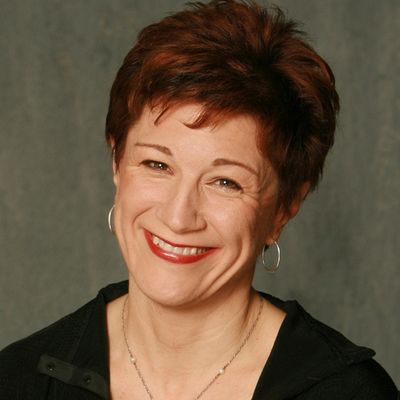
Lisa Kron is an actress and playwright. She is best known for writing the lyrics and book to the musical Fun Home for which she won both the Tony Award for Best Original Score and the Tony Award for Best Book of a Musical... Read More
From the show: The Producer's Perspective Podcast with Ken Davenport
Guests
Featured Shows


About
Lisa Kron is an actress and playwright. She is best known for writing the lyrics and book to the musical Fun Home for which she won both the Tony Award for Best Original Score and the Tony Award for Best Book of a Musical. Fun Home was also awarded the Tony Award for Best Musical in 2015 and the 2014 Obie Award for writing for musical theater. Alison Bechdel's acclaimed graphic novel/memoir Fun Home serves as the basis for the musical. Her major works also include 2.5 Minute Ride, Well, and In the Wake. Performances include roles in her own shows such as Fun Home, and 2.5 Minute Ride, and other shows such as All My Hopes and Dreams, and Brides of the Moon.
Lisa and I talked about her entrepreneurial and unexpected journey in the theater including . . .
- Her #1 rule to success: if a door opened, and she was scared, she forced herself to step through it. (Words to live by.)
- Why her early writing horrified her. And how she got better.
- How performing stand-up helped hone her stage writing.
- Being mistaken for a seat-filler at the Tony Awards . . . the year she was nominated!
- Who young writers should be trying to connect to in order to have a successful career (hint: it’s NOT who you think).
- Why trying to increase diversity in terms of gender and race is like looking for your keys. (This is such a brilliant analogy – only a Tony Award-winning writer could come up with it, so make sure you listen.)
Keep up with me: @KenDavenportBway
Transcript
This transcript was automatically generated and might contain errors.
[0:00] Ken Davenport: Hey, so if you don't know, I have three shows currently running on Broadway with my name on it right now. I got Once on This Island, I've got Play That Goes Wrong, and I've got Kinky Boots. If you enjoy the podcast and wanna support it, go see one of my shows. It's that easy. Once in this island, Kinky Boots, or The Play That Goes Wrong now running on Broadway. Check 'em out. I wanna be a producer with a hit show on Broadway. I wanna be a producer.
[0:29] Ken Davenport: Hello everybody. This is The Producer's Perspective Podcast. I am Ken Davenport. Welcome everyone. I'm super fortunate to have on my podcast today the Tony Award-winning author, Lisa Kron. Welcome, Lisa.
[0:41] Lisa Kron: Thank you.
[0:42] Ken Davenport: So Lisa won two Tonys for her book and lyrics to Fun Home. She was also nominated as an actress for her own play. So let's start with this one. Why eat plays? Why not write something else? What drew you to write for the theater?
[0:57] Lisa Kron: Well, I was not gonna be a writer at all. That was I definitely did not see that coming. I didn't really write anything. And when I did write, I, you know, just the little bits that as, you know, a kid in school or whatever I wrote, I was a little bit horrified by my writing. But so I, you know, I came into it sort of backwards. I mean, I was drawn, first of all, to tell stories. My family was my parents were both great anecdote tellers, my whole family, and that was something that we really I mean, the majority of family conversation was anecdotes like that. And, you know, starting from when I was probably like in third or fourth grade or something, I had this interest in figuring out how to be funny.
And which I quickly understood was a little bit different for girls than it was for boys. And I was interested in how to tell a funny story. But I didn't know anything about theater. We didn't go to the theater. I didn't see a play till I was 16 years old. It really wasn't on my we listened to cast albums. We listened to Broadway cast albums. But I didn't really know anything about it. And but I, you know, I feel like it's a vocation. It calls you. And in my Jewish youth group, we did poor and plays and we had like sometimes games that involved improv and I really loved doing that. I really there was something about performing that I was that it lit up the world for me. You know, it made things just more interesting to be to have that kind of whatever that electrical current is that goes along with connecting with an audience. So this is a long story, but I ended up, I mean, I you know, I feel like it's theater's a vocation, it chooses you, and I just sort of found, you know, kept stepping toward it in various weird ways.
[2:48] Lisa Kron: Once I was a theater major in college, I was told outright that there wasn't really a place for me in theater, as I like to say in shorthand, not thin enough, not pretty enough, not straight enough.
[2:58] Ken Davenport: Because this is when you were pursuing an acting career.
[3:01] Lisa Kron: Well, I was n I I don't even think I thought about a career. I was at a small Midwestern college. I mean, I c I couldn't even get cast. You know, I was told outright by the theater professor that I obviously couldn't play. I hadn't been, you know, there was this thing that happens, I don't know if it still happens in small Midwestern, like a liberal arts college theater department where if you don't get cast, we we would go in and ask why we didn't get cast. And what I was told was it was because I this was just said like obviously, well, you obviously couldn't play this role because you know, you don't convey any sexuality on stage. What's amazing is that someone would actually say these things to an 18-year-old girl, you know, like why would you do that?
Also, you know, later I thought perhaps my sexuality was not recognizable to you. But you know, for every sort of avenue that was closed, there was something that opened, some avenue that opened. And I was was sort of scared of everything, was really, really shy. But I was sort of when I was in high school, I guess, I started to have this feeling that I could get to the end of my life and be like, wow, I didn't live my life because I was afraid, and then I would be horrified. And so if I sort of made a rule for myself that if a door opened, that I needed to step through it, even if I was scared. And that took me in a lot of interesting places. And it's a very hard thing for an 18-year-old person to decide to do, especially when everyone's saying, by the way, this is probably not gonna work out.
[4:31] Lisa Kron: I guess so, I mean, you know, it's not like anything I did was actually so scary, you know, so I don't want to congratulate myself really about it. It's not like I I mean, I know a lot of people who do really scary things. It's not like I made any choices that were actually dangerous in any way. And I had a very supportive family, and that was that made that was extremely helpful. They weren't pressuring me to do anything other than what I was doing. And that was that was really awesome. But anyway, I ended up at the WoW Cafe, this lesbian theater collective. I had been drawn there by seeing a show by these this company, the Split Bridges Company, Peggy Shaw, Lois Weaver, Deb Margolan, all of whom are still writing.
Peggy and Lois had a show in the under the radar festival this past season. Deb Margolan's still writing. I just read a recent play of hers called Turquoise, which somebody needs to produce, somebody produce this play Turquoise. It is astonishingly beautiful play. And I saw their work when I was first in New York. I was 24, 25 years old, and anything I thought I knew about theater, which was virtually nothing, but I thought was a lot. I mean, it just cracked the world open. It just cracked the world open in terms of what I thought theater could be, how it could make me feel, and what I thought it was for. I was on a panel a couple days ago with the playwright Monet Hurst Mendoza, who was talking about seeing Angels in America for the first time, and how seeing that she thought that plays had, I'm sort of paraphrasing her here, but she thought that plays had to be I guess she thought they had to be more literal, you know.
And when the angel comes in, she was like, Oh, oh, oh, that's a play, that's a play, you know, and she's this wonderful inventive playwright now. And certainly that's the kind of thing that happened to me. I mean, it just revolutionized my mind and the rest of my life.
[6:13] Lisa Kron: So they were working from this theater collective, this lesbian theater collective in East Village, and I just started to go there. It still exists, the WoW Cafe on East 4th Street. It's open to any woman who wants to go there. You I don't know if it's still organized exactly the same way, but when I was there, you would just go, there was a staff meeting every Tuesday night, and you'd go to a staff meeting, and then you do support work on somebody else's show, and then at the beginning of the year in the summer, there'd be a retreat and you'd say if you wanted a show, and then you'd be given a time slot to do a show. The fact is that if you give theater makers resources, and if you don't try to fix them, the amount of good work you will get will be much higher than it is if you meet out these resources to only the people who you deem worthy, and then you help them or fix them. That has been my experience.
[7:04] Ken Davenport: What was your first thing that you did there?
[7:05] Lisa Kron: Well, the first thing I did was a variety night. That's after I saw that play, then I I knew this woman who w was a part of WoW, and she was like, Oh, we have variety nights. Come to a variety night. I had never done anything like that. The variety nights really, as it turned out, were like people just standing up and talking about their vacation they just took, or there was a woman who could whistle classical music through her nose, or they were just or you know, somebody would like jump rope and do poetry. I mean, it was really thick, but I came from this undergraduate theater background at that time. I had also had been a member of a touring company, had done a national tour with as an actor.
So I had these, you know, these stories, these funny anecdotes that I had honed for years, mostly about my family, and then I had this Victorian variety song that I sang as an audition called I Saw Stars, and in this song, which was kind of funny, I would do a tap dance. It was like a little tap break in it. So I for the variety night, I told these two stories, and I sang this song, and then it was at WoW at that time was in a little storefront on East 11th Street, right by where Veneiro's is, and the stage was like five by five, and it was in a tenement, so the it was the storefront of the tenements, so there was the storefront door, and then there was you could go out the back door into the hallway of the tenement next to you.
So I went out the hall, I finished, I went out that back door, and then I was out on the street, and then somebody said, There's still clapping, you have to do more. And I was like, I don't have anymore. I never did that before. And then they were like, Do you want to do your own show? And I was like, Okay. Scared though. Scared, totally, totally, but I thought, yes, yes. And then I had no idea how to write a show, so I just sat in my apartment and ate a lot of Entenmann's cookies, many boxes of Entenmann's cookies. And then when it was, and that went on for weeks, and then and I there were two shows at 11 o'clock at night. I made a list of all these anecdotes that I'd honed, and I rehearsed a couple of songs that this Eric Rockwell, who's actually also a composer, and then I the show that was happening like at eight o'clock was called Hiroshima Beach Party, and the set was sand, so the little stage was covered with sand, and I swept the sand to the side, and then on the and the piano, because it was no room on the stage, the piano was in the house.
And so I taped my list of stories and songs to the upstage side of the piano, and then I told these stories and I sang these songs, and it was like magic. It was so amazing. And it went really well. And but you know, people just I mean, it was like people who my friends and then people who I worked at on my temp jobs and whatever, they came so and it was small space, so it was pretty full, but people kept coming in off the street as I was performing, you know, it filled up and it was just like magic, and I was like, wow, I am so talented, I don't really need to do any I just stand on stage, and everything that drops out of my mouth is like magic. And then they asked me if I wanted to do a show like another show, and I did, and then that didn't go as well. And then it was like, you know, seven months later or something, and then I was like, oh, I have there's some something happened there, something I did instinctively that didn't happen here.
[10:06] Ken Davenport: And what was the thing that was missing? Did you ever put your finger on it?
[10:13] Lisa Kron: Yeah, I mean, I think it like anybody who performs comedy, you can't try to be funny. You have to you have to learn how to come at it from underneath. I was trying to repeat what had been successful, and you can't it does it just doesn't work that way. You can't you can't control it, and you can't indicate to the audience how you want them to respond. You have to offer, you have to do a thing and let them do what they're gonna do.
[10:40] Ken Davenport: We go back to the Entenmann's cookies for a second.
[10:43] Lisa Kron: Absolutely.
[10:45] Ken Davenport: So you said you had never written a show before.
[10:48] Lisa Kron: No, and then I didn't write anything then. I didn't write anything for years. I improvised on stage. I improvised on stage. And then I would tape, I would do a lot of like little short performances, and I would take, you know, tape them so that as things occurred to me in the moment, I would have an idea of what I was gonna say, and then those stories got built by performing them. And then I would sort of gather material together and ended up doing at some point Mark Mark Russell, who was at PS122 then said, Do you want to do a show here? So I would do a full-length show. I'd do full-length show at WoW or full-length show. I don't think if I did a full show at La Mama, I think it was most or Dixon Place.
I just chose it at Dixon Place, but it was really between WoW and Mark Russell offering me time to do whole shows that I would sort of put together these, you know, shows where I told stories and sang songs, and I often had choruses of backup singers, and I was really, really interested in being consistently funny and also the nature of that kind of a connection with an audience that is simultaneously, seems spontaneous, but is something it is spontaneous, but it is also planned, and it is also not the same as you and me talking. It's something else. You it's it's lifted into a different kind of engagement. And I was really, really, really interested for a number of years in learning how to master that engagement, which which in which you have control over the situation, but you are so you're you're moving in a pre a direction that you have planned out, but you have got to also be porous.
You've got to be in actual conversation, actual interaction with these people in this room at this time. So if someone gets up and walks out, if if there's a siren outside, if something else happens, you've got to somehow make you've got to incorporate that into you can't just close down and say, I'm gonna keep going in this direction.
[12:45] Lisa Kron: You want to keep going in that direction, but you need to be permeable also, and you're lifting people into a world that you are making with them, which means that you have to somehow, whatever comes into that room needs to be incorporated into the thing that you're making together. Otherwise, you're not really doing the thing. And that kind of mastery, I remember like watching Betty Davis on a talk show and feeling looking at her authority sitting in that chair. You know, it's a kind of pre that's it's what they call stage presence. And the only way you learn it is by being on stage for hours and hours and hours and hours, and not only in successful shows. I mean, it's really interesting. Sometimes I see on stage actors who have become famous because they have been fantastic in really successful shows, and then you see them at a benefit or something like that.
And they don't actually have the chops to bring people toward them if those people didn't come in wanting to be on the ride with them. You know, that's a different kind of chops that you learn over time.
[13:49] Ken Davenport: Your process now, how related is your process about writing now to your process in that first time when you have the editor in cookies? Do you still eat cookies?
[14:00] Lisa Kron: Yes, yes, easily. The cookies are constant. Do you still tape things? Because you are one of those very interesting writer performers. You do both, obviously, you're very comfortable doing both and very good at both. Is there a performance element to your writing?
[14:15] Lisa Kron: No. Not so much. Well, I would say there is, and that I can hear when things are out loud much better than I can hear something on the page. So I develop things on paper now. I certainly don't develop by improving things in front of an audience. I don't have the, oh my god, I'm too old for that. I just don't. That just really takes a lot. It's amazing we get more scared about those things or more like a little when you get older.
[14:40] Ken Davenport: Well, you know, I think the thing is that it takes a kind of focus. It is a gathering of energy that is very intense. And I remember sort of in my, you know, the height of my powers, you know, when I was doing say 2.5 Minute Ride or something. I remember right before I would go on stage. I don't know if you remember in the like the Ed Sullivan show, you know, when there were all those sort of old vaudeville acts, and every once in a while there was somebody who used to like eat an entire car, like piece by piece. And I would often have this feeling before I went on stage for 2.5 Minute Ride, like I was about to have to eat an entire car to in fact gather and be a conduit. Use your body and your focus and your attention and everything to gather and then be a conduit for the attention of an audience to bring them together into a community of attention and then to lift them and hold them. It just takes a lot.
[15:35] Lisa Kron: And I think I realized at some point that I had an amazing focus. I was capable of amazing focused attention for approximately an hour and 20 minutes. And then it would drop off because that was the length of a show. So it's just that I, and it's like walking a tightrope, you know, when you lift people like that. I mean, it's the reason. I mean, I haven't seen The Play That Goes Wrong, but I've heard about it, and it's only that I just was out of town a lot last year that I didn't see it. But that thing, I mean, I think I am guessing that the success of that play is that it plays on the thing that people love more than anything in the theater, which is that when things go wrong in the theater, you can feel what theater is about.
You can feel what you invested in it, and the reason it's so potent is that for whenever that thing happens, it's a contract of trust. We are gonna go together into this place of collective imagination, and there's something humiliating. I mean, theater is ultimately nerdy in that way because there's so much vulnerability in it. There's so much vulnerability in it. So the horrifying thing about dropping it is that it's that's the thing. You've made people so vulnerable, and then you have dropped them. So that's why it's that's the nerve that it takes that I, that is harder for me to come by now to do that.
[16:58] Ken Davenport: When you were working downtown and even when you're doing 2.5 Minute Ride and Well to some extent, did you ever imagine that you would one day be a Broadway writer or performer, especially after being told that, oh, you'll never do anything? You're not meant to be on the stage because you're different than everyone else. Did you ever think you would yourself would translate to the city?
[17:22] Lisa Kron: I think I didn't think it because it wasn't a possibility when I was starting out. I mean, it was not a possibility. Also, when I was nominated for Well in the category was Best Actress. There was like that whole season. First of all, I was so lucky because the other nominees, I mean, it was absurd. The other nominees were Cynthia Nixon, who won the Tony that year, Lynn Redgrave, Kate Burton, and Judy Kaye. And they were the best. I mean, I remember at one of the events, Kate Hudson, who's just the greatest, saying to me, "We're so lucky that we're all over 40, and we all know what this is and what it isn't." Lynn Redgrave opened a show at the West Side Theater at that time and invited us all to come to opening.
I mean, it was just the loveliest. At the Tonys, I had to go to the bathroom. I didn't realize I had needed some credential to go backstage. And Kate Burton waited with me in the long line so that I wouldn't have to stand there by myself. And that was right after Lee Silverman and I had been in our seats and we had stood up for something in one of the breaks, and then we were sitting back down, and one of the bouncers thought that we were seat fillers and yelled at us, "Get back in your seats." And he was like, "She's a nominee." Anyway. So no, I didn't imagine, I didn't imagine any of those things.
[18:44] Ken Davenport: What was it like when you found out you were going uptown?
[18:47] Lisa Kron: Well, what I was gonna say about being nominated for Best Actress is that I realized like that whole season I walked around with this like little chuckle. Like it was like every moment, if somebody talked to me, I was like, "Ugh," because I thought, and I couldn't figure out what it was. And then at some point I realized that everything that I had done, everything that had sort of spurred me along, every kind of background shaping that I had done unconsciously of my career had happened because of the fact that I knew for certain that the, I mean, the bedrock thing I knew was that I would never ever be nominated for a Tony for Best Actress. That was the like one or two things I know for sure. That I knew for sure. So it was just kind of hilarious.
[19:32] Ken Davenport: Do you think that helped though in some crazy way? Like you don't talk about not thinking about the thing that you would, of course, love to have happen, which did happen.
[19:42] Lisa Kron: Well, what's helped and what continues to help is that because of being at the WoW Cafe when I was, where the greatest work was being done, work that changed my life, work that when I look at it again in retrospect, it is absolutely, you know, sometimes you think something is so great, and then you go back and you're like, "Hmm." It's absolutely as amazing as I thought it was then. Nobody was paying any attention, with the exception of a couple of women from The Voice. Nobody wrote about us. And then academics, women academics started to write about the work there, but nobody else. When so reviewers didn't write about us, when at that time HBO and Showtime was starting to come down and find people and bring them up.
Baldwin Gray, Eric Bogosian, Dennis Leary, all kinds of people were getting lifted out of that world. Nobody could see us. Then at some point there started to be histories of the performance scene at East Village. Until very recently, we were in none of them. And that was enraging in a way. Still enraging. But it for me had this other effect, which was there was no reason to be there, except to that what was happening in that place was electric. It was the making of culture. It was us delighting ourselves by there were no images of us or what we were like, and we were making them, and they were hilarious and they were sexy and they were inventive, and they were done. And so I remember this feeling of just like, "Oh, this is a lie."
Wendell Pierce talks about a living culture and how as opposed to a commercial culture that when culture is alive it's how you celebrate your, it's how you mourn your losses and you celebrate your successes it is interwoven into your daily life it's a means of daily expression and that's what the WoW Cafe was like for us. We lived there. Everything we did we were putting on stage. We were putting on stage things that didn't cost any money because we didn't have any money and we were just like, "Wouldn't it be interesting if we did this? Let's do this. Let's do this." That was the most valuable thing that could possibly happen to me because I don't have any re, of course it's amazing to have made my living for the past several decades or so in the theater that is very lucky, but I am not confused about I don't confuse making my living in the theater with my legitimate right and my ability to make theater.
I know that those two things, it's lucky when they go together and they can occur separately with no problem at all in terms of making the work, and that is really lucky because it means that I can do things on my own terms and I can walk away from projects I don't want to do and in negotiations. I mean, the other thing is I learned to be a collaborator. It's not like I don't think that I'm a, I mean I know that I'm a really good collaborator, but I don't have trouble. I don't, you know, I often say to students like, "Who's your primary relationship with in the theater?" And they often will start to talk about artistic directors. That's who they're trying to forge relationships with. And I say, "Your relationship is with an audience. And the artistic director is the guy you've got to get through. Sometimes the woman you've got to get through to get to that audience."
[23:03] Ken Davenport: You talk about collaboration. So let's talk about how you made the transition from doing these downtown variety shows to 2.5 Minute Ride, to Well, to then Fun Home, which all of a sudden it's a musical, first of all, right? You would have some musical experience, but now you're collaborating with folks. What were those first sessions like for you?
[23:25] Lisa Kron: Right. Well, I was collaborating, you know, I worked for many years at WoW. I made shows with the theater company The Five Lesbian Brothers. So we wrote, the five of us wrote collaboratively. So I feel like I know I really learned a lot about something that many people don't get to learn, which is how you can actually collaborate with people, and which means listening to them and being open to them and also pushing, you know, that there can be rigor in collaboration. How you can be kind, how you can be in humane relationship with somebody else, and also rigorous. I think for I learned to be a sit with disagreement and how you get past that and how you get through it, and the experience of believing for sure that you know what the answer is, and then either being able to convince people that's right, or finding out that in fact there was a better answer that you couldn't hear because you were only thinking about your own answer, or what generally happens, which is together finding a third way.
[24:27] Ken Davenport: Any specific examples of Fun Home where there was disagreement and you were persuaded, like, "Oh wait, I should look at this a little different." Anything changed?
[24:36] Lisa Kron: Yeah, I mean a lot. I mean, I'd say that, you know, Janine is also just a world-class collaborator, and I think she and I knew that about each other, and then Sam Gold was too. And so I think the ethos of that collaboration, which was so great, I think we all knew how to say, "I don't understand what you're saying, but let's take a look." That was the ethos. And I ultimately we all had the same. I think the thing about collaboration too is you realize you can't collaborate with everybody because you have to ultimately have the same aesthetic values at the end. So you all ultimately are gonna have to agree that the solution, you have to be able to agree on a solution to a problem. I mean, the story about that isn't actually about those collaborators, but Oscar Eustace was like, I mean, there were some notes that he gave me that I was absolutely opposed to, and I was correct about those things.
[25:28] Lisa Kron: But there was one, and I have to say one great thing about Oscar was that he really just let me just like pound on him, you know. Like he would say so and so. And I remember at one point I was like, Oscar, I'm gonna I think I threatened to hit him. I didn't really threaten; it was a rhetorical device, but I thought even so that he was just like, whatever. But there was a song that was in the lab that he said needed to be cut, and I was enraged by this note. I was enraged. I was like, there it's obviously ridiculous. He's obviously not he can't see the problems that we're working with; he doesn't know what he's talking about. I railed on about it for a long time. I was so angry that he would say that.
And so for the lab, we didn't cut it. I was just like, that is the most absurd thing I've ever heard. And then we walked, we finished the lab, we took a month or so off, and then I went back to the work, started looking at it again to get ready to do whatever the next pass was, and you can see what's coming. I looked at it and I was like, oh man, oh fuck. I called Janine and I was like, I can't believe I'm gonna say this. I can't believe it, but Oscar's right, that song has to go. I can't believe it.
[26:30] Ken Davenport: So like that. When you first started working on that show, were you like, again, was it like this thing's never gonna go to Broadway with this subject never?
[26:41] Lisa Kron: Yes, oh absolutely, yeah. Were you even did I don't even know the story of how you came on board with it. Did you were you immediately like, oh yes, I must do this story, or were you like, do I really want to invest my time in something like that?
[26:53] Lisa Kron: No, I had a feeling, you know, I had a feeling about that work. I didn't know anything about musicals, so I could have as easily been wrong. But I think the thing that I felt about it, I mean, really, I mean I've thought many other things since then. I've been, Janine, let's make a musical out of this, and she's like, no. But I do think that one thing that I think I understand now is that there has to be something on musicals are interested in what can't be articulated. And they need yearning. They're about yearning. And if everything is if there's no human mystery in them, if there's nothing that just can't be articulated, that I mean, that's what music does. It expresses that which cannot be articulated.
And Fun Home is all about that. It's all about I mean, that's the nature of that story. I also knew that I understood something about that book that I felt that most people would not be able to see. I understood its essayistic nature, and I knew that what she was doing, that it wasn't a story about things that happened to a family, that it was an essayistic consideration of the narratives that this family had formed about itself. So I felt like I could recognize that that's what it was because I had been similarly interested in those kind of narratives, and I knew that I knew something about dramatizing that kind of an essayistic questioning of the nature of family narratives. Because I had done that with 2.5 Minute Ride.
I didn't. So I also knew how difficult it was. I mean, the same with Well. Well is a similar version of that. Also that the story in some sense was about individuating from your family, which was also the story that I have told again and again. That's been my central story that I've told a lot. I also knew that that was very difficult form. I struggled with it for five years with 2.5 Minute Ride. I struggled with it for five years with Well. I knew it was going to be tough. I knew that there had to be a character of Adult Allison and that people were going to assume she was a narrator and she couldn't be a narrator; she had to be a character. As with certainly with Well, it wasn't. I felt that that was if you were gonna adapt the book, that was what had to happen. Whether I could figure out how to do it successfully, I didn't know.
[29:11] Ken Davenport: Biggest surprise you had when you got to Broadway with the show that you didn't expect. Like, oh, this is what being a Broadway author is like of a big musical.
[29:24] Lisa Kron: Well, yeah, I mean, going with a musical was certainly different than going with Well. Yeah, I mean, it's fun. It's fun, it's fancy, it's fun. Yeah, I mean, the particular kind of fandom that there is for musicals is really touching to me. Especially for that show.
[29:43] Ken Davenport: I imagine you got a lot of very difficult.
[29:45] Lisa Kron: I mean, we definitely did, but every show has that. Every show has that. And I what I mean, I get told a lot because of the nature of Fun Home. I hate musicals, but I like Fun Home. And I always think nobody hates a musical. That's just a lot. Nobody hates a musical. The fact is we love musicals so much. I believe they're the highest, they're the highest American art form. We love them so much that we feel horribly betrayed when they're bad. That's what I think. We do get very angry when they're bad.
[30:16] Ken Davenport: Yeah.
[30:17] Lisa Kron: Because what they have the potential to do is ravishing. And nothing else can do it.
[30:23] Ken Davenport: Do you get writer's block?
[30:25] Lisa Kron: I don't think I get writer's block. I'm a I it's not I mean, writing is extremely I'm not a natural writer, I'm not a natural dramatist. So I just have to work and work and work and work and work and do drafts and draft and draft after draft after draft.
[30:42] Ken Davenport: If you're not a natural dramatist, what do you call yourself?
[30:46] Lisa Kron: I love the form more than anything. So I don't know, I'm dogged. I'm dogged. What I think is that I have I have good discernment. I have good discernment. And that means that I mean somebody like, for instance, Stephen Edley Gyrgas, that's a natural dramatist. You know what I mean? There's not he just trying to think of um so it's it's not actually that common, but there are people who just write certainly who write in metaphor very naturally, but who write interactions between people that are doing the thing that plays do, as opposed to approaching it more novelistically or more cinematically or something. So I guess I I don't do it naturally, but I I think I can feel when it's not there, and I can feel when it is there. So I just keep churning out draft after draft after draft, and then I'll be like, that seems better, and then I hang on to that, and then that seems better, and I just stay at it.
[31:45] Ken Davenport: So you were able to confront your own fears as well as confront people telling you, like, hey, there's probably not a place for you in this thing we call the theater, which is incredible, and you're such a role model for so many other women out there that as we all know, they're not enough of in well, just about every position in the theater. But especially available, women are available. Especially writers. What can we do? What give us one action item, one thing we could all do right now to encourage more women to pick up a pen, to offer them more opportunities, whatever it is.
[32:21] Lisa Kron: There are plenty of women writers. There's no shortage of women writers. There's no shortage of writers of color. There's just not. There's not. The difference it I mean, number one, diversity, gender, and racial and ethnic diversity have to happen from top to bottom. It means that we have to make those choices. We have for white people, so speaking as a white person, we have to know, and I can see this happening with men around the gender issue. It will feel different. It will feel when there is parity, when there is balanced diversity, it will feel different than it does now. As someone said, I heard someone say, if you have had privilege, then equality feels like oppression. So we have to be aware that it will feel different, and we have to make room for people to move up.
The other thing I think that is the most important thing is that you know, I interviewed James Lepine for the Dramatist Guild Legacy Project. I'm a huge admirer. It was an amazing interview. And he made this comment, which I don't take any issue with, but it really stuck with me. But he was talking about his first plays, and he said, well, you know, first couple of plays that you do, you get the benefit of the doubt. And I remember just feeling like being like, what? And I was like, oh, oh, wow, yes, no, I don't know that. That doesn't happen to women; that doesn't happen to people of color. How that translates into other things is that white male playwrights, we take chance every time, every time somebody chooses a play, they're making a leap of faith every single time.
And it's very unconscious, these different sets of assumptions. People look at a white male playwright and they think this might be interesting. And this I'm speaking very generally, right? That could be interesting. I might give that guy a chance. But with women and people of color, they're like, I don't know. Let's see. Once I see that they can do the work, men are lifted on the basis of their potential and women and people of color on the basis of their accomplishments. We're aware of that and say the chances that this leap of faith will pay out are equally distributed. Success and failure equally distributed. That will be helpful. But there's no shortage of writers out there. None. And if what I'd hear somebody say, if you lose your keys, you don't say, well, I've lost my keys.
I guess I'll never drive my car again. You keep looking till you find your keys. If we feel like we can't find women and people of color to fill any position, it's only because we're not looking far enough. Because in fact, there is a there's actually an untapped wealth of extremely talented people across the board who are not being brought in.
[35:10] Lisa Kron: Advice to young women playwrights out there or young playwrights in general that are trying to break into this business right now that may be finding ourselves banging their heads against the wall and can't get through.
[35:23] Lisa Kron: I mean, I don't know. I don't think I I was I was just on this panel with Money Hurst Mendoza and Patricia Ione Lloyd, and they were both enormously smart and wise about their paths. I don't really I think that there are people who are doing a lot of smart things and don't really need that advice. I think people are working very hard and they're creating their own opportunities and they're doing all the things that I did. I was listening to this appreciation of Stephen Hawking last night, and this guy was saying he was such an inspiration to disabled people and because he really believed in himself and he just didn't let himself be stopped. And I that might very well be true, but I thought that's disabled people face all kinds of obstacles that have nothing to do with how much they believe in themselves, you know.
So I think people always make their way, they always do with the arts. It's hard for everybody. You have to I mean, I just kept going because I couldn't stop, and there are always people who keep going because they can't stop. And so that also means that there's lots of interesting work out there already that is not visible to you and me sitting here, but it's right there and it's happening.
[36:35] Ken Davenport: So my last question, which is my genie question, and I have a feeling I know how you're gonna answer this, but I'm gonna ask it anyway. I want you to imagine the genie from Aladdin comes to visit you and is going to sing some snappy songs. Yeah, you know, doing moving around show tune or two, and grant you one wish. What's the one thing about Broadway or the theater that drives you so crazy that gets you angry, frustrated, that wants you to flip this table over that you'd ask this genie to wish away in an instant.
[37:06] Lisa Kron: That's the way it always has been. The great British series. I always forget the name of it. You know, that TV series from it's not British, it's Canadian with the new Burbage Theater. Slings and Arrows, Slings and Arrows, is about that tension. That will always be the case. But I would love for, I'd love to see more places, more resources go directly to artists to make their work happen.
[37:28] Ken Davenport: A very good answer. I wish that one too. Thank you so much for joining us today.
[37:33] Lisa Kron: Thanks to all of you for listening. We will see you next time. Don't forget, if you're in New York City and looking for a show to see on Broadway, check out Once in the Silent, Kinky Boots, or The Play That Goes Wrong. Those are all shows that I'm producing right now, and we'd love to have you. See you there.
[37:51] Ken Davenport: Look out, Broadway here I come.
© Broadway Podcast Network, All Rights Reserved