

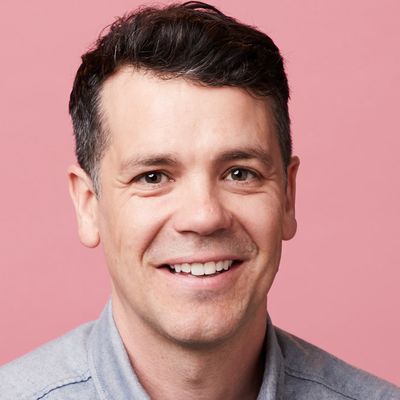
Anthony Veneziale (Two-Touch) is the conceiver and co-creator Freestyle Love Supreme and FLS Academy. Founding member of American Immigrants (San Francisco)... Read More
From the show: The Producer's Perspective Podcast with Ken Davenport
Guests
Featured Shows
About
Anthony Veneziale (Two-Touch) is the conceiver and co-creator Freestyle Love Supreme and FLS Academy. Founding member of American Immigrants (San Francisco). He has used improv techniques to create endeavors with Thomas Kail & Lin-Manuel Miranda (In the Heights, Bartlett, “The Electric Company”), Daveed Diggs (The Freeze), numerous networks/companies (HBO, Cartoon Network, Sesame Workshop, Boardwalk Pictures, Google) and co-founded speechlessinc.com, an improv thinking company that helps humans create, collaborate, and find their authentic voice. STAGE: Freestyle Love Supreme, Servicemen, Death in One Acts, and Trashin': Time to Waste. TV: ”Sex and the City”, Freestyle Love Supreme.
Listen in to this podcast, and you'll hear about the origins of this new form on Broadway, and how he helped Lin-Manuel Miranda and Tommy Kail with In The Heights, and a ton more, including (yes, I'm giving you the full bullet points, because this podcast is that good):
- Why Hip-Hop/Rap is so effective in the theater and why this is just the beginning.
- How his success happened overnight . . . NO IT DIDN'T! It took a long time, and why and how he had the courage to keep at it.
- The most commonly uttered words on my podcast from all my guests, and why those words helped Anthony crush his goals.
- How he teaches freestyle at the Freestyle Love Supreme Academy (if I can do it - anyone can).
- And in addition to me beatboxing, you can bet he shows a little of his freestylin' skills as well.
This week’s #SongwriterOfTheWeek is Douglas Lyons and Ethan Pakchar. Check out "Runnin'" (sung by Matt Rodin) from their new musical Beau at the end of this episode. If you enjoyed the outro music in this episode, go on over to www.beauthemusical.com.
This week's episode is brought to you by AJV Media. They've been our videographers for our Super Conference since the beginning! They're professional, easy to work with, and local to NY! If you're looking for a videographer and want more information, visit their website www.AJVMedia.com.
Keep up with me: @KenDavenportBway
This podcast was edited by Stanley Wiercinski.
Transcript
This transcript was automatically generated and might contain errors.
[0:00] Ken Davenport: And so there's this other part of your brain, the medial lateral prefrontal cortex. It's a little bit further forward, and that's your creative flow. That's like your state of joy and flow. And for a lot of people, it happens when they engage in that thing that they just love so much. You know, it's like, oh, I get a runner's high. So that's the part of your brain that we're trying to get to with freestyle. I wanna be a producer with a hit show on Broadway. You're listening to the Producers Perspective Podcast with your host, Tony Award winner, Ken Davenport.
[0:36] Ken Davenport: Lights up by Washington Heights up at the break of day, you wake up, and I got this little... That is the Lin-Manuel Miranda musical In the Heights and that fantastic opening number. You know, with all the talk about Hamilton these days, it's easy to forget how good In the Heights actually is. Well, today we're gonna talk to one of the guys who was around at the beginning of In the Heights and the whole Lin-Manuel Miranda phenomenon. And he's the guy responsible for ushering in this new genre of art on Broadway in Freestyle Rap. He's the creator of Freestyle Love Supreme, which is a fantastic show on Broadway right now. Go see it if you haven't. So tune into this episode. Very inspirational. A true entrepreneur, you are going to love it. And spoiler alert, I do a little rap, hip-hop at the end. Maybe a little beatbox. You will hear it.
[1:27] Ken Davenport: This week's episode has been sponsored by AJV Media, who also has been the official super conference videographer since the very first super conference. We're super thankful for that. They're great partners of ours, and they are great videographers available for all of your video needs. They'll be back next month, so you'll be able to say hello to them in person at our 2019 super conference. For more information, visit them at AJV Media.com. AJV Media.com. And now let's hear a little more In the Heights before we get to Anthony.
[2:02] Anthony Veneziale: Follow the lawn to Northern Manhattan and maintain. Get off at 180 first and take the escalator. I hope you're writing this down. I'm gonna test you later. I'm getting tested, Tom for tough on this modega. Two months ago, somebody bought or take us on April started backing up and backing up, and ever since the rates went up, it's gotten that expensive, but we live with just enough.
[2:28] Ken Davenport: Welcome back to the Producer's Perspective podcast. My name is Ken Davenport. I've been looking forward to this episode for the past couple weeks. So two weeks ago, I saw one of the freshest and most unique and authentic shows I've seen on Broadway in a very long time. And the cool thing, it was a type of show that I never thought I'd ever see on Broadway for so many reasons, which I will get into. That show was, of course, do you know it? Freestyle Love Supreme. Today we have the conceiver and one of the stars of that show here today. Please welcome to the podcast, Mr. Anthony Veneziale.
[3:05] Anthony Veneziale: Have a band, eh? Nice. Uh welcome. Thank you. So I'm thrilled to have you here. For those of you who don't know, Anthony, he's a performer, producer, instructor, speaker on the TED stage. He helped relaunch The Electric Company on children's television. Is that true?
[3:19] Anthony Veneziale: Yep. Big thank you for bringing that back.
[3:21] Ken Davenport: Sure. And he helped create this very unique art form and blend of rap and theater, which with his buds Tommy Kail and Lin-Manuel Miranda, who've probably never heard of.
[3:21] Anthony Veneziale: Never heard of.
[3:30] Ken Davenport: Help became the basis of In the Heights, and of course, Hamilton. He's a true entrepreneur. I am thrilled that he's here. So let's start back in the early days of Two Touch. So you're a little kid. Did you like when people said, what do you want to do when you grow up? You're like, oh, I'm gonna be a freestyle rapper.
[3:49] Anthony Veneziale: Professional soccer player.
[3:53] Ken Davenport: Really? That's what it was.
[3:54] Anthony Veneziale: Oh yeah.
[3:54] Ken Davenport: Where did you grow up?
[3:55] Anthony Veneziale: Outside of Philly.
[3:56] Ken Davenport: Outside of Philly. Born in Philly and then moved outside of it, and all my brothers are amazing soccer players. My brother Joe is a professional soccer player. Played for the team here in New Jersey, New York before they became the Red Bulls. They were the MetroStars. Played in college, was top college athlete, and then that's something I very much wanted to do. So which came first, music or theater for you?
[4:21] Anthony Veneziale: Music.
[4:22] Ken Davenport: So what was the first introduction to music then as a kid?
[4:25] Anthony Veneziale: My dad played in a band for a super long time. He had a wedding band, so he'd gig out. That was one of his three jobs. He also worked for Philco and he was a coach. So he was like this, you know, mad scientist of a human being, and he had band practices at our house. So the Drakes, they were called, they'd all come over. One gentleman was blind in the group who played the sax. Super cool. And I used to just like sit, and sometimes there was no front to my dad's bass drum. So sometimes I would actually sit inside of the drum. I just loved that. I loved the bass. I loved the beat of the songs.
[5:07] Ken Davenport: Makes sense. So what did you play an instrument first?
[5:10] Anthony Veneziale: Yeah, and then I started playing the trombone in fifth grade because it was the hardest instrument to carry. So I was really excited about being bigger than I was. I mean, I had four older brothers, and I'm the youngest, so being big was a big deal. And the trombone was like the same size as I was when I first started playing it. And then I just got really into it, and I also just got really into hip hop at a very early age.
[5:37] Ken Davenport: So tell me how that happens.
[5:39] Anthony Veneziale: Yeah. Right. So I had a best friend named Abe Forman Greenwald. He's still named Abe Forman Greenwald. And he and I used to just push each other in terms of like musical tastes. And he heard this album by Young MC called Stone Cold Rhymin'. And I heard it at his house and I was like, oh my gosh, this is amazing. What is this? He was like, it's rap, you know. And I'd heard LL Cool J before that. I was kind of obsessed with Around the Way Girl when it first came out, and I kind of heard it on the radio and I was like, this doesn't sound like anything else I've heard. And I became kind of obsessed with that song, and then Abe got that album, and I was like, I have to have this album. And so this is probably like fourth or fifth grade. What year was that? About 1989.
[6:29] Anthony Veneziale: And then I listened to it nonstop. I wanted to know every single word on every single song. And I still remember probably 90% of that album to this day. And then that was it. The sort of neural network got created in my mind for the algorithm of rap and like the mathematical beauty of how it adds up. And that's how I used to go to sleep. I would like listen to rap album after rap album and memorize every song on every album I could get my hands on. Tribe Called Quest probably being the first, like I wanted everything they had, and then De La Soul. Yeah, so it was just that there was just something I think that started getting built inside of my brain upon absorbing all that music.
[7:11] Ken Davenport: Some people listen to Simon and Garfunkel going to sleep, you listen to hip hop to try to get to sleep.
[7:18] Anthony Veneziale: Yeah.
[7:19] Ken Davenport: So this is a bigger question, but what for you, but also for people in general, what do you think it is about rap that gets people? I've listened in my lifetime, and it's very rare. I think a new musical style is born. And we're close to the same age, I think. So I grew up on DJ Jazzy Jeff and the Fresh Prince a little bit. That was the first one. Summer, summer, summertime. Oh my gosh, yeah, that first album's amazing. And Beastie Boys. A lot of people don't know this, but I was a breakdancer when I was a kid too. So Beat Street, Breakin', and all that stuff.
[7:54] Anthony Veneziale: Oh, breaking two, electric boogaloo.
[7:56] Ken Davenport: Of course. Oh yeah. I wanted to do a musical version of that at one point.
[7:59] Anthony Veneziale: Oh, please.
[8:01] Ken Davenport: We'll talk about that after. But so this new musical style is really created, or this music musical genre. What is it that you think appeals to so many different people? Again, the Italian from Philly, this white kid from a prep school in Massachusetts.
[8:19] Anthony Veneziale: Yeah.
[8:19] Ken Davenport: How does it cross?
[8:21] Anthony Veneziale: Well, I think hip-hop is the music of the disenfranchised, right? So most great things that have been created in the United States are created by black people, and in the Bronx is where this rap started. Probably early 70s, DJ Kool Herc having these parties, and Coke La Rock, you know, being sort of the first MC in some ways. But it very much sort of started in the epicenter of where I think most of New York City was terrified of the Bronx, right? This is Robert Moses, this is after redlining happening, the Cross Bronx Expressway comes through, cuts the neighborhood in half. People are literally living in these bombed-out looking buildings. And the message then comes out, which is Grandmaster Flash and the Furious Five.
This is like 1982. And that song really captures this, like it's called The Message, right? So it really captures this essence of hey, let me tell you about my world and why you should care. And I think all of us feel that in some way. All of us at some point in our lives are misunderstood or feel left out. And so, especially the youth. And I think that's why probably hip hop, and it keeps reinventing itself every number of years, because it's mostly in some ways about disenfranchisement.
[9:40] Ken Davenport: So when you become super successful as a hip hop artist, how does that alter your approach or what it is this art form is actually kind of like pushing?
[9:50] Anthony Veneziale: So, yeah, that's my take on it. And why do you think it also, flashing forward now to see its success in theater? Why do you think it's transitioned and been such a great new musical style for the Broadway stage?
[10:03] Anthony Veneziale: I think Broadway is starting to really broaden its horizons as well, right? The great white way is getting a little more colorful. And so that was the impetus behind In the Heights. So, you know, when Lynn was first starting to work on that, I was running the theater at the Drama Bookshop. And Tommy and I had started this small production company because we didn't know any better. Why wouldn't you tell us how hard it was, Ken?
[10:29] Ken Davenport: So it's funny, I will just say this. Those words that you just spoke right now, we didn't know any better, I didn't know what I was doing, are the most commonly uttered words on this podcast by people successful like yourself.
[10:41] Anthony Veneziale: Yeah, it seems like the key to success at the beginning is not knowing what the fuck you're doing.
[10:46] Ken Davenport: Absolutely. You know, when you see the ceiling, you bump up against it. When you don't, you just keep building, you just keep going higher and higher. And I think in essence, those mistakes that you make that you didn't know you were making are such a blessing. They're so huge, right? And then when you know afterward, you're like, oh wow, maybe I would have made a couple of different choices for sure. It might have gone a little bit faster. I mean, you know, it took seven, eight years to get In the Heights to where it was. But you learn so much, right? Like, there's no other way than to just do it. And this is something I often will say to friends and people who come and ask for advice. I'm like, yep, just say you're gonna put it up and put it up.
[11:32] Anthony Veneziale: Right? So, yeah, so I think hip hop coming to Broadway and how it's being used in storytelling now, not just as a, hey, this is an art form, let's stage the art form, but it's implicit in the way it's being voiced. Rather, the characters are really they have something about them that is disenfranchised. I mean, and that's why Lynn reacted, I think, to Hamilton to that story that Ron Chernow wrote, because it was like, this is Tupac. Like Alexander Hamilton is Tupac. And the striking similarities, like, they are ubiquitous. I mean, they are like riddled, and he was like, I gotta write this from that perspective.
[12:13] Anthony Veneziale: And so that's what Lynn knows as well.
[12:16] Ken Davenport: Yeah, I mean, that's his language, you know. A lot of us grow have grown up with the language of hip-hop, and I think more and more people feel the same way.
[12:27] Ken Davenport: So let's go back to you and your journey. So you fall in love with rap, you go to sleep with rap at night. When do you say, uh, this is what I'm gonna do? What was the reaction? Like, that's what I was like, mom, dad, yeah, I'm gonna be a rapper.
[12:45] Anthony Veneziale: Well, I think the big turning point for me was I was kicked off the soccer team my sophomore year at Wesleyan. And I got cut from the team, I got into a fight with the assistant coach, and I was devastated because like I said, soccer was a big part of my life, and I wanted to interact with the world through the lens of soccer. And um I got kicked off, and I called my dad later that day, and I was like crying my eyes. I was like, I got kicked off the soccer team. It's been a part of my life for since I was three, right? So I was like, this is devastating. And he was like, hey, pick yourself up, it's gonna be okay. You can you can play in lots of different ways, and if you wanted to transfer, we can look into it.
But I loved, I went to Wesleyan. I mean, my school, I loved my school. And the next day there were auditions for an improv troupe on campus called Gag Reflex. And I'd seen them all throughout my Frosh year, and I was like, these are the funniest humans I have ever seen. And so I auditioned just on a whim because I was like, that's great. I I don't know if I have the skill set, but I'd like to find out.
[13:50] Ken Davenport: You acted before?
[13:50] Anthony Veneziale: I mean, I dabbled in acting before. Uh I definitely was in like high school plays. Uh my brother Michael was an amazing actor, and I I had so many older brothers, I was always in shadows in some way, you know, and I was trying to find my own light. Um, and I think doing improv felt different enough from from like regular theater and and and film and and television acting, and I was like, let me try this. And uh and I auditioned and I got in, and what was your audition? Do you remember?
[14:23] Anthony Veneziale: Well, I mean, in improv, it's just these like games that you would play. There was one that was music based because they do this thing, and this is the thing that I think started the that freestyle engine up for me, which is there was a song or a game called the Song Game, and that's where you're just in a scene with another person, you and I are a scene, you're on Broadway and in an office talking about theater. Um, and at some point there's a moderator and they say freeze, and then they get a genre of music from the audience. And sometimes there's a keyboard player or a guitarist, or not just acapella that you have to kind of support the other person. And they get a genre and it's like great, country and western. And now you have to continue the scene. Well, I'm here on Broadway, just singing a song. My car broke down, and I can't get along. You know, and you just have to hit your tropes of whatever that genre is and continue the scene. Um and I loved that.
[15:17] Anthony Veneziale: I there was something about the way I think the neural networking in my brain had been built to that point that was particularly suited to it. And that was one of the games I did. I also just did a scene, world's worst, it's called, where you like are the epitome of the worst version of that. And I they gave me I was a used car salesman, so I was the world's worst used car salesman, and I was doing a scene with my dear friend Ashley Kennesi in the audition, and I remember specifically that sort of just being like, Oh, I know how to play in this way, right? It's this whole yes and mentality of like, cool, we just jumped over this big river, and like it's just a carpet, but yes, there's a river there, right? Uh, and I just took to it. I loved it so much.
[15:57] Anthony Veneziale: I also loved that everyone in the group had a voice. It wasn't like, oh, the seniors rule, and like you just have to follow what they say, and because I I'd been in a big Italian household, right? Seniority is the it, like that's it, the oldest brother, and then everything trickles down, and I'm the fifth, right? So I barely ate at night. Um, and so being in that group to see that everyone's voice mattered and that everyone had input as to how this thing kind of got built, that's still in my DNA, that's still in freestyle up Supreme to this day.
[16:31] Ken Davenport: Yeah, that's what struck me so much about the show, which I loved, is I'm a huge improv fan, I've followed for a long time, and I was like, Oh, this is structured in the same way as an improv show, it's just a different language. And obviously, what you're doing is even so much more challenging because you are making up raps and rhymes and all that on the spot. So, when did that start? When did the freestyle thing start for you?
[16:57] Anthony Veneziale: So once I started doing song game, this is like the mid and late 90s, and at Wesleyan, like raps the like everyone's listening to the rap, like the Fuji's The Score came out, and Lauren Hill's miseducation of Lauren Hill, and like that's all you hear at every house party. So when we're doing the show, when we'd say freeze, we would always get rap as a genre, and it would sometimes be specific, you know, it'd be like uh East Coast battle rap, or it would be like, you know, gangster rap, or whatever it was, and so you would have to just do the scene in in that genre, and I just was like, oh, this is so fun. I want to create a a community where we can just support each other doing this thing.
[17:40] Anthony Veneziale: And so I used to do cipher sessions at any house party I would go to, and I also would bring a cardboard box because I was still a b-boy at the time. Like I still did break dancing at the time. So I'd have a cardboard box at any house party and be like, who wants to who wants to break dance? And then we'd get into these like, you know, rap circles and just freestyle with each other. And out of that came a show that I did with Tommy Cale. So at the time, um Tommy was not involved in theater at all. I mean, he had done a little bit in high school, but he got to college, he was an American history major. I I was also an American history major and a film major at the time. And I said, I need your help. I'm gonna be putting up a show, and I think you'd be really perfect to like, you know, co-direct it with me.
[18:24] Anthony Veneziale: It was this is like the most liberal arts story of all time. It's a show by Heiner Müller called Hamlet Machine, very esoteric East German playwright. He does something that he calls the shrunken head of Hamlet to really address what's going on in East Germany at the time, right before reunification. Uh and right, so cliche. And so um, and so I wanted to do something like that about Wesleyan. We were called Diversity University at the time, and there weren't many conversations happening across race, across identity. And so we cast two black Ophelias, uh Krishna Lee and Nefisa Monroe, and we cast two white Hamlets, Neil Stewart and John Buffalo Malor, and we just started playing. And I said, let's use the text for now. It was like 20 pages of text, it's not anything huge. And I said, Cool, let's look at it and throw it away and let's start improvising what we think might be the shrunken head Hamlet version of Wesleyan. And that's what we did.
[19:25] Anthony Veneziale: And before every show, we we got together and we started ciphering. So anytime the audience was coming into the theater, they'd see us around the set, freestyle rapping, as they kind of got to their seats. That's how we like warmed up. But we wanted the audience to kind of be involved in that process. And then boom, we would do the show. And there were lots of improv moments throughout the show. And I think that's when Tommy was like, Oh, this is what I'm supposed to do with my life. Uh, and then started directing thereafter. Um, and you know, I I'm super lucky to have a some small part in that, uh, because he's just a brilliant, amazing human being.
[20:06] Anthony Veneziale: Um, and then once I graduated and then Tommy graduated, we started Backhouse Productions and we started working on In the Heights pretty soon thereafter. It was our first musical that we'd ever worked on. And I was a TA in the film class, and I'd met this kid named Lynn Manuel Miranda, and everyone was like, Oh, you have to freestyle with this kid, he's like super good at it, and this other woman named Talvi, like you gotta like get them together. So during breaks from in the heights, I would go in and be like, Lynn, let's let's freestyle rap, like, let's have some fun, let's pull off some steam, you can use this to help you write your stuff.
[20:39] Anthony Veneziale: Um, and so we started a practice of freestyling together. And pretty soon I was convinced him that this should be something we could do in front of other people. And I created a loose format that then maybe like two months of doing that, Tommy came to was like Tommy, come to this, I really need your help on it. So he came and he saw it and he was like, I've got some ideas. Um, and then probably about a month or two later, like freestyle of Supreme really started to congeal. Uh, and that was when we were doing shows regularly at the pit, and then we got an offer to do a run at Ars Nova in 2004. So that's sort of the like the seed, and then the small sprout that became Freestyle of Supreme.
[21:19] Ken Davenport: So you brought up the diversity question, and I want to ask you if you again, as this Italian kid from Philly ever bumped up to it from an external perspective of someone saying, like, what the hell are you doing rapping? And then, two, if you ever bumped up at it personally. If you're like, wait a minute, I I shouldn't be doing this. Talk to me a little bit about both of those forces.
[21:45] Anthony Veneziale: Yeah, so you know, I I think once I started doing it, it was just a pure expression of joy. You know, it was just this thing that I was really good at. And now I'm not quite sure how or why. I think I know some of the ingredients, but when people saw me do it, they reacted, you know, in such a way they were like, wow, this is something you're really good at. You should continue doing it. Um, and the reason why I have got into theater and deeper into theater was that I'm very interested in exploring what it means to have different perspectives on stage and having especially a black voice be a part of the American theater. That's just like uh my senior year, we had to do all these different writing projects and proposals, and and I proposed the idea of doing um written on the wind in at the Atlanta rep uh with an interracial cast and just exploring what it meant to, you know, have black people in love with white people and white people in love with black people and what that means.
[22:49] Anthony Veneziale: And I was doing improv at a time when it was predominantly white dudes, you know, and so I wanted to create a show that had the language of hip-hop and sort of opened the door in a lot of ways to invite other voices that it was maybe a little bit more ubiquitous for. Um and that's where it sort of started and continues for me. The reason why I love doing Freestyle of Supreme is you get a really good POV of very different people up on that stage.
[23:19] Ken Davenport: And that's what I think theater is meant to do. Uh, creating community in that way and and learning and hearing about other people's perspectives. One of the, and you talk about being a pure your pure expression of joy, but that's what I got from the show itself. And one of the things that was so unique to me was I talked about how it follows a very specific improv traditional structure, if you will, in the same way that Hamilton Farrell is a very traditional musical structure, but very unique perspective.
[23:49] Ken Davenport: Yeah. But you did something different that most improv shows don't do, which is there's this moment in the show where you uh you give this great introduction, and then you say, and everything you're about to hear is real.
[24:01] Anthony Veneziale: Yeah.
[24:01] Ken Davenport: And there is a moment which is not a funny, quote-unquote, not intended to be humorous number in the show. And I think 99.9% of every single improv show that I've ever seen, I've seen a bunch of them, all try to be funny straight through.
[24:17] Ken Davenport: Yeah. And you don't. There's a very heartfelt and very authentic moment. Tell me just a little bit about why, and yeah. It just was my favorite moment of the entire evening. When you came, what was the do you remember what the Grace?
[24:32] Anthony Veneziale: Oh, Grace. Oh, and Chris Jackson. Just that was like a sermon, right? Like I saw David.
[24:41] Ken Davenport: Yes.
[24:41] Anthony Veneziale: Oh, right. David. Oh, David ended that one. Wayne Brady was in the middle.
[24:46] Ken Davenport: Brady's sermon that evening.
[24:48] Anthony Veneziale: Sorry. That was Wayne who did the one that was.
[24:51] Ken Davenport: Yeah. About his experience with his best friend who is his ex-wife.
[24:57] Anthony Veneziale: Yeah. How he went into that world. That story was just and the grace that he showed her, right?
[25:02] Ken Davenport: Yeah.
[25:02] Anthony Veneziale: And then Utkars was first that night. Anissa member, right?
[25:06] Ken Davenport: Yes.
[25:07] Anthony Veneziale: New member that talked about.
[25:09] Ken Davenport: Anissa.
[25:10] Anthony Veneziale: Okay. So Grace, yes. Okay, so you were there when Wayne was in it.
[25:14] Ken Davenport: Yes, so we do this number called True.
[25:17] Anthony Veneziale: And for me, it derived out of this exercise that I learned from a troop at Emerson. So we used to do uh the troop I got into at Wesley was called Gag Reflex. And so Gag Reflex uh used to tour, and we did a lot of shows at other colleges, and one that we would go to often was um Emerson up in Boston, and there was a troop there called This Is Pathetic.
[25:39] Anthony Veneziale: And there were three people there that blew my mind at improv. Evan Blackford, Ann Tebow, and Chris Libby, and those three people, they did an exercise throughout their show at like three different intervals. Let's call it like somewhere in the beginning, somewhere in the middle, and somewhere in the end, where each of them stood out there and did something called one minute of truth, where the audience could ask them anything and they would answer it truthfully.
[26:04] Anthony Veneziale: And it was so bold, it was so brave. I remember just sort of being there, being like, oh, this is the power of improv because we're not just saying it's comedy improv. Like it doesn't, it doesn't have to just be one thing, it can be so many things. And I remember seeing that and just being struck at how much the audience appreciated that sense of humanity and listening that they that the person on stage would listen to them and respond to the question that they asked to the best of their ability.
[26:40] Anthony Veneziale: Um and how much they the audience appreciated that. So when I was creating Freestyle Love Supreme, we have we have someone in the group named Arthur Lewis, Arthur the Genius, as we call him, and he has an incredible instrument. His voice is something that we kind of reveal during true, because before that he's just playing the piano, and then he steps forward and he sings, and it's one of those, oh yeah.
[27:05] Anthony Veneziale: That when he opens his mouth, first of all, he doesn't look like someone like that's gonna have that type of voice, so you've got that effect from me for sure.
[27:12] Ken Davenport: Yeah, so it slightly takes you aback, and we've sort of then set up this this moment as oh, you're about to see us telling you the truth. And I love that Freestyle Love Supreme, the show is a container for not only hysterical laughter, but a depth of feeling as well.
[27:32] Anthony Veneziale: And because we're up there making stuff on the spot, we're going to it's really hard to obfuscate, it's really hard to lie under that moment, and so things come out that I don't think you're planning on or quite ready necessarily to reveal. Um, but the moment kind of calls for it, and everyone up on that stage, because we have been supporting one another so fiercely throughout the show up until that moment, they're able to really go for it.
[28:02] Anthony Veneziale: And yeah, the night you saw it, Wayne talked with his heart on his sleeve about messing up in his marriage, and this person saying, Okay, I need to leave you, but I will still be your best friend.
[28:18] Ken Davenport: Um, and that our show can contain that, I think is a testament to how much we love and trust each other through the process.
[28:26] Anthony Veneziale: The fact that he could look that would be hard to just say on a stage. Never mind, say it in rhythm and rhyme.
[28:32] Ken Davenport: Yeah. Uh so speaking of that challenge, and you talked about you and Lynn being like, Oh, let's just practice. What is practice?
[28:44] Anthony Veneziale: I mean, is it like okay, we're gonna memorize every single word that rhymes with podcasts? We're gonna like how what do you do? There's gotta be just like anything else, it looks easy, it looks like you're just making shit up, but there's gotta be some kind of process here.
[28:59] Anthony Veneziale: Yeah, I mean, look, at this point, I've done over 2,000 shows with Freestyle Love Supreme. I was not good when we first started. Like our first shows at the pit, they were a mess. They were all over the place.
[29:09] Anthony Veneziale: We uh at some point I think someone said, Isn't it Freestyle Love Odyssey? Or like, you know, it's just like this crazy thing that just spooled out of control. Um so having that structure of, you know, for us, it's it's very much like jazz. The instrument that we're using is our voice and and the English language.
[29:30] Anthony Veneziale: So that's kind of the major difference. But we want to still be able to understand all the different, like, let's call it interpolations of the chord structures that would lead to a home our harmonious um creation.
[29:45] Anthony Veneziale: So for us, that means we practice harder than we play. So we'll we'll do a normal show kind of structure. We'll we'll work each song, and we'll usually do it like three or four times, and then we'll say, cool, let's do it again. But now this time you have to do it where we do the non-rime version of it, which is unbelievably hard.
[30:07] Anthony Veneziale: So you have to set up a very obvious rhyme for the next person, but they have to subvert the rhyme with a synonymous word. For example, what is this? A pawn piece right here on your table? This is a queen.
[30:18] Anthony Veneziale: A queen, oh a queen, okay, so it's a small, small piece. Okay, queen, great. You do improv and you call scene, but not if you're king or not if you're so the other person knows that the word they should rhyme is queen, but now they have to subvert it with something synonymous.
[30:34] Anthony Veneziale: So they might say, ruler of the kingdom, right? Like whatever they can do, yeah.
[30:39] Ken Davenport: I'm lost already.
[30:40] Anthony Veneziale: Yeah, exactly. So right, so if you do improv, then you'd call scene, but not if you're king or ruler of the kingdom. Thanks for your help.
[30:50] Anthony Veneziale: All right, now I'll put it on my and then the word would be shelf, but the other person would then subvert that and say upper closet, you know, and you keep going, you keep passing it in twos, and it's impossible. It breaks your brain because your natural instinct is to solve it.
[31:06] Anthony Veneziale: But now you're not only solving it, you're going to the next step. And then when you take that away, it becomes much easier.
[31:13] Ken Davenport: And did you make up all these exercises and things?
[31:15] Anthony Veneziale: Yeah, I did.
[31:17] Anthony Veneziale: I mean, that is mind-blowing. Like what a workout.
[31:20] Ken Davenport: Yeah. You are now teaching this stuff, this very unique proprietary.
[31:24] Anthony Veneziale: Look at this, we're giving all these exercises away. So there is so tell us about the freestyle of Supreme Academy. Tell us about this, and now I can sign up and embarrass myself.
[31:35] Anthony Veneziale: Please do. I mean, of course I went home trying to do this. I'm sure like everybody does this.
[31:40] Ken Davenport: I love it.
[31:40] Anthony Veneziale: Yes. If you go to a baseball game.
[31:42] Ken Davenport: You cannot like leave the baseball game trying to hit a home run.
[31:45] Anthony Veneziale: But if you go to see Freestyle Love Supreme, I guarantee you'll walk to the subway going like, can I walk to the subway? What the fuck? Raj was subway.
[31:52] Ken Davenport: Yes. You will do that.
[31:53] Anthony Veneziale: Yes. Tell us how you uh you teach this and how people can learn it.
[31:58] Anthony Veneziale: Well, I love that so very much. And yeah, and the Freestyle Love Supreme Academy, I'm so incredibly proud of. Um it's this community where we are helping foster creative and diverse voices. That's our mission.
[32:14] Anthony Veneziale: And the way we're doing it is we have a very uh inclusive format that says everyone in this room has a lot of wisdom, has a lot of skill, and we are just facilitators trying to tap into the wisdom of the room.
[32:28] Anthony Veneziale: That's what our show is as well, right? Like, yes, we might be up there crafting some pretty amazing words, but we couldn't do it without the wisdom of the room.
[32:36] Anthony Veneziale: Like the entirety matters so much. And so we follow a couple of really important, let's call them uh sources of inspiration. One is Paulo Ferrery's Pedagogy of the Oppressed.
[32:50] Anthony Veneziale: So this is a really important book in the history of learning. Um, it's a pedagogical approach to um something called communal learning.
[32:59] Anthony Veneziale: So it's about learning from each other. It's not deposit-style learning, which is most western style of teaching.
[33:07] Anthony Veneziale: So for us, it's how the group informs each other, and then where there is facilitators, then using something else called uh the facilitator's guide to participatory decision making, which is based out of something called CBPR, community-based participatory research.
[33:22] Anthony Veneziale: Now, these are some pretty esoteric, um, deep-rooted in making change in community type learnings and pedagogy. Uh, and for us, we think that people are are really thirsty for learning new ways of learning.
[33:39] Anthony Veneziale: Um, it's something called neuroplasticity. And and we're also slightly obsessed with with neuroscience and what's happening in your brain.
[33:46] Anthony Veneziale: So, mostly what we're trying to do is create an environment where people feel super supported, not only by the facilitators, but by the room as well, so that they can take these risks.
[33:57] Anthony Veneziale: And when you do that, you start making these implicit agreements that say, I'm gonna go further and further.
[34:03] Anthony Veneziale: So it's exposure therapy in a nutshell, and we do it with careful small steps, and we've been design thinking the process for quite a while.
[34:12] Anthony Veneziale: My partner works at IDEO, so I've done a ton of projects with design thinking. So we took two years to develop the first class.
[34:19] Anthony Veneziale: And we did uh extreme user interviews, we did people who were, you know, terrified of speaking in public. We did people who were spoken word poets and have their own YouTube channels, and then sort of found what might fall in the middle there for a wider audience in terms of what it is they're looking for.
[34:37] Anthony Veneziale: There's a huge confidence gap out there. There's just this thing that says, I'm not a creative or I don't want to take a risk.
[34:39] Anthony Veneziale: I don't want to look foolish in front of others. So we're creating the play space for people to look foolish and feel okay doing that.
[34:53] Anthony Veneziale: And when I think people start embracing that, they're gonna be able to fail and learn from that failure.
[34:59] Anthony Veneziale: And that's all freestyling is. I failed for so many years at freestyling, and I still fail inside of the show.
[35:06] Anthony Veneziale: There's plenty of moments in there that I fumfer or don't completely meet what I think maybe that expectation I wanted to meet was.
[35:15] Anthony Veneziale: And it ultimately that's not what's important. What's important is that I tried.
[35:26] Anthony Veneziale: They can't all be perfect rhymes. They can't all be that.
[35:29] Ken Davenport: Yeah.
[35:29] Anthony Veneziale: But you have to keep going.
[35:31] Ken Davenport: Yeah, well, if you're sitting in your judging brain, which is a part of your brain called the dorsal lateral prefrontal cortex.
[35:36] Anthony Veneziale: So that part of your brain, which is a little bit higher and mostly around like cognitive, um, effortful planning.
[35:43] Anthony Veneziale: Like it's like, oh, I really have to like muscle this thing. I have to have everything in the perfect place in order to succeed.
[35:50] Anthony Veneziale: A lot of us have a very loud version of that.
[35:52] Anthony Veneziale: And so there's this other part of your brain, the medial lateral prefrontal cortex.
[35:56] Anthony Veneziale: It's a little bit further forward, it's on the sides, just a little bit more, and that's your creative flow.
[36:00] Anthony Veneziale: That's like your state of joy and flow. And for a lot of people, it like happens when they engage in that thing that they just love so much.
[36:08] Anthony Veneziale: You know, it's like, oh, I get a runner's high, or oh, when I'm in yoga, I don't even realize an hour and a half past. I just like did it.
[36:15] Anthony Veneziale: So that's the part of your brain that we're trying to get to with freestyle.
[36:20] Anthony Veneziale: And we've proven inside of these fMRI machines with uh a doctor out of UCSF named Charles Limb that that's in fact what's happening.
[36:28] Anthony Veneziale: So when you engage in this sort of playful like risk, and you start going towards that, you start entering this medial lateral prefrontal cortex and you start muting the dorsal lateral prefrontal cortex, which is amazing. Like, think about that, right? Like that critic voice that we always have following us around that's saying you're not good enough. Usually it's our parents' voice in some small way. No one's gonna love you. Um that voice gets turned off when you do this. So that judging brain isn't a part of the process when we're on stage for Freestyle Love Supreme. It just gets muted because we're like, I have to keep going forward in my flow. Another great reason why people should study and learn this stuff to get rid of that critic inside us, and the critics also at newspapers, but uh, we could get rid of those too.
But what I love about this learning process is the collaboration involved of having it's so great for corporations or creative teams or wherever it is, just learning how to work with each other and depending on each other to carry forward whatever story you're telling.
[37:34] Anthony Veneziale: Hugely. So I moved to San Francisco a number of years ago, and it was a big uprooting. Like I was doing lots of projects here in New York, and In the Heights was one of them, and The Electric Company was another, and all these different plays, and Bo Willemon and Ann Nelson working with a ton of talented playwrights. But my partner decided to get a PhD out at UC Berkeley, and I was not going to not live with her, so I said, okay, let's go. And while I was out there, I've started a company called Speechless, and we go into major corporations and we help them with improv thinking is sort of what we've kind of coined the expression of your state of flow when you're collaborating with others. People do it all the time.
It's just that they're not, you know, necessarily thinking about it in that way. So when we start doing these workshops with people, what ultimately we're getting at is how do you remain open and collaborative and communicating to the like to be the best version of yourself? And that's I think what you're seeing on stage at Freestyle Love Supreme is like the best version of each one of these people. And that's also what Freestyle Love Supreme Academy is trying to do as well.
[38:42] Anthony Veneziale: And we've been around for about a year now, we have like about a hundred alumni and it is just so magical like it's a bit touching as well to hear how many people's lives have changed dramatically after eight weeks of this class and one of those people is Anisa Folds. I mean she was in our class as of March 2019. She went through eight weeks of class and we were like we've got some gigs coming up would you mind sitting in and like trying this thing out and then we had an audition and now she's on Broadway.
[39:18] Ken Davenport: Amazing yeah how does it feel for you to be on Broadway? I mean did you ever think you would be here when you're at the drama bookshop?
[39:25] Anthony Veneziale: No. Also this was not a dream of mine. I was not audacious enough to think that improv could go to Broadway. That's just not something what's the template for that? I mean Nichols in May 1961 to 62 and you know like they did about 165 shows. Um that's it. That's it I mean Full Moon which made a huge impression on me has some improv elements in it. Um and W had some improv in elements in it but there aren't any full there are very few fully improvised shows on Broadway. So why would I imagine that this I couldn't see what the earth looked like from outer space. You know it's just like that 1969 photograph coming back of oh we're all in one planet. We all affect each other um I was I did not think that improv could be on Broadway. So I never imagined it.
[40:16] Anthony Veneziale: And then when Tommy called me in I want to say July of this year and said, Where are you? And I was like, I'm on Howard Street in 3rd in San Francisco. Are you here? And he was like nope, Nope. I just want you to remember where you are when I told you that Freestyle is going to be going to Broadway. And I was like, I like stopped dead in my tracks. I was like, what did you? I think I have a bad connection. It sounded like you said we're going to Broadway. He was like, Yeah, we're gonna go to Broadway. Uh, and I think we're gonna be at the booth theater, and um, we're gonna be doing improv on Broadway. And I was flabbercasted for sure.
[40:53] Anthony Veneziale: What's next? You know, I think for free for for myself or for Freestyle or So I think for Freestyle, the next thing is how do we continue to spread the love? Like, how do we either go on tour in some way or create these sit-down elements where we can do the academy in a community and then bring people from that community onto the stage? That is super important to me. And and because I also think that that hip hop is so unique to each location in which it comes from. I mean, Atlanta sound, I mean, that dirty south sound is like totally different than the New York and the Northeast sound and the Chicago sound is completely different. Seattle's got its own scene, LA. I mean, like all these places, they have they kind of have.
I would love to see what what version of Freestyle of Supreme would be in those areas using local talent, or at least some of us and local talent as well. So, yeah, I think that's that would be pie in the sky hope, right? That's yeah, who knows?
[41:54] Anthony Veneziale: And then for me personally, Freestyle of Supreme Academy, continuing to build that, and then Speechless. Um, we're getting into the realm of mental fitness, is what we're gonna be calling it. We're we're beta testing a studio in San Francisco right now, so that's normally where I live, the Bay Area. I'm just out here for the run, and that studio is having some open classes to the public, but we also want to scale it to whoever would like to sit in on it with maybe a piece of hardware or maybe just their phone or or their laptop where they get to play. They do something called restorative play, or they do something to innovative play, whatever it is that they're kind of looking to work on with their that state of flow.
We've now been around for seven years, and we've trained over 60,000 people in the just in the corporate community. And so we're taking all of those learnings and building a public offering in these studios. So we're hoping to open more studios across the United States in the next two years.
[42:51] Ken Davenport: Alright, my last question, which is my genie question. I want you to imagine the genie from Aladdin comes to visit. And he says, look, you're such a positive guy, you are spreading the love literally. That's how I envision the show and the joy, the expression of joy. But there's gotta be some things that drive you nuts about this process. So what's been the most frustrating thing for you of working on Broadway or the New York theater scene in general that would make you rap angry that you would ask the genie to wish away in an instant.
[43:27] Anthony Veneziale: The one thing, one thing that just drives you the most nuts, make you flip up the table and about the process of getting to Broadway? Anything about the New York Broadway theater scene. The idea being here is if we throw it out in the world, maybe someone out there has an idea, or we can come up with an idea to crush it.
[43:43] Anthony Veneziale: Yeah. I would love to see more improv on Broadway. I mean, I think you know it's seen as such a a risky endeavor in some ways, or or how do you commercialize at that at that expense point um what improv is, but I I think there's improv out there that is worthy of being on Broadway for sure. So that's one.
[44:06] Ken Davenport: Well, that's a good one, and I will tell you it's certainly the case as I wrote to someone very recently, you know, the channel I've looked at improv and doing other improv off Broadway on Broadway, and it's always who's gonna play $150 a ticket for improv when they can pay eight dollars and a two-drink minimum at the pit or wherever. Right, which is fantastic by the way. But I will tell you right now, your show is worth $150 a ticket. Plus, so those of you out there, go check it out. It's an extraordinary experience. Uh you'll have a blast. Where can they learn about Freestyle Love Supreme Academy?
[44:38] Anthony Veneziale: Yeah, our our website, freestylovesupreme.com, and then there's uh a tab at the top that says Academy, or you can just type in freestylovesupreme.com slash academy.
[44:46] Ken Davenport: Great. Go check it out. I would not be a very good podcast host if I did not say will you freestyle for a way out.
[44:56] Anthony Veneziale: Only if you provide a beat. So here's how you do that.
[44:59] Ken Davenport: Oh great, we're getting a little academy lesson right now.
[45:02] Anthony Veneziale: It's true. All right, so there are two words you need. Okay. First word is boots.
[45:06] Ken Davenport: Boots.
[45:07] Anthony Veneziale: Great, and would that was awesome. Boots.
[45:09] Ken Davenport: Yeah, because there's it's like a plosive, right? So when Shakespeare writes soliloquies and someone's angry, it's B's and P's, right? So this is a boots.
[45:16] Anthony Veneziale: Boots.
[45:17] Ken Davenport: Great, and then the next word is cuts.
[45:19] Anthony Veneziale: Cuts.
[45:19] Ken Davenport: Yeah, like, oh, it cuts my finger.
[45:21] Anthony Veneziale: Oh, cuts. Great, yes and perfect, because it's a like imagine your mouth is like a cave, and then there's the stalagtite in the middle of the cave, and that's where the c it's a soft palate. Yes, cuts. Great. So now you're gonna go, boots and cuts and boots and cuts and boots and cuts.
[45:37] Anthony Veneziale: Uh-huh. Yeah. Don't wanna cut this interview short. Cause I'm just chilling now people with Ken Davenport. Now we in the top of 1501. And there's not rain, because it's gonna bring some sun to the sky and to the rain that we've done. All right. So, Ken, thank you very much for having me as your guest.
[46:00] Anthony Veneziale: Cuts. Amazing. Thank you so much for being here. Thanks to all of you for putting up with my boots and cuts. We will see you next time.
[46:11] Ken Davenport: Hey, thanks for tuning in to this week's podcast and for bearing with me as I tried to beatbox. Challenging for you, I'm sure. Not as challenging as was for me. Don't forget about the super conference coming up November and 16th and 17th, just a few weeks away. Joe Iconis, Heidi Shrek delivering keynotes. We also have Bart Share, Rick Miramantes, Mara Isaacs, Chris Jones, a critic. We have a critic coming to tell you how to get a good review. All the secrets revealed at the superconference. Go to TPP Superconference.com, get your ticket.
[46:41] Ken Davenport: Uh if you are excited about this new podcast season, do me a favor, review us on Apple Podcasts. What this does, it's not about me. It helps other theater makers like you find us and really helps promote the artists that give up their time to have these conversations with me, which is really all for you. Uh if you want to keep up with Anthony and Freestyle Love Supreme, now playing at the booth theater on Broadway, follow at Freestyle Love Supreme. Don't forget to follow me on Instagram too, at Ken Davenport Bway, short for Broadway, at Ken Davenport Bway.
[47:14] Ken Davenport: And now this week's hashtag songwriter of the week. Today we'll be hearing the song Running from the new musical Beau, performed by Matt Rodin and written by Douglas Lyons and Ethan Pakchar. If you like what you hear, you can find more on their website, beauthemusical.com. That's B-E-A-U. French. beauthemusical.com. We will see you next week with a brand new Producer's Perspective podcast. Thanks again for tuning in and for supporting live theater wherever you are.
[47:49] ♪ Musical number: "Runnin'" — performed by Matt Rodin ♪
© Broadway Podcast Network, All Rights Reserved