

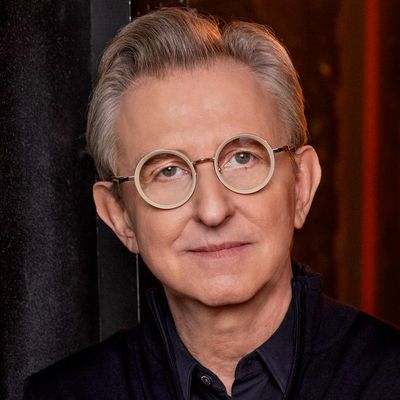
Thomas Schumacher serves as President & Producer of Disney Theatrical Productions, overseeing the development, creation and execution of Disney’s legitimate stage entertainment worldwide... Read More
From the show: The Producer's Perspective Podcast with Ken Davenport
Guests
Featured Shows

About
Thomas Schumacher serves as President & Producer of Disney Theatrical Productions, overseeing the development, creation and execution of Disney’s legitimate stage entertainment worldwide. The division’s Broadway, West End, touring and international production credits include Beauty and the Beast, King David, The Lion King, Der Glöckner von Notre Dame, Elton John and Tim Rice’s Aida, Mary Poppins, On the Record, TARZAN®, High School Musical, The Little Mermaid, Peter and the Starcatcher, Newsies, Aladdin, Shakespeare in Love and Frozen. The company has collaborated with the nation’s preeminent theatres to develop new stage titles including The Jungle Book, The Hunchback of Notre Dame, Freaky Friday and Hercules. As a part of the recent acquisition of 21st Century Fox, Schumacher also heads the Buena Vista Theatrical banner which licenses Fox titles for stage adaptations including Anastasia; Moulin Rouge! The Musical; Mrs. Doubtfire and The Devil Wears Prada. Recently he served as Executive Producer for the 2019 remake of The Lion King, the live-action Beauty and the Beast and the Disney Channel Original Movie Freaky Friday.
You can hear him talk about...
- How the film version of The Little Mermaid gave musicals back their voice
- How theatre and Disney become part of your family heritage
- What Broadway definitely needs to learn about diversity from Disney's Mulan.
- How Disney's purchase of the New Amsterdam Theater helped revitalize Times Square.
- A hint what might be next for Disney on Broadway.
When we discuss an upcoming production of Beauty and The Beast, please note that this is not a Broadway production. This is an overseas tour!
My pal Justin Guarini wants to help you nail your next audition! Sign up today for his online vocal audition audit! We love working with Justin and I know you will too.
Enjoy and thank you for coming back to our new season!
This week’s #SongwriterOfTheWeek is Grace McLean! If you enjoyed the outro song in this episode, go on over to www.gracemclean.com or check her out on Instagram & Twitter @thatgracemclean.
Keep up with me @KenDavenportBway on Instagram.
Check out my blog for daily content: www.theproducersperspective.com
This episode was produced by Mary Dina.
Transcript
This transcript was automatically generated and might contain errors.
[0:00] Ken Davenport: It's worth it to me to try three different flying carpets before I get to the unbelievably cool one that you and everyone else I think justifiably would admire downstairs. If you get it right, it's worth it. And if you don't get it right, change it later and you'll fix it. I wanna be your producer with a hit show on Broadway.
[0:23] Ken Davenport: You're listening to the Producers Perspective Podcast with your host, Tony Award winner, Ken Davenport.
[0:29] Ken Davenport: Do you wanna build a snowman? Come on, let's go and play. I never see you anymore. Come out the door. It's like you've gone away. So if you have a kid under the age of 15 in your household, or frankly, if you just know a kid under the age of 15, then you know that was "Do You Wanna Build a Snowman" from the Broadway production of Frozen? And today we are talking to the president of Disney Theatrical Group, Mr. Thomas Schumacher, the man responsible for bringing Frozen to Broadway, as well as all those other super successful Disney titles.
[1:03] Ken Davenport: But first, let me just welcome you back to the 2020 season of the Producers Perspective Podcast. We've pre-recorded a bunch of these episodes, and let me tell you, you are in for a treat. Lots of secrets and strategies and some gossip too. We've got a ton in store for you. I can't wait to share all these episodes with you. So stay tuned, subscribe.
[1:21] Ken Davenport: But first, let me give a big shout out to my pal Justin Guarini. You may know Justin from American Idol, Wicked, and Transit. He's got a new book, a podcast, and a coaching series to help actors nail auditions. In just a 40-minute online vocal audition audit, Justin will help you discover places you can grow. He'll help you discover and create your unique personal connection to whatever material you're working on, and lots more. He's up to some really incredible things. He's helping a ton of people, and I encourage you to check him out. Just visit JustinGuarini.com, and also check out the link in our description of this podcast in the notes or on my blog.
[2:06] Ken Davenport: But now let's hear a little bit of that snowman and get on to Mr. Thomas Schumacher.
[2:12] Ken Davenport: Hello, everybody. Welcome back to the Producer's Perspective podcast at the start of our spring season here. And what better way to start the season than with today's guest? Please welcome to the podcast, the president of Disney Theatrical Group, Mr. Tom Schumacher. Welcome, Tom.
[2:27] Thomas Schumacher: Hi, how are you?
[2:28] Ken Davenport: So, in addition to all of his work at Disney from Beauty and the Beast and Lion King to Frozen and whatever is next, which you sure can bet, I will find out. Tom is also the chairperson of the league, helping guide all of us working in the theater today. He is the author of "How Does the Show Go On," an Introduction to the Theater, helping guide the folks who will work in the theater tomorrow. So, Tom, I want to start with a big question. So Disney has had enormous success, obviously, with musicals. So, but let's forget what a lot of people point to as, oh, the marketing machine behind Disney, oh, the global brand. That's what it's all about. I actually believe you could strip all that away and the shows would still be big hits. What is it about these stories that Disney chooses to put on stage that resonate so strongly with such a big audience?
[3:17] Thomas Schumacher: Well, first off, when you think about the titles we have chosen to put on stage, it's a very select few from a very large catalog of titles. And often people will say to me, "Why isn't this one on stage? Why isn't that one on stage?" And well, obviously, besides logistics, which is you can only have so many at one time going, it's most things are not worthy of what the theater can do best. Particularly when you make movies that are about special effects, movies that are about fantasy characters that have fantasy behaviors that are impossible to recreate, or movies that are built on scale issues like Toy Story. It works because there's giant people and little tiny toys or whatever. I always look for what about it would be enhanced by being told in the theater, what about it is classical enough that calls for what the theater wants to do, and also which ones utilize their music in a way that is most theatrical.
People often say, "Oh, you're just taking movies and making them into musicals." And it is true that there's been a lot of that in our industry going back for the last 50, 60 years, but we're taking musicals and reinventing them for the stage, so that when you gather with me in the opening moments of The Lion King, when you hear Rafiki's call and Circle of Life happens, you know that material and will present material you know and material you don't know, but you're coming in to a popular catalog of music. And I think the music combined with the emotional power of the story, when we get it right, which we don't always get it right, I think that's when it lands.
[4:57] Ken Davenport: Let's go back to your beginnings now. You started in the theater when you were young.
[5:02] Thomas Schumacher: Yeah, I'm a child of the 1950s. I like to point that out, wearing my age. And I was in high school, junior high in high school in college through the 70s, and I grew up outside of San Francisco during that period when there was so much funding for the arts, and my community center was very active and had a very robust arts program, and I got wrapped up in it very quickly. And I was doing a lot. I was actually directing, I worked for my city's recreation department and was paid to direct. I was also acting in community theater shows, directing community theater shows, producing shows, doing a lot while I was in high school. And then I went to college and had to get a real job, so I was a busboy.
My first, my first straight job was as a busboy after three years of being paid to work in the theater. So it's, you know, I learned a lot. And I've had all these wacky jobs, but I was a theater major at UCLA. I got out of UCLA. I began working the day after I graduated. And I worked consistently in the theater for 10 years until I got the call to go to Disney.
[6:03] Ken Davenport: And what drew you to the other side of the business? Most of us, I think, starved, you know, with the footlights and the spotlights on us, and then we transitioned. Why did you think the other side was more suited for you?
[6:15] Thomas Schumacher: It wasn't. What happened is I was working in the theater and I had done all these things. I worked with Peter Brook on the English language adaptation and first presentation of Mahabharata. And all these big I brought Circus O Later America the first time in a big festival we did in 1987. I was working in the performing arts. I'd worked for a ballet company where I met my husband now of 38 years. Performing arts was what I did. And when Roy Disney inspired the rebirth of animation in the early 1980s, 83, 84, when Michael Eisner and everyone came into Disney, and my pal and my longtime friend Peter Schneider, who I'd done the Olympics with, he had already gone to Disney and he's there for about a year and a half, and he needed help.
And I thought, oh, I could come in. I was the first person from the outside world to produce a movie for Disney. It's called The Rescuers Down Under. And they Disney asked me to come produce a movie. I'd never worked in film. I didn't know anything about animation, but I knew how to organize a large group of people to do something. I was reasonably fast on my feet. And but get this again. I took a pay cut. I took a cut from the nonprofit to produce a movie for Disney. That's what it was like. When some people always say, "How did you get this big break?" I said, "Because they didn't pay you anything." So I got paid less money to come produce a movie for Disney than I was making running a nonprofit arts festival.
So they would explain why I got the job, because apparently I would work for almost nothing. And I did this movie, and it was called The Rescuers Down Under. And it was a we invented a process that was very important to animation, how to make movies where it's complicated, but the back end of the movie is in a computer so that everything is hand-drawn or hand-painted, but it gets digitized and what have you, and there's no negative. You print it from that. But and it was and it then allowed Lion King and everything else to happen. And at the end of it, the movie didn't work, and it was a kind of a flop. And Jeffrey Katzenberg, kind of a famous guy who was a real mentor and a great, great person to me.
Jeffrey, we were talking about what I would do next. And there was one project called King of the Beasts. And then there was Nightmare Before Christmas. And so I started working on those two films. King of the Beasts became The Lion King. And then it just started happening. And then Peter and I were the theater guys who happened to be also running animation. And so Beauty and the Beast, which came out of the theme parks, when it opened, Lion King opened three months later as a film, and Michael Eisner, then chairman of Disney, said to Peter and I, "Why don't you take over Beauty and the Beast and start a real theater department for Disney? And you guys can do that on the weekends and just fly into New York when you need to."
[9:00] Ken Davenport: So you, when you took that job with Disney, you didn't think, oh, I'm gonna get in there and we're gonna start a whole theater division. You just took a movie gig.
[9:07] Thomas Schumacher: No, yeah. Yeah, the unlikely consequences of one decision. I thought an animated movie and kind of busy myself at Disney until some better theater gig came along. Because I really fancied myself as an artistic director of a theater in Las Cruces, New Mexico. That was sort of my fantasy life.
[9:25] Ken Davenport: It's not too late, Tom. Just so you know, I can put in a good word for you.
[9:28] Thomas Schumacher: It is my dream job. That's what I thought I would be doing. You know, loading, you know, with Matt and I was loading everything we had into two Volkswagen vans and driving off to New Mexico and running a theater company. That's what I thought. And I had this image of all these different repertory companies around the country, like the Pacific Conservatory of the Performing Arts. And I grew up with ACT in San Francisco, and I love rep, I love revolving repertory. I love that, you know, being up at Stratford in Canada, we're doing Shakespeare and Love. I just so loved, I love that, you know. So that's what I thought I would do. And I thought Disney would be a quickie thing, and it's now 32 years.
[10:07] Ken Davenport: 32 years.
[10:10] Thomas Schumacher: Fully functioning human beings listening to this today. People who actually are vital to our industry in the world were born after I started at Disney. That's the upsetting part.
[10:23] Ken Davenport: Well, that's what leads to my next question, which is look, Broadway is going through this huge boom right now. We're so popular, theater is so popular, and I hypothesize that part of the seeds of this renaissance that we're in right now were planted 30 years ago with the beginning of Disney on Broadway.
[10:42] Thomas Schumacher: Oh, I would actually go earlier than that, Ken. What I would say is that when Howard Ashman and Alan Mencken wrote The Little Mermaid, they gave a new life to the form of the narrative musical. Because The Little Mermaid is the first actual musical Disney had made. Prior to that, they made films with music. Film musicals are just films where the music just accents stuff, but you know what's going on. If you, I would argue a true proper musical, if you took the songs out, you don't know what happened in the story. And the first movie Disney made like that was The Little Mermaid. And when that comes out in 1989 and shocked everyone, because it became a hit. I mean, by today's standards, it did nothing.
But back then, it was huge. And that gave and that gave a direct birth into Beauty and the Beast, the movie. So now what's happened is over all these years with Hunchback of Notre Dame and Pocahontas and The Lion King and all these things that came after Beauty and Aladdin, things that came after Mermaid and Beauty, raised a generation who are absolutely comfortable with a story being told with music. Now take that exact same period of time and lay it against VH1 and MTV. Music, music in its forms, people dancing, people telling stories work. And the reason I know this is true is because Newsies, the movie. Kenny Ortega's great movie, and Kenny's a great guy and such a real fighter for what matters and in like kids seeing people performing.
But the movie of Newsies flopped, and the stage version of Newsies is a triumph. But ironically, to the same audience, right? Newsies wasn't a thing for kids. The people who were the fansies, as we called them, were people who'd grown up on musicals. It didn't seem absurd to them in whatever, you know, 2000 or whatever that we did Newsies that these boys were singing and dancing. But it did seem absurd to the audience back when the when Newsies first came out. And I just say that it's people who were raised on musicals, get it. You could come downstairs with me tonight, actually we're dark tonight, tomorrow night, to watch Aladdin. The audience downstairs at the Newham, we're upstairs in the old rooftop theater right now.
The audience downstairs at Aladdin in New York here is 90% over 18 years old. People have an expectation there's kids in there. But why is that? Well, because if you were 13 when you saw Aladdin, the movie, you're 40 now, right?
[13:24] Thomas Schumacher: If you were 16, 17, 18 when you saw it, because it was huge on that high school crowd, edgy comedy into the college crowd, you're in your mid-40s, you're pushing 50. You're bringing a kid possibly, or you're just coming. I remember I can't forget when we were previewing Aladdin here, and I thought my hunch was right, because a lot of people thought I was crazy to do it. When the Brooklyn hipster with the little, you know, soul patch and his girlfriend are like laughing at the genie, making fun of the story of Aladdin in this kind of meta way. And yet, when Whole New World happens, he puts his arm around her and she snuggles into him, and they're able to have that romantic moment, the magic of that moment, and then still, because the show very quickly steps out of it and makes fun of itself again.
That thing that has happening downstairs in Casey Nicolas's production of Aladdin is the true Disney audience. They know. They know that they were raised on this, and they have a simultaneous nostalgia hit and a contemporary connection to it. And they'll raise their kids on it in a new form. Well, yeah, we're discovering on Disney Plus one of the most Bob Iger mentioned this the other night in a meeting. He's the chairman of our company, that one of the most popular things on Disney Plus are parents, you know, in their 30s or 40s, watching something old Disney Channel material and showing it to their kids. And that they're actually, as a family, sharing stuff like that. And even my assistant, um, who is under 30, but in his late 20s, um, he's literally watching Disney Plus, watching the Disney Channel shows of his childhood, right?
That this nostalgia thing is very powerful. It's very, very powerful. And by the way, I think it cuts through all levels of our culture. I'm a long-time mentor in uh the open doors program for TDF. And my kids, you know, from a high school on Fordham Road in the Bronx, um, you know, many of them economically disadvantaged. Um, they were big Disney channel fans at 17 years old. This connection to this and wanting to dive back cuts across all parts of our culture, I think.
[15:42] Ken Davenport: What I love about what you've done over the many different shows is the different and diverse creative teams you've chosen, people that we wouldn't normally think about for a musical, Julie Tamor, of course, being the famous example of that. How do you put together a creative team? Including think back to that first moment you got the call, like, let's turn Beauty and the Beast into a stage musical.
[16:04] Thomas Schumacher: Well, see, Beauty was created by from the theme park. So, Robert Jess Roth, who directed it, who's a we're very close friends, but we didn't know each other. He was, they were all hired to do that. We had nothing to do with it. That team, Linda Wolverton we knew because she had done the movie with us, and she had been part of animation. So she wrote the book. Everyone else had built most of their Disney experience was in the parks and having been very successful. And then it was from that that we stepped in. Um, we're doing a big revival of Beauty and the Beast, and it's an all-new design, new concept, revising parts of the book, cutting some things, adding some things. So it's altogether new from what was on Broadway with the original team.
Julie Tamor, I didn't know what else to do. I had tried to work with Julie 10 years earlier, um, when I was doing a big festival, and I wanted to bring a piece of hers, and that's how we met. And then when I had a slight this has been talked about a lot, but I'll tell you the briefest version of the story. Michael Eisner, chairman of Disney, says, Let's put Lion King on stage. And I tell him it's the worst idea ever. And about a month later, he comes, How's that Lion King coming? I said, No, no, we're not developing Lion King for the stage. It's a terrible idea. And this goes on for a while until he finally reminds me that I work for him. And he says, and I said, Well, if we do it on stage, it's not going to be what you're expecting.
And I got one of those kind of glib, I don't care what you do, just do it versions. And I literally, I was with Stuart Oaken, who used to I used to work with and it's a dear friend. And Stuart and I went back to my office and I had a Rolodex, you know, the round kind that you could flip around. I still have it, but it sits in a box in my attic. And I went through the Rolodex and I pulled out a card with the dates I'd called Julie Tamore, penciled in, like we used to do back in those days. And I pulled out the card and I just called literally called and left a message at her, the same apartment she lives in today. And uh I left a message and she calls back later and I said, So she says, So what have you been doing the last 10 years?
And I said, Yeah, I've been at Disney for a little bit and you know, made this big hit movie called The Lion King. She goes, What's that? And I said, Well, it's actually one of the biggest movies of all time. This was like like three months. No, it was like the movie had opened in June. It's like six months later, so it was kind of in the popular culture. But she had no idea what it was. And um, I sent her some materials and um she came back with a with an approach, not a physical approach, an approach to how to tell the story. The design component came much, much later. And then around June, of course, it was Julie, so then Garth Fagan came in, and I'd known Garth's work because of I was in the festival world, and I knew concert dance because I'd also been in the ballet world.
So I knew Garth from that. Richard Hudson was not the original designer of the show. He replaced someone else. Um, and and but I'd known his work in the opera world. So just that kind of all fell into place. And then it became the thing of how would we do this? So when Bob Falls directed um Aida, it's because I had met Bob, but I I knew him before he was at the Goodman, um, when he was in Chicago. We were on a cultural exchange mission to Japan for three weeks. And I met him actually in a very large public bath. I like to say I met him in a bathtub because it upsets people, but it was a public bath where I met Bob Falls. And then, you know, over the years, Francesca Zambello, I met Francesca, who directed Little Mermaid, um, at an opening night of Prince Igor at the San Francisco Opera when she was directing my friend Lauren Flanagan, who's a big opera star.
And, you know, it's just you sort of meet people, you collect them, you take notes when you see shows that you like. But I I don't have any sense that just because someone's had a hit that they can make another hit. And I do think that people have to want to work on this kind of material. I can tell you, I won't name names, although I will in my book, um, of the very, very famous people who just who I begged, because I love them so much to direct for us, and that didn't want to. And why? Why wouldn't they? One said animation hurt their eyes, and they'd never seen any of the stories, so they couldn't. One said, I can't twice, said I can't imagine how I could possibly stage that material. Um yeah, and you know, over the years it just didn't come there.
Some and I some and that there's a number of people who are very close friends of mine who are famous directors who turned us down. Did they regret it? Anyone come back to you and go, God damn it, I should have done that thing?
[20:35] Thomas Schumacher: Um, I do think some people probably, because what happens, everyone will take a meeting with me, and everyone knocks on the door, particularly when they hear like we have certain rights or something. Now, because for us, and I know that you do get into this on your show, I mean the economics of our business, you can make so much more money on a hit. Now, hits are rare, but a hit Broadway show, if you're a director, is vastly more lucrative than a hit movie. Vastly more lucrative than a hit movie by a factor of probably five to ten. Yeah, it's uh it's upsetting, isn't it? You know, you can't make a living, but you can make a killing. What is that old expression? Because it, but because of that, I think people do now come.
So, for example, with certain titles, and we don't talk about development uh in a big public forum. Apparently I do on podcasts, because Dennis keeps yelling at me. But things that we're playing with or developing, here's a really good director story. I want to um to revise Aida because I love Aida. It won four Tony Awards, Heather Headley became a star out of Aida. But I also know that what we put on stage originally, you couldn't put on stage today. And when we talk about musicals from a certain period, Aida's not one of them, but of a certain period that you say, oh, there's some uncomfortable elements of the narrative or whatever. But in the case of Aida, we own the IP. It's ours. We own it.
We commissioned everyone to write it. We paid them handsomely. They all still get paid for it. It gets done all the time. We just opened a production of Aida in Korea a month and a half ago. But we own it. And so I can sit here today in the cold light of day, knowing all my friends, Sherry Mine Scott, Adam Pascal, Heather. I mean, we are we're very close. The Irida Aida gang and Wayne Celenta choreographed it, and Bob Falls directed it, and my beloved Bob Crowley, who's obviously like a sibling, one of the greatest designers of our era, certainly Natasha Katz. We all are so close, but now I want to go back and reexamine it. And to reexamine a piece of material and the way that Aida comes into Radamaze's life, how he cut how she then goes into Amneris' life in the stage show is unseemly today.
The way Radamais treats Aida, the dynamic, the gender dynamics, and certainly some of the race dynamics, are just I'm uncomfortable with them today. So we can sit down and re-examine it. Now, one of the great things I get to do there, though, is I've been in a conversation over the last whatever, almost 20 years or whatever it is since Aida opened, with an original cast member of Aida, Shelly Williams, who was Nahebka in the original production, and played it for many years, sang famously The Gods Love Nubia, this big ass song that closed the end of the first act. And then she understudied the role of Aida and played it over 70 times on Broadway. She did the entire run in various different roles.
She's grown into a writer and a director in her own regard. She is now going to direct the revival of Aida. So now a woman of color is directing a play that she knows backwards and forwards, knows all the parts she loves. I mean, we were meeting with Tim Rice going over songs that would have to get a new lyric or a change or whatever. And she's literally showing Tim photographs of the two of them together at the opening night. It's very touching to me. But also her perspective, her perspective as the woman she is today, as the director she is today, but also having grown up inside this material, knowing it. That to me is a very interesting way to reexamine Aida. Will it be a hit? I don't know.
If you could predict that, we'd be the richest guys in the world. But I do know that it's a very interesting way to dig into it. Working with Lear de Bessonet on Hercules, which we did in Central Park. I've known Lear for years, trying to find something to do. And for us to come together with that program with Public Works and Hercules and the park and Disney, it's the right match. And then we will continue to develop Hercules into something, not Broadway. But as I look at these things, the who, the what, the it's fun. What I love about this description of development without talking about development is that you Princess Bride, we'll get to that later. So uh is that it just seems like you're running it like a mom and pop shop, producing shop, when you are, of course, this major corporation. You didn't talk about having to justify to a bunch of board members how much money a new revised Aida is gonna make.
[25:16] Thomas Schumacher: And I often point to this, except we talk about the corporatization of Broadway all the time, and I often say Disney doesn't feel like a corporate producer, it feels like an independent because here you are talking about these. Well, here's the shocker, Ken. Because Disney writ large does not pump money into Disney Theatrical. They don't pay for anything. Disney Theatrical started with Beauty and the Beast. We puddled around and and that played many productions around the world. And it's, you know, it's what the sixth, seventh longest-running show in Broadway history. It played to millions and millions and millions of people. We've done endless productions around the world, and we're going to revive it.
By the time we got to Lion King and the breakout, pardon me, success of Lion King, I think by the second production of Lion King opening, no money has come west to east. So our job is to create a plan to take the money that we um think we're gonna make and project how much money that's gonna be on a five-year plan. So I have to hit a plan. How much money are we're gonna make this year how much will it cost us to run this business and how much money can I return to the studio.
[26:34] Thomas Schumacher: We have never had a year where we were underwater economically. We've been very profitable, and we have many, I call them legs under the table. Lion King is a huge leg under the table. So ultimately what this means is I have money I get to spend on new productions, I just budget it. I know what I'm gonna spend this year on everything. We responsibly return a very real amount of money to the studio, um, which then turns it into the company. We're a profitable division, and uh, my job is to go make stuff. And even in a year, say, admittedly, I mean, anyone with a calculator could say Little Mermaid did not recoup on Broadway, right? Didn't run along a year and a half, whatever it ran. Um, for us, that's kind of a wipeout, right?
But we we closed it, obviously. We were gonna tour it, we decided not to. We reinvented. It played in Europe, it played in Moscow, um, and then we have two productions that play in Japan. And then those have all been very profitable, paid back whatever was lost on Broadway and the mother company. Between that and Tarzan, we've never done a show that didn't recoup. But it but because I can do, I can rewrite it, rechange it, bring in new designs, do this, and and now mermaid gets licensed everywhere. I mean, just just if the Muni in St. Louis does it, you'd be shocked with that pace. And so economically, we manage our own ship. It is unique because we are representing the Disney brand outside of any other part of the company.
But our values, and and you know me personally. We'd see each other socially, we see each other at these events and stuff. You have a stereotype type image of Disney, but you're hard pressed to find someone who knows the values of this company, what we stand for, the history of this company, the history of our characters, and who fights for it and cares about it as much as I do. You're hard pressed to find it. I've been around for a very long time, and I had the great privilege of being very, very close to Roy Disney. But we're a unique business. We have 21 shows playing around the world tonight. By this time, by the end of this calendar year, it'll be 27 shows or something playing. We'll probably over the next two years get up to 30-something shows playing. We we play to a very substantial audience around the world in places where there's probably not other parts of Disney.
[29:02] Ken Davenport: What's one thing that look, you're the chairperson of the Broadway League, so you get all of us independent producers in a room all the time. But if you had us all in a room and you could tell us one thing that we could learn from how you and Disney does it, what would be the one thing that you...
[29:09] Thomas Schumacher: There isn't one? I learned more from this community than they could ever learn from us. I think from a um I think there are things that we do that independent producers can't. We we own and control our IP. Um that's a big deal. That's a big deal. I don't create shows that I can't say this is the rewrite, right? And I've never had an artist say to me, I won't make that change. Do you think we should do that? Do you think I, as an independent, should start saying, you know what? I'm gonna start paying these people a lot. I'll just raise more money. Let's pay these people a lot more money so I can't. My people make the exact same money someone else does based on the success of their shows. But I do think it's important that, and by the way, Cameron would agree with me, and you know, Andrew certainly would, that I do think it's important that we be able to deliver the show that we think we're supposed to deliver.
And it's controversial, but I'm not exactly sure why the people who make it happen, put up the money, take all the risk, don't control the property. And, you know, no my uh mind you, I've had very vigorous relationships with a lot of the, like, you know, my pals at Pixar and another great John Lassock, and these people that, you know, we made a lot of movies together and we just fought it out. But I've never ever, and this is just me, I've never made a movie or um, of which there's like 21 of the big features that I oversaw. Um, I certainly have never made a stage show where my I did where I did not have a voice at the table, or where I had to ask permission to have a voice at the table, or where I had to prove myself to.
So people know that coming in. People know that coming in the door. And um, I I'd never talk about this publicly, but why why would anyone get into that situation by which the group couldn't shape it? One person, one person, they can have the whole group say, This is what we need to do, and one person, I'm not changing that. Mm-mm.
[31:26] Thomas Schumacher: Now, mind you, I don't think there's a rule about it. We were working on newsies, and my my dear dear pal Alan Mencken, who is I mean, I've I've learned more from Alan Mencken than any other human being, I think, in my life. And we've done so many things together. And there was a song, and I were on the phone. I said, Alan, is that song good enough? And he's like, uh, what do you mean? I said, well, you know, why don't we take another whack at it? He goes, okay. So he and Jack Feldman, lyricists, great guy, they come up with another song. And I went, uh, Alan, really? Is that really great? He went, it's a good song. I said, Yeah, it's a good song. You're Alan Mencken. And um so he said, Okay, let me let me let me try one more time.
Harvey Feerstein calls me and says, Why didn't you like Alan's song? And I'm like, Well, it's it's not a Mencken song. It could be better. He goes, it's ridiculous. So Alan turns in this fantastic song. It goes into the show, and I've never had anyone say, you know, like I in working with with Bobby Lopez and Kristen Anderson Lopez, they are such geniuses. And by by the way, she is she's a giant star. Kristen, we all everyone knew about Bobby, right? Because he'd already had so many hits. But Kristen's a giant star and deeply, deeply talented, and I have a giant amount of respect for her. And we've had there are ideas that I pitched in just rooms that are incorporated in songs. They have usually if I say, What if it did this?
They have a better idea, which is always my favorite thing. I hate it if my idea wins. I just want my idea to prompt the good idea. Um, but we've also had things where I said we have to make a change here. And, you know, they do the right thing. They rationally fight for what they believe in, and then we all end up someplace good.
[33:19] Thomas Schumacher: Uh, I I just went through this with uh a writer on um Father of the Bride, which um food development alert, development alert. Um, because we we have this, we have this piece. There's a couple of things and things we're around it, but Father the Bride's one of them, that just sort of sits there as an idea that I love. And I'm working with this wonderful, wonderful writer named Bridget Carpenter, and she wrote Freaky Friday with us, and I loved working with her, and I loved her TV series Friday Night Lights, where I that woman can establish a character in five lines. She is so gifted, and and she has a very, very, very deep commitment to diversity on stage, as you well know I do. And the trick of Father the Bride is if you set it in its time period, that becomes very problematic, right?
If you said in the time period of the original novel or of the Spencer Tracy movie. And I like musicals set in time periods because I like the the I like the lens of that. And contemporary musicals tend to kind of irritate me. And so she and I had to figure out how we could do Father of the Bride and hit my fear of contempt telling stories where people are wearing clothes from TJ Maxx with Ikea furniture, and our collected fear of um of a musical set in a time period that prevents you from having the kind of buoyant, diverse, a live cast we would want. And we went back and forth so many times, and I think this the staff, my creative development staff, probably thought, oh, this is just all gonna end in tears.
And she and I just went round and round on the phone one afternoon. So I'm sitting in the exact chair I'm sitting in now, and we came up with a really, really fun idea. She turned in 25 pages recently, and it's I think it's the best 25 pages I've read in as long as I can remember. That it's not because no one had to win. We just had to figure out how to hit what everybody wants to get done, or come up with a better idea.
[35:14] Thomas Schumacher: And so when you ask, I guess going way back to when before you glazed over, then where the mom and pop nature of this is because it is a mom and pop. Now it's a mom and pop that has huge fiscal responsibility. Because by the way, if you mess up a show, you're answering to the attorney general. If I mess up a show, I'm answering to the SEC, right? And we I am fiercely, as as my colleague in the room would acknowledge, I'm fiercely, fiercely committed to our investor, which is the Walt Disney Company. And which is owned, I'd like to add, not by famous executives, but by shareholders. And me. You bet. It's people like you, it's pension funds for teachers in Cleveland, Ohio, and on and on and on.
And I'm very respectful of what we do with that money. And we are, we're we're much tighter, we're a mom and pop, but we're much tighter about following the appropriate rules. Um, we're very careful about how we do stuff, very careful about expenses and things that we do, what we pay for shows, how we yes, our shows are expensive. And and here's why. It's worth it to me to try three different flying carpets before I get to the unbelievably cool one that you and everyone else, I think justifiably would admire downstairs. But I'm gonna try three different ideas. And if I get it right, here's what I the big thing I've learned is if you get it right, it's worth it. And if you don't get it right, change it later and you'll fix it.
And because we've never just lost our shirt and been wiped out, because we aggregate the profitability for the company, right? The shows don't aggregate their costs. They're all discrete budgets, right? But the staff here, the 110 people who work here running a business globally, they are paid for by the profit of the we are a company that makes stuff, right? So I can go test an idea. I can try something. I can spend a little bit of money here because I don't have the investor structure that you have, and you have the weirdest investor structure on Broadway. I have to sweat a five-year plan. I have to sweat the same things about recoupment. We don't we do it in a different way, and it's worth it for me to make sure I get a cool flying carpet.
[37:40] Thomas Schumacher: The two things people said on Aladdin would never work was no one would ever watch Aladdin without Robin Williams. And no one and the carpet will never, you how do you do a flying carpet? Well, you you hire Bob Crowley to design the show. I had the idea of what the actual event of the carpet was, but Bob had the solution to how my my magic I'm a magic geek, you know, and so my magic concept of how it would work, Bob had the physical concept to make it play as a piece of art. So because he's a genius. It's worth the research, right? It's the worth worth the time spent. I don't have to think about it. For example, also famously, I well, famously to me, um Aladdin, I've in our industry, widely known as not having really been working in Toronto when before we came in from out of town.
And my my dear friend and mentor and rabbi um Manny Eisenberg, at my request, came up to see it and was like, uh, and he said to me, after he'd seen it, he says, Well, first, you know I love you. I've known Manny Eisenberg since I was a child. That's when you're a big trouble. Yeah, you know I love you. And I and I said, Yes, Manny. And then he said, and I think you have a hit. I said, Thank you. He says, but those first 30 minutes. And we went and had a drink, and we sat up all night long talking about the show. And he had he didn't tell me what to do. He told me what didn't land. And I came in the next day, and Casey said, What? How'd it go with Manny? And I told him exactly what I just told you.
And then he said, huh? And the next day Casey came in and he said, Can I see you in my office? Which meant three rows behind my tech table. And he pitched an entire revamp of the first three. We were talking cutting character moments, cutting scenes, building new scenery, rearranging songs, moving things. I mean, massive, massive stuff. And we had a couple weeks to go in Toronto, we had a couple of weeks in New York, and we're gonna go back into rehearsal.
[39:51] Thomas Schumacher: And we had wisely held back a serious piece of rehearsal time that we learned over the years. When you come in from your out of town, do it. Like, you know, we on Frozen, we rewrote the entire opening number and put a new one in. We wrote the ending, put a new one in. People don't realize that happened between Denver and here. But Aladdin, we really restructured it, really restructured it. And we had that we had held the time because I knew that I would want those four weeks. That's what separates Aladdin from being to everyone's surprise, a hit and a total failure. So was it worth it? You bet it was. Now, what if I did that and it still closed in six months or 12 months? Well, I still have all the IP of Aladdin.
And I would have started over, and I knew I could license it. And here's something this the first version of Aladdin that we tried was not the Toronto one. The cast that you know from the original from the Broadway production, and Casey and my co-producer Ann Cord and I, we all went to Seattle and did it at the Fifth Avenue with no money spent on physical production. We call it the mattress on a stick production. A stick came up with a mattress on top of it, and that was the carpet. We wanted to see if people would buy into the idea of returning the genie to Howard Ashman's original idea, which is Cab Callaway, Fat Swaller, Harlem Jazz Era. The meta idea that the genie would talk to the audience because he can't be a shapeshifter, so he could be contemporary.
How the character, the idea that Aladdin would have three sidekicks, and how the new song material would work. Would people buy into Aladdin with that idea? So the Fifth Avenue was so great to us, and we went out there, and we just said it is a one-off production. But what I learned coming out of that is I believed we could rework it. Confidence, generally speaking, from people who came to see it, was very low. But I knew that people loved this material at some level. So we gave to a con in St. George, Utah, the big outdoor theater, Big Shed, and the Muni, those two theaters where we had close relationships and still do. We gave them the rights to do one-off productions the following summer.
And they each did. And they each sold out at record levels. I went, I flew out to see both productions. They were big romping, Johnny Tartaglia was the genie in the Muni. I mean, they were just big romping crates. People had live camels on stage, all this stuff. But what I learned is it was huge. People wanted to see it. So I thought, okay, I'm right that the nostalgia is there. What we were wrong about is some of the elements of what we delivered. But in so doing, I learned, and I think people would be afraid, oh my God, you're gonna let people see what you're nobody's watching. So we did all that, and then Chad Beglin and Casey sat down and with Mencken, and we just started and we did all the rewrites.
And then we were trying to make changes that we couldn't make. We went to Toronto and then we made the changes that came in. If we hadn't delivered it for here, you know, we swung for the fence. If it was a whiff, you know, whoop, we lost it, then we would have just licensed it and it would have paid for something, or it would have been a colossal failure.
[43:16] Ken Davenport: Two questions before they hustle you out of here. Uh, what do you think Broadway looks like in 30 years?
[43:23] Thomas Schumacher: Well, that's a good question because to me it looks exactly the same as it did 30 years ago. In truth, in the truth sense of great people are making theater. End of the 1957-58 season, Music Man, West Side Story, Dark at the Top of the Stairs, Sunrise at Campabello, and something else. We're all playing on Broadway. And Tyrone Guthrie said, Broadway has gone to crap. Um, you can't, the tickets are too high, it's too expensive to mount shows. I'm leaving Broadway and I'm gonna start a theater someplace else. All these cities can bid for it, and of course, Minneapolis won the bid and they got the Tyrone Guthrie Theater. West Side Story, The Music Man, Sunrise at Campobello, Dark at the Top of the Stairs, and something else.
Well, here we are today. Great artists are still making great stuff. Look at this season. Where you can have Jagged Little Pill open and we can have The Inheritance, and we can have new musicals, we can have revivals. It's all happening. Now, has the landscape changed? Yes. They built this plaza full of hideous walk-around characters. Um, traffic's being controlled a little differently, crime is way down. I can give you statistics if you're interested, but you know, it used to be you know 3,800 in the in the 70s, there were 3,800 um crimes reported in Times Square every year. Uh, roughly 1,500 of them were violent. Today we're, you know, down at around 1,100 crimes being reported and maybe 75 violent in Times Square.
So that's like that. That sounds like Thanksgiving at my house when I was a kid, you know. So that part of it, the cosmetic parts have changed of some of the presentation, if you will. But the reality, when you say 30 years, well, I'm expecting the half the kids in this office who are here, the kids, anybody who's younger than me, by the way, is referred to as a kid, but they're gonna be producing. I can't wait to see that. I can't wait to see when Eva Price, when she's 75. What is Eva producing, right? And she'll tell these stories about how the first show she jumped in on, like Peter and the Starcatcher as a co-producer, and then to get her way up to winning the Tony, right? How that happens.
All these young people who are writing, I knew Benj Pasek when he just got out of Michigan. And he was just a kid banging around town writing lyrics. Look at him now. You know, two Oscars, a Tony, big hit. Where will he be in 30 years? Be making great stuff. So what does it look like? It looks like the theater as you know it.
[46:04] Ken Davenport: My last question, which is very apropos for you, it's my genie question. I ask this to everybody. So imagine the genie from Aladdin comes to visit you and thanks you for your incredible contributions to the American Musical Theater and to Broadway and Times Square and all the amazing things that you've done and says, I'm gonna grant you one wish. What's the one thing? You have such a positive, optimistic attitude towards this business and this space and the city and the world, actually. What's the one thing you'd ask this genie to change about Broadway? The one thing that drives you nuts, makes you angry, flip over a table.
[46:40] Thomas Schumacher: Well, I don't flip tables. Um, but the thing that I think is so desperately missing is enough diversity at the table. You know, when you look at what we at Disney Theatrical have done, going back to when we started, um, you know, whether it was Toni Braxton playing Belle or what have you, or certainly the kinds of shows that we do. I mean, Toni played Belle, what, 18 years ago or something? And you know, doing shows like Aida and of course Lion King and the way we've chosen to cast our shows, right? But when you walk around the creative community of Broadway, not as diverse as I would hope it would be. And certainly, and I think really importantly, when you sit in a staff meeting here at Disney Theatrical, when you sit with my students from Columbia University, when who are theater students.
When we sit at a Broadway League meeting, that room is not as diverse. And when I say diverse, I mean at every level age diversity, gender diversity, cultural diversity, economic diversity. We don't find that in our rooms. Partly because it's hard to be a full member of the league if you're not producing shows. It's hard to produce shows if you're not rich, right? Um, how do we? I'm looking for a word because I don't believe in egalitarian because I'm a total meritocracy person. I always just believe best idea wins, I want the best person. But how do I give more opportunity for more best people? You know, I love the movie Mulan, right? I talk about it all the time. I some of my proudest things I've worked on, and I'm we fought hard to make the movie that we made because it's not what people wanted us to make.
Um but there's a thing that happens in Mulan. She ends up, if you know this movie, she ends up saving China right at the end. And um, and it's a you know, very sweet, it's a fantasy for God's sakes. But she's able to do it because she got access. She makes a choice to cut her hair, disguise herself as a boy because she wants to take her father's place to save his life. She does not do it for any personal gain. She does it merely to save her father's life, but in so doing, she gets training that a young woman in her community never would have gotten. And she is trained in a certain set of skills. Because of these skills, she's actually able to rescue a battalion of men at the exact same time that she's revealed to be a woman and should be punished for having disguised herself.
But she's given one more chance and her life is spared because she has saved all of them. But she's outcast. And now as herself, not dressed up as a boy, not dressed up as some fantasy female character, but just as herself, Mulan. With the skills that she was trained with, she goes on to her great achievement. She didn't have magical powers. She wasn't granted some fairy dust. She learned something when she went to camp with Captain Shang and and uh um Chen Po and Ling and Yao. She learned something. How do we help people get access to our community, learn a set of skills that make them vibrant parts of our table? And your previous question is how will Broadway look in 30 years? If my wish is granted by the genie, we will be producing work that is thrilling and engaging and exciting, that engages the community at the broadest possible levels, that we have something for everyone, and that is created by the most diverse community.
And why wouldn't we want that? Why wouldn't we want that? Think how how exciting is it every time you're in a room and someone says something that surprises you that you wouldn't have expected? It's the greatest thing ever. It's the greatest thing ever. It's it's not about representation, it's about creation. And you want the most creative, vibrant, interesting voices in the room, and everyone bringing their history in. And my staff knows this. I love knowing people's stories. Where did you come from? What is your point of view? How do you see this? I ask in marketing meetings all the time. I have friends who who work for us who like live in the suburbs and their husbands hate the theater or whatever.
And like, well, what are your neighbors think about the ad campaign for this? What do they want house seats to? We have to seek diversity at every level: economic, cultural, gender, age, everything. That's my genie wish.
[51:08] Ken Davenport: Well, it's a fantastic one, and I think that's what creates the most exciting Broadway that we could ever have. So thank you for that. Thank you for this. Thanks to all of you for listening. We will see you next time on the Producer's Perspective Podcast. Thanks again to one of the busiest guys on Broadway, Mr. Tom Schumacher, for sitting down with me and with all of you today. If you're excited for this new season, please do us a favor, review us on Apple Podcasts. You know why? The more reviews we have, the better guests we get. We get more people like Mr. Schumacher to join us and share their incredible wisdom. So do us a favor, uh, review us on Apple Podcasts positively, mind you. Helps other theater makers and theater fans all over the world find us.
And if you're looking for more theater podcasts, check out Broadway Podcast Network. It's a brand new community platform for Broadway themed podcasts and other online content. Do me a favor, cheat on me. Cheat on me all you want and listen to all these other amazing Broadway podcasts. To find out more about me and learn about my projects, you can follow me on Instagram at Ken Davenport Bway, or check out my blog at the Producer's Perspective.com. That's the Producer's Perspective.com. And now, this week's songwriter of the week, it's Grace McLean. Check out her song Natural Disaster. And for more information on her, visit Gracemclean.com or at that Grace McLean on Instagram and Twitter. We will see you next week with a brand new episode.
[52:32] ♪ Musical number: "Natural Disaster" — performed by Grace McLean ♪
© Broadway Podcast Network, All Rights Reserved