

Theresa Rebeck is an American playwright, television writer, and novelist. Her work has appeared on the Broadway and Off-Broadway stage, in film, and on television. Among her awards are the Mystery Writers of America's Edgar Award... Read More
From the show: The Producer's Perspective Podcast with Ken Davenport
Guests

Featured Shows

About
Theresa Rebeck is an American playwright, television writer, and novelist. Her work has appeared on the Broadway and Off-Broadway stage, in film, and on television. Among her awards are the Mystery Writers of America's Edgar Award. In 2012, she received the Athena Film Festival Award for Excellence as a Playwright and Author of Films, Books, and Television. Her works have influenced American playwrights by bringing a feminist edge in her old works.
Tune in to hear the writer of Seminar and Smash talk about . . .
- How the heck she writes so much and where she gets her ideas.
- The differences between writing for the Stage and the Screen, and how she switches hats in an instant.
- What happened with Smash, and could we ever see another Broadway-themed TV show?
- How she and I became friends, and why that’s important to your career.
- What all young writers should be doing.
. . . and a heck of a lot more . . . because we packed a lot of stuff into this 30 minute podcast, which is punctuated with Theresa’s infectious positivity and incredible passion for what she does.
Keep up with me: @KenDavenportBway
Transcript
This transcript was automatically generated and might contain errors.
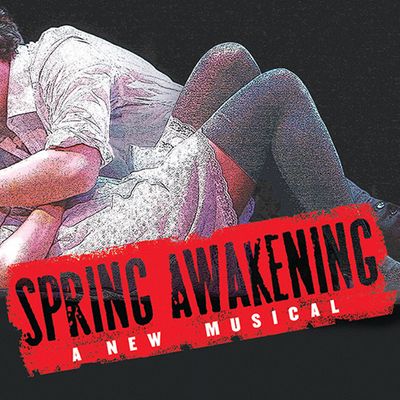
[0:00] Ken Davenport: I wanna be a producer with a hit show on Broadway. I wanna be a producer. Hey everybody, it's Ken Davenport. I wanted to make sure you heard the news that I'm bringing the Def West production of Spring Awakening to Broadway in the fall. If you love Spring Awakening, you wait until you see this production because you've never seen anything like it. Def West is one of the most innovative theater companies I've ever worked with and ever seen. Uh, and their production of Spring Awakening is mind blowing. Check it out, go to Ticketmaster.com, get tickets. I got a lot of work to do. Okay, on with the podcast. Hello everybody, Ken Davenport here. You're listening to the Producer's Perspective podcast, which by the way, when you have some time, you should try saying that five times fast.
It is not the easiest uh name of a podcast. And uh if you'd like to do it right now, I'll wait. No, we won't wait, and we won't wait because my guest is way too important to waste her time. Welcome to the Producer's Perspective Podcast, the brilliant playwright Theresa Rebeck. Welcome, Theresa.
[1:03] Theresa Rebeck: Hi, I'm so pleased to be here.
[1:04] Ken Davenport: I just called Theresa a playwright, and of course she is one, but she is so much more than that. Uh what I love about her is she actually runs her creative career like a business, diversifying her own portfolio over a number of mediums. Yes, she's written many Broadway plays, including Mauritius, Dead Accounts, and The Fantastic Seminar, which is one of my favorites over the last several years. Uh, and even more off-Broadway plays, including co-writing Omnimum Gatherum, which was a Pulitzer Finalist, but she has also written copious amounts of television, including for such shows as Third Watch, Brooklyn Bridge, LA Law, and was the creator of the only Broadway themed primetime television show I know, Smash.
She's written novels, movies. See, I told you we're wasting her time, so we should just get to it. Uh, if you want to read more about her, check out her website, TheresaRebeck.com. So, Theresa, let's start at the beginning. When did you decide you wanted to be a writer?
[2:01] Theresa Rebeck: Oh, I was really young. I you know, I was somebody who wanted to be a writer when I was six years old. You know, it was uh peculiarly something that appeared in my imagination very, very early. I don't remember when I didn't want to be a writer. I did I mean I would drift in and out of other ideas, but it was always sort of the baseline thing that I wanted to do. And then when I was in high school, I started acting a lot. So there was a period of time when I felt like maybe I wanted to be an actress, just like everybody uh has that moment. And there was just a moment where I thought, oh, I could be a writer and in the theater. That makes me a playwright. And it was sort of like A plus B equals C. And that's the last time I had any sort of clarity about it.
When but uh I I did. I went to my mother and I said, I think I want to be a playwright when I must have been 16, and she went pale. I mean, she looked sort of shocked and horrified. Uh you know, I was in Cincinnati, Ohio, so there weren't um a lot of people uh I I didn't know any playwrights. It was a peculiar thing to dream of. And do you remember the first play you wrote?
[3:08] Theresa Rebeck: My the first play I wrote, I was um I was doing a lot of you know, at the time in high school, I went to this really crazy Catholic high school um that was run by a bunch of nuns, and they were like liberation theologists, all of them. They were these radical nuns. And it was an all-girl school, and they thought we could do anything. It was kind of an extraordinary place, you know, you didn't know it at the time. So they had us doing all s I was doing all creating pieces with my fellow students and doing them for the like just for the school at the assemblies and stuff. Um, so I think that's uh, you know, that would be the first time I wrote anything for, but we were all just out of our minds, you know, we were doing nutty stuff.
And then in college, I sort of knew. I mean, I I was out there at the University of Notre Dame of all places, and I had had the idea that I would be a playwright, but they didn't actually have a playwrighting program. They were kind of uh, they would circle it in really abstract ways. But the great Julie Jensen was on the staff there, and uh and she she was sort of a mentor of mine, and I kept bugging her to have a playwrighting class, and so they they started this playwriting class, and in retrospect, I'm convinced they started it for me, but I'm I'm sure it was uh a little more complicated than that. So I studied with Julie and wrote um my first sort of uh you know, actual just sit down and write a play, take a crack at it was when I was an undergraduate in in the more formal sense of the word, and she was a great teacher, she's and a wonderful writer herself.
[4:48] Ken Davenport: Where do you get your ideas for your plays? Where do they come from?
[4:50] Theresa Rebeck: Um, you know, that's that's a really good question. Uh uh people ask those that question. I think the general answer is no one knows, you know what I mean? That there's a there's a real mystery around where anyone gets their ideas. Um, and there's you know, a large body of work examining that question. Um, you know, the Greeks would invoke the muse, you know. Some people say it's God, some people say it's your subconscious, but they do kind of rise up a lot of times. I have a lot of ideas. I mean, I think that uh you know, people say to me sometimes, you're so prolific, and I'm like, I just they I have a lot on my mind and they come a lot. And a friend of mine actually said to me one time, you know Theresa, the muse likes you.
And I thought that's actually true. I'm sort of constantly getting smacked upside the head with another idea. And sometimes, you know, I go through periods where there was one period when I was writing for actors for specific people a lot. You know, I worked with Julie White several times and there was clearly an affinity between her instrument and my my language. And then I had a moment where I thought I should write I'd like to write you know it was honestly it was it was almost mathematical in a kind of backward sense. I thought I was thinking I'd like to write a novel. I've always been curious about that. And then I thought you don't know how to write a novel you're never gonna be able to do that.
And then I thought well if it was like you know a first person novel like there's been some great ones call me Ishmael you know it could be like one long monologue and then I thought you've never even written a long monologue or a one you know like a one person show. And then I thought I could write a one person show and then I thought I should write a one person show for Julie. She could like be amazing. And then there was it so I called her up and I said I'm gonna write a one woman show for you and she thought you know I she was charmed by the idea but I think people say a lot of things and they don't necessarily come through with them. You know so then one night I went over to her house and we talked about what it might be but she was clearly somebody who should have a one person show written on her and that was a great experience for me and uh to work with her that extensively.
It's very challenging. I I I don't recommend writing one person's shows. It was hard. I've never done it again. But then, you know, I went from that every now and then I go back to the idea of writing on actors. And so I was doing that for a while. And that was the source of my inspiration was I would really like a write a play for that specific person. I'm actually doing that right now for this actor Brian Dijkstra, who I've worked with for 30 years. And he's very much like, you know, he's kind, he's got a kind of authenticity inside my head that is useful to build things on. And then I and I'm also writing a play right now for um the Alley Theater for their company because I've worked with those actors a lot.
And so, and you you know, that's a really of interest to me right now. You know, Ibsen did it, Molière did it, Shakespeare did it, where you like you have these people in front of you, and you think, what do you build out of that company? So so I think that's what happens to me is I get curious about certain things, and then I follow that curiosity. But there have been other times when, you know, where I've just felt very, very, very grief-stricken about something, and so I think that the best thing to do is perhaps write a comedy and um, you know, and see like how funny you can make something that's really horrifying. What you know, what is the meaning of those two realities? Because I, you know, I think most of my comedies are very dark.
I'm I'm interested in, you know, as a writer, I tend to be interested in a lot of blood on the floor, you know, sometimes literally, sometimes just like emotionally. And so I I generally I have a lot of different places where ideas come from. This is a long answer, so I hope you can cut it together.
[8:48] Ken Davenport: Oh no, it's good. I'm leaving this one in. You just keep going.
[8:51] Theresa Rebeck: Okay, well, that I think that's it. Well, okay, so you get it one of these ideas, the muse slaps you upside the head or whatever you said spoken like a writer. I love that image. What's your next step? Do you have a do you I write? I wake up in the morning, I have a juice, I write for three hours, I go to lunch, do you write until you stop? Do you have a process?
[9:12] Theresa Rebeck: I do tend to have in general, I write a lot. Um, you know, sometimes when when young writers ask me about it, that is ultimately the only good advice I can present is that you know you can't be afraid of it. You have to be fluid with it, and you you can't be afraid of when things run into a wall and then they don't grow. I mean, you know, I always sort of sometimes I start things and they don't grow the way you want them to, or like they hit a wall and then you can't get past it. I actually, because I have written for film and television and to support my family, and because I'm excited by it a lot of times and stuff, but there are a lot of situations where you have to write lots of very complicated uh treatments and outlines and be in conversation with people in offices, and I find that wearing and at times actually debilitating because if you have to think out everything ahead of time, for me, it starts to make the writing itself thin out.
Um and I'm remaining convinced that if you are a little loose, I mean that if I have a kind of general idea about where something's going, that the best way for me to write it is to just follow, follow the characters, like set it up and then see when they start to move and speak on their own on their own and follow them and kind of shape it a little bit, but not get in their way, never force a character to do anything that the character doesn't want to do. Sometimes I'll have them and I'll be like, I don't know why you won't do what I want you to do. But I do know to pause at those moments, to not force it, to maybe back up a little bit that maybe you know, so that's t that tends to be how I write, and sometimes even given that things kind of wither, or I'm not ready to write it, and so I need to back up and start something else.
I mean, I tend to feel like if I get past like page 11, then I'll probably get to the end of act one. And if I get to the end of act one, then I will probably get to page 64. And if I get to page 64, then I'll write the rest of it in a few days, because by that point things will be tumbling so quickly that and I will have so much information. And by then, I think um by then I sort of understand what the secret subject of it is. It always feels like things that are like you know, the muscle of a play reveals itself in the writing, and you can't know what the real subject is unless you let it teach you that. So you have to be in that kind of relationship to the writing process. You can't try to over control it.
Now, having said that, I feel like I have like I write a lot. And you know, there was a period when I was young when I was writing a lot of short plays, and that was great practice for me, you know, just write a 10-minute play based on two people or do those crazy 24 hour plays, they really drive me crazy. I used to be much better at them. There was something sort of just trust your technique, and I feel like it is sort of like for me, the truth is it's just like um, you know, how do you get to Carnegie? Y'all practice, you know, and so and that writing is a little bit has always been for me a little bit like practicing the piano. If you do it a lot, you'll get better. You know, my son is a pianist, and like when he's practicing a lot, it's he's amazing.
[12:36] Theresa Rebeck: When he takes a couple weeks off, he gets rusty. And I think that that's partly what happens to me is that, uh, is like, you know, an idea. That's why I'm sort of like sometimes I get overwhelmed by how many ideas are floating out there because it's like, oh, brother. Like, leave me alone because they all seem viable. You know, I sort of see how it could work a lot. So I have to, that's why sometimes people bring me ideas, and that frankly rarely works, you know. It sometimes works, but it's challenging to take on somebody else's idea.
[13:09] Ken Davenport: You're not the only playwright that has said that to me. I tried to commission a playwright to write a play, and they said to me, "That's a great idea, Ken, but I just write my own stuff. I just can't. I have so many ideas brewing in my mind. I write what I'm passionate about."
[13:24] Theresa Rebeck: Yeah, I think, you know, there's actually a project I'm working on with Josh Schmidt, you know, the composer, that I like very much that somebody brought to both of us, and I'm hopeful that being in collaboration with an artist who we have great energy between us, you know. We sort of, there's one point when I thought, this is a little nerve-wracking because we both talk so much and we both talk really fast. Um, but there is something, uh, fluid and vital about that interchange. And I think that in this case it's going to help put that idea, you know, that came from a third place into action because it's an action between us. So I think it's possible.
[14:05] Ken Davenport: So that I do think it's possible, but it's challenging when it's somebody else's idea and I'm supposed to take care of the whole thing. That somehow feels difficult to me.
[14:13] Theresa Rebeck: Yeah, I think it's actually more possible to your point, more possible with musicals than plays for some reason. It just seems easier. Right?
[14:21] Ken Davenport: I know I'm wondering why that is. So as I said in the introduction, you're a very prolific writer, but yet you write across a variety of forms in the entertainment industry. You write for the stage, you write for the small screen, you write for the big screen. Is there a difference between those three styles?
[14:43] Theresa Rebeck: Yes. I think there is a difference. In the theater and in fiction, there is much more bandwidth for language. That language moves to the front of both of those forms in a way that's really exciting to me. You know, for instance, I'm one of the plays I'm working on right now. You can feel the characters kind of crackling against each other, and then there's a moment where something opens up and someone can talk for a good five minutes, you know, and that's actually potentially an exciting moment in the theater when there's suddenly an aria or speech, whatever. You see it, you know, especially in Shakespeare or Molière or Chekhov, where suddenly the entire room is hushed. You actually can't do that in film and television.
[15:31] Ken Davenport: There's something about the way the image steps in front of character and story.
[15:36] Theresa Rebeck: Like in film, it's extraordinary how much the film catches of the human face of emotion, how much gets told in, you know, the turn of a head, the blink of an eye. I sometimes, you know, there's an old story about Billy Wilder and Jack Lemmon that he just kept telling him to do less, do less, do less, do less. And then he finally said to the great Jack Lemmon, "Do nothing." So you look at something like Some Like It Hot, and that's Jack Lemmon doing nothing. Well, I mean, and he's a big old ham bone, we know that, but it's quite magnificent how much the camera catches, but because of that, their image steps in front of the narrative in a way that makes language and care, I don't know, I think mostly language step take a step back.
[16:30] Ken Davenport: So I'm sure I have a lot of writers who are listening right now who would love to start writing for television and film. How did it all happen for you where you go from this playwright and all of a sudden Hollywood comes a knocking? What how did it work?
[16:45] Theresa Rebeck: Well, when I started, I just knew we had no money. My husband and I, we were really broke. And I had sort of luckily landed an agent very early on for this play called Sunday on the Rocks, and then my second play was Spike Heels. Um, and so people were kind of circling Spike Heels, but it was taking a really long time. And I had done some stuff in New York, like really like street cred stuff, you know, at there was a theater called Alice's Fourth Floor, and I did a one act there, and I was doing one acts with Nick and Angels in their issues projects, and we just had no money. It was really fun.
[17:27] Uh, but my plays were funny, and so this like agent I had, the great Esther Sherman was my first agent, and she said to me, you know, you're funny, you could work in television. And so she introduced me to some people in the TV department, and they had me writing, uh, sitcom spec scripts. It's how things were done back then. It was very, very different. Um, and then there was a kind of sort of hellish, brutal story, but I eventually landed a job with Gary David Goldberg, and I went out to Los Angeles and worked for him for a few years and got fired very quickly and for no real reason.
[18:06] And then I wrote a play about it called The Family of Man, which is one of my favorite plays that I've ever written. Once I got fired, I thought that's it. It's done. It was sort of terrifying to me that I thought I was finally making a little money because we were still pretty broke. I mean, we were paying off student loans, and my husband was a stage manager, and so he was doing two shows at once. He was always working way downtown, you know, for like On Guard Arts and Soho Rep and stuff like that. So between the two of us, it was sort of like this money coming in for this like year and a half on a sitcom, like which was terrifying to me because it was such a weird environment. That was like our meager fortune, but, uh, and then I really did think that's the end of that, and back to writing plays, which I was pretty happy to be doing, but then I had met some people there, and they actually got my play Spike Heels into the hands of Steven Bochco, and so then I got hired to be on NYPD Blue, you know, right at when it was starting.
[19:13] Like it was the second season when I started writing for NYPD Blue, and that was exciting, you know. That really was. It was a beautiful show to work on. Those two guys, it was Bochco and David Milch, and you know, it was challenging and illuminating and fierce and fun. You know, that show back then was like The Sopranos kind of we were, it was very innovative and the writing was exceptional. You know, being sort of smacked around and steered by David Milch was exciting and horrible too. But I, you know, I learned an awful lot about writing for television on that show.
[19:51] Ken Davenport: And nudity from those shows, nudity on that show I remembered.
[19:54] Theresa Rebeck: It was a big deal, right?
[19:55] Ken Davenport: There were butts.
[19:55] Theresa Rebeck: Yeah, it was, you know, it was like people's butts.
[20:01] Ken Davenport: What I love about that story just to circle back is you got fired and you wrote a play about it. The play, was it a comedy?
[20:10] Theresa Rebeck: You know, it was a comedy. It was a very dark comedy. A lot of people looked at it and said, "Wow, this is amazing satire about Hollywood," and I got to say, "No, no, no, it's cinema verité," because a lot of the scenes I just like, I was so perplexed by that whole culture. It's a very different world. It still is that, you know, it's very brutal. It's very male-centric, you know, it's very, I mean, theater is male-centric too in a totally different way. Um, but it's also, it's Machiavellian. There, you know, a lot about power politics like all the time, and I was having trouble figuring out how to make any sense of it. So I would go home and just write down like things that had happened to me that day, conversations that, it was really so I had really had a notebook full of these scenes.
[21:04] And so when I got down to writing the play, it was the only time I've ever written a play this way. I had like thirty scenes. And then I started like moving them around to see how they looked next to each other. And then I kind of created a narrative for it. You know, I invented a love story, sort of. You know what I mean? It was like that. But out of the grief of getting fired, just like you said at the beginning, you found the dark comedy in it that were constructive enough and put a play together.
[21:33] Ken Davenport: Well, speaking about television, let's talk a little bit about Smash. So how did this come about? Because I've always thought what television needs is something about Broadway on it. So how did the Smash idea come to play?
[21:47] Theresa Rebeck: I have to tell you, I agree with you. I was out there pitching how to do backstage at a theater for a long time. And my agents kept saying no, nobody's interested, nobody's interested. They wouldn't even let you know, people would approach me and say, "Hey, how come there's never been a show backstage at a New York theater, backstage in a regional theater, backstage in any kind of theater?" And I said, you know, I don't know. They won't let me. Everyone says it will never sell. And then when Glee happened, I think that there was more, uh, more of like a wider imagination around what was possible.
[22:22] And Steven Spielberg was out there also pitching, he came up with it should be a musical, and he ended up pitching that to Bob Greenblatt when Bob was still at Showtime, and Bob said, "I would like to make that show." And so then they very quickly put, um, you know, producers on it and Shaman and Whitman on it, you know, as composers of the music, and Spielberg had had the idea that you could do a musical, you could build a story and make a musical, and then ultimately perhaps if it worked out, put the musical, have it kind of come out of your television set on your Broadway.
[23:04] And they had all talked about that. You know, and then they were looking for a writer, and they did. I mean, I have to say, I was working on The Understudy at the time with Julie White and Mark Paul Gosselaar and Justin Kirk. We were doing that at the Laura Pels for the Roundabout when someone sent it to Spielberg, and he really liked it, very much responded to it, and so did everybody else. And so they, uh, they all brought me on to create the show.
[23:33] And so it moved fairly quickly for a while, and then Bob left Showtime and went to NBC. So that took like a year and a half to kind of work out what was gonna happen. And then once the show had been moved over to NBC, there was kind of a how do you reimagine this? Because the original pilot was considerably darker, and people, you know, used the F-word.
[24:00] Ken Davenport: Am I allowed to use the F-word on this thing?
[24:02] Theresa Rebeck: You can. You can say fuck all you want, uh, Ken.
[24:05] Ken Davenport: Okay, yeah.
[24:06] Theresa Rebeck: That was the thing. People said fuck. And you know, and sometimes I think I really missed it as we went on, not being able to use that word because it's for fuck's sake, it's the theater. But, um, you know, that was basically how it all came together. And I, what's interesting to me is I talked to a lot of people outside the city, outside of our bubble, whether it's audience members or whether it's investors of mine from the Midwest. And people loved this show. They loved it. If they had like a peripheral connection to the theater, it was such a great inside look and sneak peek at the world. They were obsessed with it. It didn't obviously run as long as everyone would like it to have run. You weren't involved with season two, right? Is that is that right?
[24:56] Theresa Rebeck: No, no. I, you know, there was a very complicated and sort of ugly, uh, political situation that developed, and I became the, um, you know, the roadkill that was left behind as it moved on, which is fine.
[25:12] Theresa Rebeck: You know, that listen, it was painful when it happened. I loved that show. I'm really proud of the work I did on it. I thought it was a shame. Um, I really regret that I didn't have more time to work on it. I know people still talk to me about, you know, it was years ago, and people are still coming up to me on the street and telling me how much they loved that first season. Um, so I think it's a shame. I also really did at the time, I felt very strongly the, uh, because, uh, you know, it's in my nature, I felt very strongly the responsibility and the great opportunity to have that show be a calling card for, uh, New York Theater to the rest of America and the world. And I mean, I do I have great love for it.
I and I'm glad that it was, you know. I think that's really true. Yeah, I like I still get people from all over the world calling me up to talk to me about that first season. People still ask me about it when I meet someone, oh, you're doing a Broadway show. Oh, the only thing I know about Broadway is that television show that smashed. That was fun. Um, do you think do you think, uh, Broadway theme show can work? Can another one work? Or is there something about just the medium?
[26:20] Ken Davenport: Oh no, I think it definitely could work. I really, I listen. There were a couple of people who said to me, yeah, but you know, Theresa, that show was never gonna work. And I went, it worked, I got it to work for 17 episodes, and I know it can work. I knew how to do it. I had a great line producer. Part of the challenge of it was how much, uh, the networks, the networks have such tight control over their programming. So many people in place that have been told that that's their job. It's a very corporate model, and they really needed to loosen up because there were so many, you had to like figure out the story arc for all the characters and the musical itself. You had to f and then figure out which song you were gonna ask the guys to write.
I mean, I thought their work was beautiful. They worked really hard, those two guys, but it was you had to be real specific about this is the song that's going in this episode, and you know, everything had to go through such a long process of approvals that for me, I was like, you have to back everything up. You have to really commit to things much earlier than you think you're going to have to in terms of a network schedule in terms of what they're used to, and that was terribly difficult for them to do, you know.
[27:38] Theresa Rebeck: But I was like, you can't you cannot cut a song three days before we're shooting it, because then we have to shut down. And they had a real hard time, you know. The structural, uh, corporate reality had a real hard time with how many different pieces there were to it. As I'm sure you, you're a Broadway producer, there are a lot of pieces that you have to get working at the same time. And it was totally possible to do that, but it was a little bit, you know, it was a little bit of a high wire act, and that was challenging for them.
[28:14] Ken Davenport: Yeah, listen, it's something I talk about with shows all the time as the producing teams on shows have grown and grown over the years. I've sat in many an ad meeting where I've looked around the room and people waiting for someone to make a decision or oh well we'll get approval on this, and it takes a week to get approval on a television ad or a print ad or some even marketing initiative. And in that week, we haven't moved any tickets. So we just, I always say that shows like that, it sounds like, um, the, you know, major corporate shows, whether they're on Broadway or not, they move like big giant steam ships sometimes, and they're very hard to manipulate. So yeah, you have to be a little faster on your feet.
But you know, by this point I've done a lot of work in television, and it's really, you know, you really have to be nimble. You have to, that's why I had such a good time working on this independent feature I made last year, because it was, it reminded me of how fierce and clever you have to be when you're working on a television show because you have twelve, you have this ship is moving so fast, and you really do have to in television, you have to shoot four and a half to seven pages a day. That's just regular like life on a TV show. And so I think that the there were like really weird like disconnects around look, we gotta move this fast. So no, you, you know, because there were a lot of people, you know, Spielberg mostly works, he mostly works in features, and you know, the guys worked on broad well, there was like very little experience around just hardcore, this is what TV needs. So that's I think really was, uh, was, uh, difficult. But, uh, not by any means impossible. I'd love to see someone try it again because it was, uh, I thought it was blah.
[30:00] Theresa Rebeck: One of the things I love about you again is that I really think you treat your career differently than so many others, especially after all the success you've had. I will never forget the day I'm looking at my inbox, and all of a sudden pops up an email from Theresa Rebeck saying, hey Ken, I think we'd really get along. We want to have lunch. And I was like, I literally I think said to my assistant, Theresa Rebeck just emailed me. And I found that just very cool because you were saying, hey, I think we might get along. You've got some projects, would you like to take a look at them? Despite, again, all the success you've had, um, you're still very proactive. Is that something you think all writers have to do at whatever stage of career they are, make opportunities happen today?
[30:46] Yes, I think that playwrights need to be a little sturdier and proactive because it's easy to become a victim in this field, you know, to wait for someone to, you know, anoint you. And for a lot of people, I think that becomes painful and sorrowful, even, you know, that they don't know why they haven't been picked. And I don't I think that's a dangerous position to place yourself in. I have to tell you also the reason I called you that time was because we have this mutual friend, Jim Price, who said to me, you should, you, Theresa should call he. I mean, Jim was the one who told me to do this. And I at that point, and I remain I'm still at that place. I'm looking for people who I will like collaborating with.
It's stressful this business, and I think that the recommendation of someone I trust that you would also enjoy and trust this person matters to me. I'm kind of on the lookout for those people now. Aren't you? Like I know a lot of people who are in this position now where it's like, no, no, no, I don't want to work with someone who's gonna make my life crazy. I want to work with people who love the fact that we get to do this and find joy in it. And there's enough challenge to the thing itself. We have enough on our plates without craziness. That's what I really believe. So that's why I came looking for you.
[32:12] Ken Davenport: I love it. Enough on our plate without craziness. It's true. I find that especially young, I know when I was just starting out, I was so desperate to work, I would just work with anybody, anything, and then I would get myself in these situations where I was taking up so much of my time and energy and not enjoying the process that I was not able to take other opportunities with people that I enjoyed that I think would have led to better things.
[32:34] Theresa Rebeck: Yes, I think so. I think also there really does you there comes a point where life is too short. And so I'm on the hunt for people who don't make my life too short.
[32:46] Ken Davenport: Yeah. You've heard that, uh, listeners. She's on the hunt. Theresa Rebeck is hunting right now. Okay, last question, Theresa. My famed, infamous, I should say, genie question. I want you to imagine that the genie from Aladdin comes to see you. For those of you listening, I'm actually skyping with Theresa right now because she's in Vermont. So the Aladdin genie makes his way all the way to Vermont, knocks on your door and says, Theresa, your plays are fantastic. I love Smash. I can't believe it's not with us anymore. I want to reward you by granting you one wish. Just one, though, one wish. What is the one thing that drives you so crazy about Broadway that keeps you up at night, that makes you so angry that you would wish that this genie would change with the snap of his finger? What would that one wish be?
[33:42] Theresa Rebeck: I would like the ticket prices to go way down. I'd like them to be half of what they are. I'd like more people to be able to go. I don't want it to be, oh, can I have two? No. I would like, I would like that. I would like there to be more new plays on Broadway. I would like to have, I would like to have Broadway be like the vital soul of the American theater that it was like when Tennessee Williams and Arthur Miller and Edward Albee were doing their works on Broadway. That's what I would like. That's one wish, isn't it? Is it one or more than one?
[34:21] Ken Davenport: What I love about that answer, Theresa, is at the beginning of this podcast, you were like, I have lots of ideas. I have so many ideas. They just keep popping. And just then you had two. You had two ideas. And both both great ones. Uh, well, I feel like I do feel passionately. You know, sometimes people say to me, oh, you can't do new plays on Broadway, and I think, why not? The greatest American plays were on Broadway. It was, you know, it gave birth to mighty, mighty storytelling. And it feels essential to me that that still be there. Um, and I don't want to, I don't want to be part of the generation that saw that go away. I don't want to think that we did nothing about it. And it does feel like it's connected to how much it costs to do shows on Broadway and how because then how expensive the ticket prices get.
So I'd love it if the community could like get together and start to propose to each other. How do we, you know what I mean? I'd love it if we were this is another thing. I'd love it if we were like more of a I love this. I love what we're doing right now. That you are producer and you're talking to me a playwright about these questions. I'd love it if there was more of that going on that we could see ourselves as a vital community working together to kind of draw more audiences in. Instead of looking, sometimes I feel like we say to each other so much, what are you gonna do? It's just like this. This is just the way it is. And I think there are a lot of things that aren't working just the way they are, and people fight to make them work better.
That's what I would like. That's the other ideas. I'd like us all to kind of be in the soup together, you know. I'd like it if producers thought, how can we figure out how to give playwrights more actors? You know, I get told so often you gotta keep the plays, gotta be like three to five, six people on, like going, you know, the Brits get to have more actors in their plays, Shakespeare gets to have more actors. I think that maybe we should be thinking about that, you know, because sometimes I think the new American play gets kind of put in smaller and smaller boxes, and that there's energy and vitality in people who are still passionate about writing for the theater, and how do we like take that passion and that gift and explode it more instead of squishing it? How many more ideas did I come up with? Thank you for letting me have more.
[36:36] Ken Davenport: Well, I love that, and I of course love that we're talking as well. You're one of the most prolific writers there are, so I'm starting to feel guilty. We should let you go back and write. I want to thank you so much for being here. We're all gonna be looking forward to the next Rebeck contribution to the stage or the screen. I prefer the stage, just saying. Um, so for more on Theresa, do visit her website, TeresaRebeck.com. Thanks to all of you for listening. Stay tuned for next week's podcast. Don't forget to subscribe. We'll see you then. Hey guys, don't forget Spring Awakening returns to Broadway in just a few short weeks in a production unlike anything you could ever imagine. You're gonna love it, I promise. Get tickets today, ticketmaster.com. See you next week. Here I come.
© Broadway Podcast Network, All Rights Reserved