

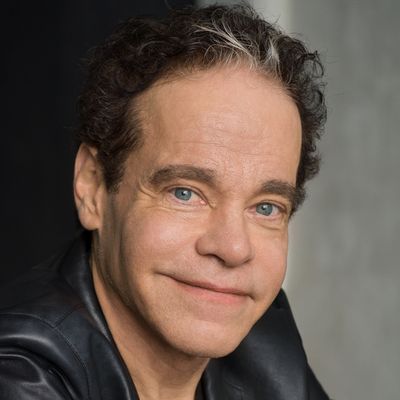
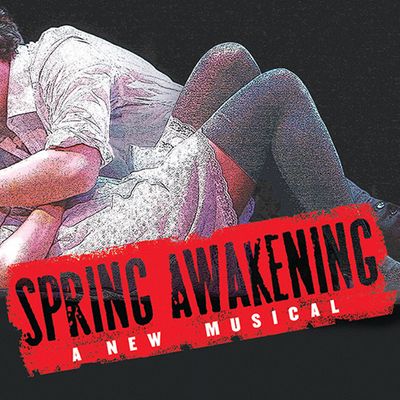
Steven Sater is an American poet, playwright, lyricist, television writer and screenwriter. Him and Duncan Sheik worked together on Spring Awakening, a musical interpretation of German playwright Frank Wedekind's play of the same name... Read More
From the show: The Producer's Perspective Podcast with Ken Davenport
Guests
Featured Shows
About
Steven Sater is an American poet, playwright, lyricist, television writer and screenwriter. Him and Duncan Sheik worked together on Spring Awakening, a musical interpretation of German playwright Frank Wedekind's play of the same name. In 2007, Sater won two Tony Awards for his work on Spring Awakening. He won the Tony for Best Book and Best Musical Score, the Drama Desk Award for Outstanding Lyrics, and the Outer Critic Circle Award for Best Lyrics. The pair received the 2007 Grammy Award for Best Musical Show Album and, in addition, The Dramatists Guild Hull-Warriner Award, the Outer Critics Circle Award, the Drama Desk, the Lucille Lortel, New York Drama Critics' Circle, the Drama League Award, and the 2008 London Critics' Circle and Laurence Olivier Awards for Best Musical.
Just wait until you hear some of the poetic truth bombs he drops about writing for the theater, about Spring and about living life in general. His story could be a musical itself, with the number of dragons he slayed in order to get where he is today. And we talk about everything, including:
- Publishing his first novel . . . at age five.
- How he turned an almost fatal accident into an opportunity to master ancient Greek.
- Why he prefers writing lyrics and book, rather than just the book . . . and why.
- Why he writes on yellow pads with a pencil rather than on a computer.
- Where he got the idea for Spring Awakening in the first place and what he thought when the curtain went up on the very first production.
Keep up with me: @KenDavenportBway
Transcript
This transcript was automatically generated and might contain errors.
[0:27] Ken Davenport: Hello, producers, prospective podcast listeners. I am Ken Davenport. Welcome to week number two of Spring Awakening Month on the podcast. Last week we got to hear from director Michael Arden. And this week I'm thrilled to have sitting in my office the Tony Award-winning bookwriter and lyricist of Spring Awakening and my new friend Steven Sater. Welcome, Steven.
[0:48] Steven Sater: Thank you, Ken.
[0:50] Ken Davenport: So let's start at the very beginning. Very good place to start.
[0:54] Steven Sater: Yes.
[0:55] Ken Davenport: When did you decide you wanted to be a writer? When did you have the first inkling?
[1:00] Steven Sater: My beginning. Um when I was five, I wrote a novel. I printed it. And my mother still has it.
[1:08] Ken Davenport: What was it called?
[1:09] Steven Sater: It was about I don't know if it had a title, but it was about these three sisters trapped in the Midwest. So it's sort of like Chekhov. And I was five years old in Evansville, Indiana. But um, I think it was about feeling dispirited with life and surroundings. So that was a prelude to everything that was then to come.
[1:30] Ken Davenport: At five years of age.
[1:31] Steven Sater: Yeah.
[1:32] Ken Davenport: And you printed it?
[1:34] Steven Sater: I was sick a lot. I was in and out of hospitals as a kid. I had a lot of pneumonia and bronchial problems, so I was in and out of oxygen tents. So I was home a lot. So I was kind of with my dog a lot, and I don't know, I just found writing.
[1:51] Ken Davenport: And okay, so after five, your novel.
[1:54] Steven Sater: After five, yeah.
[1:56] Ken Davenport: Your novel is still unpublished.
[1:57] Steven Sater: Yeah. Unpublished.
[1:59] Ken Davenport: So drag it out right in later years.
[2:02] Steven Sater: So you experience this massive failure at five because no one picks up your novel.
[2:06] Ken Davenport: I know.
[2:07] Steven Sater: Uh what do you do after that? What tell me a little bit about the...
[2:08] Ken Davenport: Well, I wrote plays for Sunday school. We used to put them on in the backyard. I would make write plays and we'd make costumes with my sister and we'd put on plays. I would charge admission. See, I was the aspiring Ken Davenport part of me. What but I don't where did I go after that?
[2:29] Ken Davenport: Yeah, did you did you know when you were writing these, like, oh, this is what I want to do for the rest of my life?
[2:35] Steven Sater: No, but I um I will say this that my first love is literature, it still is, and that that's what I kind of um Wordsworth says our being's heart and home is with infinity and only there. And that I think that's sort of what I come at life through poetry through writing. You know, that's kind of where I again as a kid who stayed home a lot and had plastic all over my room and my mother would get freaked out if someone came over to see me with a I wasn't allowed out really to play till like sixth or seventh grade. I would go to school and come back. It's like this weird sort of childhood. And um, you know, I found a place in Emily Dickinson that I like made sense to me, made sense of the world to me.
So I don't know that I knew I wanted to write. I didn't, but I I did know, you know, it's I'm still that way. That's where I'm happiest. Like before I came here, and I'm happy to be here, and I'm happy to be promoting Spring Awakening, which is a major thing of my heart. But I was so happy. I'm working on this play where I'm actually working on something where I'm translating it from German again and completely adapting it again. And I was just so happy just sitting, like that's how I'm happy. Like with an I write on yellow pads and with pencils. You see me. That's what I like, is just sitting still.
[3:49] Ken Davenport: I have seen you, and I did want to ask you about that. So I my fetishism of the floor. I went to see a development play of Steven, and I see him, or no, it was at auditions, it was at callbacks, and I saw you with your yellow pads, and I asked what you're like, Oh, I'm writing a play, or I'm writing a pilot. So you don't use computers or technology at all to...
[4:06] Steven Sater: Well, I mean I mean like everyone, I have a computer and I but I don't write on it, no. I mean, everything is on it. You can't believe the like if I opened the file of Spring Awakening, you would be frightened at how much stuff there is and how many drafts everything goes through. You know, and I have things I've worked on for so long, so many subsequent versions, but no, I write by hand. And then I on yellow pads, and then um I mean, in truth, my assistant inputs the stuff for me, and then I rewrite all of her pages that I get back, and then we input those. And it's not like I can't get on the computer and revise things on Final Draft if I need to. I do, and when I've done I have a couple of TV projects where I'm working with um, you know, kind of major showrunner people, you know.
The only things that I've done for TV have been like to create TV shows, not to go on staff. So when I work, yeah, I'm doing something with Chuck Lorre. So when I'm with Chuck, I'm the one on the computer. So I'm completely I'm very comfortable being on it. It's not like I don't know what I'm doing. You know, um, or I have a thing with Paul Reiser, and he's the one on the computer, but I'm sitting there with him and I can take over. It's like okay, you drive. You know, Ted Hughes, who was poet laureate, who was married to Sylvia Plath, who's a great British poet who died not too long ago, and did a translation of Spring Awakening, by the way. Anyway, he said that he felt um what happened with he was he was decrying kind of word processing writing, or maybe it was even typewriter writing.
He said, you know, we have such memories of the time in our hand learning to write cursively, and that difficulty of writing becomes part of your heart. I'm putting this in my own words, but it becomes part of your heart, and you lose that experience when you're writing. And that's that is what I find that you you're writing from your mind instead of from your I don't know, the emotional memory that's your body.
[6:00] Ken Davenport: Well, you also picked up writing at such a young age.
[6:04] Steven Sater: That's true.
[6:04] Ken Davenport: So you were trained to do it.
[6:06] Steven Sater: That's how you learn how you exercise those muscles, so it makes sense to me. And you know, and you know, I have like a broken back and this whole history, and I write completely in the worst possible position. So I'm like humped over all day.
[6:17] Ken Davenport: I know a little bit about your personal history and your broken back as you as you say. I can't remember talking about this, but anyway, yeah.
[6:26] Steven Sater: This is whoa, this is the intense emotional situation.
[6:31] Ken Davenport: This is way more intense than over. Stephen is already crying, everybody. There's just a bucket of tears.
[6:35] Steven Sater: No, but uh, you know, some of the readers and listeners may not know this. Can you talk about that story a bit? What are we talking about?
[6:41] Ken Davenport: Oh, my accident?
[6:42] Steven Sater: Yeah. Um, okay. It was in my sophomore year of college. I had written this well, this has big impact on Spring Awakening. Um, so I had written this paper, James Joyce's Ulysses. I know I keep referring to literature, but maybe that's good one week of the month, one day of the week that someone talks about books. The um this James Joyce has this book Ulysses, one of the great novels of the 20th century, and in that book, he took the 24 books of the Odyssey, the ancient Greek poem, and he kind of they become 18 chapters in this book, but each chapter is based on a chapter in the Odyssey, right? So I, for my paper, of course, you know, wrote 18 chapters based on the Odyssey doing this. Anyway, it was this, you know, major it was my major piece, right?
And um, I woke up and my my room was on fire. I lived off campus. I went to Washington University in St. Louis, and um, we moved off campus and we didn't yet drive. We didn't have a car. So that what was surrounded, it's actually there are apartments that I think it's very similar to the ones in The Glass Menagerie. There are these like tenement apartments that surrounded Wash U. And um I woke up and it was on fire. In fact, I turned back and my bed went up in flames within seconds of my getting out of it. And I um the flame was coming toward me, and I ran out. There were French doors, it was a balcony, but it was the third story, it was high. And um I ran out, and there were people on the street and they called up um just stay there.
The fire department's been called, you know, and I waited and the fire kept coming toward me. And I remember saying, It's getting hot. And then the next moment the glass in the French doors like burst out, and this fire um caught my bathrobe, which I was wearing, and it just went up in flames. So I threw off the bathrobe and my I was on fire at that point. So I put out the flame on my face, and someone screamed from below, jump. And I honestly don't know if I would have thought to jump. It was so so high. So I had to climb up on this ledge of the balcony, and then I just leapt off. And um, it was a long fall, and I I broke it with my hands. I sort of fell in push-up position. And so, um, in all I I broke my I shattered and fractured a total of 14 vertebrae, and I broke my arms and my wrists, and I was all burned.
So I was taken to a hospital, and um my parents found out about this like a day and a half later. They're in Evansville, Indiana, and they came and they got me out of this public hospital I'd been put in, got me into this other hospital called Barnes, and I remember the most painful thing, they had to re-break my wrists because the way my wrists had been set in the cast, they would have been permanently awry. But so that was a major episode in my life, and I was laid up in this hospital bed for a long time. There are these beds, they're called striker frames, they're like ironing boards, like a long thin bed, and he was turned every two hours on the bed. Um, so it was two hours in my stomach, two hours in my back.
And um I had a page turner that I could turn with my teeth when I was on my stomach, and then I had a different one that I could turn with my teeth with these glasses so that they would project so I could read. And um, I taught myself ancient Greek. That's why I said no TV, no movies, no videos. Um here's what happened. So I lost this is going back to the Odyssey, and you know this is I lost my work. It went up in flames, and I thought I have to create things that'll last. It seemed to me that I had been acting, which I still loved, but it seemed to me that everything I had been attached to was really ephemeral. And um I have always had this love of ancient Greek culture, and I thought, well, these plays have been around forever, there's a reason.
So I thought I was gonna I was determined to read them. And so I did. But so I taught myself ancient Greek, and then when I came out, um, which was a while later, and I came out, I was in a back brace for a long time. But I was I I read Homer. That's what changed my life, The Iliad. It's my favorite work of literature. And um, I have to say, had I not read been so immersed in Greek tragedy as I really was, I don't think Spring Awakening would have ever had the form it had. I really appreciate the form of musical theater. For me, I've never liked songs that forward the plot of a story. They don't feel like songs to me. When dialogue is forwarding action in that way, then you might as well just say it.
I always thought that songs are about what you can't say, what's profounder than you know, them speaking, you know, some songs come out of silence. So I could look to ancient Greek tragedy for a model because the songs are come from the chorus, they come from the culture, they come from the people, the elders of the city or the women of the city, and they enrich the action, they deepen your investment in the action. Um and I thought, well, what if I did that but use them at character logically? In other words, if the songs this was many years later, but yeah, if the songs could work as a kind of I'm I'm I'm jumping so far ahead, I'm kind of speaking in the middle of things, but there's a sense in life that we all go through things with our class, with our grade, with our year.
There's there's a commonality of our experience, and um we go through things together, and I thought, well, that that is kind of the body politic of childhood. It's your friends, it's the people you know, it's it's those you've known. And so um, I don't know, that gave rise a lot to Spring Awakening. I mean, the and now I'm just jumping into Spring Awakening, we'll go back, but I remember when I first proposed to Duncan that we work on Spring Awakening, we talked about this very issue about that he didn't like in musicals, how it's people are talking and then they're singing, they're talking, and it feels arbitrary. And um, that was when I had this thought. I remember calling him from 72nd Street, uh walking the block, and I said, you know, I was thinking the songs could be internal monologues, which by the way is a technique that began really with James Joyce and Ulysses, but the um bringing it full circle.
But then I remember talking to Michael about this, Michael Mayer, original director, and the need for group numbers, and I said, No, but everyone can be an extension of that person. The way I just said that we kind of are the body politic of one another. And um, I think that affected the whole concept of the show, the staging, the way that both in the initial production and now that the two young lovers are in the Halo, but everyone is there. I think one of the most powerful and evocative things that Michael Arden is doing in this production is making use of the company in ways that I had never imagined. I don't know how much we can give away about the production, but there are moments when um someone does something potentially shameful. Vandela's mother or Vandal and Melchior together, and suddenly the whole company's there watching them. It's really it's exciting. Shame is a public experience.
[13:56] Ken Davenport: Well, so you you come out of school.
[13:59] Steven Sater: I come out of school in high school, grades college, college, and you now are going to be a professional writer. What's the first thing you start to do? What's the first thing that gets on?
[14:10] Steven Sater: Oh, I didn't know what I was doing, but I um I uh when I went to graduate school and then I moved to New York and I was working for a literary agent. I guess I did. I was I was auditioning as an actor, and then that just like wasn't like doing it, and I wanted to write these plays, and what did I do? Well, I can tell you the first thing that got on, but it was insane writing with all these ambitions. But the first thing that got on was this play called Carbondale Dreams. That was these three many Greek tragedies set in the Midwest. And um it played. Do you know there was a theater? It's still there on 42nd Street between 10th and 11th. It used to be called the Kaufman Theater.
[14:49] Ken Davenport: I do remember that space.
[14:50] Steven Sater: Yeah, and so we were there, and you know, it ran for like a year and a half in this 99th seat theater. It was kind of amazing. It was a lot of work, it was hard to get it on. But I remember I used to work the TKTS booth a lot. I would have flyers from the show, and I would go trying to convince people to come see the show. In fact, there are people who remember me from that and come up to me and say that the um and I love her, the woman who runs um there's this rehearsal space we use a lot, the Snapple Building. I've used it for a few years. And the woman who runs the Snapple Building remembers me from the TKTS booth passing out flyers.
[15:28] Ken Davenport: Amazing.
[15:28] Steven Sater: No, Catherine Russell, I know her well.
[15:30] Ken Davenport: Yes, because she was there with Perfect Cry.
[15:34] Steven Sater: She's still there.
[15:36] Ken Davenport: She's still proud to be.
[15:45] Steven Sater: A hundred percent. What was your big thing? And I was really responsible for getting most of the people in.
[15:49] Ken Davenport: Yeah, did you tell them you were the author? You were like, I wrote this play, please come see me.
[15:52] Steven Sater: No, I didn't. So what did you think? And then people asked, I would say that. I just talked about how rich and strange the play was and how that would bring them bring them all, you know, the feeling of their own families and you know I don't know what I said. I was I was convincing I was sincere.
[16:07] Ken Davenport: Well you were right before you do have a producer instinct in you it sounds like for sure.
[16:11] Steven Sater: I do. It's some part of me yeah. It's for my dad.
[16:15] Ken Davenport: Now you write Tony Award.
[16:17] Steven Sater: I do that is a Tony.
[16:19] Ken Davenport: You have a couple of them.
[16:20] Steven Sater: I do. Yeah. For those of you who can't see Steven just glanced at my Tony He's got more awards than I do. Uh but you write for a lot of different mediums now you talked about television, I do film movies, yeah poetry. Yeah music is is there one form that you like more than the others?
[16:39] Steven Sater: Oh are we allowed to be honest? I mean I care most about poetry.
[16:42] Ken Davenport: About poetry.
[16:43] Steven Sater: Yeah.
[16:44] Ken Davenport: What about what about poetry?
[16:45] Steven Sater: Well it's poems are so they hold everything in such a little there's like infinite riches in a little room. There's so little and they have the world in them. Someone write that down there's a poem right there. But I've always loved theater too you know it's like a different part of me. I always think of theater as like the mind is like the again the body politic it's like a com because it's words. Theater's words movies aren't really words. Theater is dialogue.
[17:15] Ken Davenport: Did you know then if you were a such a lover of poetry that you would write lyrics eventually?
[17:20] Steven Sater: Never I never thought about lyrics at all. Never no and I never listened to maybe I did but did I listen to either I mean a Lauren Nero song I'm trying to think of a good lyricist, Joni Mitchell. Um David Sylvian. These are accomplished lyrics. I don't think I ever envied them their lyrics, no.
[17:39] Ken Davenport: Was Spring the first thing you wrote lyrics to?
[17:41] Steven Sater: No. Well, yeah, it was the f it began the same year. What happened was I met Duncan. And then we ended up writing songs together. I had this play called Umbridge, which is still really great. We're just now it has a different name. But but the um it's how long I work on things. But it's your five-year-old unpublished novel just recovered. See, it's something like that. But uh but it um we met and we wrote a couple songs together for this play of mine, and um then he said we should do an album together. I get we ended up, I mean I'm foreshortening the story, but we ended up writing like four or five songs. I'm relentless, and so I kept giving him lyrics, and so we I was like, oh, this is fun. And it felt sort of like falling into something I'd always had been destined.
[18:30] Steven Sater: Which is what I felt when I met Duncan, that it was like my life turned to Mystic Corner. And um, anyway, we started writing songs, and then I said we should create a piece of theater together, and he recoiled, and then that was that was when I suggested Yeah. He said, he said, musical theater. And I said, Well, we could do something cool. And then he said, Well, I would want to do something where the music is relevant to the culture at large. And that that's when he's the moment he said it, I thought of Spring Awakening.
[18:57] Ken Davenport: And how did you know the play?
[18:58] Steven Sater: Just because being Being Me. Just being here. I don't mean it badly, I just mean I knew the play, I had had read the play. I discovered it in high school at the city library. So when I first moved to New York, I went to graduate school, Princeton. So I was near New York, and um my girlfriend, just grandmother had a rent controlled apartment in the city, so I spent a lot of time here. And um Hanson's monologue was my audition piece.
[19:27] Ken Davenport: So you were very familiar with the source material.
[19:31] Steven Sater: So instantly that comes to your mind when he says That was my first thought.
[19:35] Ken Davenport: And did what did he say? Was he like, oh, let me read it.
[19:37] Steven Sater: And yes, I'm in the world. I um no, he said, Well, why don't you give it to me? And so I gave him a translation. And um his interest was piqued. I don't know how they fully understood it at that time. Um, and he said, Well, maybe it would make a cool movie, it's very edgy. And I said, No, I think it really could make a piece of musical theater. And I think that's I think that's how he said, How would the songs work? And then one thing led to another.
[20:04] Ken Davenport: And how long did it take for the two of you to write it?
[20:08] Steven Sater: Well, in all it's eight years.
[20:10] Ken Davenport: Eight years.
[20:11] Steven Sater: Yeah. Well, we started in '99, and we opened at the Atlantic in 2006, so that's arguably seven years. But like the Tony Awards were eight years, and then when we went to London, you know, I did further work on the show. And so then some of which is incorporated on Broadway for the first time in this production. For so, for example, when Malcolm sings that kind of desk when Bella's singing whispering, and he sings no more listening. That's never been on Broadway before. Because I put it in in London, and then Michael didn't want to put it in a broad, and then uh we put it into the national tour. I think it was already the second year of the national tour, so they wanted to put it in.
[20:54] Ken Davenport: Yeah. Relentless you keep working on your pieces.
[20:57] Steven Sater: I've made a couple changes for this, but it had to do with um making sense with you know the signing and the deaf actors. So over the seven to eight years that you're working on this, what is the what what's the collaborative process for you two? Like, what's it like? You you two are the two of the nicest guys I've met and artists that I've met.
[21:17] Steven Sater: Oh, that's good. Do you I mean, do you get at it? Do you fight? Do you argue?
[21:21] Ken Davenport: Never.
[21:23] Steven Sater: No. No, Duncan and I do not argue. I mean, I say that and now we'll go have an argument, but that's not how we work at all. Uh and and we have a number of projects now, and I kind of have the heavy lifting up front. Um, and all the things we've done so far together, obviously we're both doing things with others now, but I kind of conceive the project and have a conceit for it and a sense of how the music might work, and then we talk about that, and he's super smart about music, so he's great ideas. I mean, the thing that this is gonna sound so weird, but what something that really distinguishes Duncan is he reads. He reads a lot. He reads nonfiction, which I don't read as much, but he reads serious books all the time. He's he's a thinker.
[22:04] Steven Sater: So we have great conversations, but I have these ideas, and then I start because I write the book and the words because I write the lyrics first and then he sets them. And it's a kind of miraculous thing that easily ninety percent of the lyrics we have, he sets verbatim whatever. When I say verbatim, I mean the same number of blah blah blahs were in the the text I gave him and that are now in the song of Totally Fucked. Truly the same number. Same thing with the O in Left Behind. It's just you can look at it on the page. It's it's exactly how it looked. Um and then there are times when he'll say, I need another one of these, you know, like I need another verse and other and sometimes he'll record it and he'll just sing the same lyrics again.
It's like, duncan, why don't you tell me? But and then other times he'll ask for things. Or he'll say, um like we're doing a project about Alice called Alice by Heart. And we have this great anthemic song right at the beginning, down the hole. He said, This is great, but it it was like A B A B. He said, What if the rhymes he said, Can you be A A B B? You know what I mean? It was just like it was like, oh shit, this won't work at us. I had to like rewrite it a lot. Sometimes he'll but I was able to keep it, you know what I mean? It's the same structure, it's just like I changed the rhyme scheme. Or um he'll set something and then I'll think, Oh, I don't like the words anymore there. Or or in that part. And then sometimes there's more back and forth than that, but we don't ever write in the same room together. Never always written ever.
[23:36] Ken Davenport: For two guys that are so close, you never We're really close. And um, no, we don't. And I think each of us feels embarrassed if the other's around. But we have been for many years off on retreats together and workshops together. And so it's happened that like I'm in one room and he's setting a lyric in an adjoining room, and I hear what he's doing, and I try not to pay attention to some not to make him self-conscious. And there was a time on our show near, I remember showing up at his house with a lyric, and he said, Oh, this is a no-brainer, and just like you know, set it in front of me. But it's not usually the way.
[24:26] Ken Davenport: Do you have any advice for successful collaborations?
[24:30] Steven Sater: To be a good collaborator. You know what I mean? I'm well, I'm very open. First of all, I'm very determined, you know, and I have a very strong take on drinks, and I always go at things in such a strange way that it's like, what was I thinking? And I have to like catch up with my mind. But I think if you have a great partner, for I really rely on my director a lot. A lot, a lot. Like um Michael Mayer and I really developed the shape of Spring Awakening together. I mean, and not that Duncan wasn't part of it, he obvious obviously was, but usually he was. I mean this thrift, but there's a lot of time that was Michael and me, and Tom Hulse was very involved in that. Moving scenes, reshaping things, you know, what if we what if this happened here?
What if that happened? There you're so much you learn in three dimensions that you can't know, you know, in a page or even in a room where you're hearing it and sitting around a table. But I think it I think it's about finding collaborators you trust and listening. And you can listen to much too. You can but um I don't know, to me the my relationship to the director is always really primary.
[25:37] Ken Davenport: Have you ever written lyrics for anything or are you working on anything now where you're lyrics but not book? Or book and not lyrics?
[25:43] Steven Sater: Yes. Um you find that more challenging, less challenging.
[25:48] Steven Sater: I find it less rewarding. But um, alright. I have um a couple projects, but one new one that's sort of well, I have two projects where I'm have an inherited catalog of songs. In one of those two cases, I'll be involved writing new songs with the person who wrote the, you know, the extant catalog of hits. So that's a different situation, and I actually like it that you get to um conceive. Here's this body of songs, and you get to have some crazy idea about how to make them work. So that's cool.
[26:23] Steven Sater: But this the songs are the joy of a musical. The book is the endless labor of a musical. So if you are not writing the songs and you're writing the book, and I say this with deep disrespect for so many book writers, but it can be kind of thankless. You know what I mean? Just doing all that labor and not for me as a songwriter, I want to be part of that joy. But um I have been asked on several occasions to write lyrics um for projects where I don't like the book. And I suppose there was one where I actually was going to do it for a while. And I may end up doing it, but at the this time I haven't said yes enough. You have to really um feel like you're in good hands if you're a book writer, if you're willing to give that up, because another thing Michael Mayer said to me, which I think is true, he said, you know, people remember the score, but musicals succeed because of the book, and you're you're so unsung, you know, you're never mentioned and you're never near the one who's always working all night, and and there are very few, you know, musicals where the the book is great. 1776, the book is great, Gypsy The Book is great. Most musicals that don't work is because of the book.
[27:34] Ken Davenport: Yeah, and what's funny is several of those musicals they don't work, but yet the music often lives on, I say. So you someone's walking down the street listening to the music of some flop. They're never listening to the book of the flop.
[27:45] Steven Sater: Yeah, and and even you know, musicals which now are greatly esteemed and reproduced again and again, we all know the book never has worked and it still doesn't. And there's just another attempt because the score is so beautiful to to try and you know rescue it.
[28:01] Ken Davenport: Was there anything ever cut from Spring Awakening that you so much? Right, those hundred or so drafts. Anything you miss? Anything you're like Oh, when I'm watching the play to end up. Anything you're like, God, I love that song or I love that moment.
[28:14] Steven Sater: No. But but but I have repurposed some of those songs. And like where and what?
[28:20] Steven Sater: Oh, I have. And there's also those that are like trunk songs. Um, where and what? I look forward to the day that we're having our podcast about Alice by Heart, which is forthcoming. So there's and there are a few songs in there that they've got I guess there's two or three, depending on whether or not we cut one of them that were repurposed from various versions of Spring Awakening. Fascinating. And I can tell you that there are songs from Spring Awakening that circulate on the internet because people have recordings of when like Leah, Michelle and Gavin Creel were doing it, or you know, we had all these different amazing casts through the years. But I don't um I don't miss it while I watch it. I think that it's sort of like um, you know, what Michelangelo said about sculpture was that you just have to take keep taking away enough stone till you just reveal what was always there, and that's what I feel. Like you're I don't miss the stone.
[29:14] Ken Davenport: When you first saw the production at The Atlantic, that first night when the audience was brought in. Did you think, oh, this is gonna be something that's gonna go to Broadway, that is gonna go around the world, is played in how many countries now, come back to Broadway. Did you know what you're doing?
[29:32] Steven Sater: I thought it would, yes. I mean, I was, but I was alone. And I think maybe Duncan joined me. No, no, did I imagine in any measure that it would be like it is? No, in no way. But I had this vision from the beginning that this would really be able to reach people. And I had this determination in my heart to um my determination was to touch the troubled heart of youth around the world. I know, I had no idea what that would mean, that there would be, you know, all these productions and all the emails and communication from these young people to tell us how it's affected their lives. No idea. However, I did feel I remember the day, it was May 3rd, 2006, when we first came to the Atlantic theater, um, to the space, and we staged the bitch of living.
It had been choreographed and it went on the stage. And I sat there, I remember texting Duncan, I said, This is going to work. And I mean I was just thrilled. And then Doug, he came around, he was like working with the band around the corner, and he came and joined me. We did it again, and it was so spectacular. We sat there with tears in our eyes, and then Bill T. Jones stood up and said, This is not my choreography. What is this piece of? And then the rest of the day was Bill reworking the number. But um, yeah, I thought it would again, no, did I have any idea we would be like this? But yeah, I thought it would affect people. I always believed it would work on Broadway.
[30:56] Ken Davenport: And what do you think it is about it that affects people so much?
[31:00] Steven Sater: I think it's the cry from the heart. That if you you know, it's like this young woman who created Mother's Day just because she so believed in honoring her mother, who's just passing out carnations and now it's celebrated around the world. I always thought about her. I thought that if you if you touch that the pure cry of one heart resonates in every other heart. And there's so much in this play that's about what it means to have a mother and what it means to be a mother, what it means to, you know, masturbate in your room, what it means to, you know one I well, want you know, to lose your best friend. I just thought these are things we all feel. That's what I feel when I write songs. You want to get to the cry below the cry. And so I feel like if you get that, then you can touch something true and people respond to it.
[31:47] Ken Davenport: Do you ever think it would be back so quickly?
[31:49] Steven Sater: No, I didn't. And I remember closing night of the show, I guess it was 2010, 2009. When was it? Whenever it was, maybe it's 2009. I remember saying, I was talking about ghosts, and I said spring awakening on Broadway is now becoming a ghost. And um I felt it's like well, like maybe it's like being a grandparent to see your child give birth to another child, but it it feels like revisiting this life moment that was already a stolen season in my life, and that here I am having it again. And it's kind of amazing. Nor did it could I have ever imagined the play being performed in the way it is, where it's been, you know, translated into the language of silence.
[32:32] Ken Davenport: So tell me why, in your words, why you approved this production to come back when you saw the production.
[32:38] Steven Sater: You're not gonna like this answer. But a lot of it had to do with you.
[32:42] Ken Davenport: Well, I like that answer just fine. I'll take it.
[32:45] Steven Sater: Because when I saw it in LA, well, first of all, I saw it in s on Skid Row. And um, I thought it was really moving, and I thought there were a lot of problems with it, you know, and I mean I had a lot of notes and um I was tough with them. But I knew it was beautiful and it was how moving it was, and I saw it a couple times, and I was impressed by how much progress they made. And then it moved to the Annenberg, and that too was a process. But, you know, I knew how moving it was. It it speaks to this silence in all our hearts and our inability to articulate our own deepest feelings. So I was moved, but I thought it should go like to St. Anne's or go to a regional theater and continue working on it and maybe have a tour.
So that's what I wanted. And um when we met you, I just was so impressed with you. And I thought that I thought you could pull it off. And that even though in a way it was also like a financial risk for us because it was a short run and we didn't know if you'd make the money, and if the show didn't make money, would it endanger endanger kind of the you know, there's a sense in which the show's an annuity for us. And then I just thought, no, Karen, we'll take care of it. I don't know. That's what I thought. And um, I thought you'd be a good producer for Michael and for all of us of this. I know I'm saying this sitting here, but it's true.
[34:08] Ken Davenport: Well, thank that means a lot to me, more than you know. Uh and I'm a bit speechless right now, to be very frank. Uh I'll try to get back on track here in a second. I'll check my notes. Um, and what about the ASL component and the Deaf West mission story?
[34:26] Steven Sater: Yeah. Whether Deaf What You know what I think what I really think? Again, this boy who goes back to literature again and again. But in 1891, Frank Vadekin wrote this searing indictment of the world of his time, saying, you know, that, you know, parents, teachers, and students, I mean, that that being the original spring breaking, Frühlings Ervachen, and saying that we're not listening at all to what's in the hearts of our children, and we're, you know, sort of sacrificing our young people on a public altar. And um, then there's been this history of that play, which was not really fully produced till 1906, and then it wasn't produced in its in an un an unexprigated version in English till 1970, and only at the insistence of um Laurence Olivier passed the kind of royal censor.
And then we brought rock music to it and introduced this play to this whole other and by the way we really transformed that original play. I think the greatest critical misapprehension of Spring Awakening is that we took the play and added songs. The most work we did on the show is on book for sure. And I think I'm throwing kudos my own way but I'll give them to Michael and Tom and Duncan too. I think that's the the major che we she we made the book work. I mean it really it's we created heroes' journeys for those characters. But so then was our play and then the play is out there in hall the way and now here's this Deaf West production and I think it does honor to the history of the play. I think it's a transformational moment for this work of literature in in the world.
I think it will be like a milestone that's remembered by those who think about such things. So all that really meant a lot to me and I knew having it on Broadway would be a more public forum for it. So yes was that a component of it yes it's been an extraordinary experience being part of this deaf community developing this piece. It's amazing um and feeling like you're speaking to a whole other audience but also speaking to a different part of the same audience you know so yes that's that's that's a big deal.
[36:34] Ken Davenport: Advice for young writers out there five year olds who uh have a novel that they want to get published.
[36:40] Steven Sater: Well I have to say you have to trust your own look I'm could be like Melchior too and totally fucked by the end, but I think you um have to trust your own true mind. You know, I mean you have to create things according to your own. Yeah, you have to trust the kernel that's within yourself. And then then I say that as the person who says you really have to listen to people around you. You have to and you have to take in how the audience is reacting, and you have to um but you can't sell out that. I don't know. I don't think you can really create things that are deeper lasting by following rules. I think you have to learn from the rules and make them your own. And I say that as a classicist, so I like I'm one who really honors all the rules, but you have to find your own way.
[37:29] Ken Davenport: Well, that's a perfect example of what Spring Awakening is. You know, I remember seeing it and it revolutionized musical theater. I'm a big traditionalist, quote unquote, in terms of musical theater, as far as my training goes. I studied it, I learned it almost like Shakespeare, the Rogers and Hammer seeds of the world. Of course. And here was you took this piece of literature written in the 1800s, and then you modify and change it and make it new and fresh uh in your own, which is exactly what you just that advice you just gave to the writers out there.
[37:58] Steven Sater: I see. Uh okay, my last question.
[38:00] Ken Davenport: Okay, ready? I call this my genie question.
[38:04] Steven Sater: Okay.
[38:05] Ken Davenport: Which is this. I want you to imagine the genie from Aladdin.
[38:10] Steven Sater: Okay.
[38:10] Ken Davenport: Knocks on your door. If you like Aladdin, have you seen Aladdin?
[38:14] Steven Sater: Do you mean Walt Disney's Aladdin?
[38:15] Ken Davenport: Yes.
[38:15] Steven Sater: I have to change the genius.
[38:17] Ken Davenport: Is it Robin Williams?
[38:19] Steven Sater: Yes.
[38:20] Ken Davenport: Okay, I don't know it so well.
[38:22] Steven Sater: Okay.
[38:22] Ken Davenport: But that's okay. So imagine Robert Williams comes to you.
[38:29] Steven Sater: Yeah, he would be a great genius.
[38:30] Ken Davenport: And he says, Stephen, you have done such an amazing thing by speaking to these troubled youth around the world or the uh and allowed them to acknowledge the cries within their cries, as you said.
[38:43] Steven Sater: Yeah.
[38:44] Ken Davenport: With your beautiful, beautiful words. And I want to thank you for that. I want to grant you one wish.
[38:49] Steven Sater: Oh.
[38:50] Ken Davenport: I want you to think about the one thing that drives you crazy about Broadway. What's the thing that frustrates you so much that keeps you up at night that says, Oh, I wish this could be different. I wish it could be changed. What's the one thing you would ask that genie?
[39:08] Steven Sater: So it's about Broadway.
[39:09] Ken Davenport: Yeah.
[39:09] Steven Sater: What I would do to Broadway. Oh, but I would have an impossible question for I mean, like, you know, I wouldn't know how to say that. Because I would want it to be accessible for everyone. And I would want it, I would want us to host great works of literature. So I would have, you know, and someone could say, go see Shakespeare in the park. So, but I um I don't know, I don't think that much about Broadway. So I um I guess I, you know, I fell in love with it as a boy. I don't know. I guess I um I don't know, but I can tell you that I think the history of art proceeds by transgression. And there's a series of transgressions to create great things. And I think most of what we see is sort of, I don't know, lives in a mode either that's very derivative or that proceeds by setting up what's already been done.
I love Rogers and Hammers and I happen to love them. And I think they're so radical. You know, and I think that's what we forget is how radical things are that really change the world and you know move us in a deep way. I don't so I don't know if that's a good answer, but I don't know that Broadway, how hospitable Broadway.
[40:20] Ken Davenport: Well, look, we're back. Hamilton is on Broadway, it's the biggest thing on Broadway. So that's encouraging. You know, I've never thought about Rogers and Hammerstein being radical of course they were. And it's we think of them so traditionally now, and it's about being the radical for your generation. It's what it is.
[40:37] Steven Sater: Yeah, and honoring the I mean that's the thing about Spring Awakening. It is groundbreaking. It still is. But it also fulfills the traditional dicta of storytelling.
[40:50] Ken Davenport: It does.
[40:50] Steven Sater: It's it's very has three heroes' journeys in it. And that's unusual. So I think uh I would want to honor both. I want to create great new classic works. You know, I would want us to be living in a time where there are plenty of great new classic works and we can all attend like we did in ancient Greece as if we were in a temple come to purge ourselves of our great dark worries.
[41:12] Ken Davenport: Well, there you have it, Steven Sater wishes for a giant temple in the middle of Times Square where we can all go see great works of art. Uh thank you so much for being here. I think you win. I think you win the contest of the most buzzworthy phrases and poetry in one I was taking notes about all the great things that you said. So thank you so much for spending your time with us. I know you're working on a bunch of stuff. Uh and thank you for letting me produce Spring Awakening on Broadway. Uh it is already one of the things I'm most proud of in my life, not just on Broadway. So thank you for that. Thank you for the gift of it uh around the world. Uh and thank you all for listening. Next week we're gonna hear Steven's partner in crime, Duncan Sheik, tell a lot of Spring Awakening stories, and we'll see if he says, oh yeah, we have a great collaboration.
We never fight. Um so tune in next week. Thanks so much. Bye-bye. Don't forget, didhelikeit.com is your resource for all the New York Times reviews on the web. Download that app, be the first to find out whether he liked it or not.
© Broadway Podcast Network, All Rights Reserved