

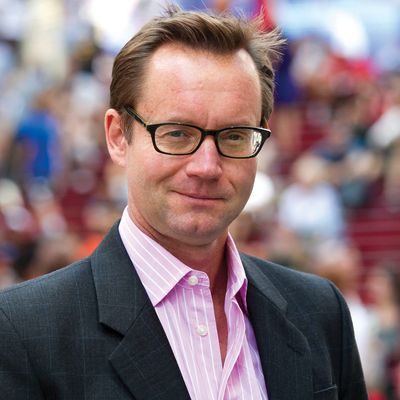
Michael Riedel is an American theatre critic, broadcaster, and columnist. He is the co-host of "Len Berman and Michael Riedel in the Morning" on 710 WOR in New York City, weekdays 6-10am. Riedel has been a controversial and influential Broadway columnist of the New York Post, for over 20 years... Read More
From the show: The Producer's Perspective Podcast with Ken Davenport
Guests
Featured Shows

About
Michael Riedel is an American theatre critic, broadcaster, and columnist. He is the co-host of "Len Berman and Michael Riedel in the Morning" on 710 WOR in New York City, weekdays 6-10am. Riedel has been a controversial and influential Broadway columnist of the New York Post, for over 20 years.
But there’s a lot about Michael that you may not know, which is why I sat down with the writer and over a 45 minute chat, Michael talked about:
- Why he never wanted to be a reviewer.
- What it was like having Arthur Miller work for him.
- Where he gets his gossip.
Keep up with me: @KenDavenportBway
Transcript
This transcript was automatically generated and might contain errors.
[0:09] Ken Davenport: Hello everyone, this is Ken Davenport. Welcome to the Producer's Perspective podcast, episode number six. And this one is gonna be juicy. Uh, we're actually recording this podcast in a secure, undisclosed location for the protection of my guest. Um, because this uh, this week's guest is none other than Michael Riedel, one of Broadway's most controversial figures. Uh, welcome, Michael Riedel.
[0:34] Michael Riedel: Uh, good to be with you. Kind of like your little uh, Matt Lauer imitation there.
[0:36] Ken Davenport: What do you want to do?
[0:38] Michael Riedel: Host the Today program at one point.
[0:39] Ken Davenport: I'll take it. It pays better than what I do. So I will certainly do just about anything pays better than the theater. Um, Michael, for those of you who may not know, is uh, the New York Post theatrical gossip columnist as well as the host of one of my favorite television shows and one of what, two television shows dedicated solely to Broadway, uh, Theater Talk on PBS.
[0:59] Michael Riedel: Now we cover off Broadway too, if it's good.
[1:01] Ken Davenport: Yes.
[1:02] Michael Riedel: But as we can talk about this, off Broadway has changed dramatically in the course of uh, my career. I mean, all the interesting stuff used to be off Broadway, and now very seldom do I go to off-Broadway that's not uh, nonprofit theaters.
[1:14] Ken Davenport: That's very interesting. I just wrote a blog two days ago about how the lack of commercial theater, uh, commercial productions in this season's uh, off Broadway season. Playbill did an article about what's coming. There was like one commercial off-Broadway show.
[1:28] Michael Riedel: Well, I think they've been off commercial off-Broadway can't exist financially anymore because the costs uh, and you don't have enough seats to sell. I mean, I remember theaters like the Promenade on the Upper West Side where you saw wonderful things like the Common Pursuit and Terrence McNally's Lisbon Traviata, uh, a lot of great A.R. Gurney plays back in the day, and they were all for-profit productions, major playwrights. They would do very well off Broadway, and then of course they would have this big life at all the regional theaters around the country. Uh, and all those theaters are gone now. So it's really only the nonprofits that can have a smaller 199, 299, 499 uh, seat theaters.
[2:07] Ken Davenport: So where do you just ripping on this a bit, where do you think those writers now can go if they can't because I'm now I'm hearing from a lot of writers, I can't get access to those nonprofits because they have their writers they work with cards.
[2:19] Michael Riedel: Well, that's a problem. The nonprofits uh, have become these, I think, bloated bureaucracies where people uh, who work there are paid extravagant sums of money. Uh, it's public records, so we know people like Todd Haynes and Andre Bishop, who are talented producers, but they've been at this job a long time, and you see their salaries of five, six, seven hundred thousand dollars a year, and they tend to do their in-house writers. Whether the plays good are good, bad, or indifferent, uh, if you're um, Terrence McNally, you're going to be done by Lynn Meadow, because they have a long-standing relationship. And there doesn't seem to be a lot of room for new young playwrights. And I'm not even so sure that the nonprofits, especially the ones that are interested in being on Broadway, I'm not so sure that they really want to take the risks on an unknown playwright because they have this very large subscriber base to cater to that they can't afford to alienate with the play that uh, has no star in it or is not by a tried and true playwright.
[3:26] Ken Davenport: I mean, they will argue that we've done this play and we've done that play, but on the whole, I think, they have moved much more into the mainstream commercial mentality with casting stars, pursuing Tony Awards, and building these big theaters on Broadway, which of course have to be paid for, which is why you see Todd Haynes is basically uh, uh, mini Schubert now. I mean, he's four-walling beautiful at the Stephen Sondheim Theater.
[3:53] Michael Riedel: It's fascinating, and this is what I love every time we sit down and chat a little bit. This is not what probably my listeners would think you would talk about in your day-to-day. Um, I'm not sure if you remember this, but uh, we first met actually at the opening night party of Moving Out, and I remember I had been the uh, company manager of Gypsy with Bernadette Peters.
[4:15] Ken Davenport: And it was my first time meeting the guy that was very public. Of course, Bernadette was ill the first few performances, and um, and as much as I admire her in certain roles, I must say I never thought she was right for Mama Rose.
[4:32] Michael Riedel: Right.
[4:32] Ken Davenport: And there was uh, my favorite uh, column of yours featured the milk carton with her on the side of missing.
[4:38] Michael Riedel: Yeah, well, you'll remember she was uh, really struggling in previews. I'd gone to the first preview of the show, and uh, I'll never forget seeing tiny little that nasty little raisinette, Arthur Lawrence charging up the aisle at the end of the show, right made a beeline right for a poor old Sam Mendy's and said, Well, you've done something I didn't think anyone could. You've ruined Gypsy.
[5:01] Ken Davenport: Yes, he told that to just about everybody working on the show about including me. I would call him about his house seats or something, and he said, Let me tell you what I think about Sam. I'm tired of people kissing the ass of the flavor of the Month.
[5:16] Michael Riedel: That was my favorite.
[5:16] Ken Davenport: Oh, that would be Arthur, yes. And apparently he uh, submitted uh, a war and peace size list of notes the day after the uh, first performance.
[5:25] Michael Riedel: Oh, he did.
[5:26] Ken Davenport: Oh, he did. And uh, in his defense, I will tell you, we adopted a huge amount of them. Uh, and a lot of them were right on the money.
[5:33] Michael Riedel: Yeah.
[5:34] Ken Davenport: One of my favorites was we had opened the show and staring at this um, black wall, there was a ghost light, it was very dark and gothic. And Arthur said, This is Gypsy. It's a beautiful Broadway musical.
[5:47] Michael Riedel: Exactly.
[5:48] Ken Davenport: You can't have the audience who's coming in for the channel.
[5:52] Michael Riedel: That's exactly what. Well, I think that was the period where Sam and David Laveau and Jonathan, he did uh, Man of La Mancha for David Stone. Jonathan can't remember his name now, but he ran the Almeida Theater for a while. And they had this idea that uh, they wanted to explore uh, awful cliché word, but the underbelly of the great American musical, which uh, is boring because Gypsy is about a psychotic woman who's basically abuses her children, but the power of the show comes from the fact that it's in the guise of a big old-fashioned bright musical comedy, and it lures you in that way. And only midway through do you realize wow, I'm actually getting involved with a woman who's capable of doing the most horrendous things to her children. And that's where the power of musical comes from.
[6:42] Michael Riedel: And what Sam and these other guys were doing is that we're just gonna give you the darkness right away, and then there's no place to go. And it becomes kind of one note. And I remember it had a weird Brechtian feel to it, and people would come on and they'd carry vaudeville signs announcing the scenes and all this kind of stuff, but they move very slowly across the stage. And the one thing I always faulted Arthur on, and he and I had many discussions over the years about this. Uh, I did not think Bernadette Peters was right for that part, but that's not something Arthur ever admitted, at least to me, because he chose her.
[7:13] Ken Davenport: And he always thought that he said to me once, the real Mama Rose was small and pretty.
[7:19] Michael Riedel: And I said, Well, I'm sure she was, but that's not the character that you've written. You found the monster inside of her, and that's the character you put on stage. And Bernadette is just, that's not who she is to play that part. Whereas then you saw Arthur do it his production many years later with Patti LuPone, and the grotesque monstrosity was there.
[7:38] Ken Davenport: Yeah, a writing teacher once told me, you can't sit by the side of your audience member and whisper in your ear why you made a choice.
[7:46] Michael Riedel: Exactly, yeah. I remember talking to poor old Jessica Lange when she was in David Leveaux's terrible production of uh, Glass Menagerie. And uh, Jessica objected to a number of things that I was saying in the column, particularly about her performance. And yeah, she was just far too beautiful to be this grotesque Amanda Wingfield. And she brought pictures at the theater talks. She came on to defend her performance. It's quite interesting. She brought all these pictures of the real Amanda Wingfield. And Amanda Wingfield was a very attractive Southern woman.
[8:18] Ken Davenport: And my point to her was uh, that may be the case in real life, but in her son's mind, in Tennessee Williams' mind, she was a grotesque, frightening, smothering lunatic.
[8:34] Michael Riedel: And that's what he's created in the play. And you, who are so beautiful, just cannot convey that.
[8:45] Ken Davenport: So you obviously love the theater. You love it. You're a- That's not gonna carry away. Certain types of theater. So how did you make a living? So, how did you uh, well that's a great question, really, to start with. How did you end up being this guy who obviously has a huge affinity for this business, and sometimes the we that throw barbs at it, including me, are the ones that love it the most. How did you end up from being such a big fan to being a guy that is, you know, skewering it twice a week in the Post?
[9:15] Michael Riedel: Well, I was never what I would call a big fan. I mean, I was not a theater kid, really. I was uh, major in history, was gonna be a lawyer. Uh, but I had friends in the theater department at Columbia where I went, and I was friendly to them. I think I did one play, the Zeus story. But that was it. But I would go see them in all their little shows that they did. In fact, one of my friends back then was Dan Futterman went on to become an actor and write the screenplay to Comrade. And I became very close to a woman, an older woman who was a soap opera actress at the time, and she loved to go to every off-off Broadway place she could find, and I would often go with her. So I was seeing Rosmer's Home and all these obscure Scandinavian and Norwegian plays.
And it was interesting. And then really what happened was uh, one of her friends got the job as the editor of a now defunct magazine called Theater Week. And at a party one night, he offered me the job as managing editor because he knew I'd just hung out with these theater people. And I really had no plans other than eventually going to law school, so I took the job and it paid, I think, $18,000 a year, so I thought I'd last maybe the summer. Then I'd get my life together and do something else. Uh, but it was fun, and I got to interview some great old theatrical people, many of whom are now dead. And I remember one of my first interviews was with this guy, I didn't even know who he was, to be honest with you, and I had to go meet him in his office, which was uh, this rabbit warren of a space above the Mark Hellinger Theater, which is now a church.
And you go up these creaky staircases. I heard this banging on the piano coming from the room. And I went in, there's this guy with these big ssss 1972 sunglasses and a cigar. He was at this piano and banging away at the piano. And uh, he was, he had a new show then called The Red Shoes, and he was, I was interviewing about that, and he was uh, playing music from The Red Shoes. And I said, Could you play me something I might have heard of? And he said, Well, how's this for you, kid? And he played, People, people who need people. And it was Jule Styne. I mean, I really had no idea who it is. And then he proceeded to play the entire score practically of Gypsy for me. And I spent four hours with him.
I thought, yeah, this is fun. And then through him, I met Charles Strouse and Cy Coleman and John Kander, and I did a thing back then on the great Broadway composers. So I would go to their houses and they would play all their stuff for me. And so it was a crash course in the musical theater. But you have to remember at the time, we now think of musical theaters being very, very popular with the, you know, Wicked takes in two nearly two million dollars a year. But this is back in 1989, and Broadway was pretty dead then. And a lot of these guys were yesterday's news. I mean, Charles Strouse, Cy Coleman, Jule Styne, these were guys who had not had a hit in a long, long time, and they were considered really old-fashioned.
[11:58] Michael Riedel: Uh and here I was this young kid and interested in their lives and their music. So they were very kind to me and gave me a lot of time, and I guess through those interviews, and really spending time with them at the piano, listening to them explain their music, that sort of made me fall in love with the musical theater, the old musical theater. I'm not really into the new stuff. And gave me a sense of how exciting the theater at its best can be. So it was really a crash course. That was sort of my showbiz education, if you will. Then I had another education, again, just through luck, really. Uh I had no money, so I needed a place to live cheaply. And I knew from college, I'd taken a class on modern drama, and I read all these books that were either by or edited by a guy named Eric Bentley, of course, famously translated Brecht in English.
Brilliant, brilliant critic and scholar. And um he wrote a couple articles, theater week for me, and we became friendly, and he lived in this rambling old apartment on Riverside Drive on the Upper West Side, divorced and his kids were older and long since moved out. And he offered me one of the rooms in the apartment for $500 a month. So I lived there for three years. And through Eric, I mean, I learned all about Brecht and Shaw and Pirandello and Shakespeare and Chekhov. And we would have we meet for dinner two or three times a week, and he talked, we talked about Shaw, and then I could go to his library and read all the Shaw, talk about Brecht, I'd read all of the Brecht. So I had a real masterclass, if you will, in the great playwrights in the classical theater. So those are the two strands that came together early on in life in my life.
[13:38] Ken Davenport: And how did the post actually let's go back because I was the biggest fan of theater week, first of all. I love that. And actually, one of my favorite parts was the first couple pages. There was a page or two of blind items, if you will, right?
[13:51] Michael Riedel: Ken Mandelbaum.
[13:52] Ken Davenport: And Mandelbaum did it, yes.
[13:53] Michael Riedel: Oh God, I we I got used to get that at Summerstock, and we would all wait for it to arrive so we could see what it was it was incredibly cheaply made though. I remember the paper was this the cheapest stock paper that you could have. You know, I think there were bit you know pieces of wood still floating around in it. Uh and you know, we uh the pictures were always kind of off-kilter, and the captions were off-center, and it was full of typos, and but we had a lot of fun putting it out. I mean, it was it never made any money whatsoever, and it was eventually gonna collapse sooner or later. But uh but it was fun, and I thought that we brought John Harris and I, we took it over from the guys who'd been there before, and we brought uh a little more show busy quality to it, because I early on became interested in what was going on behind the scenes, where the money was, how the money was deployed, uh some of the fights and feuds that were going on backstage.
Because I often think most of the shows I see, what's happening off stage is far more interesting than what's happening on stage. So we injected that into the magazine. And we were also able to get quite big writers to do pieces for us. I remember Arthur Miller used to review books for us, and Edward Albee would write essays for us, and Martin Gottfried would weigh in on uh Andrew Lloyd Weber or um Eric Bentley wrote beautiful, beautiful obituary, I remember of Lawrence Olivier and another one of um of uh Samuel Beckett. And again, these people were people who because the theater was not thriving back in the late 80s and early 90s, they weren't being asked to do a lot of stuff. I mean, I just got Arthur Miller's home phone number in Roxbury, Connecticut, and said, you know, Mr. Miller, there's this book of the history of drama criticism in England.
Would you review it? I thought it'd be fun to have a playwright review critic. It was Irving Wardle, who was very famous British critic. And the book's actually quite good. Uh, and and he said, sure. And that was it. And then he started buying, he was my book reviewer. That's uh but that's a pretty good staff you had working for you back then.
[15:53] Ken Davenport: He had one funny um grammatical problem though. He always, whenever it was whose, as in who is going to the theater tonight. He always wrote W H O S E, the possessive version. That was the I thought that was interesting. Here's one of America's greatest writers, and he couldn't couldn't distinguish correctly between whose apostrophe S and whose no apostrophe and E. The only thing better than that would that he would use the wrong your if you would tell me. So I always remember I'd say uh I'd say, okay, uh everything's fine. Any changes you want to make before we go to press? Nope. So I hope I can uh count on you again for another review. He said, Right oh, or be it. I'm not just right oh.
[16:41] Michael Riedel: So you jumped over to the post and did you I went to the Daily News.
[16:45] Ken Davenport: You went to the Daily News, that's right. And was it I want to write a gossip column? Were they like you we need a gossip column for Broadway? Because uh at this time in the early nineties, uh Frank Rich was the drama critic of the New York Times and he was the most powerful critic of the world really. And at the time he had his girlfriend, Alex Witchell, now his wife, he installed her as the uh theater columnist. There used to be a Friday theater column at the times. And Alex uh was very tough and mean and not afraid to put the knife in. And she started writing this very bitchy catty behind the scenes column. And the theater world was shocked because they were used to very sweet Enid Nimmi, who wrote a very nice piece about, you know, Nathan Lane will be starting this show, and there'll be this nice benefit that's happening on Friday, and here's how you can get your tickets, and be a sweet little interview with a new actor on the scene or something like that.
It's all very genteel. And Alex came in, you know, Amanda Plummer hates her wigs backstage at Manhattan Theater Club. But I went back to look at some, and it's petty, picky you and stuff. You just laugh at it now, you know, I mean, because gossip is prevalent everywhere. It's prevalent now. But it was a shock to see that kind of gossip in the New York Times, which of course didn't disdain gossip, and there it was. And, you know, she really, her best stuff was on Arthur Lawrence, on uh Nick and Nora, which was a disaster for Charlie Strauss and all that. And Alex had very good sources there, and she wrote a couple of uh very funny, funny columns. In any case, as much as I enjoyed her work, I felt that because of her relationship with Frank and his power, that the theater wasn't getting a fair shake from this incredibly powerful newspaper, which by the way is not nearly as powerful in the theater as it was back then.
Brantley and Pat Healy just don't have the kind of power that Frank and Alex did. But there was definitely a sense, and people were saying this, but they were afraid to speak openly about it for fear you would be blackballed by the Times, which Alex and Frank are quite capable of doing that. I mean, they kept the Friends and Enemies list, believe me, because I'm on the enemies list. Have been for 25 years, I'm proud to say.
[19:09] Michael Riedel: Whereas if he'd given you a bad review, then she went after you. And the real egregious case was poor old Joanna Coleitis at the public theater. Joanne had been handpicked by Joe Patt to take over. And uh, I'm not saying Joanne was the greatest director in the world, but you know, she was avant-garde and she had her fans. Frank didn't like her stuff, which is his parietal. He never gave her uh very good reviews. But then Alex enters the picture, and suddenly in the column, on a regular basis, nobody can work with Joanna Acoletis down at the public theater. She has a brusque attitude. She doesn't know how to run the theater. And so you really felt there's this pincer movement against poor old Joanna Colitis.
She'd do a show and Frank would kill it. And then Alex would come in and say, you know, basically she's a bitch to work with. And Frank then made some suggestion, I think it was in a Sunday piece, that his particular favorite director of the time, George C. Wolfe, should be running the public theater. And a few months later, the board of directors fired Joanna Colitis and they hired George C. Wolfe. So I thought that was really unfair to her, uh, that she just was not being given a fair shake by this very, very important paper. And I started writing articles about that. And of course, Alex applied material because, you know, she's not exactly the friendliest person in the world. I remember uh the famous line when my dear old friend Arthur Cantor, a wonderful world producer, called her up uh because he was gonna do, I think Eileen Atkins in a room of one's own.
And he asked her uh if she would mention it in her column, and her response was, take out an ad. And I remember a press agent that was representing Emma Jane Cocca and Sid Caesar. They had this off Broadway show, reliving the great old show of shows, all that little skits and routines. And this press agent called her up and said, We, you know, we'd like to announce in your column, but Sid Caesar and Emma Jen Coke are coming to Broadway or off Broadway. I said, Well, I'm glad they're alive, but it isn't news. Click. So I would write this column, you know, about what a bitch this woman was. And then Frank and Alex, they got mad at me and they tried to sue me, which was their mistake because that drew more attention to the situation.
And all of a sudden I found that I was being written about in New York magazine and page six and Liz Smith as the only one willing to take on the two bullies of Broadway. So it was sort of good publicity for me. And I remember Walter Winchell once saying, if if you're a nobody in this town, the way to become a somebody is to take a big brick and hurl it at somebody at the top. And that's pretty much what I did. And through that I got uh the Daily News people got to know me, and uh they were starting a new gossip column, and I got hired as the sort of the old-fashioned term a leg man, which meant that I ran around all night long going to all the premieres of movies and plays and nightclubs and all that, just gathering bits of gossip to throw into the column. It was a sort of general column. But again, because I had the theater background by now, because I'd done my three years of theater we a lot of my best stuff was coming from the theater.
[22:08] Michael Riedel: And then I, you know, I the column life for me was not something, that daily gossip column is not something I wanted to do very long, because it's really a grind. And I wasn't really interested in a lot of the personalities I was writing about. So I started to write feature stories, Sunday feature stories about the theater. And I was able to write about uh the financial side of the theater and make it interesting because I knew a lot of producers. So the one story I wrote that really got my career going at the Daily News was I had friends who were investors in Sunset Boulevard in England. And that was supposed to be Andrew Lloyd Weber's next big gigantic hit. But they were very concerned about how the costs were spiraling out of control, because this is back at Andrew's, he would spend money on anything.
I remember um Billy um what's his name? Did Sunset Boulevard, Billy uh Wilder. Billy Wilder saw Sunset Boulevard in LA, and in the scene where Norma Desmond drives into the Paramount lot, they had half an Aschee Frashotti. I think that's what the car is. They had half of it. And Billy Wilder said to Andrew, you need the whole car. And it was like, next day, $500,000 spent on doing the whole car. Because Billy Wilder told Andrew, you need the whole car. Once it went and just drove across $500,000, just drove once across the stage. That was it. So I and I wrote this column saying Sunset Boulevard is supposed to be the new big column, it was a big feature story. The Sunset Boulevard was going to be the new big, supposed to be the new big gigantic Android Weber hit coming to New York and all that. But people of money in it are concerned that the costs are spiraling out of control.
[23:44] Michael Riedel: Exactly right. And you know, in the end, I was right because *Sunset Boulevard* collapsed. It ran several years on Broadway, but it didn't make any money. It lost a lot of money in London, New York, Australia, all over the place. And it almost brought down Andrew's empire back in those days. It was the beginning of the end of that type of thing. Of that era. It was the last of the big bloated British shows. Actually, now, and I've talked to Andrew about this, I think *Sunset Boulevard* is one of his best scores, as if we never said goodbye and with one look and um ringing in the new year. Those are wonderful songs. And the story's great. But it didn't have to be blown. I mean, the house didn't have to fly.
This was the era, everything had to fly. Every time you went to a British show, things were flying around for no reason. I mean, a house can't fly. So why is the house flying? All right, saying you need a big staircase. Okay, that's fine. But it doesn't have to fly. It's like when you went to see *Aspects of Love*, another good score, very good score by Andrew and Don Black. But an intimate show, right? It's about what, three people? A menage a trois, something like that, four people, maybe. But they, you know, Maria Ask Bernsson built the entire Alp mountain range. And the train. The training. And the train was right there. But the Alps flew. They fly around. I didn't send Anderson. Why does everything have to fucking fly to stay age?
All going up to the heavy side layer, I think. They were doing that and the chandelier, and there's a helicopter in *Miss Saigon* and all that kind of stuff. And I think, you know, looking back on it now, Andrew, I know would love to see a production of *Aspects of Love* done very intimately, sort of in this secret little tiny space we're in now. Yeah. And I think *Sunset Boulevard* is another show, because if you look at it, it's really very intimate. It's just about the butler, the old diva, and the writer. Just the three of them. It doesn't, you know, have to have a, I think the thing weighed 40 tons that flew.
[25:32] Ken Davenport: And back to Frank Rich. Do you have relationships with the critics now?
[25:38] Michael Riedel: Yeah, I'm friendly with most of them.
[25:40] Ken Davenport: You're friendly with them?
[25:40] Michael Riedel: Yeah. And my good ones, good friends, they're all dead though. Jacques Lesour, Mike Kushwara, Donald Lyons, they're all dead. Um John Simon is a good friend of mine, but he's sort of semi-retired now, I guess. Uh I'm very close to Charles Isherwood, who's a good friend. Elizabeth Vincentelli, my colleague at the Post. I like Joe Dominkowitz over at the Daily News. So yeah, I'm gonna have a good relationship with him.
[26:05] Ken Davenport: Did you ever want to be a critic?
[26:06] Michael Riedel: No, never, never, I think. Never absolute torture. To have to go see everything, first of all. And second of all, then to have to sit there in the dark night after night and then scurry home and write little book reports. Deadly. Deadly.
[26:18] Ken Davenport: No worries. Because I think you'd be a very good one. I mean, you have the knowledge, you have the...
[26:20] Michael Riedel: I have no, you know, I like being with theater people too much. I like hanging out with them, I like having lunch with them, I like having drinks with them, I like gossiping with them. I like writing about them. I like having them on my TV show. And I really think as a critic, you can't really traffic among theater people. You do have to keep them, you do have to keep them at arm's length.
[26:44] Ken Davenport: You probably wouldn't have a job either, because the theater critics seem to be shrinking. The world seems to be shrinking. What are your thoughts about that? As you've seen not only, unfortunately, we have had a number of great critics pass away, but others have just been laid off, or theater department. The number of theater reviews being done weekly seems to be decreasing or getting print anyway. You seem there's no word about, oh, the New York Post is going to get rid of Michael Riedel. There's no that that's a good idea.
[27:09] Michael Riedel: Well, I mean, I just yeah, I you know, I think. I try to make the news of the theater lively and interesting. And I think I was lucky in the sense that I caught this tidal wave of gossip now when it was just beginning. And so I've been able to ride that. Um I just think. You have to remember back in those days when the critics were big names, it was there were only newspapers. So, and there were only five or six that really mattered. I'm not the first to observe this, but certainly the internet has exploded that. These guys just don't have the power anymore. You know, you can find out what you want to know about a show with first preview by Jesse 21 and all that chat. Or, you know, there are I'm sure many bloggers of theater out there that'll have things to say, and people have their own websites now.
Shows have their own websites, and they can promote themselves in a way they never could before, which used to be we have to give the Times $500,000 to take out an ad. They don't have to do that anymore. Uh so that has certainly diluted the power of the critics. But I also think we don't really have anyone now, especially in Ben's spot at the Times. Ben has I would say rather peculiar tastes. They're not mainstream. And the general reader of the Times is they like something intellectual and intelligent, but not too bizarre. And Ben can go for the bizarre, and so can Charles. You know, Charles can go for the uh the Tom Paines of the world. And I think when the New York Times sends audiences to those kind of plays, and the audiences walk away saying, what the hell was that about?
Scratching their heads. I think then they begin to discount what the critics had to say. Whereas Frank Rich had power, one, because the paper had power, of course, but two, in the 80s, when Frank was at his height, he had perfect pitch for the readers of the New York Times. He was the New York Times reader. Upper West Side, liberal, love show business, could write the rave for *Crazy for You* and for a good revival of *Gypsy*, *42nd Street*. He loved all that stuff. And then he could also draw your attention to a Richard Greenberg play called *Eastern Standard*. That wasn't too weird or strange. And then he could overpraise things like *Angels in America*, which to me is the most overrated classic, contemporary classic.
But you know, he sent people to the theater and they thought, oh, I'm gonna see this Richard Greenberg play, and it's about rich people in the Hamptons, and a homeless woman comes in. Ooh, homeless people, what an issue. But then they send them, he'd send me sending the *Crazy for You*, and they love it. Whereas, you know, Ben will send you some eight-hour Scandinavian production of the Brooklyn Academy of Music.
[30:01] Michael Riedel: So I remember there's a great story, maybe apocryphal, but I like to tell it anyway. Ben loved this unbelievably incomprehensible play by David Mamet called *The Old Neighborhood* title poem. I saw it, I have no fucking clue what was going on. Neither did anyone else who saw it, except for Ben. And he wrote this rave review, and the story goes that this couple went to see the play, and as they were leaving, the conversation overheard was...
[30:43] Ken Davenport: And that's okay. I mean, critics have to have their own taste. And clearly, you know, the Times likes what he does because he's been there a long, long time.
[30:51] Michael Riedel: Um, but I think also, see, Ben doesn't really come from, and a lot of the critics today don't come from just your old-fashioned newspaper man reporter background, which Frank came from. You know, he was a reporter. And as a reporter, you have to convey information in your lead and make it exciting and interesting and grab the reader. You know, newspaper is not a place for an essay, really. And Frank covered Broadway shows as if they were news events. And he brought that muscularity of writing to his reviews and made things seem important. And Ben, I just don't think he's that kind of a writer. So the critics, I think everyone agrees, have lost power over the years. You're obviously a real fan of the theater, but at the same time, you write a populist, more gossipy column. Do you think it's a good thing or a bad thing that the critics have lost power for the theater, for the future and health of the Broadway theater?
[31:53] Michael Riedel: Um I'm ambivalent about that because I certainly think people should make their own decisions, and um they should do their own research, and there's plenty of plenty out there now about shows that you can find. On the other hand, I'm sort of sad that we've lost the idea of the critic as a star. You know, I mean, I used to race to *New York Magazine* to see what John Simon had to say. You know, you'd race to *The New Yorker* to see what Pauline Kael had to say about the movies, or Rex Reed in his heyday, or Frank Rich at the New York Times. And there was a kind of excitement when those reviews came out. And you, you know, you would find a critic you trusted whose opinion you often agreed with, and it would be kind of your guidepost.
And I liked their writing, which was lively and fun and insightful and sometimes vicious. Uh and I liked the critics as being real forces of personality in the theater world. Uh, because what I interested me most about the theater world are the crazy personalities swirling around. And the critics used to be part of that, and I don't think they are as much anymore. So I'm a bit nostalgic for that. But on the other hand, you know, I mean, was it good for the theater that one man, Frank Rich, had that much power? Probably not. Although I will tell you this, there are a lot of producers who will say, who suffered at the hands of Frank, who railed against the power of the New York Times. And now they're like, Jesus Christ, I got a good review from Ben Brantley, and nobody's coming.
That's what's killing everybody now. They're getting good reviews. They're getting these big feature linked stories in the arts and leisure section of the New York Times, and they're not selling any tickets.
[33:30] Ken Davenport: Yeah, it's quite shocking. There's a handful of those shows that...
[33:34] Michael Riedel: Look at *Sideshow*. Charles Isherwood raved about *Sideshow*, and it lost 12 million dollars or whatever. The other one for me is *Finian's Rainbow* from a number of years ago. Which was very similar. Revival, no stars. Across the board raves. Everybody loved that show, couldn't sell a ticket. No. And years ago, if you think back, uh *Crazy for You*. No real stars. Certainly Susan Stroman wasn't what she is today. No one knew who Mike Ockrit was. It was a Gershwin musical, Harry Groner, charming guy, but it wasn't Hugh Jackman, right? But it was the Frank Rich Review who said this is the most enjoyable musical comedy I've seen in years, and it was a smash. And here's Charles saying *Sideshow* is the undiscovered classic of the American musical theater, and it's a flopperoo.
[34:24] Michael Riedel: Well, I always think word of mouth was always the ultimate arbiter. I mean, as powerful as a critic is, was back in those days. 1,500 people are leaving the theater and telling, at least each of them telling four friends they didn't like it. Ultimately that's going to doom the show. Whereas on the other hand, you know, there were shows that Frank didn't like, not as many as uh there might be today that can survive bad reviews. But uh, I'm trying to think of well, you know, Andrew Lloyd Webber, you know, Frank wasn't no fan of *The Phantom of the Opera*, and it's still around 25 years. And I remember there was a wonderful play by Jerry Sterner called *Other People's Money*, which was off at one of those off-Broadway theaters that doesn't exist anymore.
And it was one of the funniest plays I ever saw. I loved it. Mel Gusso, lovely man, God rest his soul, went to see it and just didn't get it. He just thought this old shticky humor wasn't any good, and he gave it a bad review. And uh they thought they'd have to close, but people loved the play. And then next week, John Simon came along with a rave in *New York Magazine*, and that really turned the play around. Now, as much as I like Jesse Green, I think he's a fine writer. I don't think Jesse Green could save a show in this world today.
[35:34] Michael Riedel: You've obviously teased a whole bunch of producers in town over the years. The Harvey Weinstein thing you guys have got going on now, I just love. Which one are your favorites? You have favorite producers? You I was. Well, I mean, they just have pipes and they're not as active as they used to be. They used to do a lot of shows. And you could always get them on the phone. And they would talk to you about everything. They were fun. They were just, they were characters and personalities. And they always had funny quotes and they were up to funny tricks and gags and all that kind of stuff. Um and I became friendly with them early on because they were sort of being dismissed as the, you know, they do these cheap revivals with the star and everything they do is cheap, and then the cheap producers.
And I wrote an article once saying they may be cheap, but here's the track record. Had you invested with Fran and Barry Weissler, nine out of the ten productions would have made a profit. So if that's cheap, I'm all for cheap. And they appreciated that because, you know, at that time it's just like, oh, well, you know, Rocco Landisman, he went to Yale, and he's an intellectual, and we love Rocco, but Fran and Barry Weissler are rug traders, practically. So they were kind of I always identified with the people who weren't part of the New York Times club. You know, I like those people who were outside of that. Scrappier kinds of people. So. And of course, I, you know, very friendly with David Stone over the years because I knew him when he was general managing little off Broadway shows. Out of the Weissler's office. Out of the Weissler's office. Because I was a uh intern and an assistant to Charlotte Wilcox, who was also working in the office at the time.
[37:06] Ken Davenport: I actually, just to uh to tap onto that, I started my career with the Weisslers, and I used to say the same thing. I was a PA for them in the same thing. Say what you want. They're one of the few mom and pop organizations still doing it year after year and making lots of money.
[37:20] Michael Riedel: Well, then, of course, then when they hit it with Chicago, it was no longer mom and pop operation. And you know, they owned, I think they owned 75% of the show. I remember Fran telling me a great story about when that show was at uh Encores. We all loved it. And she and Barry saw, I think they saw the last performance. And they had a relationship with John and Fred because they'd done Zorba with Anthony Quinn. So Fran called Fred, and she said, Fred, Fred, darling, Barry and I would just love to be an investor in the show. We loved it so much. If you could just find a little place for us. And Fred said, Fran, no one's called. Because everyone thought it was a concert. And a concert was never going to work at Broadway prices.
So Fran and Barry decided, well, we'll do it. They called Sam Cohn. Sam said, You're the only inquiry we've gotten. So they did it. And I think the original production cost was something like two and a half million dollars. I can't remember now, two and a half, maybe three million. And uh they had trouble raising the money for it. They went to their bank, and the bank wouldn't give them a loan. And Fran said, Barry and I were in bed one night. We looked at each other, and they probably had a couple million in the bank from Greece. And they said, we might as well do it ourselves. So they took their money and took a flyer on uh on uh Chicago. And I've been up to the house in Walkabuck, and let me tell you.
Well, I was the company. The vet has paid off rather handsomely. I was the company manager for the Vegas production of Chicago, and I signed a lot of checks. So, yes, I I can say firsthand the bet paid off, and uh I love that about they took that big risk, and Barry's told that story at a couple events I've been to myself. So uh and I'm I'm very friendly and and I'm I admire him greatly with Scott Rudin because his boyfriend John Barlow, the USB press agent, and I grew up in the business together. And I mean I Scott is a throwback to David Merrick and Colonel Bloomgarden because he does everything on his own terms, makes all the decisions himself. There's no committee, there are no 15 people sitting around conference table. If it's a Scott Rudin production, you put your money in and you shut up. And he makes the decisions. And he has tremendous taste, too.
[39:28] Ken Davenport: And what do you think about um the change in how theater owners operate now versus before? Obviously, they used to be very involved in producing a lot of these shows.
[39:34] Michael Riedel: Well, I can tell you a lot about that because I've just completed a book for Simon and Schuster that'll be out in November, which is about Broadway and New York City in the 60s and 70s when things are really unraveling. The city was bankrupt, Times Square was a disaster. Schubert Organization was almost bankrupt. Jimmy Niederlander had really he was just coming on the scene, but he really had no money. The theaters were in disrepair, there were no shows. And Bernie Jacobs and Jerry Schoenfeld took over the Schubert organization from Lauren Schubert Lawrence, who was the great nephew of JJ Schubert. He was a total drunk and he had throwing the company move around. And things were really, really bad.
This is about in 1972. And they had no shows. And Bernie and Jerry, in a boardroom coup, which I tell in the in the book, ousted the Schubert family, basically, and got control of this empire for themselves. But they were then faced with an empire that had a cash flow problem and a lot of empty theaters. And I remember I do have this in the book because it's a tape recording that Betty Jacobs Burns' widow gave me that he made for the family before he died that she's allowed me to use in the book. And he and Jerry went to JP Morgan, who had been the Schubert's banker back, you know, when JP Morgan was alive and the Schubert brothers were alive, and they needed, they needed cash, so they wanted a million dollar, a million dollar line of credit in 1972.
And they used as collateral the 17 Schubert theaters. And JP Morgan turned them down because they said 17 Broadway theaters in Times Square 1972 were not worth a million dollars. Unbelievable. That's the state the business was in back then. Today, to build a theater, I know the Schuberts have been looking to build one, and the minimum cost is 150 million dollars. That's for the building. The Schuberts can do it because they own the land. If you have to buy the land, you're talking $300 million. And that is just not an investment anyone's gonna make. But in 1972, 17 Schubert Theaters were not worth, in the estimation of JP Morgan, uh one million dollars. The air rights to one of those theaters is worth more than absolutely.
But but I remember, you know, Bernie, Bernie and Jerry were they were not producers, they were lawyers. But by necessity, they had to become producers because they had to fill their theaters. That's why they became producers. Today, they don't have to be producers because there are plenty of people like you who will fill their theaters for them, and they will take no risk.
[41:56] Michael Riedel: Predictions for this year, what do you think about the current current year that we're in? It's certainly been an odd one for musicals. Uh nothing really has become that big, big hit. And I do think every two or three years, the business needs a really big, big musical that just makes the industry seem exciting and Broadway is a place you want to be. I mean, the last one they had was Book of Mormon. That's going on four years. And we haven't really had anything like that in a while. And I think everyone's looking around, trying to figure out where that, where that next musical that's gonna get everybody talking about Broadway is gonna come from. I hear this thing called Hamilton, supposed to be quite good.
Jeffrey Sellers got it, and it's uh the guy who did in the heights, which I didn't like, so I'm a little skeptical. The all-rap version of Hamilton's life may not appeal to me, but if it's a hit, fine. I'm not, I don't argue with hits. Uh but but we're certainly at a very weird place where there's nothing that strikes me, even in London in the pipeline, which looks like it's really gaining momentum as a Matilda or uh uh a Billy Elliott. Both both excellent shows, but neither one of which will ever achieve the level of a wicked or a book of Mormon or anything like that. Although Matilda, which I love, uh, I thought was gonna be in trouble earlier a while ago. It seems to be have found its mark.
But it's not I guess what do they call them, the mega musical. And the industry needs that. It really does need that. It can't just survive on 12 week runs with stars. It really and the road needs these big shows to survive. Because the whole infrastructure of the road was built on the cats and the phantoms and the lay miz. Well, you know, those things are yesterday's news. And I know all the road guys are like, you know, yeah, we'll do alright with Lion King and Wicked, but they've come to our markets now ten times. You know, and the audiences they want what's the next big one? And a lot of these big theater chains have been built Broadway across America. It was all predicated on this idea in the pipeline would be these mega hits that would keep coming through.
And uh it's that well seems to be dry for now. And you can't survive with the plays because the plays won't tour unless there are stars in it, stars don't tour. Even if that, I mean, we've been talking about that a lot, a lot of these markets just won't take plays anymore. They just tone to it, there isn't an appetite from that audience.
[44:19] Michael Riedel: Well, I mean, I think if, let's say, if Hugh Jackman decided I'll do, you know, I'll do six months in the river, of course, having seen the river, uh. But if you Jackman decided, or if Nathan Lane said, yeah, you know what, I'll do it's only a play for three or four months, I'm sure it would be booked and people would go see it.
[44:37] Ken Davenport: We're making that request, funnily enough. But I don't know that that one's gonna go. Um, one one last question for you. I want you to imagine that uh you wake up tomorrow morning and some deal atin genie says to you, Michael, I'm gonna grant you one wish, one wish only, you can change anything you want about Broadway. Anything. You get one wish to change it.
[45:05] Michael Riedel: Every play should be 90 minutes.
[45:08] Ken Davenport: Very well said. On a more serious note, uh, I do object. I mean, I'm a capitalist and a republican, and I'm not against making money, but I do think ticket prices on Broadway have reached an obscene level. And I think, like all of New York, Broadway is basically telling people you have to be rich to be here. And I don't think in the long run that's very healthy for the theater. Because if you talk to people like Scott Rubens of the World, they didn't have the kind of money when they were kids growing up to go spend $495 to see the Book of Mormon. And where is the next generation of producers and actors and writers who are going to come to New York if they can, because where are they going to live? They can't afford to live here. And how are they going to see these kind of shows? So, how are they ever going to really learn the business and get a foot in the door? They will.
[46:16] Ken Davenport: Thank you very much to. I think that's an expression they use in the movie business.
[46:20] Michael Riedel: That's right, I know. Well, it's also in the podcast business. We're taking time away from the post and from Theater Talk. Uh, do tune in to watch uh Theater Talk. It's fantastic. It's a much different side of Michael, the same side you're hearing now than you do read in the post, although reading the post is a lot of fun, I will admit it, even when my shows have been mentioned in it.
[46:42] Ken Davenport: Negative.
[46:42] Michael Riedel: Yes, supervisation online. Oh fun. And then if you want to see me get yelled at by Don Imus, you can always check out Tuesday mornings. I'm a regular on IMUS in the morning and uh constantly makes fun of me in the theater business.
© Broadway Podcast Network, All Rights Reserved