

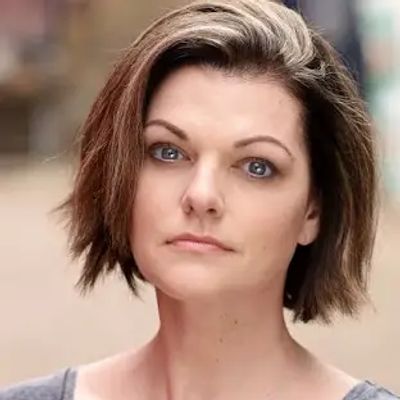
Kate Shindle, Miss America 1998 and Miss Illinois 1997, is an actress, singer, and dancer. She is the author of the 2014 memoir Being Miss America: Behind the Rhinestone Curtain, published by the University of Texas Press... Read More
From the show: The Producer's Perspective Podcast with Ken Davenport
Guests
Featured Shows


About
Kate Shindle, Miss America 1998 and Miss Illinois 1997, is an actress, singer, and dancer. She is the author of the 2014 memoir Being Miss America: Behind the Rhinestone Curtain, published by the University of Texas Press. Her Broadway credits include Jekyll & Hyde, Cabaret, Legally Blonde, 8, and Wonderland. She was also on the National Tour of Cabaret in 1999. She is currently serving as the President of the Actors' Equity Association, elected in 2015.
On this podcast, you’ll hear how Kate started on her path to the corner office she now occupies by refusing to be complacent about an issue that bugged her years ago. (My favorite people in this industry are complacency crushers like Kate.) You’ll also hear . . .
- How being Miss America was an asset and a liability for her acting career.
- The hardest part about being a working actor in New York City.
- What’s going on with the minimum wage situation in LA . . . and why she can’t say too much about it.
- Her plans for technology to improve the audition process.
- About the myth of “The Equity One.”
Keep up with me: @KenDavenportBway
Transcript
This transcript was automatically generated and might contain errors.
[0:00] Ken Davenport: I wanna be a producer with a hit show on Broadway.
[0:07] Ken Davenport: I wanna be a producer.
[0:09] Ken Davenport: Hey everybody, in case you missed the big announcement, we turned all the transcripts of the podcast episodes from the last year, and we turned them into books.
[0:18] Ken Davenport: Good old-fashioned books.
[0:20] Ken Davenport: Actually, new fashion books because they're ebooks.
[0:23] Ken Davenport: Read them on your Kindle.
[0:24] Ken Davenport: So go get them on the Amazon store or go to the ProducersPerspective.com and go to the book section, download them, give them away as gifts.
[0:32] Ken Davenport: You're gonna love reading this stuff as well as listening to them.
[0:36] Ken Davenport: Now, on to the podcast.
[0:38] Ken Davenport: Hello, everybody, Ken Davenport here.
[0:40] Ken Davenport: You are listening to the Producers Perspective Podcast.
[0:43] Ken Davenport: Thanks so much for tuning in.
[0:44] Ken Davenport: So last week we talked to the president of Local 802, the Musicians User Union on Broadway.
[0:50] Ken Davenport: Uh and this week, it's like Labor Month here at the Producers Perspective Podcast.
[0:54] Ken Davenport: We're talking to the president of the other performers union on Broadway, the folks who are above the pit.
[1:00] Ken Davenport: Welcome to the president of Actors' Equity Association, Kate Shindle.
[1:03] Ken Davenport: Welcome, Kate.
[1:04] Kate Shindle: Hi.
[1:05] Ken Davenport: So Kate, you have a very interesting story of how you got into the big office in the equity building where we are right now.
[1:12] Ken Davenport: How did you get started in performing?
[1:14] Kate Shindle: Performing. Wow. Um, I did a play, I was not a show kid, but I did a play I remember when I was really small, I was like four or five years old, that the moms put on, and I played a Valentine's Day card and I had one line. Um and then I you know, my my interest in performing went more toward uh playing the violin. I was a violinist for several years, not a terribly good one, but it taught me a lot about pitch um and about you know working together with a group of people to create something amazing. Then I got into high school and I went to this really small private Catholic school in South Jersey, and we didn't have any facilities. I actually like telling this story because I learned how to make good theater, theater we loved with nothing.
You know, we didn't have a big budget, we weren't one of these high schools that has a budget the size of some colleges. We didn't even have a stage. We did our yearly musical because we did one show a year on the stage of the elementary school in the next town because they actually had an auditorium. But I just fell for it, like everybody does. And my freshman year, we did Fiddler on the Roof, and I was the violinist in the pit, and then I was also from Assara and ran back and forth and had a blast, and then sophomore year we did Into the Woods, which was really exciting because I I'd never experienced theater like that before. Um, and then I decided around that time, sophomore junior year, that I wanted to try and do it forever and ever. So I studied theater at Northwestern and then I came to New York.
[2:40] Ken Davenport: And what was life like for you when you first arrived in the city as a performer?
[2:45] Kate Shindle: I went to NYU, and I always used to think like, thank God I went to school in this city so I could acclimate myself to the environment. You just moved here from Chicago. But you know, I my sorted history. Um I had actually been here a lot because after my junior year, I took a year off of school and I was Miss America. So I traveled all over the country and several times came to New York, and that's when I really went. This is where I want to be. A lot of my friends stayed in Chicago after graduation, but I knew I would end up in New York at some point, so I just came here. Um, and the reason I say that is because I came here with a slightly different situation than most students right out of college, in that I had some money.
You know, I had made not you know millions of dollars, but enough to have a healthy start in a reasonable apartment with roommates, and I ended up getting a job because I was just bored. There was just I I I was used to such a schedule, and and I just got here and there were auditions, but there wasn't much else. So I worked, I went and sang at a piano bar at Sam's, which is no longer with us, and I kind of just did everything that I could. You know, I uh tried to get the lay of the land, and of course I thought I knew everything because I was right out of a theater program, but you learn pretty quickly what you don't know, or sort of the edges of what you don't know, and then you have to get into it and and figure that out.
Um, my first job on Broadway actually came about pretty quickly. I went into Jekyll and Hyde as an understudy three or four months after I moved here. And then after that, I was there for four or five months, and then I went out on tour playing Sally at Cabaret. So I I can't complain about my first couple years in New York. I mean, it was awesome. It was an adjustment, but it always is when you move somewhere new.
[4:25] Ken Davenport: So obviously the pageant experience that you had of being Miss America helped you get a head start here. Did you in some ways? Did you think about you some sounded like you always knew you wanted to be a performer?
[4:38] Kate Shindle: Yeah. That you went into the pageant world, the circle circle. Were you in it from as a new no, not at all? In fact, I remember when I was growing up, you know, these different contests would send postcards to the house, and I'd be like, Mom, what do you think? She's like, No, go read a book. You're not doing a you know, preteen pageant. But my parents had been volunteers with Miss America when I was very young because we lived right uh at the Jersey Shore, very close to Atlantic City, and kind of everyone in our community went over and volunteered on Miss America when it came to town in August and September. Um, it helped in some ways. I mean, part of it was that when I finished that year, there were a lot of people who just told me go right to New York.
And I actually went back and finished my senior year of school, and it helped me remove myself from what was really a um fascinating, inspiring, exciting, but extremely demanding year that had very little to do with what I actually wanted to do for a living. And I knew that I wanted to get my degree and I wanted to have another year of doing college theater and going to football games and that kind of stuff. So there were ways in which it definitely helped. Like I kind of had no business playing Sally in that production, although I learned a lot on the road. You know, I if not for the fact that they were doing one weekers in the Midwest, I don't know that I would have been considered for that.
But I felt like I rose to the occasion, you know, and and learned a lot on the job. Um and I also wildly overprepared for that audition, which was great. You know, I took it really seriously because I wanted them to take me seriously. And at the same time, I've definitely been in audition rooms when I used to have it on my resume, and somebody on the other side of the table gets to that line and goes, Oh, you were Miss America, and just you could feel the air in the room change, and I would think, Oh, I'm not gonna get that job, because there is a whole set of assumptions that comes with that too, and stereotypes and um beliefs and stuff. So it's been a mixed bag, but I'm very proud that I did it, and I wouldn't want to undo it. It was just a matter of trying to figure out how to compartmentalize that one part of my life, which was really a deviation from the straight line that I felt like I was on.
[6:42] Ken Davenport: So you spent uh how many years here before you're the now the president of Actors Equity? How many years were you working in the business and how many Broadway shows?
[6:52] Kate Shindle: Um I moved in the at the end of 99. So um, and I've done four Broadway shows. And you know, at the beginning it was frustrating for me because I thought, you know, I was feeling the things that you feel when you're right for on genou roles, but I'm 20 feet tall and nobody would ever cast me. I'm hard to pair with a guy, you know, and it was it was very frustrating um at times, but then like now I look back at it and I think that I'm glad for that. I'm glad that I didn't hit my stride in my twenties and then have to try and figure out, okay, what now? Like I I feel like I've gotten to play a lot of interesting, unusual roles, and now I'm kind of on a a different path, which I like.
[7:33] Ken Davenport: What's the hardest part about being a performer here in the city of trying to make it on Broadway?
[7:39] Kate Shindle: Um there are a couple things. I mean, I think I would say that the stability issue is the biggest one. You just have to be okay with not always knowing what's next. And you know, the other thing that I think is important is that if you're just looking for the performance aspect of it, if you like being on stage with an audience and rehearsal is just a means to that end, I think it's very easy to get frustrated because you have to love the process and you have to love it enough to go into the reading that you're getting paid a hundred dollars for and um get excited about the new pages and oh my gosh, there's a new song and we're making change. I mean, if you don't love the process, I don't think you're going to like being a professional actor.
Because when we're growing up, all we sort of see is the glamour. And then when you actually spend time doing it, it's a lot less like when you're 22, it's super sexy to live like the people in rent. But when you're like 28 or 30, you want a little more stability and um I guess solidity to to your lifestyle. So that's tricky. But otherwise, I mean I I don't know. I I've always really liked it, and at the same time, I periodically and regularly think, should I be doing something else? Because I think that if you don't, you're crazy. If you don't look at this lifestyle and think maybe there's something else out there for me, and just sort of check in with yourself every so often, I don't understand how that works.
[9:02] Ken Davenport: Yeah, I talk to so many of my friends now that have been in the business for 10 years, and they remember what it was like, oh, I'm gonna be on Broadway for the first time and the glamour and the sexiness, and then they realize so many of them in ensemble roles doing the exact same thing every single night, eight times a week. It's it's grinding on you.
[9:20] Kate Shindle: Yeah, I mean, I I learned that when I went into the first show and I went into Jekyll and Hyde because I was an ensemble member and understudy in a long-running Broadway show, and you learn pretty quickly that the mechanics are the thing you have to learn first. It's not like you suddenly walk into this universe of complete artistic fulfillment every single minute. That cast has already done that, and you have to fit in, and then you get the chance to explore things once you get there. Um once you learn all your blocking, for example. The other thing that I think is important is is for performers to know that even for those of us who do Broadway shows, I mean, I've done four Broadway shows in what, 15, 16 years, I've done a lot of other stuff.
And if you're only looking at Broadway as the way to know that you're a successful actor, it's really easy to get frustrated. Um, some of the best work I've ever done, most of the best work I've ever done has been in regional theaters and in, you know, readings of shows that kind of died in development, and you have to figure out how to live with that because if you're only looking at Broadway, Broadway, Broadway, then you're really cutting yourself off from a lot of what it means to be a working actor.
[10:27] Ken Davenport: So you've been here for about 15 years or so. At what point in the that process or during those years did you say, I want to get involved in the other side of this, in the administrative side of the performers union?
[10:41] Kate Shindle: Well, for me, it's I kind of feel like once an activist, always an activist, right? And my year as Miss America was 90% AIDS activism. I was talking to students and lobbying legislators and um giving speeches and all that stuff. So I put a lot of that away when I came to New York to just work as an actor. And I got involved the same way a lot of other counselors. If you talk to our counselors and officers, uh, because I'm on the governance side, I'm not a staff member, I don't have a salary, I don't, you know, none of that. So I'm I'm the head of the governance side of the union, which is our elected working actors and stage managers who make our policy decisions. Most of us got involved because we were in a show and something went wrong, and we didn't know who to call, and we ended up starting to understand better that there is a union that we have in place that we pay dues to that's there to deal with these things.
Um, my specific path was that I was doing a show at Nymph, which was a blast. It was such a fun show. But I was doing Legally Blonde at the same time, and the night before our last Nymph performance, I sprained my ankle in Legally Blonde, in a scene, by the way, where all I had to do was stand still. Um, and I fell down and sprained my ankle, and there was no way that I could do it. It's called Sympathy Jones, and it was a like a 1960s girl spy musical. So the opening of Act Two was literally singing and running an obstacle course, crawling under things, jumping off tables and heels, and like there was no way I could do that with the injury that I had just gotten. And there was a lot of back and forth because we were talking about doing it as a reading, but then I was told the nymph didn't want that, and that the director really wanted her staging to be seen because she had important people coming.
And I was really frustrated. Like, guys, I can't do it. So the solution ended up being that I sat in a chair at a stand downstage left, and everybody else did the show as if I was where I usually was. Which we had stage combat. Somebody could have gotten hurt, you know, because if you're choking someone, they brace on you, you know. And if that person's not there and they're just throwing themselves around, oh so in all of that, I mean I had been a deputy and stuff, but it never occurred to me to call the union. I talked to the director, I talked to my agents, I talked to somebody from Nymph, and so there was a forum after the festival was over.
[12:59] Kate Shindle: And they said, you know, would you like to come be part of this talk back to the union about how things went over there? And so I went and I spoke to the right people, and then one of the staff members came up and asked me if I thought I'd like to join the Off Off Broadway committee. So I did. And then after a year or two of kind of doing that, I decided I would run for counsel. And actually Patrick Quinn, who bought all this stuff, who was our past president, and we still keep a lot of his things around, had approached me too to possibly be a counselor. And I didn't win a council seat the first couple times I ran. So I first couple times. First couple times I ran in like the general election, and then I ran in like an internal replacement election where only the council elects the replacement counselor.
And so finally, like pretty much everything that ends up being important in my life, I had to decide it was time to get serious about it instead of just treating it as something I could do that was fun on the side. And then I just really liked it. So after a year on council, I ran for Eastern Regional Vice President, which was probably a little premature, but I thought, why not? You know, I dig what is going on there. I'd like to be more a part of the decisions. And then after the first term of that, I had been asked to try producing. And I thought, why not? I may as well. But you can't do both at once. You can't be an officer and an employer. So I stepped down during the election because I was running against someone for re-upping my seat.
And I thought I can step down and we have another candidate. It won't mean that I step down halfway through the term and then the seat is empty and it causes problems. So producing as it turns out is not my jam. It's okay. I mean it's interesting, but fundraising is really just I don't envy you. I really don't. It was fun, but then I decided not to kind of go whole hog, and then this came around and I thought, why not? Nope. It's very rare for officers to run in contested elections and sometimes even counselors, and that bothers me. I feel like every election should be contested. Everybody should have to be at the top of their game to be able to sit in this building and make the decisions that affect all of us every time we walk into a rehearsal. So I went for it. And you are now how many, it's not even the end of your first year yet, right? You've been ten eight months.
[15:12] Ken Davenport: Since the election was in May, but the like oath of office was in mid-June. So what is that? Eight, nine, ten months, something like that. So how's it going?
[15:30] Kate Shindle: It's awesome. It's actually awesome. I mean, you can see that my priority has not been decorating this amazing office because it's just like a hodgepodge. But otherwise, you know, it's endlessly fascinating to me. I think that it's really important for us to build a tent, essentially, that our members want to be in. It's important for us to communicate with them well because our employers get way more FaceTime with our members than we do, and it's very easy when something goes amiss to just blame the union because most members don't know who to talk to at the union to find out whether it's accurate or not. So the first year is kind of like I really want to make equity cool. I mean, not that I'm some paragon of coolness, but I think that, you know, I actually think that equity is exciting.
I would like for our members to see it the way I see it. And I don't know how long I'll do this. I really have no idea. I kind of thought one and done would be a good idea, but I like it. There's a lot I want to accomplish. There's a lot we can accomplish.
[16:32] Ken Davenport: One and done is how many years?
[16:34] Kate Shindle: Three.
[16:34] Ken Davenport: Three. And then you can run again.
[16:36] Kate Shindle: Yes.
[16:37] Ken Davenport: No term limits, right?
[16:38] Kate Shindle: There are no term limits starting in this is kind of inside baseball, but starting in 2018, the officer terms are staggering a little bit so that every officer isn't up for a re-election all at one time. So after this three-year term, actually, I don't even know. I don't know if it's like some officers serve a two-year term, some serve a four, and I just haven't looked at it lately. So I'm just kind of focusing on the first three years.
[17:02] Ken Davenport: So, what's your day-to-day like? What uh when you come into the office, when what do you deal with on a day-to-day basis?
[17:08] Kate Shindle: Well, I'm not in the office every day. But rarely a day goes by that I'm not doing some kind of equity business. I mean, I spent probably four hours on the phone with different counselors and officers this weekend, just talking through some of the issues that we're working on. Whether it's things that are gonna come up in council, whether it's big picture governance, whether it's communication strategy, those kinds of things. And that's why being president is so surprisingly and awesomely different from being a regional vice president, because I just I feel like I guess more of a team leader and closer to the center of decision making. I mean, technically the president probably is the center of decision making, but I think it's important to be to think of myself as the you know the member of the council who happens to be sitting in the office of the president because really the council makes all the decisions.
The president is just the head officer of the council. So when I come in, I mean I may work on my equity news column, which is overdue and which I should have done last week. I just went out to LA and Chicago for focus groups because we're doing strategic planning about what this union looks like and is going to look like and how we operate. You know, I have to chair the council meetings, and we have a number of issues that the council has to make decisions on. So it's a matter of somewhat filtering and distilling the information so that it can be presented to council in a way that allows a decision to be made with some debate, but rather easily. Because if you just dump everything into the council room, it could take 10 hours in order to figure out which end is up.
But that's a bit of a tightrope walk too because I want to be transparent, I want our union to be transparent, and I don't want to be filtering things in a way that obfuscates them. You know, I just want to make it simpler for our 83 member body to understand debate and actually make decisions that don't take three months. Um, there's you know, there's this sort of running joke around here that everything takes forever, and I think that part of it is because we expect it to take forever. You know, if we need to get something done, like online signups, we're 10 years late for online signups for EPAs and equity chorus calls. I can sign up for any yoga class in the city on my phone, but our members who do EPAs can't yet sign up on their phone for like the number one thing that they want their union to offer.
And again, it kind of goes back to the when you're young and when you're first starting out, it's so cool to be out on the sidewalk waiting in line. It's like part of the myth. But I think that once you're past 25, you would really like to be able to just make an appointment and show up. I mean, it makes people feel like they're professional. So at my first council meeting, I asked the council to give us permission to form a working group and just get it done. And we formed a working group in I took two chairs of the two main committees. We formed a working group in like two days, had a meeting, and convened the whole group a week later and then sent it to staff. You know, things can happen quickly. It's just kind of a matter of expecting them to, without being a you know, cracking a whip. You know, there's I think there's a way to work with people and motivate instead of reprimanding, you know.
[20:22] Ken Davenport: So that specific example is a great one. I was gonna ask you about how equity was going to use technology in the future.
[20:28] Kate Shindle: Uh so I love it. We have a lot to talk about with that. Keep going. The but the 22-year-old of me that was an actor at one point just loves that idea because I one of the reasons I was like, I'm never doing this anymore is I used to wait on the sidewalk in the freezing cold. So that's amazing. So, where is that? Is that happening then?
[20:42] Kate Shindle: It's in process. We have to revamp our casting call section of the website, and that's going to be a part of it. But we just had a status progress report like 10 days ago, maybe, and our IT department walked us through the different parts of it and what it's gonna look like, and basically their template, and I think, although I can't promise, they've told us that it'll be up and running like late spring, early summer, which at first I thought, oh, that's just when everything dies down for the summer. But actually, if you're beta testing something, it's probably better to not do it in January when everybody's just flooding the audition room. So to me that's a really important thing, and it's something that will actually make a huge difference in the lives of our members, especially people who, you know, I got an email early on from a member who lives in Westchester County, and he said, I don't have friends in the city that I can ask to go put my name on the list, so I really can't afford to do equity chorus calls because I have to spend the money on whatever it is, child care travel, just to come in and write my name down.
Isn't there some way we could put, you know, just a sign-up sheet online? And when I wrote him back and said that the council was taking up the issue of online signups, he responded within like 90 seconds with more exclamation points than I can count. You know, our members who live on Long Island or in Westchester County or Staten Island or wherever, because they can't afford to live in Manhattan, it's not their style, whatever, they should still be able to participate. And I also think this is probably gonna go a little too far at first, but I think that our members in you know, Buffalo and Pittsburgh and DC and Philadelphia who have never really been able to participate in these kinds of auditions, will probably want to sign up too.
Pretty quickly, I think people will discover that commuting from Buffalo is not maybe the best way to do this, but they should have an opportunity. You know, it shouldn't just be about the members who live in New York.
[22:35] Ken Davenport: This is a lot of work for a from what for a hobby.
[22:39] Kate Shindle: Right. I know it's an unpaid position, yeah, this job of yours. And yet you have to make a living at the same time, you have to you still pursue your career and that's the other thing, right? How do you juggle this?
[22:51] Kate Shindle: I you know, I was out of town for about the first half of last year. And that kind of took me out of the loop for you know how there's like a lag, right? So if you're not in town from January to May, you're not working in the summer because you haven't been here for auditions. So fortunately it all coincided with this so I had some time to sort of settle in. And then in the fall I just went, I need to also make a living. So it can be crazy. I mean like this afternoon I have a callback for a really big job and I'm trying to make sure that I can you know do what I have to do here and then get my head in the game for that which is pretty demanding. I don't know you just make it work. I mean I think if you like the things that you're doing you just make it work and I like doing this and I like being an actor and it's not rocket science you know it's just time management which I'm not that great at but I'm getting better.
[23:47] Ken Davenport: What do you think the biggest concern is of working actors today?
[23:52] Kate Shindle: Wow biggest concern I I think it's availability of work. Um and you know that is sort of a straight line to availability of things like health insurance. You know obviously we have exchanges now and we have national universal health care but at any given time and this is this is a balance that we always have to figure out because we could organize more work weeks if we just let anyone join because we would just soak up everybody. We would soak up the whole talent pool. But at any given time like 17% of our members are working and so if we have a lot more members, but don't organize more work weeks, that's not really a solution either. Um, you know, but I actually think that the other thing that people are afraid of, or or maybe it it's just a misconception, is that that we think we're really alone.
You know, we think that we're, you know, when you're in a show, the show is your family, right? More or less, especially a musical, even a play, but especially a musical. And then when the show closes or when the run ends, that family sort of shuts down and people go their separate ways, and even the people that you're best friends with, you kind of fall out of touch with. I think here in New York, there's definitely an extra something when you're in a Broadway show. You really feel like part of a community in a way that you may not if you're not actively in a Broadway show. But equity is a community that everybody's part of all the time. I mean, all of our members, not all actors, but and I would like for that to be sort of an umbrella community that our members know to ask about things.
And um it's funny because there there's been this, oh, save me, but there's been this rise of um unofficial Facebook pages where our members are discussing all kinds of different things. And that's fine. I'm glad that there are places for people to congregate and get information.
[25:47] Kate Shindle: Hopefully it's the right information, but there's no question in my mind that we have to communicate differently with our members because there are now places that members can congregate and swap stories. We have to be ahead of that messaging because it's very easy for the wrong information to get passed around. And then people get very angry. And if they had just come to equity, if they just called the office or emailed someone and asked the question that they got an answer to on Facebook, they might have gotten a different answer. You know, so that to me is a big challenge.
[26:21] Ken Davenport: You've been a producer for a brief period of time, you've worked with a lot of producers. What do you think makes a good producer?
[26:29] Kate Shindle: Hmm. My favorite producers, I think, are all they all seem to be pretty good people, you know, and that allows me and I think other actors to trust that they're not trying to take advantage of us, that they're not trying to exploit us, that they're not trying to, you know, pull a fast one with the rules. It's pretty easy to tell when you have that kind of producer who's trying to play really fast and loose and you know, push the stage manager not to give you breaks or maybe not, you know. I'm a rule person. If the rules don't make sense, then I think it's good to change the rules. But as long as you've signed the contract that you will work under certain rules, then you should. And that applies to actors too.
You know, it's not just a producer thing. I think my favorite producers also are the ones who really understand how to lead. And I think that that's even more challenging now than it ever has been because you know, people who would have been investors 30 years ago are now producers and everybody's got an opinion. And in a way, wrangling those opinions is one of, I think, one of the hardest jobs that a producer has. To be able, again, to distill information from 30 people who wrote checks and came to tech rehearsal or came to a run through or whatever, and then feed it to the creatives, the director in particular, in a way that doesn't just overwhelm the whole production, is a real skill. I don't envy that, that wrangling of voices. But I think it's really important. I think good producing just doesn't happen very often in chaos.
[28:03] Ken Davenport: Do you like to deal with producers directly now in the chair that you're in now? Do you find yourself dealing with them?
[28:11] Kate Shindle: Not so much. I mean, I'm happy to. I went and had a meeting with Barbara Whitman a couple weeks ago because I forget who it was had told me that if I had questions about how producing worked, if I wanted to know more about it, and Barbara was one of our producers on Legally Blonde, so I've known her for a long time, that she was a great brain to talk to. Like I went and had lunch with Kevin McCullum and just talked to him about ideas because frankly, if you want big picture ideas about how our community works, you should ask Kevin and he is happy to tell you, you know.
[28:41] Ken Davenport: But how long was that lunch?
[28:43] Kate Shindle: It was perfect. It was like an hour and a half, hour and a half. But it was funny because I walked in, I was walking in the door and I thought, should I have prepared more to talk about? And then we just kind of and I've known Kevin sort of socially for a few years, so it wasn't just like going in blind, but you know, I think that it's important to draw on every possible resource. And look, we're all making theater together. And my view is the more that we can be allies in that instead of adversaries, the better. Now, can we all herd our respective cats in order to make that possible? It's easier said than done. But again, we've put a man on the moon. Like we can have conversations about theater and survive them.
This is one of the reasons I was excited to talk to you, although I don't really have much to say yet. We've got to figure out how to expand our content delivery. I mean, I have a friend who again, I just went called to talk to her because I think she's got a good brain, and she was at YouTube for a while. She works for Google, but she went over to YouTube for a while. And she said, why do you guys keep this wall up between live theater and streaming content? And I said, well, because we do. That's just what we do. It doesn't mean that has to be what we do. It doesn't mean we have to price online content out of existence. And I thought it was interesting, it was shortly thereafter that you announced your Daddy Long Like stream.
And there's something to be said. There's a lot to be said for preserving the fact that live theater is live and that's an experience that is unlike anything. And it's also, let's be honest, it's like jobs that can't be outsourced. It's a really valuable commodity these days to be in a room with people telling a story, whether it's a meeting or a show. And at the same time, you know, we look at how many shows close and how narrow profit margins are, and think if we don't take advantage of some of the technology or allow our employers to take advantage of some of the technology that could really deliver things in new and exciting ways, we're just gonna stagnate, and then we'll be fighting over one dollar a day per DM instead of saying, look at this, you know, brave new world that we've got out there.
So that is a big ask for our members because we're used to things like recognition fees and we know that there are members who don't when Lincoln Center films the show, they don't want to go. They don't want to perform because they feel so strongly that their work is best viewed in person. But I don't know, I get really excited thinking about you know learning to film theater from the people at NFL Films, you know, like a really active sort of engaging experience. Can you imagine? Like one of our counselors mentioned virtual reality last week, and my brain is not there yet. But can you imagine? That would be so cool. It's just we have to take some baby steps first, but I think our industry has to go there because every I mean pretty much every piece of evidence we have is that when people see something at their house, they want to see it more in a building, not less.
[31:57] Ken Davenport: So obviously I agree with you.
[32:01] Kate Shindle: Yeah. I don't really have anything else to say. So it's like, oh, fish in a barrel from Davenport. So we've talked a lot about Broadway, of course, and it's very easy to think of the Broadway actor and this and that. But the fact is you are the president of all of the members of Actors' Equity.
[32:16] Ken Davenport: I'm the boss of everyone.
[32:17] Kate Shindle: Everyone. And that means all the touring actors, that means the summer stock actors in Maine or in Michigan, all over. Are the interests the same? Different? How do you juggle those differing opinions?
[32:34] Kate Shindle: It's unbelievable how we do have a lot in common, but the needs of the different communities are so diverse. Like I went to a couple student theater conferences in the fall. One of them was in Richmond, one of them was in Greenville. And you know, Greenville is beautiful. It's this like thriving small arts community. There's not a lot of equity theater in the state. And they explained to me, because we were just talking about union stuff and why they can't afford to bring in too many equity actors. And they said, look, all of our people have day jobs. You know, in New York, your day job is going to rehearsal. In South Carolina, in most places, you can't make a living. You can't make your whole living by being an actor.
So you have to have day jobs, which means you can only really rehearse four to maybe six hours a night. Maybe. And that means that if you're bringing somebody in from New York at housing them, what would ordinarily be a four-week rehearsal process turns into an eight or twelve-week rehearsal process, and then you need to make contributions, and you know, obviously you need to pay their salary. And so the good news is it's exciting to try and figure out how to solve these problems. The challenge is that they're real. You know, it's not just people complaining or not wanting to use equity actors. The other thing, for example, is gender parity, especially in smaller theaters all over the country, but not just in smaller theaters.
We've got we hear from a lot of women young women who have just joined the union that as soon as they get their card, they stop working because they are the roles that they would be right for are being cast non-equity. And so I asked one of the artistic directors of a theater in Richmond when we were at the other conference. Why does that happen? Like there has to be a real reason. It's not just that producers don't like girls. And he said, if you're doing Gypsy, you can probably get a local June and Louise. I have to go to Tulsa, go to New York to get Tulsa because the Tulsas in Richmond are playing baseball. You know, you need a kid that's been in dance class and knows how to sing and knows how to really own a stage.
He said, so you probably get your Rose from New York or elsewhere, you know, it could be from Atlanta or DC, but you probably use one of your equity contracts for Rose, probably one for Herbie, one for Tulsa, and then you know, whoever else, but June and Louise are pretty easy to cast locally. So where do we even start with that? You know, are we gonna start by telling five-year-old boys all over the country that they have to get into dance class so that they could too, they too could be hired non-equity? You know, it's demanding. The touring stuff is absolutely a frustration for some of our members, but the touring market has changed, and so we're you know, that we actually have a really really interesting, long but oddly fascinating YouTube video.
How? Sorry, hey everyone, I just slammed my elbow on the desk. We have a YouTube video about touring, about how the market works and how get what a guarantee is and things that our members don't necessarily know. And you know, we had a big dust up about that two years ago, I want to say, which culminated in us having well, I wasn't me, I went to it, but I wasn't an officer at that point. Having a town hall for our members who are really unhappy about the lower salary tier tours. And people I remember walking into that room and thinking that people may as well have pitchforks because they were angry, like where did the money go? Why aren't we making what used to be made on tour? And then Russell Larer, who's a numbers genius and one of our staff members, got up and he gave a presentation about how tours work, you know, why venue A is going to book this tour with this guarantee, all the costs that they have to subtract from it, you know.
And so finally, like I could feel the air in the room change, which was interesting. When our members have actual information instead of like edited sanitized information, we do well with it. We and we're questioners, we just are. So that's what we do, and then we need to have accurate information given to us so that we can make sense of this whole thing. So that is that's on YouTube somewhere. I just watched it three, four days ago, but it's 40 minutes long, but it's kind of everything you need to know as an actor who might go on a tour.
[37:05] Ken Davenport: Yeah, it's gonna be so hard. All of these people all over the country in pockets, working every single night, talking to each other, spreading information, some true, some not, and you have to govern all that. The one that the instance that sticks out in my mind, of course, is the dust up in LA that happened, which I remember being still happening. So shocked about because here was Actors' Equity doing what you think unions were supposed to do, try to get more money for their members, and here come celebrities and all these people saying that this will change the market out there, there'll be no more these small productions, which is again just so different from what the New York actors might feel about their reading contract.
[37:52] Kate Shindle: Yeah. Well, I have to be careful what I say about this because now they're suing us. There's a group that is has filed but not served a lawsuit against equity for basically what basically this issue. So I can't stray too far into it. But I think that I think that the whole thing is something of a balancing act. I mean, obviously, there's a somewhat thriving, some would say completely thriving community out there of actors who feel like they can do the kind of work that they want to do, and they don't care if they get paid. There are also members who move to New York or move to LA, and I've actually even talked to some of my friends who were not involved in that conversation at all. Moved to LA thinking, let me try some TV and film.
[38:39] Kate Shindle: People who work here all the time. But in the meantime, I'd love to continue to do some theater, and they've had to give up the theater because there's just basically no way to make a living. Now, there are a couple different arguments. One is that there's just no money to pay people. Um, one is that there is somewhat of an oversupply of inexpensive theater or 99 seat theater in Los Angeles, so the audiences um are spread out and basically no one is breaking even, or very few are. Um, and the other is that it, and I think this was one of the things that guided the council, the idea that a mid-sized theater could open at this point, or even a small-ish theater could open at this point in Los Angeles when they had to compete with the 99-seat business model, which is much more cost effective, is kind of preposterous.
So, if there are going to be jobs in LA, there has to be some way that some actors can get paid aside from the big institutional theaters that you know, like the Geffen, they they have a budget. I'm not worried about them. So, um, what the council I believe did was try and figure out a way to get some actors paid some of the time and carve out enough opportunities for people who wanted to work, you know, with membership companies, for example, and volunteer their time. It got to such a fever pitch that by the time the election rolled around and um and then I found myself in this job, I actually asked the staff to just let's just stop talking about it. Let's just stop engaging, stop defending, let's just calm down.
Because at this point, if any of us went on Facebook and literally just wrote the word volunteer, there would be 35 responses, and nobody's hearing each other anymore. So one of the first things I did was go out there and sit with a number of uh a number of people and our executive director, Mary, and just talk about you know what our members actually need. Because I think lost in the passion out in Los Angeles was the fact that our members are looking for certain things, and people who produce these shows are looking for different things, and um everybody united, which is good and I'm sure was really exciting, and it was nice to see their passion. But at a certain point, you have to say, okay, what what do our members really want?
And and how can we talk to them about how to make that work? So it's an ongoing conversation, it's an interesting conversation. Uh, it's definitely a challenge, and I'm sure that no matter how we solve it, someone will be unhappy. Um I I do think, and I have said a number of times, and it's gotten me in some hot water, that like when we were going in to sit down for the production contract negotiations. I thought that we're not gonna get through one day of this without you know, our employers, our bargaining partners reminding us that there are you know a few thousand actors in Los Angeles who want to sue the union because they want to work for free. I mean, that there is bleed over into other markets, and that was so public that how can we sit down across the table from Lourdes Theaters in San Diego or San Francisco or whatever, and argue with a straight face that our members need a pay raise. You just can't. So there are a number of balls in the air when it comes to solving that, but um, we're sort of on pause right now because we're sort of figuring our way through this litigation.
[42:10] Ken Davenport: What do you think is the biggest myth about actors?
[42:14] Kate Shindle: I was gonna say the equity one.
[42:16] Ken Davenport: Did you know what the equity one is?
[42:18] Kate Shindle: I've never heard that before.
[42:19] Ken Davenport: No, please tell us all.
[42:21] Kate Shindle: Apparently, there's this myth about equity that you're allowed to have one drink before half hour and not get in trouble. That's totally made up. You know, I think that the thing that irritates me the most is contempt for actors. You know, I know that we can be mercurial. I know that sometimes we are like kids because we want to know why, why, why, why, why, you know, and I think that that is just fundamental to who we are and why we're doing this. We're trained to ask why. We're we do it on stage, off stage, it's consistent. So when I see people just rolling their eyes like, ugh, actors, I think that people who do that are selling everyone short. Because if you know how to deal with actors and to treat actors with respect and expect them to treat you with respect back, it's a lot better than, you know, sometimes I'll see these.
There was a snarky thing on Facebook that I've almost replied to three times and just been like, no. And it's this graphic that said, you know, it's a stage manager thing. So it's funny, and it's like first thing every actor is trained to bring to rehearsal is a sharp pencil. First thing every actor asks a stage manager for on the first day of rehearsal is a pencil. Um, it was like, why we drink, you know? And okay, I get it, it's funny, but it's not necessarily accurate. You know, you know, we we know plenty of very professional people who take this seriously who show up and do their jobs the way that they're supposed to be done. So this myth that actors are like whiny crybabies who just want to talk about themselves all the time is so frustrating.
And again, it some of those things become self-fulfilling. If you treat actors like kids or anyone, you're probably not gonna get the best behavior. But um, you know, I the best stage managers I know really don't ever have that problem because they know how to manage without a whole lot of drama. People do what they're supposed to do. We are we wanna be collaborators, and I believe, um, throughout the process of whatever we're doing, and that to me is the key to really having good relationships between creatives and producers and actors.
[44:37] Ken Davenport: Sounds though some of those assumptions people make about actors sounds like some of the assumptions they were making about you as Miss America in a way.
[44:44] Kate Shindle: Boom, good segue. Um I would actually say that set of assumptions can kind of be summed up in one sentence, which is that it's not the first time I've said it, but it's like I was I was on the dean's list at Northwestern and suddenly I became Miss America and people assumed I didn't have a brain. It was baffling to me. I never saw it coming. Um it wasn't that much fun, but you know, you just we have to be adaptable. Well, I will uh before I ask my last question, I will tell you one of the biggest myths about Actors' Equity Association, and I'll describe the Daddy Longlegs process after I finished. I must have got so many emails from people saying, like, Ken, how did you get equity to agree to this? How did the unions and I was like, I asked them, and we worked it out. It was that simple.
[45:32] Kate Shindle: The angels are singing. Yeah. It's crazy how there is this myth out there that you don't want to provide work or opportunities. You have to ask the question. Too many of us, uh, I know on the producing side, especially in when we're doing peripheral stuff, like not the big Broadway stuff that's you know, dealt with by a contract, then we don't just call and ask. So that's a big myth, I think.
[45:55] Kate Shindle: Yeah, we you know, the recent frustration for me, and I again I'm not gonna get too far into this, was the the snowstorm, right? And there was a there was a bit of a dust up because the shows were canceled pretty late. I mean, by the time they were canceled, it was like 1245 for a two o'clock curtain. And I think there were some people who thought that um I I have heard that I personally was um I'm just gonna use my own word, sort of agitating, right? Because I said I was on Twitter all morning and Facebook, and there were some people who said, okay, everybody just don't go to work. Like, no, no, no, no, no, can't do that. Nope, that's illegal, no, don't do that. But if you don't feel safe, if you don't feel like you can safely get from your home to your theater and back again, then you should call out because you're allowed to call out as long as the show is still on, like you would for any other show.
Now, I can understand how perhaps a producer might think that that was encouraging mass call outs. That really wasn't what it was. It was, you know, if we're talking about people's lives and safety, isn't that more important than a play or a musical? I mean, really, as important as we all think this is, there have to be there has to be some time. And as much money's at stake. I I I understand that there's a lot of money at stake, but there has to be a time at which we can say, okay, well, maybe the show will not go on this one day. Um, so it there have been a number of people who have asked me, Well, are you afraid you're gonna stop working because you're um you're president of equity? I hope not, but I also think that you know, if if you're on a power trip and you just want to be an asshole all the time, then yes, people will probably not want to hire you because they'll see that more. But if you act in good faith and just try and use your common sense, I think that there's a way to balance all of it. I hope so.
[47:46] Ken Davenport: Okay, so my last question, which is my genie question, it's my one James Lipton question for you.
[47:51] Kate Shindle: Oh god.
[47:52] Ken Davenport: I want you to don't be scared, Kate. You're gonna be fine. I want you to imagine that the genie from Aladdin comes to your new office, which still needs some decorations. Hopefully, maybe an interior designer will hear this and volunteer. Yeah, right. And Jeannie knocks on your door and says, Kate, I want to thank you so much for being an activist for actors all over the country, and to thank you for all the hard work you've done by granting you one wish. Whoa. One wish. What's the one thing that drives you so crazy about Broadway that keeps you up at night, that really gets your blood pumping and the steam coming out of your ears that you would want this genie to change with the snap of a finger?
[48:34] Kate Shindle: Hmm. Right now, the thing that's really been bothering me is that I think we have to figure out a way to work out some kind of system. And this our members are saying we should eliminate the lab contract because there's no percentage like a workshop contract. Now, to me, that is not the answer because before the lab contract existed, everything was developed out of town. Now that can be good for our members who don't live in New York City and want to be part of developing shows that may eventually go to Broadway. But I've also heard from friends who have developed shows. One in particular was developing a show. The book writer wasn't even in town for this developmental part. I forget if it was a lab or whatever.
And they would sort of come up with stuff in rehearsal and it would be taken down and sent to the book writer in another country, and then it became part of the show. In that context, I can understand where our why our members feel frustrated that they don't have a piece of participation in future rights. It's not about performing in the show. It's actually about helping to create the show. That's been a really buzzy topic in the last, let's say, six months. And something's gotta give because enough members have been told, well, the lab contract exists. Take it up with your union, and they have. I would really like the genie's help in fixing that. It just there are certain things that just kind of oil, you know, sort of simmer for a while, and then you hit the point where it just becomes a pressure cooker and the top pops off.
And I feel like we're there with development. So it looks like the head of our uh show development subcommittee, Paige Price, who's also our um first vice president and co-chair of the production contract committee and I are going to meet with some uh some folks from the dramatist guild to start and talk start talking through not necessarily participation, but just development. Uh it has to be an industry-wide conversation, and it's tricky to start it because people just want like metaphorically slam the door when they hear percentage. And I understand why. Uh, but but that to me is the biggest challenge we're gonna have in the next few years. So, Genie, fix it.
[50:48] Ken Davenport: If you're asking him, I'm sure he'll listen to you. Uh, thank you so much for sitting down with us and thank you for everything you're doing. Uh, thank you to all of you for listening. Don't forget to subscribe and hey, leave a nice rating if you like this podcast, and we'll keep doing more. Thanks so much. Don't forget, go to Amazon.com or theproducersperspective.com to download the book editions of these podcasts. You're gonna love them in printed form.
© Broadway Podcast Network, All Rights Reserved