

Robert Lopez is an American songwriter of musicals, best known for co-creating The Book of Mormon and Avenue Q, and for composing the songs featured in the 3D Disney computer animated film Frozen, with his wife Kristen Anderson-Lopez... Read More
From the show: The Producer's Perspective Podcast with Ken Davenport
Guests
Featured Shows

About
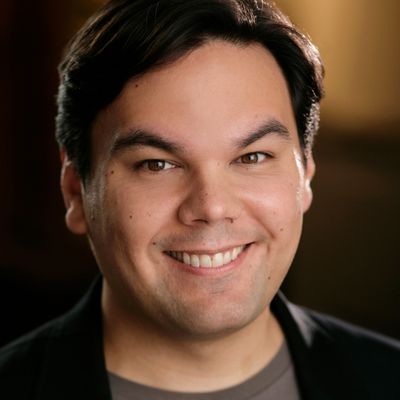
Robert Lopez is an American songwriter of musicals, best known for co-creating The Book of Mormon and Avenue Q, and for composing the songs featured in the 3D Disney computer animated film Frozen, with his wife Kristen Anderson-Lopez. Of only fifteen people who have won an Emmy, a Grammy, an Oscar and a Tony Award, he is the youngest and quickest (10 years) to win all four.
I got to spend an hour with Bobby in his brand new songwriting studio in Brooklyn (which was the coolest space btw – in addition to the computers and white boards that had notes about dramatic structure – there was this big ol’ cabinet that housed all of the awards that make up that EGOT title), and we talked all things about songs and his success including . . .
- What an early meeting with Stephen Sondheim meant to his career.
- Why he never thought The Book of Mormon would ever happen.
- Why he recommends the BMI Workshop to Writers.
- What he thought the moment he and his wife, Lyricist Kristen Anderson-Lopez, finished writing “Let It Go.”
- If there might be another collaboration with the South Park guys in the future.
Keep up with me: @KenDavenportBway
Transcript
This transcript was automatically generated and might contain errors.
[0:00] Ken Davenport: I wanna be a producer with a hit show on Broadway. I wanna be a producer. Hey everybody, so social media is all the rage, and everybody wants to know how to use it to sell tickets. Well, I'm teaching a webinar next Wednesday, April 6th at 7 p.m. Eastern, all about how to use social media to sell tickets for your show. Get all the details on the producers perspective.com. And if you're a pro member, you get this webinar for free. Now on with the podcast.
[0:32] Ken Davenport: Hey everybody, it's Ken Davenport here. This is the Producers Perspective Podcast, and I've taken the show on the road today. We're podcasting from Brooklyn, which I will be honest, I've lived in New York 20 years. I've only been here like three times. We're recording this session from the studio of today's guest. Welcome to the podcast, Egot winner, Robert Lopez. Welcome, Bobby.
[0:52] Robert Lopez: Hey, thanks, Ken. Thanks for having me.
[0:55] Ken Davenport: So Bobby really needs no intro, but in case you've been living under a musical theater rock for the past decade, he's responsible for some of the most unique and successful shows on Broadway. One of the co-creators of Avenue Q, Tony Award for Best Musical and Score, Book of Mormon, Tony Award Best Musical Score and Best Book as well, and a Grammy Award. Television contributed songs to Wonder Pets, Emmy Award, as well as Scrubs, The Simpsons, a lot more. And with his wife Kristen, he wrote the songs for Frozen, including the song heard around the world, as sung by every child under the age of 10, Let It Go, which is when he won that Oscar and Emmy plus Grammy plus Oscar plus Tony equals Egot. The quickest person in history to rack up all four. Okay, Bobby. So that's where we are today. How did you get started in writing for the theater?
[1:42] Robert Lopez: Um I I uh kind of got the bug really early. I grew up in Manhattan, um, and I was in this drama group. I I well, actually, before that I started taking piano lessons. I was seven years old, and my piano teacher had me um write little pieces, and I started writing songs at seven. And um all my teachers knew that I was a musical. And we did um we were doing I was in this drama group in Grand Village, and uh the teacher said, Well, you know, would you like to write the opening number of our show? It was a little student-written show. It was kind of like chorus line, but um, but kids auditioning for a performing arts type high school. It was like chorus line meets fame. And uh and I said, sure, oh yeah, I'd love to do that. And I wrote a number, um, and that was the that was the end of it. I loved doing that, and everyone said what a great number it was, and I had the bug. I never I never looked back.
[2:39] Ken Davenport: Do you remember what it was about writing that piece or seeing it up that made you go, oh, the theater, that's what I want to write for? You could have written for pop music, for singers, for anything, but why the theater?
[2:52] Robert Lopez: I don't know what it was. I think I just um I enjoyed, I was a shy kid. Um, and I think a lot of artistic kids, a lot of kids who compose and play piano are you know, they tend to be a little bit shy, and music um was my was my way of um sort of coming alive in in in a group, and um I think that's what it was that I got to be on stage and be extroverted and be and sing and tell jokes and uh and you know, and then through composing and songwriting, I could I could sort of show that off at the same time. And it was really it was kind of like a kid that kept to himself getting to finally show off once in a while and and uh uh and and having a convention that um that that made it okay and and bridged the bounds bridged the the boundaries that shyness kind of put up.
[3:49] Robert Lopez: Uh this is where I sometimes ask my composer guests about their first song, but you talked a lot about your first composition or early composition on your TEDx Broadway talk, which is amazing. So we're just gonna put a link to that uh in the blog about this, um, which is great. Then you went to Yale, right?
[4:06] Robert Lopez: Uh-huh.
[4:06] Ken Davenport: And what did you major in at Yale?
[4:08] Robert Lopez: I majored in English. Um, I got a BA in English. And I actually minored in, or not minored, it was a double major. I majored in music too. But I think when you double major, it only only one of them counts, so that that's the one.
[4:21] Ken Davenport: And did you know you wanted to compose for the theater when you went to Yale?
[4:24] Robert Lopez: I did, and I went, I went to Yale because uh it's funny, the the day that I met Stephen Sondheim when I was 15 years old, I um I had I had um some I knew someone that knew him, and I got uh through that person I got him a tape and he wrote me back a letter, um, as he does to so many young composers uh so generously and gives it his time. And and it was an encouraging letter, and I just felt like wow, I could really do this. And then the friend said, Would you like to meet him? I said, Yes. So um I went up to there, he was recording an interview with James Lepine at um in Manhattan somewhere, and it was part of the the into the woods um question and answer kind of portion of the MTI videotape.
And um, and so I was there that day that they take it, and so was David Pogue, who was this Yaley, uh, who now is famous for his um his Apple reviews uh from the Times and Yahoo, whatever. And he was the one who said, if you're gonna go to college, you've got to go to Yale. Adam Geddle was at Yale, um, and uh, you know, you that that's the play, you know, you you you're gonna um have your work done as much as you want, basically. There's so many so many theaters um just doing student written stuff, so that's why I went there.
[5:42] Ken Davenport: So after school, you just picked up though and then took the got on the Metro North and moved to New York?
[5:48] Robert Lopez: Yeah, well, I was from New York, so I moved right back in with my parents. It was uh quite as simple as that.
[5:55] Ken Davenport: And so tell me your first show, you're gonna burst on the scene with Avenue Q, but tell me a little bit about how it was born.
[6:02] Robert Lopez: Um I was uh one of the first things I did when I graduated uh Yale, uh, and this is something that I tell everyone that asks me for advice, uh, is I I auditioned for the BMI workshop, BMI Musical Theater Workshop. Um, and it was a it was this great um, it's a class, it's still being done, it's stronger than ever now, and um it's free, it's for anyone that auditions and gets in. And um it's it's a place where you can a kind of learn uh the the professional jargon and the craft of musical theater writing. And um it's also but even more than that, it's a place where you can um you can meet collaborators, you can have an audience for your early work, you can um find out what's going on in the scene of your generation, basically.
And that's what that's what it was for me, and that's where I met Jeff Marks. Uh and we um we started writing, we we uh together. I was actually writing by myself to begin with. I was writing music and lyrics, and um I noticed that I wasn't having as much fun as most of the other people in the class because they were all meeting each other and finding times to write together, and uh uh I just realized like I'm kind of just sort of sitting in my parents' house uh with headphones on writing songs. Uh so I I called up Jeff who had written this great song called uh People Suck. Um, and it made me laugh, made the whole class laugh. And uh I said, we want to write together. So we ended up writing a little show, and uh our first project we ended up doing in that teeny show, and then a bigger show called Kermit Prince of Denmark.
We had to do an adaptation, so we decided to do Hamlet as done by the Muppets, and um it was all about Kermit the Frog. Um, was on a plane to Denver and got on the wrong plane uh to Denmark and uh and and chaos ensued. Anyway, so that's how we got puppets. That's how we got the idea for doing puppets, and we met Rick Lyon, and and I I remember I was sitting once again in my parents' place um with a with like my third scotch at one in the morning, thinking, How the hell am I gonna get out of here? Um and uh and it hit me. I was looking at the TV, I was like, what about a TV show? It's like Sesame Street meets friends, and I called Jeff. It was like one or two in the morning, and he was like, Yeah, let's do that. Um, so that that's how that was born.
[8:32] Ken Davenport: So we'll uh flash forward a bit. Actually, Robin Goodman was on last week's episode, so she talked a little bit about the the uh change from television to theater. Um so it opens off Broadway, and then it gets moved, you know, people think around town, oh, what a great off-Broadway show. It'll probably sit there, and then Kevin and Jeffrey and Robin move it to Broadway, and all of a sudden it's this big hit. You were living in your parents. Were you still living in your parents' house when—
[8:59] Robert Lopez: No, I I moved out like the the month that we signed the deal with uh with Jeffrey and Kevin and Robin. Um I moved, it was right after 9 11 to it was like nine, it was 10-11. 10 1101.
[9:15] Ken Davenport: So this little show opens big. What was going through your mind when the night of the Tony Awards? Could you ever have imagined this little show born in your parents' house would ever have achieved what it did?
[9:27] Robert Lopez: Yeah, no, I mean that was the that was the crazy thing. I I never imagined Broadway success. I just always imagined you know, off Broadway failure. I always thought, well, if I could just get a failure off Broadway, that that'll be something. Um so uh that was my goal, and uh and somehow somehow I'm so sorry to tell you. I wanted I wanted to write something that that you know was very admired but didn't run very long off Broadway.
[9:58] Ken Davenport: Okay, so Avenue Q is a big hit, and then uh we go on your next show, you start writing Book of Mormon. How did you was there a lot of pressure on you when you started writing that show? Did you feel more pressure, less pressure?
[10:10] Robert Lopez: I you know, it was for fun. Uh in a lot of ways it was for fun because I was writing with these um these giants in my life, Matt and Cherry were were were a huge inspiration. They had they had just come out with South Park the year I graduated. So um that completely, they were sort of heroes. And um and I didn't uh you know, for a lot of it, I was kind of thinking like they're just they're just screwing around, you know. I don't think they really care. I don't think they really want to do this, but we're having fun. And I get to, you know, go to LA and meet them. And um, and then it sort of started to to every time we would meet, we would write some songs, and then the songs would still be good and they'd still want to work on it.
So over the course of a few years, we assembled enough to do a reading, and that that's when it started to gain some momentum. And we did a we did a reading at the Vineyard Theater, which is where we had done Avenue Q, um, in 2008, I think. Um, and that's when it started to be like, oh, this could be a show, this could be my next show.
[11:08] Ken Davenport: Um interestingly enough, just like you, you were as you were writing creating, you weren't thinking, Oh, Broadway is where we'll be.
[11:15] Robert Lopez: No, I mean, uh I think and and not only that, we weren't even sure it was a theater piece. Um, we were kind of writing it as an album. We were sort of writing these songs, we would write notes on what the story was, and then Trey would always lose the note cards every time. And uh we'd we'd get together the next six months later, and we'd be like, Oh, so what's the story again? Shit, Trey lost the the note cards, so what's what's it? Oh, yeah, and then we talk and we'd say, like, we already figured this out. Wait a minute. And uh um, and so finally, finally, um, you know, we committed some stuff to paper, and we thought we still thought they weren't sure if they wanted to stay with what they knew and do a movie, um, or if they wanted to sort of be adventurous and do it on stage. I'm glad we did it on stage. Um, but we still we still have that urge to maybe see it as a movie one day.
[12:05] Ken Davenport: I just love that you committed it to paper, no one picked up a laptop and put it in there, so you wouldn't lose that.
[12:11] Robert Lopez: Oh yeah, I don't know. I think we probably committed it to laptop.
[12:14] Ken Davenport: And what was what's your approach in in general with the collaborative process? You work with Jeff Marks, you're working by yourself first in your room with your headphones. Then you're working with Jeff, a student appear, then you're working with these giants of comedy. What is your approach to the collaborative process for writing a musical? Are you a music lyrics? And I notice on on a lot of your shows, you're just listed on a Book of Mormon specifically, it's just the three of you, right? It's not music, lyrics, book.
[12:40] Robert Lopez: Um, yeah, I love the more um the less definition between the roles. I really get I get off on that. I like um obviously like I started as a lyricist and a composer mixed together, and I always feel stifled if I can't write lyrics. So I've never worked with anyone as purely a composer. Or maybe I have, but just not that much. And um, and uh I um I just like an open atmosphere. I like not feeling too precious about things. I like um I like when my collaborators are allowed to say, I don't like that melody. What if it went like this? I don't like can you change the baseline there? I like that. I like that it that it um it takes it away from preciousness and um and ego and brings it towards the the realm of what's gonna connect with people, what um what is gonna speak to people? Because I think that in the end, that's really what I want to do.
[13:38] Robert Lopez: I don't want to write stuff that's sort of ethereal and admired. I really do like to connect with an audience. And that went both ways when writing Book of Mormon. So you were saying to Trey and Matt, like, you know what would be funny here? This would be, oh, yeah. I mean, we both we all wrote all of it. It wasn't I think the because they're so famous, and because they're so charismatic, they are perceived, and because we advertised the show as South Park, South Park, South Park, they're perceived as having come up with the idea and being responsible for a lot of the content. But it was an equal collaboration between us all, and I, you know, I came up with Hasidika Ibawai, you know, which is the song you would think that they wrote, and vice versa.
There's lots of stuff that I had less to do with, and they had more to do with it, you would think that I did. But yeah, it was a lot of making each other laugh. And it's funny, we just celebrated the show's fifth anniversary on Broadway, and we spent some time together in a room talking about you know what the next things might be. And we were sort of it was this rhythm kind of came back that felt very familiar of talking, laughing, and then all of a sudden we're all on our phones, and then someone says the next thing, talking, laughing. And it was this cool, familiar dynamic that reappeared.
[15:11] Ken Davenport: So when you say talk about next things, next things for Mormon or another show for the three of you?
[15:16] Robert Lopez: Yeah, I mean, well, it was mostly just they were in town, we were having a party, we were doing some press for Australia, and we wanted to have a creative session to see what would happen.
[15:26] Ken Davenport: And what about so you like to collaborate early with your fellow writers? What about directors? Do you like when they come in early? Do you like them to wait for a while? You worked with Jason on Q and then Casey Nicola, of course.
[15:39] Robert Lopez: Directors are really important. I mean, Jason, I can't say enough about Jason. We never really talk about him with what he did with Avenue Q, but Jason was the last of the four of us to come on board, but he was the one to kind of marshal these forces that were kind of we were like a train that was pulling it several different ways with like three locomotives, and he got us all rowing in the same direction towards a goal. And even though I would say that the end product definitely reflected what we wanted, it was Jason that got it there because he was the one that knew where we should head. If he hadn't come on pretty early, we probably would have spun out. And the same thing, Casey really took Mormon in a way different direction than it had been going in.
His influence was really kind of huge. The perception of Mormon as this big dancing traditional musical is a lot due to Casey's work. I mean, his the dance arrangements and the dance breaks that he put in there and that Glenn wrote really they all we all had to work with the comedy that we set up. A lot of the show became what it was in Casey's workshop.
[17:04] Ken Davenport: And what do you think about the role of the producer on Broadway and in the development of new musicals? He worked with some very different producers.
[17:10] Robert Lopez: Oh, yeah, Jeffrey Robin to Scott Rudin now to Disney, of course. What's that like for you? What do you what kind of support do you like? What's what's a good producer to you?
[17:20] Robert Lopez: I've been really lucky. I mean, I think they're all in their way the best that I've gotten to work with. And I think my favorite dynamic is that they're there when you need them, in the development, anyway. That if you need a workshop or a reading, they're able to make it happen, that they're able to challenge you to go beyond what you think is possible, they're able to give notes but not expect you to follow them to the letter, that they'll understand if you try and hear the problem behind the note and address that they're not prescriptive of how the plot should go or whatever. And that they be brave, that they be risk takers. I think a lot of writers are risk takers. I know I'm a risk taker, but I'm also profoundly conservative with my money and like, you know, I could never write a check the way producers do on something challenging and something that could just be a waste of money.
So I think it's that sort of, you know, risk taking, gambling, high risk, high reward attitude that they need to provide the bravery for it. And you know, in terms of the different strengths and weaknesses, I mean, Rudin is so smart at story math and he's so good at getting you to put in 150%. I think Jeffrey and Kevin know a lot about the soul of musical theater just having been there for Rent and Avenue Q and Hamilton and all these amazing shows that they've done. They just know they have a lot of wisdom about what makes a show, what makes a good original musical. Robin too. She's been there through so much of it. So I don't know. I've been really lucky and you for Avenue Q, you know, keeping Avenue Q going for an ungodly amount of time. It's like Lord Voldemort Horcrux time. I don't know how we're doing it. But grinding it out over there. Seriously, seriously.
[19:38] Ken Davenport: I find it interesting you said you don't understand how producers could write a check or raise money because it's so risky, but you don't see any risk in creating something and putting up in front of people and letting thousands of people judge it. Is that scary for you when the curtain goes up the first time on something that you've created?
[19:58] Robert Lopez: Yeah, it's the scariest. It is super scary and I don't mean to say that we're not risk takers. I just meant risk takers as financial entities and as you know, like I like my stuff to be where it is. I like to know how much I have, all that stuff. I don't I'm not a big better. But producers have to think like, okay, if I risk this, so what? But if I, you know, if it comes back, I can really get a lot out of it. And that's how they have to be. But anyway, yeah, I mean, it's an emotional risk. It's a risk of putting in a lot of time to something and maybe not seeing anything happen, you know, but it's only yourself that you're putting into it. It's not your stuff. And for me, the thing that I love about it, about Avenue Q and Mormon and Frozen is that we've put something together that really hasn't been seen before and we don't know how anyone's gonna react because it's never really been done before.
And it's almost like a weird social science experiment that you're conducting. And opening night or the first preview is really the test case. And I mean with Book of Mormon, it was so electric. It was so cool that no one knew what was in the show. And the reaction we got was just I just I'll never forget how electric it was. Same thing with Avenue Q was pretty people were not expecting it, and I love when something new kind of hits an audience. It's also I'm also pacing in the back, and I with Avenue Q, I was I was at the bar all the time. I'm not a big drinker, but I was just always there during those months because I did not enjoy previews. We'd had a show this summer that was just up here at La Jolla, and that was just a tryout. But it just put us through so much stress. The amount of just adrenaline and worry and fear that goes through you when you're seeing your work up for the first time.
[22:14] Ken Davenport: Are you a fast writer or slow? Do you love to write? Like I'm sitting in your office, which you have just to write. Do you wake up like I'm gonna rush to the or are you a procrastinator? Like which?
[22:24] Robert Lopez: I'm not, yeah, we can't be procrastinators anymore because I write a lot now with Kristen, my wife, and we are basically together all the time, but if we want to be working, we have to use the hours that we have well, and we have a lot to do. So we've turned into really kind of nine to five or ten to six writers, and you know, we're always thinking about it. We think about it in the shower, we think about it, you know, while we're reading books, like, oh my god, you know, but I just solved it, or whatever. Kristen is always, we even have like a little notepad in the shower that is waterproof. And if there's like a pencil that's waterproof.
[23:04] Ken Davenport: I have the same one.
[23:05] Robert Lopez: Yes, I did. One of my staff members gave it to her. It's useful.
[23:08] Ken Davenport: It is very useful. Beats writing in falls in the shower.
[23:13] Robert Lopez: How is writing with your wife? A lot of people would say, I will never want to work. My wife actually lives in Los Angeles, so we don't see each other. We see each other every couple of weeks. You guys live together, work together, raise kids together. Yeah, how is that? Obviously, it's been successful.
[23:27] Robert Lopez: It's been successful and it's, you know, I think it's essential to who we are. I met her at BMI as well, and we started dating first before we started writing together, but it quickly became sort of part of who we were as a couple, even though it wasn't the major focus until I'd say like four years ago. And what we share together, I think, as a result of both being writers and writing together is so much. We're just we're really, you know, we communicate so intimately about so many things during the day. We have the opposite problem of most married couples who are like ships passing in the night sometimes, they don't see each other because one takes over and the other one gets a rest. You know, we're full in partners and it's a lot of good.
And then when things don't go well, when we're both up, it's great. When one of us is up and the other is down, that's fine because we both we, you know, the other one brings the other one up. But when we're both down, it can be challenging because then who's gonna bring us up? You know, it just feels like everything has collapsed. But that's been rare. Like we've been pretty lucky.
[24:53] Ken Davenport: So let's talk a little bit about Frozen and of course the big song "Let It Go." And what I'm most curious about is when you finished that song, when you two were done, did you know what it would become? Were you like this is a good one. We got a good one here. This is gonna go far.
[25:12] Robert Lopez: Yeah, I think we did. I think we we didn't know. Obviously, you never know. You always have a good feeling about anything that you want to share with people. Otherwise, you wouldn't want to share it with them. But we had this feeling of like this is sort of a big song, big emotional song that we weren't even expecting to get to write in this movie, this princess movie. But it was a nice it was a change of pace for me for sure of being able to write this emo kind of ballad that was about empowerment and really had doesn't have much irony to it. You know, it has a little ironic moments and all that but it's not it there's nothing tongue in cheek about it and it was a first for me actually. I've been thinking back like I really hadn't gotten to write that kind of song ever.
Even when I was a kid I would write these little ironic sometimes poignant, I don't know, every adjective but empowered and you know, bearing one's soul. And so it was a fun change of pace for me and I knew that it was catchy and I and I and it all basically after that it all came down to well will the movie be good? Will the movie earn this moment? And the answer for most of the time that we were doing working on the movie was no. I mean everyone recognized that's a good song, but no one bought it until very towards the end of the process of making Frozen.
[26:51] Ken Davenport: How do you think Broadway is doing today? If it was a patient in a hospital, as I often say, how do you would it be critical condition? Would it be doing well, ready for release?
[27:03] Robert Lopez: Seems like it's not in the hospital to me. It seems it seems like it's put on its shoes and it's in its apartment. It's fine. I think it's great. I mean, looking at Hamilton and the I've never seen I don't remember a show in my entire life that has caused as much of a stir as Hamilton has.
[27:25] Robert Lopez: And I think that Fun Home is equally as exciting, although to me I feel like Hamilton seems to have covered up the excitement that is Fun Home too. I just found that show so moving and so different. I think of them both as real pillars of this new age on Broadway. Looking at all the songs that you've written, I'm gonna ask a very dark question now. If you had to put one in a time capsule, as if the world was gonna be destroyed tomorrow, but this would exist for future generations to see. What song of yours would you put in? This is a derivative of my Smithsonian question. I used to have. I was shaking it up. What's what song viewers would you put in there?
[28:18] Robert Lopez: Oh gee, I don't know. You know, there's a song that hasn't come out yet, and I can't even tell you what it's in. We won't tell anybody. Just the thousands of subscribers. Yeah, it's a song that no one's heard yet. I wrote it, Kristen and I wrote it right around the same time we wrote Let It Go. But it won't come out until next year. So I have that to look forward to. Do you get writer's block? Do you get stuck like that and think, oh god, I don't know if I can do another Let It Go, or I can I have another big one in me?
[28:58] Robert Lopez: Yeah, all the time. That's a constant dialogue that you're having with yourself of like, I don't know if I can do it again, what if I never write another good one, etc. But you learn to evolve routines and habits and therapy and just talking. And I think once the more you write on a routine, the less that seems to be a problem. I think a lot of people have said that too. Favorite song that you haven't written? Someone else, you know, this is a question that Sondheim was famously asked.
[29:35] Robert Lopez: Yeah, and I wrote a song called I Wish That I Had Written Something Sondheim Wish You'd Written. Kristen and I wrote for the Roundabout 80th birthday concert. That's a good song. I don't know. Let's see. Uh lately. Gee, that's such a there's just too many. That's that's too too much pressure. I mean, even Sondheim realized there was a lot of destruction spread by that, at least. I don't know. Oh you know what? God Only Knows by Brian Wilson. That's the best.
[30:10] Ken Davenport: You think it's easier today for new writers to break into this business or harder?
[30:16] Robert Lopez: I think it's good. I think I mean, I think it's hard. It's never been easy, but I think there's more attention being paid to musicals than than I can remember in my lifetime. You know, when I was graduating, A, no one was not a lot of people were banging down anyone's door to write anything. Certainly not mine, and there was also this feeling of like, oh Broadway's a little dusty. And now there's this feeling of freshness that it's this youthful thing, and young people are doing it, and so I feel like it can't have gotten any harder because there's more opportunities and there's more belief that the form can show fresh things. So I'm gonna say it's easier. I don't know. Easier for me than it used to be.
[31:12] Ken Davenport: So when I got I came in the door here, you I said, Oh, yeah, it's been a long day for you, and you were like, Yeah, I've been working, and then I went back to have dinner with my kids. You have two daughters, yeah. How do you juggle family with all of this?
[31:26] Robert Lopez: Like a lot of help, a lot of support, and also like the best wife and mom ever. I mean, she just it would all collapse without her. I'm I do I do stuff and I'm but I'm a supporting I'm playing a supporting role compared to what she does. She's got the matrix in her mind, you know, she's plugged into it, and we have great caregivers, we have a great school, we have this wonderful school that the girls are in, and great family, and it's still hard, it's still really hard.
[32:02] Ken Davenport: How old are the kids now?
[32:03] Robert Lopez: They're 10 and 6. Was Frozen the first show of yours or the first piece of yours that they could actually see were allowed to see because of the material in Q and Mormon?
[32:13] Robert Lopez: I think Winnie the Pooh would be closer to that because that came out a little earlier. But we also did I also show I brought when I thought Avenue Q was closing on Broadway Forever, I brought Katie, who was then four, to see it, and the funny thing was I kept taking her out and then bringing her back, taking her out, bring her back, and then for Act Two, I just sort of sat there with her and watched the whole thing, and then I realized that's what's wrong with Act Two.
[32:43] Ken Davenport: I love it. So what's next? Obviously, Frozen announced coming to Broadway. You told me earlier that this is something you're working on right now. Is that the only thing you're doing right now? What else is what's next for you?
[32:57] Robert Lopez: Well, we have, you know, there's stuff we can't talk about. We're also doing Gigantic, which is a movie that was announced for Disney. It's a Jack and the Beanstalk retelling, and it's animated, it's a musical same like Frozen, and we're doing Frozen 2, and then there's another thing we're doing, but really what we have to focus on right now with the schedule that's been handed to us by Disney is Frozen Broadway, which is such a major, I didn't even really quite realize what a huge undertaking that would be. Because we didn't have first of all, we had about you know we've been talking about it for a couple of years, but we only really started writing songs in September, and we have to we have to basically have them all done tomorrow. Tomorrow really is the last, this is kind of our last day before everything needs to be drafted.
[34:02] Robert Lopez: And I kind of in the back of my mind when they started talking about Frozen Broadway, I thought three songs, five songs, maybe I don't know what would it need. And then when we got into it, and if you look at The Lion King, for example, these movies have you know you can count them on your hands how many songs they have in them, and it's usually somewhere between five and ten. It's not it's never ten, like it's really really less than ten. And on Broadway, I always thought, well, this it's more like 15 songs on Broadway, but it's more it's really more like 20. So 20, 22, so counting the little ones and the big ones, and the reprises and all that. It really is it's a far more musical medium, the stage, than cartoon, musical, fantasy, adventure.
Because you don't have the benefit of close-ups or action on stage so much. You could do on stage, you're really talking about emotion. Stories told through song and emotion, and while the plot is happening, information is not as important. Events are not as important on stage. You know, they jump over a big ravine and something, you know, important thing falls into the ravine. Like that's not really something that registers on stage, or you know, you think people traveling on stage doesn't register as much as it does in a movie where you believe they're traveling. So much of what we're doing is taking cinematic moments and turning them into songs, basically, and communicating the same story through songs, and it's a lot of songs, it's like 15 songs, 15 to 12 songs, something like that, depending on how you count. Frozen only has seven.
[35:58] Ken Davenport: See, that's so interesting, because I think for me and for most people out there, they're like, oh, they're doing Frozen on Broadway. They're just gonna put it, I mean it'll be done in like a month. Why are they waiting a year? They're doing Frozen at Disneyland, right? They're doing at the Hyperion Theater in Disneyland, and we went to a we're not writing anything for that, but the show only needs to be 45 minutes or 50 minutes or something like that. And we watched it, and they didn't omit anything that we wrote. All the songs were in it, and it was a beautiful, cozy, 45-minute, perfect 45 minutes. You know, like then we realized holy shit, we have a lot of stuff to write.
[36:38] Robert Lopez: So yeah. I love it. Okay, my last question, which is my big James Lipton question of the podcast. You ready?
[36:47] Robert Lopez: Okay.
[36:47] Ken Davenport: I want you to imagine that the genie from Aladdin comes to your office here, knocks on the door, and says, Look, we're all part of the Disney family. I want to thank you for everything you've done for us and for musical theater, and I want to grant you a wish.
[37:03] Robert Lopez: Wish for more wishes.
[37:04] Ken Davenport: Can't wish for more wishes.
[37:06] Robert Lopez: Damn it.
[37:08] Ken Davenport: What's the one thing about Broadway? Or for you, I'll even widen it to the entertainment industry because you work so often on both coasts now. What's the one thing that drives you so crazy that makes you angry? You are one of the nicest and sweetest guys I've met and known. I when I hear about your collaborative process, I am not surprised because you're such a nice and genial guy. What makes you mad, keeps you up at night that you would wish this genie would change in the snap of a finger?
[37:46] Robert Lopez: You know, I don't I don't I don't think about that stuff like you're saying. I think if I if I were to it's it's something new that I really never quite felt before, but I've realized I've I think a lot of people have been realizing it lately, and it's just representation. I never realized. I grew up you know in part Filipino. I'm I was not raised as ethnically different than the I was assimilated, you know, it's basically I came from an assimilated family, and to me normal America was a you know, a story would be about a white person. And I would change that. I would change and and having daughters and after having written Frozen, I learned just from watching the response to that, how much my experience as a man has been affected by the white privilege white male privilege of our society and that how insidious it is at a very basic level.
It's like the lens we see the world through that yeah, of course, men run it. Of course, it's just that's the way it is. I would I would change that. I would change I would I would want the stories that we see to reflect all the stories that are out there.
[39:20] Ken Davenport: It's a great answer. I want to thank you for that answer and congratulate you on all the success, and thank you for taking time of your very busy, busy day to spend it with us. Ooh, and I'm gonna announce our next guest, but we're gonna announce it in a little different way. We're gonna play a little game. You ready?
[39:34] Robert Lopez: Yeah, play this game.
[39:35] Ken Davenport: Love it. It's the riddle. First of all, I will tell you that all the guests, we are now doing a little six degrees of separation. So you are connected to the next guest. Okay. Now finish this riddle. Ready? Here you go. All you out there, you ready for it? He's press-repped like 400 Broadway shows from Book of Mormon to Sunset Boulevard to Anything Goes. Originally from London Town. My next guest is Chris Bono.
[40:05] Robert Lopez: Adrian Bryant Brown, his partner.
[40:09] Ken Davenport: You're good. Don't worry about it. I have no idea. Thank you so much for this, Bobby. And best of luck with Frozen and Frozen 2. Thanks so much for listening, everyone, and we'll see you next time. Don't forget, next Wednesday, April 6th, how to sell tickets with social media, the webinar. 7 p.m. Eastern time. Get all the information at theproducersperspective.com and join the Producers Perspective Pro, and you can take this webinar for free.
© Broadway Podcast Network, All Rights Reserved