

Andrew Lippa is a composer, lyricist, book writer, performer, and producer. He is a resident artist at the Ars Nova Theater in New York City. He began his professional theatrical career at the Goodspeed Opera House in East Haddam, Connecticut... Read More
From the show: The Producer's Perspective Podcast with Ken Davenport
Guests
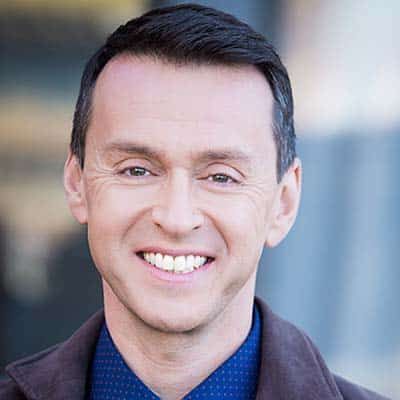
About
Andrew Lippa is a composer, lyricist, book writer, performer, and producer. He is a resident artist at the Ars Nova Theater in New York City. He began his professional theatrical career at the Goodspeed Opera House in East Haddam, Connecticut. In 2006, the musical Asphalt Beach, with music and lyrics by Lippa and the book by T. C. Smith and Peter Spears premiered at the American Music Theatre Project at Northwestern University. He receives a Tony nomination (Best Original Score) and two Drama Desk nominations for his work on The Addams Family. Big Fish, Lippa’s newest musical, with a book by John August, based on the 2003 film and the 1998 novel, premiered in Chicago from April 2013 through May 5, 2013. It opened on Broadway at the Neil Simon Theatre October 6, 2013.
Listen to his self-producing tales in this week’s podcast, along with . . .
- How Jeffrey Seller, the Producer of Hamilton, got him to believe he could write a musical.
- Can anything be a musical? Maybe, if it has this . . .
- His amazing analogy about the creation of a Kleenex Box and how you should create the same way.
- What Edward Albee taught him about writing.
- His work as The President of the Dramatists Guild Fund, and why it’s important to writers.
Keep up with me: @KenDavenportBway
Transcript
This transcript was automatically generated and might contain errors.
[0:00] Ken Davenport: Hey guys, quick coming attractions for the podcast. We've got Jack O'Brien coming up. We've got David Stone, the producer of Wicked coming up. Super VIPs. You don't want to miss one. Make sure you don't by subscribing to the podcast. Subscribe on iTunes, whatever podcast listener you use, or just go to the blog at the ProducersPerspective.com, throw in your email address. You'll get an email to you as soon as it comes out. On with today's podcast.
[0:25] Ken Davenport: I wanna be a producer with a hit show on Broadway. I wanna be a producer. Hello, podcast listeners. Welcome back to the podcast. I'm super excited to have today's guest here with us because I've been a fan of his music since someone handed me a song to sing in like 1991 when I was an acting student at NYU. Welcome to the podcast, Mr. Andrew Lippa. Welcome, Andrew.
[0:54] Andrew Lippa: Thank you. Hello.
[0:56] Ken Davenport: So, first of all, do you remember what I'm talking about?
[0:58] Andrew Lippa: I have no idea what song you're talking about.
[1:00] Ken Davenport: No, what did you sing in 1991?
[1:02] Andrew Lippa: So I went to Tish at NYU, and Jason Robert Brown was my singing accompanist. He was a compass.
[1:08] Ken Davenport: And you that's like hitting the jackpot.
[1:11] Andrew Lippa: I know. So I took some vocal coachings with him, and he said, I've got the perfect song for you. It's called Make It Fly by Andrew.
[1:18] Ken Davenport: Oh my god.
[1:19] Andrew Lippa: So that song, that song was Tom Greenwald, who I wrote John and Jen with, and I. There was some yu uh like um company that was a competitive company to Theaterworks USA. They were a smaller company in New Jersey. I don't even know if they exist anymore. They did shows 45-minute shows for kids. And there was some, oh, it was some it was a sports-related, which already disqualified me. A sports-related something. I don't remember if it was like the Jesse Owen story or something like that. And we wanted to write an inspiring anthem. And uh, we were young and uh believed in inspiring anthems. And we wrote this song of Make It Fly. That Billy Porter actually loved and sang. And in fact, Billy, like about a year ago, I bumped into Billy.
We were doing an interview. We were both in Boston doing uh something about a year and a half ago, and we were back to back on WGBH. There was a TV interview, and we were both on the same show. And he said, Do you still have that song, Make It Fly? Can you send a copy of it to me? I'm like, I had no idea where it was because it was before anything was digital. But I found it and sent it to Billy Porter.
[2:26] Andrew Lippa: So Billy called me, you still haven't sung the song yet. The amazing thing, and the real credit to you as the composer, I can remember that fucking song. Make it fly, make it so that you can touch the sky. Show the world that you can make the most of what you can if it's. Oh my god, that is excellent. That thing's stuck in my crawl. Look at that. It's gonna be here. What year was that?
[2:46] Ken Davenport: 91, so 25 years ago.
[2:48] Andrew Lippa: And about like Rossini. So Rossini was famous for taking old stuff and using it again. Like all throughout Rossini's operas, there's repeats, and he's like, Oh, I like that tune. Let's use it in this opera. I have to, and also because he was always under deadline. I love that about like I got a show next week, I've had to write something. Or he would borrow old stuff or take stuff out of the what we call the trunk. I don't know what they called it back then. So maybe Make It Fly will show up somewhere in a show. You never know.
[3:14] Ken Davenport: Well, my I'm sure my version was much better than Billy Porter.
[3:17] Andrew Lippa: You have a lovely voice, by the way. I'm perhaps a career uh missed.
[3:22] Ken Davenport: Or too yet too gone.
[3:24] Andrew Lippa: Yet too gone. Ken Davenport, head of all things theatrical, and actor. Well, let me uh give you a little bit of bio on Andrew's. So the first Andrew Lippa show I saw was that fantastic two-hander John and Jen back in those 90s. He went on to write some new stuff for the You're a Good Man Charlie Brown revival, wrote book, music, and lyrics to the terrific Wild Party, which won the Drama Desk Award, and which actually was the event, the show of the season at City Center last year, by the way. Tony nominee for a score for the Addams Family, which had been performed all over the world, wrote Big Fish for Broadway. He also wrote, which I want to talk about, this musical tribute to Harvey Mill called I Am Harvey Mill. He's the president of the Dramatists Guild Fund, which we'll talk about as well. But let's start at the beginning.
[4:08] Ken Davenport: So, how did you get bit by the theater bug? Where did this all start for you?
[4:11] Andrew Lippa: I started, I was born in England. I was raised in suburban Detroit, and moved when I was about three, so I'm for all intents and purposes American, but have this English Jewish thing as well. And grew up in a great town where they had a really fantastic public school music program. I wanted to play piano, but my parents didn't have one and couldn't afford lessons. So I didn't start playing piano until I was in eighth grade. And so up until that point, I was a singer and I always sang well, and I loved singing, and so I learned how to read music and sing. And music was my first entrance into art and has always been my religion, my breath, my life, the thing I love the most.
[4:50] Andrew Lippa: And when I was in high school, when I was in 10th grade, it was a big decisive year because I, after my bar mitzvah in seventh grade, I was I started Hebrew high school. And I uh most kids didn't, but there was you could carry on your Jewish education. So I I liked it, and I went three days a week after school to Hebrew high school. And when I was in tenth grade, I auditioned for all the advanced musical groups, and I was fortunate I got accepted to them all at school, and I auditioned for the pajama game, and I was cast in the production of the pajama game, but rehearsals were after school, and I was either going to be in the musical or go to Hebrew high school. And I went to my parents and said, I have this, you know, what felt like a daunting 15-year-old choice. And my parents, to my surprise, still said it was okay to go into be the pajama games, the pajama game and not and not do Hebrew high school anymore.
[5:45] Andrew Lippa: I really can't quite I don't know what they thought. You know, I really don't I other than they wanted to support my talent because they believed in what I what I loved and they had seen evidence of some of the things that I that I was showing promise when I was showing promise in that young age, at that young age. So I was in, as a very fat kid, I was a fat steam heat boy. They told me to shovel more coal in the boiler, and I did that show, and that was what started it, and a few friends, including my lifelong friend Jeffrey Seller, who I grew up with, who's bought my parents' house from us when we were six, who we were boyfriends for six years. Jeffrey Seller, the producer of Hamilton and Rent and many other things, has been my lifelong best pal.
[6:27] Andrew Lippa: And Jeffrey and I were in those productions together. So we were in the pajama game the following year. We were in the Fantastics, we and we did choir, and you know, we we memorized Evita, and uh so Jeffrey was the one in college. We went to college together, and when I was at the University of Michigan in my freshman year, Jeffrey said, You play the piano and you like musicals. Why don't you write a musical? Which for me was like you've been to Chicago and you like pasta, why don't you sell real estate? It complete non-secondary, and yet there was something about it that felt like um a challenge, I think. It was an intellectual challenge, if nothing else. Can I do this? What what is it? What is writing music? What is that? I I don't know anything about writing music. I've never done that, I've never thought about why musicals do what they do. I didn't understand what the rules were.
[7:20] Andrew Lippa: I didn't know what the rules were that you could break. I didn't know anything. So Jeffrey had an idea for a story, and frankly, it was it was uh like into the woods long before Into the Woods. So Steve and James LePont Steve Simon and James LePine should give us a call. But um, but it was a combination of fairy tale stories. I'm sure lots of people tried that until they got it right, into the woods. And we wrote this 45 minute musical for which I wrote the music only and played it for our teachers, who several of our teachers, and they each of the teachers spoke to both of us and then contacted me privately and said, You're really good at this. I don't mean to throw Jeffrey under the bus because he's really talented.
And but Jeffrey's Jeffrey's um life as a lyricist wasn't going to last long, and he knew it too. So we we I kept that uh quiet, but it it opened a really huge door, and it was the door of possibility in my in my own body and my own ability to create and make things and the desire to say this is what I believe.
[8:23] Andrew Lippa: I I think writing in in most ways, I've heard people say, you know, I I write for you, or you know, I made this for you, and I'm like, I don't make things for anybody. I I you know it sounds selfish, but I I make them because it pleases me and it makes it allows me to understand me a bit better, and and I have found that that's hard enough. You know, it's hard enough to understand myself. So the characters I've written, you know, even even comedies, you know, are a way for me to understand myself. Uh when we talked about Rick Mar Rick Ellison, Marshall Brickman and I talked about the end of the Addams Family, this big story about this dark family, and it's a big comedy. And the question was, how do you end it? Because most musicals are about, many musicals end with hope and light and move toward lightness and happiness, or you know, the possibility. Is that's the American idea, right? That we that we move towards possibility, the end of next to normal.
[9:16] Andrew Lippa: This woman goes through this horrible experience and is still in a horrible experience, and yet they sing a song called Light, I think it's called at the end of Next to Normal. So Rick and Marshall hit on the idea of like, no, it's about going into the dark, move going to the cave, move toward the darkness. I said, Stop. And I wrote Move Toward the Darkness, which is a facet of me. It's a the notion of I love that Joseph Campbell notion of the the cave you fear to enter, holds the treasure you seek. So anyway, long answer to the question is I got the bug in high school, fell in love with musicals and opera, and musical theater storytelling. So it's not just about Broadway, it's about musical theater storytelling for me.
[9:56] Ken Davenport: And so they tell you you're good, so you're like, okay, I'm gonna do this. And after college, you move to the city and just start writing some more shows. How did you get that first show on?
[10:05] Andrew Lippa: I went to the University of Michigan, Go Blue, and uh graduated uh in 1987 with me in music education, and I was a school teacher at a private school on the Upper West Side called Columbia Grammar and Prep School. And while I was there, I got accepted into the BMI Musical Theater Workshop, which is uh a really great training program for young writers and uh mostly young writers, although I don't think it's restricted by age, but most of the people in my group were were young. A couple people in my class went on to write some things like Amy Powers, who went on to write some shows that have gone to Broadway, Dr. Givado most recently, and it was uh a great opportunity to have a deadline and have people, uh a like-minded people give you some feedback.
[10:47] Andrew Lippa: And I met Tom Greenwald there, who I wasn't writing lyrics at the time, and I asked Tom to write something with me. Jeffrey Seller again came forward and commissioned us from a synagogue on the upper west side to do a musical based on a play a friend had written in college, which was five Jewish folktales that we musicalized and into one play. And it was called A Pound of Feathers, and we got a production, and we did it in the end of 1989. And I it was a you know, as non-professional as you can get, and yet Jeffrey and I and Tom, Tom is uh the creative director at Spotco, the big advertising company, and and he's also a children's book author. He's she's written over 15 children's books, and and Tom and I had another idea to write a musical, uh, and it turned into be turned out to be John and Jen.
[11:31] Andrew Lippa: And one of the advantages of writing a two-person musical is that you can self-produce. And I'm I'm huge on this. This is a thing that we're also big at the School of Music Theater and Dance at the University of Michigan. Our new dean is big on this entrepreneurial things and and ways that our young artists in particular can make their own work and can create their own universe. And we knew that somehow in the early 90s, we we knew a 10-actor musical was going to be really hard to get anybody to do. But a two-actor musical, I was one of the actors, and so we already had a half the cast went around with us, and we funded and put together our own presentations, and we invited people we knew. And I had worked at the Goodspeed as a music as an assistant music director on a few projects there, and we invited Sue Frost, who is now uh uh with Randy Adams.
[12:23] Andrew Lippa: Uh, you know, they produce Memphis and uh I think they're doing Come From Away. Is that their next show this season? Um, but at the time Sue was the associate artistic director or the associate, she was Michael Price's uh uh associate at the Good Speed, and Sue came along with our friend Steven Sondheim, who came to give us notes and was unbelievably helpful and taught me a lot about mentorship and what that is and how we are a guild, like the guilds of your where you you teach the young ones what you know about shooing a horse, and and and that's part of my responsibility, and we'll talk about that when we talk about the dramatist guild fund. But we did a private thing, we invited for two performances, and the truth is it was about Sue Frost.
You just have to have that one person who likes what you do. And seven weeks later she called us and said, We'd like to put this on at the Good Speed at the Norma Terrace Theater. And we got our production, and we did a production for three weeks in 1993, and at the final performance, Carolyn Rossi Copeland, who used to run the Lambs Theater, came and she came up to us, and she was the only person who said anything, and the only person who can ch affect the life of the show. She said, I love this musical and I want to produce it in New York. And we said, Yeah, yeah, call my agent. No, we were so moved, and we said, okay. And two years later, she made good on that promise, and she produced it in New York.
And we didn't make a giant noise, but it was a great thing for us, and it ran for about six months, and in this tiny space, and for part of that time I was the music director and played the piano so that I could make a living, because we weren't generating tons of royalties. And it got recorded, and later it got licensed and published, and and that felt like a real thing. That felt like, wow, you really you can you're not you're not pretending anymore. You you're not saying you're a writer and just doing it at home. You you went you went through every step of this process from an original idea made manifest through readings and productions, and then record frozen into recording and a published version and a licensed version, and people now can do this show, and people can sing songs for their auditions.
Our 20th anniversary production was last year with Kate Baldwin and Ghana Ryan, and we recorded that too. And and so I feel so fortunate that Carol and Rossi Copeland and Sue Frost came into our lives because really it was about those two people who said yes, and all you need is really one person to say yes.
[14:58] Ken Davenport: What I love about how you work is that you've done things where you've written everything book, music lyrics, but you've collaborated with artists as well. Do you have a preference on what you like to do, or what's the difference for your process?
[15:10] Andrew Lippa: I have enjoyed both collaborating with people who are passionate about a particular idea, Big Fish with John August. I had the idea to make it into a musical and called Bruce Cohen, one of the producers of the film who I had met. But it turns out that Dan Jinx and Bruce Cohen, who had produced the movie, and John August, who wrote the movie, also wanted to make it into a musical, and I didn't know me. And so somehow I got to them and they were thinking about making it into a musical at the same time. And we decided John and I should write a few things, and Lau write a couple songs, she'll write some scenes, we'll structure it, you know, we'll talk about the structure of it, and present it to Bruce and Dan, and boom, we did, and we made a musical.
And that was a great like-minded people who had some who had deep experience with the title already, and me who was the new guy, but I was the most theatrically experienced. So it was a good combination until we brought Strowman, Susan Strowman into it, of course, who was our leader on the project, and then there was a real balance to you know people who understood and worked in the theater and people who were new to working in the theater, uh newish. And uh funny, you don't look newish, but my experience, for example, this year, our world premiere of I Am Ann Hutchinson, I am Harvey Milk, which starred Christian Chanowitz and me in the title roles, and we did it with 200 other artists on stage at the music center at Strathmore in Washington, DC.
And in all my career, I've never seen nor been involved with something where an audience gave the first act a standing ovation, and that's what happened when we did it this April. And that piece I wrote every second of it by myself, and I am at the at this at this moment in my career feeling very much like a novelist, and I am enjoying uh and and welcoming in new projects and new ideas where I will write everything. And it's forcing me to think in different ways and different ways of telling narrative and different ways of of chronologically playing with musicals. There aren't a lot of musicals I know of that chronologically challenge you, meaning, you know, even even like even like Death of a Salesman, which is a memory play in its way, or Glassman Asie, which certainly is, and and how you play with time in a musical is a really tricky thing, and I'm really interested in that.
And so I'm I just went to Mexico City last week to talk to a rights holder of a project I want to make into a musical piece. People, and I and he said yes, so I'm gonna go forward with that. But the thing that people ask me uh uh about a couple of these new projects that I'm not gonna tell you what they are yet, but they are they musicals or are they opera? There's this constant question, you know, to me. And Ann Hutchinson RV Milk in the press that we got and the wonderful support from places like the Wall Street Journal or the Washington Post or Opera News, the the folks who wrote about our our piece don't the everybody's starting to learn that it's it's musical theater and it's opera, that it's a three-song thing, but it is in a vernacular that is familiar to a larger audience and it has the capacity to bridge those audiences and has the capacity to to feel like something different because of it.
[18:19] Andrew Lippa: You know, I I may end up writing a musical like Alterboys, which I see all over your office here. Congratulations again, that has you know real influence by contemporary music music of its day, and at the same time, while I love music of my day, I'm I'm not entirely motivated to write that kind of music. So I I'm just happy to tell the story the way I want to tell it. And if people then want to see it and be part of it, then that's just a wonderful thing. And I I like I kind of like that Pied Piper notion, you know, if if you build it, they will comma. If I make it, and Ann Hutchinson RV Milk was was that way. It was commissioned by the San Francisco Gay Men's Chorus, the IMRV Milk portion, as a as a concert work.
And Noah Himmelstein, the director and I have transformed it into a theatrical work, and that's been a great, great joy to do. And for me to make something and then to bring other like-minded people to it is where I am at the moment. So I'm open to collaboration, of course, but at the moment I'm enjoying being a the sole voice on these few projects.
[19:24] Ken Davenport: So let's talk about adapting material. What is it about, like that made you get on a plane and fly to Mexico to meet with a rights holder about that material that said this is a musical or even wild party, this is a musical. What do you look for? And do you think anything can be a musical?
[19:41] Andrew Lippa: Well, the answer to that is yes. I think any in the in the hand anything can be a musical. Uh, you know, describe Sweeney Todd not knowing Sweeney Todd. And you know, it's about this barber, and he was wronged by a judge and he was imprisoned, and in the in the Victorian era, and he finally gets out of prison and he goes back to his old stomping grounds and he meets up with this woman who thinks she knows who he is, but doesn't know who he is, and and he uses her as cover so that he can start killing people surreptitiously. He stumbles on the idea that he can kill people as a barber, which is really what his trade was, and so he kills them and he doesn't know what to do with the bodies. He's really just practicing so he can kill the judge who incarcerated him and raped his wife.
And so the the woman he lives with now, she takes those bodies and turns them into meat because there's a scarcity of meat in life. I mean, you're gone out, you're out the door. You anybody, quote unquote, commercial producer, is going to go, that what on earth? You know, but in the hands of masters like Stephen Sondheim and Hugh Wheeler, you and Hal Prince, it becomes an extraordinary masterpiece that has long endured and turned into a film, etc. And so anything can be a musical. And I hope somebody cracks a science fiction musical. Like I hope that it's not a joke, you know, because he loved R Trek and Star Wars and all that whole universe of films. And boy oh boy, I don't think I'm gonna be the guy to do that, but I think somebody will, and I think somebody can. And challenge is a visual challenge, but there's also an imaginative equivalent, which is the theatrical idea of what those images are. I'm putting the call out.
[21:16] Andrew Lippa: Anybody out there, if you got the idea, call me. 1-800 Star Wars the musical, which is another story I can tell you about a demo of Star Wars the musical that I actually sang Yoda on, and Jason Robert Brown was involved. He didn't write it, but it's so we were sworn a secrecy. I can't tell you that anymore. But what's the other part of the question? That was is anything a musical? So I have um I don't know what makes me want to make something, and that was one of the things I said to the man I went to go see in in Mexico. I said, Look, if I knew the answers, all the answers as to why I want to make this into a musical, then if I were you, I'd say no. Because if I come to you with the answers, that's not art making.
That's not that's not passion. That's not what drives good storytelling. I don't know the answers, and that's why I want to make this, because uh what what I am in I am deeply uh uh intrigued by what happens to these characters. The basic story of this of the premise of this idea are three people who think they have found finally found happiness or a a version of happiness in their lives after considerable suffering, and they've reached a point where at the beginning of the play, they've gone through the storm and they're they're they're in a good place. And then one terrible thing happens that affects all three of them at the same time and connects them together and drags them down into something far worse than what they came from in order to get there.
And the question is: can you become happy again? Can you find can you reach hope and happiness again after that kind of suffering? And again, commercial producers' eyes will glaze over the minute you say the word suffering, because, you know, describe lame is. You know, just lay blame is is all about suffering. And all about a man who believes in God as the ultimate, in the ultimate uh way out and the ultimate uh way to save your life. Well, if you start talking about God and suffering in the commercial musical theater, most people will leave the room or say thanks, but no thanks. But if you are artful enough, like Claude Michel Schoenberg and Alan Bouville and write such extraordinary things and write characters who you want to want to be with and want to spend time with and can understand their motivation, then sometimes you end up with something like Le Miz.
And if it were easy, oh boy, there'd be a lot of Les Mises, right? So it's not easy, and it's not easy to reach to reach deep and to reach wide. And Le Miz is the I think the single greatest example in our lifetime of a of a musical theater piece that did both of those things. I think Hamilton, we don't know yet. We don't know how Hamilton will play around the world. So that's an that's something I'm excited to watch and to see what happens, because we certainly know it reaches deep and wide in the United States. And so the next thing for the folks doing Hamilton is to play it in London and then to see what happens in the rest of the world where they might have productions. Will the rest of the world want to uh see the depth and the and the width of the passion of that story outside of the Americanness of it?
And and again, try describing that Lynn Manuel Miranda to a commercial producer eight years ago. You know, oh it's about Alexander Hamilton and he gets killed, and he's but he was the this and it's kind of a biography, but it's not, and it's we told through contemporary musical, it's like you know, hip hop infused music and theatrical things, and it's gonna be a multiracial cast, even though of course there was, you know, wasn't multiracial back then.
[24:40] Andrew Lippa: I mean, like, and you can explain it in as profoundly, deeply spiritually, meaningfully, intellectually a way that Lynn can, and I still think there are many folk who wouldn't get it. And that's what I call the Kleenex box analogy. So when I talk about making a show, we're a group of people developing a new product, and our noses are dripping all the time, and we're sneezing all the time. But boy, do we wish we could do something that's better than a piece of fabric that you keep in your pocket and keep blowing into all day and have germs and like it's gross, and you have to find a new spot on the piece of fabric each time that hasn't been used, and by the end of the day, it's really kind of gooey and disgusting in your pocket.
So somebody says in the meeting, oh, I got this idea. It's um it's paper. Okay, so it's a bunch of pieces of paper, and they're really thin and they're soft, and they all connect to each other somehow, like they overlap somehow, and they're in a box, and you pull one at a time, and you use it to blow your nose, and then you could just throw it away. And there are a good number of the people who are like, I have no freaking clue what you're talking about. So the smart creator of the Kleenex says, you know what? Here's the problem. The problem is we want to blow our nose into something that isn't disgusting by the end of the day. I've got an idea. Let me come to let's meet tomorrow. And that person goes home and she makes a prototype and she brings it in and she puts it on the table.
And in this particular case, the you pull it out from the side, and it's they're all green. And so people around the table go, oh, wow, that's so cool. But what if you pulled it out from the top? Like, can we just turn it one quarter turn? And green, I'm not sure green's the right color because like what you blow out of your nose might be that color, it's and you couldn't see it. You know, maybe it should be white, or maybe it should be like a lighter color. And this is the process of making a musical. And if you have people sitting around the table talking about the idea, some of whom are not equipped to do it. The truth is the writer is the creator. The writer is the person who makes it. And everybody else is the interpreter.
Or the people can have ideas, but they're not making the thing. So I get it. We have a problem, and we have a set of potential solutions. Let me go make a Kleenex box and bring it to you tomorrow. And then the work of feedback is so much easier, takes anxiety out of the process because it allows everybody to go, oh, if you turned it one quarter turn, or what if it what if it was this instead of that? And then the writer can go, ah, you're responding to the thing I made as opposed to the idea. There's this wonderful meme I saw, GIF, is that what it's called? I'm like, I'm old, the G I F GIF, what do they call it? And online that was um I a story idea in head, and it's um it's Van Gogh's Starry Night.
And it's that gorgeous image of the starry night. It says idea in head, and you see the image of Starry Night, and then it says idea in in script meeting or whatever, or like in discussion, and it's like stick figures and not quite the right colors, and there's one star and and and description written on the page, and that's exactly what it feels like as a creator when you bring stuff, when you don't bring something in. So I'm a big advocate in terms of uh back to your question uh uh is can anything be a musical? The answer is yes, but you have to go make it. Go go make the thing and bring it to your collaborators and say, here's the thing. Now we have something to talk about.
[28:12] Ken Davenport: Do you when you pitch for underlying rights or do you use spec? Will you like do you do you say, hey, I've got a here's an idea for a song? Would you ever do that?
[28:20] Andrew Lippa: I do it, yes, depending on what it is. If I wanted to turn, you know, something of incredible value into a musical and was trying to get the rights. Obviously, that's different from something that nobody's asking to turn into a musical. So if I want to do, you know Star Wars. Star Wars, the musical, obviously, whoever uh go I'd have to go to Bob Iger or whoever at Disney and with a huge production already. You know, I would have written five songs and brought the best people into the room and say, hey, watch here are the numbers, you know, and act it out. Or whatever, the equivalent of that, as opposed to an idea where it's not an in-demand property. And even so, with this uh with this man I went to go see in Mexico City, I had written the quarter of a page of lyric based on something from the movie, and I had written about a minute and a half of music that I recorded and played for him at one point to give him a sense of what was in my mind in terms of the the Sonic universe, possi the possible Sonic universe.
And perhaps we think it mattered. It was a it showed him that, you know, it showed him just a a notion into it that wasn't just talking. Yeah, it's showing not telling. It's that old adage, but in a commercial in a pitch way, which I think is fantastic.
[29:35] Ken Davenport: You mentioned performing in Harvey Milk, and you mentioned pajama game kicking off your career when you were in high school. And just to go back to Oh, if you had seen it, if you had seen it, Ken. Get us some videos.
[29:45] Andrew Lippa: There was no such thing then. It was the Dark Ages. And actually, the full story of the Make It Fly is that I tried to go see you in cabaret at this is the first place we met at 88 downtown. You couldn't get a ticket.
[29:59] Ken Davenport: I couldn't.
[30:00] Andrew Lippa: I was sold out.
[30:02] Ken Davenport: It was sold out.
[30:02] Andrew Lippa: Jason Robert Brown was the highlight of that evening. He was my music director.
[30:06] Ken Davenport: I know.
[30:06] Andrew Lippa: And he I said Jason, he was there, and I was like, Jason, I can't get in. And he was like, Oh, sorry. Well, it's Andrew's really, really popular.
[30:14] Ken Davenport: That's hilarious.
[30:14] Andrew Lippa: And you were standing right there. And Jason said, You should tell him you like his song.
[30:20] Ken Davenport: You were about to walk in to do your set.
[30:22] Andrew Lippa: And I walked up to you and I was like, he gave me makeup, and I just love your song. I was so let you in?
[30:28] Ken Davenport: No.
[30:29] Andrew Lippa: You were literally the about to make your entrance. So I was so it was amazing. Anyway, I didn't get to see.
[30:35] Ken Davenport: Oh my god.
[30:36] Andrew Lippa: The point is, you're also a fantastic singer and a fantastic actor. Does that help being an actor or being a singer, does it help you as a composer and a lyricist and book writer? And how?
[30:47] Andrew Lippa: It helps in a way. The answer is yes, of course it helps, because that it it happens to be who I am. So as long as I am true to who I am, then that helps. I I can't write without singing. If I get sick and lose my voice for some reason, I probably won't write because I have to make noises with my voice, I have to sing. I think like a singer in terms of how things are singable. I wouldn't put difficult vowels on high notes and you know, and and and that sort of thing. I think about what key things should be in based on what kind of a singer I would be looking for. Doesn't mean I don't change those keys, but you know, for an individual, but for the most part, I think very much like a singer and actor, and I I act out oh, you know, I look like a crazy person in my studio because I'm talking, acting, singing, repeating, you know.
When you get into the when I get into the act of of writing, sometimes you you turn over short sections of it over and over again. You play them over and over, you sing them over and over, and I you edit them and make little changes as as I do it. I shouldn't say it's speak in the second person, I should speak in the first person. I keep saying uh you, but I mean I. And being an actor in my own work is wonderful. It's wonderful. I I I love playing Harvey Milk and Governor John Winthrop, who I play in I Am Anne Hutchinson. And they're wonderfully different characters. With Winthrop is a is a puritanical leader and founder of the Massachusetts Bay Colony in 1630, who who believes in the ultimately in the subjugation of women and the subjugation of the native uh populations in in colonies.
And Harvey Milk, we all a lot of us know, you know, is a great civil rights leader and and a homosexual and a Jew, and I am uh two out of three of those things. And so it's wonderful to to be in my own work, and and I and I am gonna be in The Man in the Ceiling, which is my newest musical that I wrote with Jules Pfeiffer based on his book, and Jeffrey Seller again is uh directing it. Jeffrey started directing again, and this is his second full production. He did Fly in uh the Dallas Theater Center, which is a Peter Pan adaptation, and uh he's still developing that show, and he's now directing with Bay Street Theater, presenting a man in the ceiling, and I am playing one of the roles in that show, and and that that too is uh has been a process of other people have played that part.
Christian Borrell did a reading for us once and was wonderful, and he's very unavailable at the moment, but uh to my good luck. And uh, but a couple years ago, when we were talking about when we we Jeffrey got involved and we did a reading, I said, guys, I've always wanted to play Uncle Luster. Can I do it for the reading? You know, I I think I'm gonna be really good. And they said, okay, let's do it as an audition. You should do the reading. You know, that's a great way to find out if you're any good. And I I landed the part, I booked the gig. So I am playing that role, and it really makes me happy. And I'm going in December, I'm going to LA to do a one-night only event for my former students, Pat Lundquist and Pete Seiber, who is writ have written an adaptation of the Swan Lake story, and they are producing in a 900-seat theater, they're uh a one-night event with a small orchestra, and I'm playing the the baddie, and I get my own song, and and I'm gonna go to LA and do that and be in their show.
And so I'm enjoying being an actor again and find it freeing in a lot of ways. And being part of the making of a show from the inside of a show again is really instructive and teaches me a lot about what I love about actors, what I love about the actors' art, what I what I recognize, I I deeply recognize from our our teacher and great writer Edward Alby. Edward used to say at uh dramatist guild meetings, he often asserted that that uh the difference between the creator, the creator's voice and the interpretive voice. And you know, Edward was a strong believer that the writer is the creator in the room, and that everybody else is an interpreter. And doesn't mean they're not creative, doesn't mean that they're not artists, they are, but they didn't make those words, they didn't make those songs, they didn't make those notes.
And as an actor, I recognize that I have a responsibility when I do my own work as well as others to honor the intention of the thing that was written. So it's a good reminder and a fun thing to return to, and I feel in a lot of ways in my life, I'm having an inverse experience. Some people feel a physically diminished as they get older. I feel stronger. I feel, I mean, eight shows a week. I just did a run in California of a show of mine that I do a lot in, and it's tiring. I mean, really tiring. And man seeing won't be quite as tiring because the role is sizable, but not nearly like the thing I did in California called Life of the Party, which is basically an Andrew Lippa compendium show. So I play the piano, I talk, I sing, I dance. And uh, but as long as I'm healthy and people are interested in me.
[35:47] Ken Davenport: So tell me about your role as the president of the Dramatists Guild Fund and the mission of that part of the organization.
[35:47] Andrew Lippa: The Dramatist Guild Fund is the charitable arm of the Dramatist Guild of America. The Dramatist Guild of America is the organization that represents composers, playwrights, lyricists, librettists around the United States. We have about 8,000 members. The fund is a public charity that supports writers all across the United States, in part by giving emergency grants to people who can't pay their rent, can't pay for child care, can't pay for food. Writers who are actually getting produced in theaters across America who cannot make enough living to take care of their families. We have actually a story. Somebody came to town with a new musical last year, wrote a major part of you know a book musical earth.
They wrote a big part of a new musical. And because of the way deals are structured and the way the way uh option payments work and how writers aren't paid a lot up front, they this person ran out of money and couldn't pay their rent when they were in rehearsal for this new show, and had to come to us and ask us for some help.
[36:52] Ken Davenport: A Broadway show, our broader show. That was a Broadway show, and that's how dire it is for writers. We see the very successful ones, you know, your friend Andrew Lloyd Webber and Alan Mencken and Stephen Schwartz and Lynn Manuel Miranda, people who have Bobby Lopez, who have, you know, got really big successful shows, and yes, those generate a lot of income, and they do generate a considerable amount of income for the writers of those shows. And if you're fortunate enough to be one of those people with those long-running shows that have multiple productions around the world, well, then it's the adage, which I learned from Richard Malpey Jr., you can't make a living in the theater, but you can make a killing.
And it's a silly notion, but it is about the idea that if you have a big success, then everybody benefits. Everybody benefits, including the writers. But most writers don't reach that level of financial success, and that doesn't mean that they're not talented, and it doesn't mean that they don't deserve support. So, in addition to supporting writers in that tangible financial way through grants and awards, we also do a program called the Traveling Masters Program, where we send out people like Terrence McNally and Steven Sondheim and Doug Wright and other well-known playwrights and composers and lyricists across the country to do programs for students, for theaters, for college-age students, and we do we have hit 22 states so far, and we have a list of 28 others we are trying to cover in the next three years so that we really feel we've achieved a portion of our mission as a national organization.
[38:22] Ken Davenport: Our goals are to step in and support the help of writers. You know, people you work with as you develop shows can, who are particularly if they're younger, and they've got to work really hard on the show, and there's not a lot of money in the pot from a producing perspective. It's hard to raise money. We all get it. And as writers, we agreed to a fundamental process, which is we know we'll take money, we'll take less payment up front in favor of the potential of a show being really successful, and then we're all going to share in that success. And that can take many, many years, and sometimes often that success never comes. So, a gorgeous production like Spring Awakening that you produced on Broadway with your partners last year, one of the greatest productions of in many a season, as I told you personally before, and I'll tell you now on the air.
And that show didn't run as long as you'd hoped it would, and therefore it didn't generate the income that you'd hoped it would, and therefore a lot of people who were counting on making some money, particularly including the writers, didn't make it. And so, and it took years and years and years to develop. These are not things that take a few months, and oh, we didn't make it, let's do it next year. In the 50s and 60s, it worked that way. People would do a show, and next year, if it didn't work, they another year later they had another one. So it's a different thing, and therefore, there's more need for a nonprofit organization like the Dramatists Guild Fund, not only to promote and sustain the work of writers themselves, but to go out into the communities and say, hey, it's not just Broadway.
Theater is so many things, and so many other things, and we want to promote the making of theater and the culture of going to theater, along with our friends at the Dramatist Guild, and our friends at many other organizations who have the same mission, like the American Theater Wing. And it's a thrill to be part of this organization. Our gala is November 7th, and we've got a great lineup of talent. It's called Writers Thank Their Lucky Stars, and it's at Gotham Hall, and we have some great people. Again, Mr. Sondheim's gonna introduce a cut song from Assassins, and that's exciting for anybody who loves the musical theater.
[40:28] Ken Davenport: And just a couple weeks ago at a donor cultivation event at a private home, I got the opportunity to interview Steve Martin. And Steve Martin is someone who has been a creative hero for me since I was in eighth grade, and I managed to because we had a successful chat in front of this audience and we had a lot of giggles together. I worked in the fact that in eighth grade during lunch, Steve Granitz, Eric Schultz, Jeff Stern, and Ricky Krosnick and I used to literally recite a wild and crazy guy album from back to front. And we knew every pause and every moment, and I mentioned that to Steve in front of the audience. I said, I know this is like super gig dumb, but I gotta do it. So we're attracting people like Steve Martin, who also loves the theater and has written several plays, has a new play developing at being born at the Old Globe in San Diego this year, and I love the opportunity, and thank you for giving it to me to talk about writers, how that's where it starts.
Writers have ideas, writers say I want to make this thing, they find partners to help them do it, and people like you who help writers create something, and then we go do it. And a lot of the time, those people don't make don't aren't able to support themselves solely writing in the theater, and we lose them to television and film. So I have nothing against television and film or writing novels, but I want people to work in the theater. I want the best talent to be in the theater, so I'm trying to do my bit. It's a great facet of that organization. So anyone interested, there's a section of the Dramatist Guild website has lots of information on the website. Or if I may, you can go to DGfund.org, which is our own website. Great.
[42:04] Ken Davenport: Okay, my last question. Ready?
[42:05] Andrew Lippa: Yeah.
[42:06] Ken Davenport: So James Lipton Genie question. Is he here? Is James James here?
[42:10] Andrew Lippa: Always here.
[42:12] Ken Davenport: He's everywhere. I want you to imagine that the genie from Aladdin comes to knock on your door and says, Andrew, I want to thank you for the gifts that you've given to the musical theater and to writers all over the world, thanks to the Dramatists Guild Fund. And for giving Ken Make It Fly in 1991. And he's gonna grant you one wish. One wish. What's the one thing that drives you so crazy about Broadway? That gets you angry, that gets you upset, that could have you jumping up and down that you'd ask this genie to wish away.
[42:46] Andrew Lippa: Ha ha ha ha ha! There's no way I'm gonna honestly answer that question.
[42:51] Ken Davenport: You can do it.
[42:52] Andrew Lippa: No one's listening to this.
[42:54] Ken Davenport: I can make I'll make it fly.
[42:56] Andrew Lippa: I wish it's unrealistic. I mean, so it's a wish, clearly. These are why those are the best answers. Just like making a clean. I wish time could slow down a little bit. From the moment a show opens to the moment of will it reach the audience it's trying to reach. That connection, from the time that all the people who write about the shows and all the people who've seen the previews and the word of mouth and the perception in the theatrical community, all of the ways what a show is about how and how it affects you and what it is communicated. It takes longer. It takes longer than we allow it to. So what I mean by that is it's a complicated answer for your audience, I know, because people don't know all of the ins and outs of the Broadway world.
But you do four weeks of previews. Really, if you're in a thousand-seat house, that's only 32,000 people if you've filled it. Which you haven't. So you've only got under 30,000 people to communicate with each other, and it takes a while to get that energy going. And then you've got twenty people who weigh in with criticism in various places print and internet journalism and television, etc. Maybe 25 people weigh in, which is a very small number, really. And then any number of people who read only a percentage of any of those things and or communicate that information. Oh, I heard it was, or it was about, I saw it, it's wonderful. That period, from the time people tell you what the thing is that they saw to the time that a show hits that moment where it's got to close because it hasn't sold enough tickets because it hasn't, there are so many factors at play, most of them having to do with finance.
I wish that window were longer. I wish you could open your show and know that you could get through six months of limping along if you have to limp along to reach the people that that core group of people who are going to love it, and then those people will tell other like-minded people, and what looked like a show that wasn't going to be successful will be selling 90% in six months. But unfortunately, because otherwise you have to be a blockbuster out of the box. And that's been a challenge that's a challenge for every show, and that's what makes 80% of them close very quickly and lose their investment. Now it doesn't stop people from making plays in musicals. We're very fortunate that people still want to write them and people still want to produce them.
But I think over time it affects the kinds of things that people think work or are successful on Broadway. And the length of time it takes to go through all the hoops you have to go to to prove before it gets there because it's such a large financial commitment that it can work. So I wish there was a little more love in the in the hey, it's not selling that well this week, but just we're gonna get there. We're gonna get there and just give it some time. And sometimes you know, movies hit that same thing. Movies are even, I think it's even worse. My husband's in the movie marketing business. You know, if they don't have that big opening weekend, it's really tough, unless it's a smart house film or an art house film, even those have to, in relation to what was expected, do well that opening weekend, or they quickly get kicked out of the theaters, or they get they just get dismissed.
Nobody hears about them, or the marketing budgets are dried up and they can't promote them. So I know it's a complex answer, but I guess the simple answer is from the day you open to the moment you have to decide are people getting this, do people like it? Is it working? Are people coming? And it's not even about do they like it, it's just about did you reach, you know, I'm gonna use your show as an example just because I loved it so much. Spring Awakening was so powerful and so beautiful and so about the present. And whatever the reasons are in the world, I don't you don't know them, I don't know them, it just didn't reach the audience. But if it had been allowed to stick around a little bit longer, if there was some mechanism that allowed for it to stick around a little longer, it might have.
And if it did, it would still be going now. And more people would experience the love in the room of that play. And really, they're one of the top things I've seen in a very long time. And so that's the big, I think that's the big challenge working on Broadway. And that for me as an artist, I like working on Broadway because I like knowing that you have, you know, the access to everyone and everything. Everybody wants to be here. This is the place. But I also am developing projects for other places because I think the pressure of it's gotta be a hit is it also affects the nature of what you make. So I think that balance is one we all have to learn as artists, as producers. You haven't only produced on Broadway, etc. That every place, everything has its own. And as it says on your wall, it's only a play.
[48:21] Ken Davenport: It's a great answer. Thank you so much for joining us today. Thanks to all of you for listening. Good luck with the project in Mexico. All of you listening, when whatever that project is, they'd use wherever it didn't use, you'll be able to say you heard about it then. Thanks again so much. We'll see you next time. Don't forget to subscribe to the podcast. Great, great guests coming up. You want to be the first to hear, and you don't want to miss it. Subscribe on iTunes or at the ProducersPerspective.com. Look out Broadway here by coming.
© Broadway Podcast Network, All Rights Reserved