

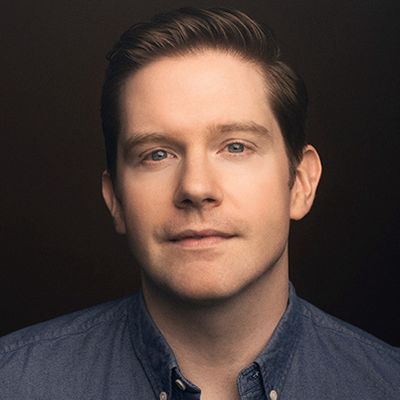
Rory O’Malley (The Book of Mormon, Hamilton) is a fellow performer of inspiring perspective and heart and kindness. In this episode, we discuss the parts of us that are driven by ambition - how powerful it can be in the life of a younger performer, and how that ambition is so often driven by the need to be seen, to be validated, and ultimately, to stave off the pain of shame... Read More
From the show: The Quiet Part Out Loud
Guests
Featured Shows


About
Rory O’Malley (The Book of Mormon, Hamilton) is a fellow performer of inspiring perspective and heart and kindness. In this episode, we discuss the parts of us that are driven by ambition - how powerful it can be in the life of a younger performer, and how that ambition is so often driven by the need to be seen, to be validated, and ultimately, to stave off the pain of shame. Rory shares how his ambitious parts have entirely transformed through his experience as a parent, and as someone whose values have found home in family, health, curiosity for the moment.
Help guide the show with me! Submit your request for guest and/or topic(s) to cover by visiting https://bpn.fm/quietquestions
Transcript
This transcript was automatically generated and might contain errors.
[0:00] Bobby Steggert: I'm Bobby Steggert, and this is The Quiet Part Out Loud.
[0:15] Bobby Steggert: Hello to my friends, my family, and hopefully some of you I've never met before. Welcome to my very first episode of my very first podcast. Some of you might know me as an actor. I was on Broadway for about 20 years, and now I have this entirely different life as a psychotherapist in New York City. I work with an amazing collection of clients in the creative arts, actors, dancers, writers, directors, you name it. And so fast forward, here we are, and I had this idea for a podcast through my work with my wonderful clients. I'm in this unique position as their therapist because I really understand the specific emotional gauntlet that the life of the arts provides for people. And what I keep finding over and over again is that there's real healing opportunity in the act of normalization.
So, that's the ability to learn and recognize that different difficulties and challenges when they feel so private, and even shameful, perhaps, are really universal. They're things we all experience. And so now that I'm no longer performing, I have really nothing to lose. Well, I mean, there are losses when it comes to missing all the adventures I had on stage. But I know that what I've gained is a great deal more freedom and exploring and talking about the whole range of experience. I remember when I was an actor, I just felt this pressure to present a more curated version of myself, the version that I thought maybe other people needed to see or wanted to see in order for me to succeed. And so in this show, I'll be speaking really frankly, and I'll be connecting with some brave souls, friends, former colleagues, artists of all stripes, who are willing to do sort of a therapeutic interview.
It's not the normal thing. We won't really focus on career highlights or anecdotes from people's lives. We'll go right to the heart of the complexity of what it is to be human in an industry that sometimes threatens your humanity. We'll go into what we struggle with, what we haven't figured out yet, what our regrets are, what we still need help with. And so welcome to Episode One. My first guest is Rory O'Malley. You know him for his culture-defining performances in The Book of Mormon and Hamilton. And I also happen to know him as a fellow performer of inspiring perspective and heart and real authentic kindness. I appeared on his podcast, Living the Dream, pre-pandemic when I was smack in the middle of a transition from actor to therapist.
And we had a super honest conversation about the complexities of being a Broadway performer. That exchange about five years ago was a seed planted, and I am so grateful to him for being one of my guides here. So it was only appropriate that I ask him first. In this episode, we discuss the parts of us that are driven by ambition, how powerful it can be in the life of a young performer and how that ambition is so often driven by the need to be seen and validated, and ultimately to stave off the pain of shame. Rory shares how his ambitious parts have entirely transformed through his experience as a parent and as someone whose values have found home in family and in health. I hope you enjoy hearing his perspective.
[3:52] Bobby Steggert: So you were a major inspiration in terms of me deciding to experiment with this podcast, because it seemed like your goal really was to eliminate the realities around a sort of fantasy world. And so I just want to thank you for being part of what guided me to this moment. I really appreciate you coming back and sharing your experience.
[4:10] Rory O'Malley: Well, thank you for saying that, and I'm so excited that you're doing this. And I think that it's so appropriate that you're taking this one step further from what I was doing and as a professional, because I realized while I was podcasting with actors that it was a therapy session, a therapy session for myself, a therapy session for them. But there's nothing that makes me more proud now than when a young actor comes up to me and says that they listened to the podcast, and that's what really helped them get through something or help them understand that their struggle was something that everyone's gone through in our industry. And having you come on to that podcast was such a big deal for me, because I felt like you had an understanding of it, and you were so open about it in a different way that a lot of performers are scared to do.
And so I'll always appreciate you being on my podcast, and I'm thrilled that you're doing this, and I know that you're going to be able to take that format to a level that really no one else could, that really you're uniquely situated to do. So I'm excited for you.
[5:30] Bobby Steggert: Thanks, Rory. And other than the history that we share in terms of me speaking on your podcast, I think what makes you an interesting subject for this, you lead with such genuine joy and generosity and really full-bodied spirit. That's just clearly who you are as a person. And so I also imagine it would be easy for people to assume that you don't struggle in the same ways that other people do.
[5:53] Rory O'Malley: That is absolutely true. Well, first of all, thank you. It's definitely how I try to get through life and this industry is by creating joy and trying to find the joy and appreciate for others. It's the only way I've been able to stay alive in this world and in this industry that we have.
[6:12] Bobby Steggert: You don't have resting bitch face, you have resting joy face.
[6:16] Rory O'Malley: You're absolutely right. I'm one of those people that if I'm not smiling, sometimes people are like, what's wrong? I'm like, oh, I just can't really smile today. You know, I look like a young Santa Claus, so I just am a jolly looking guy, right? So people have a tendency to assume that things are always great. And without a doubt, that's why I wanted to start the podcast because I realized so many young people were just getting a curated version of my life as an actor and certainly of so many people's lives as artists through Instagram and social media. And it was not being honest. It was not being true. And I just thought it was a real disservice to younger people and really to each other to not be honest with each other about what this is really, it really feels like to be an artist and to put your heart out there constantly.
[7:14] Bobby Steggert: I'm also curious about what being in a big old culture changing hit does to an actor. Did you ever feel in connection to The Book of Mormon, like a responsibility to portray the energy of that show in terms of maintaining some sort of overall optimism?
[7:33] Rory O'Malley: Yeah, I mean, there were certainly plenty of days in the, you know, nearly a thousand performances of The Book of Mormon where I went there and I just didn't want to smile, you know, because I had a bad day at home or I had, you know, like something, you know, when my family was going poorly, or, you know, so many reasons that you still have to live your life when you're doing a dream role or dream show. And I would show up and have to be this smiley tap dancing Mormon and just dread and think like, oh man, I wish I was, you know, doing a Greek tragedy today. You know, I just don't want to smile. And, you know, it was definitely a challenge. And at the same, you know, in the same way, sometimes I was doing Hamilton and it's like this, yes, I was the comic relief in a heavy, important show, but I remember we were doing it during an election year.
I was like, can we just do Hello Dolly today? I don't want to have the whole weight of the world on our shoulders and everything we do, you know, it's just like the importance was just so, so much in 2016, right after the show opened and, you know, that election and it just was, it was so hard to show up to work and have it be a new experience for an audience that was so eager and excited. And you kind of are just like, I don't know if I can take on all the energy today, you know, and some days you can and say, you know, like, but eight times a week, as you know, is a specific challenge to a human psyche that really should be studied of what it does to a person to do something eight times a week over and over and over again.
[9:27] Bobby Steggert: It really would be a fascinating paper to be written.
[9:30] Rory O'Malley: Your nervous system doesn't quite know the difference between a simulated emotional experience and one that's happening in the real world.
[9:36] Bobby Steggert: Yes.
[9:36] Rory O'Malley: And also, you're speaking to the reality that actors are, they're athletes, they're emotional athletes. And so no matter the circumstances, they're required to perform.
[9:45] Rory O'Malley: Right? Yeah. No, that's the closest I will ever be to being called an athlete is an emotional one.
[9:56] Bobby Steggert: Well, the experiment I'm trying out on the show is one that is inspired by the kind of therapy I do, and it's called internal family systems. And the idea is that we all have parts that have been with us for a long time, and that have some sort of protective function. And I'm wondering if you've thought about a part that you've navigated all your life, that just has an interesting complexity to it in some way.
[10:20] Rory O'Malley: Yeah, I mean, I think I've been a very, I've had to look inside of myself many, many times in many different parts of my life. So I'm introspective and I'm an actor. So as my husband would say, I certainly can talk about myself for as long as you need, Bobby. No shortage of me being able to delve deep. I think that like, you know, most recently being middle aged now and having like a understanding and maybe being a parent has changed me so much. I have such a different perspective on some of the things that really were driving me and seeing what that ambition was professionally. I had a friend who was visiting with me and was asking me what my goals are in my career right now. And I said, Oh God, you know, I, I don't have any.
I don't have any goals and I don't want any. I don't want any vision board goals. What I want is a way to provide a good life for my son and my husband and to do only things that support our family. And I think that I probably could have said those words 10 years ago and been totally full of shit and been like, that sounds good. You know, like, but I really just want to be a Tony winning Broadway actor. And now like where I am right now and the, like the gratitude that I have for the experiences that I've had, I cannot tell you how honest and true I am when I say those words, because anything that I could have professionally is only going to bring me joy. If it's going to add to my home life, to my family life, if it's going to give us a little more freedom so that my son can have, you know, golf lessons.
[12:28] Rory O'Malley: He likes golf, you know, or like something that I'm like want to be able to provide for him. And so I want to be able to show him that I am pursuing my dream and that I am a creative person and that I want and I certainly have ambition, but the thing that drives that has completely changed. And something new that I'm kind of beginning to articulate to myself is, you know, we always say like don't worry what other people think. Don't worry what other people think, just do what makes you happy. I've always and I think that most people we think don't don't worry about what the haters think. Don't worry about what those people who are gonna tear you down and you know we always are thinking of it in that light.
But I kind of have realized I can't worry about what the people who love me and support me and cheer me on and want the best for me think. Because they certainly do, but I know that I can't be doing something because I think it's gonna make someone proud of me or I think that it's going to make somebody else happy or impress someone else. And you know of course these are like simple things that you understand, but I think that the nature of who we are and especially as gay people who have had a coming out story and wanting to show that hey we're gay but we are so many other things and we're very impressive and look look over here you know like I'm amazing. We work so hard to show how accomplished we are to so many people.
People who we shouldn't be caring what they think about at all. That it takes a long time to stop to turn that off. Haha Book of Mormon. To stop living your life so that you make other people impressed or happy. And social media certainly is something that just really throws a lot of fuel on that fire and I have struggled with it in some ways, but I just I gotta be honest I can't tell you how little I care about what anybody thinks other than my husband and my son. It sounds like a total paradigm shift.
[15:01] Bobby Steggert: Yeah it really is. You know I'm not there are thoughts you know like of course I have ego. I have an ego where things pop up and I want to impress somebody or you know I but I can set it aside and say oh yeah that's just like that thing that little monster inside of me that wants to come out every so often and literally will not service me in any way. So just set that aside that little thought and focus on what's really important what's real which is my family inside my house.
[15:33] Bobby Steggert: Yeah what comes up in my therapy work all the time is when someone is expressing a desire or an ambition the first question I ask is whether the motivation is intrinsic meaning it means something to me internally or extrinsic which is that it means something to me based on the perceptions of others or societal or cultural norms which would be considered successful and that's so much of what you're making a distinguishment between. I guess I'm curious before the paradigm shift before the family in younger years how do you remember being motivated by those more extrinsic values if it was either fame or money or success or notoriety?
[16:09] Rory O'Malley: Yeah I mean I so came from a single mother household and I truly wanted nothing in my life more than to make her proud of me and with that is without a doubt this still the case is that I want her to be proud of me you know it's the greatest joy of my life that I've been able to accomplish so much and it's only because of the work and devotion and love that that woman gave me but at some point you have to become a person who is operating for yourself that you have to be able to accomplish things and wake up every morning and say what makes me happy and my mom has been fantastic you know but that's also like and then I came out when I was 19 and we're a very catholic family so it wasn't easy but certainly that was all wrapped up into it that like it was a very difficult thing to disappoint an image of what she and the world I thought needed me to be and so it's not just artistic achievement it was being this person who was supposed to be a straight guy from Cleveland who could have a big family and I did think at that time in 2000 when I came out that I was forfeiting my chance at having a family and that was devastating to me and I think devastating to my mom who also knew that that was something that I would definitely want and probably saw that I would be a good dad one day and you know she wasn't going to be a grandmother and all the all those things so I guess that was a big moment that I can certainly remember being worried that I wasn't going to be that straight perfect kid and I was letting go of that image.
[18:19] Rory O'Malley: So if I can't be the straight perfect kid I will be what? I will have to just become a Broadway star and I will have to you know go to the to a university that if I'm not going to be this normal quote-unquote successful person I'm gonna have to be a Broadway star do everything I can to get to Broadway or to be Tom Hanks or to be someone you know like I wanted to be able to say okay yes no I'm not this but look look I'm I'm this person who you greatly can admire and be proud of and so don't worry it's okay I have value.
[19:07] Bobby Steggert: We'll be right back.
[19:09] Bobby Steggert: Hey y'all it's Bobby. In one month's time the quiet part out loud has become even more than I hoped and now it's time to ask you who do you want to hear from? Who are you curious about or what part of you do you want reflected in these conversations? Head to the episode notes and follow the link to a quick survey or reach out on Instagram at quiet part out loud pod and thanks for listening. It came as a shock to me that I was nominated for a Tony in Book of Mormon because I was in the ensemble and like just got lines one by one you know like I mean even in the end I had like 20 lines in the Book of Mormon and like two solos in songs. They were just really excellent lines and excellent solos.
Yes you know like I was like stitching together over three year period putting something together so I was in the ensemble you know and to me like that is who I am as a performer. I'm the supporting character who's got a couple of moments and I'm so excited to be there. So I guess no I never was like oh I'm gonna be the lead in a Broadway show but to me it was I'm going to be able to show my family my friends my children's theater you know everyone who has been so supportive of me that I did it whatever that is. But you know when you're from Cleveland Ohio the bar is pretty low in terms of what making it is on Broadway and you know as it should be. It's an accomplishment just to be at that party.
[20:45] Bobby Steggert: I relate to so much of what you're saying of course and I've shared that with you and I have two questions about what happens when you reach that success. One were there any elements of it that really seduced you into this belief that the shame you were responding to was gone because of your success? And two were there ever any illuminating moments in which you realized that this kind of ambition did not heal the shame?
[21:09] Rory O'Malley: Yes and yes. Yeah I mean you think that the external accomplishments that external satisfaction is going to change the internal and it doesn't. If you are not working on yourself you will not have something happen to you. Some accomplishment come along that will make you happy. You really do have to work on yourself and without a doubt you know like it's very clear my first Broadway show was the 25th annual Putnam County Spelling Bee. I had just moved to New York. I had been out in Los Angeles for a couple years working for Gary Marshall and doing Happy Days the musical as Richie Cunningham and I decided you know I'm doing a lot of theater in LA. It's probably time to move to New York and I of course knew Spelling Bee and was like ready when I got that audition and I was an understudy.
I got to be in it with Josh Gad my college roommate and that was the first time I went on was for Josh when he was missing the show and that was my Broadway debut. So it was this incredible wonderful full circle moment in so many ways and I remember going to St. Patrick's Cathedral and lighting a candle of gratitude and just being like you know I did it. It's here but then you realize this contract is not forever. This contract is for five six months. This is gonna end and then you know it's not like once you cross a threshold of getting on Broadway they're like and here's your next part. Here's your next job. You are just back at square one in many ways and I was working at a financial firm at the time as a temp and I was aware that this Broadway debut was only temporary so I kept my temp job while I was doing the Broadway show.
I would go work in the mornings at the temp job and then I would go to the Broadway show rehearsals and do the show at night and because I wasn't always on I felt like okay I can navigate this but I was like way overwhelmed and I also was like trying to keep up with the nightlife of staying out and going out with the cast and being like this is you know a party and then showing up to my temp job hungover trying to keep this like you know I was 25 trying to keep this like life together knowing that the job was gonna end and I really had a moment where I was like I can't keep doing this and I knew that I was trying to use alcohol to numb myself which I had been doing for years while waiting on tables from like 22 to 25 which was without a doubt the hardest years of my life when I thought this might not happen.
Oh it was the first time I considered oh I might not get to be a professional actor and that was really really difficult for me so when I would show up to restaurants and wait on tables of course I would just numb myself by going out all night and so when I got the external thing of being in a Broadway show I thought that was going to clear that up right away but it turns out I had trained myself that the only way I was going to feel some kind of joy or numb myself from pain was if I went out afterwards so I had to go out and drink and you know party in the New York gay scene and and be wild and crazy and then try to show up for a temp job and then go to the rehearsal. Well I started missing rehearsals. Something had to fall. I remember being late for a rehearsal for a Broadway show and I thought my god here I am living this dream.
[24:56] Rory O'Malley: Doing what I've always wanted to do my entire life, and I'm hungover and can't show up. And it was when I really kind of like looked into what my drinking was, and my background as an Irishman, and the fact that like most of the men in my family stop drinking at a certain age or things get bad. And it's very normal in my family for guys to not be drinking. And I was like, I think this is it. This is the moment that I have to kind of put this down and decide if I'm going to actually find joy in what I do and the things that I love or if it's going to be about this nightlife. And I did. I have been sober for 17 years. And it has been a real, real gift because that was a really difficult time. But I have been completely present for every moment of the Book of Mormon, every moment of Hamilton.
And there has been a lot of wonderful times that I have been totally present for. There have been a lot of hard times that I haven't been able to numb myself from through alcohol and drugs. But I've been able to build myself a tool set that has gotten me through all of those times and given me confidence. And there's just like, without a doubt, the only reason that I'm still in this industry is because I'm not drinking. And I highly recommend to anyone who is in our industry or anyone, if you find yourself using alcohol to numb the hardships of our industry or of life, that you really examine and try to take that out and see what happens, see how easy it is. I always said it was like, it should be as easy as giving up French fries.
I love French fries. And if I didn't want French fries, and if I said this would really change your life, then I'd be like, yeah, I'll give up French fries for a while. But if it was something that I could barely do, then maybe you need to look a little deeper. And I keep like how I do that to myself. But talk to somebody who you know, who is sober, and who has done it, and I highly recommend it. It certainly was life changing. So yeah, that's basically the moment when things really changed for me.
[27:22] Bobby Steggert: So beautiful. And I'm just reflecting on how many layers substance use and especially alcohol can address in terms of the stress of a performer's life. And I'm sure it's the same in other industries. There's the numbing, the pain and the stress, of course, but there's also the element of it being somewhat expected of you, in terms of being a present social player in the world of the thing.
[27:51] Rory O'Malley: Yes, without a doubt. And you know, I had so many times when I would see people who were leading Broadway shows or you know, in it, especially in your 20s, you know, you see these young people who are partying hard, and you're like, how are they doing it? And guess what? They don't do it for long. It's like it's not, it is not something that you have to do. But there is a lot of pressure to do it, to be a part of that social scene. And I understand it. You know, I get it. I remember feeling very scared that that was going to be something that was taken away from me and put me behind in our industry. And what are we going to do if I'm if I can't go to that party? Well, it turns out you can go to whatever stupid dumb party you want to and not drink. You can do anything you want and not have alcohol. Yes, they will be more boring, but it's because many of them are just boring parties.
[28:50] Rory O'Malley: I will fully admit that I was also quite seduced by the attention. And I'm wondering in terms of those environments, if you were also motivated by the validation?
[29:00] Rory O'Malley: Oh, 100%. 100%. It's very intoxicating. It's like another form of intoxication to have attention. I remember like during the Tony Award, like circuit, you know, during Mormon, where we all were invited to so many things that you kind of felt obligated to show up to because you were being given this gift of being nominated and you had to do the thing. And, you know, I remember a friend who'd been nominated for a lot of things just being like, just just say yes to everything. It doesn't happen more than once. And I did. And I remember being at this one thing and somebody turned to me and they were like, why are you here? And I was like, I don't know. I was invited and I maybe I don't have to be here.
Maybe I don't have to do this. And they had me like, take a picture with the person that was being honored at this event. I'd never met this person. There was no reason for me to be there other than like some publicist wanted somebody from the Book of Mormon to be there. And it's, you know, it's supporting art. It's not like it was a bad thing to be there. But I certainly could have rested instead. I could have just like gotten ready for the show and I shouldn't have had to feel like I need to show up for everything, especially when somebody there is like, wow, you know, like this is weird that you're here. And it wasn't shady. It was just like genuinely like, what are you doing? And I remember that, you know, 12 years later being like, I don't know, I guess, because somebody asked.
I felt like obligated. But you do kind of realize that you can say no to so many things and still be a part of this industry. And that goes into the validation that you get from social media. You can say no to so much social media and to yourself. Like it's okay not to post. It is okay. And I'm lucky enough to be married to a very grounded person who is not in our industry and who literally will look at other actors social media and say, if you ever posted like this, I would I would pack my bags, you know, I mean, he's always been very upfront that he's not going to have a tolerance for the egomania that can really be brought out on social media.
[31:28] Bobby Steggert: And not only is it brought out, it's also celebrated by our culture, which makes it really complicated.
[31:33] Rory O'Malley: Yeah, yes, it does. And it's literally a way to make money. And I'm not having judgment on how people get by or what they do. But I will say that for my own mental health, I need to have specific boundaries around all of that. And it's got that's gotten more and more as I've gotten a family, you know, it's one thing to be like, in my early 30s. And hey, you know, I want to post every part of my life and you know, just spew out whatever. And, you know, I think there's value to some of that. But it's not just my life anymore. It's my husband, it's my child. And so I've gotten more and more closed off and boundaries and want to make sure that when I'm putting something out there, it's for the right reasons.
It's it's to celebrate my family and not to have content not to have, which I am not immune from. I'm still you know, it's still a drug. Listen, I just saw the picture of you as a Dolly impersonator. And I like I like the shit out of that post. Right? I mean, come on. But let me tell you, I was not I wasn't sure when or how or what I played a Dolly Parton impersonator on an episode of CSI. And this was in January. And I was like, three hours in makeup. And the whole time I'm thinking, Oh, my God, when people see this, what is gonna happen? You know, like, and I even asked, believe me, it's sometimes I asked my husband, is this a good thing to post? Because he's just so clear eyed, level headed about these kinds of things.
And he was like, Yeah, you got to like show this Dolly to the world. And it kind of represents so much right now, especially with, you know, the attacks on drag, and you know, so many things to me, like, it was exciting to get to to be a part of that community in a way that I in a community that I have so much reverence and respect for that art form. And to show off work of a makeup artist, that was incredible. But without a doubt, you better believe I was checking. Okay, how many people liked it? What what comments of people said it's it's a celebration of something, you know, and it's a celebration of work that I got to do. And it's trying to navigate when it goes from celebrating something into an adrenaline rush of something that I need on a regular basis is is the key trying to relegate that you also several minutes ago alluded to this and I agree these parts of us you call it the ego, they'll never go away. They're never dead. And so it's about negotiating with that when it comes up so that it doesn't like you just said, take over the whole story.
[34:20] Bobby Steggert: Right? Right. It's absolutely true. Like and you can't you can't judge yourself. When those thoughts come up. It's not about, you know, evolving into some different kind of being we are all human beings. And we all have those thoughts. It's about what we do with them. It's just for me like, okay, that was a really weird, self defeating thought, I'm just going to place it to the side and acknowledge that it that it popped up. Oh, that's a real jealous thing that I just thought I'm going to set that aside. And you know, especially with with jealousy and comparison, which I know that is a topic that you, you know, will be talking a lot about on this podcast. It is, to me, hands down, the most important thing that an artist that a actor has to address and figure out if they want to have any longevity in this industry. Because if you are comparing yourself to others, to anyone else, if you are comparing and despairing, as they say, you will not last, you just won't last.
[35:39] Bobby Steggert: We'll be right back.
[35:42] Bobby Steggert: It takes real work at self knowledge. And the core of that self knowledge is what do I have that is purely mine? Can you articulate that for yourself? I don't want to hold a gun to your head about it. But do you know what is purely Rory that that is so unique to what you are and what you do that it couldn't be compared?
[35:58] Rory O'Malley: Yeah, I mean, I think that you just have to trust that every time you are creative or open your mouth, that it is so unique that it can't be defined because it's you. It's just like when you step into a role that, you know, like, going into a role that Jonathan Groff played, you know, who is God of really big following and people were like, Oh, my God, you know, who's going to replace Jonathan Groff? People who don't know what it's like to do that would ask, like, did you like, worry about taking on his version of the king? Or, you know, well, you don't have to worry about that at all. Because you can't be his version of the king, you will always be uniquely you. So I don't worry about the lines or or the choreography or trying to figure out ways to differentiate myself from somebody.
I'm always going to be myself, whether I try or not. It's just whether I celebrate that, whether I am happy with that, whether I can be okay with that. And there's been many times where I am in doing an audition when now we do self tapes where we have the for TV and film, where you see yourself, it's one thing to go in an audition and to walk out of a room and not really see how you've acted, but
[37:24] Rory O'Malley: You can really judge yourself just physically on that day if you're having to stare at yourself, and there's just been many times where I will start the audition and go, "This is what I look like. This is who I am." Not, "I look great," or, "Oh God, I look terrible." I'll go, "This is who I am. This is what I look like," and I kind of need to remember that because whoever I look like on that day, that person is worthy of telling a story. That person is worthy of having their story be told. It may not be the story that this director or this writer or this producer is looking to tell, but I have a story that is worth telling. And so it's just about finding the right material and creative team that's trying to tell a story of a person that looks exactly like me.
I think that's so beautiful because so often we're asked to affirm what's great about us, right? And maybe that's even what my question was leading to in asking you about what's uniquely yours. What you're saying is different and importantly different, and it's that we find release and freedom through the acceptance of self. That's all it is, right?
[38:46] Rory O'Malley: Yeah, and I mean that's why I could say like, "Oh, well, you know, I'm really, I know I can be funny," or "I can do this," and I have my things that I can do that I can bring that are unique, but it depends on what day it is. You know, it's a living, breathing thing, and I don't have to define my type. I just have to show up and do the work and trust that it's unique because it's me. And look, this is the well-curated therapy answer that, you know, does it mean I don't look at another gay actor around my age and say like, "Well, I'm sure they'll be great in the role?" You know, like I've seen that in my head all the time, all the time, because there are so many actors who, you know, are doing well and are in my lane, so to speak, and are getting that work.
But what I have to remember is that there is another actor who is in my lane, maybe right behind me, who is saying, "Well, I'm sure Rory O'Malley will be great in this role," and has got that same thought and is not considering the humanity of like how much my struggle is and how difficult this is for me. And that if I have any win, that I've really done a lot of work to get to that win. So I try to put myself in the shoes of another performer or artist who would look at me with jealousy or comparison and not have a full understanding of what I'm going through and realize that's probably what I'm thinking about this actor, you know, and maybe I should realize that their struggle is real.
[40:36] Rory O'Malley: And I've had that conversation on my podcast with like really gorgeous actors, right? And I, you know, I've so many times as being a character actor, I've never really, we all struggle with our bodies and our looks and my weight without a doubt, but I don't really have to worry about being a leading man. You know, I'm a character actor, that's just what I do. And I've always looked at people who are just gorgeous leading actors and thought that their journey is so much easier. And realizing there is a very specific struggle that I'm so glad that I don't have to do, especially for gay actors. I never really had to worry about fighting off, you know, my homophobia of being out because I wasn't too scared about being a romantic leading man.
[41:33] Rory O'Malley: I want to end on something that you started with, which is that if we start out in life with ambition that reaches for things that are quite sustainable in terms of their ability to make us feel stable, what are the sources of genuine sustainable pride for you at this point? One thing I picked up on was that your sobriety is something you really value. It's something that I can tell you are extremely proud of yourself for living through and committing to. And of course, you mentioned your family. And in addition to those things, what do you define as a source of pride that really lives in you and is sustainable?
[42:04] Rory O'Malley: Yeah, I mean, it is definitely those two. My source of all my pride right now is my son, you know? I mean, that being said, like the only reason I have a child and can trust myself is because I'm sober. So that is always a priority to me, and that's something that I always have to work on. So it definitely gives me pride, but nothing, nothing comes close to the pride and joy I feel when I tuck my son in at night. And I haven't maybe spoken to another grown-up all day long, like maybe I've just been like at the park running around with this kid for an entire day and my husband has been working full-time for the last six months for the first time in his life. So I've been the primary parent, and it's been a real challenge because we've been so lucky to really be 50/50 and to share everything, and he has to be in an office now and has been working so hard, and it's wonderful, but it's certainly been more of a challenge for myself.
But there's just nothing that comes close to, as I said, tucking my kid in at night, knowing that I got through the day and was able to provide for this young child and that he's asked me questions about Jupiter. And, you know, like his mind is just expanding and I'm trying to come up with answers. And, you know, like a side note, like if I say like, "I don't know an answer to a question," he'll go, "Just tell me, just tell me." Like he thinks I'm saying, "I don't know," because I'm keeping it from him. "No, dude, I don't know that much about black holes. I'll look into it. We'll just research it tomorrow." You know, and he's like, "Just tell me." And having another human being in my life who's looking to me for answers on everything from black holes to reading to, you know, how to be a friend to his friends at school is just, it's so humbling and incredible.
And when I, I've many, many, many, many times, I feel like I fail and I have to try harder the next day. But when I feel good about it, when I have like today when I woke up and I packed his lunch and I was ready to go and he kind of wanted, he wanted to bring a toy, this drone that he had. I was telling you earlier, like this, he wanted to bring it to school. And I, yesterday he wanted to bring a toy and I let him. Okay, I let him. And I was like, he shouldn't let him bring this to school. He's gonna lose it or it's gonna get, you know, an issue with the other kids at school. And I just didn't want to have that fight. And today I was ready. I knew he was gonna surprise me with another toy, and it was this drone.
And I said, "Jimmy, we will have a child of yours come to the house and we will play with it at the house." You know, I was ready. And this is all to say, like yesterday I failed at this. Today I succeeded, and I had a plan, and I'm learning as I go. And without a doubt, there's nothing that comes close to it in my life and never will that will make me feel this accomplished and this satisfied because this kid loves me. And as much as I love being an actor, and I do, I love it. I love being creative. Most of that job is begging to do that job. Most of that job is auditioning. Most of that job is pleading with someone to let me do it. I don't have to do any begging to do this job. This job is, even while I'm sleeping, I am doing this job.
This job is happening constantly. I am constantly in need. I am constantly of value. I am constantly sleeping with one eye open and, you know, trying to make the best decision I can. And I fail and I succeed, but, you know, it's just without a doubt the most accomplished I'll ever feel in my life.
[46:40] Rory O'Malley: You never have to worry when you have me on a podcast about having content, okay, Bobby? Like this is what I'm saying. My husband says, "Oh, you have Rory on? You know he'll talk for an hour, no problem." What I love about what you just shared is that one, what I notice as a therapist is that when someone is undyingly committed to something, it's often a great source of satisfaction. And that is so clearly how you experience parenthood. And the other thing is that the antidote to suffering is curiosity. And not only are you so curious, but your son is re-teaching you how to be curious about the world around you through his undying curiosity.
[47:14] Rory O'Malley: Yes, and he doesn't seem to like musicals very much at all.
[47:20] Bobby Steggert: That's a shame.
[47:27] Rory O'Malley: It is, it is. But you know what? I'm like, okay, so we're gonna be a space kid and we like Mars rovers and we're, you know, it's expanding the world for me. You know, you think you're gonna bring the world to your child, and it turns out, you know, the same is true for you. They're bringing new worlds to me. And he likes golf, so I'm like a caddy on a golf course for a five-year-old kid, which is not because of me. I have no desire to own a golf club, but it's a beautiful thing, you know, how much they expand your world. And if we're ending, I'd want to be able to say one thing to you. You started off saying something so sweet to me, and I just want to say to you, like I've always respected you so much as a performer, as a person, and I truly, truly am in awe of your transition into helping people in this new role.
And I think it's such a wonderful gift to the Broadway and artistic community that you are coming back into this space to bring both worlds together. And I think it's fantastic, and you are such an accomplished actor. You are the person, you know, when I've seen you in "Yank" and so many performances that I've seen you do, which were extraordinary. For you to be able to have those accomplishments and know that this world is so much bigger than just one dream and to keep pursuing more is so inspiring to me. And I have a lot of respect for you. I mean, we barely know each other, you know? It's like we're in that same world, but I feel very, very close to you in the fact that I understand what your journey is, and I know how difficult it is. And I also know how much you've gained by expanding your world and your dreams, and I think it's fantastic that so many people in our community are going to get to benefit from it now with this.
[49:26] Bobby Steggert: Thank you. That means a great deal, and you're doing what you did gave me some of the bravery to do this, and I hope you really know that I'm here in this moment because of you.
© Broadway Podcast Network, All Rights Reserved