
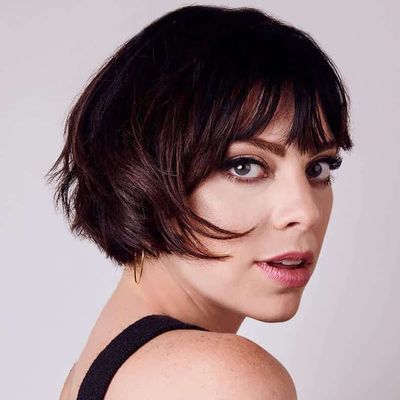
Krysta Rodriguez (The Collaboration, Smash, Spring Awakening, The Addams Family) explores a complex history of trust (and mistrust) as influenced by many factors in life - religion, family addiction, and a cancer diagnosis at the age of 30... Read More
From the show: The Quiet Part Out Loud
Guests
Featured Shows

About
Krysta Rodriguez (The Collaboration, Smash, Spring Awakening, The Addams Family) explores a complex history of trust (and mistrust) as influenced by many factors in life - religion, family addiction, and a cancer diagnosis at the age of 30. She shares how the journey to self-trust is about continuing to center autonomous choice over reliance on external forces.
Transcript
This transcript was automatically generated and might contain errors.
[0:00] Bobby Steggert: I'm Bobby Steggart, and this is The Quiet Part Out Loud.
[0:15] Bobby Steggert: How do you know if you can trust someone? How do you know if you can trust yourself? These two questions, whether we're aware of it or not, are ones we are asking in every waking moment. Our most basic instincts, really, are whether to approach or to avoid. To approach is to trust. To avoid is to mistrust. And then when it comes to our inner trust, it requires a free and clear relationship to intuition, to our body, that is available to all of us, but often elusive, obscured by our many parts that create distance from the self and protect us with their own agendas of distraction or avoidance and rationalization or interpretation. I'll add, in terms of therapy, it might be safe to say that the work all boils down to this.
Can one develop a trusting relationship with themselves so that they're able to then develop healthy relationships to others? And we all land somewhere different on the spectrum of trust. I might have a lot of self-trust as compared to trust in others, having survived through self-reliance. Some other people might, through people-pleasing, put a lot of trust into others and have a hard time trusting themselves because they haven't truly listened to their own intuitions. The question of trust is especially salient to where we are as a culture, too, when levels of mistrust are at historic highs, be they about information or institutions or free and fair elections. My guest this week is Krysta Rodriguez, and her relationship to trust and mistrust is intersected by a complicated legacy of religion, in which trust in God is often prescribed catch-all replacement for trust in anyone or anything else.
There's also the legacy of addiction in her family, creating complex dynamics around who's to be believed and counted on and who is not. And add to that a cancer diagnosis at the age of 30 that brought on even more questions about trust, everything from the medical world to her very own body. I'm so grateful to Krysta for this especially far-reaching exploration of a very complicated life experience, and I'm so proud to share it with you.
[2:31] Bobby Steggert: Krysta, I'm so happy you're here. And we're talking about trust today, which was such an interesting thing to offer as a topic. And I'm just wondering, initially, why that concept was the thing that you were most attracted to in terms of exploring?
[2:50] Krysta Rodriguez: Something I try to explore in my life all the time, and when I do trust and when I don't trust and why I do or don't. I really believe that the best work and the most fulfilling life comes from having a bungee cord has to be attached to something really strong in order for you to jump off. We feel like we need to be free, but actually we need to be rooted in something. And what is that thing we want to root in before we jump off the cliff? And trust is a big part of that. And who can you trust? And what do you feel you can trust? And is it yourself? And when do you try to go from trusting other people to trusting yourself? So I think you can't be in a jail. I just had therapy and this was what resonated at the moment.
I was also thinking in knowing I was going to talk to you today how there are probably many jobs you can do in the world and not fully trust yourself. But I don't think an actor can be successful in their craft unless they have a deep trust in how they're showing up to do the work.
[4:04] Krysta Rodriguez: Yeah. And also humility at the same time, because you have to trust in so many people. And I think especially theater, there's quite a few people to trust. But in film and television, there are people you will never see that you have to trust in. And that is really hard. And I feel like disproportionately, the dueling and the applause goes on the actors, even though they have very little to do with what there is actually showing up on screen. But people's careers are made or broken by bad or good movies that you have very little hand in determining.
[4:38] Bobby Steggert: What's the example of someone who is instrumental to the final product of a film that you would never meet?
[4:46] Krysta Rodriguez: I would never meet an editor. And they are the movie. That is how the movie is made. They always say you make a movie three times, when you write it, when you shoot it, when you edit it. You're there on set and you're thinking, I don't know, they had kept this together, but I have no idea how someone's going to take that. That camera might never be on you in a whole scene. You just you don't even know. So that is a huge thing. An editor, a music supervisor, someone who scores the film, someone who creates the entire mood is built on what the music is, or no music, or is it, you know, like comedic timing, or is it really long strings and swelling? You can drastically change the feel of something based on that.
And also producers, especially if you're working on a TV show, you might never meet anybody that works with the network who's the head of development or who's working on how things, what gets chosen and why it gets chosen. You shoot a pilot, you'll never meet the two, three, or 100 people that are making that decision for you, deciding your life, where you live, how much you make, where you work, how much you don't. And you just don't meet those people.
[5:55] Bobby Steggert: Yeah. So before we come back to work and career, I'd love to ask you a really fundamental question, which is, what was your earliest relationship to trust or mistrust?
[6:10] Krysta Rodriguez: I think a lot of my who I am has been formed with, I grew up with an addict in the house. And I think I, as I've unpacked my life and where my trust lies, I feel a lot of distress was formed in that area of somebody who is putting drugs or addiction or anything over you and your wellbeing and your safety. Just a lot of addicts are just master manipulators. It's wild to think, you think of manipulators as people who are sociopathic and can create these grand schemes, but it's actually innate. To get out of trouble, to try to keep yourself out of trouble, you will do anything. It's survival. And so even the youngest, it was a sibling of mine that this was occurring with. And the youngest age that I remember is just this person is not someone to trust.
They are going to lie about where they are. They're going to lie about what they're doing. They're going to be erratic. They're going to run away from home. They're going to come back. And it really led to me conditioning myself, I'll say, to be the steady one, to be the thing that you can count on, the thing that you can rely on like clockwork. And that has led into my life. It's led into my work. It's led into my relationship with my family and all those things. And especially I think it also comes into trust with men because it was a real part of my family. So having a man lie to you from an early age can be damaging, I think.
[7:45] Bobby Steggert: Are you saying that you filled in that space and became the trustworthy kid, the one that's made sure that everyone was okay?
[7:52] Krysta Rodriguez: Yeah, absolutely. I was where I said I was going to be and I got the grades. We went to the same school many years apart, my sibling and I, and I had to prove to all those teachers I am not going to do what my sibling did. And I had to prove to all of the people around me who knew, oh gosh, so-and-so sister's going to be in this class. That came with that. And then also once I left that and he had been gone for... He's six years older than me. When he had been gone for a while and I could tread my own path, that's when I really got to learn, I think, how to figure out what I trusted and what I believed in and how I wanted to be seen by people without having that to compare to. So many people, once I started doing theater and felt like community, didn't even really know I had a sibling because I didn't have to keep showing myself in relationship to him.
[8:50] Bobby Steggert: Did being trustworthy really equate to being good and following the rules?
[8:54] Krysta Rodriguez: Yes, sometimes. And trying to crack the code and be perfect, and my value will come from doing it right and doing it right consistently over and over again.
[9:07] Bobby Steggert: This is connected. It's not really about just your story, but I'm just so curious how that affected trust within the family system in terms of your parents as well.
[9:13] Krysta Rodriguez: I think my parents do trust me a lot, and they did trust me a lot. I think what I want to find as an adult is how to trust myself a little bit more. I think there was a lot of parameters put in place. I thrived in the rules and because he didn't thrive in the rules, the more rules I was given, I felt like I could grow within them. When you get older and you realize, who are these rules for? And a lot of that, I'm sure we'll eventually maybe get to this, but when I was diagnosed with cancer, that was when a lot of that dismantling happened of what was being good, quote-unquote, getting me, and who was I being good for, and what happens if I try to just make as many mistakes as possible?
[10:13] Bobby Steggert: So I'm just intuiting this. Do you equate sickness with the restriction through which you were living?
[10:20] Krysta Rodriguez: I definitely, yeah, I think I equate that. I think I also grew up in a religious household, and so there's a lot of, and this is so interesting because I would say that the religion was trying to teach me that you don't have to be good to be forgiven, or you don't have to be good to be loved, and yet a small brain who's raised in the house that I was in couldn't equate that. What I internalized of the religion was, do this, there are punishments if you don't, because as much as there's forgiveness and freedom and all of that, there is heaven and hell. There is consequences for bad decisions, and in this religion, I would say, I'm not saying that there isn't anything, but and so as much as I could say, oh yeah, I'm going to be loved anyway, unconditional love, I'm still going, but if I make a wrong step, I will be punished, and punished swiftly, and
[11:17] Krysta Rodriguez: I feel like I was doing the right thing, possibly. So don't make any mistakes. And in my mind, I felt like I wasn't making them. And then I still got, quote unquote, punished. And I was like, was I even thinking? The whole system that my life was built on fell apart. So in the magical thinking of religion, if I follow all the rules, I won't get sick? Yeah. Yeah. Or I'll get rewarded. No, I don't get. I don't know that I feel like the sick was punishment. I just felt like the rewards were that I was doing the right thing. I'm going to be, it's a small distinction, but I do want to be, I don't view, I don't feel I was being punished by anything. I felt like I was looking the wrong direction and didn't, wasn't paying attention to what I should have been, which is that always taking the right step in front of you isn't going to save you from pain.
[12:03] Bobby Steggert: I understand. I'm also thinking about that phrase, put your trust in God. And was that something that was instilled in you as a young person?
[12:12] Krysta Rodriguez: Oh, yes. Absolutely. Absolutely. Absolutely. And that is why as an adult, I'm going like, wait, what do I trust in? Recently I had this experience and I still, when I have some nerves, I'll still find myself doing the prayer, like I'm reaching out to a God that I'm not putting any effort into believing in or, or trying to please. And I had gotten in a car and I didn't drive a lot cause I live in the city, but I was in California and I got in a car and I found myself sort of asking for safety to God, like to keep me safe. And I just stopped and I won't, no, I'm going to instead say, Krista, you can keep yourself safe. You are equipped. You have been trained to drive a vehicle. You are able to make decisions.
You are good at making decisions. I'm picking myself up and saying, you are going to get you from point A to point B and trust your, put your energy in trusting yourself. And it's little things like that, where I felt like in my whole adult life, I was outsourcing my trust to the opinion of my parents, to the opinion of my religion, to the opinion of directors, to the opinion of my friends or all of that. And I'm really having a reckoning and I'm 40 now. So it's taking a while to get us there to what does it feel like to trust myself and also to fail with my own decisions? What happens when my own decisions fail me? Can I forgive myself? And learn and not make the same mistake over and over again, which we all do.
So. I'm also curious as to how performance came into your life and if performance was something that allowed you to start trusting your body, trusting your voice, literally trusting your self-expression.
[14:06] Krysta Rodriguez: I think it definitely gave me confidence. I was going, when I was younger and going to school, I was trying to play basketball and I was like terrible at it. It wasn't until I found, oh, I can be good at something that I was able to have the self-respect to go into that more and say, I don't need this other thing that will make me more popular with the kids I go to school with. That I want to do the thing that makes me feel like that I can be confident in it. Did you know you were powerful early?
[14:33] Krysta Rodriguez: I don't know. I didn't know I was powerful early. I mean, I was, but I do feel like as I get older, I'm like the power is so strong and also comes with so much. I'm almost spending more time holding back the power because it will, it could hurt people. It feels like a floodgate that could just like knock people out. And that's not to say because I'm so powerful or because I'm so great or anything. It really just is. I just think as you get older and women really start to know the secrets, and part of that is because people start looking at them as much and you're just like, well, I can really, it's a superpower. You're almost invisible. I can do a lot of stuff and no one even knows. It's a weird thing. But so I don't know that I was as powerful then as a 13-year-old. I definitely had, probably the power was in the fact that I didn't know that failure was that, that was an option.
[15:37] Bobby Steggert: We'll be right back. And so when in your process did illness come along?
[15:43] Krysta Rodriguez: Um, basically two months after I turned 30 on my 30th birthday. And, um, I also talk about trust in the medical field is it's nearly impossible. We have white coat syndrome where we will trust anyone in a white coat. And then we also are told medical industry is big camera. Everyone's lying to you and trying to, they're dying for your soul as much as Satan is the medical industry. And so it's just another thing to be like, the food is bad and doctors are bad and medicine is bad. And you just, you never really know what to trust and who to trust. And everyone has a different plan. And every doctor, I can't believe that doctor was going to do that. I would have done this. And it's got complexes everywhere.
We're told as performers, I think, oh, we know our bodies. We really are in tune with our bodies. And I think that some of that is true. I also just think we're obsessed. We have to know our bodies because it's what we're using. But I started to feel a lump in my breast from age 25 and I would go to the doctor and they would check it, but it was an ultrasound sort of situation. And they would be like, how old are you? I'm 25. Do you have any history of breast cancer? No. And then they would call a little bit and they'd be like, you're fine. So I have medical documentation from 25 to 30 of clear scans when we now know that I have actively had cancer during all of that time. So that is something that's jarring because when you have a medical thing that you want to investigate and someone tells you you're fine, do you go, second opinion.
I advocate for myself. I know my body, et cetera, et cetera. Or do you go, why would I want to spend my life searching on a illness I don't have? That's going to lead me to be crazy. So you have to trust. You have to go. You want to trust. You want to trust. Exactly. And so, and you want to trust yourself that yourself felt something was wrong and someone who has more degrees tell you it's not. So you trust them instead. Was it a wholesale trust or did you, was there a part of you that kept on asking the internal question?
[17:56] Krysta Rodriguez: I think you want to trust. And so you just go with it. And especially at that age, it's just ridiculous to think I would have breast cancer. And that's just absolutely insane. And in fact, I had less than a 3% chance of getting it and I still did. So I don't have any genetic mutation that they are aware of at least now. I don't have any family history. I don't have any markers ethnically that would lead anything, nothing. It's just wild. Unfortunately, the more we're coming, we know there's something. So I had all of those appointments and then I had an even similar appointment on my 30th birthday. I went to my gynecologist for my annual check. She said, yeah, there's a lot of lymphs in here, but like, why don't you go get an ultrasound?
And then I never, I didn't schedule it because I was busy. And then I had, I had a little drop of blood come out of my nipple. And that was when I was like, oh, that feels strange. That's when people started taking things more seriously. But also some, this is when I went to go get my ultrasound, they had scheduled me for a diagnostic ultrasound and a diagnostic mammogram. And that means for a specific thing, they're not just generally checking, they're looking at this one area. And when I got to the doctor's office, they said, you can't have these, you can't have these tests. You're not eligible for insurance to cover this. This is a mistake. You don't want these tests. And I was like, but I do want these tests.
And they really said, I refuse. I had to go back to my doctor, have them call and send another referral over and say, yes, in fact, we do want this. And so I had to go through, there's a point of advocating, trusting. I don't want to go get a mammogram. I don't want to get talked to myself. But here I am begging these people to do it for me and they won't do it. Okay. So there we go. I get the thing and I get the mammogram and then the doctor comes in for the ultrasound. The woman's, the tech is going around it over and over again. She's looking at it. She's seeing spine over and over again, the same, this is strange, but so she called the doctor in and the doctor is legitimately annoyed that I'm even here.
And he says, this is obviously a papilloma, which is basically a benign sense in your milk ducts. He says, there's no way that there's anything done. He goes, when I squeeze the breast, blood will come out. And that means that it's a papilloma. And so he grabs the breast with both hands and squeezes it and nothing happens. And I can't see, I'm laying on the bed, but I can see his face and it's just why nothing's happening. And then it's okay, let's schedule a biopsy. And I'm trying to hope that it's not, but I'm also trying to keep pushing to make sure it is. So then when we get to the biopsy, the woman says, why are you here? And I say, oh, because I had some blood come out of my nipple. And she goes, yeah, sounds like breast cancer to me.
And now when I was the one seeking it out, I'm like, yeah, how dare you? And then my mom's in the waiting room texting me this. So now I'm like, you can't be trusted because whatever. And then man, the whole, there it is. I don't think she should have said that, but what was helpful to me was when she said, I said, they think it's a papilloma. And she goes, the good news is after this, we will know. And what has really been a guiding factor for me and what I try to advocate for, I become a mentor for other women going through this, is that knowledge is power in this situation and that the language we use around it is really important. That people say, I had a cancer scare. And what that actually means is you didn't have cancer.
And we put the word scare on it to prevent people from going and checking these things really, because they don't want to hear that they might have something. And why is the word scare put on that good event? And so it really changed me when she said, whatever happens, we will know. We will get in there and we will know what it is. And then it was cancer. And I remember asking the doctor, that's when she told me they thought it had been growing for five years based on the growth rate. And then she said, listen, how did they miss it? And she said, they weren't looking for it. So that becomes, okay, there's nothing you can do about that. You can go to six doctors, but they're going to not let you have a mammogram. They're going to fight you on whether it's a top or a bottom. They're going to tell you, oh, it's definitely.
[22:34] Krysta Rodriguez: And then they're going to tell you it might not be. And so it's just about the trusting. And then you go into the doctors and then this one has a plan and then this one has a plan and you need an oncologist and a surgical oncologist and a chemo doctor and a radiation doctor. And the amount of trust you're putting in these people's hands is phenomenal to the point where even after the treatment, they always say it's harder after the treatment because in the treatment, you have all this advice, you have all these people. Once you're alone, you're making decisions by yourself. It got to the point where I would stand on the street crying because I couldn't decide whether to take a cab or take the subway. Every decision had become a life or death decision to me.
[23:15] Dr. Jim Mazza: In terms of treatment, were you given options or did they say, this is what we're doing?
[23:20] Krysta Rodriguez: This is what we're doing. And most doctors agreed. My tumor was really big. And so there wasn't really a lot of options because they had to shrink the tumor first or I couldn't even have surgery. It was just too big. But there was an option where I maybe wasn't going to have to do chemo and this doctor was going to try something else. And then it became clear that wasn't working and we had to do chemo. And I cried because I was really holding on to this idea that I didn't have to do chemo. I felt like that was going to mean it wasn't as serious as it was. And when that happened, I cried. And doctors can have varying degrees of bedside manner. Bedside manner doesn't always mean good doctor either.
They can have good bedside manner and not be a terror to find the truth. The best doctors sometimes just want to be behind their microscope. They don't want to talk to you. So anyway, he looked at me and was so shocked that I was crying. And again, he goes, we know this is goodness. We know this works. The other thing didn't work. So now we know this thing will work. So it's again, accepting the bad news as good news all the time and taking the little wins where you could.
[24:40] How long was the process until you felt, until you trusted that you were no longer with cancer?
[24:47] Krysta Rodriguez: You can become cancer free when you get your tumor taken out, really. Especially because I had done chemo before and I did radiation after. I would get a double mastectomy. There shouldn't be cancer. The point in that is to not have recurrence. I've always been a little more confident in that, like I would, but I do now know my body makes cancer and there are many other cancers. So I do have that fear looming, especially in the same realm. One of the things that my tumor was estrogen positive, which means it's fed on estrogen, which means I had to deplete myself entirely like that. And so I've been in menopause for 10 years. A lot of stuff that goes around that, which means there's a lot of things I can't do.
I can't do the things that a lot of women can do to treat certain symptoms. And I can't be on certain birth controls. A lot of things that you have to avoid, even as much as maybe getting pregnant could be dangerous and drinking could be dangerous and eating dairy can be dangerous and all of these things. And so you're having to make a doctor tell me if you want to go through life knowing you did absolutely every single thing you could to prevent a recurrence or a new type of cancer, then you do this. If you want a quality of life for the time you have left on this earth, because it is finite, then you have to make peace with that you maybe lost some things on the table. And for me, I had to decide what felt worth it to me to cut out.
[26:21] Did you find a middle ground?
[26:23] Krysta Rodriguez: I think I did. Of course, if something were to happen, I might beat myself up about it, but I'm gonna keep living life. I think the choices that I make with my life, I feel okay with. It's more about using this time that I've been given for the best purpose and recognizing that I did survive. You can somehow feel somehow like you still died. It's very strange. You have to remind yourself that people don't make it past this and parents will grieve their children and life will not get fully lived. And it sometimes still feels that way, because the ramifications continue to this day. To me, my family, my relationships, my mental health, all of that still reverberates.
[27:15] Dr. Jim Mazza: What did it do to you on an existential level in terms of how you view life and mortality?
[27:23] Krysta Rodriguez: I feel like I wish. I mean, I've met people who went through it and were like, I faced death and now I'm not afraid of it. And it did the opposite for me. And I fight that. I wouldn't even tell on a daily basis, on a minute to minute basis, that there's something about, quote unquote, cheating death, but also knowing there's no way to really clean it, that you've escaped that. And I'm looking around the corner all the time for where it will be coming from. It almost feels I will more likely have an anvil fall on my head, like the thing that should have killed me didn't, and I'm going to have some crazy something happen. That my relationship to death and the rest of my life is a little more fraught in that way, which I think comes with age in general, and especially in what I would call the middle age, where you've lived long enough to know that things can go up and things can go down, but you've never really seen it come back up from really down. And trust that movement happens as well. Sigmund Freud said no one really believes they're ever going to die.
[28:31] Dr. Jim Mazza: Yes. And your experience is different. You had to look at it in a way that a lot of us have a false trust in terms of not having to look at it.
[28:37] Krysta Rodriguez: Yeah, I definitely, I am very fortunate that I had a favorable diagnosis right away. I had the most common cancer you can have in this realm. I had many well-studied, well-treated, and I had doctors tell me right away, this is the best that you can get, and it still can kill you for sure. So I had some maybe, not false, I held onto that very tightly, that do what you need to do and there will be life on the other side.
[29:10] Dr. Jim Mazza: What did it give you in terms of learning to trust your instincts, learning to trust how to advocate for yourself?
[29:16] Krysta Rodriguez: I think it gave me a little, I don't know, maybe it gave me a little trust that like I do know what's going on in my body, but it also gave me a lot of mistrust in my body. My body was doing stuff I was not aware of, and when you can know that can happen, and for so long, it does feel like I'm still in the process of learning to trust my body again. And integrating that I am my body too, that it's not this thing that I'm at war with, because it does definitely feel that way. And not just because of the illness, but everything changed overnight. Most women are not going through menopause in a day, and my whole body composition changed, the way my body functions changed, I had parts of my body amputated.
Everything about me from head to toe is different, and an analogy that I often use is that if you've ever like been robbed, if you've ever had your home robbed, you can walk in and know someone's been in there, but you can't say it was like maybe the sculpture has been like tilted 10 degrees to the right, and you know someone's been there. It's like that. It's like someone came in, looted me, and put everything almost back to where it was, but not quite. And it feels invasive. It feels really hard to, you would want to move. You'd want to not live there anymore.
[30:41] Dr. Jim Mazza: How did it affect your relationship to your body, both in terms of your work and your relationships with other people?
[30:45] Krysta Rodriguez: I definitely am a lot more, my body is more reactive. I feel like I have a, I'm always wound up for a sucker punch. I don't love that about myself, but I had a conversation with an ex, who I'm still very good friends with, where he was like, I don't think we fought a lot. He's fighting with a current girlfriend. I said, I feel like you and I fought a lot. I was like, yeah, it was 22. Date me now. We're fighting. I am a fighter. I can't even imagine a 20, like the 22-year-old me, how docile I was. I'm just really a lot more tight and wound. And maybe that comes from protectiveness around my body. I feel like I have to be a lot more vigilant. Maybe it comes from just a shortened fuse with patience. I don't know where that comes from, but I definitely feel like I spend a lot of time keeping in a very crusty monster that can just spill out of me at any moment.
[31:51] Dr. Jim Mazza: What does the monster feel?
[31:59] Krysta Rodriguez: Indignant. There's a revenge monster, even though there's no one to get revenge on. It's like, it's just, there's a little bit of, I don't know, it really feels godzilla. It just wants to raise in the town. It wants to decimate anything in its path. And I don't know what that would solve. I don't know why that's there. I don't know what mechanism allowed me to form that little monster or big monster, but it's in there.
[32:25] Dr. Jim Mazza: I have to assume that then it is a benefit to your work.
[32:31] Krysta Rodriguez: I definitely think it's a benefit to my work. And even when we did that Yale project together, I was right before I got sick when I, it was like the June or whatever of that year. Oh my gosh. I was there at Yale and I was like, I need to rebrand. I need to go back to school. I need to learn. I need to like, I feel like I'm just going on instinct and I'm taking projects that sort of just are easy and right in front of me. And being on that Yale campus, I was looking at grad school. I was going to apply to grad school that year. And then I got sick and did the same thing. So I was joking. I was like, you could go to grad school or you could get cancer. Where it like, it not only deepened my ability to understand life.
I think people saw me as someone who could handle more complex situations. I was simultaneously becoming a woman and becoming somebody who had something to fight against. And I wasn't just like a moody girl in the corner or a girl pining after a boy. I was someone who could hold a lot of complexity inside of them and share. And I immediately started working like crazy. I was on a TV show about cancer. And I
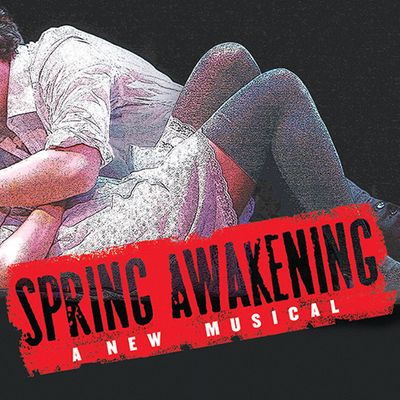
[33:51] Krysta Rodriguez: I didn't really have anything against him, and it was a play that was, basically, while I was doing chemo, I was doing chemo on the show, and they worked around my schedule and allowed me to be bald and all this other stuff. And then Michael Arden asked me to do A Spring Awakening in LA, just for a two-week run. And I had played Ilsa—I had understudied Ilsa on Broadway before, and then he wanted me to do it. And I was like, "Oh, you have to be 30 to understand Ilsa. She is 30, even though she's 15. You have to experience loss and pain and anger and betrayal in your body and violations of people on your body and all of these things." And I felt, for the first time, like I now can do anything.
Throw it at me, and I can figure it out. I think that really did open a lot of things up. As far as being a good little girl and listening to direction and saying yes now and yes forward, that has gotten harder. I mean, because I'm older. And as I have this monster inside of me.
[34:53] Bobby Steggert: Does the monster ever prevent you from trusting when, objectively, you could trust?
[34:58] Krysta Rodriguez: Oh, that's a good question. I think my initial reaction is, when is a time when you objectively can trust?
[35:07] Bobby Steggert: Good question. In return, where my brain went is, let's say you're in a rehearsal process and the director is good. And they've proven themselves to be worthy of the advice they give. Does the monster still come forward and protect you?
[35:20] Krysta Rodriguez: Yes. All the time. Yes. And that's something when I now, because it's not about that I disagree a lot of times. It's more that I am nervous that I can implement what they're asking. And so, again, trust in myself. And then it becomes trust in them, because I have to be able to trust them to get in there and do the whatever horrific thing I'm going to have to do. The opening, the ripping of myself open to give them what they want. Are you worthy of that? And is this choice worthy of that? A tool that I try to do is, and I'm sure you've experienced this, you're in a note session and you're listening to the notes and you're like, every one of those is right. Every note that he's giving this person, I would have given them.
And so it can't be that his notes for me are the only ones that are wrong. And so you have to do that. But still, it becomes about like, when do I speak up? And when do I trust? And I don't know that I will ever know. And I guess you just have to feel out each situation. And I try to believe that I'm hired for my brain as well as my body and my ability to implement things. But sometimes that's not as welcome. I tended to trust the directors who left me alone. That says something. Maybe I wasn't as trusting as I would have liked to be.
[36:43] Bobby Steggert: How do you know when you can trust a collaborator?
[36:49] Krysta Rodriguez: I think, again, if you see that they've got good intentions for everybody else, I think one thing that makes me, in the inverse, mistrust somebody is when I have seen how the sausage is made. Like when I see them giving positive notes to somebody and then going like this, "I can't get anything from this girl" or whatever. Then I just have to assume that's happening to me. And I think a lot of what my work and trying to be comfortable in this industry is knowing that people might not like me or what I'm doing. And that's okay because not everybody likes everybody at all times. The narrow street has gotten a bad review at some point. So I'm certainly going to get someone who doesn't quite vibe with me or whatever.
Especially when you can complain about your partner and not want to leave them. You can complain about a coworker, complain about it. Actors need to be able to complain about the director and the director needs to be able to complain about the class. There has to be a sort of a way to get out of there. So not taking everything so personally, it's so hard not to say things personally because I am who the product is. I can't separate those things. If I have a person who I don't see that double speak, I can trust that a little bit more. But also, I guess I still feel like even if I don't see the double speak, it's happening and I just have to be comfortable with that.
[38:12] Bobby Steggert: We'll be right back. Using this framework is making me realize something, which is that I think it's safe to say that the reason I left the business is because I did not trust that I could be a happy person for the rest of my life in that job. Do you have those questions in terms of the inconsistency of the job?
[38:40] Krysta Rodriguez: Yeah. Yeah. And I think it's weird because I think it came up early, but I didn't notice that because I had a steady success for what you could want at my age at that time. And I remember doing one particular show that I just felt odd in, but it was a great opportunity. It was a huge step for me. It's going to move the needle. It's going to do all the things you want to do at that time. And saying, "I wouldn't want to see this show actually." And that's why I don't feel comfortable here. I'm having to make decisions and want people to like a product that I don't even like. So how do I do that? How do I reconcile that? And you just go, "Okay, I'm just gonna put my head down because the next job."
And then it's very rare that that project comes along. So I think as time went on realizing like nothing is ever the thing, nothing ever moves the needle, especially in the way you think it will. Like starting to have more of a nihilistic view of the business, which is your only way to survive. And who am I if I am nihilistic? I feel that way about social media and reviews and message boards and all of those things and how the meanest things people can say about you and how you have to have a tough, a thick skin. Who will I become if those comments don't affect me anymore? Who doesn't have empathy for somebody else? Like someone who's so crusty, that's who we're all becoming as a society. I think that's who we're all becoming as a society because we are all having to build up this thick skin because we're all putting ourselves, every decision we make is up for debate and scrutiny.
I think as I started to realize I'm becoming a nihilist with a crusty thick skin who doesn't trust anything and isn't making stuff that I want to make, what does this industry hold for me? And then the pandemic and then the strikes and all of these things where it just keeps like false starts. And so I try to tell younger people this is that like you're supposed to live your dream and like the dream is so much bigger than you think it is. And even if the dream is to act, keep the dream big. And the acting can have, I think that the exercise I keep trying to do is keeping acting in a rightful and proportionate place in my life. That it actually can either be the dream or facilitate another dream.
And that still makes that the dream. So I don't have to say this job makes me unhappy because sometimes it does, but how can I reframe it to not be the central focus of my life and still do good work?
[41:37] Bobby Steggert: Is this something that you have learned to trust in yourself, this idea of expansion and balance in terms of what you prioritize in life?
[41:42] Krysta Rodriguez: I think I'm getting much better at it. It's so weird because I think on the outside and to me 10 years ago, who was fighting wanting to do shows that I believed in and I wouldn't take a paycheck if I would rather do a $400 a week off on my thing than a series because I could get stuck in that series and I'll be rattling off medical jargon for 10 years and all of that was something I have very specific things I can point to that where my life went left instead of right because I didn't want to make decisions based on money or clout or didn't believe in. Now I feel like in order to right size that joy, I have those projects are becoming a little more appealing to me. So I trust that that is going to give me more stability, potentially more satisfaction and to not fight against those things anymore.
But I do look at that as this old failure or success. Is this a win or a loss for my artistic integrity? But I'm going to count it as a win. That's where I feel like I'm succeeding now is counting those things as wins and using them to expand my life.
[43:07] Bobby Steggert: Final question and it's a big one so it can go anywhere. But I often think as a therapist in terms of the concept of legacy and you have shared the legacy of addiction, the legacy of illness, the legacy of religion. Those are the three main forces you brought forward. How is the legacy of those things affecting your relationship to trust today?
[43:31] Krysta Rodriguez: I think a little bit like what I said before about the car. It's like one of my aha moments about religion was that meditation and prayer and all of those things is neurological. You put your brain on something, you get specific about it and then you are looking for signs that is coming to you. And this sounds very, it might have hubris, but it was important to me in my development, which was it was me the whole time. Every time I got on my knees to ask for something and I felt like it arrived, it was because I determined what I wanted. I spoke it out loud and I looked for it to come to me with an open heart, with an expectation that it was coming to me. And I think that goes hand in hand with trust is that I hope the legacy of trust comes next, which is that I believed in myself and I made poor decisions and I made good decisions. And neither of those things means that I'm a bad person or a good person. It just means I'm in a human body making decisions as best as I can.
© Broadway Podcast Network, All Rights Reserved