

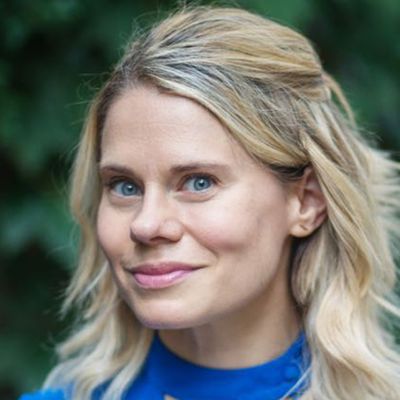
Celia Keenan-Bolger (Mother Play, The Gilded Age, To Kill a Mockingbird) learned as a young girl that self-sufficiency and a responsibility towards the larger good was what made her belong in a family that valued service above all else... Read More
From the show: The Quiet Part Out Loud
Guests
Featured Shows


About
Celia Keenan-Bolger (Mother Play, The Gilded Age, To Kill a Mockingbird) learned as a young girl that self-sufficiency and a responsibility towards the larger good was what made her belong in a family that valued service above all else. This part has served her extremely well in an already storied career, but she has learned that self-sufficiency is also an obstacle to connection. She is still learning how to risk the intense vulnerability of intimacy with those she's closest, understanding that to reveal herself fully is the only way to create true connection.
Help guide the show with me! Submit your request for guest and/or topic(s) to cover by visiting https://bpn.fm/quietquestions
Transcript
This transcript was automatically generated and might contain errors.
[0:05] Bobby Steggert: I'm Bobby Steggert, and this is The Quiet Part Out Loud.
[0:14] Bobby Steggert: Celia Keenan Bolger always felt like an artistic kindred spirit to me. Now that may sound like boasting because she is up there with the best stage actors we have. But it's true. We both came up into the business playing sensitive outsiders. She also thinks big picture like I do, aware not only of her character's inner life, which is very rich, but of her function in the larger story. She is a dream to work with. She's a true team player, and it's one of her greatest assets as an artist and as a colleague. The part that goes at it alone, that assumes it must carry the burden as an individual, that historically made her small and efficient in order to belong in a family culture that centered service to others as its core value.
In order to belong in her family, she had to have as few needs as possible and to look outside of herself to determine what needed to be done. But for a social species, belonging is safety, even if that belonging is a betrayal to the self. Celia shares how her self-sufficient part believed, still believes sometimes, that to keep certain needs or truths from others is a way to stay safe from loss or rejection, but that ultimately that kind of independence is actually an obstacle to true connection. Intimacy is messy. There's just no way around it. But the relief, of course, is that in the mess, others feel the permission to be messy with you. And to be human is to be messy. The entire purpose of this podcast is in the title.
My hope is that it takes some of their power away, that it gives parts a different kind of energy, one that is flexible enough to serve us in new ways, allowing us to evolve, giving us the gift of belonging to ourselves so that we may belong to others more authentically.
[3:02] Celia Keenan Bolger: Oh my gosh, I think it's such a good idea. And honestly, I feel like there are those high-impact things that we do, and then low impact. And I was like, this one is gonna not only be low impact, but it's gonna fill me up a little bit.
[3:15] Bobby Steggert: Oh, I hope so. And I think it's important that someone like you does this because you're part of the DNA of the theater community. And so, as such, people might just assume that everything flows out of you so effortlessly.
[3:30] Celia Keenan Bolger: Yeah, if only.
[3:32] Bobby Steggert: What is it like to hear that?
[3:33] Celia Keenan Bolger: That's it's so generous, but I think I do feel a kind of responsibility to make sure that people know that none of this is just like what a walk in the park. Like we're all coming up against our own barriers and self-doubt and all of that stuff. Like I wish as we ascended it went away. And I think in some ways it does, and then it's just oh, now we've got some new things to deal with, you know, that it's replaced by something else.
[4:07] Bobby Steggert: Absolutely. If you read Barbara Streisand's memoir, she says the same thing. She's at a whole other level of ascension, but I think it's true. And especially she's such a perfectionist, and she has always been so exacting as an artist that it's you're gonna just always be pushing the goalpost.
[4:25] Bobby Steggert: Right now, before we go into the personal stuff, you're in a show that just opened, it's very well received. This feels like your life every three or four years. What's it like?
[4:36] Celia Keenan Bolger: I feel this time around, there were a few things going in that I felt strongly about. And the first was that I did not wear myself down so much that I couldn't be a, I want to say like an active member. I was an active member of my family when I was doing To Kill a Mockingbird, but I was so depleted that I went into this process saying, I want to not feel that way, and I want to be present with my family, and I want to be present at work and like what I don't know if it's boundaries or practices can I build around that so that that can continue to be true. And I feel really grateful that I have been able, and my family and I have been able to do that. And I think the other thing going in is I was like, I really at this point in my career, the thing I care about the most is making the thing.
Like I love the rehearsal process so much. And there are all kinds of things that can corrupt it if there's insecurity, I think probably being the greatest one. And it requires so much vulnerability from so many different people to make a piece of art. And I felt really strongly that I wanted to not just be a participant but also a leader in collaboration. Like how can I help build a container where people feel so safe and so supported, including myself. Like I wanted to build that space for me as well. But to really have that more than make something good, to make a great collaboration was the thing that I wanted so badly. And what I'm realizing is that I think great collaboration breeds great art.
[6:50] Celia Keenan Bolger: But I think in this particular instance, because there were so few of us, I've never been so close with a stage management team. I feel so close to Tina and to Paula, Tina who directed it and Paula who wrote it. There was a point in the preview process where things were very hard. And I can go back to like three different processes in my career where either I gave up or I got so scared that I was on a sinking ship that I started to commiserate with my castmates about how nothing was working and how we were not being taken care of by this person and this person. And I think the gift of age and experience is that I was like, whatever you feel as fear coming in, how can you recognize that and continue to pursue this collaboration?
And I feel like everybody did that. Like it was such a powerful experience to watch so many people like in the third week of preview, the second and a half week of preview, where we were like, we will keep working until we get this to the place that we want it to be. And it was it was very moving to be a part of.
[8:07] Bobby Steggert: That's amazing. And you know what? We both grew up playing supporting roles in important but sort of smaller aspects of the larger production. And here you are a leader. And it sounds like you decided that you needed to be a leader in that room.
[8:21] Celia Keenan Bolger: I guess, yeah. And it's weird because it feels both natural and unnatural for me because I think you're right. Like, I grew up in a family that was so much about not making yourself better than anyone else. Like we were a real family of equality, both in the system of our family, but also in the world that we didn't put ourselves above anybody else. And so I think the idea of leadership I associated with making yourself important or more important than other people. And also, I've done this for so long. Like I've been a part of a lot of processes. I've started to realize like you do have something to offer. And I'm not somebody who I think is obsessed with making sure that I am the center of attention. I come at this with a holistic approach, wanting the whole thing to be something that is good and meaningful. And so I just had to sort of lean into that.
[9:26] Bobby Steggert: Will you say more about childhood and the lessons that you learned in terms of what we're talking about, both perhaps the strengths and the drawbacks of it?
[9:36] Celia Keenan Bolger: Yeah. I think the best part of what I got in terms of not making yourself too big or too bright is that my reliance on a system and on other people, that muscle feels so strong, and that I never felt like if something doesn't work, it's because of you. Because I wasn't allowed to make myself so big. It was like the whole thing just didn't come together in the way it was meant to. And so it took some of the pressure off of me in that way. But I think the drawback is that I'm sure you have had this conversation a number of times on this podcast. Like so much of the reason that I ended up wanting to be an actor was because I think there was a part of me that didn't feel seen at home or felt like who I was just a little bit too much, or was a little needy of attention in a way that was not in alignment with our sort of family ethos.
And so I think my pursuit of this career in acting, so much of it is just wanting to feel seen. And when you go into a career where you literally have literal eyeballs on you every night, and there is a feedback loop for sure. But that feeling seen, I think, and feeling loved are two very different things. And I think you can certainly be seen by eyeballs on stage, but being loved, you cannot look for that from an audience, from a director.
[11:37] Celia Keenan Bolger: Even if I didn't always feel seen. And maybe that also goes back to what I was saying about really wanting to feel a kind of balance feels like such a like an inadequate word, but to feel presence with my family, because my family is such a source of love for me, that it's I think in the past I would come home off of this sort of high of doing this thing of feeling so creatively dilated, and then coming home would almost feel like a letdown, like it was like, and now we're just back to life. And I think what I'm realizing is that if we level set in a more realistic way, that they're feeling different parts of ourselves, that coming home, I think also I felt like coming home, I needed to be on, I needed to have energy for my kid, that all of these expectations of who I was in the house, and that I couldn't just come home tired. And I'm realizing, like, oh yeah, you absolutely can. You can just come home wherever you are. And that's been such a nice discovery.
[12:52] Bobby Steggert: Was there a different expectation for you as a kid?
[12:56] Celia Keenan Bolger: As a mother, you want to be on and present and really available. What was expected of you as a kid?
[13:03] Celia Keenan Bolger: I think self-reliance was the thing that was prized most in the Keenan-Bolger household. My dad came from a family of five, and my mom came from a family of seven. And so self-reliance in their family systems, it wasn't that it was valued. It was like you couldn't exist in the family if you didn't have self-reliance. And so I think that was something that was very baked in, but that I also, I think, as a pretty sensitive kid, was able to absorb pretty quickly that one of the main ways that I could receive love was by both being self-reliant and also maybe taking care of my brother and sister, or taking care of things around the house and doing things without having to be asked, and just noticing what needed to be done.
And I think it's so funny. I just was having a conversation with my son about he was asking me about the biggest lie I ever told when I was younger. And I was saying that I had broken something of my mom's and I never told her and how bad it felt. And he was like, Why didn't you just tell her? And I was like, I don't think I had the same relationship with her that you have with me. And I was scared of her, and she had really high expectations for me. And he was like, You met all those expectations, so that's good. And I thought it was so insightful for an eight-year-old to say that. But I was like, at what cost does one keep trying to? And I guess it goes back to what I was saying before. How do we at a very young age realize what gets us our parents' love?
[14:38] Celia Keenan Bolger: And I think it wasn't even like I lived in a house where it was verbalized that there were such high expectations for me. It was just innate in our family structure that there were things that were expected.
[14:51] Bobby Steggert: Were there any values that were expected beyond just making sure that you were behaving and being a good kid?
[14:58] Celia Keenan Bolger: Yeah. And again, there really are two sides to this because we were a family of service. Like service was such a hugely important part of growing up and recognition that there were people who had less than we did, though making sure also to remember that didn't mean that we were above them, but that there were people that either grew up with a different set of circumstances or because of the color of their skin or class, like any number of things. They didn't have the same opportunities that we had. And we had a responsibility to help other people. And again, I think that it's been so powerful in my life. That thread runs through me so deep. But I do think there is also a feeling that I've had, which is that whatever I'm doing is never enough. That it's always I can look so many places where I could be putting energy and I'm not doing it. And that can lead to a feeling of just not enoughness.
[16:08] Bobby Steggert: We'll be right back.
[16:11] Bobby Steggert: Hey y'all, it's Bobby. In one month's time, The Quiet Part Out Loud has become even more than I hoped. And now it's time to ask you. Who do you want to hear from? Who are you curious about? Or what part of you do you want reflected in these conversations? Head to the episode notes and follow the link to a quick survey or reach out on Instagram at QuietPartOutLoudPod. And thanks for listening.
[16:36] Bobby Steggert: I'm thinking about that self-reliance part. It sounds like it was lonely too. And that part of you felt like the burden was entirely yours.
[16:45] Celia Keenan Bolger: Oh my God. Yes. That has really been a huge part, really, even of this last year. It feels to me like the self-reliance and the belonging part of me, that they're so interconnected that, like, in order to belong in my family, the thing that needed that was like required was self-reliance. But I think my belonging, I have been so desperate. I mean, this doesn't distinguish me from anybody, but my belonging part has been so powerful. And in some cases, self-reliance has been the way to belong. But what I do know is that ironically, the belonging part has also in my life, I think caused the most isolation. That this feeling of self-reliance, like exactly what you just said, it's so lonely. Like it doesn't bring other people into the equation and in an effort to belong.
And then either I didn't feel a part of or I didn't agree with it, or whatever. That really brought me into myself into a kind of rumination, into a kind of lonely isolation. And that is, I think, one of the most for me dangerous places that I can be, because our brains are just so powerful. And the narratives that I think we're able to keep reinforcing, they are long-lived and hard to navigate out of.
[19:15] Celia Keenan Bolger: In a more global or macro way, it does shine a different kind of light on oneself. And I even feel like Tina Landau just said this to me. She was like, I have never really worked with an actor who has such a sense of the whole play while also really being attentive to their character. And I think that speaks exactly to what you're talking about, which is that it's not just my place inside of the system. It's like, how is the entire system functioning? And who am I inside of that? But I think I sometimes have a, I don't know if it's conflated or if it's an outsized sense of either responsibility or sense of importance inside of things that are just like not mine to take on.
[20:11] Bobby Steggert: In terms of needing to fix a problem by reaching too far into it?
[20:16] Celia Keenan Bolger: Yeah, or something that is just not in my control, that I can start to fret about things that really either have nothing to do with me, or if I wasn't looking at the larger picture, I don't think I would have come to it on my own to feel bad about it.
[20:38] Bobby Steggert: How does your self-reliant part come into play when it comes to needs and then the communication of needs?
[21:03] Celia Keenan Bolger: And then my mom died the year after I graduated from college. And so I think the way that part of me got extra like superpowered because of the circumstances and this feeling that was like the rug can be pulled out from under you at any point. So unless you are like good with yourself, unless you are taking care of your needs, like you can't ask other people. And if in fact if you invest in other people, there's a chance that they might die and then you'll be like totally screwed. I can really look to it like in romantic intimate relationships that I had after my mom died and just like how deeply one-sided they were in terms of me really taking care of them offering whatever support and love I could offer and going back like sort of what we were talking about before into this space of isolation of just both like I will take care of my needs and then also feeling extremely lonely inside of the relationship and feeling like I didn't have the tools to ask for what I needed.
I didn't really know how to do that. And I think even if I had it would have felt so vulnerable. And I think I honestly wisely picked people who weren't gonna ask me what I needed and I think that was by design.
[22:35] Bobby Steggert: Because you weren't ready.
[22:35] Celia Keenan Bolger: I think probably yeah or that it just yeah. If you had no experience asking for what you needed it would have been terrifying to do so.
[22:45] Celia Keenan Bolger: Yes. Yeah. And I'm still, I am deep in this work still of trying to express the silliest and not even need, but this is a, I don't know what this is, but leading up to these Tony nominations, I thought after I won, I was like, God, what a relief. Now I can go into the rest of my career. I have this thing that I wanted so badly. I can take a deep exhale and enjoy. And sure enough, this season rolled around and I was like, I will feel so sad if I'm not nominated for a Tony. And I was like, you've gotta be kidding me. And in the past, I would have never expressed that to anyone because it feels so ugly or it feels so talk about moving the goalpost where you're like, when is it enough? And I just I tasked myself with saying to my husband, like exactly what I just said to you, like, I thought I was past this, and it is disappointing to me how much I'm thinking about it.
And I think in this case, it also really goes back to the belonging part too, which was that with Jim and Jessica are nominated and I'm not, I'm gonna feel like I've somehow let them down, whatever, all of the stories that we can tell ourselves. But that even just taking myself out of isolation and into connection, the amount that it deactivates that feeling is so powerful. And I'm like, God, I get that it's hard to do, but there's so much less suffering if you are able to do it.
[24:38] Bobby Steggert: And you did it in a place of trust. Obviously, your husband is going to hold that with you and to not judge you for it. But I think that has always been true. And for whatever reason, I told myself a story that was about how I viewed myself inside of that instead of how he might view me. And the way that I viewed myself was that you should be bigger than this feeling. You should be a better person than somebody who wants this. And because I had that judgment of myself, I could only assume that he would have it too. And that made me feel like I don't want him to see that part of me. I don't want him to know that. And it's still, it doesn't feel great when you admit those things. But what I know it does is that it instead of stewing about it before I go to bed or thinking about it in the morning, then it's just not on my mind as much because it's been given a voice and it creates a connection.
[25:42] Bobby Steggert: I feel connected to you in terms of that honesty here. What does it feel like to say it, knowing that people who only dream of being on stage will hear what you just said?
[25:51] Celia Keenan Bolger: Not great. But I think also again, do I wish that I didn't feel that way? Yes. But do I feel that way? Yes. And I think there are, I don't know if it's specific to being an actor, but I do think because we have the gift of having this job that is constantly asking us to sort of unearth these parts of ourselves and have real access to our feelings and our interior life. And so on one hand, there is this great gift of that. On the other hand, it does mean that I'm clocking so many emotions and so many feelings, some of which are not that comfortable. And I think that is universal, regardless of where you are in your career, this idea of who we are and who we wish we were, it feels particularly present to me in my circle of friends who are artists in a different way than my like muggle friends.
[27:01] Bobby Steggert: Well, sure. And everything you do is visible. And there's an added pressure in terms of, like you just said earlier, eyeballs on you.
[27:09] Celia Keenan Bolger: Mm-hmm. Is there something about acknowledging the uncomfortable icky feelings around, let's say a Tony nomination that we can project into the future that makes it a relief that perhaps this would come up every single time and to expect it is better than to deny it?
[27:29] Celia Keenan Bolger: Yes, for sure. And I think also part of my desire to give it voice here is that it's like a different version of sharing it with my husband, which is that does it possibly deactivate it a little bit? Not the idea that the feeling won't come up again, but my experience around the feeling. And when I have heard people talk about things that they have struggled with, again, that feeling of belonging or that feeling of isolation, I think that's part of why I want to talk about it, because it I think the more this again, as I'm not saying anything new, but the more we can really talk about our vulnerabilities and the things that we view as like real deficiencies. So often when we give voice to those, I find a lot of people are like, same, same, same. And even that feeling of togetherness or of us like having not just this one isolated experience on our own, also is very meaningful.
[28:43] Bobby Steggert: So a major part of your working with the self-reliant part is to risk the discomfort of being brutally honest.
[28:50] Celia Keenan Bolger: Yeah. That's I think that is right. And yeah. And I think in some ways it has always been easier for me to be brutally honest in a larger situation. I think of myself like in a rehearsal room when I have felt like I don't really like the way this is going.
[29:16] Celia Keenan Bolger: I have never really had a problem speaking up in a big group, even if it was to the people who were in power.
[29:25] Celia Keenan Bolger: I think where I have really seen it less evolved is in my most intimate relationships, like with my siblings and my husband.
[29:38] Bobby Steggert: What about?
[29:39] Celia Keenan Bolger: I think I have a sense of this.
[29:40] Celia Keenan Bolger: When you're in a process, you're not speaking just for yourself.
[29:43] Celia Keenan Bolger: You're speaking for the piece, the art, the cast.
[29:46] Bobby Steggert: Totally.
[29:47] Bobby Steggert: So that girds you.
[29:49] Bobby Steggert: What about the intimate relationships feel scarier to you?
[29:54] Celia Keenan Bolger: I think probably it might go back to the thing that I was saying, which is that if I reveal a little bit less of myself, that if something is taken away, I won't be as damaged or hurt by it.
[30:15] Celia Keenan Bolger: Whereas if I keep a little part for myself, that's just like the ugly bad feelings, vulnerable feelings, petty bullshit.
[30:28] Celia Keenan Bolger: If I just keep that for myself, then if everything falls apart, I've still got that thing.
[30:39] Celia Keenan Bolger: I'm still okay.
[30:41] Celia Keenan Bolger: And I think I'm just really learning, like that is not how love works.
[30:46] Celia Keenan Bolger: If you have an amazing partner like I do, I think you come to realize that, or I am slowly realizing that in fact, the more I reveal, the more full I feel.
[31:10] Bobby Steggert: So let's add parenthood to this whole conversation.
[31:14] Bobby Steggert: What do you want to teach your kid in terms of this balance between self-reliance and intimacy?
[31:21] Celia Keenan Bolger: That is such a powerful question because I think so much of parenthood is a sort of default setting of whatever you grew up with.
[31:29] Celia Keenan Bolger: And in my case, I would say more than most people, the default setting is like so good.
[31:36] Celia Keenan Bolger: I think they were really good parents.
[31:38] Celia Keenan Bolger: And so I am so lucky in that way.
[31:42] Celia Keenan Bolger: However, I've got a lot of notes.
[31:45] Celia Keenan Bolger: So I'm trying to, and I even feel it.
[31:49] Celia Keenan Bolger: My mom's sister visits sometimes, and I can just tell that she thinks I am spoiling my child.
[31:56] Celia Keenan Bolger: And maybe she's right.
[31:58] Celia Keenan Bolger: But the thing that I am really trying to do is to see him as he is.
[32:09] Celia Keenan Bolger: And that means having less opinions, I think, certainly than what I have.
[32:17] Celia Keenan Bolger: And also making sure I think that line between seeing your child and also like giving them the wheel, I still want him to know like I'm most certainly in charge.
[32:30] Celia Keenan Bolger: And that I make the rules early on in his childhood.
[32:35] Celia Keenan Bolger: I was like, there is an expectation about your morning routine, like the things that you have to accomplish before you get out the door.
[32:42] Celia Keenan Bolger: And on one hand, I think that's completely reasonable.
[32:46] Celia Keenan Bolger: And on the other, I'm like, what would happen if you just saw how it went?
[32:51] Celia Keenan Bolger: And I think the other thing that I didn't understand as a parent is how much I love to do things for him.
[32:58] Celia Keenan Bolger: And that sometimes I'm like, are you sending mixed messages?
[33:02] Celia Keenan Bolger: But that picking up a bunch of socks all over the apartment bugs me.
[33:08] Celia Keenan Bolger: It doesn't bug anybody else in my family.
[33:09] Celia Keenan Bolger: And so I'm like, I'm gonna pick up the socks.
[33:12] Celia Keenan Bolger: But also that I'm like, whoever learns to pick up the socks.
[33:16] Bobby Steggert: Well, little Celia had to pick up a lot of socks, it sounds like.
[33:20] Celia Keenan Bolger: I think that's right.
[33:21] Celia Keenan Bolger: And I think something that was strong in my house was I shouldn't have to ask.
[33:27] Celia Keenan Bolger: And I think the way that has served me is that going into other people's homes, going to my friends' houses, going to boyfriends' houses before I met my husband and seeing how I could be a member of the evening and be both helpful and participate, but also be taken care of is something that I value and that I think is valued when you go to people's homes.
[33:56] Celia Keenan Bolger: But I also think then if everything is about if I don't do it, then nobody else will leads to a kind of resentment and well of feeling that is not generous towards the other people that you might be cohabitating with.
[34:14] Celia Keenan Bolger: And so with William, my son, I am aware of how much I want him to be independent.
[34:21] Celia Keenan Bolger: And I think also like independence is such a different thing now than it was when we were kids.
[34:27] Celia Keenan Bolger: Even what that means, I'm not entirely sure, but that I want that more than anything.
[34:34] Celia Keenan Bolger: And I also know that I don't want him to feel like he can't lean on me or ask me for help.
[34:44] Bobby Steggert: And when you say that you in certain fundamental ways didn't feel seen, what do you think wasn't seen?
[34:50] Celia Keenan Bolger: And how is that inspiring you to look with open eyes at William?
[34:56] Celia Keenan Bolger: This is a deeply stupid example, but I've thought about it recently.
[35:00] Celia Keenan Bolger: And that was that at like the age of, I don't know, six and seven, I loved a long skirt.
[35:06] Celia Keenan Bolger: I loved, I wanted to wear like long skirts.
[35:10] Celia Keenan Bolger: And my mother was like, it's that's like an old lady skirt.
[35:14] Celia Keenan Bolger: Like that little girls don't wear long skirts.
[35:18] Celia Keenan Bolger: And my mother was, she was like hardcore second wave feminism.
[35:22] Celia Keenan Bolger: I think her feelings around like fashion in general were pretty reductive.
[35:29] Celia Keenan Bolger: And she viewed it all as shallow and not as self-expression.
[35:33] Celia Keenan Bolger: But this thing that I love, I just remember I had like one skirt, and I think it like started as like a dress-up skirt that I was like, I'm just gonna move this into my wardrobe.
[35:43] Celia Keenan Bolger: And she would make not make fun of me, but she always had a comment about it.
[35:48] Celia Keenan Bolger: But I remember I loved how I felt in that skirt, and I loved how it looked.
[35:53] Celia Keenan Bolger: And that is just like a very basic way that I think she was like, I don't like how that looks, and I don't like what it says about you in the world as my daughter, that you're wearing it.
[36:06] Celia Keenan Bolger: And that my son has some wild ideas about what he wants to wear, what color he wants his hair to be.
[36:16] Celia Keenan Bolger: And I think there would have been a time when I was just like, you can do all of that when you're out of my house.
[36:22] Celia Keenan Bolger: But for this moment, and we have this conversation all the time where he has holes in the knees of his pants.
[36:28] Celia Keenan Bolger: And I'm like, you don't want to put on something that doesn't have holes in it.
[36:31] Celia Keenan Bolger: And he's like, why do you care?
[36:33] Celia Keenan Bolger: And I was like, Well, I care because I think sometimes if other parents see that you have holes in your pants, that they think that I'm not taking good care of you.
[36:41] Celia Keenan Bolger: And he was like, that's not like your problem.
[36:44] Celia Keenan Bolger: And I was like, oof, boy, you are correct.
[36:48] Celia Keenan Bolger: But I think that's like a very rudimentary version.
[36:52] Celia Keenan Bolger: My mother was so intent, and she would say this that she was like, I'm not here to be your friend.
[36:59] Celia Keenan Bolger: I'm here to be your mother.
[37:00] Celia Keenan Bolger: There will be a time when we will be able to be peers, but that time is not for a very long time.
[37:07] Celia Keenan Bolger: And I think she didn't share a lot of herself with me.
[37:14] Celia Keenan Bolger: And therefore, I didn't share a lot of myself with her.
[37:17] Celia Keenan Bolger: I had a lot of other people to do that with mercifully, but that even I like got my period and I didn't want to tell my mom.
[37:25] Celia Keenan Bolger: And that feels like pretty weird to me that I was like, that I felt like, and she had said, if you ever need to get an abortion, if you want to get birth control, I'll take you to Planned Parenthood, no questions asked.
[37:39] Celia Keenan Bolger: It wasn't that we were a family that didn't talk about sex, but again, it goes there was something so intimate about it that I was like, this feels hard to share.
[37:49] Celia Keenan Bolger: And I think in that way, probably to a fault, maybe I do try to let William see me, like and all of the ways that I'm trying to navigate the world that are both positive and negative.
[38:07] Celia Keenan Bolger: And that I think I hope in letting him see me that he will ask me to see him as well.
[38:16] Bobby Steggert: Sounds like so much of the self-reliance was about avoiding the mess of intimacy, and you're offering William the beautiful mess of intimacy.
[38:26] Celia Keenan Bolger: I think also, like to my mother's credit, I think she was deeply sensitive in a way that read to me as totally stoic.
[38:39] Celia Keenan Bolger: And I think the gift of being an actor and being very sensitive is that you are able to both like access and excise emotion so that when emotional or intimate things come up in real life, I feel like I have a kind of sturdiness to deal with them in a way that I think my mother was very practical and very healthy, like her ability, again, like the sex conversation, the birth control conversation.
[39:13] Celia Keenan Bolger: Like she had no problem having those conversations.
[39:16] Celia Keenan Bolger: It was the details inside of why I might need birth control or any of those kinds of things that she was less either comfortable with or that it brought something up in her that felt so vulnerable that she was like, I gotta just stay away from that.
[39:34] Celia Keenan Bolger: And so I think that's the other part that I feel the gift of what I get to do for a living has fortified me in some ways as a parent.
[39:59] Celia Keenan Bolger: Yeah.
[40:00] Celia Keenan Bolger: And I think especially in this business, that kind of resilience, it has served me so well.
[40:09] Celia Keenan Bolger: And I'm so grateful, even at like major moments when I was like, what is gonna happen to me?
[40:19] Celia Keenan Bolger: This feeling, and I think this was also just given to me by my parents, which was that they were like, we know you're gonna do great.
[40:28] Celia Keenan Bolger: We know you've got this.
[40:30] Celia Keenan Bolger: I wasn't necessarily said, but I felt from them that they were not worried about me.
[40:37] Celia Keenan Bolger: And I think that has really served me, like in so many ways.
[40:44] Bobby Steggert: Are you worried about you right now?
[40:46] Celia Keenan Bolger: I'm not.
[40:48] Celia Keenan Bolger: And that's a really nice feeling.
[40:49] Celia Keenan Bolger: If you would talk to me maybe six months ago, I've had a different answer.
[40:55] Celia Keenan Bolger: You know, that there's always that's on a wave.
[40:58] Celia Keenan Bolger: And I think there's probably also something about working, it does so much for one's identity if your identity is wrapped up in what you do.
[41:08] Celia Keenan Bolger: But I think I honestly, like going back to your first question, I think it took me so long to integrate being a mom into this other thing that feels like the most important thing in my life, this creative outlet of acting.
[41:29] Celia Keenan Bolger: But it actually also, it's like it is making me think acting was always about a kind of self-reliance.
[41:36] Celia Keenan Bolger: It was a thing that I was in control of, that I was, even though making the thing, you're a part of something larger, but that I was the boss of how I showed up, of how prepared I was, of how I chose to deal with whatever came my way.
[41:50] Celia Keenan Bolger: And then I think having my son was so disruptive to the way I had been doing that, that the tension between coming out of self-reliance and acting and into a kind of intimate community space with my family and with my work, that has taken nine years.
[42:15] Celia Keenan Bolger: That's how long it took me to figure out really how to do that.
[42:19] Bobby Steggert: What I can tell is that full circle, the process you're in right now has proven that you got there.
[42:25] Celia Keenan Bolger: Yeah.
[42:26] Celia Keenan Bolger: And there's it's so amazing.
[42:27] Celia Keenan Bolger: It's so often that we hit these little touchstones that we're reaching for, and we only understand that we got them like years later.
[42:37] Celia Keenan Bolger: And I think it's so beautiful to me to get to experience it this time around in real time and feel like, wow, we're doing it.
[42:47] Celia Keenan Bolger: And like that isn't always the way that life works.
[42:50] Bobby Steggert: That's amazing.
[42:51] Bobby Steggert: I just want to share one thing.
[42:52] Bobby Steggert: A memory just came to me.
[42:54] Bobby Steggert: Before you and I worked together, we were both in our early mid-20s.
[42:58] Bobby Steggert: You were doing Spelling Bee.
[43:00] Bobby Steggert: And the first time I ever saw you on the sidewalk, you were wearing a long skirt.
[43:06] Celia Keenan Bolger: Oh my God.
[43:09] Celia Keenan Bolger: First of all, I love that you remember that.
[43:11] Celia Keenan Bolger: Seems like I was still living out a kind of childhood desire.
[43:17] Celia Keenan Bolger: I still really like a long skirt, but I love, I really love that.
[43:22] Celia Keenan Bolger: It's, I mean, I remember it well.
[43:23] Celia Keenan Bolger: I don't, I'm not a fashion person, but I remember it.
© Broadway Podcast Network, All Rights Reserved