

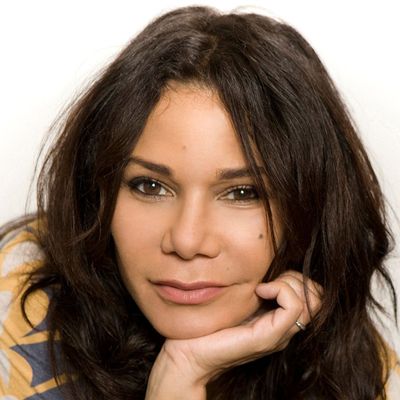
Daphne Rubin-Vega is back at the table, bringing the honesty, artistry, and fire that have defined her career for decades. Best known for originating the role of Mimi in RENT and for her dynamic work across Broadway, film, and television, Daphne joins us to talk about her latest project, The Adding Machine, presented by The New Group... Read More
From the show: The Roundtable with Robert Bannon
Guests
About
Daphne Rubin-Vega is back at the table, bringing the honesty, artistry, and fire that have defined her career for decades. Best known for originating the role of Mimi in RENT and for her dynamic work across Broadway, film, and television, Daphne joins us to talk about her latest project, The Adding Machine, presented by The New Group. She shares what drew her to this haunting, thought-provoking piece and how it reflects both the world we’re living in and her continued evolution as an artist unafraid to take bold risks.
In this candid and inspiring conversation, Daphne opens up about longevity in the industry, choosing roles that challenge her, and why storytelling still fuels her passion all these years later. We also celebrate the legacy she’s built—from iconic performances to new chapters that keep audiences leaning in. It’s a full-circle moment with a true original—real talk, real artistry, and a whole lot of heart.
Watch The Roundtable with Robert Bannon on BroadwayWorld, YouTube, Spotify, Apple Podcasts, iHeart, and more. For more, visit RobertBannon.com and follow along on Instagram @RobertBannon.
#DaphneRubinVega #TheAddingMachine #TheNewGroup #Broadway #RENT #TheRoundtableWithRobertBannon #BroadwayWorld #BPN #Theater #Acting #Artists #Interview
Transcript
This transcript was automatically generated and might contain errors.
[0:09] Robert Bannon: Well, welcome to the round table, everybody. My name is Robert Bannon. You're listening to us on Broadway World over here on the Broadway Podcast Network, iHeart and Spotify. I am so, oh my goodness, I'm so excited. I think I fell in love with our next guest in 1996 when I heard her say, "Gotta light." I was 12 years old, and I've been obsessed and in love ever since. Um and being able to do that show we're talking about, you know that that's the hardest role in the whole show, because you gotta sing and dance and act your face off. And then ever since then, her career has just blown up and grown into something incredible. She's an incredible actor who's back on stage here in New York City with this most exciting, timely show that you need to see. And I'm honored and welcome to welcome the one and only Daphne Rubin-Vega to the roundtable. Thank you for being here.
[0:54] Daphne Rubin-Vega: It's my pleasure.
[0:55] Robert Bannon: How are you doing, Robert?
[0:57] Daphne Rubin-Vega: I'm doing amazing. I literally have been following and obsessed with your work as an artist and your voice, both singing, acting, and your voice since I'm 12 years old. So thank you.
[1:08] Robert Bannon: Thank you. That makes me feel validated completely.
[1:14] Daphne Rubin-Vega: Well, you absolutely should be, and I want because you've moved, you've changed the theater and the industry for all of us out here, truly. And now you get to do this incredible new show with this incredible new cast. So what is it about a piece that makes you say, okay, I'll go, I'll get up, I'll leave my family, I'll go to the theater, a chosen, I'll get I'll get it together. What is it that moves you to say yes?
[1:38] Daphne Rubin-Vega: It was such a challenge in all the best way. Yeah, um, it was uh it's a challenge. It's a character that is so um provoking, provocative, uh archetypal. Um as much as he's a bit of a dinosaur, he's terribly modern. Um and I I just thought it it was a it was a perfect opportunity to play someone um, you know, I I as a person that looks like me that has lived my life and had this career. Um I I find that I it it I need to be mindful of of tropes of uh uh of not repeating certain stereotypes that I don't want repeated. And this role is the perfect antithesis to that, because it really does um he is a trope. He is a stereotype. And um, and for me to play him and to add humanity um and a layer of, you know, I don't know.
I I I say that I say that reluctantly. I I don't to play a trope um was a really great challenge, is a really powerful challenge for me because you know, I don't I don't do tropes, I do humans, right? Um I do I play stylized human beings or I put I play human beings and that's that's my job is to humanize a character. So um, so this is a perfect opportunity to play someone that I, you know, the conscious Daphne would um has has very powerful p um judgments and opinions about this this person that I play. So it's quite a meditation to to actually play them.
[3:50] Robert Bannon: I love the new group.org, everybody, is where you can get your tickets. The show is running till May 10th, and you need to go that you hear this, you better go get a ticket. Now I know that you're working with some incredible actors. I mean, you have Sarita who is a star, and Michael, who is Jennifer. I mean, they're I you're all our icons. And and what's it like when you sit in a room, you have your director, you have the people who have now adjusted this piece that's over a hundred years old, and now you gotta build this baby and put it on stage. What was it like to work with them?
[4:21] Daphne Rubin-Vega: It's wonderful. I mean, I love Jennifer, Sarita, and Michael. We are we are a coven. We are the legit coven now. We have self, we are self-proclaimed coven. Um, you know, it's great to have um we're we're developing a real tightness. I mean, the show is a bit of a beast. And so it's really important. And we just naturally um came together to become a nice protective little unit because we need each other desperately, you know. We need each other to to pick up where the other left off. We need each other because um it's a hard piece. It's it's it's not an easy piece. Um and so we provide a lot of a lot of comfort and a lot of, you know, we do. We comfort and love each other through this.
[5:22] Robert Bannon: I love that. We need what do you think about people who are afraid that it's 100 years old or it's going to be too too too uh academic for people to understand?
[5:35] Daphne Rubin-Vega: Laugh in your face. I laugh in their face. Too academic. First of all, um the intellectual um the genius of the piece is that it's toe-curlingly accurate for today. Um, you know, I Scott, the director, makes a point of of he makes it clear to us actors. He makes it clear that he's not trying to um make the show modern or like you know, relevant, but he doesn't need to. The show just at face value, the language is so um so relevant to today, you know, these people are obedient students of of the culture that they've grown up in. Um yeah. It's it's timely, everybody. You need to sadly, you need to get your you need to go get your tickets and and see this and and see what they're doing at the new work, the new group.
How's the new group been? They've been doing 30 years, they've been doing some of the most incredible work. I think that original works that are done off Broadway or downtown or around or over at this at the theater that you guys are at are so important to the culture and life of New York City and art in general.
[7:02] Daphne Rubin-Vega: Yeah. I mean, I think that we're the the real um sort of uh what do you call that? The the lightning rods, you know, Broadway, because it's Broadway, it has to have a wiggle room of of safety, you know, it can't be too on the edge, right? Because if you're hanging out on the edge, they say you get picked off. But then when you hang out on the edge, you also um create other kinds of um centers, right?
[7:33] Robert Bannon: Yes.
[7:34] Daphne Rubin-Vega: Like the edge becomes a center for something else. And and that's definitely what the new group has become has has been about, I think um for 30 years it has created a center out of the center.
[7:49] Robert Bannon: I love that.
[7:51] Daphne Rubin-Vega: Off the center in their new center. That's perfect.
[7:53] Robert Bannon: That's yeah for a nerdy actor question for you I know that you have you've studied acting for a moment you went to Esper.
[8:01] Daphne Rubin-Vega: Well I went to Esper too I mean you did I did I'll do Meisner repetition with you anytime.
[8:07] Robert Bannon: You'll do Meisner repetition with me anytime I'll do Meisner repetition with you anytime.
[8:15] Daphne Rubin-Vega: Do you think of the preparation uh for a role like this do you are you are you a nerdy actor in the script with the pencil making actions and circumstances and how do you what is your process to get in what do you do now?
[8:30] Daphne Rubin-Vega: That's a good question because I uh I do I I draw on my scripts and because we get new pages I I don't keep them like I I get rid of them and they become sometimes almost illegible.
[8:46] Daphne Rubin-Vega: And then by the time I get the copy that I'm living with, it's almost just highlighted pages. It looks like I'm an absolutely vacuous, you know, like empty vessel. Uh yeah, just the other day I was looking at a script and I was like, I can't even read my own writing. And I'm like, what is that? And it just said beat, B-E-A-T. And it took me forever to be like, what? What does beat mean? It's like beat, right? Um so I'm a nerdy, I do feel nerdy, but I write on scripts and then I can't read what I write. So I mean, a lot of it is in my head. A lot of it I feel like what was that thing that I didn't write down? Um, but it stays in my head and it comes back. Um I can't tell you exactly what my process is all the time.
It really changes. I will say one thing about the nerdiness. Um it seems apropos of nothing, but the fact that the theater is also a church is um that's where I get real nerdy because I don't think of, you know, if I, you know, it always broke my heart a little bit when comrades down the road stopped, like gave up acting for whatever reason, it was like, what happened, you know? And today I completely understand why you give up acting, and it has nothing to do with acting, it's all the other blowback and occupational trauma that can happen from being an actor, you know, the ego weirdness and the financial weirdness and um. But I never I always knew that if I wanted to be rich, that I was not in the right business, that that acting isn't how you make money, acting is how somebody like me can be heard, right?
And seen. Um, and often I felt that that was I was made fun of for that. It's like, oh, Daphne wasn't loved enough as a kid, and you know, um, it's easy to prey off of those things and say, oh, actors are people who just are like so, you know, um insecure that they need to have this kind of attention. When in fact, although that might not be altogether untrue, the bigger, more powerful fact is that there's something that I need to say that I feel that needs to be heard, and I don't know who needs to hear it, and I don't know how it needs to be heard, but I know it needs to be transported. Um, and that's less of an ego thing than it is of a spirit thing. Um, you know, and spirituality is a big loaded word, but that like the vocation of acting comes from spirit, it comes from a need to commune with the rest of the world.
Commune, um, you know, and the line between like preaching and acting, you know, um, you know, I'm not I don't have a conclusion, but it's a meditation that I often make that like as an actor, I need to do it, I need to tell stories, and um and I'm very discerning about the stories that I need to tell. Yes.
[13:13] Robert Bannon: I mean it's like it's imperative that I play this guy, you know. It's a call, it is a calling. You wear a cloak, you put on your armor, and it is a spiritual experience when back to acting school, but I remember the first day saying this is a vocation, and if you um it's a noble profession, it is a profession that is going to document history, it is going to tell stories that people that don't have a voice, and if you don't look at it in that way as a holy grail of communication and of humanity, then it's not for you. Yes, you know, and like unapologetically, you can exit, right?
[13:52] Daphne Rubin-Vega: Yeah, um, yeah, it's a way to strive for truth telling and um, yeah.
[14:03] Robert Bannon: Well, thank God you're still doing it. We need you, we need your voice and your talent and what you're doing. Who do you hope comes to see this show? Am I taking my date? Am I gonna, am I gonna have a little drink and a piece of pizza and show up at the theater? Who do you hope is out?
[14:17] Daphne Rubin-Vega: Everybody who has money to get a ticket. Who do you hope comes and sees this piece?
[14:22] Robert Bannon: Yeah.
[14:23] Daphne Rubin-Vega: Um, old people, people um that who do I everybody. I I don't, I don't, yeah. I mean, I don't hope certain people don't get to see this, you know.
[14:45] Robert Bannon: I hope the entire spectrum of humanity in New York that can get to, you know, this little theater. I mean, you know, theater is rare, theater's precious. You can't just turn on the TV and watch a recording. It is live. It is a sand mandala in the wind. It is over when it's over and it doesn't come back, right? And what you have. So I hope that as many um souls as we can get in that theater come.
[15:15] Daphne Rubin-Vega: Oh, they're coming. Wait till you see this, wait till you see this cast, wait till you see what Miss Rubin-Vega is gonna do up on stage and this incredible cast and creative team and everything. And we gotta support the arts institutions here in New York City as their funding gets taken, as money gets taken away, as all of these things are going on, support The New Group and what they're doing for acting and humanity.
[15:36] Robert Bannon: So I before I let you leave, um, I had uh old school, one old school question, if you don't mind. Jesse was here, Jesse L. Martin was here uh the other day, and we celebrate he was celebrating 30 years. And I hope, do you understand the impact that you have on this culture? Do you understand your music will be ruined in audition rooms forever?
[15:57] Daphne Rubin-Vega: Um I hope you know that when people go to see this show because you're in it, um, and and they've been listening to you and following you, that you hold such a special place to so many up and coming artists and actors out here in the world because of what the sacrifices and work you've done.
[16:16] Robert Bannon: Thank you.
[16:16] Daphne Rubin-Vega: I appreciate that.
[16:18] Robert Bannon: Thank you.
[16:19] Daphne Rubin-Vega: It's true.
[16:20] Robert Bannon: Um, Icon and and uh and legend and out here working people working up, out, working. You need to go get your ticket. The newgroup.org is where you can get your tickets. They're doing the best to make it affordable so that you can take your whole entire group of people, come see the show and see this incredible cast. You have only a short limited run until May 10th to get your ticket, so make sure you check it out and go see it. Break legs have the most incredible run, and it is such an honor and pleasure to be able to talk to you.
[16:47] Daphne Rubin-Vega: Thank you, Robert.
[16:49] Robert Bannon: Have a beautiful day.
[16:50] Daphne Rubin-Vega: Have a beautiful day.
[16:51] Robert Bannon: Thank you.
© Broadway Podcast Network, All Rights Reserved