

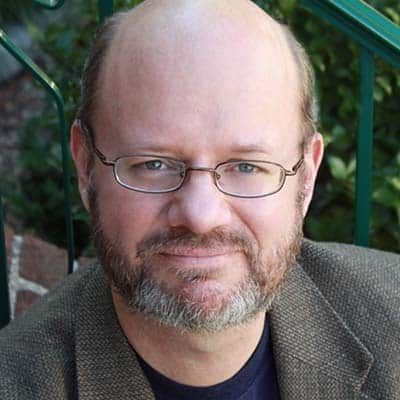
Who doesn't love an island? Who doesn't love a nice vacation? Well Nick Sullivan, aside from a long list of TV and Broadway credits, he is an author with a popular series of Fiction Novels all about the islands, scuba diving, and adventure!.. Read More
From the show: The Roundtable with Robert Bannon
Guests
Featured Shows
About
Who doesn't love an island? Who doesn't love a nice vacation? Well Nick Sullivan, aside from a long list of TV and Broadway credits, he is an author with a popular series of Fiction Novels all about the islands, scuba diving, and adventure!
He is here to tell us all about the second season of "The Twits" Podcast now here on The Broadway Podcast Network! How did it come to be? Who is in it? How do you find the right voice for a project like this? All This & More!
______________________________________________________________________________
Check out “The Roundtable with Robert Bannon” everyday right here on The Broadway Podcast Network!
www.RobertBannon.com
Follow on IG @RobertMBannon or @theroundtablewithrobertbannon
Transcript
This transcript was automatically generated and might contain errors.
[0:15] Robert Bannon: Welcome everybody to The Roundtable. You're listening to us on the Broadway Podcast Network, or you're checking us out on the YouTube virtual talk show. I'm so excited. You know, I'm proud to be a part of the Broadway podcast family, and I'm excited when they have new works that get done. So at first, we had Nick on because I wanted to talk to him about this piece that he's a part of. And then, you know, then I realized I've seen Nick on Broadway multiple times. Then I realized that Nick has like 106 books out that you can buy. Then I realized that Nick has done every show that ever taped in New York City. And then I realized that Nick is a student. Nick is a student of Rutgers and went into acting there. And he's an Esperite, and like I'm an Esperite. So then I'm like, oh boy. Nick, you're just gonna become my new best friend. Nick Sullivan, welcome to the show.
[1:08] Nick Sullivan: Thank you so much. That wow, that was quite a lead in. Thank you very much. I saw that you had Bill as your teacher at Rutgers, and I was ready to hear about your nursery tales. I wanted your Spoon River.
[1:18] Robert Bannon: Oh my Spoon River. I was ready for you.
[1:25] Nick Sullivan: Yes. And oh, and I, you know, one of the things we did, we had to do a set speech for Bill. It was about making sense of things. And I had never heard of the Chicago 7, the Anarchist trial, which made into a great movie or I think it may have been a series recently. But I found one of these anarchists' arguments and it was so well put, and I thought, okay, good. And I did that. And that's when Bill was like, you should do something with your voice, I think. I think that's something you should consider. I ended up teaching voice and speech at Rutgers shortly thereafter.
[2:06] Nick Sullivan: Yeah, I loved Bill Esper and I went there very much later in life. I was 33, I was divorced, I had given up acting for 16 years. It was Bill's second to last year before he passed away, and I actually was randomly put into Barbara Marchand's class. I did not know anything about Esper. I'm not one of the people who came there with years of research. I literally was going through something and a friend said, why don't you go to acting school? My friend went to the school. I walked in there and sat at the mercy of Barbara Marchand, who is a genius, and my life was changed forever. So I am always excited to talk to fellow Meisner people like you.
[2:45] Robert Bannon: You have quite an interesting career, Nick. You don't follow any mold or do one particular thing. You do it all.
[2:52] Nick Sullivan: I know my agent the other day was like, I think you need new headshots. I'm like, what for? Well, oh yeah, okay, sure, why not? Yeah, because I'm sort of doing whatever comes along. I've been lucky enough to have sort of found my toe dipped into different things, sometimes without me realizing what was going on, since the very beginning. I started in theater, didn't really get into film and television for a long time. I was in theater and then the audiobooks dropped into my lap. I've now done 600 plus audiobooks.
[3:35] Nick Sullivan: While I was doing the audiobooks, I would sometimes after I don't know, audiobook number two, three hundred, I'd be thinking, this one is a New York Times bestseller. I think I can write better than that. So that was in my head, but I wasn't really serious about it. And then the film and television took off shortly after watching a masterclass with Judi Dench. I constantly cite this as I just I was going in for things. I wasn't booking. I went in for Gimli in Lord of the Rings, and I went in for the Star Trek Voyager, one of the original casts, and I just wasn't booking. And then I watched Judi Dench and her secret to acting for film and television is don't do anything.
[4:22] Nick Sullivan: And she went on to say, okay, I don't really mean that, of course, but kind of that anything you do, if you make a choice, it's going to be huge on screen. So you need to sort of pull it back, pull it back, pull it back. And I immediately went out and booked the next Law and Order. If you watch Law and Order, it's not there's not a lot of scenery chewing, except for maybe the killer. Ever since then.
[4:55] Robert Bannon: Ooh, and Law and Order, and you've done, I think, all of the Law and Orders, really.
[4:59] Nick Sullivan: Now you've done it. I didn't do Trial by Jury. That was on very briefly. But I always say I've done all the Law and Orders, all three flavors.
[5:08] Robert Bannon: There, that's my last SVU appearance.
[5:13] Nick Sullivan: I love it. I love it, and I think that's good advice. It's so simple, but it's probably true. We are if you're a theater actor, you're so used to everything being big and expressive, and they want that one little twitch of an eye or that one little move.
[5:29] Nick Sullivan: Yeah, definitely.
[5:31] Robert Bannon: Nick, you 600 books, 600 audiobooks?
[5:35] Nick Sullivan: So yeah, I kind of stopped counting once I crossed 600. I know it's more than that, but yeah. A lot of them I did for Talking Books, which had a SAG-AFTRA contract. So I did them and they were done for the Library of Congress, which was cool because there might be a version that everyone's able to buy from the store of Mark Twain's Huckleberry Finn, but there's also my version of it in the Library of Congress. Also, some of the ones I did early on for commercial have been redone since because when I was doing it, it was on tape cassette. And if you made a mistake, they punched you in on the reel to reel. But once digital came along, all of those have been redone. So some of mine have been lost to history, but I've still got them in a crate somewhere upstairs.
[6:32] Nick Sullivan: I just talked to somebody who else also has done a lot of audiobooks, and I said when you have a big giant book and you have to read it word for word, is it monotonous? Is it sometimes it's a job? I know it's a job and I know there's a real art form to it, but did this really lead, as you said, to your book series? Like was reading this and being in the chapter and forcing yourself to read get you to become like I'm an author, I'm ready?
[6:59] Nick Sullivan: Yeah, I think so. To your first point, if it's very well written, then audiobook narration is a joy. I do detailed prep beforehand. I come up with a voice scape for all the characters. Early on, I'd be like, I can do anything, and you know, it was more of an exercise in Hanna-Barbera cartoon voices. But I've learned that no, as long as a listener can effortlessly know who's talking, that's all you need to do. So I do dialect work and such. But when I prep a book, I like to once I know who a character is and what they look like, where they're from, how they talk. If I have another scene with that character and someone else that I've already established, I gloss over that. I don't read, I just basically by the time I'm getting to the end of a book, I'm skimming for unfamiliar words and phrases and new characters so that I can be surprised when I'm reading the book for real.
[8:04] Nick Sullivan: If it's badly written, then you know you're constantly stopping to go, wait a minute, how where how do I parse this sentence so that a listener, okay, I gotta hit this and this, and that can be painful. But it was a combination of two things. One was I was realizing I think I can write like this. And I started learning which genres were popular. And then I started narrating for an author named Wayne Stennett, and he hired me through Audible's ACX audiobook creation exchange. And he was just starting out, so I got to watch how he went from a trucker, he was a trucker and a cabbie and a dive master, sort of a jack of all trades, to an author who was making a mint, and he did it all self-published.
[9:03] Nick Sullivan: And that had always been what had held me off. I have enough rejection as an actor. I don't need it there. So once I learned I could do it myself, I went in full bore and it helped that I didn't have to pay a narrator for the audiobooks. And now I've got six novels in the Deep series. One off called Zombie Bigfoot, which I am hoping to get onto Netflix at some point, but I'm trying to finish.
[9:37] Nick Sullivan: Oh, there's the Deep series. Look at you, how prepared you are.
[9:41] Robert Bannon: I tried to be.
[9:45] Nick Sullivan: Yes, that's the Deep series. Look at them all. And yeah, that one's got all of them. Look at that. And I'm working right now on a prequel to that series that takes a look at two of the main characters and follows what led up to them meeting. Grab a book today, wherever books are sold.
[10:06] Robert Bannon: I love that. That's the voice. If you're listening to us, go right now, go to nicksullivan.net, click the link, buy a book, buy all six books.
[10:15] Nick Sullivan: You know, yes. Um, but this, so this I I've got that, I've got the zombie bigfoot, uh, and a few other co-op books, and uh that all really came from the narration, and the narration came from the acting. I got into book narration because I was at an audition for something, and they were looking for audiobook narrators to narrate for the blind uh for the Jewish Braille Institute. And I thought, well, I want to get into audiobooks, this would be a good way to get trained. And I popped that off the corkboard. And that came from an audition for some small little regional theater. I think it was at an odd little space in Chelsea. And that was just a coincidence. So many of things in this business, I think are coincidences.
[11:05] Nick Sullivan: Um, I should point out, since we're here for Twits, right? Yes, I was gonna say Twits came from early on when I was writing, I talked to Tom Robbins and invited him to join us in this round robin project, which was where a whole bunch of different writers got together and we took a story and we started it, and then the next person came in and wrote on, and we had certain rules, you know, you can't kill this person and you can't do this and that. But his section that he wrote was so imaginative and marvelous. This I kept I called it steampunk of manners, comedy is sort of comedy of manners with steampunk. Uh, that after we didn't really do anything with the round robin, I went back to him and I said, Tom, you ought to consider doing this all on its own.
Uh, because what you wrote stands alone, it doesn't need the rest. But if you want to steal anything from what I did after you take it, go for it. And uh so he did, and uh all these coincidences that led to me doing what I'm doing, led to Tom doing Twits. It's just the way things work.
[12:24] Nick Sullivan: It is, and Tom Alan Robbins is brilliant. If you don't know, if you've seen him, he is the original, you know, Timon in The Lion King. He's amazing in Little Shop when it's still running for all these years. He is so sweet and brilliant and has another great voice and so creative. Twits Imperil, the second season airs right here home on the Broadway Podcast Network with an all-star cast of amazing actors, and it's super fun.
[12:50] Robert Bannon: So, how does a project like Twits work? Do you get the script and do the piece yourself? Is it taped live? Do they edit it together? How does this work, Nick?
[12:58] Nick Sullivan: Well, so it in general, when you have something that is uh a multicast sort of radio play style, you want everybody together so you can play off of each other. Uh sometimes practicality requires a particular part. Someone has to do it later, and they'll dub it in. But even then, then usually like Tom would read it. Tom, you know, Tom Robbins would come in and be that person. Uh so as many people are uh as are available, come on and record it with each other, uh, usually scene by scene. And yes, we have the material ahead of time. Uh so we go through and we make decisions. If we have questions, we send them to Tom. And uh it was a lot of fun popping on, and there was Michael Urey and Mary Testa, and we just swung for the fences, I guess.
It's not swang. Such a good writer, I am. Uh, we swung for the fences and just made bold choices. And uh Tom's writing is so witty, so funny. Um he was a uh a playwright in addition to being an actor, and I've seen three of his plays and participated in readings, and they are hysterical. That's why I invited him to do uh that Round Robin project way back when was because of the writing in his plays. Um but yeah, we get together, we laugh it up. We had to stop several times. Um, the fellow, I'm blanking on the name, but the fellow who played Cheesworth, he would just do his delivery and we would die. And they had these marvelous sound effects for uh Cheesworth had these conveyances that he would use to go from place to place.
Uh these like a steampunk camel caravan, uh, you know, made out of metal, and they would come up with what that would sound like when it would arrive on the street, and we inevitably had to stop recording because everyone would burst into laughter.
[15:08] Robert Bannon: Well, it is a great cast. We've had Michael's been here, Mary Testa is a legend and a trip and a half, and all of the casts of this show is fantastic and so uh and so much fun. If you're not, you know, obviously you're listening if you're listening to us, you know what the Broadway Podcast Network is. But if you're watching us, BroadwayPodcastNetwork.com, you can download it and join the family and listen to all of these shows because the original content on here is super fun and great, besides just like talking heads like myself. There's some original content on here that is really fantastic. Um, and what a great idea, and what a great cast of characters. I love it so much.
[15:43] Robert Bannon: You right now are in New Jersey, you said like me, but Nick, uh you're also like a man of the world. You travel all over. You are a diving aficionado.
[15:55] Nick Sullivan: Uh yeah, I uh and once again ties into the theater. Yeah, it was the stage guys backstage at Broadway's Footloose. One of them was a diver. He's like, You should do this. Uh and so I took my very first solo vacation with my own money. And uh, you know, I went, I got certified in New York City, and I went and went diving, and I was absolutely hooked. So I tried to dive every year. Uh, and the deep series that I write, uh, it's a pretty standard uh thriller mystery action adventure. Uh a little bit of each depending on what the trope is. You know, I try to focus on things like what's something that is done and how can I put a twist on it? Well, but I'm not characters with dive masters, and it all comes from all of my journeys.
[16:50] Robert Bannon: Oh, well, what I love about it is if I'm I may be wrong. So this is my plan in my head, Nick. This is what I thought. You listen to Twits and Pearl Peril for February or March because it's gonna be out and you're gonna listen to it, and it's gonna be fun when you're at the gym, at the walk, uh, cleaning your house, whatever. Then it's going to become spring and summer, and you're gonna want to take your vacation, and everyone's gonna want to lay under a palm tree somewhere in this world. We work, you know, in the United States 50 weeks to get one week off, and then another week for another vacation or something, if you're lucky. So you wrote a book that we can sit on the beach, we can daydream in the winter, we can we can it's action, it's adventure, it's not gender specific, it's not age specific, it's a little bit for everybody, and dream of this tropical oasis. If it's in Belize, if it's in another island somewhere, you change the locations and you tell it's not just for people who want to go scuba diving.
[17:44] Nick Sullivan: No, no, I and sometimes my hardcore diver readers will be there wasn't enough diving in this one. You know, I have one where one of the characters looks like an actress who's been kidnapped from this low budget movie, and they put her into the movie. So and uh so that one allows me to have a lot of my acting stuff in the the I have directors and movie folks. Uh, but another one might be a treasure heist in Belize, and another might be uh I try to put each one in a different location so you get a touch of travel log in each. Um, and you learn about different cultures and whatever the threat is in the book or the mystery is usually tied into something about the place so that it works with the culture and the geography.
[18:32] Nick Sullivan: Uh, it's so neat. I only have one short story. I have never gone scuba diving. I I'm a chicken, I'm a scaredy cat. My brother, who is the butchy police officer, the straight to my knot, and he's the stereotypical guy. He always forces we go on vacation, and then he always tells me we're gonna go snorkeling. And I always I'm scared, I don't want to go in the water, I don't want to go. And then every time we go, I jump in, he jumps in after me, he complains that his mask fogs, he can't, and he leaves, and I'm the idiot out here swimming amongst these beautiful creatures. But I'm so lucky a place like Belize. I got to snorkel there. It's the most gorgeous place in the world. We need to take care of this planet and keep our reefs alive.
And oh, you're gonna inspire me. I'm gonna get a book, Nick. I'm gonna, I'm gonna get a book. I'm gonna meet you on the turnpike and ask you to sign it at the Molly Pitcher Rest Stop. And I'm going, I'm gonna be inspired to go scuba diving.
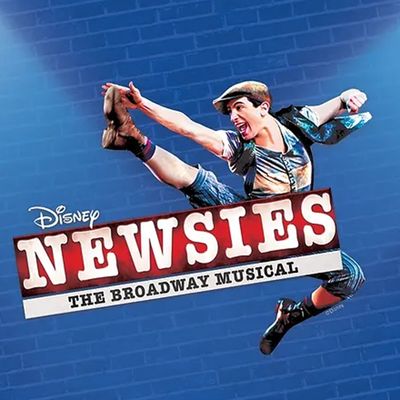
[19:31] Nick Sullivan: Well, I hope so. I've had readers say that they went out and got certified after reading such and such, which uh that's better than any like review from Publishers Weekly, honestly. If somebody goes, What you wrote, now I dive. I just I'm like, oh, that's so good to hear. I love it. NickSullivan.net, get a book, go to Amazon, go to wherever you get your books and order a copy or the set today. You uh and Twits, so how do you organize your life? Like you could be called to set, you could do broad. I mean, we I saw Newsies, you're in your Newsies on Broadway, Footloose on Broadway, you have a musical theater career, you have a television career, you have 600 audiobooks, you have novels that you write.
[20:13] Nick Sullivan: So when you wake up, is it a free-for-all of whatever comes your way? Do you departmentalize it in a way? How does it how do you do it? Um I well, I don't know that I do it well. Like right now, my editor is like, where's this prequel that you're supposed to get to me in April? And I'm like, um, not wanting to tell her that I'm probably only a quarter of the way through. Uh, yeah, I mean it depends. If I'm if if you're doing a Broadway show, you're not doing much else, no matter what you tell yourself. Um, although I do remember when I was doing Footloose, I was still a recurring character on All My Children. Um and I also booked a bunch of commercials all at once, and I was doing the audiobooks.
Uh, and I don't know how I did it. I feel like your time expands or contracts depending on what you're doing. Because right now I'm not in a show and I feel like there's not enough time in the day. Uh I I think I've written 500 words tops, uh, and that's not enough. Um and if I'm narrating, that's all I'm doing. You know, I I I like to I don't like to do a teeny bit here and a teeny bit there. I I prep it, and then once I start, that's all I'm doing for several days in a row until it's finished. Um and a film and television comes up, I I'm not someone that's on all the time. I'm I'm the person they pull in to either shoot dead in the lobby or or maybe I'm the expert witness. Uh so that's usually a day or two. And so everything else goes on hold if I'm doing that. Uh yeah, I'm I am at the mercy of the the winds of whatever job is lowering by me.
[22:02] Robert Bannon: Yes. Well, like literally, if we if we go through it, like I said, I I'm I will brag for him. The Fossey Verden, and then all the New York shows. If it's Orange is the New Black, if it's Bull, if it's Boardwalk Empire, if it's Madam Secretary, if it's Elementary or The Good Wife, or all of the sh 30 Rock, All My Children, Axel Green with that recurring role. You have done the the gamut of the of the shows. When you categorize yourself, are you an author? Are you are you an actor? Are you a Broadway performer? Are you just an artist? What how do you consider it? What do you consider yourself?
[22:36] Nick Sullivan: Uh it depends on who I'm talking to. What I'll say. Uh I mean, it's a little bit of everything. Um I'm I'm also a creator of of uh I run a website called tropicalauthors.com, and there's 50 of us. Um that I've sort of learned that uh the best way to sell is not necessarily buy a Facebook ad, but it's to get another author to pimp your book, and then you pimp their book. And I said, Well, why don't we have 50 of us doing that constantly? Um, so that that's something else I'd do. But um, I I guess I consider myself an actor first and a writer second. Um, but I have a lot of writers tell me if I were to re-evaluate that and get out more than one book a year, I might have a different opinion of it.
[23:26] Robert Bannon: Oh, I I love it. So I I I've literally I got my our friend Alison Ahern, who helps book shows here on the Broadway Podcast Network, sends me the Twits in Peril and asked, and I said yes, and then I read the cast and I and I look and I I see Nick and I say, I need you speak to Nick because Nick is you're fascinating. I'm sure you don't feel fascinating on the day-to-day. Fascinating.
[23:52] Nick Sullivan: I just sit here writing recording and uh and you got your puppy. I I understand. So when you're starting a you're working on a book right now, does the cursor doesn't give you anxiety? Like the little blinking Google Doc or Word document.
[24:09] Nick Sullivan: No, no, not really. Um I'm constantly dropping out to research things because I I uh one thing that really will pull me out of a book is if something doesn't ring true. Uh so um I usually write for a while and then I'm like, what does search and rescue do if they don't know where the body is, you know? So I I'm I'm always having to pop back and forth, which is why when I jumped on here before, before this podcast began, I was having some severe internet issues, and I think it's because I had probably 20 different windows open on two different browsers related to the scene I'm currently writing. It's uh yeah, it's but but no the cursor doesn't bother me. I think what bothers me and makes me anxious is when I get to the end of the day and I'm like, what day is it?
When does my editor need it? And I only wrote this. So um, and then when I have a film and TV audition, that that's it for that day. Uh so I don't write that day. Right now, I'm clean-shaven because I I went in for a role where I look like a particular person in real life. Uh, and uh we just did that uh yesterday. Uh so I didn't write yesterday either. And that's okay, because we'll you'll write later, you'll write tomorrow.
[25:31] Robert Bannon: It's true. But if you if you do this, if you want to write, your editor is your best friend and the most important thing. Don't think you can do it without an editor. And they are booked solid. So uh even though I'm sort of like, oh, I could just do things as they come, I still have a hard deadline with my editor.
[25:50] Nick Sullivan: Yes, I understand that. Now, one more question about writing. I'm sorry to nerd out about it and and all of this. How many times do you read the book before it shows up on our shelf? Because that's as an ADD artist myself who I'm on a podcast here, I'm auditioning for this, I'm teaching my class here, I'm doing it's the fear, the dauntingness of it is oh my goodness, I'm gonna have to edit it and fix it and change it. And that's part of the art of it, is is the constant. So, how much do you play with it after you do it?
[26:21] Nick Sullivan: Well, basically, anytime I feel a bit stuck where I am, I will often go back and read a portion up to and and I tweak and fix things all as I go. Uh, and if I had like, let's say I did three days on Law and Order or something and just wasn't writing at all, I might go back to the beginning and read through. Um, but once it's done and then off to my editor, and then it comes back to me, and I look at her notes and I do all the rewrites. I then usually only read it one more time.
[26:59] Robert Bannon: Okay.
[27:00] Nick Sullivan: And then I have an advantage. I narrate it. So what I do is I change stuff while I'm narrating it because I'm hearing it out loud, and I'm like, that sentence is much clunkier than it is on the page. And uh reading it word by word, out loud, in real time. Uh and honestly, if you're not a narrator, I think it's a good idea to do it. Um, that's sort of my final read is when I do the narration and I make final edits, and then it goes off to the proofreader for anything I missed.
[27:38] Robert Bannon: I I'm fascinated. I'm floored. I took all of your time. I'm just I could sit here for five hours and listen to you talk. I um there are people that have gone on airplane trips, road trips, fall use you to fall asleep at night to not have anxiety. All of the things that we, you know, books on tape have have really done for us, and it's it's kept reading. I you know, I'm an I'm uh I'm an actor, but I'm also an English, I teach fifth grade. I have a master's in reading, and I'd so important that the art of reading is disappears with younger generations because everything's on a phone and everything is is visual. And the to sit down and be able to read a book or and now the audiobook to listen to a book.
I have so many friends who tell me when they're in the car, they get tired of the radio. They they need the audiobook. It helps them relax and and and to enjoy. Um and they're enjoying that work with your voice. And that is such a beautiful gift as an artist. Thank you so much.
[28:34] Nick Sullivan: That's it's true. And I I think audiobooks, if I'm mowing the lawn or anything long, and uh I have family in Tennessee, and that's a 12-hour drive, and I always have an audiobook for that. It makes it zip by. And you can get an audiobook and get the deep series and listen to him read it to you today. And then at the end of February, early March, make sure you listen to the entire season two of Twits in Peril right here on the Broadway Podcast Network. Go to BroadwayPodcastNetwork.com and follow us wherever you listen to podcasts, Apple, Spotify, Amazon, wherever podcasts are heard. You can listen to uh to Twits in Peril, and then you can listen to Nick talk about it here with me.
[29:15] Robert Bannon: Um go dankworth.
[29:20] Nick Sullivan: Yes.
[29:21] Robert Bannon: Yes, not having the beard and having my rather fleshy jowls, not saying better with character. I think that's what I wrote when I read the book. I was like, jowly waffles a lot.
[29:35] Nick Sullivan: And there it is.
[29:36] Robert Bannon: Yes. That's see, that's that good Bill Esper preparation right there. That's that's what it is. Um, Nick, thank you for being here. It was a real honor to be. I'm looking forward to reading and seeing you on our screens and stages a whole bunch more. So thank you so much.
[29:42] Nick Sullivan: Thank you.
© Broadway Podcast Network, All Rights Reserved