

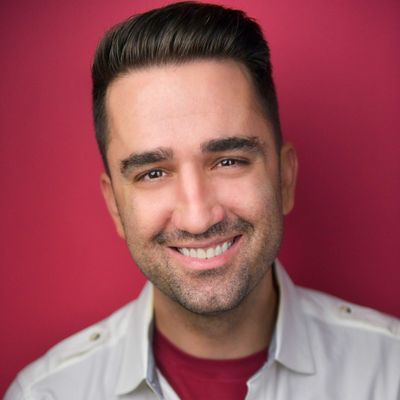
We are on our best behavior! I promise! The man behind BPN is here! Alan Seales, who hosts "The Theatre Podcast" is also the co-founder and CTO of The Broadway Podcast Network! Hear how he merged his love of tech and theatre and helped create this platform celebrating its 4th Anniversary!.. Read More
From the show: The Roundtable with Robert Bannon
Guests
Featured Shows
About
We are on our best behavior! I promise! The man behind BPN is here! Alan Seales, who hosts "The Theatre Podcast" is also the co-founder and CTO of The Broadway Podcast Network! Hear how he merged his love of tech and theatre and helped create this platform celebrating its 4th Anniversary!
He also tells us about the first ever BPN Podfest, where The Roundtable will happen to record an episode live! Plus how can you create a successful podcast? The Master weighs in!
For More Info: www.BroadwayPodcastNetwork.com!
For Podcast Fest: bpn.fm/PodFest
______________________________________________________________________________
Check out “The Roundtable with Robert Bannon” everyday right here on The Broadway Podcast Network!
www.RobertBannon.com
Follow on IG @RobertMBannon or @theroundtablewithrobertbannon
Transcript
This transcript was automatically generated and might contain errors.
[0:10] Robert Bannon: Are you ready? It's the round table with me, Robert Bannon. Well, welcome to the round table, everybody. My name is Robert Bannon, and I am so listen, we have to be on our best behavior. Because firstly, you shouldn't be watching this episode. You should not be watching me on YouTube. You should only be listening to me on the new Broadway Podcast Network website or app on your phone. You need to be listening. I want you to take a whole 24 hour. We're gonna tell you a whole about a podcast day. We're gonna find out how you can go from working for Google to creating your own company and taking over Broadway. We're gonna deep dive Alan Seales' whole life. He is, I don't know what his title is. Alan, what is your title?
We're gonna find out. He is the he has his own podcast. He's the person who responds to my emails when I don't know what I'm doing. I never felt more nervous to be doing audio and sound in my entire life because Alan knows what he's doing and he's interviewed everyone. And I really love, love, love being a part of the Broadway Podcast Network family. It is a joy to see my fellow podcasters on red carpets to talk to some of Broadway and entertainment's biggest names. And it's all thanks to Alan Seales. Alan, thank you for being on the round table.
[1:20] Alan Seales: Oh my goodness. I need you to go ahead of me everywhere I go and just introduce me before I walk into every room.
[1:26] Robert Bannon: Done. I will do that for you. I was at the opening of Limpika the other day. Yeah. There was a publicist at the party, and the publicist said to me, where can I watch your show? And I said, Oh, it's on YouTube. And but I'm on the Broadway Podcast Network. And he said, you know, Alan is very smart. He worked at Google. I knew him from when he was at the Google days. Alan, you know how to use this whole computer life.
[1:51] Alan Seales: I know the zeros and the ones and the bits and the binaries.
[1:55] Robert Bannon: And who are you talking to, by the way? I'm just curious. Are you able to say?
[2:00] Alan Seales: We can bleach it out.
[2:01] Robert Bannon: No, you I don't have any secrets, Alan. Um he he was, I'm gonna tell you right now. It was not a Broadway, well, it was an individual press agent. Chris Chris Kanerick.
[2:16] Alan Seales: Oh, yeah, yeah, yeah. Chris.
[2:17] Robert Bannon: Yeah, yeah. And he was like, Alan, it was at Google. I've known him that long.
[2:23] Alan Seales: Well, ironically, uh, yeah, I well, I stopped doing what he was what he knew me for at Google, which was Google Talks. And for those who don't know, um, technically the name is Talks at Google, but as fast as I talk, it comes out as Toxic Google. Um, so I say Google Talks just because that's what most people call it. But talks at Google is what I did for five years full-time. Before I started doing that, I was doing it part-time, and um that is basically TED Talks for Google. So I helped it grow starting in let's see, I joined Google in 2013, was doing it part-time until 2016, and then was doing it full-time again again until 2022 or late 2021, early 2022, and um until COVID shut down everything, I was bringing in Broadway casts, performers to do events um at the office in New York, which was then live streamed all over and recorded and put on the YouTube the the talks at Google YouTube channel, and then I started Google's very first ever podcast, which now there are bajillion Google podcasts. But um, I turned the talks feed into a podcast back in 20 uh 2016, 2017 maybe. Um, before uh before anybody else had podcasts in that area. So there you go. That's that's a little bit of background.
[3:46] Alan Seales: You so you this Broadway podcast network is not like your first go of the podcast world or the talking into a microphone life.
[3:54] Alan Seales: So uh yeah, well, kind of, maybe I don't know. Let's let's dissect this. Because a friend of mine who was a freelance who uh someone who became a friend of mine was a freelance editor at Google, and um he approached me and when I was still doing it part time, and he said, Hey, I got this friend who's got this great book, and the content in the book should be a podcast. Will you help me figure out how to make it a podcast? And I said, I love a challenge. I I love technical technical challenges, solving technical problems, and I was like, Yeah, let's do this. Didn't know the first thing about podcasting. And so I helped get this podcast into the world, and we ran it together for a couple years, all while I had a couple other friends, um Alison Pac uh Allison Burns and Lulu Picart.
Lulu was most recently in 1776 on Broadway. But I met the two of them when they were doing Disenchanted off Broadway um a bajillion years ago. You're nodding your head, so I think you remember the show.
[4:53] Robert Bannon: I remember it.
[4:54] Alan Seales: Yeah, yeah, yeah. So Alison and Lulu. I knew I brought them into Google to perform. They reached out to me when they started their own podcast, and they said, Hey, you should be a guest on our podcast. And I said, uh, okay, I've never done that. Am I gonna be any good? And I had so much fun being a guest on their podcast. That's that's the first time I had been on mic on a podcast, um, and not just behind the scenes and on their producer chair. And I was like, I gotta do this on my own. I gotta figure out what I'm doing and and make this. I just love I love the combination of art, entertainment, stories, and tech. You wrap it all in this nice, this nice technical bundle that people still don't know how to play in very well, and it's this perfect little ecosystem for me.
[5:35] Robert Bannon: I I love that too. I have to be honest, Alan. Don't judge me. Before I joined BPN, I've never listened to a podcast.
[5:47] Alan Seales: See, I never never I I don't, you know, I'm of a certain age, and you know, Alan, I've I I don't know how old you are, but me I have 40. Like I'm old, I can't cut the cable cord. I don't, you know, I'm lucky I you know there are things that I'm a certain age.
[6:04] Alan Seales: I am 43.
[6:05] Robert Bannon: I got a couple years on you. But you're like a technological wizard.
[6:10] Alan Seales: See, there's you're a technological wizard, Harry. The the I I I just love I I cannot stress enough how much I love tech. Just the the I'm a very direct and definitive person, and the fact that computers are binary, it's it they're either on and off, they're ones and zeros, like that that speaks to me in a way that that I cannot describe. And if computers didn't exist, I'd probably be like an airline mechanic or something something like really cool fixing jet engines.
[6:42] Robert Bannon: Hey, that's a good way to pay make a living. And no shout out to everyone who's an airplane mechanic. I my my fiance just fixed his own car, and I said, There's something about a mechanic that is like, damn, come on.
[6:55] Alan Seales: Mm-hmm.
[6:56] Robert Bannon: A wrench and you fix my engine. You know, so Alan, when you came, you have you always so tech is a part of your life. Very and and and and all of that is a part of your life. But how does the art enter into it? Like when I was a wee lad, I was always into uh when I was done playing soccer and baseball, um, I would go and sing and dance. And I I never really thought much about it. I always had these two competing drives within my brain. And uh when especially when I was like a little little, when I was, you know, nine, ten, eleven years old, when my brother and I, who's three and a half years younger than me, when she when he and I would be annoying my my parents, my mom specifically, she would just be like, guys, just go outside and make a video.
And I would take our over the shoulder, you know, shoulder-mounted VHS camcorder that had stop motion and dubbing capabilities. Uh, and I would make like out of clay. I would make little stop motion things, or I would um take video game sound effects and dub them over things I would shoot. And but then I it ended up turning into me directing and eventually having cameos in um little sketch sketches basically that I would write with all the neighborhood kids, and they you know, we'd all come over, just go make things. And then I just kept growing up again, doing singing, singing, dancing, computers. I the first thing I did when my dad brought home our first computer was take it apart. I wanted to open it up and see what it looked like inside.
You know, when I get a car, I pop the hood, when I get a computer, I open it up. And I just want to see how it works. And dove in was like, oh, computers are great. What's this prodigy? Okay, let me log on to Prodigy. This is pre AOL, by the way. Remember? When emails used to cost money to send.
[8:43] Robert Bannon: Yes, I do remember.
[8:45] Alan Seales: So Prodigy, I would go on Prodigy and I would play Mad Libs because nobody else my age had an email address, or I didn't know what a website, nobody else had websites. This was what 1990? Nobody had a website. And and yeah, just dove in while at the same time. I I started like community college. I would just go start auditioning at community college, singing, performing, acting, dancing. And I always just did it because it was there growing up in in uh little North Carolina, uh little Florida, and then North Carolina from seventh grade onward. And at that point, um, I was, you know, high school. I'm great on the soccer team, on the track team, and then I'm still singing, dancing, performing, doing at the high school, at my high school and in the community college.
And I'm like, what do I want to do? I'm gonna go to Columbia and be an actor. And my mom said, Nope, hold that dream. That's too expensive. You need to get a real degree and something that we can pay for. And I said, Okay. What do you mean? And she goes, We're in North Carolina, lots of great universities for in-state tuition. So I ended up going to NC State, North Carolina State, for computer science, because she said, and listen to my mom, that you can do computer science. Uh sorry, you can't do computer science with an acting degree, but you can act with a computer science degree. And that's what I did.
[10:03] Robert Bannon: Oh. That's so that's good advice.
[10:07] Alan Seales: It it was. She's she's good. She's good things, you know. Um the the original, I guess, the original plan, which I sort of followed through on for a while, was graduate with my comp sci degree, work computers for a year or two to save some money, and then just like go out regionally and and try my hand at acting. And that's what I did. I worked um as a net admin, network admin for a small company in in Raleigh, North Carolina, out of college, and then at a after about a year, left that and started performing regionally all over the East Coast, all non-equity stuff. I never made it into equity. And then eventually moved to New York in 2007 during that writer's strike.
[10:56] Robert Bannon: Okay.
[10:57] Alan Seales: And because I was in um because I was there was nothing to audition for, right? Because it was a writer's strike. I started doing computers again to pay my bills in New York. And then I was like, oh, a regular paycheck. This is this is cool. This is great. And fast forward five years and I find myself at Google as an engineer. I've never performed in New York. It's it's kind of bittersweet.
[11:23] Robert Bannon: But Alan, you never performed in New York, but meanwhile, you perform all the time on your on the podcast and and you get to be a part of this community. And I it's a f what a ride and a journey. You know, I I feel very similar. I I went to Juilliard Prep, I have musical theater, I still sing, I still do but but to be a part of this world, but in a interesting way, but it fits better, but it's so fa it's fascinating, and your journey is fascinating. It's interesting because out of 31, 18 episodes, I think I just released episode 319 today as we're recording on my my first podcast. Um of the things I say every now and then is like, I think I'm glad I didn't I put an air quotes make it on Broadway, because even if you're a successfully working Broadway actor, you're always looking for your next job.
Unless you're one of the lucky lucky few to get an Aladdin or a Wicked or even a Hamilton, something that you know isn't gonna go anywhere anytime soon. Uh but yeah, to be able to to have that peace of mind and just a regular paycheck. I didn't you know I took it for granted for a long time and then um having the conversations I've got it it's really insightful. I mean in a different world I in the multiverse right I am an actor I I'm sure there's multiple versions of me out there one's starving one's grossly successful and then most of the others are like what am I doing with my life? But in this in this life that I am in now in this universe um I'm okay I'm I'm happy with where I am because I I get to like you said I'm involved um from a pre uh from a production side from a podcast side from a tech side and kind of get a little bit of the benefits of of having a more stable um I mean everything in this industry is not that stable but it is more stable than showing up at auditioning and trying to find that line of work.
[13:18] Alan Seales: Absolutely well I I got to go to the fourth year launch of the Broadway podcast network the other day um does it feel like it's been four years does it feel like it's been 40 ha have you are you do you ever stop and look at the amount of podcasts you have 11 million plus people you know like you're in every single continent like does do you ever take a moment to smell the roses are you always chasing the next viewer the next number?
[13:18] Alan Seales: Oh I don't smell enough roses that is that is for sure it it's a constant it's a constant battle of trying to find you know what wow you just you just gave me an epiphany in that I I literally just said, I'm glad I didn't make it on Bravo because I'm always looking for my next thing.
[14:04] Alan Seales: But what I was about to tell you was even though I'm here, I'm still looking for the next thing. Damn it. Damn it, Robert. Yeah, you're giving me an existential crisis all of a sudden. Okay. So here, okay. To answer your question, I still like to think about Andre DeShield's his Tony speech when he won a couple years ago. He said the top of one mountain is the bottom of the next. You gotta keep climbing. And then I, when I quote that, I always say, I would like to add to it and say you guys still got to turn around and see where you've come from. So we're used to what we're used to. And to that point, what you just asked, I think you know, the recent event we had at Sardi's, our industry event was nice because yeah, we've got a hundred eighty podcasts with 12,000 episodes, and we've helped so many people grow and get their ideas and their stories out and literally have listeners on every continent.
It's so cool to see listeners literally coming from Antarctica. There's scientists down there listening to Broadway podcasts. That's cool. But what's really neat, I had a moment a few months ago, I was looking at the stats, and in places like India, even Russia, places where it's still illegal or punishable pretty severely to be gay, we have a huge chunk of listeners, and so I just imagine like we're bringing these stories and this content to people all over the world who crave it, who desperately crave it. And that gives me a nice feeling.
[15:30] Robert Bannon: Absolutely. I'm always moved by when I get to hear from people who watch or listen continuously, and they're in this country, and we as like a snooty Jersey boy growing up here right outside of New York City, I forget there are places in this country and definitely in the world that are starving for what we have, you know, a few moments away from us. And what you do is make it accessible to everyone for free. You can listen, it doesn't cost anything to download the app or go to the website and listen to a lifetime's worth of content that you have up on Broadway Podcast Network.
[16:04] Alan Seales: Well, it's all our podcasts, we make sure that we can legitimately say available everywhere podcasts are found. First and foremost, all 180 podcasts are available everywhere you listen. So Apple, Spotify, iHeart, wherever you are listening, you can find it. But the really cool thing, you brought up the website, it's, you know, we're calling it or branding it our listening platform. And it allows you to cut through the noise and the discoverability problem of having four million podcasts in Apple iTunes, right? Literally, there's over four million podcasts now, most of which are inactive. Most of which, and most of those active ones may or not, may or may not even be good for whatever you're looking for. And so to be able to have like it was important to us to be able to take all of this content and put it in one easily discoverable, easily searchable place so that people don't have to struggle to find this content that they're looking for.
[16:59] Robert Bannon: Well, if you're listening to us, then you already know where we are. But if you're not, if you're watching us, go to BroadwayPodcastNetwork.com. I love Alan, and I filled out the Google form. I'm a good employee. Like I listen to you. But I want you to know my favorite part and my favorite part of uploading episodes of The Roundtable is the part where you get to put in the show or the actor's name. Because if people come on and they love Hamilton or they love Dear Evan Hansen, or you love you're going back and you want to talk about, I don't know, 42nd Street or something, you can have it pinpointed and specifically into your tastes. That's a lot of engineering and work though to get that all formatted so that it just pops and goes to the right place.
[17:41] Alan Seales: Yeah, it was very intentional, a lot of work and very intentional is that we want one of the downfalls of the old website before we completely rebuilt it and launched what we have now is that there were a lot of dead ends. You would go to a landing page and there was nowhere else to go without like starting your search over a little bit. And so to that point, we're like, okay, let's dissect it. And from a business needs standpoint, if you're on The Roundtable landing page and you like the guest, and so now, like you said, it'll automatically associate that guest page with them on the episode page. So you can click, the user can click on that person, see what shows they've been in, see what episodes they've been on.
If they're a podcast host, you could also see their podcasts that they host, like Carrie Butler has a podcast with us and is also a guest on tons of episodes. So her page is outrageously big. It's great. So it's making sure that no matter where you are, there's always more information to discover and uncover. And we want to feed the curious minds.
[18:46] Robert Bannon: Yes. Well, that's what I love. And what I've learned so much about Broadway Podcast Network is that it's not just broad, I mean, yeah, it's Broadway, but you're talking about regional productions, you're talking about West End podcasts, you're talking about in-depth interviews or people's critiques, reviews. Alan, I was gonna get myself in trouble. You guys put me on podcasts to dissect shows, and then they say tell the truth, and I'm like, oh boy, this is they're gonna come for me, and it was the best, most fun time I had talking about. I love that it's a little, it literally is there's something for everyone. It's not just the theater fandom, the Broadway fanatics. There's something for anyone who loves art and entertainment.
[19:24] Alan Seales: Yeah. My favorite, and it's funny, you said before you joined the network, you hadn't listened to any other podcasts. I typically don't tell anybody this. This is just between you and me. I don't often listen to other interview style podcasts. That's just not my thing. And what I love personally are stories. I want edited, not edited like censored, but produced, more produced stories like with full foley and sound effects and like reminiscent of old school War of the Worlds kind of radio plays. And so you know, we've been leaning into that recently, the past few years, and we've got a bunch of stuff on there now that's, it's like it all falls under our umbrella because everything is a story and theater, it's not just Broadway, it's theater, it's performance.
And so we have so many things that are, if you go to the site and like search for radio plays, and you're gonna find all of these we've got several dozen, they're great. Some that are about Broadway, starring Broadway people, and some that have nothing to do with Broadway starring Broadway people, and then like every combination therein. So, like yeah, I mean, I don't want to get too sales pitchy. I'm just really happy with the collection we've got. It's so great.
[20:48] Robert Bannon: Now, see, and my brother, who is way less artistic than me, he loves podcasts and he loves stories. He loves hearing about stories. So I told him he should watch or listen to Twits, like on the BPN. Like you're talking about things that are not Broadway related, but like you said, some of your favorite Broadway people, and you get to hear them as well. You have an interview style show yourself, so I understand that listening to other people do interviews is always a little bit odd. Well, how has it been to have 300 and plus episodes of The Theatre Podcast with Alan Seales?
[21:19] Alan Seales: Oh, which you should listen to. Yes. He's very Alan is professional. He has questions, he has in-depth conversations. He's everything that this show is not. And you what is it? What has it been like to interview some, I'm sure some people who are people you looked up to and are fans of outside of this business and get to chat with them?
[21:43] Alan Seales: Oh gosh, what's it been like? It's been, to use an overused term, it's been a journey. I started out, I started my podcast in August twenty eighteen, and I texted a bunch of people that I either knew through the industry or had known before they got famous, and just said, Hey, I'm starting this brand new thing. You want to just hang out and record and tell your story? And they said, Okay. And so I said, you know, and so my first couple episodes were all like this people I knew like Orfe and Andy Carl and Ariana DeBose and Bonnie Milligan and just personal relationships that I've had with people for years and years. And then as soon as I had that proof of concept, it was a lot easier to go out and say, Look, I'm, you know, this is tangible.
You can tell I can put I can string a couple words together and make some coherent sentences, so I guess you could trust me with your talent. And it became this kind of snowball effect. Ironically built on the back of the reputation I had with Google because bringing in the shows with the press agencies there, they just got to know me and they got to, you know, realize that I wasn't just some random weirdo asking to hang out with their celebrities. So, which, well, side note, again, don't tell them I am a random weirdo. But now I'm hanging out with their celebrities. But like there's been some weird pinch me moments. Like I a couple months ago I did Mark Summers and Scott Bacula in back to back episodes.
And people from my childhood, like the eighties and early 90s childhood, I'm like, oh my gosh, this is, it's just, it touched me in a way, like in a nostalgic way that I haven't felt in a while. And then there's been other cool things like Isabella Rossellini. That was just a random offer that landed in my inbox that I was like, wow, I'm actually talking to Isabella Rossellini. Like Norrit Leo Butts, I grew up listening to The Last Five Years, Kristen Chenowith again like Wicked and Rent or what got me into theater in the first place. So to talk to Adam Pascal in general was another pinch me moment. And so yeah, but then it was kind of a switch in me where I said, you know what? Like I realized everybody poops.
They're all normal people. And so what was really cool, it was a turning point for me was Patty Mirin, was when she and I, it was one of my, I think it was in the 30s or 40s, one of my earlier episodes. And I was diving into Frozen. She was doing Frozen and Patty had just I think several months earlier had written that article about having panic attacks on stage. And to ask her about that to A have the confidence and be like, you know what, this is a sensitive subject, and let's actually talk about it. Okay, that that was breaking through a barrier for me. But then I said, I had recently also been diagnosed with OCPD, which is obsessive compulsive personality disorder, which is different from OCD.
OCPD is essentially you can't see the force through the trees, and without a very small amount of anti-anxiety medication, I get hyper focused on one detail and just don't see the bigger picture, right? And so to be able to say, Hey Patty, let's talk about our neuroses for a second together, just you and me with the world listening, it was strangely cathartic, relaxing, and really sort of eye-opening for me that I'm like, you know what, I could admit that I'm not 100% perfect, and it's not the end of the world, and everybody just moves on, and it's great. And that moment after that episode was editing that, I was like, wow, this is changing. This is changing. I've gotta relate to these people on a human and personal level. And once I started doing that, it was eye-opening. Everyone immediately let their guard down.
[25:52] Robert Bannon: I think that's such good. Firstly, I live on Zoloft, so I hear that. And I find it very similar, Alan. I'm not not about me, but firstly, Mark Summers when I wanted to do an interview with him, he called me with an unknown number, and I answered him, I was like, hello, and he said, Hi Robert, this is Mark Summers, and I said, What? Excuse me, you know, us from a certain age, like that what? Yeah, yeah, yeah. But the humanity of artists is what makes your podcast good because you see a side to them that it's not as, and that's why I like about podcasts, that's what I like about doing things virtually, because you can build an intimacy. It doesn't feel like a red carpet. There's not a thousand people around, it is not a press junket. It's a moment, it's a real connection. What do you say to people who reach out to you now and say, I want to make a podcast? I mean, people must send you submissions, you have all sorts of ideas. What do you look for?
[26:52] Alan Seales: Oh man, the first thing I tell people is that you have to do things, you have to talk about something that you love to talk about because you are not gonna be an overnight millionaire, you're not probably ever gonna be a millionaire on this is podcasting, this isn't TikToking, I don't know. I don't do the Tiki Talks, and you because it's work, you're gonna find that it's work and there's a learning curve if you don't already have A V experience or even like tech, even computer experience, like getting hold having a microphone pointed in the right direction. We were talking about that similarly before we started recording, right? Um because it's going to be work, and if you want to continue it, you have to talk about something that brings you joy.
Because if you don't like what you're talking about, it will be picked up. All we have to do, especially in an audio-only podcast, your listeners are literally wearing you on their head. You're in their head, you can't hide, they can hear all the nuances of your voice. They can tell when you're smiling, they can tell when you're not. And it's one of these things where if you're not happy, then unconsciously your listeners aren't gonna want to come back. So something super important again, talk about what you love because it will be hard, and then literally write down, draw a picture, a timeline of your structure. No, um, I'm gonna have this segment here, I'm gonna have this intro here. This is gonna be underscored with music here. I'm gonna do this, like literally draw it out, make a blueprint, and then follow that. But don't be afraid to fail. You have to fail early, fail fast.
[28:39] Alan Seales: Um, if they're pitching a brand new idea, I look for things that don't exist on the network yet. Um, brand new ideas, brand new types of conversations. Um again, leaning into the scripted side, I love something that's a that maybe needs a little bit more production side so that we can spend more time and like polish it up. Because uh even little things about um part of why I don't like listening to to interview podcasts is that a lot of people don't edit out their mouth ticks and you know, sorry, ASMR folks. Um but mouth ticks, um the fillers, all of these things that that a lot of people don't realize they're doing when you listen back to it again when all you have to go on is an audio format, you're not you don't hear someone's mouth ticks when you're face to face with them because you're looking at their eyes, you're seeing I'm watching you nodding right now, you're watching me shake my hand, and you know, I I'm gesticulating as I talk.
But when you go back and edit this, if you were if you had your eyes closed or you're only listening on audio, then if every time I was just doing this, like I can't listen to that. I will turn it off. So, audio quality is gotta be good. I want audio quality. I want enthusiasm. I want to be able to hear the enthusiasm. I want an original idea. And and essentially just like we'll take a meeting and I want to see the excitement. I want to see the drive. I want to again say that like, oh, theater is what makes me happy, or storytelling, or investigative journalism, whatever the hell it is. Like I want to see your eyes light up when you're talking about your potential podcast or your current podcast.
And then that's gonna mean that's somebody that we want to work with who's gonna be passionate about truly I guess making it through the complicated times when it does get more work and less fun or or whatnot, right? Because if you give up, then like w we've all just wasted our time.
[30:43] Robert Bannon: And what I've learned love about the BPN family is that there is a lot of excitement. Like the people that are on your network are very excited and passionate about what they do. And it's beautiful to to be a part of this family. It is so nice to get together or see people on red carpets or see people at industry events because you've curated a really talented, fun sunshine. There's not competition. There it's really nice, Alan. They you really did a good job of curating people.
[31:13] Alan Seales: What one of the best things uh why part of why I love have always loved theater, aside from just like the performing and the individual, I guess, um standing on stage and feeling the light and the applause and all that stereotypical stuff, is the the fact that you're creating a chosen family with your cast. You're it's a it's a group of misfits that are have all found a home. And I've always felt like an outsider. I've always felt like it didn't quite belong with the jocks, I didn't quite belong with the computer nerds, I didn't like I was always sort of on the outskirts of every group I've been in. And theater's the only place where I found truly just accepted. And being able to replicate that feeling of family and togetherness and um yeah, non non-competitiveness, just being like a rising tide lifts all ships, right?
If we all work together, we're all gonna get better. And that's like I that's how Dory uh Beringstein, my co-founder and I, she and I like she's been producing Broadway again for uh producing Broadway for decades and has five Tony Awards now. And um, like she and I like we want to do these events to bring people together, and before COVID, we need to bring this back. Before COVID, we would do like wine and cheese sort of things once a month and get people together to to meet each other. And so now when you go out and you see people, you have that rapport, especially on red carpets where it's kind of a a carnivorous um atmosphere, if I can use that term. It's like you gotta elbow your way in and get a good interview.
Um to be able to just like see friendly faces all over is it it's priceless. I love that feeling of walking through Midtown, going to see a show, and like I'm seeing these people that we've you know, this of these relationships that we've been curating. It's been great.
[33:02] Robert Bannon: Well, it was great to be there. I'm excited about four years. I I I mean, Tim Rice was at your party, Alan. Sir Tim Rice. I you know, you talked about you know the rent and and to see Adam Pascal, and the same, like when Adam was like, Robert, you emailed me. Who am I? When did this become my life? I I owe you. How are you? I owe you a response. Like, I I'm floored, but it's thanks to you know, people who put themselves out there. The fact that you turn this into a business, that that you you know, like that you provide money to people to create art, that you have created a company that hires people, Alan. Like the fact that that this model has worked, I I don't know if people understand how hard it is to make show business business. But you did it.
[33:49] Alan Seales: Yes, yes, it's tough. And and in this industry, the Broadway theater industry, it's really hard. The constant struggle we have every day is getting people to understand that you need to embrace technology to move forward. That's I mean, uh coming from who I am, I strongly believe that. And I just see so many opportunities all over the industry to improve ticketing, to improve uh programs, to improve uh literal podcasting to take a show home with you. That's why, like, we've been leaning into the companion podcast idea. Uh, we're building a a 10th anniversary companion podcast for Aladdin. So, like, you can find out more of the deep dive behind the scenes behind the magic of Aladdin, right? We're putting that together now.
Um, when Dracula Comedy of Terrors was off Broadway, Andrew Keenan Bolger was releasing the weekly episodes with the cast and playing games with them and like it. So, if you love a show, why not take it home with you? We have that already on uh I mean, that's the that's the DVD behind the scenes that you don't get anymore. And that's what we're trying to bring back. And I want to introduce into the Broadway scene.
[34:55] Robert Bannon: Well, it's it's so smart, and I'm so excited to be a part of it before I let you go. Because you know, Alan is busy, everyone. He is like the Oprah of Podcast Broadway. Look out of your chair, you get a podcast, you get a podcast, you get a podcast. See, told you he that he's that generous. I think wait for this Christmas when Alan Seales' favorite things list comes out right here on BPM. Alan, you you um have a day. We're having a day of podcasting coming up.
[35:22] Alan Seales: Yes.
[35:22] Robert Bannon: What what are you? Are you a part of it? Are you doing an interview that day?
[35:26] Alan Seales: I'm not doing an interview, and it's this is oh, this is so tough. Because it's on a Sunday, so we're dealing with Matt Nays, and it's the busiest season, I think ever in terms of openings. So ever. Ever. And so I am there. This is the first time we're doing Broadway Podfest. And you can actually go, the event registration just opened up if you go to the museum of Broadway.com/slash calendar. You can register for everything and see what's there. Um it just opened. We just pushed that live at the start of this interview, ironically. And um, so those the the day we want to continue to do this with in partnership with the Museum of Broadway and uh and some other physical locations too, because people want to come out, they want to see their podcasters, they want to see their their favorite Broadway stars, and all this.
We want to just bring this free content out for awareness, for growth, for relaxation and and just make people happy, you know. And the the the podfest again, it's just a one-day of podcast recordings. I'm not gonna be interviewing because as the first one, I'm gonna be there behind the scenes running the tech, making sure nothing goes wrong along those lines because we want to be accurately capturing the audio in the highest quality we can so that we can then put it out into the feeds later, you know, all the all the nerdy nerdy stuff. So for this first one, I've stepped aside from being on stage.
[36:49] Robert Bannon: Okay, so I'll be there. So if you can register people, and you could come hear my panel talk about who we think is gonna get nominated for Tony, and we have some VPN stars. We have some industry insiders. We will be as politely shady as possible. No, we are gonna be on love, but we're but we're gonna talk about what's going on down and on this crazy season. And I know that I saw some of the other events that you have going on so people can register and be there in person or you definitely gotta listen. You definitely have to listen when this all goes live. And you, you know, this whole entire network, the Broadway Podcast Network, go to Broadwaypodcast Network.com and just find find a new podcaster, find a topic you love and deep dive when you're at the gym, when you're making dinner, when you're driving in your car. You know, just find something you adore and you love and and just fall into it. And we I love your podcast, and I I love your network. And um, I'm so grateful that you let us be a part of it.
[37:51] Alan Seales: Well, thank you for joining. And then I mean when you reached out, I was, you know, again, I could tell that you love what you're doing. You you do the legwork. You were already doing your live events in in um in Jersey, and I could tell that like it's something that you were already hustling. So like to bring you on and to and to incorporate your enthusiasm with everybody else's, it was a no-brainer.
[38:16] Robert Bannon: Well, and I'm a nerd. I check the numbers every day. There are days when I'm damn it, and then there are days where I'm like, okay, and then I'm I am I am, you know, so don't let me fool you and think, oh, I'm so artsy fartsy. Oh no, I'm in there with it all with you. I get it, Alan. We're gonna welcome to show business. Show business, the business of show business. Yep. You can follow Alan on Instagram as well. It's his name. There's a link below us if you're listening to us, uh, and and you can say hey and make sure you can see all the new episodes he's got coming up for the theater podcast and all the news that's happening here on the Broadway Podcast Network. I'm so excited to see what you have up your sleeve because I know you're you're tinkering away over there.
There's big stuff coming. I I yeah. Oh man, we stop recording. I'll tell you something I just was talking about this morning because it's pretty cool. I'm excited. I'm gonna leave that hanging. There you go, listeners. Thank you so much. It's an honor. Thank you so much for being here. Of course. Thank you for having me. I've enjoyed this. Well, there you have it. Alan Seales, co-founder, the boss man over here at Broadway Podcast Network. Go to Broadwaypodcast Network.com. Listen to your favorite Broadway podcast now. And come join me at Podfest. Podcast a Thon. Podfest a Thonogram. Sunday. Oh, it's a lineup. It's a it's a really fun lineup, and I'm really excited to be a part of it. Uh, get all the information, go to Broadway Podcast Network.com or and get all the scoopity scoop or go to Instagram and find it out and come say hi.
We could take a picture. Maybe you'll give me your best musical prediction, and we'll have a good old time. Everybody, thank you so much for being here. The best is yet to come. Until next time, I'm Robert Bannon saying, have a good one.
© Broadway Podcast Network, All Rights Reserved