

One of the most influential and admired ensembles in progressive jazz and improvised music, the primarily plucked and bowed string instruments of 9 Horses returns with Strum, its most extraordinary collection yet... Read More
From the show: The Roundtable with Robert Bannon
Featured Shows
About
One of the most influential and admired ensembles in progressive jazz and improvised music, the primarily plucked and bowed string instruments of 9 Horses returns with Strum, its most extraordinary collection yet. Bursting at the seams with creativity and virtuosity, this 67-minute instrumental epic serves as the antithesis to today’s augmentation of A.I.-generated music. Alongside the string trio as the ensemble’s core, STRUM also features 25 of the world’s leading instrumentalists performing eight tunes prominently showcasing acoustic, organic human-made sounds. \
The album features guest contributions from today’s top musicians across a spectrum of genres all of whom have collaborated with the members of 9 Horses previously.
Joe is here to talk about the album, playing in some of Broadway's biggest shows, creating a label, and the state of music! If you are a music or music biz fan, this chat is for you!
________________________________________________________________________________
Check out “The Roundtable with Robert Bannon” everyday right here on The Broadway Podcast Network!
www.RobertBannon.com
Follow on IG @RobertMBannon or @theroundtablewithrobertbannon
Transcript
This transcript was automatically generated and might contain errors.
[0:10] Robert Bannon: Are you ready?
[0:11] Robert Bannon: It's the Roundtable with me, Robert Bannon.
[0:15] Robert Bannon: Well, welcome to the Roundtable, everybody. My name is Robert Bannon, and you could always tell when we're on Zoom because our guest is already here. Look, Joe.
[0:24] Robert Bannon: Joe Brent. How are you? Are allegedly Broadway's leading mandolinist.
[0:32] Robert Bannon: And in default. Joe, before I met you, I thought there were only two mandolinists in the world.
[0:39] Joe Brent: Who which ones would those be?
[0:41] Robert Bannon: You know the bear from Robin Hood that plays the little mandolin.
[0:45] Joe Brent: Yeah, yeah, he was awesome.
[0:47] Robert Bannon: He was sick, man. You and the bear from Robin Hood.
[0:51] Joe Brent: That's right.
[0:52] Robert Bannon: Yeah, but that guy shreds, man. I can't really get to the bear for Robin Hood.
[0:56] Robert Bannon: We're all looking up to the bear for Robin Hood.
[0:59] Joe Brent: Before we I that's my whole career.
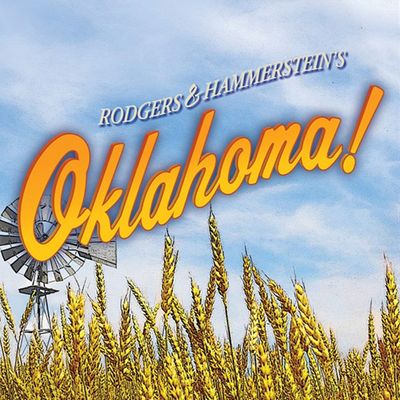
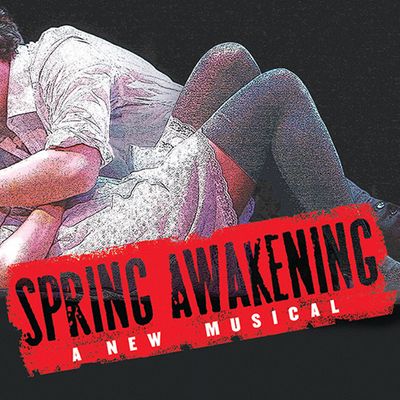
[1:02] Robert Bannon: I'm ready to be the sheriff of Nottingham. You know, when you uh before we get to talk about what you're doing and and and what your projects like and about the the record and all that great stuff that's going on, you've played in Oklahoma, Spring Awakening, a whole bunch of shows. You have your own record label and you have a whole new album. So where are you from and how did this start?
[1:24] Joe Brent: Uh I am uh originally from the city. Uh grew up in Florida, of all places.
[1:31] Joe Brent: Uh complicated. We can go there later if you want.
[1:35] Robert Bannon: Sorry to hear that.
[1:36] Joe Brent: Not literally.
[1:37] Joe Brent: No, not let's not literally go there, but we could talk about it. Uh but uh yeah, grew up in Florida, came back to the city after going to school at Berkeley, and then uh uh going uh doing a little bit more school in Italy, studying mandolin out there a couple of years.
[1:55] Joe Brent: Yeah, it's it's not the worst place to spend a few years in your early 20s just puttering around Europe playing mandolin. Uh came back here and uh I was originally gonna go to grad school at Rutgers and uh um I I I was I had started at Rutgers and I was living downtown across from the World Trade Center and two things happened one was that the World Trade Center um stopped being a thing and then also uh I uh immediately got hired to play in an off Broadway show called Jolson and Company.
[2:31] Joe Brent: I don't know if you have any recollection of this maybe this may have been before you were even bored.
[2:36] Robert Bannon: That's not true.
[2:38] Joe Brent: But that's um but uh and uh I was playing a lot of different instruments in that uh musical it was violin and mandolin and guitar and banjo and trumpet and a bunch of things and uh I I think fairly quickly uh uh I was seen as hireable because I could do multiple things and that meant you could orchestrate the book for one less player sorry to everyone who lost a gig because I played this and that um and then it it's that's just uh I I I didn't have time for grad school anymore and I've just been playing since then.
[3:12] Robert Bannon: And you've been playing since then can I ask you a controversial question?
[3:15] Joe Brent: Oh yeah let's get into it.
[3:17] Robert Bannon: How do you feel about the pits of a Broadway show or off Broadway show?
[3:23] Robert Bannon: They've been a lot of controversy about them. There seems to be union fighting with producers and and numbers of players and and it's a very con I have a lot of friends who play in the pit. It's a very complicated issue. So how do you look at it?
[3:36] Joe Brent: Right. And it what I was just describing, I came in right at the time when I was able to take advantage of that without really being fully aware of it.
[3:45] Joe Brent: Because I, you know, my first ever I did that Jolson and Company show. And then like right away, I got a show called Urban Cowboy based on the movie.
[3:54] Joe Brent: And that was my first Broadway show. And that was also, I think fiddle and guitar, if I'm not mistaken.
[4:00] Joe Brent: But uh I I came in right at the beginning of that without really having an understanding of you know what you know what the controversy that you're referring to is, which you know, it if people who are listening, or if you're not aware, I mean if you go back and look at the original orchestration of Oklahoma, for example, it's for like 40 something players, and West Side Story is for like a 52-piece orchestra.
[4:25] Joe Brent: And nothing remotely like that exists now. Uh a lot of Broadway, a lot of musical theater, and even a lot of just uh theater encompassing opera and you know, stage performances with live music or even you know, all these other things, um, just the economics of it are so the margins are so incredibly thin that every time our union, local 802, the musicians union negotiates a new CBA, and this is going back more than 20 years now, the the thing that we were always willing to bargain with was the minimum, the the mandatory minimum in the pit, which was when I first started, it was like 19 players, and then it was 17 and and 15 and 14.
[5:13] Joe Brent: And and now they're really it logistically, there's there is no actual mandatory minimum. They there may be one in the CBA, but everyone is able to get a dispensation to go lower than whatever it is.
[5:26] Joe Brent: Um and it it it's an economic reality. Um, and it's you know, we've our union has been able to hold on to a pretty robust insurance plan. The our plan A is pretty good.
[5:39] Joe Brent: And our pay scale for the musicians who are working on Broadway is good and it's fair, and there's a lot of protections for us, more so than I think even equity is able to ensure for their actors, you know.
[5:52] Joe Brent: But the trade-off is that there's fewer and fewer of us, and you know, it doesn't take uh a soothsayer to see what's going to happen at some point, which is that you know someone's gonna figure out a way to just replace us with AI.
[6:07] Robert Bannon: Yeah, and then the actors too.
[6:10] Joe Brent: And then the actors too, and then the audiences, and then I need some AI money.
[6:17] Joe Brent: And they won't need us anymore. Broadway will just go on like it's got momentum.
[6:22] Robert Bannon: It's true, and it's a fact, and we we saw it uh last season, and we see it with the coming seasons as as well.
[6:28] Robert Bannon: The canned music of it all and and and the finances of it. You then have to pivot, I'm assuming, to make a living and to create art.
[6:36] Joe Brent: So you seem to be the master of the pivot. You have a record.
[6:40] Joe Brent: Uh, you know, I was always doing other things concurrently in addition to playing in in shows and and and pits and stuff.
[6:48] Joe Brent: And for many years, I was playing with Regina Spektor. I was in her band.
[6:52] Joe Brent: I was touring with her, playing a lot of classical music, and then playing in my own ensembles, which uh Nine Horses is the main one.
[7:00] Joe Brent: It sort of evolved into that. Oh, roughly 10, maybe a little more than 10 years ago, and now that's been my main thing.
[7:08] Joe Brent: But then, you know, when a show comes along that I'm able to do, of course, I'm I'm I'm thrilled to do it.
[7:14] Joe Brent: I'm thrilled to take take part in that. Um I I feel like just the economics of it are making are making it a very difficult thing to count on.
[7:26] Joe Brent: You know, I'll give you an example. Like like one of my best friends is a guy named Matt Hinckley, who's conducting Outsiders right now, and we met in the off or the out of town tryout of Burnt Part Boys, which then played off Broadway is, you know, I I think 12 or 13 years ago.
[7:46] Joe Brent: And he's really primarily a Broadway and musical theater guy.
[7:51] Joe Brent: And he went to NYU as a voice major, but also plays several instruments beautifully.
[7:56] Joe Brent: Um, and it as his career is going on, because that's really where his focus is, it becomes more and more precarious.
[8:05] Joe Brent: He gets a workshop here, and then there's it's it's thin.
[8:07] Joe Brent: And then he conducted SpongeBob for a little while, and it was great, and then it's thin again.
[8:13] Joe Brent: Um, and it you know, it had been a little difficult for him for a little while, and now he's got Outsiders, and it's and that's looks like it's gonna be a huge hit.
[8:21] Robert Bannon: Hopefully, it runs for a million years, right?
[8:24] Joe Brent: But as a musician, without some other thing, it and and this is true of the entire music business in general, and you know, I have various windows on this world as a record label executive, as a musician, and just sort of as an advocate for the music business.
[8:44] Joe Brent: Um, the story is basically the same no matter which window you look in. It's it's tough.
[8:50] Joe Brent: Yeah, it's getting really tough.
[8:52] Joe Brent: I could show you my $62, you know, Spotify stream check, and I thought that was amazing that I had $62.
[8:59] Joe Brent: But you know, that's a whole that's a con the music business from I'm 40.
[9:03] Joe Brent: So the way that I grew up, you know, going to the Coconut Records on a a Tuesday back then as a Friday releases and going on a Tuesday with my money and buying a CD or a cassette when I was younger, and being that money being able to see the pie where it goes to the label and the songwriters and the artists versus what it is today.
[9:22] Joe Brent: It's the music is really given away practically for free.
[9:25] Robert Bannon: So what what how do you come up with the idea that you want a label and then how do you monetize that?
[9:32] Joe Brent: Well, the the idea of the record label, which is Adi Europa Record, came about basically by accident, which is how a lot of these things happen, as you know.
[9:41] Joe Brent: Uh my you know, Nine Horses, my band. Our last album, uh, we wanted to put it out in a way where we owned the masters and we controlled everything.
[9:53] Joe Brent: And we had been on a record label. Um uh it was called Sunny Side, and I say the name of it because genuinely I like them a lot and I really respect them.
[10:02] Joe Brent: It was founded by a guy who made money working for IBM and retired young and threw it all into starting a weird jazz label, which I can't imagine respecting anything more than that.
[10:13] Joe Brent: So I don't take any disparagement from this, but we wanted to do things our own way, and uh a lot of major artists will start what's called a boutique label.
[10:24] Joe Brent: Um, Jason Isbell has one, Alien Welch, you know, Madonna famously started Maverick Records, and I don't know what became of that.
[10:31] Joe Brent: But you know, the reason why major artists do that is because it's front loaded with a lot of time and expense.
[10:38] Joe Brent: But it was worth it to us because we are a progressive band and an activist band, and we wanted to set an example of what artists can do when you essentially uh seize the means of production, if you want to put it, you know, in a very sort of referential way.
[10:53] Joe Brent: But uh so we did that, and then right after that, my friend Sam Sadigerski, who I met playing in I was subbing in the band's visit, and he was the clarinet player in bands visit, but he's also the clarinet player in the Philip Glass ensemble and wine music, and he's a big guy.
[11:11] Joe Brent: And he was putting out a record, and just on a lark, I was like, hey, you're looking for a label. I'll put your record out, you know. Um, and that did really well. Um, it was a duo album with Nathan Cosey, who's currently conducting um Illinois. Um, and it did great. And that's the last time I reached out to an artist. Everything else has been people coming to us because what we did was we created a contract structure that we think reflects the music business as it exists today. The problem we were having with our previous record label, nothing at all personal. Um, it was really just that they have been around since the 70s or 80s, and their contract structure was still rooted in a music business that that was intended to reflect.
That there's nothing, no relation to what is actually happening in the world right now. And that's true of almost every sort of legacy label that's been around for that long. It's um, you know, these labels like that are essentially like big boats that take forever to turn, you know, just like a lot of organizations. Academia is basically the same way, lots of things are that way. So no knock on them, but we created a contract structure that reflects how hard it is for artists. Long story short, artists on Aud Europa keep a lot more of their money. Um we don't have to go into the granular details of it, but it's it's been a popular concept. Um we are uh we I just um registered UPCs on our 80th album.
Oh we started we started this a little over two years ago, our 80th release. Um yeah, it it's it's been sort of exponentially uh popular, and I'm I'm really gratified by that. And uh if we continue to do it this well, the idea is that pretty soon every record label will look more like us. We're not trying to take down the system. We want to be the system.
[13:14] Robert Bannon: Eric, is there a way for our listeners to find your releases? Is that is there a website? Is there some way we could just jump?
[13:21] Joe Brent: Yeah, the I mean the best place to go is band camp. It's Aud Europa. Um, if you can see it right there, that's how it's spelled. I understand it's it's not a it's it's not the easiest word to to spell. It's a it's comes from the Sanskrit, and we don't have to go into that either. But well, wherever wherever you're lit, if you're listening to us on the Broadway Podcast Network or you're watching us, we will have the links for you below. So click it so you can all of the all of the music. As I can get in the weeds with you about this subject for like this, but uh same.
[13:54] Joe Brent: No, once I was it's it's not great radio.
[13:59] Robert Bannon: So listen to the music instead of hearing us talk about the business.
[14:03] Joe Brent: That's right. Come to my home and let's have a glass of wine, and then I'll hit you with the rant. You know, I bamboozled his email address, so now he's gonna get ready for me to talk about music business and putting out records. But it was funny. I was signed to a record deal a year ago, and I sent it to a lawyer to look at the deal, and the lawyer said, I have hundreds of changes. This is so outdated. The language is so outdated about catalog sales, and you know, like we we need to modernize this business.
[14:30] Joe Brent: Oh, yeah. Oh my god, in in so many ways. I I'll I'll give you an example. So I I have a pet theory that a lot of the music business um seems Byzantine to artists, like uh like intimidatingly complicated, and it's that way for a reason, in many ways, it's to give lawyers and record label people the excuse to be able to say you couldn't possibly do this yourself. You need someone like us. And then that's how artists, in some cases, get taken advantage of. And an example I'm always referring to is recently someone figured out a hack where they could claim songwriter credit on, and they had done this on hundreds of uh Latin music tracks, um, and had essentially stolen like 11 million dollars in royalties from artists, and the way they were doing it is they were claiming credit in places that no one ever thinks to check.
Um, then and then that goes for the artists, for their labels, for their management teams, for everyone. It the the comp the process by which an artist puts music out, even in the simplest version, which is to just throw something on SoundCloud and hope someone finds it, is still incredibly complicated because then okay, now it's on SoundCloud. Have you registered it with Sound Exchange? Does it have an ISRC? Do you know what the ISRC is? Does it does the release have a UPC? Is your PRO tracking the ISRC and the UPC? Do you have an ISWC? You should check with AskCap. They're your PRO, unless BMI or CSAC is your PRO. I I can feel my brains just falling out of my ears as I'm saying this, and it's my business to know this stuff.
[16:20] Joe Brent: I get it. Listen, now I'm upset because now I need a new retirement plan because apparently that that plan is out the window. That that I'm gonna find your album and the streams in Zimbabwe or somewhere and take some of that money. That it's it again, I'm not trying to get into this, but it's so hard when you when people don't understand, and I hope you're if you're listening, you love music and you listen to your music and you understand. And I just had a conversation with my brother and my sister-in-law yesterday about Spotify and how you're am I morally opposed to Spotify and what do I think of streaming services? And we had this deep conversation, but I don't think people understand when they pay their monthly fee and the convenience we all have to have every song in history at our fingertips at any moment comes at a cost to the artist.
[17:05] Joe Brent: That's right. And so the two main American DSPs, which is Apple Music and Spotify, I have issues with both of them right now. Spotify, I think a lot of people have heard. Uh, what they've done is they've decided if you don't make a thousand streams in a year, we have demonetized that track, meaning the artist makes nothing, which could mean if you have a hundred tracks that stream 999 times each, you make nothing. And it I think a lot of people are like, well, a thousand streams, that's not actually a lot of money. Why don't you you know go out onto the street and busk and you can make that in an hour? And I'm like, yeah, how would you feel if someone took a dollar out of a busker's case? You think that person was a can I curse on this podcast?
You think that person was an asshole. Well, that's what Spotify is doing it, but they're doing it to literally every artist in the world simultaneously. So what what's the word for that? You know, it's we need a bigger word for that.
[18:03] Joe Brent: Uh-huh. Um, and you know, so that's terrible. Everybody knows Spotify doesn't pay artists very much. You know, it's much less than Apple Music, and Apple Music is still nothing. Um, but Apple Music has done something even more insidious. I think a lot of people don't even know about. Um, they've just announced that uh music that isn't mastered in Atmos uh will no longer be considered for playlist consideration, meaning and playlists are how you get lots of streams and how you actually make money. If you get on a playlist, you might actually see a little bit, not not a lot, but you know.
[18:43] Joe Brent: Um, and so if your stuff isn't mastered in Atmos, then you can't get on a playlist. Now, what's Atmos? I think people don't really realize what Atmos is. Um, is so stereo is left and right. Films are mastered in uh Dolby Surrounds 7.1, meaning two speakers, two speakers, two speakers, and a head. Atmos is 14.1, meaning 14 speakers. And what's really bad about that is the main demo democratizing thing in music over the past 20 years has been home recording. It's amazing what people are able to do in their homes. I think uh another thing people don't realize that first Bonnie Vera record, he did it with an acoustic guitar and a laptop and a hundred dollar microphone. The first Billie Eilish record, they did it in like their living room.
And it sounds incredible, but they're gonna take that away from the small artist because what artists? This is my home recording studio that I've been right now. What artists has 14 speakers set up in their home system? No one could possibly afford that. And the reason they're doing it is because they came out with buds that are designed to work with Atmos. So they're trying to force people to buy their proprietary hardware. It's the same stuff they used to do every year when they made you buy a new USB cable just to fit whatever Apple product is designed to work with that. And they're doing it with music now, and they're doing it in a really sort of roundabout kind of evil way. And I'm I'm I feel like uh like just a crazy person going out on the street and being like I can't believe no one is up in arms about this. And I'm I'm screaming it to the heavens, and uh I it's it's it's tough getting people to to register how bad this is for artists.
[20:35] Joe Brent: I understand. Listen, my my first album is called Unfinished Business. We we did it all virtually, we put it together during the pandemic, everyone recorded from home. The fact that that was even a possibility is insane, and that's the way of the world. I mean, that's what we're doing.
[20:49] Joe Brent: Yeah, they they they figured out a way to make it expensive and hard for artists, and artists found a way around that to make it a thing that they could do logistically, and now the corporations are coming around on the other side and figuring out a way to take that away again. And maybe artists will find a way to get around this, but then it's just this constant push and pull. But we're losing this battle. Like look over the course of my lifetime, it went from what you described, where you went to a record store, you bought an album, some went to the artist, some went to the label, some went to the distributor, and it and it worked, you know, in one way or another for a long, long time, until the the labels essentially uh took away Napster and then became Napster. And uh and now, you know, there's no putting the genie back in that bottle.
[21:45] Joe Brent: And I when I look at what the writers and the actors did with their recent strike, and they got almost everything they wanted. And the reason they were able to do that is because they're incredibly well organized. The the guy playing a corpse on CSI is in the same union as George Clooney and Julia Roberts, and they were all striking together, and they were organized and they got what they wanted from the producers' guild. Musicians are not organized that way. I I'm not in the same union as Taylor Swift, you know.
[22:18] Joe Brent: Uh, and it's difficult to get major artists like I don't want to just dump on Taylor's or use her as an example, but like the major artists who are like sort of the the one percent of the one percent of our industry together, if five or ten of them, if like Taylor, Beyoncé, Post Malone, Bad Bunny, and Jay Z said, tomorrow we're just taking our music off of all streaming services.
[22:46] Joe Brent: They could change the world in a heartbeat, but streaming is couch money to them, and it's very difficult to see to get them to understand how what benefits their industry, even if it's a tiny percentage of their revenue stream is the tide that lifts everyone's boat not just, you know, not just the small artists but them themselves. I don't know how we go about organizing musicians in that same way, but we've got to figure something out because, you know, Spotify and Apple Music can do things like this because there's no pushback. Who's doing the pushing? Well, that's, and that's, there won't be a music business to be happy people, you know, there won't be any income at least, an artist won't be able to make a living off of playing music that you enjoy and that you love.
Speaking of putting out music June 7th, everybody, Strum, the group that you're a part of has Nine Horses. I feel now that I've told you about how awful it is, now you're gonna stream, stream away. Yeah, now that I've told you like how dire and destitute and just what a terrible situation we're in, by the way, I'm adding to it by putting out some new music and you should go check Nine Horses, your group returns. What are we doing? What are we doing here, people? I don't get it either, Nine Horses. I'm with you because I've thrown, oh God, the amount of money I could be reliving on an island somewhere on recording music, but we love it, that's why we're here, we love it. And this album, we're compelled to do it, it looks beautiful, the cover is beautiful, look at the cover art, we don't even have the booklet anymore.
[24:30] Robert Bannon: The album is beautiful.
[24:34] Joe Brent: It is, look at how beautiful it is. Come on now, cool. Kind of done in the style of the old like Blue Note records and stuff like that.
[24:42] Robert Bannon: Yes.
[24:42] Joe Brent: Sethie Hopkins did our design. This is what I read about, and I'm fascinated. The 67 minutes of instrumental music that's called progressive jazz and improvised. But what does, is it really improvise? How much of it was on paper?
[25:06] Joe Brent: Quite a lot of it was improvised. The way I write tunes for the band is, um, it's kind of like the way they would write I Love Lucy episodes. They would first start with a really funny situation for Lucy to find herself in, and then kind of write backwards from there. And that's how I write. I basically, what's the cool thing that I want to hear, me or the violin player Sarah Caswell or somebody, what's the cool thing that I want to hear if I'm in the audience? Start with that and work backwards, but really that's just a skeleton, that's just a framework. I then bring it to Sarah and Andrew, who are my bandmates, and then we flesh it out because I think, um, not every artist works this way, but for me, um, the really interesting stuff happens, and the music is at its best when everyone has some kind of creative agency over the finished product because Sarah is gonna have ideas that I couldn't possibly think of, and Andrew is gonna have ideas I couldn't possibly think of, and the combination of that is more interesting than anything I could do myself, even when it's not really what I had in mind to begin with.
[26:22] Joe Brent: You have to kind of yes and it and let it develop on its own organically, the way that humans do when they're in a room bouncing ideas off of each other. And the finished product is improvised, and it's improvised in the way that everything is improvised once. We were improvising right now. You know, we're also jazz musicians and we have classical background and all these different backgrounds. But it's the thing that happens when I come to them and say, How about this? Yes and that, yes and that. And then eventually you just kind of say, I think we're done. There it is.
[26:56] Robert Bannon: Do you, are there multiple takes? Like, what do you, is there multiple takes? Do you just keep doing 67-minute takes over and over again?
[27:06] Joe Brent: So the framework of the tune is roughly in place. A lot of it is, uh, I, so the drummer lives in Paris, and I would just send him something and say, Send me something back, and he would. So he may have done a couple of takes on his own, but I only have the one that he liked to work with. Um, and then, you know, various bits of it are we would try different things within the same time frame within the same sort of skeleton, but then also quite a lot of it is just, well, let's just do it again and see, let's do it differently. Let's see if that works better. And then eventually you've got 67 minutes of what you think is your best stuff, but you've also thrown away by that point thousands of what the stuff you don't like.
[27:56] Robert Bannon: Well, and not only is the album out June 7th, you can, the album release concerts at Williamsburg Music Center where all the cool people are out in Brooklyn.
[28:04] Joe Brent: Correct, that's right.
[28:06] Robert Bannon: With beards and dogs and kombucha.
[28:08] Joe Brent: On June 22nd, you can grab your tickets and you can come and see this done. I'm assuming listen to it live. Is it gonna be everything? What are we doing?
[28:16] Joe Brent: No, it's just the three of us. We'll be doing sort of condensed versions of the stuff that we did together. So that it's the three of us on the album plus 25 other musicians all contributing, kind of like a big telephone game. Um, you know, I'm making it sound like this convoluted, weird esoteric thing. No, um, it, you should be having fun when you listen to this. We're trying to try to make it fun for people.
[28:42] Robert Bannon: I'm gonna go listen to your other albums and get ready for June 7th. The event, you can get tickets at eventbrite.com and um, the trio performance of Nine Horses on Saturday, June 22nd, eight o'clock at Williamsburg Music Center, and you could listen to the mu where do you want us to listen to the album?
[28:58] Joe Brent: I want you to go to Bandcamp because the ideal version of this is when you get the LP, which will come eventually. Thank you, Adele. Do you know about this? You know why LPs take a long time?
[29:09] Robert Bannon: No.
[29:12] Joe Brent: Uh, the beginning of the pandemic, Adele bought all the vinyl for her album. And so every other band since then there's been a vinyl backup and now it takes a long time to get vinyl made. Less of a backup than there was at the beginning of the pandemic, but thanks, Adele.
[29:31] Robert Bannon: Oh, you know what? Get her album. It sounds great. I'm glad she, I'm glad if anyone was gonna wind up with the vinyl, I'm glad she's the one who wound up with it.
[29:41] Joe Brent: But get the vinyl, throw it on, and listen to it from beginning to end, the way that music is, you know, that album format is meant to be listened to. And if you don't want to do that, you can also just go on streaming. It's fine. I might shame you a little bit, but not so much that I'm not glad you're listening to that.
[30:00] Robert Bannon: I hear you.
[30:01] Joe Brent: Well, I'm excited to meet you, and I'm really excited about what you're doing and to check out the label and check out your other releases that are coming out. I give you so much credit for being in this business and fighting this fight.
[30:14] Robert Bannon: Thank you.
[30:15] Joe Brent: And thank you for giving a platform for musicians like me to rant and rave. I have so many friends, I'm looking, not that this is about me, but I'm a school teacher. But I was an artist and I gave it up because I was scared about how do you make a living being an artist. And I have so many friends who play in the pits of Broadway shows that play for my shows. I'm a teacher at the New Jersey Performing Arts Center. Their jazz performance out there. I see these kids improvise. I see these jazz trios work every single day. Mark Gross runs the jazz program over at NJPAC. Um, what he does and to the next generation, we need to have something to keep people in this business and give them some. Don't give it away. Don't give this whole business away.
[30:56] Joe Brent: Wait, man. If you listen to music however you want. The stuff you like, go on Bandcamp and support the artist. Go see their shows and buy some merch at the show. Buy a t-shirt, buy an LP. Get a record player, and you'll be thankful you got those LPs because not only will you support the artists that you like and made it somewhat more viable for them to do what they do, but you'll also have the best listening experience because it's tactile and you'll get the liner notes and it encourages you to sit and listen rather than to use it as wallpaper.
[30:57] Robert Bannon: Yeah.
[30:57] Joe Brent: Listen to music however you want. There's no bad interface with music. Don't listen to me.
[31:38] Robert Bannon: No, but I was a kid who loved reading the liner notes, who loved looking at the booklet. Who, it's important. There's still a story to be told. I mean, you don't have to listen to just a single. Go listen to the whole story, the whole album, the whole piece of the puzzle. Artists make an album because they feel like the album itself is a statement that no one song could make on its own. I'm a child of album format, and I'm glad that there's still artists out there doing it that way. I'm doing it that way. And again, listen to music however you want. I'm just glad people are still listening to humans instead of AI. Hold out as long as we can. But yeah, get the album, support the artist. And I'm with you. I'm with you. I'm on this fight with you.
[32:24] Robert Bannon: Everybody look below, click the links, save your date for June 7th, get your tickets June 22nd, especially if you're in New York or in the Brooklyn area, and support some live music and some art today. Buy a ticket, go see a show. And thank you so much for spending time and adding your expertise to this. It is a passion of mine, and I love to talk to someone who actually knows what they're talking about.
[32:46] Joe Brent: Well, we just got to the tip of the iceberg. I'm ready to come out, I'll bring my own kombucha to your house, and I will get a couple of beers in me, and then we could go down, we could go down the rabbit hole. I'm ready for a full kiki moment. I'm ready for it. Congratulations.
[33:03] Robert Bannon: Thank you so much for being here.
[33:04] Joe Brent: Thank you very much. Hopefully, one day we'll be running things and we can save the world.
[33:08] Robert Bannon: Don't say the, don't even tell, don't even tease me. I'm ready.
© Broadway Podcast Network, All Rights Reserved