

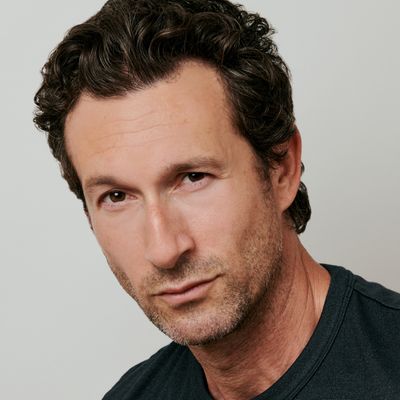
This is a MUST LISTEN chat with an incredible inspiration! ALL HANDS ON DECK BPN FAMILY! Theater, television, and film actor Aaron Lazar (The Light in the Piazza, A Little Night Music, The Last Ship) shared the complete tracklist and lineup of guest artists for his debut album, Impossible Dream... Read More
From the show: The Roundtable with Robert Bannon
Guests
Featured Shows
About
This is a MUST LISTEN chat with an incredible inspiration! ALL HANDS ON DECK BPN FAMILY!
Theater, television, and film actor Aaron Lazar (The Light in the Piazza, A Little Night Music, The Last Ship) shared the complete tracklist and lineup of guest artists for his debut album, Impossible Dream.
Lazar continues to face ALS, and a portion of the album’s proceeds will benefit the ALS Network, an organization committed to helping people live longer and better with ALS by providing comprehensive, integrated, multidisciplinary, community-based care at no cost to the ALS community.
The nine-song album will be released on August 23 and is available for pre-order now.
The duets on the album include Lazar performing with Josh Groban (Sweeney Todd) on Sting’s “Let Your Soul Be Your Pilot”; Neil Patrick Harris (Hedwig and the Angry Inch) on “Fight the Dragons” from Big Fish; Leslie Odom Jr. (Purlie Victorious) on “Get Happy/Happy Days,” from The Nine Fifteen Review; Kelli O’Hara (Days of Wine and Roses) on Leonard Bernstein’s “Make Our Garden Grow”; the late Rebecca Luker on Cole Porter’s “I Am Loved”; Norm Lewis (Porgy and Bess) on “When You Believe” from The Prince of Egypt; Kate Baldwin (Hello, Dolly!) on “I’d Give It All For You” from Songs for a New World; and Loren Allred (The Greatest Showman) on Rodgers and Hammerstein’s “You’ll Never Walk Alone.”
Aaron stopped by to tell us about his journey, why he went public with his battle, and what made him inspired to make this album! He is shedding light, facts, and art with us on The Roundtable! Do not miss this special chat!
________________________________________________________
Check out “The Roundtable with Robert Bannon” everyday right here on The Broadway Podcast Network!
www.RobertBannon.com or Follow on IG @RobertMBannon or @theroundtablewithrobertbannon
Transcript
This transcript was automatically generated and might contain errors.
[0:15] Robert Bannon: Welcome to The Roundtable, everybody. My name is Robert Bannon. I'm so excited to have you all here on the Broadway Podcast Network if you're listening to us. And we're excited to have Aaron Lazar back. You know, Aaron Lazar was here during the pandemic when we had a show called Quarantine Cabaret and Cocktails with his boys who were young. They're growing like weeds, I'm sure now, Aaron. And Aaron's new album is coming out this August, and we are so excited to talk to you. Welcome back to the show. Thanks for being here.
[0:46] Aaron Lazar: Thanks, Robert. It's great to be back. It's great to see you.
[0:50] Robert Bannon: Yes, my children are six feet tall, basically. So they are giants. But I hope they're still collecting baseball cards and they're still on it, because that's what we talked about when you were here over COVID. My brother, their uncle, is the master at card collecting. He's going to the national card conference in Chicago this weekend. So we were just talking about that. See, when it's in you, that's what it is. Well, we are excited to talk to you because we love your jersey in the house. I'm a Jersey boy, and you being a Jersey boy yourself, and then your career, I believe when I looked at it, what is it, 11, 12 Broadway shows, something like that?
[1:38] Aaron Lazar: Yeah, that sounds good.
[1:40] Robert Bannon: That right? Well, it's something like that. And your career, we talked about your journey to theater, and we all, you know, from Phantom to Mamma Mia to, I don't know, you know, Light in the Piazza and Dear Evan Hansen and Les Mis and all of the shows. But your career and this album have taken a very personal turn. And it's from People Magazine to Playbill. What was the decision like to talk about your—you're not a character? You're playing Aaron, like you're—this is real life.
[2:12] Aaron Lazar: Oh, yeah, it's about as real, I think, as life gets. It's been an incredibly challenging three plus years now since symptoms of ALS started, and then I started to publicly talk about it about six months ago, seven months ago. I am really not playing a character. I'm me, and I think that's been a fascinating, transformative, and very awakening journey for me to go from a guy who really created a niche for myself, you know, on stage in New York as these kind of romantic heroic characters, and struggled with maintaining that identity, you know, throughout my whole life. You're feeling like I needed to, you know, not just be the perfect actor, but the perfect husband, the perfect father, you know, have the perfect body, and all of that, because that was my only way of feeling like I could somehow control my destiny in an industry that is insane.
I mean, show business is—it's very hard to like—you can create your own opportunities. It's hard to know how you're going to support yourself and your family because shows don't last very long. Money is often tight, and none of that is part of the original Impossible Dream, right? You're a kid, an actor, no matter the odds. I believed in myself, and you know, started living that dream. So here I am using this terrible adversity of this, you know, incredibly challenging diagnosis and the symptoms that you live with, using it as an opportunity to actually be more of myself than I've ever been. I've really remembered who I am, and that's been truly extraordinary. I think that's a lesson for everyone.
[4:49] Robert Bannon: And we're here talking to Aaron Lazar, everyone, and we want you to know that the album that we're here talking about, Impossible Dream, is coming out this August. You can pre-order a copy or you can be ready to stream it. I was reading the article about that you did in Playbill where you were talking about your journey and your life through ALS and your journey and career. And now this has become not just you and your friends' houses, not just you talking to people, you've become a face, and you've been giving lectures and speeches. What's it been like to spread the word about this issue and be out on the road and talk to other people who are looking to you for inspiration?
[5:30] Aaron Lazar: Thanks for mentioning that because it's been such an important part of my life the last nine months or so. You know, it became—I was a guy living with ALS for about a year, and sang "The Impossible Dream" in a concert in New York for the first time since singing it in grad school when I played Don Quixote in The Man of La Mancha. And it just hit me how those lyrics really spoke to me and my journey, you know, dream the impossible dream, fight the unbeatable foe, bear with unbearable sorrow, run where the brave dare not go. This is my quest to follow that star, no matter how hopeless, no matter how far. And I just went, "Well, I gotta do something with this." This song just feels—I just started to follow my gut, you know.
Listen to my soul, which funny enough, the single that comes out is "Let Your Soul Be Your Pilot," which is a reason why I chose that song, and I'm incredibly excited and honored to sing it with Josh Groban. But that's what it's been. Remembering who I really am means really getting back in touch with my soul and what that means, and it can be a sort of obtuse concept until you're in the fire. And you're facing, you know, I was facing a terminal diagnosis with doctors basically saying, "We have no idea, we don't know how fast it's going to progress, no idea how much time you've got left." So I was like, "Well, I don't want to spend whatever time I've got left afraid," and started to go within.
And here we are, you know, me sharing that story, using that song as a diving board. It became basically a TED Talk style speaking platform. I sing the song throughout, it's about a half an hour. We do, you know, that's kind of the long version with a Q&A after, which can go up to like an hour, or I do like a 10-minute, you know, highlights of it at shorter keynotes. And I can't believe how much of an impact it's been having. So I first started doing it, and it was very healing for me to go through my life and trace the breadcrumbs of how I thought I could have contributed to a disease of the nervous system. And in making sense of all that, in addition to then starting to read books on healing and the nervous system, I've read more than 70 books now by doctors and yogis and spiritual teachers and renowned scientists.
And there's a whole list on my website under the healing section of most of those books, probably needs to be updated. But there's a bunch there. And I encourage anybody who's going through any kind of a healing journey or spiritual journey to just check out the list, see if any of the books might help. But here we are now with an album, which is essentially taking this song that became an anthem for my life and became a gateway to having an impact on the world in a way like never before for me. And now, you know, we get to share that in a more accessible way for a lot of people who might not be able to get to hear me speak. They can just buy the album, listen to music, and music heals, love heals.
And there's, you know, from me and the—I think I get to sing eight duets on this album, even one with the late Rebecca Luker, you know, to the 50 plus Broadway stars and family and friends who came to the studio for the Impossible Dream or the work stuff. There's a lot of power in this music, and I really am honored to be a vessel for it. I mean, this whole thing feels bigger than me, it feels more connected to who I really am. It feels connected to a purpose that is way bigger than anything that I've known before, but feels true to who I am. So, you know, as difficult as it's been, and I wish I could have learned all of this about ALS, you know, what I like to say to people is maybe you can.
[10:18] Robert Bannon: Firstly, the album sounds so gorgeous. And when you talk about eight duets, everyone, he's not just talking about—he's talking about duets with Josh Groban, Kelli O'Hara, Leslie Odom Jr., Neil Patrick Harris, Norm Lewis, Kate Baldwin, Loren Allred, who I just was with the other day, who sings her face off, and you know, the late great Rebecca Luker, who is one of the most gorgeous voices in history ever. And you assembled a like a "We Are the World" litany from Lin-Manuel Miranda to, you know, Kristin Chenoweth to Shoshana to an amazing lineup plus so many more. What was it like when you reached out and asked people to join you on this? What was the reaction like? Were you surprised?
[11:04] Aaron Lazar: I was—you know, I was blown away. I think Brian Stokes Mitchell was one of the first folks that I reached out to, and I had worked at the Hollywood Bowl with Brian. He was a tough guy to get a hold of, not a big social media guy. To know that, you know, the guy who sort of redefined that song for a modern era was on board, and has just been a real friend since. I've just been completely blown away. I think I spoke about this a little bit on an Instagram Live that you guys can check out, which we posted on—I think it's on my Instagram and on the Impossible Dream album Instagram. There's this dreamer in me, this kind of visionary that has these big ideas, and I've always been, I guess, naive enough to go, "Well, let's just do it."
And this was one of those. And a lot of times, you know, people just go, "You're crazy," but to the credit of my producing partners, they were like, "No, let's actually do this." And that's the credit to them. It's a credit to the Broadway community for saying yes. And it was such an open-hearted day of people, you know, thanking me for gathering us all together because we all felt the power of the Broadway community in a way.
[12:52] Robert Bannon: We go, this is so much a part of who we are, and we just don't get enough opportunities to support one another in ways that you know, like this.
[13:04] Aaron Lazar: So I'm still processing it, man. It's love just beyond. Well, the album's streaming everywhere August 23rd, and you could follow Aaron on Instagram at Aaron Lazar, and you could just go to his website as well. Some of the proceeds of the album are going to the ALS network.
[13:23] Robert Bannon: What have you learned about that? How can we help support a cause like this to get the research and the money to where it needs to be?
[13:32] Aaron Lazar: Thanks for asking. Yeah. So the ALS Network is sort of my home ALS chapter in Los Angeles, where I live. And they have been amazing. Sherry Strahl is their new CEO, and she is an incredible human being. You get assigned a care manager. So I got a phone call. Emma is my care manager? She's amazing. And you just get a call from somebody well before you need anything, and they just say, "Hey, you know, we just want you to know that we're here, and if you need anything, you let us know." And so, you know, who knows how long went by. And I was like, "Hey guys, I think I need a walker." And within a couple days, a walker is at my front door. Um, "Hey guys, I think I need a wheelchair." You know, this is the power of the ALS network.
And when you buy the album, um, you know, the proceeds go to me and helping me to, you know, live with this disease. Helping me, I should say rather heal from this disease, um, and become one of the 61 now known reversals of ALS. So let's go for 62. And the proceeds go also to the ALS network. So um, you're helping me, you're helping them.
[15:02] Aaron Lazar: And I would also encourage people to, you know, I used to be kind of a charitable, you know, donation guy where I'd go, "Oh, you know, um, I know someone who passed away from cancer. So let me write a check to, you know, the American Cancer Association," or "My aunt passed away from ALS, so I'll write a check to the National ALS Association," but I never really knew where the money was going. So I encourage people when they donate to do a little bit of research on where that money goes because these organizations are incredible, they each have different missions. Some are patient care, some are drug research, some are biotech innovation, um, at-home care. And uh, there's a lot of incredible people doing God's work out there.
[15:56] Robert Bannon: Well, like you, Aaron, like you, um, truly. It's is there something you're so inspired? I know people use this word, you're very inspiring because many people um go through things and we all cope in different ways and we handle it in different ways, but you've taken this moment and you have just opened the conversation and proved to us that you know, your spirit and your mind and your body and all the things are in line to continue to fight this fight for this disease, but also to just show us we all have an impossible dream. We all have something we're going through, and uh, and to look at you is something that really is very moving. And we I'm so grateful um to be able to chat with you today. I can't wait to listen to the album. Is there something that we should know about ALS that without being too personal, like that we symptoms to look for, how we get treated, how we can help, what is something the general public does not understand that we should know?
[16:57] Aaron Lazar: Well, I want to circle back real quick to something you just said, which is you hit the nail on the head. I felt deep within myself that there was a power within me to take this on. And I don't think that I am unique in that regard. I think every single one of us has the power within us to do the exact same thing, whether that be, you know, with a disease or whatever, as you said, whatever adversity you might be facing. I think um it's truly, you know, other than being a father to my kids, I think it's the great honor of my life to be able to share my story and my experience as a way of empowering others to empower themselves, you know that that's what this is for me.
[18:07] Aaron Lazar: So um I thank you for the chance to talk about this. I mean, as far as ALS, yeah, I mean, there's I've learned so much. And you know, without going too far into the weeds, um ALS is not really diagnosable with one symptom, you need more than one symptom. So I had muscle twitches for a while and was diagnosed as having benign fasciculation cramp syndrome. Um, because they couldn't diagnose ALS because I didn't have any other symptoms. And then when I started to get weakness, you know, a foot drop, they then said, "Oh, now you have ALS." Also, the electromyography tests where they stick needles in your muscles, the results of that changed over the eight months from muscle twitches to foot drops.
So I just encourage people if you're not sure and you're scared, you want to go to a neurologist that can do an EMG, and you want to know that they know how to do these EMGs. They're not very hard to do, but I've had a real mixed experience seeing doctors early on because it's hard to get into an ALS specialist. You can't get in to a specialist without seeing a regular neurologist first and getting a referral. So just go get that EMG and don't freak yourself out. You know, keep the fear at bay because it doesn't, you know, there's a great yogi mystic Sadhguru who brings to light, you know, that we have this brain, and it's like the most powerful supercomputer in any animal anywhere. But is your mind working for you or against you?
[20:03] Aaron Lazar: So it's like my son was getting on a plane yesterday, and he's like, "Dad, I'm scared, I'm scared, I'm scared to fly, and I'm scared." And I'm like, "Is your mind working for you or against you? And how do you get it to work for you?" Well, you don't spend time with the fear because you're just gonna get good at whatever you practice. Obviously, harder to do when your health is on the line, but possible. And um in my experience, there's really nothing worse than mental pain and anguish of mental health issues, anxiety, insomnia, and depression. So if you have to get on something to keep yourself calm while you go through something like this, and then know that there's hope. So I've been um I've got some of the best doctors in the world, and there's thousands of people working around the clock to try and cure this disease.
[21:04] Aaron Lazar: Um, there are 61 reversals being studied by Dr. Richard Bedlack at Duke University, and uh there's a doctor Dan Goodinow, who has a plasmologen supplement protocol that is helping people with neurodegenerative diseases to regain function in ways like we've rarely, if ever, seen.
[21:44] Robert Bannon: And not a lot of people know that.
[21:48] Aaron Lazar: That's what I was just gonna say. We spend so much time with uh the news and social media and what's going on in the world that we don't hear stories like reversals from this disease or different options or what's being the advances being made by people's money, time, effort, and brainpower that they're putting out there in labs and in charity organizations. Um, but we know it because of you and your public battle and bravery in this. So you're out there representing a lot of people who uh are looking for the voice and the knowledge and know-how. So I'm sure there's a giant community that owes a debt of gratitude and thanks to you, Aaron.
[22:28] Aaron Lazar: Oh, thank you, Robert. The album, which will support the ALS and uh and Aaron and the whole story, but also has good, crazy good producers, crazy good songs, a gorgeous orchestra, a gorgeous choir, Broadway stars who have won every award in the entire world. Um, literally. Um, you can hear all of that and more. Uh, August 23rd, and you could pre-order your copy right now. You have a single. When does the single come out?
[23:00] Aaron Lazar: The single comes out August 2nd, and we actually just won a Hollywood Independent Music Award, which is kind of the precursor to the Grammys for that song in a best adult contemporary category. So thank you to Sting for a beautiful song. And thank you to Josh Groban for just being a master and being a true friend. And you know, that guy is just incredible. And I can't wait for people to hear that.
[23:29] Robert Bannon: So that's soon. That's next week. You know, just Sting and Josh Groban hanging around and making.
[23:37] Aaron Lazar: Yeah, exactly.
[23:38] Robert Bannon: Pinch what is my life?
[23:39] Aaron Lazar: Pinch.
[23:40] Robert Bannon: And we loved, I think Josh Groban is the nicest guy in show business.
[23:43] Aaron Lazar: He is a gem.
[23:44] Robert Bannon: And I would agree.
[23:47] Aaron Lazar: So can't get better than that.
[23:50] Robert Bannon: Sting composed song, Aaron Lazar, Josh Groban, August. Make sure you're following Aaron so you can stay up to speed. We'll be getting the album. We can't wait to listen to it. And we send you and the family and the boys so much love and light, prayers, good vibes, and joy. And we thank you so much for spending time with us and talking about this issue and everything. And thank you for all the years on stage, all the talent you've shared with us, and for this. We are very grateful.
[24:21] Aaron Lazar: Robert, you're a kind man, and uh I appreciate you uh and this conversation. You know your stuff, and um that's not always the case uh these days.
[24:34] Aaron Lazar: And um, let's get back on stage, man. Let you know, let's keep going.
[24:39] Aaron Lazar: I feel you, love received. I return it back to you and your audience. Thank you guys for listening. Thanks for buying the album. And um reach out to me, you know, on Instagram if you got any questions about anything we've talked about today. I'm pretty good about getting back to people.
[24:57] Robert Bannon: You are.
[24:58] Aaron Lazar: You are.
[24:59] Robert Bannon: He is good.
[25:01] Aaron Lazar: He is, he means it.
[25:02] Robert Bannon: Um be well. Tell the boys, have fun. I'm on a trading card extravaganza sports.
[25:09] Aaron Lazar: I will, I will. Thank you, man.
© Broadway Podcast Network, All Rights Reserved