

Meghan Finn is the Artistic Director of The Tank. She previously served as the Associate Artistic Director at 3LD Art & Technology Center... Read More
From the show: The Roundtable with Robert Bannon
Guests
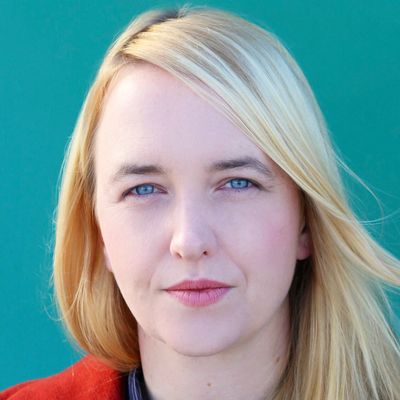
About
Meghan Finn is the Artistic Director of The Tank. She previously served as the Associate Artistic Director at 3LD Art & Technology Center. Her directorial work has been seen at the Tank, the V&A, Powerhouse Theater, Serpentine Galleries, The Wexner Center, Powerhouse Theater, SCAD, The Logan Center for the Arts in Chicago, Museo Jumex Mexico City, The Power Plant, Clubbed Thumb, HERE, The Brick, The Bushwick Starr, Soho Gallery, PS122, Dixon Place, Soho Rep, Ars Nova, Montclair State, New Georges, The Flea, Canadian Stage, Carnegie Mellon, Brooklyn College, MIT, NYU, the Great Plains Theater Conference and others.
Under her leadership, The Tank has established itself in a two theater complex on 36th Street, tripling its artistic programming and annual revenue since FY17. In 2020, The Tank was awarded an OBIE AWARD for institutional excellence, under Finn's leadership as Artistic Director. She is also the recipient of a 2021 Lucille Lortel Visionary Award by the League of Professional Theatre Women and 2023 PRELUDE Festival Award. She just won the David Prize with her plan how to utilize performing art venues in NYC! We talk her plan and how she uses her spare time to advocate on political issues! She is out here working for us all!
Grab a ticket and support the tank: www.thetanknyc.org
__________________________________________________________________
Check out "The Roundtable with Robert Bannon" here on BPN on the daily, on YouTube, and on social media!
For more info on Robert- www.RobertBannon.com
Follow Him on IG- @RobertMBannon
TikTok-@RobertMBannon
Transcript
This transcript was automatically generated and might contain errors.
[0:14] Robert Bannon: Welcome to the round table, everybody. My name is Robert Bannon. You're listening to us on the Broadway Podcast Network on Broadway World or on social media. I'm so excited that you're here. I love art. I love theater in New York. And as a student and acting student, a lot of the times my acting teacher would talk about the work over at The Tank because The Tank is a place where actors are born, where new works are born, and it is very important that we support all of these theaters out here in this world, especially these theater organizations. So when I found out about what the David Prize is, and I found out what it does, and then I found out that Meghan Finn is the artistic director at The Tank, and then in her spare time, she works on boards to help immigrant families, and as a teacher here in New Jersey and in Detroit, Michigan, who has many immigrant families that are affected by the politics in the world today, and how art can save people's lives and see us and represent us. And it's very important that the art of today is going to change the world tomorrow. I was like, where is Meghan Finn and why is she not on this show? Meghan Finn, welcome to the round table.
[1:16] Meghan Finn: Thank you. Thanks so much for having me.
[1:19] Robert Bannon: I firstly, you might be the richest person I know because you I know. It's very, it's very funny to suddenly, you know, we've been we like back bar a seal over here at The Tank and I'm like, remember, it's just me. And this kind of makes up for all the years of struggling. So, you know, it's a nice place to be. But I'm fascinated by you have worked at the Who's Who as a director, an artistic director at some of the most iconic theater spaces in New York City and around the country. And why settle at The Tank? What about The Tank made you say this is my home?
[2:01] Meghan Finn: Well, you know, at first I kind of The Tank has grown quite a bit since I started almost eight years ago. When we first started, we were a $450,000 a year organization. Now we're a $1.7 million organization. We had one little theater space and we'd go renting spaces all around town. And I was really interested in the big shows for the ones for ours. They're not as big as some of the happening around town, but we're really trying to get plays out of drawers, and that's what I was most excited about about the productions. And I thought, oh, well, this presenting stuff that we do the rest of the time is you know, oh, that's cool, but you know, it's not what I'm interested in. And the time that I've been here, my view of the whole thing has completely changed.
I now see the presenting work that we do as being such a vital part of the cultural ecosystem of New York City. I don't need to tell you, there's so many amazing talents that get started here, and they're on Broadway or off Broadway before you can even blink. And so I really started to see, oh no, this is the work here. And of course we wanted plays out of course, and I have stopped doing that, but it was really like, oh, this is what's gratifying to me is the presenting about 3,000 performing artists every year.
[3:28] Robert Bannon: Wow. Well, what's amazing for me about it is that when New York thinks of theater as what's going on in Times Square, but what is important is that new works and new artists and actors getting to work and people being able to afford a ticket to go support art and see original art is so vital to the artistic ecosystem that is in New York City.
[3:48] Meghan Finn: Yeah, and you know, I think we've come to a crossroads as a sector. I mean, you know, I hope that every I hope that your listeners and watchers think of all the excitement that's happening on and off Broadway as the best of what's happening here. But there really has been a moment for theater where people it's been a lot of soul searching since the pandemic. They haven't seen the audiences returning in the ways that they were before some of the ways that people have been thinking about producing, they've had to rethink just out of necessity because the theater has had a hard time bouncing back. And I really think that audiences at an emerging or experimental artist level are what build the space for those bigger shows.
You have to teach people how to pay for culture and how to have the experience. And it might start as at 15 bucks, but that's how they learn to spend the bucks that way is they learn to go to the theater and to have that be a part of their world in New York, and it's actually what makes New York New York. I mean, I think you know, that's why we live in this city, you know, because of our access to world class culture, and that can be in a small theater, that can be the seen the next best thing, which is what happens at The Tank every day.
[5:09] Robert Bannon: Every day. The tank nyc.org, they are a nonprofit. You can donate money and contribute if you have a couple bucks lying around. They'll be happy to take that off your hands. And the fall, and if you want to, if you don't have that, the best way you can help contribute is buy tickets to come see the shows. The fall season is out.
[5:26] Meghan Finn: Yes, we have an amazing show happening right now by Justin Hale called Bile Isle. It's a brand new play. Some of the best performances. Actors you'll see off Broadway come to The Tank. You know, we just did a show with David Greenspan last spring. Midnight Pulse Law. You'll see, like, where because actors know that they want to be working with the next up and coming writer, they want to be seeing something exciting. So check out The Tank's website. We have stuff going on every day.
[5:58] Robert Bannon: That's literally people have said, and I'm nobody, I'm a school teacher from New Jersey, but people will say to me, Oh my gosh, yes to our school teachers. Thank you, Meghan.
[6:08] Meghan Finn: Come on. My parents are both public educators, so we are nothing without our school teachers. So I appreciate that so much. And I teach musical theater at the New Jersey Performing Arts Center in Newark, New Jersey. And a lot of my students say, How do you get started? How do you make these connections that I may have made in my 40 years of life? And I say, Find the next up and coming person, reach out to go to The Tank, see someone who wrote something that you love, and then tell them, I loved this. I'm an actor, I want to hear, I'll take you to coffee. I want to know what makes you tick and build your own network because there are amazing artists out here all around the absolute.
[6:43] Meghan Finn: You know, I say that to Tank turns, which is our affectionate name. We have a paid internship at The Tank that people can check out at our website if they're interested. But also, you know, The Tank is the first place, is your first stop if you're an emerging artist, it's a place you can afford to do new work, it's a place where you can hang out and just get to see what's going on and meet those artists. But I always say look to the side, I don't always think forward and above. You know, I was an intern a million years ago for a project called 13P. That was 13 playwrights. And the producer runs her own theater now. Playwrights are many of them are of some renown. And the other interns with me, Caleb Hammonds just took over Soho Rep and you know Polly Hubbard was over at in Chicago at Steppenwolf for a long time.
So I say, you know, if you hang out with the right people, all the interns get their own theater one day. So you know really look to the side look next to you. Who's in the ranks with you and start making work with them. Because there's room for you.
[7:49] Robert Bannon: Absolutely I think it's the best advice. So we're talking here about theater we're talking about this the how you have evolved The Tank how it's become two places how capital and revenue wise you have you're maybe modest but you've tripled it you've done some work there in creating a viable way to make art artistic and affordable for patrons and for artists. But with the David's pro you won because you're the first theater person to win because you just not to like I'm the first cultural sector worker to win. So that's also very exciting. What did you have to do? Like what did you talk about to win?
[8:29] Meghan Finn: So the way it works is you're vetted for the better part of a year. It is a long process and all the way along the way I thought well this isn't gonna happen but I kind of came out of it thinking well this was a great way to flesh out this project idea that I had had, you know, The Tank we closed like everyone else during the pandemic, but we did not stop. I spent every waking moment of the pandemic saving The Tank and working with the artists to ensure we had the space. And what I noticed coming out of it, you know, we make a lot of our money from earned revenue once we recovered. Audiences, I started seeing that we were able to, we’ve been doing better in terms of our box office revenue than we were in FY19.
So I said to myself, looking at other theaters that are having trouble and that rely on contributed revenue, well, where's that whole? And I think part of it is that emerging artists, experimental artists, when they do have two shows at The Tank, they sell out and they bring out a whole audience that maybe would never go to one of these bigger theaters, but they're following the artists. And so then we continue to market to those people and we find them coming back. So I said to myself, okay, well, where's the how can we do this? So the whole idea is this project, I call it Revenue NYC because we have been losing. We lost 27, according to Indie Space, an art service organization. We lost 27 rehearsal and performance spaces during the pandemic.
So, what can we do to start bringing back these spaces? And the idea is to start with pop-ups that basically replicate The Tank's model because I think one thing that happens to the bigger theaters when they see how much work we do, they just get tired. They're like, how can you possibly do that? And we've been doing it for 20 years because we have systems in place and we have we're able to maximize the use of our space and serve a high volume of artists. So essentially the project is taking our model, making it in this very adorable, sexy package that can basically slot in like a rental, replace lost rental revenue for the theaters that they're losing, and also get a high volume of artists through who bring new audiences that then they can begin to market their season.
The idea is to raise money to theaters, make some money for artists and get new audiences in new spaces. You know, there's many things have been written about from the New York Times to Playbill to about theater audiences being old. That you know, like these some of these classic places that have been around for a long time that skew older, their audiences are literally going away and not replacing. And so what I say to that, you know, because you know, we're wringing our hands about this as a sector, and yet we need to take a deep breath and remember that we're on a 13-mile long island where 8 million people.
[11:25] Meghan Finn: So we could be in a harder situation, which many other theaters outside of New York are. So, what we really need to do is ask ourselves how are we gonna invite these new audiences in? And when I see the Tank seven nights a week, I can go down to the Tank and it's full of vibrant audiences, new artists, that wild, wonderful New York energy that defines the theater. It's why I got into the theater, you know, it's why I watched Funny Girl. You know, I watched the movie Funny Girl for, you know, 12 times, and I thought, well, I want to be backstage like she is after the show with all that wild, you know, no girls running around. That's how it feels at the Tank. So I know that the audiences are out there.
We just need to find ways to get them into your space, and that's inviting new people. But you know, the aesthetic issues that go along with that. This is also, it can revenue holds statistic risk. We can slot in like a rental at a bigger space, and they get the cachet of saying, hey, we helped these emerging artists get a start. We invited new audiences in, they know how to navigate this up, they know where the bathrooms, they know where the bar is. You know, they've had time at my theater, and then I can market my own shows to them. So that's the idea.
[12:39] Robert Bannon: Well, it's brilliant. I'm excited for you. I think it's such a great idea. I think that it's so important to support art no matter where you're listening to this, even if you're in somewhere far from New York City, there's a local theater company or some performing arts center or community theater that needs you to buy a ticket. It's so important no matter where we live. Fine, Meghan, I will come to your Pride Fest. I'll sing for you. I'll do whatever you want, Meghan. I love your programming. And we've had a lot of your shows and the creators and directors and stars on our show. And I think, you know, it's such an honor to be able to use my little platform to be able to hopefully get somebody out there to buy a ticket and know about something that maybe they wouldn't hear about it. Do you find it hard to make noise in this craziness that is New York City?
[13:25] Meghan Finn: Yeah, I mean, this is one of the reasons that I'm so excited about the prize because I feel like it's an opportunity to really get the word out about what's happening in theater and culture in New York City, and I think as a result, it's gonna be really helpful in having conversations. That said, you know, whoever is listening that's like, hey, I want to get involved in this, whether they're an artist or they know of a space and they want to get involved. Like, please reach out. We have a website too for the project, revenue nyc.com. You can follow us at revenue nyc. We actually have soft piloting. What? Sorry. No, we're actually soft piloting. You're gonna edit this, right?
[14:06] Robert Bannon: Yes, no.
[14:07] Meghan Finn: Okay, of course we're doing that. We're actually soft piloting revenue NYC right now at a space called Paradise Factory on East Fourth Street. We started it on Monday night, and we have 30 shows that are happening over the course of the next three weeks to replace some lost rental revenue for that venue and get a whole new slew of artists and audiences to know about it. So we're testing it out and seeing how it goes. But I have a lot of faith that the project's gonna be a huge success because we've done it for the last 20 years at the Tank. So I'm so excited for this opportunity. I find as an artist and somebody who does cabaret and puts on shows and has a band and does things like this, that it's one of the biggest fears is people say there is no audience, no one's gonna come, and I don't know where to be.
And some places are very hard to book, and some places are very overwhelming and intimidating, or you make no money and you lose a bunch of money because you have to spend all this money. So what you're doing is gonna help the next generation.
[15:08] Meghan Finn: That's my plan. I want the, you know, because people come up to me once a year, once a week, once a week and say, the Tank is one of the last places I can perform my work. And that's just unacceptable to me because this is New York City, and we should have a vibrant downtown emerging artist experimental community, and we have this space and we can absolutely do it. It's at our fingertips. We just need to get started. So if you want to know more about the Tank, it's the tank nyc.org, and then we'll put the link below us for your new project, which you could tell us one more time.
[15:48] Meghan Finn: Sure, it's revenue NYC, so it looks like revenue nyc at dot com. So exciting, amazing, award-winning idea that's gonna be implemented. Now you have literally one award, your artistic director, and I'm sure it keeps you very busy. There's shows at the Tank literally every day pretty much. And then in your spare time, you work on being an advocate and work for charities for immigrant families. Like just in your like when you leave work, you just say, you know what makes me relax? Working for immigrant families in 2024 in the United States.
[16:24] Meghan Finn: Yes. Well, I feel called to do that just as a person. It's not something, you know, it's something that I wanted to mention in winning the prize because I wanted it to be an opportunity for the organization I co-founded, Each Step Home, to, you know, amplify me as an effort to just let people know more about the organization itself. But we work to essentially fill a gap between families whose children have been separated from them at the border and the system. So we expedite the release of children from federal custody detention and help them get back to their families sooner. So a lot of people don't know that children can still be separated at the border from aunts, uncles, grandma and grandpa, and it's even though, you know, certainly one side of the aisle is leaps and bounds better than the other side of the aisle, neither is really talking about the issue of immigration and how any kind of immigration to the United States increases the GDP.
It's helpful for the United States. I mean, I think, I think I just feel a moral responsibility to be involved because I think our policies are inhumane, and so I just do it out of a feeling of, you know, I would want someone to do it for me, you know.
[17:49] Robert Bannon: Well, I would like to say thank you. You know, my grandfather was here from Italy, he came here without any documentation. He had to hide for many years here in this country until he married my grandmother back at that time and leaving the country and coming in. And I'm a teacher in North Bergen, New Jersey. I have so many undocumented residents that live in my classroom and their parents, and I see the fear, the fact that they're afraid of medical care, they're afraid to fill out paperwork for their children, they're afraid to use our police department or to go to stores or the library because they feel, and if you've ever spoken to someone whose family has been rounded up and detained while their children are in school and their wives or girlfriends are home, and you put a face and human name to the rhetoric that you hear every day on the, it is a totally different understanding and feeling when you know them, have a relationship with them and when they're a part of our society than when it's just a statistic on cable news.
[18:45] Meghan Finn: Absolutely, and you know, I think that a lot of people don't know, and this is something for them to look at themselves, that a vast majority of undocumented immigrants pay federal income tax. A lot of tax revenue annually comes from immigrants, and so economically, no one's really talking about that. Ironically, I think there's some reporting around it from the Bush Foundation. So, but I mean, nobody is really in my mind to talk about this issue in a more humane way. But I do think, you know, we need to do that's next on our agenda. We have some items, some initial November items to take care of, and then we can start putting more pressure on some of these issues that we care about.
[19:34] Meghan Finn: But yes, I'm sure you do because I literally, when I read your press release in your bio and researched your organization, which you can find more information about each stephome.org, I was like, of all the time, the topics of the time, I mean, your head must spin around 360 on a daily basis with the things you hear.
[19:51] Meghan Finn: It does. I think we need to do frankly, you know, the left and center left need to do a better job at talking about this issue. I think we like to, I think the United States talks about the immigration system like it's global warming. And it's not, it's it is solvable, but we need to start talking about it more. And letting, you know, letting the people who are experiencing it speak about it in safety instead of with fear of deportation. I just kind of in my mind, I let I don't talk about it a whole lot because it's not generally it's not my story to tell. I try to decenter myself in this narrative. But, you know, I'm trying to do my part in the time that I have, and I really the organization that I work with is fantastic. The people that the caseworkers, you know, we've helped reunite over a thousand children with their families since 2019. So I'm very proud of it.
[21:02] Robert Bannon: Wow. Meg, give Meghan Finn some more money, somebody. Come on.
[21:09] Meghan Finn: Well, Each Step Home is a great organization to donate to, as is the Tank. I'm excited for the future of Revenue and what that means for the Tank and for the many artists in New York City. So I'm grateful to be on here to talk about it.
[21:21] Robert Bannon: Well, as an artist here in the New York City area, I want to say thank you. I want to thank you for the work you put on at the Tank. I want to thank you for coming up with the idea to get artists a chance to work and make venues make some money. And then all that you do out here as an advocate for people and human beings in this world in general is very inspiring and moving. So thank you for all the time and effort you've put for all of the things. It makes a huge difference for all of us.
[21:44] Meghan Finn: It's my pleasure. I'm uh it's been nice. You know, you get a little worried when you win some money. It's not something I'm comfortable with, but I have been feeling like a lot of the artists that I work with, they were like, I feel like I won.
[21:57] Robert Bannon: Good that you did.
[21:58] Meghan Finn: Like, and that's that means more to me, even than any money. So I'm grateful.
[22:04] Robert Bannon: Well, I'll see you over at the Tank.
[22:07] Meghan Finn: Sounds great. Thanks for having me, and thanks to all the listeners out there. I appreciate you.
[22:11] Robert Bannon: Thanks so much for being here.
© Broadway Podcast Network, All Rights Reserved