

Andrew Lippa is a Broadway Writing Superstar! Tony Nominations, long running shows, and classic hits from The Descendants to the most produced regional show of the year, "The Adam's Family!" We also know his classics like "You're A Good Man Charlie Brown," "Wild Party," "Big Fish," and more!.. Read More
From the show: The Roundtable with Robert Bannon
Guests
About
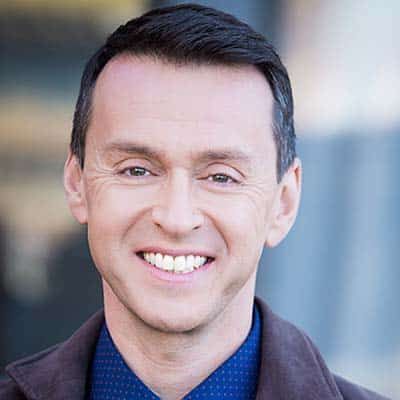
Andrew Lippa is a Broadway Writing Superstar! Tony Nominations, long running shows, and classic hits from The Descendants to the most produced regional show of the year, "The Adam's Family!" We also know his classics like "You're A Good Man Charlie Brown," "Wild Party," "Big Fish," and more! I bet you did not know that he spends a lot of time helping the future as the President of The Dramatist Guild Foundation!
We spoke to Andrew & the amazing Executive Director Rachel Routh about what they do to help ensure the survival of the next generation of theatre writers! DGF has given away over one million dollars, provide support, free spaces to work, and so much more! Hear what they do and how you can help! PLUS they have an amazing gala on the way you need to get tickets for!
For info and to support: www.DGF.org
__________________________________________________________________
Check out "The Roundtable with Robert Bannon" here on BPN on the daily, on YouTube, and on social media!
For more info on Robert- www.RobertBannon.com
Follow Him on IG- @RobertMBannon
TikTok-@RobertMBannon
Transcript
This transcript was automatically generated and might contain errors.
[0:11] Robert Bannon: It's the round table with me, Robert Bannon. Well, Broadway World, Broadway Podcast Network, social media, world, wherever you are watching, welcome to the round table. My name is Robert Bannon. I am really excited to have our next guest here. Um, everyone who doesn't know but should know that the Dramatist Guild Foundation in particular, Tony winning organization, literally helping some of the best next people who make drama art music out here in the world. I was gonna say New York, but that would be limiting what it does, everyone. So we have fancy people here with us. Yes, we do, and way fancier than my trashy show. The executive director, Rachel Routh, I'm excited for more than a decade, has been a part of this organization.
Andrew Lippa, America World, he has the definitive Wild Party. I don't care what you say, I'm saying it right now. Before he's here, I got the courage. I practiced in the mirror to say it to him before he came out here. Andrew Lippa, the award winning. We all sing his songs in the musical theater world. So, Rachel and Andrew, welcome to the show.
[1:12] Rachel Routh: Thank you.
[1:13] Andrew Lippa: Thanks for having us.
[1:14] Robert Bannon: Nice introduction. Andrew, before we get into the real business, can I just say that somewhere around this world, at any moment, there is a high school, there is a community theater, there is some up-and-coming musical theater superstar who's getting their break and singing your words and your music. And we thank you for the lifetime of art and music that you've given to us.
[1:36] Andrew Lippa: You are very, very kind and, uh, in all humility, very correct. That see, uh, I have I am I'm incredibly blessed to have, uh, in The Addams Family the most produced musical in the world. And, um, and um, and it's extraordinary that, uh, people wanna keep singing my songs. I'm just grateful to everyone.
[1:57] Robert Bannon: So absolutely. So I joked about Wild Party, but you, as you said, Adam's Family comes in. So I know the high school I grew up in with the high school you grew up in, Rachel. The high school you grew up in, everyone has done an Andrew Lippa song. The high school I grew up in is now buried under rubble. It's no longer exists. I'm so old, it no longer exists. So it's just a figment. Well, the music that you've done and now if and now the kids out here singing Descendants and all the things that you've done, um, all comes from you. So, Rachel, when you, before we get into what you all do, why did Andrew and how did you did you recruit Andrew? Did Andrew recruit you? Did you all meet magically at the, I don't know, Shake Shack in Times Square? How did it happen?
[2:39] Rachel Routh: I think the universe brought us together, but technically I recruited Andrew.
[2:44] Andrew Lippa: Correct.
[2:45] Rachel Routh: Being so inspired by his artistry and also, um, how he is as a teacher. He, the first experience that he had with DGF was being a teaching artist for us in Chicago at a high school that was probably doing Wild Party or The Addams Family, I'm not sure which one. Um, but it was just incredible to watch Andrew teach these children and help bring out who they are through his music.
[3:11] Andrew Lippa: Incredible.
[3:12] Robert Bannon: Andrew, when you started writing your Harvey Milk work or your the Broadway work, the commercial work, the work that you've done, was everyone they you guys give over a million dollars away in awards and grants to up-and-coming playwrights, composers, writers, people that are making the art that we see on our stage. Andrew, when you were starting out, what kind of a difference would it have made if you were able to get an award or grant that you're able to give as a part of this organization?
[3:41] Andrew Lippa: Uh, that's a great question, Robert. When I was starting out, uh, in the late 1980s, there were organizations in, uh, and the Dramatist Guild Foundation existed then, but was much, much smaller and only gave out very, very small amounts to individual artists, uh, because that's all the capacity that DGF had. Um, there was a wonderful award at the time when I was emerging, uh, with Wild Party in, uh, around 2000, um, called the Gilman Gonzalez Fayette Theater Foundation Award. It was Sandra Gilman, may she rest, and her husband, um, Celso Gonzalez Faya, and they gave out this award, unstipulated $25,000 cash grants to people who wrote musicals. And, um, it was, uh, Lincoln Center was involved.
We used to do, they used to put on a little show celebrating the winner each year, and I won it in 2000. And that taught me, uh, not only is winning $25,000 lovely, it's actually, um, sustained me for a couple years. You know, I was working as a music director and pianist, but I was trying to write musicals, and it's not something that you can go apply, you know, for as a job. And so, um, I have always had that in the back of my head when we have given out, uh, awards and tried to sustain people who are emerging, people who are in other parts of the country who are making extraordinary theater, new theater, new writing all over the country. And in fact, in 2020, in March of 2020, uh, when the pandemic was a week old here in the United States, uh, when, you know, meaning we were everything was shut down for a week, um, and we were on a call, and Rachel said, "This is what we were built for."
And, um, here we are four and a half years later, we've given out over four million dollars to individuals writing plays, musicals, libretto to musicals. Um, and, uh, those folks have been able to pay their rent, put their kids, uh, in schools, uh, you know, daycare, been able to pay their, uh, medical bills, been able to pay for food, all of the basic living needs so that they can sustain themselves maybe a little bit longer to get that play or musical finished.
[5:58] Robert Bannon: So amazing. Rachel, you come from fancy school. I mean, you're Columbia grads. You have, you worked in commercial theater, you could be, you know, you know, making big, big bucks here, but instead you choose to live a lifetime of make a make your living out of the charity organization out of a Dramatist Guild Foundation, a foundation that gives Robert, we want to keep her. So, you know, I know it's like, huh, my end of year reviews coming up. What drew you to this work? Why is this work important?
[6:29] Rachel Routh: Yeah, I think, I think growing up, my mother was a pianist, and so I grew up in like the pit orchestra with her. Um, and the theater was such a safe place and a wonderful, like it was a family. Um, and I think I felt that my whole life. And so I don't know. I just, to be able to support the people who create that, who create those spaces where we can feel seen and heard, um, and find joy when we're in pain and process our pain with other people on stage, to be able to support those writers that create that is, uh, I feel like it's my life's calling. So that's, you know, that's why I do it. And I get to hang out with Andrew Lippa all the time.
[7:13] Andrew Lippa: Um, which is not a good thing.
[7:15] Rachel Routh: No.
[7:18] Andrew Lippa: But it's, it is incredible. I'm so fortunate to be able to be around writers much of my day. Um, and when you're around quote unquote normal people, you forget that it's quite hard for people to express who they are and to express what they want and need and the world around them. And artists really have been given this incredible gift, and those that take that leap to actually put it on paper and get it on a stage, like it's incredible.
[7:46] Robert Bannon: So it's important to know that's a wonderful thing, Rachel, because you're talking about generative artists. That's what we are as writers. And I remember sitting in Dramatist Guild council meetings with, uh, when I was much younger, uh, when I started 17 or 18 years ago on the council, and Edward Albee said, uh, in a meeting, there I was in a meeting with Ed Albee. So that alone is just, what is that? And Edward Albee said, um, that, uh, there's only one creator in the room. There's only these people who write in their bio, so and so created the role of, and he would be grumpy about that because he would say there's only one creator in the room, and that's the playwright. The playwright is the creator, and it is not meant to be an insult or to say that everybody else is not creative.
That is not what we're saying. We're saying that the only person who made up something, the person who invented a character, the person who created that song, who created that scene, who invented how those people interact and behave, that's the playwright. Whether, and I use that in a catch-all phrase, right? The composer, lyricist, the brettest of a musical, they're the playwright. And so those folks are making something from whole cloth. Sometimes they're adapting things, shorts, existing stories, but they're turning them into a completely different kind of art form. They've created that thing. And those, those folks, you know, what's really kind of incredible to us still doing this work that I've been doing here at DGF for over 10 years now, almost 10 years now, uh, is that writers just don't get the support they need.
They just don't get it. They get, they get some support, they don't get paid enough, they don't get enough, uh, they don't get enough support along the route. It's a very long road. It took us nine years to get Big Fish to Broadway from the time we had the first meeting talking about how we might make it into a musical. And so, and nine years is kind of almost average now for shows. And so it's the writers need help along the way. And, uh, as I've said many times, there are a handful of folks. You see, you know, their names on Broadway, uh, or on the, you know, the big, big shows. There are a handful of folks who, yes, they've had enormous success, their shows get done, these giant productions that get done all over the world, like The Lion King or others, and those are amazing, and those folks make a lot of cash.
But most writers, even when they get a show to Broadway, and it only runs a short time or runs a year, even most writers are, they're doing okay, but not great, or they're doing not great. And they, you see them have their show on Broadway, and then they have to go back to trying to get the next one. And so it is something where DGF has been able to step in and step forward.
[10:23] Andrew Lippa: And the Tony Awards, well, by the way, I don't know if we talked about that here today, but the Tony Awards, you were, you're gonna bring it up probably. Why don't I let you bring it up, Robert? Go ahead, bring up the Tony Awards.
[10:31] Robert Bannon: Do you know who won a 2024?
[10:35] Andrew Lippa: Well, I wonder who was honored with a Tony honor this year. And, and why and who, and tell us all about it.
[10:45] Rachel Routh: Um, it was such an incredible experience. As Andrew was just saying, writers are often, you know, behind the scenes, uh, even though they created the whole thing. And I feel like that's kind of where DGF has been. We were behind the scenes trying to help writers get their stories out. So to get this honor from the American Theater Wing was just so incredible. Um, and we were, we were just so grateful to be able to receive this on behalf of all the writers that we serve. Um, maybe all the writers who may never aspire to win a Tony Honor or want to win a Tony Honor, but we, you know, we won this for them. That's why we do this, is so they can keep telling their stories.
[11:22] Robert Bannon: I want people to go to DGF.org, which as you can see on your screen right now, if you're listening to us on the Broadway Podcast Network, you can look at the link below us. You can find out all the information. You could see pictures from the Tony Awards, and you could find out how you can donate and be a part of the all of the things that you guys do there. Because it's a lot, there's free space. There's lots of things that you all do to provide. I have a good friend of mine who had a show on Broadway last season, who worked on the show for a very long time. When I first met him, he had a show off Broadway and was waiting tables.
[11:49] Andrew Lippa: Yep.
[11:50] Robert Bannon: Waiting tables or taking voice lessons with me singing bad versions of Big Fish songs in my book, playing on piano. I'm fine with it. But did I pay the rights properly? Is the question? I don't know. But my bought I bought legit sheet music that I did. So when you, but because they're out, they're not making a living while they're writing the next great show that we all love. They're, they're out here working and then being able, so you give them the opportunity, Rachel, that they can have a little nest egg to invest in themselves, invest in their art, and pay their bills.
[12:25] Rachel Routh: Mm-hmm.
[12:25] Andrew Lippa: Mm-hmm.
[12:26] Rachel Routh: And Robert, on top of that, thank you for all of that. On top of that, for your listeners, uh, not only from the side of writers, but from the side of potential donors out there, folks who are really interested in the work we're doing, you can go to DGF.org and donate. And at whatever level you're able to donate. We're the, we're, uh, we're the grassroots organization that, uh, we're very willing to take, uh, single dollar donations as well as the ones that come from folks who have the capacity to give more. And that adds up to a kind of support that now, because the Tony Award, uh, is attached to our name, as I've mentioned in the past, uh, you get a new first name when you win a Tony Award. Um, and so we are the Tony honored Dramatist Guild Foundation, and we will forever be known as that. And so, um, our gala, October 28th in New York City at the Ziegfeld Ballroom, we're gonna unveil the award, uh, that evening.
[13:18] Andrew Lippa: Oh, yes, and there's our, there's, uh, the program there with our, our wonderful Tom Kitt and Mindy Rich being honored for their extraordinary contributions to the American theater and our host Amber Ruffin again this year, who, uh, you can catch her on CNN, um, on our new TV show, which is absolutely hilarious for those of you who are interested in seeing it.
[13:39] Robert Bannon: You know, Amber Ruff, you know, when you do red carpets, I get to do openings of Broadway shows and things like that and fancy shows and all this. Amber, it is not easy to make a minute chat be entertaining or fun. You do repeat yourself, Andrew. I'm sure you both know from red carpets and things, it's not super entertaining. She knows how to be so quick and so off the cuff and so funny. It's gonna be a special night. Rachel, what can you tell us about your gala and how can people get their tickets?
[14:04] Rachel Routh: Uh, they can get their tickets on dgf.org, of course. Uh, we make it very easy for you, and we'd love to have you join us. Um, we were just on another call where someone said, you know, this is kind of gala season, and there's, you know, there's a gala, and then there's the DGF gala. And she talked about how special it was, which is such a gift. And it's really our time to highlight these writers, highlight their works. Um, we have a wonderful orchestra that plays their music. And if you've ever tried to produce anything for a group of writers, it's a challenge, right? Because you know you're gonna get notes on all of the sound cues. This instrument was too loud, etc. Last year, I think we cracked it.
We got a compliment about the sound from Michael Corey, and I felt very honored. I feel like it was the first time in 10 years that we've gotten. Thank you, John Weston, sound designer. Shout out. Um, but it's a wonderful night and directed by Noah Hemmelstein, and it's really beautiful.
[15:07] Robert Bannon: So what so my question to you, besides the gala and besides what you do, can you tell us some of the people who you have helped? Can you give us some like some receipts as they say in the street? Some of the people who you have given a grant to, are there people that have gone on to great acclaim that you have helped out with?
[15:24] Rachel Routh: Receipts in the street. I like it. Um, I think our fellows program, which was started by Lynn Ahrens and Stephen Flaherty, um, Janet Nypers and Susan Miller, that is um one of our signature programs that really supports the mentorship of the next generation of writers. Andrew has been a mentor. We've had so many great leaders of the program. Um, Benjamin Justin, uh, Benj Pasek, and Justin Paul were famously in the program. Um, and now certainly we got winners who we did it in the shortest length of time possible, who are the first pair of people who've got it at the same time? I do mean that pair, Ben and Justin.
[16:05] Andrew Lippa: Yeah, yeah.
[16:05] Rachel Routh: They're all who are also on the board of the Dramatist Guild Foundation.
[16:08] Andrew Lippa: Yes.
[16:09] Rachel Routh: Because they believe in our mission.
[16:10] Andrew Lippa: Yes. Congratulations to being those guys. Also went to the University of Michigan. Go blue.
[16:15] Robert Bannon: Go blue. Did you go to the University of Michigan, Andrew?
[16:19] Andrew Lippa: Of yeah. We did.
[16:21] Robert Bannon: What? Did you not read the notes?
[16:24] Andrew Lippa: I have the bio here. I'm looking at it right now.
[16:26] Robert Bannon: I'm sorry.
[16:27] Andrew Lippa: Yes. Yes, I went to the University of Michigan and I was uh, I am still uh an honorary member of the musical theater department. I did not actually get a degree in musical theater, but the department has taken me on as one of their own. And uh I go back to teach uh master classes when I can and uh saw a production of the Wild Party there a few years ago, and um it was uh it's like home. It's uh you know it's a great place.
[16:52] Rachel Routh: Andrew is from Oak Park, Michigan.
[16:54] Andrew Lippa: That's correct. I was uh I grew up in Oak Park, Michigan.
[16:58] Robert Bannon: I wasn't gonna let it seem like I thank you, right? Are you from Michigan? Where are you from, Robert?
[17:02] Robert Bannon: Well, I am from New Jersey, and I'm a true New Yorker, but I am getting married to a Detroiter, a Michigander.
[17:08] Rachel Routh: Oh, congratulations.
[17:10] Robert Bannon: Yes. I am sitting in Detroit, Michigan right now, and he is uh, he is an alumni like you, and so we are all go blue here, and everyone I talk to, dead serious, not that I talk to on this I do an interview a day. A lot of people from Michigan are big giant musical theater stars and creatives. This school is Barnun Bananas. So Andrew, when you fly into Detroit airport to go to Michigan, I will pick you up with a Coney dog in hand.
[17:41] Andrew Lippa: I'm trying to get Rachel.
[17:42] Robert Bannon: If you're a New Yorker, New Jersey or for life, Coney dog is great, but a Coney fries is like something to live for. And Buddy's Pizza. So make sure that you check out.
[17:53] Rachel Routh: Oh, and my mother's calling me, so I'm a Buddy's pizza. But Buddy's Pizza is uh yeah.
[17:56] Robert Bannon: Rachel, come to Michigan and I'll take you out for somebody's pizza as well.
[18:01] Rachel Routh: Okay.
[18:02] Robert Bannon: Okay. I mean so what when you go into work every day, Rachel, what is the day-to-day work of this organization? What do you do? What are your initiatives? People want to know where their money goes. People want to know when they come and support you, where is this money going? So what are the things, the concrete things that we can see that you all do?
[18:22] Rachel Routh: Of course. I think as Andrew mentioned, you know, we give out over a million dollars a year in grants directly to writers. We're really proud of that. And when and because we have such a focused granting population, you know, playwrights, lyricists, librettists, um, and composers, we're able to be really responsive to their need. And we follow a trust-based philanthropy model. So we really we don't have fixed assigned grants that we give people, but we really listen to what is going on in their life and try to make that grant responsive to help them really get back on their feet. Um, so that's a core program of what we do. Um, the fellows also uh is a core program that we do of education and mentorship, as well as sending visiting artists out like Andrew all across the country. We've reached writers in all 50 states and territories, and we're really proud of that because they're writers all across this country, not America New Jersey.
[19:15] Andrew Lippa: Oh, that's true.
[19:16] Rachel Routh: We have not gotten to Guam.
[19:17] Andrew Lippa: Good point.
[19:18] Rachel Routh: Good point. Um, and I think in terms of like the day-to-day of walking into this office, um, we offer uh free writing spaces, free, as Andrew likes to underline, which is very important.
[19:29] Andrew Lippa: How much do they cost?
[19:33] Rachel Routh: Uh, they're free.
[19:35] Andrew Lippa: They're free.
[19:35] Rachel Routh: They're free for every writer who uses these brilliant, gorgeous, a giant room that can hold 50 people. It's free, right?
[19:41] Andrew Lippa: It's free.
[19:42] Rachel Routh: It's free. Yeah. So we like to say that we give writers a million dollars a year, and we also save writers about a million dollars a year because they're not having to pay for space in New York City.
[19:55] Andrew Lippa: Correct.
[19:55] Rachel Routh: Um, so it's amazing to if you if you want to come visit the space, let me know. Um, but when you walk into the visit costs a lot though.
[20:04] Andrew Lippa: Oh, it's true. We should start charging.
[20:07] Rachel Routh: Um, but we walk into the space and you, you know, on any given day, you're hearing these different stories being created and sung and performed. And so it's a really magical experience, I feel, to kind of just be in the office.
[20:21] Robert Bannon: I I'm sure. I it's it's an amazing organization, and I love the idea. A lot of students I teach musical theater at the New Jersey Performing Arts Center in Newark, New Jersey. There's a lot of kids who come to me and they say, I don't know how to get started. I write music, I write things. They feel overwhelmed, they're intimidated. It's a big scary business. So I always say to them, find, you know, the kids you're in class with will become the people that you work with and are your tribe of people. But at this organization, you could go to these working rooms and network and work and work together and build, and then you can be your partnership. Andrew, you're you've worked with some of the best people in the business.
You're it's known about the directors, the other writers, the book writers, the choreographers that you've worked with that have your shows have gone on to Broadway. Isn't the collaborative process of this finding people, other writers that you can bounce ideas off of so important? And that's what this organization can help you achieve.
[21:10] Andrew Lippa: Absolutely. Um, helping to connect people, helping to create again without free spaces, opportunities for people to actually have somewhere to go, uh, to be able to present their work, to work with colleagues, to be able to meet, you know, there's a director you want to meet, you know, where you're gonna go, and you don't want to go to a noisy coffee shop, and you can come to our spaces and have that meeting and present your musical to them. Uh, so there are lots of things that are uh beneficial about and we we acknowledge that New York is a theater center, you know, if not the biggest theater center in our country, and obviously that's why we're we're there, and that's the uh the history of the organization and the the fact that um so much theater is being made in New York, but there is theater being made all over the country, and so we're we keep working to support everybody in all kinds of places.
Uh, some people in front, you know, I I have my friend Craig Wright, who is a wonderful playwright um and works in television a lot as well. But Craig uh was living in the Minneapolis area in well into his 30s and writing plays and getting his plays on, and then at some point somebody discovered him and he got offered a thing and he moved to LA and like you know, his life changed. But there are great writers all over the country, and uh, we're hoping we can serve and reach them as well.
[22:22] Robert Bannon: Well, Rachel, the grants open on January 6th. So people want the for the DGF grant, I believe that's what the website says. And there are other grants that people are available. So if you're a writer and you're looking for information, you want to get yourself together, you can also go to DGF.org and you could read about the requirements that you'll need for when you open up for next year.
[22:41] Rachel Routh: Of course, yeah. And our grants are actually given on a rolling basis, so you can apply right now if you if you're in need of a crisis relief or emergency grant, um, to just go to dgf.org. We'll ask you a few questions about what's happening. Um, our main criteria is that you are a dramatist. So as long as you prove that you are a writer for the theater, we will help you. Just share the situation. Our grants manager is amazing and we'll be in touch.
[23:08] Robert Bannon: Yeah. I I love this. I can't believe I'm so excited when they list the honorary Tonies and the Tonies that go for the organizations. I was so excited to see you all because I know how much work and how much when you read a playbill, everybody, or when you go see local theater wherever you are, whoever wrote this show, odds are have been touched and affected and helped by the Dramatist Guild Foundation. And we wouldn't have any art without the people who write it, or we wouldn't have anything to sing without people who sing it. And they're not the stars of the show. They don't take that bow at the curtain call, but they are the people who make it possible. So the fact that you give this to the people who make it possible is so important to all the artists and art fans out here.
[23:51] Rachel Routh: Thank you, Robert. We can't uh say it any better than that. That's exactly how we feel. And uh we do feel that uh the authors are um the most critical piece of uh of anything in almost all cases, it comes from the mind or minds of someone who writes, uh whether they write words or music or whether they are doing that together uh with other people. Um, it's always about what gets written on the page. And uh Rachel uh often mentions the famous Moss Hart quote, which is the writer was there when the page was white. Um, and uh that is absolutely true.
[24:29] Andrew Lippa: That that is it for any writer, you know it's a bit of a frightening and exciting thing. Exciting and scared, as our uh beloved Steve Sondheim wrote, and how it is true. It's true every time. Every time I started a new project, it feels like I'm starting over. And uh there are lots of people who uh can't start over or can't start that new project because they just are having some impediment in their lives that keeps them from being able to get that project done. And we don't know who that next person or product, what that thing is that they will make that ninth play that they will write that will suddenly be the one that um makes them their name and makes them perhaps their fortune. And uh, you know, our job is not to judge the work, our job is to support the people, and uh that is what we continue to do.
[25:22] Robert Bannon: And that's what I love. That was beautiful. That's what I love. It's not a contest, it's for people who are out here to try to just support them to get the work made and done. But that is what what you said before is what gives me anxiety as someone who cannot write that blinking cursor on a Microsoft. It takes me back to middle school. It takes me back to write a paper.
[25:43] Andrew Lippa: Oh, it's still like that.
[25:45] Robert Bannon: Uh you know, there's nothing, there's nothing like a deadline, and and your colleagues are waiting for that song and it's the night before. I I've had that multiple times.
[25:53] Andrew Lippa: All right.
[25:53] Robert Bannon: So I had such a good time with you both. I'm going to make sure that I put this everywhere. I'm going to support my own way, no matter what you've got. They'll take as much money as they can. Go do this, go to the gala, and then we'll all we'll all collectively, when this is up and out, we'll all play my new philosophy from Good Man Charlie Brown.
[26:10] Andrew Lippa: Why are you telling me?
[26:14] Robert Bannon: I'm just saying, we're all gonna we're we're gonna support, we're gonna support, support. Andrew, thank you. Thank you so much for the music. Thank you for the joy and and all of the all of the hours you've spent in front of that piece of paper that's white and given us something beautiful to listen to and be a part in our lives and Rachel, thank you for supporting art and artists and taking your talents and all that you do for good. It means the world to people who love art and the artists out there.
[26:21] Rachel Routh: Thank you, Robert.
[26:21] Andrew Lippa: Thank you, Robert.
[26:21] Rachel Routh: Thank you so much for being here.
© Broadway Podcast Network, All Rights Reserved