

Today on The Roundtable with Robert Bannon, Brazilian-born writer, performer, and producer Darwin Del Fabro (she/her) joins us for an intimate and powerful conversation about her return to the stage in her deeply personal solo play, LILI/DARWIN... Read More
From the show: The Roundtable with Robert Bannon
Guests
About
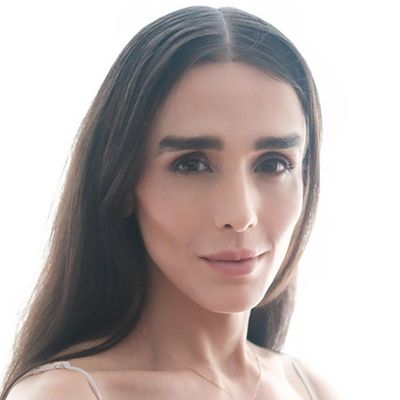
Today on The Roundtable with Robert Bannon, Brazilian-born writer, performer, and producer Darwin Del Fabro (she/her) joins us for an intimate and powerful conversation about her return to the stage in her deeply personal solo play, LILI/DARWIN. Premiering at The Tank in New York City this August, the genre-defying piece explores Darwin’s journey through gender transition, interwoven with the story of transgender pioneer Lili Elbe, offering a unique fusion of historical insight and personal truth.
In this inspiring episode, Darwin opens up about the creation of LILI/DARWIN, the emotional weight of returning to the stage after her transition, and the lifelong connection she’s felt to Lili Elbe’s story. We also talk about politics, the world, and how her journey has something in it for everyone. It’s a bold, honest, and unforgettable conversation—only on The Roundtable with Robert Bannon.
For tickets & info: www.lilidarwin.com
__________________________________________________________________
Check out "The Roundtable with Robert Bannon" here on BPN on the daily, on YouTube, Broadway World, and on social media! Like, comment, share, & subscribe!
For more info on Robert- www.RobertBannon.com
Follow Him on IG- @RobertMBannon
TikTok-@RobertMBannon
Transcript
This transcript was automatically generated and might contain errors.
[0:10] Robert Bannon: It's the Roundtable with me, Robert Bannon.
[0:15] Robert Bannon: Well, everybody, I'm so excited here on the Roundtable. My name is Robert Bannon. You're listening to us on Broadway World over here on the Broadway Podcast Network. I really, really love The Tank.
[0:25] Robert Bannon: The Tank has been somewhere that we have been working with. And Megan Finn, who's so fancy and brilliant, she was here, and we talked about her. She won all this money and this sort of award, and she has this great idea about what New York is going to be. And our next guest is an old friend as well. I am so excited and so excited to welcome back our good old friend Darwin Del Fabro.
[0:50] Robert Bannon: She's here, she looks gorgeous, she's got a new show. She sings, she acts. Apparently, she wrote a whole show that's got a whole big old run in New York City, and we need this show more than ever. So, Darwin, welcome back to the show.
[1:03] Darwin Del Fabro: Thanks for having me. I missed you.
[1:06] Darwin Del Fabro: I miss you. We had such a beautiful conversation. You are such a star. I love your film work. I love your music. I love all of the beautiful Latin vibes you gave when you did your last album and sang.
[1:21] Darwin Del Fabro: And now you wrote a whole show.
[1:24] Darwin Del Fabro: I brought a whole show.
[1:37] Darwin Del Fabro: And after that, I have to stop everything to focus on myself and focus on my journey. So I stopped acting. I stopped singing, and I went through a journey of seven surgeries.
[1:58] Darwin Del Fabro: And in the process of doing that, I started writing. I have been always writing. I graduated from Portuguese literature in Brazil, but it was something that I put aside because singing, dancing, acting, it takes a lot of us, and I never thought that I would be writing a show, a play or a movie, but that became kind of part of me moving to New York and then in this recovery I created a play in Brazil called Lili based on Lili Elbe.
[2:49] Darwin Del Fabro: And Lili Elbe was always someone who was with me even when I didn't understand the whole journey that I would go through. I was supposed to do Lili the play in New York years ago, and then the pandemic happened, so I pushed that work aside and after my transition I started to write what if Lili meets Darwin and what if we compare these two stories.
[3:32] Darwin Del Fabro: The diaries of Lili Elbe were published in 1933, and I saw so many similarities in our journeys. She was a painter, so she was an artist, and she adopted the name of Einar Wegener, and she discovered her transition later on.
[3:56] Darwin Del Fabro: And I was like, I think this is a play, and that's what I'm doing right now.
[4:02] Darwin Del Fabro: It is amazing that this idea came and how it all kind of is kismet. It came from the idea that you were supposed to do it, and then your own journey, and now this moment, and all of the pieces seem to have come together. And not only have they come together that you wrote it, but now you have a full run here in New York City to be able to do it at The Tank.
[4:26] Robert Bannon: How did The Tank get a piece of this and what has it been like so far to work with them? You're in rehearsal?
[4:32] Darwin Del Fabro: I'm in rehearsal right now, yes. It's just my first play in New York was at The Tank.
[4:40] Darwin Del Fabro: I was playing a boy wanting to become a woman, just like life is just so wonderful. Now I am a real woman playing a real woman there.
[4:54] Darwin Del Fabro: Megan and I, we have this affair, we always wanted to work together. And she knew I was a writer even when I was hiding from everyone, and she was like, we need to work together.
[5:10] Darwin Del Fabro: I want to put your work here. And she has been calling me to do something, but it was never the right moment.
[5:19] Darwin Del Fabro: When I came back from Brazil, my main surgery actually was in Brazil. When I came back to New York, I had a first draft of the play, and she was the first person that I sent it to, and I was like, look, I have this. What do you think about it?
[5:41] Darwin Del Fabro: And she read just like the next day, she sent me a message, let's do a Zoom call. And she was like, I want to produce this with you. I want you to put it as part of the festival.
[5:56] Darwin Del Fabro: The festival was happening now at The Tank, and I have a lot of directors that I want that I can for this play, but I want to direct this.
[6:09] Darwin Del Fabro: And I was like, Megan, really? And I have been seeing her work, and I always loved to work as a director, and I didn't think twice. I was like, let's do it.
[6:21] Darwin Del Fabro: And we started the process slowly, and yeah, it's been a dream, a dream. I think it's one of the most beautiful works that I have ever done.
[6:35] Darwin Del Fabro: I don't know, maybe it's because it's personal, but I'm receiving so much love. Maybe I'm open to receive love that it's been a beautiful journey, and I hope people really enjoy it as much as we are in this rehearsal process.
[6:55] Robert Bannon: Oh, I'm sure they are going to. And I'm sure if you're watching, you need to get a ticket, everybody. It's gonna run from August 2nd to the 24th.
[7:02] Robert Bannon: And we love working with The Tank, and we love working with all the shows that are there. And if you are looking for original work in New York City and you're looking for a place to see tickets, and they make it affordable and they make it available for people to get a ticket, you don't need to mortgage your house to go get a ticket to see a show.
[7:19] Robert Bannon: It is the place to go see original voices and works in New York City. And we're excited. August 2nd to the 24th. You have a whole month, people, a whole month there.
[7:29] Robert Bannon: And that's another thing of talking about The Tank that I think is very important. I've been seeing so many shows there. And as a writer, it's so good when you actually can put your original work out there.
[7:44] Darwin Del Fabro: That there are not, you know, you've been in this world of Broadway and off-Broadway, when then there's a lot of money involved in producers, and the essence of a script sometimes loses to be commercial or to sell tickets.
[8:03] Darwin Del Fabro: And I understand all of that. I've been in that journey too, but The Tank, it's a place where you can actually see the born of a project, the essence of it without the interference of everything else.
[8:18] Darwin Del Fabro: And this is rare. The Tank is one of the few off-Broadway theaters that actually nonprofit theaters who survived the pandemic.
[8:28] Darwin Del Fabro: So Megan is not only a wonderful director, a wonderful producer, a wonderful artistic director, she's a warrior, and she's really doing impressive work in New York.
[8:41] Robert Bannon: She is a warrior, and her ideas about the future of how to make nonprofit theater sustainable is amazing, and that's why she's award-winning for it.
[8:49] Robert Bannon: And you also, and your voice and your journey and story. I mean, you have, I believe, four albums. Your movies, we love, we talked to They Slash Them. That was such a fun time, and I loved that movie so much. Your theater work, your musical work in Brazil and around the world, I mean, you have your own journey and your own stardom that you're here.
[8:59] Robert Bannon: Why is it important for you to tell a part of your story? You don't have to tell your story. You could tell other people's stories. You're an actor, you're an actress, you could tell other people's stories. Why is it important that you weave your personal story on stage?
[8:59] Darwin Del Fabro: Yeah, I think when I arrived in New York back from the surgery, 2025 is very recent, so there was the elections and everything that was going on, and I was, I will not say terrified, but I was very sad with everything that was happening.
[8:59] Darwin Del Fabro: And I always imagined my career, and for me the worth of my career is being an old lady and looking back, and I just want to be proud of the work that I'm doing.
[10:38] Darwin Del Fabro: But I wanted to look back at this moment, 2025, with everything that's going on, and at least be proud that I'm doing my part, that I'm telling stories like mine, that at least I'm giving the opportunity for an audience to have sympathy for because we're here, we're here to stay, and we're beautiful, we're so powerful.
[11:09] Darwin Del Fabro: We go through this journey where everything is so difficult, but we still believe in ourselves and we still fight to be who we are, independent of what others will think.
[11:24] Darwin Del Fabro: And for me, that's such a strength that it needs to be put in workplaces like theaters and movies, and um that's why I decided to write it. It's a genuine place where no one can write about my own journey. So why not do it and do it in the moments that we're really missing uh that kind of work. We need the voice more than ever in this community, and I hope that everybody watching, no matter what your uh what where you fall in the spectrum of sexuality, gender, etc. This is a story that you need to hear. It's not just a queer story, it's not just it's a human story about human beings and their journey to be who they are. Yeah, it's about it's about becoming better versions of ourselves and and to just mystify a little.
I am still learning, you know what I mean? I want to be in contact, not with with my own community, but with everyone. We're we're learned together. I want to learn about cultures. I want to learn about languages. I'm a a foreigner, a Brazilian actress who moved to New York 10 years ago, and it's really trying to learn how to connect with what is different culturally and and artistically too. And and and that's uh that's the beauty that it doesn't need to be only it's not only about the the trans issue, it's about being ourselves and have that strength and discovering the the beauty on on the journey because it's not only the the end result, there's no such a thing. It's just always uh I will always keep evolving, and we all I I hope we all keep evolving and becoming better versions of ourselves.
That's that's the goal I think I have uh putting this play on the stage. And that's what we all need, and that's beautiful. DarwinDelFabro.com is where you can go with the link on to get tickets is below. The website for her is below, the Instagram page for her is below. Follow, look up the information, plan a day and go get your tickets.
[13:35] Robert Bannon: So was there a moment where you we live in crazy times? The world is crazy. The United States is crazy. Um the world is crazy. It's crazy. Is there a moment that you were that you didn't want to be here anymore? I mean, you're here, you choose to be here. Was were were you afraid? Are you were you afraid to share your voice? Were you afraid to be a public figure throughout some of the rhetoric and noise that is going on in this country?
[14:01] Darwin Del Fabro: No, I was not. Um, I think when you would do surgeries and you pass through this whole process, as much research you do, uh, there's nothing hotter than that. So after that, honey, just like nothing scares me. But and also New York was the place that I chose to live my life uh to build my career, is where I got my apartment, is where I build my friends. So uh I I understand the fear. I think maybe because I'm a little uh privileged to uh keep living in New York and and sustain myself with my work. I I'm not afraid. I'm not afraid of what's coming. I I think we need to um realize what is happening, speak about it, the ones who can speak about it because it's dangerous. Being a trans woman in this country is dangerous.
Brazil is the place that most skilled trans woman in the world, so I understand also you're trying to, you know, um lock yourself in your apartment and protect yourself. I did that my whole life without realizing. Um, but I think now it's time to to put my voice there in in a way that is just um bring us together uh instead of separating us. So no, I was not afraid. I was a little cautious about um my family, um my dad, um my dad is my biggest supporter, and uh of course when we enter in a journey like this, we involve everything around everyone around us, and uh I was more cautious about uh his um feelings and he being worried about the danger surrounding this whole situation, but myself no. I uh um yeah, these things do not scare me.
[16:16] Darwin Del Fabro: And you know, as growing up as a career kid, um it was never easy, and I always had those challenges, so it's not something new, it's just a challenge after the other, and you you you choose which journey you want to follow. My is just keep fighting but fighting in my own way.
[16:38] Robert Bannon: And that's what you makes you an inspiration and a role model for all of us out here to keep on fighting and uh though they they can't silence us. They can they can try, but they're not gonna silence us, and that's why I was so inspired when I was getting ready to talk to you to learn uh about Lily, because I have to say I'm embarrassed. I I I don't know about her. I I know I know the Danish girl, I remember the movie, I I remember the Oscar and all of that stuff, but I did not see the movie. I don't know the journey. I'm so happy that you're telling part of Lily's story now. No shade to Eddie Redmayne, but I think it's important that we represent people in the proper way in this world. So what what when did you learn about Lily and what inspiration about her journey made you feel like there were uh that you needed to tell both stories together?
[17:25] Darwin Del Fabro: Yeah, it's crazy. I first got in contact with uh her diary in Brazil when I was 13. Wow, and I didn't speak a word of English then. I remember that there was just this title Man into Woman, that it was written in 1933 and um and it was her her her feelings and her notes um this always uh compilation of uh she she put it together from 1907 to 1930 um letters um journals things that she was writing while she was going through this whole process um they condense all of that in this in this book that is called Men into Woman and I read that for the first time when I was 13 not even know that the person that I will become but I for for some reason I knew that I was not alone she was there and she was telling me to keep moving to keep searching and that's what I did and um I created a whole play uh based on her story to actors in Brazil which was crazy thinking about right now this place the most skilled trans woman in the world I was there with 14 15 doing a play about this trans woman um but it was beautiful we had a short run and after that I moved to New York and and then I I transl I did a translation of the play and that's where I met Joan Logan actually who I who wrote and directed They Slash Them.
I created a whole workshop for him to adapt a version of Lily. Um and uh this was before the pandemic. He did a beautiful adaptation of of that two-persons show, and we did some readings, and the pandemic happened and everything fell apart, but then the They Slash Them movie happened, and you know, life, but she was always there, but I for some reason I felt that a two-person show was not it was about the marriage, and we already had the movie Danish Girl. I want to go back to that essence of uh her single voice talking about her struggles, um, and I need someone to counterpoint that that balance. And I was like, what if um I tell a little of my last 10 years and how that boy in real discovering this whole world and realizing little by little, then changing my pronouns to he they and and discovering the dresses and discovering happiness besides my work because most of my happiness were really focused on on my work.
I have been working and successfully been working, but um if you ask me, Darwin, besides your work, what is your pleasure? And I was like, Oh, I like to read a book, yeah. Great, this is kind of work. Like I like to go to the theaters and watch movies, but yeah, but what is your hobby? And I realized it's just like, oh, I didn't have any of that, it was always related to work. Um, and then I stopped everything and just like, wait a minute, let me find my pleasure. And I think the biggest pleasure is just how can I find beauty on myself? Um, and that's hard, and and it takes time. Um, I always saw beauty in in others, but uh it was a little difficult to find that on myself, and I can finally say that I'm I'm I'm in that process, and um I'm I'm finding the beauty of it, and it's just such a wonderful journey.
[21:44] Robert Bannon: Ooh, wow, that's so powerful. TheTank.org is where you can get your tickets, everybody, August 2nd to the 23rd. Um, you don't have to color within the lines that others draw a line from, and uh I think that is so powerful, and that goes across all sorts of people that need to hear that. Your journey, you've documented some of it on social media. You've talked very you say seven surgeries. Um was was it was it a great experience for you? Was it hard? Did it hurt? Was it scary? How do you sum it up now? You look amazing. I'm so happy that you're well, I'm so happy you're you're you're safe, and I hope you are as as happy as can be.
[22:23] Darwin Del Fabro: Tell us about it if you don't mind.
[22:25] Darwin Del Fabro: Yeah, it's a wild journey that as much as you prepared, and I was surrounded by doctors and family, but it is a difficult, you know, surgeries are not easy, and you're so focused on becoming that version of yourself that you always dreamed, or at least that you will feel less uncomfortable with. The thing is, I don't, every story is different, and my story is, and if I had hate of that boy Darwin, I'm very proud of it. It's just like without, I mentioned that in my play, without his courage and his tenacity, there will not be the new me. And so it was not that I have hate about who I was. But as a protective mechanism, I started to say, oh, I live in Rio, but I don't like the beach or I don't like the sun because the truth was I didn't want to put a speedo or a bikini.
You know, I didn't have a relationship for years. I was not dating anyone for almost like 10 years, and I was like, it's not that there's something wrong, it's just I'm working too much and I don't know, the opportunities. So you kind of wrapped yourself in excuses to keep moving. I see some strength in that, and it's beautiful to see it, but then you have to confront the mirror and look at yourself and say what do you actually want? And why those things are always excuses that you moving forward. And there is a moment in the play that I said, it's strange that life has this way of sweeping you along, and before you notice, you have lost whole seasons of yourself. And I think that's one thing that I kind of lost a little seasons of myself, and now I'm starting to find it back.
So it was difficult. It was a journey that it's complicated. That you need financial support, and no one talks about that to you. I did privately most of it because the process of healthcare in America is so difficult. We're a step forward, but like you do the men surgery, the reassignment surgery, you do in a weekend and send you back home to recovery, and then you have to go back to remove some of the things that you are on because you have a machine and it's a complicated thing. In Brazil, in this place that I did in the south, I went to a recovery house after the surgery, where I spent two weeks recovery with nurses, which is very rare to have. And it's all in my play. The recovery house, there were eight trans women like me.
I said, all healing, all scarred, and it was beautiful seeing first of all, being in contact so close to other trans women before. But I've never been that close to other trans women before, and we're in such a stage of recovery, and you know, the hormones we're on really stripped us bare, but it was beautiful we had meals together most of the times we were in our rooms separate but that whole journey was life-changing and also realizing what it is the life of a trans woman in Brazil in that specific city which made me realize the urgency of I'm so again privileged and I have the chance to be at the tank you know doing theater and performing but the reality is the estimated life of a trans woman is 35.
We do not have education, we leave school because we do not feel safe there. Most of my community has to do sex work to survive and there is violence and there are so many issues involving that. I hate to talk about these things but it's just that's why I wrote, it's just like it's serious we need to put out there and we need to talk about it and see the beauty of it because we all have struggles we all have our things going on but if we just stop a little to think about ourselves and think about another person and the journey that they went through and why they are who they are.
[28:07] Darwin Del Fabro: I think the world will shift and start to, I hope, become a better place. And that starts with people seeing the work because what you do in telling your story, because once we fall in love with you and we hear your story and we see the humanity in your story, then we can't, we have no right to judge and to be rude or to be dismissive to people who, I mean that's what we need to know. Understanding and you having the courage to share your story will allow people who don't know anything about this to hear your humanity and relate to it, even if they think there's nothing to relate to, you will relate to the stories that you hear on stage. And I would go deeper. I would say like we judge. It's in human nature.
We judge, we cannot be, you know, we cannot hurt others and things, but we judge. It's in our brains. Let's accept that we have the judgment. I judge myself. How can I not expect that others will judge too? But there is a place of judging and trying to understand and trying to take that voice out of context and why am I judging? Why do I not have sympathy? Why do I not try to see from their perception of what is going on and try to invert that judgment? Because I like to be honest. I think we all have the judgment, wanting or not. I'm an actress, just like I go to see a play, I judge, you know, I analyze. I went to see that, and it was like, oh, I don't know why I don't like this. But it's like, oh, but this is good, and how can I see the good things about it?
Why, when I'm seeing a friend performing, my judgment is completely different. I'm much more open and just rooting for that thing to happen. And I think we need to go with that same feeling to every single theater, especially in New York, where it's so hard to produce. It's so hard to put a work on the stage, especially for a long run, like a month. For me, it's just like I'm on Broadway for three years almost. You know, it's just putting a piece there that runs that long. Usually our workshops or readings of things, I want us to also have that work of going with that heart open as we were seeing a friend, as you're seeing a family member, and theater is not perfect, and that's the beauty of it.
If I want perfection, I go see a movie where we cut and we edit, and we put some lights and it's gonna be beautiful. Plays are beautiful too, but there is a rottenness, there is something very human about it that it's for me. From all the streamings and things that I do, it's the most beautiful one, and the most real one, I think. I love it. I'm excited.
[31:25] Robert Bannon: I agree. That's why we love art, and that's why we love theater. LILI/DARWIN is playing for 12 performances. You gotta get your tickets the second to the 23rd, Saturdays, Sundays, Mondays, Thursdays, Fridays. You have no excuse. There's days of the week. All kids performances are at seven o'clock. So you even get out of, you don't even have to be up late. You can go and have dinner after. An hour show. It's an hour show. It's just like, come on. I'm not doing like two acts. I'm not doing Shakespeare here where we're doing like a four-hour play. The tickets are very accessible, and that's another thing too. Where we want it, and Maggit had this thing of like we need cheap tickets. Because I want people to go see it. And so you don't have an excuse, basically. You need to go. $40 and less. $40 and less. You can't even get a pizza for the amount of money you can get a ticket in New York City.
[32:27] Darwin Del Fabro: Not in New York.
[32:28] Robert Bannon: Not in New York. LILI/DARWIN.com. Go to LILI/DARWIN.com or go to the tank.org. And you can follow Darwin on social media. All the links and all the information will be below us so you can get your tickets. Make sure you find a friend or somebody who needs to hear some humanity and be inspired and take them to see the show. It's the perfect thing to do as we head into August. And you know, my show is your show always. I love to talk to you. I love your story. I love your talent, your humanity. You gotta stream her music too, people. It's saying it's her. And we hope that there's more plays and more movies and more music and more art that's coming from you because the world needs it more than ever.
[33:09] Darwin Del Fabro: Thank you.
[33:09] Robert Bannon: Thank you so much. I love you.
[33:10] Darwin Del Fabro: Thank you so much. I love you for being here.
[33:13] Robert Bannon: My show is your show anytime.
© Broadway Podcast Network, All Rights Reserved