

Sometimes an interview becomes something more than an interview. Tony Award winner Laura Benanti joins Robert Bannon on The Roundtable for a chat that is equal parts hilarious, vulnerable, thoughtful, and wonderfully unfiltered... Read More
From the show: The Roundtable with Robert Bannon
Guests
About
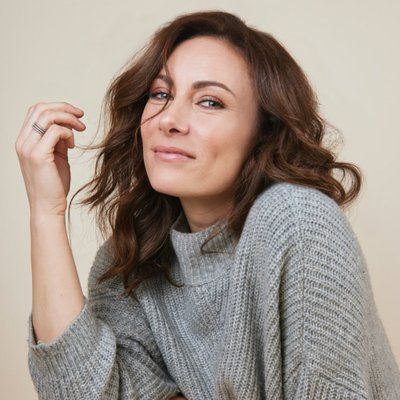
Sometimes an interview becomes something more than an interview. Tony Award winner Laura Benanti joins Robert Bannon on The Roundtable for a chat that is equal parts hilarious, vulnerable, thoughtful, and wonderfully unfiltered.
Benanti is bringing her acclaimed one-woman comedy show, Laura Benanti: Nobody Cares, to George Street Playhouse for a limited engagement August 26–30 at the Elizabeth Ross Johnson Theater in New Brunswick. Following an acclaimed Edinburgh Fringe run and two sold-out Off-Broadway engagements, the show mixes original songs and storytelling as Benanti takes on motherhood, people pleasing, aging, marriage, and the sometimes messy work of figuring yourself out.
But this conversation goes much deeper than promoting a show. Laura and Robert talk about what happens when the need to please everyone starts to disappear, the freedom that can come with getting older, motherhood, career, vulnerability, and learning to laugh at the parts of ourselves we once tried so hard to hide. And because this is Laura Benanti, even the deepest moments somehow find their way back to laughter.
It is the kind of conversation The Roundtable was made for: two artists talking openly about life, the business, and all the complicated stuff in between. There are big laughs, some unexpectedly emotional moments, and the reminder that sometimes the funniest people are funny precisely because they are willing to tell the truth.
Nobody Cares stars and was created by Benanti, features songs co-written by Todd Almond, and is directed by Anne Tippe. The 65-minute show plays George Street Playhouse August 26–30, 2026.
Tickets and information for Laura Benanti: Nobody Cares
For more info, go to RobertBannon.com and follow Robert on IG @RobertMBannon.
#LauraBenanti #NobodyCares #BroadwayWorld #TheRoundtable #RobertBannon #GeorgeStreetPlayhouse #Broadway #TonyAwards #Theatre #NewJersey #NewBrunswick #Motherhood #Comedy #BroadwayInterview
Transcript
This transcript was automatically generated and might contain errors.
[0:01] Robert Bannon: Are you ready? It's The Roundtable with me, Robert Bannon.
[0:08] Robert Bannon: Hello, Broadway World. It is Friday. You are going to broadwayworld.com and my face is popping up with an absolute icon. Somebody that when I see her, I want to sing The Sound of Music. I want to sing Nine. I want to sing Gypsy. I want to hold her Tony Award. I just want to flick Laura Benanti's Tony Award so bad. Laura.
[0:30] Laura Benanti: Is that a euphemism or is that really what?
[0:33] Robert Bannon: I mean, if you want it to be. I mean, don't tell my husband.
[0:37] Laura Benanti: Never mind.
[0:40] Robert Bannon: She has an incredible show that has been running and I've heard about it and people have been talking about it all over, literally all over the world. It is coming to our beloved, the Laura Benanti and Robert Bannon home state of New Jersey. And you need to go get your tickets. Everybody needs to go get their tickets to George Street Playhouse. Get your tickets to see Laura Benanti: Nobody Cares because we all really care, Laura.
[1:00] Laura Benanti: Thank you. Yeah, it starts tomorrow, Wednesday, and it runs through Sunday at George Street Playhouse. I'm really excited about it. And it's funny that you say, like, you know, when you see me, you want to sing The Sound of Music. I really want people to know that I will not be singing any of those. None of it. I will. It is a full-blown comedy show, like stand-up comedy. There are original songs that I wrote with the brilliant Todd Almond, but this is 16 plus. This is rated R. This is adult content. This is foul language. This is trigger warnings. Laura Benanti is going to talk filthy things.
[1:37] Laura Benanti: Yeah, she's going to say some words that when I have looked into the audience, I can immediately tell who came thinking I was going to sing My Fair Lady. And they are just like. But to their credit, once they get through the shock of that, I'm not the ingenue anymore, I'm the recovering ingenue. They get on board. Most of them, most of them get on board.
[2:01] Robert Bannon: You had two Off-Broadway engagements with this show and then you had a run in Edinburgh, which so many people have. Edinburgh Fringe Festival runs the biggest festival in the entire world. Their shows go to New York. When did you come up with the idea to write this show and what do you mean nobody cares?
[2:16] Laura Benanti: So Audible, the platform, so they have something called Audible Theater where they do live theatrical performances at the Minetta Lane Theater downtown and they audio record them. So it's like a radio play. They actually approached me and commissioned me to write a show. And as I was writing it, I just kept thinking, like, nobody cares. A middle-aged white lady is not the voice for clamoring for. But they had already paid me. So I had to keep writing it. And I thought, you know what? I have to release myself from trying to say something like important and just tell my story, make people laugh. And I'm really gratified that not only do people really laugh a lot, like it is truly a comedy show. The main intention is to, you know, make people have a good time. But also, I think a lot of people relate to, if not the specificity of the stories I tell, the overall feeling.
[3:13] Laura Benanti: So, yes, it's been a wonderful experience. And then also to the idea of, like, so many things that I worried about when I was younger, so many things I was scared people thought about me. Like, nobody cares. Nobody's thinking about those things. We're just thinking about ourselves. Like, calm down. It's fine. You know, that's what my mother and shout out to your mother, who I really love. And, you know, talking about The Sound of Music, when I was a student at your mom's voice studio one hundred and sixty-six years ago, the Sound of Music poster signed by you used to hang next to the piano. And I used to watch it as we did vocal trills together. And I'd be like, her daughter is Laura Benanti and she's Linda Benanti.
[3:52] Laura Benanti: Well, so that's a real true story, everybody. My mother used to say to me when I'd be like, but I need the newest clothes. Right. She'd be like, everyone's so worried about themselves. Nobody cares about what you're wearing. And as an ego child, what do you mean nobody cares? And nobody cared.
[4:10] Laura Benanti: Nobody cares. I mean, it's fascinating because now that we are inundated and assaulted by social media all the time, it feels like everybody cares. But they only care for the 10 seconds they're seeing it. And then they move on to the next thing, you know. So, yes, for me, nobody cares means freedom.
[4:31] Robert Bannon: Now, I knew you were very funny and we've seen you be very funny and do a lot of or a very famous imitation on late night TV. Or we've seen you do some comedic theater work and Broadway shows. When did you know you were funny?
[4:48] Laura Benanti: You know, my mom is funny. My mom sees the world through the lens of a sense of humor. I've always had a sense of humor. I always knew I was funny, but I didn't know I had permission to be funny. Because when you're playing the ingenue, you are not you are the muse. You are not there to be your own person. You are there to reflect back to a man what they want to see. And that is the purpose of you. So and what my show is about is how I really started to do that in real life, too. I wasn't just playing an ingenue on stage. I was playing one in real life. And so as I got older, I started to give myself more permission to be me. And I found that I have a specific sense of humor that a lot of people, you know, enjoy, which is really nice. And I love writing. I love the puzzle of writing a good joke. I like structure. And then, of course, I love the live performance aspect and the improvisational aspect of communicating with a live audience.
[5:47] Laura Benanti: So it's a show, but you have you have freedom. It's not frozen in the sense of like you're doing a show and you're frozen. Like this is a one-person show. You're up there. I think it's very someone who does theater. It's freeing to be free of the blocking and of the direction. And you can get up there and do whatever the hell you want.
[6:04] Laura Benanti: Yes. Yeah. I mean, it is certainly, you know, a show that I wrote. It is a written show, but I'm constantly taking side streets like I have a map, but I go all over the place. And I love the communication with the audience. I mean, certainly not if someone is like being disruptive or annoying. But the thing I love about this show is I hear a lot of like, oh, oh, like people really verbalizing their feelings, which I love. And then occasionally I'll get into like a fun conversation with somebody in the audience. But I love it. Love it.
[6:38] Robert Bannon: So what does it mean? The press release says it's a love letter to recovering people pleasers. So where are you? Are you recovered? Is it a daily struggle? Because I am. I need the meeting. Can you give me the address to the church basement somewhere? I need to go.
[6:55] Laura Benanti: It is your own heart. That's what's so fucking interesting. You know what I mean? It is like not something anyone can give you. In fact, it is the opposite. It is your husband.
[7:08] Laura Benanti: What? No, I said it's the opposite.
[7:09] Laura Benanti: No, it's your it's your husband of people pleaser. I'm sorry. Neither is mine. He looks at me like I'm crazy. Like just tell them no. And I don't ever want to do it again. Correct.
[7:18] Laura Benanti: Oh, no. But their feelings will be hurt. He could care less. Correct. You know, what's interesting is my husband will often end up sparing someone's feelings because he is direct with them immediately. I will like him and ha and go around in a circle and then ultimately string them along and they get more upset. I know. If you text me and I have to tell, you know, and I feel like it's going to hurt your feelings. I'm going to get back to you after days. And then it's like I ignored you. And it's the opposite of pleasing the people. I'm going to move.
[7:50] Laura Benanti: If you text me and ask me to do something and I can't do it, I'm going to move out of the country. That's no, it's horrible. I am. I have over 200 unread text messages simply because I do not know how to respond to someone with like succinct. So good to hear from you. I'm so busy. Love and light. You know what I mean? I can't do it. I will respond eventually and then I will instantly shut my phone off and put it underneath my pillow and not look at it for days.
[8:25] Robert Bannon: Yes. Yes.
[8:26] Laura Benanti: OK. Well, a good thing I'm not texting you because both of us will just never respond.
[8:30] Robert Bannon: Exactly. But honestly, I my favorite friends are the ones where they are the same and we're never mad at each other. And then when we do see each other, it's like no time has passed. I, I, you know, my dad said to me one time, like, if everybody likes you, you're lying to someone. And I realized I spent a lot of my time inadvertently lying because I wasn't being true to myself. And that's a disingenuous way of moving through the world, which, you know, sounds very nefarious. I certainly wasn't trying to do that. But when you spend all of your time in service of other people so that they will like you. Not like in a Mother Teresa way. Right. Like not in a selfless way, but in like a please like me way. It's no way to live. It is no way to live. And it is it's exhausting.
[9:22] Laura Benanti: How have you survived show business like that, though? That's hard.
[9:26] Laura Benanti: I don't know. I'm I'm. I started so young. And I think the way I survived was being a chameleon and just wrapping myself into other people's lives and by other people, I mean men, because, you know, I was 18. I didn't go to college, so I didn't have any friends my own age. So then I ended up just having boyfriends and like one after another, after another and then husbands. And I didn't meet my like dearest girlfriends till I was 30 years old. You know, so I feel like. I feel like a way that I survived in some ways was like dissociation because I became other people. And I think the freedom for me of a female friendship and getting older is that I am learning who I am and I'm not asking other people for permission to be it.
[10:24] Robert Bannon: Is there anything in your life that brought you to that? Was it motherhood? Is it is it an age? Is it what is it that slapped it in your face and said, like, come on, Laura Benanti?
[10:32] Laura Benanti: I think meeting my girlfriends, you know, who already had that about them. And I just had never practiced. It was a muscle I'd never flexed, you know, so that and then certainly motherhood. I mean, my God, I like my children and my whole thing is I want to make everybody happy all the time. And I want to make everybody like me all the time. My children will never be happy all the time and they will never like me all the time. And that can't be their job. It's my job not to need that.
[11:05] Laura Benanti: I think that the show is really about the things that we all go through, and I think that it’s important to talk about them. I mean, I think that we all feel like we’re in this together, and I think that’s what makes it funny.
[11:35] Laura Benanti: You know, I’ve been through a lot of different experiences in my life, and I think that the more I share those experiences, the more people can relate to them. It’s like, we’re all just trying to figure it out, right?
[12:05] Laura Benanti: And I think that’s what makes the show resonate with people. It’s not just about the laughs; it’s about the truth behind those laughs.
[12:25] Laura Benanti: I mean, I’ve had moments where I’ve felt completely lost, and I think that’s something that everyone can relate to.
[12:45] Laura Benanti: And then, you know, you find the humor in it, and that’s what makes it all worthwhile.
[13:05] Laura Benanti: I really wanted to create a space where people could come and feel like they’re not alone in their struggles.
[13:25] Laura Benanti: And I think that’s what makes the show special. It’s not just about me; it’s about all of us.
[13:45] Laura Benanti: I think that’s the beauty of storytelling, right? It connects us in ways that we don’t always realize.
[14:05] Laura Benanti: And I think that’s what makes comedy so powerful. It allows us to confront difficult topics in a way that feels safe.
[14:25] Laura Benanti: I mean, who doesn’t love to laugh? But I think it’s important to remember that laughter can also be a way to process pain.
[14:45] Laura Benanti: And that’s what I hope people take away from the show.
[15:05] Laura Benanti: It’s okay to not have it all figured out, and it’s okay to find the funny in the messiness of life.
[15:25] Laura Benanti: I think that’s what makes us human, and I think that’s what makes the show relatable.
[15:45] Laura Benanti: I really wanted to create a space where people could come and feel like they’re not alone in their struggles.
[16:05] Laura Benanti: And I think that’s what makes the show special. It’s not just about me; it’s about all of us.
[16:25] Laura Benanti: I think that’s the beauty of storytelling, right? It connects us in ways that we don’t always realize.
[16:45] Laura Benanti: And I think that’s what makes comedy so powerful. It allows us to confront difficult topics in a way that feels safe.
[17:05] Laura Benanti: I mean, who doesn’t love to laugh? But I think it’s important to remember that laughter can also be a way to process pain.
[17:25] Laura Benanti: And that’s what I hope people take away from the show.
[17:45] Laura Benanti: It’s okay to not have it all figured out, and it’s okay to find the funny in the messiness of life.
[18:05] Laura Benanti: I think that’s what makes us human, and I think that’s what makes the show relatable.
[18:25] Laura Benanti: I really wanted to create a space where people could come and feel like they’re not alone in their struggles.
[18:45] Laura Benanti: And I think that’s what makes the show special. It’s not just about me; it’s about all of us.
[19:05] Laura Benanti: I think that’s the beauty of storytelling, right? It connects us in ways that we don’t always realize.
[19:25] Laura Benanti: And I think that’s what makes comedy so powerful. It allows us to confront difficult topics in a way that feels safe.
[19:45] Laura Benanti: I mean, who doesn’t love to laugh? But I think it’s important to remember that laughter can also be a way to process pain.
[20:05] Laura Benanti: And that’s what I hope people take away from the show.
[20:25] Laura Benanti: It’s okay to not have it all figured out, and it’s okay to find the funny in the messiness of life.
[20:45] Laura Benanti: I think that’s what makes us human, and I think that’s what makes the show relatable.
[21:05] Laura Benanti: I really wanted to create a space where people could come and feel like they’re not alone in their struggles.
[21:25] Laura Benanti: And I think that’s what makes the show special. It’s not just about me; it’s about all of us.
[21:45] Laura Benanti: I think that’s the beauty of storytelling, right? It connects us in ways that we don’t always realize.
© Broadway Podcast Network, All Rights Reserved