

Professional “Theater Kid” Jeffrey Seller has produced some of the biggest hits on Broadway from “In The Heights,” “Rent,” “Hamilton,” “Avenue Q,” and more. Now he sit’s down with host Tom Greenwald to talk keeping a show hot, Tony campaigns, and finding the art that speak for a show... Read More
From the show: The Show Must Go On Sale!
Guests

Featured Shows
About
Professional “Theater Kid” Jeffrey Seller has produced some of the biggest hits on Broadway from “In The Heights,” “Rent,” “Hamilton,” “Avenue Q,” and more. Now he sit’s down with host Tom Greenwald to talk keeping a show hot, Tony campaigns, and finding the art that speak for a show.
Transcript
This transcript was automatically generated and might contain errors.
[0:00] Tom Greenwald: Hi everybody, it's Tom Greenwald back with The Show Must Go On Sale!, our new podcast about all things Broadway advertising and marketing. Very excited, today's episode is going to feature Jeffrey Seller, who has I think unequivocally become if not the most, certainly one of the most influential producers on Broadway. Just a few of his credits include RENT, In the Heights, Avenue Q, Hamilton, La Boheme, the list goes on and on, multiple Tonys, multiple Pulitzers, he's also an old friend of mine, I've known him for over 30 years, has an incredible personal story to tell, which he has told in his wonderful book, Theater Kid, and we're going to talk about all sorts of things today. Can't wait to see you, for The Show Must Go On Sale.
[0:56] Tom Greenwald: We are delighted to welcome my old friend, Jeffrey Seller. We have been personal friends for decades, Jeffrey was one of the early champions and the first director of the one and only musical I wrote, actually not the one and only, one was a small niche musical called A Pound of Feathers when we were both in our early twenties and then a few years later, Jeffrey helped us shepherd John and Jen to the stage, myself and Andrew Lippa, his old and dear friend from college. Jeffrey, welcome and thank you for doing this.
[1:29] Jeffrey Seller: Hello, Tommy, it's fun to be with you here today.
[1:33] Tom Greenwald: I'm actually going to start, Jeffrey, by showing people what's behind me, which happens to be in our Spotco offices. This was what is called a triple truck New York Times ad that was one of the first things we did together at Spotco. It's a perfect metaphor for the history of Broadway advertising and marketing since Jeffrey and I have been in this business. This was a three-page ad in the New York Times, which was unbelievably expensive. Now the New York Times is lucky if they get anybody to wave at it as they walk by on their way to their iPhones. Jeffrey, let me first ask you, do you remember making this ad and do you remember the good old days?
[2:18] Jeffrey Seller: I think that ad cost $375,000. I think it was $125,000 a page back then.
[2:24] Tom Greenwald: That sounds about right.
[2:28] Jeffrey Seller: Of course, our dear friend Manny Azenberg thought we were absolutely foolish. I remember we made that ad as we were transitioning into the second or actually I think it was the third year of RENT. I think the show was exactly two years old when we made that ad. What's also fun about that ad is that it's not the original Broadway cast. It's the subsequent cast and that ad is a reflection of a goal that we had two years into the run to stay hot. How do you stay hot after two years? Back then it would be some combination of print, radio, and television. There's no such thing as social media. We are still nine to ten years before Steve Jobs creates the iPhone.
[3:25] Tom Greenwald: You have so many things to do as a producer. You wear many hats as a producer developing shows from scratch, nurturing talent, but marketing, advertising, getting butts in seats is a huge part of it. Do you consider the marketing and advertising aspect of your job one of the fun parts, a highlight of your job? Do you wish you didn't have to do it or do you actively enjoy it making materials that attract people?
[3:50] Jeffrey Seller: I think it's my love and passion for selling tickets that is the heart of what makes me a commercial producer. Though regional theaters need to get butts in seats, they don't need to get butts in seats in order to exist. We only exist when we get butts in seats and I've been enjoying that ever since I was in eighth grade.
[4:18] Tom Greenwald: Do you remember making early materials and the satisfaction you got from things that really worked and really helped to fan those flames, keep the shows hot, as you say?
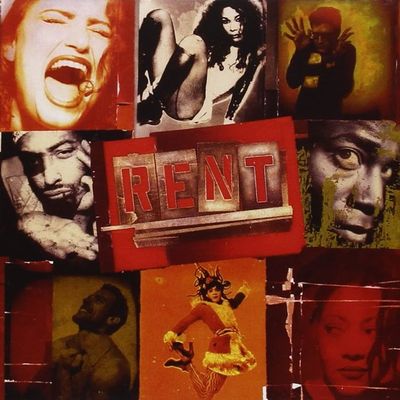
[4:30] Jeffrey Seller: Creating the marketing campaign for RENT, and marketing I refer to as advertising, sales, and press, creating the marketing campaign for RENT was one of the funnest things that I got to do in my life at that moment when I was 31 years old. It's what I always wanted to be doing and what was so extraordinary was that now I actually had a show that was worthy of all that marketing effort and a budget that could pay for it. I remember the first ad, I was either freelancing with Drew at this point, and I'm referring to Drew Hodges, Jeffrey's marketing partner on those early days of RENT, Drew's firm then called Spot Design created the artwork for RENT, and then when it was transferring, really you and Drew together with his team created this beautiful stark black and white ad in the New York Times that was bold and confident and minimalist and incredibly simple and incredibly impactful. Do you remember sitting around talking about what that should be and kind of coming up with what it ultimately was?
[5:41] Jeffrey Seller: I remember sitting in a room with Serena Coyne who was our advertising agency record at that point because in fact Drew was an independent design studio, so we had hired him to design a logo, which Serena was completely comfortable with and used to because in fact all of the great logos for the British blockbusters came from De Winters in London anyway. The Cats logo, the Phantom logo, the Les Mis logo, and the Saigon all came from London, so we were in that room and Drew brought in I think about 40 RENT logos one day and just put them all on the wall and it was a very small group and we just started looking and looking and looking and with me a logo like that, you just keep looking and see what falls away and things just start falling off the wall.
For me, it's always a process of elimination to clear the clutter and then something draws me in and draws me in further and further. By the way, as we were doing that process, I will give credit to Richard's associate Don Suma who actually was the person who walked over to the wall and said, "It's this one" and that was it. Then frankly, after that, Drew and Naomi just went away and made an ad. I was like, "Oh my God, that's either the greatest thing I've ever seen or it's so ugly it could never be in the New York Times" because all it said in typewriter face was "Tickets for" and then at the bottom of the page on the left, it just said where to get them. Then it occurred to me, "Oh, that's the ad Mark and Roger would make for Roger's Rock Band at CBGBs" even with the notion that they would need to go to a Kinko's copy store and blow up the images by pressing 125% three times.
[8:01] Tom Greenwald: I don't want to jump around too much, Jeffrey, but I want to compare that experience with the room where Hamilton's art happened. That was similar. You were there, Lynn was there, I can't remember if Tommy Cale was there. You came in, things fell off the wall and the rest was history. Do you remember that?
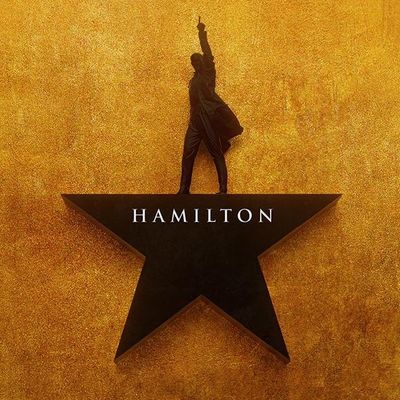
[8:17] Jeffrey Seller: It was 100% exactly the same, separated by 20 years, but the exact same process and literally it was like pull, pull, pull, pull, pull and then we're left with something that is classic. The font of Hamilton is a serif font and it's very traditional. It's black set against this gold background and of course it features this star, which I'm going to assume in that room, of course it did not yet have an image of a silhouette of Lynn, but it had a silhouette of a man and we were like, "That's it." There was something about it that said, "This is for everybody." The gold color felt rich and satisfying. It was an all-in logo, meaning everybody could get in. Somebody once said, maybe Liz McCann, "No hit show ever had bad artwork."
I'm not sure that's true, but the sentiment is obvious. It's so hard to speak and separate really a show from its image, both for better and for worse, but in terms of advertising on Broadway itself and theater marketing in general, does any part of you believe that advertising can make a show or turn a show into a hit or save a show from being a flop? At the end of the day, what is the role of advertising and how it can change the trajectory of a show, if at all?
[10:02] Jeffrey Seller: I think advertising has very rarely affected whether or not a show is a hit or a flop. I think advertising has played a big role in extending the life of a show and making it run for longer than it might otherwise have run for. But at the core of any show's success is how the first 50,000 people respond to the show. If 50,000 people walk through that door, the fate of that show will be sealed not by the advertising agency, not by the producer, but by the audience.
[10:43] Tom Greenwald: Let's talk about Avenue Q for a second, which is a show that ultimately is one of your great successes and has to be one of your proudest professional accomplishments. But it's very different from RENT and Hamilton in that it had to build, and it started very small. By the very nature of what it is, we were not going to see the floodgates open right off the bat. I remember well how low the advance was going in, and we had to exercise patience. Off-Broadway, it played at the lovely 150-seat Vineyard Theater, and the audiences were very warm to it at first, but their audience tended to be a little bit older, a little bit grayer, and they were very responsive in the way that an older, grayer audience is, but it was not raucous.
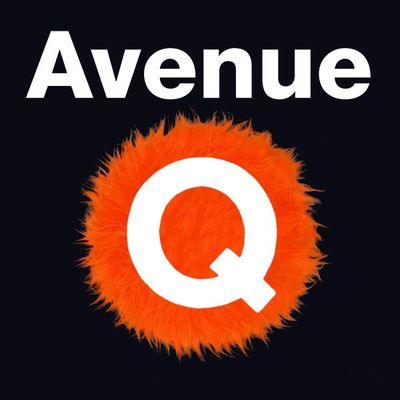
When the New York Times came, it received a very warm review, but not a money review. We took out a full-page ad for Avenue Q six weeks before we started on Broadway, and it was an image of the Trekkie Monster puppet riding the New York City subway. It was a cute ad. It showed what was unique about the show, and what was New York about the show, and how urban it was, and how cosmopolitan it was. I think that ad sold about $18,000 of tickets, and when we had our first preview on Broadway in July of 2003, the advance was approximately $225,000, and that's not even enough money to fill one week. It's nothing. What happened is if we would have just gone by ticket sales, the first audience would have had 120 people in it, and the second audience would have had 90 people in it.
So what we had to do is give away tickets, and I had a department of three people whose full-time job it was was to figure out how to give away 500 seats a night for two weeks so that we could fill the house, and we were absolutely consciously going after all the kids who worked at MTV, and who worked at Nickelodeon, and all of those media companies and companies that inhabited at the time Times Square and Midtown, and what we saw was that the audience started going crazy for the show from the first preview, and to give you some idea of what a hit show looks like, so the day before the first preview, we wrapped $11,000, let's say, and then we do a preview on Tuesday night, and on Wednesday, we wrap $15,000, and then we do another preview, and the next day, we wrap $20,000, and then a week later, we're wrapping $35,000, and one week after that, we're wrapping $50,000.
[14:18] Jeffrey Seller: How many dollars did I sell the day before? And Avenue Q needed to exist 50,000 times 7, which is 350,000 a week. If we could sell $50,000 worth of tickets a day, we were breaking even. And by the time we opened, we were doing that. And it was all through word of mouth. There was no way for advertising to sell that show. And the same thing was true when we did another popular cult hit off-Broadway in 1998 called De La Guardia. People all said De La Guardia because they thought it was the airport. Our marketing was cool as hell. And the tagline was, look up, because the show took place in the air above your head. In fact, I'm looking right now in my office, and we had a poster that said, ground rules, stand, dress down, look up, touch.
That was risky. No rules, De La Guardia. And that came a little later. But my point is, no one bought a ticket. And we were in the business of giving away 300 tickets a night to get people going. So there's where I'm talking about, we as marketers help. But the audience decides, and our first job is to get the first 50,000 people in to see the show, give or take. Earlier, you mentioned you think advertising, I agree, cannot create a hit, cannot save a flop. It can extend the life of a show. One way it extends the life of a show is what has become known, crassly but accurately, as Tony campaigning. And Avenue Q is a legendary story. Can you talk a little bit about how the process went from, okay, let's make sure we advertise the show and get enough bodies in to sell our 350k a week and keep running, to the best way to ensure the longevity of the show is to somehow figure out a way to win the Tony Award for Best Musical?
So let's pivot and pour our resources and attention and focus into trying to make that happen. Do you remember that being a conscious decision? Do you think it was just organic? And what you sell to audiences is also to the Tony nominators and campaigners?
[16:45] Jeffrey Seller: It was 100% conscious, because we knew that the only way the show would break through to a larger theater-going audience was to win the Tony for Best Musical, which for the most part over the last 60 years has been one of the pillars of a Broadway marketing campaign. Shows that win Tonys almost always become hits and recoup. It has been less true over the last decade. Up until then it was almost always true, because there is an additional crowd of hundreds of thousands of people who buy tickets because the show won the Best Musical prize. We knew that our show that was doing, you know, maybe 75% business, 70% business, 80% business, was doing nicely, but we knew the only way that we'd get over the hump and start selling out would be to win the Tony.
And we knew it was almost an impossibility. And to use a witch metaphor, if I could, it was almost as if the wizard was saying, bring me the broomstick of the Wicked Witch of the West, which Dorothy and her friends know to be an absolute impossibility. What are you talking about? That's what we were set to do, which is trying to win the Tony away from Wicked. It was a one out of a hundred idea. What happened is we opened August 1st, basically, and we were doing very nicely. Wicked opened on Halloween, and Wicked was a show that got stronger every single week it played. The reviews were not great. The advance was good, but it, the public, made that show into a juggernaut. And certainly two months after they opened, they were a juggernaut.
By the time the nominations came out, they were a complete juggernaut. There was a lot that went into that Tony campaign. There was a song. There was an event. There was the song, Vote Your Heart. There were all the ads we took congratulating other shows as the season went on, because we opened so early. And now it's even more exaggerated. Shows pile on to the opening at the end of the season to be remembered for nominations. But even then, it was almost unheard of to open, not even in the fall, in the summer, as you said, and still be relevant and remembered by Tony time. So do you remember kind of the strategy behind the various pillars of that campaign?
[19:45] Jeffrey Seller: Because we opened so early, we knew we had to stay in the mind of the Tony voters and the most avid ticket-buying public. So that was what led us to the idea, frankly, put forward by your colleague, Jim Edwards, to take out an ad congratulating all the new musicals that were about to open that season. And that season was a bit of a bumper crop of new musicals. So that led to Rod congratulates the Wicked Witch of the Chest and the Boy from the Closet and these wonderful cheeky ads that became so popular that some of the producers of revivals were complaining that we weren't taking out ads on them. And we said, well, we're only doing best new musicals because that was our focus. But I remember Mary complained to Drew or you, Tommy, that we didn't do an ad for his wonderful town.
So that was like our first attempt. And then as we were getting closer to the Tony season, it was 2004. It was going to be an election year. And that's when I said we should do an election campaign. And then someone said, you can't do that. And I said, but there'll be puppets. And that's when we started coming up with this idea that the puppets would be campaigning, not the people. And that's what led to the buttons and the red, white and blue campaign and all of that. And then it was Jeff Marks and Bobby Lopez who walked in and said, well, we're going to write a song. And the song was actually called Rod's Dilemma. And the song had nothing to do with awards or Tonys because it was a very simple song in which the character of the gentle, closeted, gay Republican Rod is asking, going to all his friends, asking who he should vote for to be the president of the Rotary Club.
So should I vote for the guy who I think is really cute because then maybe he'll like me because I'll win his favor? Or should I vote for the girl who's most popular? Or should I vote for this other person who I think is the most qualified? And all of the characters he goes to, Kate Monster and Nikki, et cetera, all tell him, Rod, vote your heart. And that became the chorus of this song that we premiered at what we call the Spring Road Conferences, which is when all of the presenters are in town in May. And then that disc, we still had discs then, was sent that day to all 750 of the Tony awards. Yeah, I remember a pizza party was involved too. We together have a history of spending a lot of money on TV commercials and turning them into little mini movies.
And you and I were on the Broadway cruise earlier this year, and we looked at a few of those, including spots for Rent and for In the Heights and for The Last Ship. Shows that already had money in the bank and didn't even necessarily need to do something so interesting and beautiful and expensive, but enhance the brands of the show. And I don't want to say that's a lost art, but it happens very, very rarely now. I know you have created something new and wonderful for Hamilton, which I've seen and is breathtakingly good, and may or may not be out by the time this airs. Do you lament the fact that these big creative marketing swings have fallen out of favor? Do you understand that it's just the nature of the beast and money is tight?
What are your feelings about how that used to be something that we did often, you and I did it together, and we did it on other shows too, and now just really that kind of thing has become much more conservative in how people approach their marketing dollars and their creative decisions when marketing a show?
[24:22] Jeffrey Seller: Well, in many ways, the new world of social media has made marketing far more efficient. So we are spending our dollars now to reach the people that are genuine candidates to buy tickets to our shows, and that's a very positive development. So as an example, when we at Hamilton announced several months ago that Leslie Odom Jr. was going to return to Hamilton and play the part of Aaron Burr again for 12 weeks, all we had to do was announce it on social media. We never took out any ads, and it sold out because we reached the right people. That's the good news, and it's also true that TV, when we made Rent and what even as late as West Side Story, which of course we did together with the revival in 08-09, even West Side Story and In the Heights, TV was still a pillar of a Broadway marketing campaign, but TV always had one inherent inefficiency or problem, and that was that when we go spend all that money on TV and buy the Today Show, Good Morning America, CBS Sunday Morning, we always bought it knowing that 90% of the people that watch it have never bought a ticket to a Broadway show and aren't going to.
So it was wildly inefficient, but yet it still was the most effective thing we had because when it worked, it really moved the needle, and if I can go back in history a little bit, it was revolutionized as we all know inside by Bob Fosse when his Pippin opened in 72-73. It got crummy reviews, and Bob decided, because he was a great filmmaker, to make his own commercial in which he said with an announcer, here's 60 free seconds from Bob Fosse's new musical Pippin. Here's a free minute from Pippin, Broadway's musical comedy sensation directed by Bob Fosse. It was a great commercial, and once again, that commercial did not make it into the hit, but what it did do is it helped get the next 50,000, 100,000 people into that theater, and once they got there, they liked it, and then the word of mouth could go.
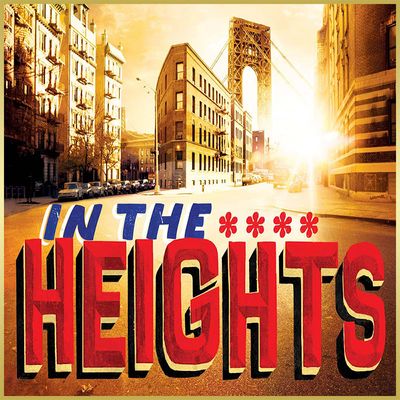
I want to say, Tommy, with Rent, we absolutely already had a hit when we made a beautiful spot, but with In the Heights, that is not true. We made that spot six months before we opened on Broadway, and we made that spot in order to build and advance, and that spot that we made on the corner of 181 or something, and Broadway or Cabrini was so beautiful that it built us an advance for Broadway.
[27:29] Tom Greenwald: You hear that music in the air, take the train to the top of the world, and I'm there, I'm home. It sold tickets. Yeah, you're absolutely right. The West Side Story commercial that Jeffrey referred to, which came out of an idea that Jeffrey himself had, is I think the favorite thing that I've ever worked on as a Broadway marketer. I mean, these are spots that stand the test of time, and these kinds of things are not made all that often today, and I think Jeffrey's point is a good one. You can find people in less exciting, less sexy artistic ways, but way more efficient and smart financial ways. But I want to lead you up, but then I would say that wouldn't preclude us from making something very beautiful to send through social media, and obviously that's what is on my agenda right now for the future. But you were able to build...
[28:37] Jeffrey Seller: It was a beautiful campaign for Sweeney Todd that was almost all on social and digital media that was just incredibly impactful and you didn't need a $250,000 TV shoot to do that. You did that in a much more efficient way, but it was still an equally beautiful campaign. Josh Groban and Anna Lee Ashford star in Sweeney Todd on Broadway. Attend the tale!
[29:03] Tom Greenwald: Switching gears from the sublime to the ridiculous for one second, and I'm asking you this because I'm going to ask it of everybody on this podcast. Reviews slash quotes slash quote ads have been a part of advertising for Broadway and show business in general since time immemorial. Do you use them? What is your attitude towards them?
[29:26] Jeffrey Seller: I don't think that critics' quotes persuade ticket buyers to pick up the phone or go buy tickets. I don't think they're effective for persuading ticket buyers to buy a ticket. I think that many of us do them because it is pleasing to our investors, it is pleasing to our creators, our authors, our cast, and our world. And of course, we're hoping that it may help us win Tony Awards with the voters down the road. Does it sell tickets? Not in the least. So there's the question, there's the answer to the quote. And I'm sure you could find an exception, but I would say find me the exception, show me the quote ad that suddenly moved the needle. With regard to reviews, of course reviews have always had a sizable impact on theater and the way that they have on restaurants.
There are certain categories or certain art forms where reviews have a big effect and a little effect. Movies, they never really had a big effect. Theater, they always did. Reviews are once again in an evolution, right? We just found out we're going to get a new critic from the New York Times, we don't even know who it is. So who knows where we're going with reviews? I have no idea, but we've certainly seen over the last few years that there have been numerous musicals that critics have praised that have failed. And then there have been musicals that the critics have criticized that have succeeded. There's some truth in that going all the way back in history, but as we know, there were times over the last 40 years that Frank Rich would write a rave about a show that would sell tickets and the same was true of Ben Brantley.
Maybe a little bit to a lesser degree when Charles Isherwood was writing and maybe to a lesser degree when Jesse Green was writing. I think now we're in a place where the public is playing a larger role in helping to decide the fate of a show, but I'm thinking on my feet. It's always been that way, but what the critic does is they help the beginning. That's what it's always about, helping the beginning. Because if they all rave and people show up and they don't like it, you're dead. But here's the problem, that if they kill you and you can't get anyone to show up, for sure you're dead. And there's where Bob Fosse comes in and tries to change that and succeeds.
[32:23] Jeffrey Seller: I think it's a social media issue as well. I think it is a more democratic process now. Interestingly, you were referring to the New York Times critics. It's a New York Times town, of course, in the New York Times industry. Their outsized influence in the Frank Rich days was enormous and their outsized influence now, while still outsized, is not remotely what it was. It's not what it was, but the New York Times and Broadway are inextricably linked. Our audience is their audience and their audience is our audience and that's how it always was. That's how it still is, though not maybe as strongly as it was 30 years ago.
[33:11] Tom Greenwald: A couple of quick questions before we go. First question, out of all the shows that you've marketed, do you have a favorite campaign or moment from a campaign or piece of material that stands out above all the rest?
[33:25] Jeffrey Seller: I think that the one work that we made that had the most important impact on the life of getting that show off the ground was our TV commercial for In the Heights. No question about it. That advertising campaign got us the first 50,000 people or more and then those people got us the next group.
[33:46] Tom Greenwald: What's your favorite campaign, if you can think of anything, from a show that you didn't work on, aside from Fosse's Pippin, if you can think of anything that when you saw it you were like, ooh, that's very well done?
[34:00] Jeffrey Seller: The campaign that I think has probably helped to foster the longevity of a show over the last 30 years was Chicago, which is a compliment to you guys at SpotCo because that was a campaign that took a show that the critics loved and the audience loved and just exploded it to a much wider audience than I otherwise would have expected.
[34:24] Tom Greenwald: By selling the oldest thing in the book, sex. Question is, what show of yours was easiest to market? I want to take Hamilton out of the equation because you didn't really have to market that at first. Do you have any show that you remember being particularly easy, the creative solutions came easy to you and conversely, do you have a show that you think of as your hardest challenge?
[34:57] Jeffrey Seller: If you remove Hamilton, then I would say Rent was just the most organic. It just came right out of us. We did it the fastest. One has to remember, Rent opens at New York Theatre Workshop on February 13th of 1996 and exactly two months and two days later, we're having our first preview on Broadway. No one works with that kind of a timeline anymore. So we were just working by the seat of our pants because once we figured out what the show was, it was so easy. Follow the show.
[35:31] Jeffrey Seller: A marketing campaign that failed, you know what? No marketing campaign caused the failure of a show. It's never happened, but I will say this. I did a show. It was a musical of the movie High Fidelity and the novel. The show was a flop and we had a terrible logo and it looked like a lemon. So something was wrong with that show. We couldn't figure it out. I will say we made a music video on the street with Will Chase. That was probably the first social media music video ever made and that was a good piece. I stand by that piece. That was a pretty good piece. We did it in black and white.
[36:11] Tom Greenwald: These were the ones that tore my heart out. These were the ones that ate me alive. Jeffrey, last question from me. The celebrity factor. You produced a wonderful and successful revival of Sweeney Todd recently and part of your equation to make that successful was to cast Josh Groban in the lead and it was fortuitous because he's an incredibly well-known star and he performed incredibly beautifully in that role. Is that something you would have even considered taking on without knowing that you could have Josh in that role?
[37:00] Jeffrey Seller: No. I could not have produced a revival of Sweeney Todd on Broadway without Josh Groban and it is questionable whether the world needed another revival of Sweeney Todd on Broadway without Josh Groban. We'd already had four revivals of the show in the 40 years since it had premiered. Four. And I'd seen all of them. What we had not seen was a full scale epic size revival that had a full orchestra and a full chorus. So the only way to do it in my opinion was to go big but the only way you could do it was with Josh and the only way we could do it was by saying to Josh, we have to have you on stage for a year and he was willing to make that commitment and if he didn't make that it wouldn't have worked.
[37:53] Jeffrey Seller: You can certainly see that the terrific revival of Merrily We Roll Along of which I saw three times would not have happened without Daniel Radcliffe and Jonathan Groff but particularly Daniel at that moment and that recouped and made a profit as well. So there's the examples on the musical side. Musicals need a year to recoup. You're not seeing stars showing up in new musicals for the most part and to the degree that one can do a play and a revival of a play with a star recoup in 14 weeks that's fine. It's part of what makes a Broadway season exciting and fun but Broadway, let's face it, is about the creation of new musicals from Oklahoma and My Fair Lady to West Side Story and Pippin and Wicked and Avenue Q and Rent and Hamilton and In the Heights. That's the entire business. Everything else beside the point.
[39:04] Tom Greenwald: I think every musical you just mentioned with the exception of Hamilton which was based on a book was a whole cloth musical and I think the track record does bear out that most very successful musicals are not based on familiar IP. You and I have had this conversation many times about how difficult…
[39:24] Jeffrey Seller: But Tommy, you're wrong. My Fair Lady is based on Pygmalion.
[39:27] Tom Greenwald: Well, yes, true, true.
[39:28] Jeffrey Seller: Oklahoma is based on Green Grow the Lilacs.
[39:32] Tom Greenwald: That is true.
[39:33] Jeffrey Seller: Which was a Broadway play and West Side Story is based on, I don't know, Romeo and Juliet.
[39:42] Tom Greenwald: Yeah, but they're not based on Pretty Woman, Rocky and Groundhog Day.
[39:47] Jeffrey Seller: Fair enough.
[39:50] Jeffrey Seller: Yeah, they're based on plays. By the way, another issue I have is that when musicals are created based on pre-existing material, the names are never changed anymore. The titles are never changed and I find that a big mistake on behalf of producers because they're telling the audience it's the same thing, it's not something different. In the old days, all the examples you just cited, new names for those properties. The trend of making most of our musicals based on very famous properties presents its own kind of marketing challenges and we don't have to get into that now.
[40:33] Tom Greenwald: Your track record is by and large because of shows that you and the creators you've worked with made things that were completely unfamiliar to the audiences that were about to see them. I know you're working on some other things that may have a bit more familiarity. You can talk about them for a second if you want. But do you think the marketing challenges are different when you're trying to convince someone that this movie that they loved is now on stage in a whole new, exciting, surprising way? And can that feel like an uphill battle?
[41:09] Jeffrey Seller: What's interesting is that I think in some instances the producers are actually doing that because they think that brand is going to build them in advance before they even start. So you start from this notion, true or false, and I think you might challenge it, that the brand is actually of great marketing value. The problem is that the shows are usually mediocre and if you're mediocre, you fail.
[41:42] Jeffrey Seller: By the way, I've done some back-of-the-envelope research and the chance that a show based on a movie will be more or less successful or a new musical based on a movie will be more or less successful than anything else is exactly the same as anything else. There is no advantage or disadvantage. They seem to work at the rate of about 20%. And all it takes is producers to come to town and make you go, oh, let's do another one based on a movie.
[42:15] Tom Greenwald: Yeah, but you and I have had this conversation, and if you take blockbuster movies into a different subset, the percentages go way down. If you have Kinky Boots and Ones and the Producers, which are all niche cult movies, yes, based on movies, but it's a different batting average.
[42:36] Jeffrey Seller: Yeah, no doubt, but you're getting a little bit too granular.
[42:44] Tom Greenwald: Jeffrey, I love you. Thank you for doing this.
[42:48] Jeffrey Seller: This was so fun.
[42:54] Tom Greenwald: Thank you.
© Broadway Podcast Network, All Rights Reserved