

One of the new guard Broadway Producers, Rachel Sussman is championing shows that challenge audiences. Her roster includes political hits “What The Constitution Means To Me,” “Suffs,” and this season's “Liberation,” shows that break the form, including “The Woodsman” and “Just For Us,” and now The Show Must Go On Sale Podcast... Read More
From the show: The Show Must Go On Sale!
Featured Shows
About
One of the new guard Broadway Producers, Rachel Sussman is championing shows that challenge audiences. Her roster includes political hits “What The Constitution Means To Me,” “Suffs,” and this season's “Liberation,” shows that break the form, including “The Woodsman” and “Just For Us,” and now The Show Must Go On Sale Podcast. Together with SpotCo co-founder Tom Greenwald, they unpack the rise of star-driven shows, trusting the audience, and the evolving climate on Broadway.
Transcript
This transcript was automatically generated and might contain errors.
[0:00] Tom Greenwald: In many ways, I'm much more interested in something that's going to spark a conversation than people are going to scroll past and not necessarily care to learn more.
[0:12] Tom Greenwald: Hey everybody, it's Tom Greenwald. Welcome once again to the show Must Go on Sale, the new podcast about all things Broadway advertising and marketing.
[0:25] Tom Greenwald: I am thrilled to be joined today by Rachel Sussman. People who are in her inner circle call her Sus. It was a big day for me when I was able to break into that circle. She is one of the new guard Broadway producers that insists on producing interesting quality work, which is a rare thing in our business. So I'm so glad to be talking to her today. But I think your first major producing credit was What the Constitution Means to Me, is that correct?
[0:58] Rachel Sussman: Broadway, yeah.
[0:59] Tom Greenwald: On Broadway.
[1:00] Rachel Sussman: Yeah.
[1:01] Tom Greenwald: And um other shows include Parade, Just for Us, Prima Facie, SUFS and the current show that is wowing audiences and has wowed critics both off Broadway and on, Liberation. Thank you so much for joining us today.
[1:16] Rachel Sussman: Thank you so much for having me, Tommy G.
[1:20] Tom Greenwald: Yeah, baby. Um, can you tell me like, do you enjoy the marketing part of your job? Do you remember when you were trying to break into this business being influenced at all by Broadway advertising and marketing and how you made your choices to see shows?
[1:37] Rachel Sussman: Yeah, absolutely. I think that, you know, I tend to identify as a creative producer, which many assume means being in the weeds dramaturgically with the artists in the show's development process, but I actually think creative producing extends beyond that to also be how are we building a campaign? How are we creatively positioning the show? What's our strategy? And all of those big questions are the things that I find so compelling as a producer because it's actually how are we introducing this to an audience and convincing them to buy a ticket? And I feel like I was heavily influenced by these campaigns. One of my favorites is Wicked, which you know has gone on to become a global phenomenon, as we all know.
And I distinctly remember doing the pose of Glinda and Alpha Whisper, the very famous key art when I was in high school seeing the show, and how some of those brands have just become so synonymous with the productions that you know they can now stand alone. And I think if you can do that, and that particular image tells you everything you need to know about the experience you're going to have because the brand is so strong.
[3:03] Tom Greenwald: Do you remember when you were starting out with the Constitution campaign and trying to establish the brand? Do you remember being fairly assertive in that process? Were you comfortable telling the marketing people what you wanted and were you satisfied with the relationship and did it end up where you wanted it to be?
[3:27] Rachel Sussman: Well, I will candidly say I was a co-producer on that show, which was a very curated co-producer team, but it was led by Aaron Glick, Diana Demena, and Matt Ross. On Constitution, they really leaned into it being about Heidi and Heidi Shrek's story, and she was featured on the key art. You know, there was a lot of industry chatter that the show wouldn't be commercially viable. It felt very niche, and we leaned in so much to the fact that it was a personal story, and that in large part I think helped drive a lot of the audience engagement and interest. This was also, you know, pre-TikTok, pre-pandemic, in an era where this small intimate play was having this universal impact beyond just the traditional theater-going and culture-seeking audience. We found that it had a wider reach and it ultimately was extremely successful. I think it was just learning how to speak up in those meetings.
[4:36] Rachel Sussman: I did a playoff Broadway in 2016 called The Woodsman, which we had done as a very short commercial off-off-Broadway run, and then transferred to New World Stages for a six-month run. It was one of the hardest things to describe and position because it was ultimately a 70-minute piece about how the Tin Man of Oz, who is sort of the universally known brand, lost his heart. How did the Tin Man lose his heart? And the whole thing was told with Bunraku puppetry and violin music. And how do you make that concept palatable to an audience? And what are the things that you focus on? And it wasn't a play, it wasn't a musical, a play with music wasn't exactly right either. So we ultimately, you know, brainstormed.
We were working with DRA, Darrell Roth Advertising, and came up with a theatrical experience because so much of it was experiential from the moment you walked into the space, and it was so ensemble-based. And that to me ended up being, I think, a very moving creative campaign. But in many ways, I had not yet learned how to focus primarily on the selling of the tickets. Um, and so the show was creatively successful, not so much financially, but it went on to have life thereafter on Broadway HD and now can be seen anywhere.
[6:16] Tom Greenwald: It's funny you bring up the challenges of marketing to your shows because I think if you look at your roster, your portfolio of shows, there have been other shows where I can imagine the first meeting going, how the hell are we gonna market this thing? You do challenging, interesting work which is a double-edged sword. It's incredibly gratifying to the audience, but getting it out there with usually not familiar IP, you've done a lot of original work that's not based on anything. Just to take one example, Just For Us, Alex Edelman's one-man wonderful show about his infiltration into a Nazi meeting in, was it Queens? But that, of course, has become a huge success, and it was an off-Broadway success, obviously, so you had a little bit of momentum on your side. But do you remember the marketing challenges early for that show and what led to the ultimate decision on how to market that?
[7:17] Rachel Sussman: Absolutely. I mean, that was my first SpotCo collab. It was a really tricky thing because we had the Hudson Theater and we only had nine weeks. I think we had like two previews, too. So we were really focused on how quickly can we get the reviews out. And thankfully, we knew it had been beloved off-Broadway and had been extended and moved many times. So the press was very much on our side, but we had this challenge of yes, people will see it in a 199-seat venue, but will they see it in an almost thousand-seat venue? And how much interest is there in this title and in this guy? And so we really from the beginning worked with SpotCo and Sign Digital to say we think most of our media should be in the digital space.
This will be successful if we can figure out a way to make Alex like a star. And we started because so many celebrities had seen it off-Broadway, and Alex is so gregarious and charismatic and beloved in this community and in the comedy community, sort of adjacent to theater, we were able to utilize all of these images and videos of people who at the time were more well-known than Alex coming to the show to create this sort of FOMO effect for potential ticket buyers, and we just blasted those assets with dollars as our immediate focus.
[9:01] Rachel Sussman: And as the earned media started to ramp up, when the reviews came out and he was doing television and CBS Sunday morning, suddenly we saw this shift, and people were buying tickets, and they weren't just buying the few discounts that we have in the market, they actually were buying full price in premium. And so we recognized, oh, we can actually create a premium experience. And we have made Alex a star, and then you know, he's now become a megawatt star in the entertainment space. And I think in large part we helped to give the platform for that.
[9:43] Tom Greenwald: Yeah, yeah. I hope you get a commission on his Hollywood earnings. It's only fair. Do you remember demographic marketing is a conversation that we have a lot with clients and people have it all the time? If a show seems geared to a certain demographic, do you go after them hard at the beginning as opposed to just the general theater-goer?
[10:03] Rachel Sussman: Yeah. But Just For Us, obviously, that demographic would be the Jewish audience, which is a huge Venn diagram overlap with the Broadway play-going audience in general. Do you remember having those conversations? And do you think demographic targeted marketing in a case like that can be successful? Or is it more advantageous to just find the playgoer no matter who they are and go out to them?
[10:29] Rachel Sussman: I think it can be really useful if it's data-driven. I think if you're using it in a way where you can really understand there is real value in it. I think that we primarily were like, where is the intersection of Jews and then comedy and then really like an 18 to 35 because we knew that if we could make it feel like a part of the zeitgeist, it was going to be the younger audience that justified it in the culture, and then the traditional audience would come. I think that if you cast a wide net generally, it can be effective, but also your messaging may not be specific enough to speak to that particular audience. In the case of Just For Us, I think we really leaned in funny. We leaned in with the celebrities, which felt meaningful to that 18 to 35 audience.
And so we were really focused on age and then everything thereafter. We got a lot of Jewish press, so we didn't have to do so much in our sort of paid space around that. It was mostly around how do we make this unmissable with the urgency messaging of we only have nine weeks.
[11:48] Tom Greenwald: Is it a fool's errand to say that you can market to that younger audience, even if they're comedy fans, because they're so jaded with marketing messages and they really want to hear it from this elusive, dreamy word of mouth thing? Obviously, the audience that followed his comedy might not have been used to any theater-going habits. Did you find yourself able to convince them with marketing alone, or did it take all sorts of different tentacles to get those young culture zeitgeist types into the building?
[12:24] Rachel Sussman: I think it always takes tentacles. I don't think one thing alone really ever is working sort of in a silo. I do think that that celebrity-driven asset we created, you know, we put particular money behind Instagram, I know, but also a Facebook audience. And I think that when it came to that in tandem with all of the press, with all of the word of mouth, it was really those elements working together. But it was the fact that it was almost entirely a digital campaign. With some out-of-home, but primarily we were really in that space so that we could have access to that data and learn from it and then adjust as needed. I will also say this wasn't the case on Just For Us, which was two and a half years ago now, but I have become a huge proponent of the influencer marketing as well, which I have had work successfully.
[13:33] Rachel Sussman: And I think to your point about how are we getting those younger audiences, this has become a way of creating that more seemingly organic word of mouth from a trusted source.
[13:47] Rachel Sussman: I mean, the influencer question comes up in every meeting, as you know, and I think it's somewhat generational in terms of how people believe how effective they are.
[13:57] Rachel Sussman: More established older producers might be a little bit more skeptical. Younger producers such as yourself see the value in that and see how they can kind of help semi-organic word of mouth start to build.
[14:12] Tom Greenwald: Is it coincidence that all the shows that you've produced seem to have a social conscience or seem to be relevant to how the world is today as opposed to just being pure entertainment for entertainment's sake? And do you think that the social conscience genes in your shows is a good thing or a bad thing or neither when it comes to how you market your shows?
[14:39] Rachel Sussman: It's definitely intentional. It's very much my aesthetic in terms of the kind of storytelling I'm interested in and what I see this sort of platform for as a producer. I think that leaning into the social consciousness in your campaign can often be a hindrance rather than a help, depending on what the work is and who it's for and the space you're in.
[15:14] Rachel Sussman: I think "Suffs" and "Liberation" both because though, I mean, it's right there in the title. So I'm curious how far you think you can lean away from the social conscience themes of these shows. You can't really obfuscate or hide what these shows are. And I've talked on other podcasts about how for years we've had shows where in the first meeting we're like, well, we can't show tell people what it is. I use the example of "Wit" way back when, which was about a woman suffering from terminal cancer. Do you remember in an early "Suffs" meeting or an early "Liberation" meeting saying, well, we don't want to get too into the fact that this is about women's fight for the vote or women's fight for equality? I mean, with "Liberation," it's probably still going on, right?
[16:00] Rachel Sussman: I literally just finished that ad meeting, in fact. I will say I think that we took an approach both are tricky, both shows are period pieces, which means that you already have to push against this feeling of it being quote unquote dusty, and they're about women in a period, and that often will naturally, in my experience of both of them, lead a potential ticket buyer to thinking that it's going to be a spinach, quote unquote experience.
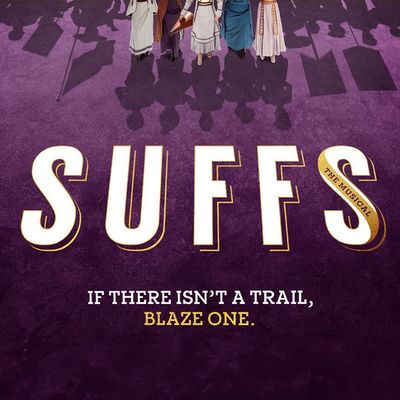
[16:53] Rachel Sussman: And for me, I think once those folks get in the room or got in the room on both of these shows, "Suffs" when it was on Broadway, now on National Tour, and "Liberation" currently on Broadway, they lean in. Right? Both of those shows are that. One's a musical, one's a play. On "Suffs," we chose to lean in really hard at the beginning to the fact that this was about women's suffrage and really take a more subversive approach by having it be all of these anti-suffrage quotes from cartoons like women belong in the kitchen, why should women vote? Your husband already does, and we use that in our front of house and our direct mail campaign.
[17:52] Rachel Sussman: Now it was so text-heavy, we didn't have any photos yet. That I remember that it wasn't giving us quite the impact we had wanted to see. And I will never forget when we took photos of the company and then we started to include them in our campaign, everything started to shift because suddenly it came alive. You had these images of women shouting in a sort of activist way. But also it wasn't necessarily telling you what to do or what to think. It wasn't so esoteric, it felt much more emotional, and that I found to be much more successful. It's actually what we're using on tour, and the tour has been successful as of yet for us.
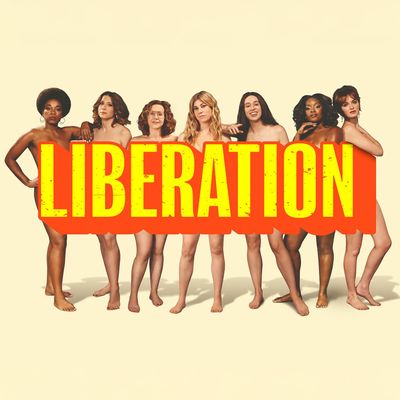
[18:41] Rachel Sussman: "Liberation" is a much more complicated thing because I think we took so much of that into account and have done a campaign focused on these women in the 70s in a really cool, more vibey contemporary look, and that has certainly generated a lot of word of mouth. You know, there is a scene in "Liberation" where the women are entirely in the nude, and we did an implied nude photo shoot and created a piece of art with the sort of the title over them. And the thing that's interesting is that image is our most successful retargeting asset. And yet it also is an image that has caused a little bit of controversy with our team internally, externally, with the public and the potential ticket buyers.
[19:43] Rachel Sussman: I think in many ways, I'm much more interested in something that's going to, you know, spark a conversation like that than people are going to scroll past and not necessarily care to learn more. So that's been really fascinating on "Liberation." But the where and when to lean in and how you can educate, I'll never forget "Suffs." It was something like urgent, triumphant, entertaining, funny, and it was never about educate, tell people about how important women's suffrage was. We learned actually we should focus on these other elements and let the audience discover how important it is for themselves and let us sort of trail the breadcrumbs and then they can go online after the show and become, you know, huge suffrage nerds like we are.
[20:39] Tom Greenwald: I do remember the conversation about those subversive anti-suffrage front-of-house posters. What one reason we wanted to do that was to show people that we like the show, had a sense of humor, we weren't taking ourselves too seriously. I think the issue with these kinds of shows, often you use the word spinach, then the spinach factor is an old phrase that means that people are going to more of a lecture than a piece of entertainment. And especially, especially with the musical, and especially with this musical, which was so entertaining and had so much humor in it, it was important for us to try to convey that as best we could.
[21:04] Tom Greenwald: Do you think I know a lot of people myself included have seen shows that are all about men ultimately not necessarily do great business because women who buy so much of the tickets don't have anybody on the stage to relate to? Do you think there's any reverse effect if the show is about women? Do you think there's reluctance for women to buy tickets for themselves and their husbands or their boyfriends?
[21:47] Rachel Sussman: I think that there is sort of this, it's not just our industry, it's our culture, and it is about, you know, we perpetuate male protagonism in a way that obviously not only men see themselves and can relate but that women are so used to seeing male narratives lead that female narratives feel foreign. I think there's, you know, people are working hard and there's a shift toward it but it is still so much harder to get work buying about women to the level of work buying about men or even work about women by men.
[22:27] Rachel Sussman: It's funny you say that I work I do some children's book writing. Oh, I am not one of the, I need to get you some books for your cute child by the way he's ready. The adage is you can write a book about a boy and the girls will read it, but you can't write a book about a girl and expect the boys to read it. It's that ingrained at that early an age, which is so ridiculous and there was a lot of effort to try to change that in children's publishing. And it goes, it's true right up until adulthood and theater going habits.
[23:07] Tom Greenwald: Do you ever consider the challenges of marketing a show as part of your decision to produce a show? Do you try to put that aside because you really just want to fall in love with the property and not worry about the marketing challenges until you get to that or does it actually enter into your thinking how sellable and how marketable a property might be?
[23:32] Rachel Sussman: Yeah, I think about it. I think in order for me to be fiscally responsible and bring it to my investors and tell them to trust me I have to believe now I can't guarantee anything ever but that there is an audience and there is a path and "Suffs," which is interesting to talk about because we have a little bit of distance from Broadway, the show is already so successful on the road and we know it's going to have this massive licensing life. So for a show like "Suffs," success just looks different than we had anticipated.
[24:18] Rachel Sussman: I'm often thinking about like the longevity of the lifespan of a show not just the life on Broadway alone or that sort of commercial life alone.
[24:30] Tom Greenwald: Here's a question for you. A show like "Suffs," which is an all-female slash non-binary cast. Did you ever say to yourself, oh boy, will high schools do this because there's no parts for men? And will that hurt our ancillary rights? Do you get that granular or just let the chips fall where they may?
[24:48] Rachel Sussman: Well, you know, this is such a unique instance because I literally was there from the moment of ideation and gave Shaynens a book that became sort of the primary source. I should say anybody can be in "Suffs." And the genders are non-specific in the licensing space. In fact, I'm going to see a "Suffs" junior production on Monday that is all children ages six to eighteen.
[25:17] Tom Greenwald: That's incredible.
[25:18] Rachel Sussman: Yeah, it's the pilot production.
[25:20] Tom Greenwald: That's amazing.
[25:23] Rachel Sussman: I'll send you the deets if you're interested.
[25:25] Tom Greenwald: Please do.
[25:26] Rachel Sussman: But for only authorial intent, is that historically black characters have to be played by the black women. Otherwise, you know, the fact that we had an all-female non-binary trans company on Broadway does not mean that it has to be that way in the future.
[25:47] Tom Greenwald: When you produce a show like "Liberation," for example, do you when you are going out to potential investors and stuff, is part of your pitch not just how marketable this is on Broadway, but what kind of life this show can have post-Broadway and into either regionals and or educational colleges, high schools, all that stuff?
[26:14] Rachel Sussman: Yeah, absolutely. I think we have to have some, if not a path, some ideas and conversations about what that future life can look like. And "Liberation" too will have a future life. That to me is one of the major benefits of doing new work instead of revivals, is that you get to participate in that tale in a very different way.
[26:38] Rachel Sussman: I don't know if you can talk about it at all, Tom, but star casting has become such an important part of our business, a financial model now to produce straight plays on Broadway almost always has a star attached to it.
[26:56] Tom Greenwald: Did you, when you decided with your partners to bring Liberation to Broadway after an incredibly successful off-Broadway run, was there any pressure to changing up the cast at all and looking for big names? And how are you able to resist that pressure if it did exist?
[27:17] Rachel Sussman: Yeah, I mean, that was a choice that we made and a risk we took because the company that made it such a hit off Broadway won a number of awards for their ensemble. And it did feel like we can keep this brilliant acting ensemble intact, and that's actually very powerful and allow them to be discovered. Or we can break up this ensemble. And for us, it felt like a more powerful narrative and position to take with this company intact. It has certainly been more challenging than if we had a number of stars given the landscape, as you said. Um, but I also think that it is why we have received 18 rave reviews on the show, and that could have been received very differently critically, or the word of mouth could have been different. Um, but you're right. And I do think that we are in a moment where if you do not have a celebrity, it makes producing your show that much harder.
[28:29] Tom Greenwald: Yeah, I think karmically it's you made the right decision too. I just want to express my admiration for you guys sticking to your guns there and what I assume might have been some pressure from some place. It's so incredibly important for shows to be able to prove that they can have a life in this business and on this street without having to resort to star and celebrity casting. And thank you on behalf of all of us for fighting the good fight. I know it's a fight, but thank you for fighting it. Just before we wrap up, I want to get your impressions on how you feel marketing and advertising has changed. So you mentioned influencer marketing, and often I ask this of people who have been around a lot longer than you, but I still want to get your take.
You've been around um long enough because things change in a blink of an eye. Come and go so quickly here, right? The fact that shows aren't just broadcast on television and the printout and the New York Times anymore, and they're not just marketed on digital, there's now all sorts of social and influencer marketing. Do you love the fact that it's become incredibly diffuse how one has to market a show?
[29:52] Rachel Sussman: It's very challenging because there's so many things you have to keep an eye on, but it has become a little bit more democratic in its process. Do you like that evolution?
[30:01] Tom Greenwald: I think that we're still figuring it out. I think that certain shows benefit from having a really diffuse strategy. And I think other shows benefit from having a really focused strategy. I mean, I don't know if Just For Us would have been as successful if we had been like, and let's make sure we allocate in our media plan for print, and let's make sure that we do a broadcast, and let's make sure that we spend money in these other places. And if our digital spending gone down in order to bring those things into the fold, I don't know. Um, I tend to feel that some traditional media has a massive impact. I still think that you know, television obviously can be really powerful, but it's just harder to track.
Digital has not only such an incredible reach, but you can start to get so granular in who you're targeting as new technology comes out. We just become better at better in that space, and then we can really pinpoint who our audience is and find people like them. Being able to pair so much of that with social, like, you know, how we can get our more organic posts then into paid, make it have this feel of organic, um has become really powerful as well. And the last two shows I did had incredible partnerships as well, which created a lot of collaborations in the digital space for us, in addition to some earned media. So I do think, yes, they all have use, but depending on what the show is and who you're trying to talk to, you want to be really clear about how you're spending your dollars.
[31:55] Rachel Sussman: One thing that hasn't really changed is quotes and using quotes, and I think the power of the review, and especially at the New York Times, which I talked about on a couple other episodes, has lessened, certainly, but the seduction of grabbing a quote and blasting it all over the place has never quite gone out of style. Are you a fan of that?
[32:19] Tom Greenwald: We still do it, but are we seeing the return on it? Who knows? It's almost like people are too nervous to not use it, even though they don't necessarily believe that they work. I also think it's a little bit of tooting our own horns to say they loved it.
[32:36] Rachel Sussman: Yeah, but you could say that at least we're their tooting our horns on our behalf as opposed to us saying the greatest show you'll ever see.
[32:44] Tom Greenwald: Absolutely. It's much more credible, and um, you know, we do that all the time on Liberation. It's like the best play of the year three times over, and it's still challenging. Yeah, you can't not do it even if it all becomes slightly well paper-y in the end because everybody's fighting for those words, and this adjective is better than that adjective. I do also think that there are certain publications that have been giving out lots of really wonderful accolades um to many shows, and then to your point, does that sort of like lessen the impact? Yes.
[33:24] Rachel Sussman: The New York Times has just announced their new chief theater critic who's their first female chief theater critic everyone.
[33:32] Tom Greenwald: Helen Shaw, I think.
[33:33] Rachel Sussman: Helen Shaw, yeah. And then Emily Nussbaum is going to uh New Yorker.
[33:39] Tom Greenwald: Oh, she is?
[33:40] Rachel Sussman: Yeah, that just came out today.
[33:42] Tom Greenwald: Oh, that's phenomenal.
[33:43] Rachel Sussman: Yeah. That's good news. They're both wonderful uh reviewers. Do you I mean, that's a good segue into kind of whatever incremental progress you think Broadway has made since you've been in the business. I don't think it's gotten any easier to sell shows, and it certainly hasn't gotten easier to produce them because the costs, but do you find that Broadway in general has become a more welcoming place for the kind of show that you want to produce? And has the audience been a more welcoming target to market to for the kind of shows that you produce?
[34:22] Rachel Sussman: I think audiences are a lot smarter than we give them credit for. Exciting commercial off-Broadway that is really happening in terms of how things are being marketed and to whom the spaces in which people are putting on productions where they don't necessarily have to be a traditional proscenium space. And there's been theater in restaurants lately, there's been theater in warehouses, there's been um marketing campaigns where you have to call a number to get a code, buy a ticket. All of that to me feels so exciting and adventurous, and helping us to rethink, you know, what's the experience for the ticket buyer? Um, and how are we inviting them in? And when does the experience start for them? All of those things, I think Broadway still has a lot to learn from, and it's not Broadway's fault. It's just a much more restrictive market. But I do feel like we are starting to see some of that trend, and um hopefully it will touch Broadway soon.
[36:03] Tom Greenwald: Is there one campaign of yours, one show's campaign of yours above others that you most point to to be able to say, yeah, we nailed it on that one?
[36:14] Rachel Sussman: It's so interesting because I think my answer would be very clouded by the fact that it was financially successful. That doesn't mean that the a campaign on a show that wasn't um wasn't successful in certain ways. I do think Just For Us was an amazing campaign. We took a long time and worked really hard on our key art, which um now sort of stands alone. I mean, we really came up with that symbol to represent him in a really strong, smart way. I'm also really proud of All Nighter, which was off Broadway last year, and we did this really exciting photo shoot with a photographer from outside the theater space um who had this perspective, shot the girls looking upwards. And then we were able to create some really interesting um like motion out of those images in a lot of our digital spaces.
It starred five highly regarded actresses. So it was a bit of a different thing. But I think that the way we were able to capture the energy and tone of the play um sort of helped audiences decide that it was worth their time and energy. And we saw a lot of young women, 18 to 35 and even younger coming to that play because they felt like it was cool and they were being seen.
[37:43] Tom Greenwald: It's funny you said you don't want to cheat toward your success financially successful shows, but it was also funny when I asked you, do you remember what growing up marketing effect you cited Wicked and Phantom? You didn't say, Boy, that Legs Diamond campaign. I remember how great that was.
[38:03] Rachel Sussman: Okay, but I will tell you, I thought the I loved the original Bat Boy. Like that off-Broadway artwork always just stayed with me. I can tell you, I mean there are so many. And I think that the thing that I'll also say, um, to talk about not my own campaign. One of the shows that I always felt this is sort of like uh digital in tandem with like creative, the the way in which like we started to um really build like fandoms around shows and that we would give our fans access before the public. And I felt like Dear Evan Hansen was one of the first shows I remember that did that super successfully, where they would like release certain singles, and if you were on the mailing list, you would have access. And of course, as we all know, signing up for a mailing list is usually important to us. It just helps to sustain and build that trust and that relationship with your fans so that they continue to come back for more.
[39:09] Tom Greenwald: It's funny you say that about Dear Evan Hansen because that was kind of life imitating art. With the virality and young people gathering around a cause or a show, they kind of totally complimented each other.
[39:27] Rachel Sussman: Sus, thank you so much.
[39:28] Tom Greenwald: Thank you for joining us. Liberation is running till when?
[39:32] Rachel Sussman: February 1st.
[39:33] Tom Greenwald: See, everybody, please go see Liberation. Um support great Broadway non-celebrity casting drama.
[39:42] Rachel Sussman: And just great theater.
[39:44] Tom Greenwald: And great theater, uh, obviously. But it's an important part of our ecosystem. And Sus, thank you for sustaining it the way you do. So thanks for joining us.
© Broadway Podcast Network, All Rights Reserved