

Producer, Executive Director, Lawyer, and now podcast guest! For the past decade, Rashad V. Chambers has been producing new and exciting works on stage... Read More
From the show: The Show Must Go On Sale!
Featured Shows
About
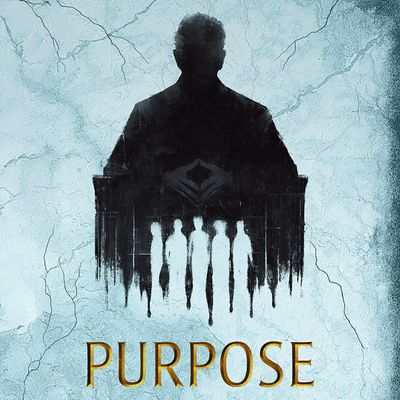
Producer, Executive Director, Lawyer, and now podcast guest! For the past decade, Rashad V. Chambers has been producing new and exciting works on stage. Now he sits down with SpotCo Co-Founder Tom Greenwald to talk about his hit Broadway runs with FAT HAM, TOPDOG/UNDERDOG, and last seasons PURPOSE, his leadership with New York City’s Gay Men’s Choir, and more.
Transcript
This transcript was automatically generated and might contain errors.
[0:00] Tom Greenwald: I often tell people this is when we're scheduled to run, but if you don't come in October or November, there won't be a December or January.
[0:11] Tom Greenwald: Hey everybody, it's Tom Greenwald back with our podcast, The Show Must Go on Sale. Today I'm delighted to welcome Rashad V. Chambers to the podcast.
[0:23] Tom Greenwald: Rashad is a man who wears many hats. He is a producer. Are you a lawyer, Rashad? Is that am I right about that?
[0:33] Rashad V. Chambers: You are right, although retired.
[0:36] Tom Greenwald: Retired lawyer. Excellent. Uh I think that may be the best kind of lawyer to be, last I heard. He had been the managing director at Houses on the Moon Theater Company. He recently was named the executive director of the New York City Gay Men's Chorus, and he's got many Broadway producing credits, including the recent wonderful hit Purpose, uh, Top Dog Underdog, FAT HAM, Ain't Too Proud, The Inheritance. This is, of course, first and foremost a Broadway podcast, so we will focus on that. And it's a Broadway marketing, uh advertising and marketing podcast, so we will focus on that. Uh Rashad, welcome and thanks so much for joining us.
[1:20] Rashad V. Chambers: Thank you for having me, Tom.
[1:22] Tom Greenwald: I always like to start the discussion with how people feel about the advertising and marketing wing of the producing building. Some people love it. Not everybody loves it. They think of it as something that it can be creative, but it's not as creative as obviously putting up a show. And where does the advertising and marketing sit in your producing wish list? Do you enjoy the process?
[1:44] Rashad V. Chambers: I do. I love marketing actually. It's one of the things that I look forward to. Um I'm pretty hands-on as a producer. And for me, as much as I'm excited about the creative and working with writers and directors, I really love to also share my vision for the production and how we can get it as much exposure as possible. So marketing is something that I certainly enjoy throughout the process.
[2:14] Tom Greenwald: You've been involved in the for-profit and the nonprofit, of course. Have you discovered a difference in what it's like getting butts in seats when you have some cushion with the nonprofit? That's a part of the marketing in a nonprofit world, of course, is fundraising too and development and making sure you can keep the lights on. Is stress level about the same?
[2:35] Rashad V. Chambers: It's not the same. I think commercial theater, i.e. Broadway, has a bit more zeros on the budget, so it makes it slightly easier to do certain things. But even when you're doing something that's not for profit, at least for me, it's had the idea of moving on from the not-for-profit. So you're not only thinking about where you are at the present moment, but you're also figuring out how to keep some sort of continuity so that if and when you move on, the messaging is the same. So there are strategies that go for each one, and um they each present their own opportunities and challenges.
[3:16] Tom Greenwald: With what show did you make your Broadway debut as a producer?
[3:20] Rashad V. Chambers: My first show was uh a play called American Sun that starred Kerry Washington.
[3:25] Tom Greenwald: Yeah, I remember it well. Did you find yourself enmeshed in the early marketing efforts for that show at all? Were you in the room where the posters and the key art and the early imagery was figured out?
[3:39] Rashad V. Chambers: I was not. So it was my first show, and I was a co-producer on the project. So just to distinguish between the co-producers and the lead producers. When you're a co-producer, most of the marketing is already in the works. It may not be completely finished. So you're kind of presented with things as they are near completion. Whereas on a show like FAT HAM, where I was a lead producer, or even Purpose, where I was involved earlier on, I was able to be in the room. I was able to talk to the marketing account executives as well as my producing partners to discuss the marketing, the concepts, the rollout, the timelines, all of those things. So my career has had a natural sort of progression of watching, listening in the early days to now being able to have a big seat at the table and to put my fingerprints on a particular project.
[4:37] Tom Greenwald: When you were a co-producer, did you find yourself endorsing and agreeing with most of the marketing decisions? And if not, were you able to at least learn from the experience? And so when you became a lead producer, you took away some lessons from those early days?
[4:54] Rashad V. Chambers: Absolutely. When in my as a co-producer, I did agree with most of the strategies and rollouts, and there were opportunities to weigh in. We would have co-producers slash marketing meetings either every month or bi-monthly, where the lead producers and the marketing executives would sort of share everything, and we could ask questions, we can make suggestions, but obviously the ultimate decision was left up to the lead producer to make. And that really informed my interests, my love, my understanding of what that process and collaboration looks like. And then as I graduated to being a lead producer, I knew how to communicate. I knew how to share ideas while still allowing people to do what they do.
You know, we all hear experts for a reason. I am definitely not an expert, but I believe that the lead producer still has to have a vision and still has to have overview for the production. Otherwise, you know, everybody is sort of the inmates are running the asylum.
[6:03] Tom Greenwald: Since you started out as a co-pro on some of these earlier shows, did that give you empathy for the co-pros on your productions when you led? And did it make you more sympathetic to their wanting to chime in?
[6:17] Rashad V. Chambers: Certainly. I mean, for me, it's best idea wins, and I really want it to be a community, and I want people to contribute, and maybe they see things in a way that I don't see them, but I still want it to be clear that ultimately it's my decision to make because I'm the one in the trenches and I'm seeing the forest and the trees. But certainly I want people and co-producers of all skill sets, all demographics to be a part of the conversation because that's what we want to come to our show. We want all pages, we want all demographics. So absolutely. I want it to be a continuous conversation, and I try to lead with the same level of empathy that I seek in return.
[7:04] Tom Greenwald: Words to live by. You hear that everybody? Take that to heart out there. What impact do you think that advertising and marketing and image making and developing the brand can actually have in the life of a show? How much weight do you give advertising?
[7:20] Rashad V. Chambers: I think the general consensus in this business and certainly people I've talked to so far is that it can only impact a show up to a point, but it certainly has impact. Are you finding the same thing basically?
[7:32] Rashad V. Chambers: Yes, I honestly think it's critical. If people don't know about your show, they're not going to come and see it. So you definitely need marketing and advertising to start the exposure, start the word of mouth so that people can become interested and will want to ultimately buy tickets. Also when you are working on a show depending on whether it's open-ended or a limited engagement, you want to create the messaging that goes along with the image, right? Is there urgency? Do people only have 16 weeks to see it? Is your show open-ended but the success is critical to the timing at the beginning? I often tell people this is when we're scheduled to run but if you don't come in October or November, there won't be a December or January.
You can't just say oh it's running until June I'll come in May. It's like no, it won't be around if we don't sell tickets. So I think marketing is so important. It's not the only thing but again if you could have a great show and if no one's heard of it you're going to be performing to empty seats. So it's really important for me to start the conversations early to really not only create artwork and strategies, but timelines and figuring out what the best way to roll it out so that there's an excitement so that you can create an event around the show and that you ultimately can get as many people there to see it as possible.
[9:03] Tom Greenwald: With Fat Ham, a brilliant show, by the way, staggeringly original, it had a successful run at the public theater. The artwork changed when it moved to Broadway, and a lot of shows do that. They just feel like it's a new start, it's new imagery. Do you remember the process of deciding to change the imagery? It wasn't, it wasn't a hugely radical change, as I recall, but certainly it was a change. And do you remember the reasoning behind that?
[9:34] Rashad V. Chambers: First, let me point out that FAT HAM is a unique case because it was originally only an off-Broadway show. It was produced by the public in National Black Theater. There were no commercial or Broadway producers attached. It was just supposed to be that limited engagement at the public. But because of the success of the show, the reviews, Pulitzer, the extensions, they got a lot of attention and people thought it should have a larger life and move to Broadway. So the initial key art was a part of the public's overall season design. They typically create a sort of style and color palette for the entire season. So it was the public's design. When we decided to move to Broadway, we wanted to create something that was fresh and innovative that could really be commercial Broadway design and look.
How do we sell the show? How do we have something that's engaging and eye-catching without completely giving away the end? So when we decided that we were moving, we had a lot of conversations, and that's how we ultimately created the key art that we ended up having.
[10:53] Tom Greenwald: Yeah, very good point about the public doing a thematic look throughout a season. And other theater companies do that. Um, but even if a show is a one-off in a in a out-of-town trial, for example, Chicago or or LA or wherever, often the look will change. Um do you remember the FAT HAM artwork process and developing the look of that as a happy experience? Was it did you feel like it ended up where it needed to be image-wise?
[11:31] Rashad V. Chambers: Um, and do you remember kind of how did it feel trying to make sure that FAT HAM could open its doors for a wide demographic, um, including a diverse demographic that can be more of a struggle to come to Broadway? It was a great process. Um, we worked with Spot Co. on that key art, and we as producers sort of sifted through them and we gave ideas as well, which ultimately ended up reflecting in the key art that we had. So, again, I said before the lead producers have to have a vision, and it was our vision and our leadership that led to the ultimate key art. We had a lot of conversations around not only the visuals, but what message we wanted to send, you know, coming off of a successful run off Broadway, winning a Pulitzer created a certain level of prestige, but also a certain level of pressure.
And so we wanted to make sure that we stayed true to what was accomplished off Broadway, but also knowing that we needed to reach a broader audience. So we did a lot of sort of forecasting and looking at some of the demographics of numbers of people who came to see it off Broadway. And we found that it was a show that a lot of younger people of color and people from the LGBT community loved because they felt seen and represented. But we also found that it was a show for many, many different types of people. Older white women loved it. Shakespeare lovers loved it. So there was something for everyone. We knew that it was going to be a limited engagement. We knew that it was a play that didn't have any stars.
We had, you know, our writer, our director, and six out of seven of our actors making their Broadway debuts. So there were certainly challenges, but we knew that it was a show that would be received well and that would stand the test of time. I also want to take this moment to point out that certain strategies that we create and curate for Broadway is for that moment, but we're also thinking about how the show can and will have a future life. And so FAT HAM was one of those that we thought, okay, this show is going to be received well on Broadway, but it will also have a life around the country. So how do we use this as the moment to get our regional theater friends to get to New York to see the show and want to program it in their subsequent seasons?
And that happened. And so we closed in July of 23 on Broadway. But because of the run at the public leading into Broadway, we already had a lot of people wanting to do it. So our first regional production of FAT HAM was in September of 23, which is almost unheard of to have a production that early. And so we were really thinking about the bigger picture, not only of Broadway, but beyond. And in the 23, 24, as well as 24, 25 seasons, I believe FAT HAM was in the top two or three plays, most plays are produced in the country.
[14:54] Tom Greenwald: Amazing. That's thank you for saying that. Great to hear. You would talk about messaging earlier. I have my own uh opinions about how important things like plot, uh story-driven messaging are. I think they can be sometimes a trap that people fall into because FAT HAM is so many things. It's it's a take on Hamlet, it's uh uproariously funny at times. Did you think that describing the kind of the guts of the play or the storyline of the play in marketing was a would theoretically be a positive when you were starting out or just um too confusing for the average consumer to understand?
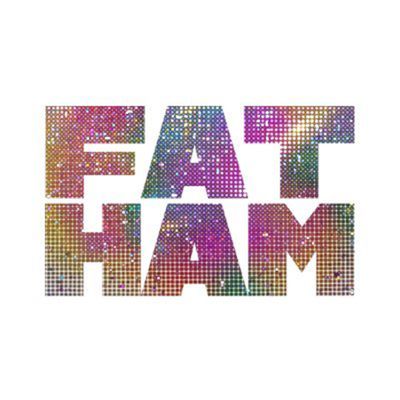
[15:37] Rashad V. Chambers: It was a combination of all those things, and it and there were several very nuanced conversations. We wanted to lean into the comedy, but we also knew that there was this Shakespeare aspect of the play. And so a lot of our conversations were about how much Shakespeare do we include. We want to honor the text of the play. We want to honor the sort of intelligence of it, but we don't want to make it too exclusive that we scare people off and that they think, oh, this is too serious. So that's why we decided to do this sort of disco ball sort of skull, so that it was like a tip to the queerness of the play and the fun. But we can also sort of have the crown that sort of leads towards the nod to Hamlet. So we really really thought a lot about it. And we I think we found the right balance of it, but but it was uh not challenging, but it was a very nuanced and continuous conversation throughout the course of the journey.
[16:41] Tom Greenwald: Yeah, you have, I mean, we we mentioned three of your more recent lead producing credits with FAT HAM, of course, Top Dog and Purpose. Blessed trio in terms of critical reaction, uh, awards, etc. Uh, Top Dog and Purpose and FAT HAM all got love letters from the critical community, as I recall. In the old days, if you got a critic's pick sign of approval from the New York Times, you were kind of off and running. It's not quite the same way anymore. It's a much more democratic process with social media and digitized word of mouth world out there. Did you feel home free when you got these reviews on these plays? Or were you kind of a little leery about taking for granted that these shows would become successful just because they got these reviews?
[17:28] Rashad V. Chambers: I think reviews are important and they certainly help, but they are not the end all be all that they used to be. And I don't think that any show is home free ever, unless in very, very small instances when you have the right A-list star, you're almost review proof. But every show has to still dig in and still be analyzing on a day-to-day basis on how to make the show successful. I would say with FAT HAM and Purpose, we had the luxury of being open in the spring. So we not only were able to capitalize on the reviews, but also award season. And we saw a significant increase, particularly with Purpose, after winning the Pulitzer, after being nominated for Tonys, and also winning the Tony, our box office like catapulted.
Whereas Top Dog, we ran in the fall. So we had love letter reviews and we sold well. We were also competing with a lot of other plays that had African-American performers, and that the African-American community was sort of low-hanging fruit. At that time, we had Top Dog, Death of a Salesman, which had a predominantly African-American cast, Piano Lesson, and even Ohio State Murders. So it was it was ingested and it was very hard to sort of break through. But we found that some of those plays weren't our exact benchmark because of Top Dog's Pulitzer and because of the pedigree of Susan Laurie Parks, we were really being more compared to a Leah Polstadt in the terms of those Tom Stoppard and that pedigree.
So reviews are certainly helpful, but you still have to strategize, you still have to figure out ways to find your core audience. How do you reach them? And how do you continue to get the word out there and break through the noise to sell tickets?
[19:40] Tom Greenwald: Yeah, it was interesting what you said about Purpose and the trajectory after the nominations. And it is true, especially with uh best musical, you know. The common consensus out there for those who don't quite know is that you get a huge bump if you get the most nominations on nomination day, and you manage to get yourself into the headlines as leading uh the either the play or the musical category. And then, of course, there are a couple of awards that will change the trajectory, as you mentioned, Rashad, winning best play uh and best musical in particular. Once you've got momentum from the pull it's around the nominations. Did your budget change your advertising budget change at all? Did you take on a strike while the iron is hot philosophy?
[20:27] Rashad V. Chambers: No, we planned for it. Not to say we knew we were going to be nominated or that we're going to win, but we factored a bit into the budget to have a successful awards campaign planned and plotted. We had the fortune to have had our world premiere at Steppenwolf. Purpose was a commission from Steppenwolf, and they produced the original production. And Purpose was, I think, the highest grossing play in their history. So we did a lot of um collaboration with Steppenwolf, who was also a co-producer on the show, and Glenn Davis, who was is artistic director of Steppenwolf, was also uh one of the Tony nominated actors. We had it sort of peppered into the budget. We didn't have to go out and spend extra money, but we knew what our plan would be if we were so fortunate enough to start achieving some of those accolades, how to build upon them.
We had a really amazing marketing, advertising, digital, and press team throughout the entire journey. But I do want to also shout out and commend Davis Stone, our lead producer, for his vision and running a very successful Tony campaign as well.
[21:50] Tom Greenwald: It's funny you do call it a Tony campaign. I've had some some other conversations with other producers, um, including Jeffrey Seller and Drew Hodges. And you know, the word Tony campaign is a relatively new, I mean it's about 20 years old, but in the overall scheme of Broadway, it has become a thing. Um and that kind of six-week period where where you're in there jockeying for position. Did you feel I'll talk about Purpose again just because it's the most recent. Did you feel that the Tony marketing message and the consumer marketing message were overlapped perfectly, or did you feel like you had to do something specific for the for the Tony crowd that you might not have done otherwise just to sell tickets?
[22:38] Rashad V. Chambers: In my opinion, they were aligned and they were intentionally designed that way. We wanted to win the award, and we wanted to get people to come see the show.
[22:52] Rashad V. Chambers: So there was a duality there. Brandon is Jacob Sinkis, one of our most celebrated playwrights of certainly my generation. He had just come off of a Tony win for Best Revival for Appropriate, and he got wonderful reviews for this new play. And so we wanted to celebrate that. You know, we joked that the play's the thing, and in this case, it was. And we knew that by putting the momentum around the run, the actors, and the fact that we received these wonderful accolades would only make it more exciting. So we didn't have sort of two buckets.
[23:34] Tom Greenwald: Did the media placement change at all?
[23:34] Rashad V. Chambers: I think people are curious about that world of how bold and how insistent Broadway marketers are trying to get specifically to these people. As we were planning the show, you know, a year in advance, we thought about all of these things together as a team. What does this look like? What resources are we allocating? Now, obviously, if we were not selling well, we didn't have the money, it would have changed in a different way because we would have had to rethink our plan, but we already had an idea of what that would look like. What do we want to do for outreach? What kind of quote unquote newsletter will we be sending out to voters? What type of, you know, every sort of agency helps create and design Tony swag that we mail out?
So we thought about all of those things in advance. So it was just a continuation of a provision as opposed to a pivot. And we were lucky enough to open in March that we had time. You know, we had a good what, four to six weeks before nominations even came out to take our reviews to and be able to fine-tune it. So it's a little bit of a different energy. So I would just say for us, we created our plan in our past early, and then we just stuck to that and delivered a really great campaign and outreach.
[25:08] Tom Greenwald: Yeah, you're mentioning the calendar, which is so important. March is actually, I think, a great time because it's before the crush.
[25:15] Rashad V. Chambers: Yeah, like you said in the last weeks of April. Not only do you not have a lot of time to kind of put your messaging together between opening and the Tony nominations, which usually come out the first week of May, but you're opening at the same time as 10 other shows in 12 days are opening, and it's very hard to find oxygen to make sure the consumer hears your message separated from all the other noise that's going on at the same exact time.
[25:43] Tom Greenwald: When did you become the executive director of the gay men's chorus?
[25:47] Rashad V. Chambers: In May.
[25:48] Tom Greenwald: Are you continuing your life determined to continue your life as a commercial theater producer? Is it how is it going wearing the various hats?
[25:57] Rashad V. Chambers: It is my desire to do both and juggle good. Figuring out what my bandwidth will be. Fortunately, I don't have any shows that are opening on Broadway this season, so I can take this full year to really give my all to the chorus. However, when I started in May, I was still working on Purpose, and I was about to open a show called Goddess at the Public, so I got a sort of taste of what it would be like to do double duty. And while I think it will be challenging, it's not impossible. So I'm hoping that Goddess will come to Broadway next season. And I've been approached about a couple of other things. So I'm figuring that out. And I'm going to just take my time and be honest with myself about what I can handle because my work ethic means a lot to me. And so I don't like to do something unless I can give 100%.
[26:56] Tom Greenwald: Excellent. I like your answer because we need people like you who are willing to produce interesting non-star plays that need to be seen. You know, there's been so much talk about how it's becoming an endangered species on Broadway, the non-star straight drama. Something like Purpose can prove that it still works. It's heartening to see you continue to work in that world. Um, so on behalf of everybody else, please keep doing it.
[27:33] Rashad V. Chambers: I want to ask you a couple of other quick questions before I let you go. Do you have a favorite campaign of yours that you did over the years? And do you have a favorite campaign that you've seen out there that wasn't yours?
[27:49] Rashad V. Chambers: I love them all for different reasons. FAT HAM, I was really proud of because I was really instrumental in helping to create that key art. And I got to build upon the success of the run of the Public. And so, you know, being able to see that sort of like reskull and to have people write to me and tell me how much they loved the marketing for the show was really special. So I'll say FAT HAM for that answer.
[28:21] Rashad V. Chambers: And in terms of that's not mine, I really love O'Mary. I love the artwork of O'Mary. I love the concept. I love the rollout for the Broadway production where they had Cole in the taxi with Joel Gray, going to the Lyceum. I love the sort of backstage changeover videos. I just thought it was so smart and engaging. And the fact that this show was a hit off-Broadway and they came to Broadway and was supposed to be a limited engagement, but they just kept going and going and going. And I had friends from Philadelphia come up to see it twice. And so it's just sort of a moment, particularly with gay audiences and how the marketing really worked to let them know that they were welcomed in the theater and that they were gonna have a good time, and this was something new and bespoke. So I thought that that team did a really great job.
[29:20] Tom Greenwald: Yeah, I agree. Speaking of non-star vehicles that cut through the clutter, there you go. So people, you know, when at the end of the day, people want originality, they want something they've never seen before. Purpose fit that bill, FAT HAM fit that bill, and O'Mary fit that bill for sure.
[29:40] Rashad V. Chambers: I noticed you were on the producing team of The Inheritance, which I just wanted to ask you about very quickly because I remember seeing it in London. The two different performances that it's a two-parter, but I saw both parts in one day and thinking it was one of the great theater experiences of my life. It came over here. Um, it got a lot of love and a lot of respect. It might not have had the length of run that I and many other people think it deserved. Looking back on that, do you think it was the two parts that hung people up?
[30:19] Rashad V. Chambers: It's complicated. It's the first show that won me every award possible, but it was also the first show where my investors lost 100% of their investment. And I think in hindsight, you know, one, I should say that I had a very, very small part of that show. I wasn't a decision maker. I was just sort of in a group and wanted to help, you know, bring this story to Broadway. But in hindsight, if I were looking back at that time, I would say there were probably three reasons why the show didn't quite take off. One, it's two parts, and people kind of feel obligated to see both. Number two, each part was three and a half hours. So not only do I have to try to play with the two parts, I'm also in the theater forever.
And even with Purpose, which was about three hours, I've had people say to me, "Oh, I absolutely loved it, and I'm so glad I saw it, but I was hesitant at first because of the length of the play." And so when we announced our extension, I asked my producing team if we could change our Wednesday hours. We were two and eight for the first half of the run, and we moved to one to six and seven because I thought that hour would make a difference for people in the middle of the week. Back to The Inheritance, I think the third crucial thing in hindsight why it wasn't as successful is the team didn't really think about how saturated the Broadway community had been with gay content in the prior season or two.
If you think about it, by the time The Inheritance opened, we had already had the Angels in America revival, we had the Boys in the Band revival, we had the Torch Song revival. And so I think if I were to, you know, one be the lead producer, but also sort of time travel, I would have probably only done part one in that season. And then depending on how it did, produce part two the second season in the way that the original Angels in America happened. You know, did I think that that would allow the show to be a bit more successful.
[32:57] Tom Greenwald: Yeah, that's a very interesting point. Um, I think most people who are listening know that Harry Potter and the Cursed Child started out as a two-parter, and they quickly learned that exactly what you said. It was hard to get people to commit to both parts, so they condensed it into one evening and it's run happily ever after ever since.
[33:19] Rashad V. Chambers: Thank you. Thank you for your insight on that. Um, that's a good point about the king gay content too, because I hadn't thought about that. Um, and the Angels in America revival also I think struggled a bit because of the two parts a bit.
[33:37] Tom Greenwald: Rashad, thank you so much for spending this time with us. I greatly appreciate it. You're wonderful to talk to, and your track record speaks for itself again. Rashad, producer of the Pulitzer Prize-winning Purpose, producer of FAT HAM, producer of Topdog/Underdog, current executive director of the Gay Men's Chorus, and lapsed retired lawyer. Thank you so much for joining us. Um, it was really fun.
[34:10] Rashad V. Chambers: Thanks.
[34:10] Tom Greenwald: Thank you, Rashad. I appreciate it.
© Broadway Podcast Network, All Rights Reserved