

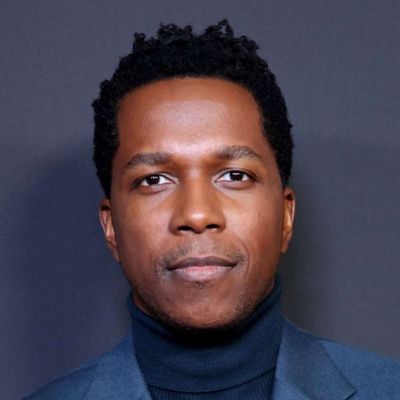
In the latest bonus episode of The Spark File, Susan and Laura talk to Leslie Odom, Jr, on the eve of his new album launch. Leslie reflects on the life lessons learned from 5th grade teacher, Mrs. Francis Turner, mentor Billy Porter, and so many more... Read More
From the show: The Spark File with Susan Blackwell and Laura Camien
Guests
Featured Shows
About
In the latest bonus episode of The Spark File, Susan and Laura talk to Leslie Odom, Jr, on the eve of his new album launch. Leslie reflects on the life lessons learned from 5th grade teacher, Mrs. Francis Turner, mentor Billy Porter, and so many more. Always open to the next challenge, Leslie shares the vulnerability and the joy that comes with truly taking a swing.
Transcript
This transcript was automatically generated and might contain errors.
[0:37] Laura Camien: Welcome to the Spark File, your one-stop shop for creative inspiration. I'm Laura Camien.
[0:41] Susan Blackwell: And I'm Susan Blackwell. If you're joining us for the first time, you are so welcome here.
[0:45] Laura Camien: You may be asking yourself, what exactly is a spark file? Where do I get one? What do I file in it? These are good questions. We have answers.
[0:52] Susan Blackwell: A spark file is the place where you consistently collect all of your inspirations and fascinations. And if you're like us and you're making stuff all the time, you already know sometimes the wellspring of inspiration can run a little dry. We're here to refill it.
[1:08] Laura Camien: So we're on the lookout for fresh ideas, images, and inspiration that spark our creativity and pique our curiosity. Things that inspire us to get up off of our asses and make things like this podcast.
[1:20] Susan Blackwell: Or a book encouraging the reader to take risks, aim higher, never stop learning, and fail up. Or a humanizing portrayal of a complex historical figure. Or a concert that lifts the roof off the joint.
[1:34] Laura Camien: On today's Maker Sode, we're gonna talk with someone who sparks us. And that special someone is Leslie Odom Jr.
[1:41] Susan Blackwell: Leslie. Welcome to the Spark File.
[1:45] Leslie Odom Jr: I'm so happy to be here.
[1:47] Susan Blackwell: Ah, Leslie. It's time to get sparked.
[1:49] Leslie Odom Jr: Let's go.
[1:50] Laura Camien: We'll do our best. So, real quick, the Spark File price of admission. You have to tell us a creative risk you've taken recently, something that was maybe not perfect, but it was progress.
[2:03] Leslie Odom Jr: I just finished this record, this album. And when I say finished, you know, it means like it's off being printed and like manufactured. She's locked.
[2:11] Laura Camien: Yeah.
[2:11] Leslie Odom Jr: It's like there's no more changes. And it's been something that I've been, you know, making tiny little tweaks and big changes, whole cloth changes for nine, ten months.
[2:22] Susan Blackwell: Yeah, you know, so the fact that I can't change it anymore, you know, freaks me out a little bit.
[2:27] Laura Camien: Yeah. You're having some anxiety about that?
[2:29] Leslie Odom Jr: A little bit, oh yeah.
[2:30] Susan Blackwell: How does that, what thoughts rise up for you? What anxieties come to you around this?
[2:36] Leslie Odom Jr: Um, you know, part of the reason why I do the music thing is because as a performer, um, I am a vessel. You know, I make myself available to fulfill and see that someone else's vision comes to life. You know, that I make it that I make myself available to do that's what I sign up to do. And this is not that. This is my, you know, my total vision.
[3:05] Laura Camien: This is your heart.
[3:05] Leslie Odom Jr: It's my heart, my total vision. And so yeah, it's like, um, yeah, when you're putting it out in that way, it's like for people's judgment and for people's ears and their eyes and all that stuff. It's scary.
[3:15] Susan Blackwell: So this isn't just an album of standards, this is an album of material that you have generated.
[3:22] Leslie Odom Jr: Yeah, we wrote it. We wrote it all.
[3:24] Susan Blackwell: This is deep. This has gotta feel vulnerable.
[3:28] Leslie Odom Jr: It does.
[3:29] Laura Camien: Can you tell us what do you do when you feel that? Do you have any sort of self-soothing rituals, things you say to yourself? How do you handle it?
[3:39] Leslie Odom Jr: I, you know, I believe that the universe, God is speaking to us, me, all the time. You know, I believe that I always have access to inspiration to that, you know, channel, you know. Um, so I'm looking for it everywhere I go. At this, when I'm vulnerable, like at this point in my life, like I know there's a reason why I'm on this couch today. Yeah, I'm supposed to get something from you guys today.
[4:06] Susan Blackwell: Oh no, I'm supposed to get something in natural.
[4:08] Leslie Odom Jr: Yeah, yeah, yeah. Oh, yeah. Even if it's, you know, what not to do. Like I'm, I'm supposed to cautionary tale.
[4:16] Laura Camien: What?
[4:16] Leslie Odom Jr: No, what a dick.
[4:18] Susan Blackwell: Yeah.
[4:19] Leslie Odom Jr: I went to, you know, I got a text from a brilliant friend of mine in LA. You know, I mean, and my schedule, you know, it's always crazy, you know, because it's work, but it's also like you gotta be a husband, you gotta be a dad, you gotta be a good friend, you gotta be a good son. Also, all of you know, our schedule is a good one.
[4:35] Laura Camien: That in your book, we'll get to that in a second.
[4:37] Leslie Odom Jr: But you, yes, but I got like a place you don't want to feel is with your family.
[4:41] Laura Camien: Yeah, yeah.
[4:42] Leslie Odom Jr: And so, but I got a text from my friend the other day. Um, who's this pastor friend of mine, he was like, you know, I'm doing a leadership seminar. Are you in town tonight? Like, I'm not like no, I'm not available, I'm not in town, but I'm supposed to be at that leadership seminar. I made, you know, I made time to go to that thing and like, and it blessed me. You know what I mean?
[4:59] Laura Camien: So that's what I do when I'm this vulnerable, I'm like, I'm walking through the streets, like who's gonna speak to me today, who's gonna offer me the thing that's like you're looking for the spark.
[5:09] Susan Blackwell: Wow, but you are keeping your eyes open and you're keeping your heart open and looking for that blessing.
[5:15] Leslie Odom Jr: Yeah.
[5:15] Susan Blackwell: Wow, I would say you are officially admitted to the spark file. Welcome.
[5:19] Laura Camien: We're locking the doors.
[5:23] Susan Blackwell: Um, for people who don't know you, Les, can I call you Les?
[5:27] Leslie Odom Jr: Yeah.
[5:27] Susan Blackwell: Awesome. For people who don't know you, Les, and shame on those people, frankly.
[5:32] Laura Camien: Those people.
[5:32] Leslie Odom Jr: And tell fuck those fuckers.
[5:35] Susan Blackwell: How do you identify creatively?
[5:39] Leslie Odom Jr: Oh, how do I, I love it? How do I identify creatively? I probably identify as a, I've always had trouble with this with the language around this, like a performer, entertainer.
[5:51] Laura Camien: Yeah.
[5:52] Leslie Odom Jr: You know, I'll say like once, you know, once I got that sort of like hyphen, once I got producer added to that, you know, that was a proud day.
[6:02] Susan Blackwell: Yeah, fancy.
[6:03] Leslie Odom Jr: So it's big. Uh, so somewhere in there, entertainer, producer, maker.
[6:10] Laura Camien: Great. Um, boy, I just want to go rogue already.
[6:16] Susan Blackwell: We're trying so hard to stay.
[6:19] Leslie Odom Jr: I'm just, I'm actually, I'm just stuck back with this conversation about this album that's getting ready to drop.
[6:25] Susan Blackwell: Say the name of the album.
[6:26] Leslie Odom Jr: Mr.
[6:27] Laura Camien: What's the significance of the title?
[6:30] Leslie Odom Jr: Um, can I ask you what it, not to be this guy, but what is what is the, those two letters? Do they mean anything to you? What do they conjure up for you? What are our gender politics around Mr.?
[6:42] Susan Blackwell: No, actually when I saw, when I saw the, I'm not sure if it's the album cover, but it is, it is, it's your photo, and then very small is the album title, Mr. And just MR.
[6:55] Leslie Odom Jr: You're saying MR.
[6:56] Susan Blackwell: I'll show it to you while you, while Susan's talking. Um, there was something—
[6:58] Leslie Odom Jr: Are you asking? Is this a Rorschach test? You're asking, what do you see when you looked at that album? What does it conjure up?
[7:06] Susan Blackwell: I'm obviously, as the maker of it, I'm much more interested in what you think of it, like what it means to you than I am what it means to me.
[7:12] Leslie Odom Jr: I'll tell you what I thought when I saw it, I thought this is a person who respects themselves, and this is a person who is requiring the people around them to respect.
[7:22] Susan Blackwell: That's what Mr. Leslie Odom Jr. I don't know. That's what I also thought about your dad. I thought about your father.
[7:27] Laura Camien: Um, I don't know. When someone has that title in front of their name, like there's a dignified feeling to it. There's a descriptor in a way that this is a gentleman, husband, father, like all of the multitudes kind of came to me in that I'd not really thought about before.
[7:49] Leslie Odom Jr: I hate to like push it back, but I'll what I will say is that um, I've yet to hear a wrong answer. When I ask people what it means to them, I'm like, yeah, sure. That's what it means. But what did it mean to you when you decided on that?
[8:03] Leslie Odom Jr: I also like a lot of, I like it because it's also very small and it's graphic.
[8:07] Laura Camien: Yeah.
[8:08] Leslie Odom Jr: Do you know what I mean? It's just two letters.
[8:10] Susan Blackwell: It's two letters. Not even the period. Did you have a conversation about whether to put the period or not?
[8:16] Leslie Odom Jr: Oh, I want to know.
[8:17] Laura Camien: Oh, there was major conversation about the period.
[8:20] Leslie Odom Jr: That it's how I intended it to be, but yes, I had to have some discussions with people about the period.
[8:25] Laura Camien: You're like, we're not putting it there.
[8:26] Leslie Odom Jr: Yeah. They're like, they're like, yeah, but what if people think it's myrrh? I'm like, well, then it's myrrh. But come on.
[8:30] Laura Camien: Then it's myrrh, sure.
[8:32] Leslie Odom Jr: It's yeah, it's myrrh. Come on.
[8:34] Laura Camien: The album's called myrrh.
[8:36] Leslie Odom Jr: That's what, come on. What's the spark in there? What was the spark for that? It meant something to you. Obviously, you knew strongly enough you didn't want that period.
[8:47] Leslie Odom Jr: I'll say this. Um, without giving too much away, because I also think, you know, I mean, I really do, I'm really super interested in like hearing from the audience. You know, I want to hear more from them. You know, I don't want to give all my stuff away up early. But I'll say that there's a song on the album called Remember Black.
[9:09] Leslie Odom Jr: Um, and for a long time, and you know, remember black is this sort of um, it's confrontational, it's a little, you know, we think it's a little surprising, possibly, you know, and this, it's you know, it's got a lot of themes that also, you know, are all over the record. And um, it was so for a while the album was called Remember Black. It was also called Something Else Before That. But um, Remember Black started to feel weird to me, and I couldn't quite understand why.
[9:35] Laura Camien: And then I went to see the Tony Morrison doc.
[9:39] Leslie Odom Jr: Tony Morrison documentary. And she said what, wait, oh, there's so many sparks. What's the name of the documentary?
[9:47] Laura Camien: Oh, I'll in theaters called it's called Pieces of Me or some a little bit. Oh, we'll figure it out.
[9:52] Leslie Odom Jr: But I went to see the Tony Morrison documentary. I'll take it. And she said this thing in there that I was like, that's why it feels wrong. She said um, she had read um, you know, black authors her whole life, and that um, are authors that she respected, she says James Baldwin, Richard Wright, you know, these these brilliant men, you know, um, who I love, I respect them. They uh had made the um, they were not speaking to her in their writing.
[10:28] Laura Camien: She said they were talking to audiences of white people.
[10:32] Leslie Odom Jr: And she said, so anyway, I spent my career making sure that the white gaze was not at the center of my work.
[10:39] Laura Camien: Yes.
[10:39] Leslie Odom Jr: She said, I want my work translated and read all over the world. Yeah, all over the world. I want people to have access to this work. But I was very clear that I was not talking to white people who sort of at the center of this work.
[10:54] Susan Blackwell: And I was like, that's it. I said, you only have to say remember black to somebody who may forget.
[11:01] Leslie Odom Jr: That's right.
[11:02] Susan Blackwell: Oh my God. I don't have to say remember black to my mama.
[11:05] Leslie Odom Jr: Yeah.
[11:05] Susan Blackwell: Or my sister or my my closest friends, right? And so it's so it's a very important, you know, sentiment on the record. Like I'm talking to, I'm talking to somebody who I want to feel this thing and to know this thing. But anyway, Mr. came, and I'll say out without giving anything away, I started to make lists of what it meant to me and what it conjured up. And it it's also it's related to the first album. The first album's called Leslie Odom Jr. This one's essentially called Mr. Leslie.
[11:34] Laura Camien: Yeah.
[11:34] Leslie Odom Jr: So there was a lot of reasons why, but um, yeah, it brought, it kind of scared me. It was kind of weird. I had questions about it, and then you know, so it did all the things that are good titles.
[11:45] Susan Blackwell: I love it. I love it. There is something I am hooked on with this about you being the originator of this music of I just feel like this is it is not your full heart because you contain multitudes, and there's more than, you know, there's more of you than even is what in those songs that are contained on the album.
[12:15] Leslie Odom Jr: Thank you so much.
[12:16] Susan Blackwell: But also I can imagine to Laura's point that it would feel, I personally would be shitting myself right now, but you seem cool as a cucumber.
[12:24] Leslie Odom Jr: I was just gonna say, but you're always shitting yourself, Susan.
[12:27] Laura Camien: In some ways, I think our listeners need that visual.
[12:29] Susan Blackwell: No, sorry. Do you feel like I bring that up at least once an episode?
[12:33] Leslie Odom Jr: Um, so Leslie, we were just talking about this. I have, and this is not an exaggeration. I have read your book three times.
[12:42] Laura Camien: I have listened to your audio book.
[12:44] Susan Blackwell: Can we just take a little second and acknowledge that you wrote a book?
[12:44] Leslie Odom Jr: You wrote a book.
[12:50] Susan Blackwell: You wrote a book.
[12:52] Laura Camien: Can I, I couldn't be more proud of you?
[12:54] Leslie Odom Jr: And it seems, I, Laura, have you read a book?
[12:58] Laura Camien: I haven't written a book.
[12:59] Leslie Odom Jr: It seems it's kind of an awesome.
[13:01] Laura Camien: It seems hard as fuck.
[13:03] Leslie Odom Jr: It was hard. The hardest thing, the hardest thing was was finding the time to be honest. It was just like, you know, I had imagined that I would like when I got the, you know, the offer to write, I was like, oh no, this is great. I'll go away to a cabin for three weeks.
[13:16] Laura Camien: Yeah.
[13:19] Leslie Odom Jr: You know, like at some point in my summer, I'll go away to a cabin and I'll, you know, I'll go, I'll retreat away and write my book on a typewriter. You know that, yeah, I want to type a typewriter and I want, you know what I mean? I want to like write my book in that way, and I will emerge from the woods in three weeks with book in hand. You know what I mean? That was really my vision.
[13:38] Laura Camien: And uh, you know, as life happened, you know, we had a kid and concerts and movies, you know, all the other wonderful things happening, and the publishers are like, where's our book?
[13:50] Leslie Odom Jr: So we were a late, we were a year late with our book, by the way.
[13:53] Laura Camien: Wow, but um, yeah, I had to, I had to so the hardest thing about writing the book was really finding that focused time.
[14:02] Leslie Odom Jr: And I learned, you know, um, before before this book, I would sleep on planes, like because that was my sleeping time. Like I would get on a plane and I would like, I'm out. If I have six hours, like dope. That's a six-hour nap. You know, I'm not, I'm not drinking anything, I'm not eating anything. And so with the book, I was like, no, that's my writing time.
[14:21] Leslie Odom Jr: So I'm gonna power up. I'm gonna drink espresso. I'm gonna like I gotta, I gotta, because I had to really counteract my, you know, like what my body naturally wanted to do. Yeah, but yeah, it became that's six hours of writing time. Or after, you know, if I'm in, if I'm in Nashville, if I'm in, you know, Kentucky for a concert or something, you know what I mean? My family's not here, I'm here for a night after that concert. Like, I got I got maybe three or four hours that I can write tonight while you wind down. While I wind down, while you know, I don't have a kid here, I don't have my wife here. So traveling really was it one of those things where you're like, I'm just there's I have a moment and I'm taking this moment and I am making the hay while the sun shines, and so I am getting this. It was there a part of that in there?
[15:02] Leslie Odom Jr: No, it was it was it was just honoring my commitment. You know, I I said to these people that I would write it, and there were people that were encouraging me and making me believe that I had something to say, and so it was like, well, let me, you know, let me honor that commitment, let me try to make good on what they believe in me. So let me let me get through this. And I and I was saying to you earlier, I really do feel like I'm very proud of the whole thing, but about halfway through that book, I really did I feel like I found my voice as a writer.
[15:33] Susan Blackwell: That's tremendous. When they first approached you, did they have an idea for the book?
[15:39] Leslie Odom Jr: Very specific. Yeah, they did. That was good question. Yeah, they they did because I was like, you know, I was sitting at that table, like, come on, you guys, I'm not writing a memoir. What am I doing? Yeah, what I'm still working on. I have a book out there to do. 36 or something like that. You know, it's like um, so but they said we've been watching you, you know. We see, you know, we've we've been talking to your agents and stuff, and they knew that I do like you guys, you know, I do the master classes and stuff, you know. My favorite sort of really my favorite way to give back is to is on that college and high school level, you know, talking to young people, really not even just young artists, but young people about you know about their path and just because I they were just such gifts to me in my life, you know, at that age, those ages, you know, people like Billy Porter and my mentor Maureen Booker in Philadelphia, you know, people that really changed my life at those in those formative years. So um, so they said, Yeah, so what if you what if you wrote this in the form of a commencement address? You know, what if you wrote that's a nice spark, yeah.
[16:43] Susan Blackwell: That is a good idea and a great framework to give you the clarity when you sit down to write, you're not just you know, you go a million directions with a book. That gives you such focus.
[16:54] Leslie Odom Jr: Yeah. So it was like so that that set me free. It was like, oh, I can do that. Yeah, I can I I feel I feel like I've lived enough life to talk to some people that are about to graduate college. And then I really started to think about I have that much life experience. Yes, that's great.
[17:10] Susan Blackwell: That's great. And and I and uh in the writing of it, you know, I really started to think about graduation, you know, more metaphorically and symbolically. And I was like, I've had a few graduations even since my college graduation. You graduated into fatherhood, I graduated into you know, a different maturation, turning 30, getting married, or leaving Hamilton in a lot of ways felt like a graduation. So then I really I could even expand that and just talk to people who really felt like they were like, you know, cap and gown, sort of, and here I go into the next phase of life.
[17:42] Leslie Odom Jr: So yeah, yeah. I have I I have my own favorite parts of the book, but I'm wondering what give me an example of one of your favorite parts of the book.
[17:54] Leslie Odom Jr: Um, I think it was so funny that oh my God. The when I tell you I was writing up until the last I mean they ripped that thing from my do you understand pencils, Dell? Oh my God. And there, I promise you, the the last, I the last, the final chapter, the epilogue. Oh, my writing coach, uh Mim Eichler Revis. I was like, Mim, we don't need that epilogue. We're finished, like we were it's due in the morning. Like the book is due in the morning. Throw up in my mouth. Yes, it's due in the morning. I need, I need tonight to like to just reread it and edit and stuff. You know, I don't think we need that epilogue. And Mim was like, I know you don't think we need that epilogue. I think we need that epilogue.
She was like, your book deserves an epilogue. You've come so far. I just I feel like it'll make a difference. Can you just push through and write me this epilogue? And I'm like, I can't, but I will try. And I stayed up through the night. I stood sitting at my dining room table. I stayed up through the night to write, it's probably about four pages. Yeah. The epilogue's four pages about about sort of my experience in Charlottesville when I went to UVA. Yeah. And it was there was something, it was the last bit. You know what I mean? It was the it was I didn't, it was the last bit of juice that I had left in me. It was also the culmination of everything that I'd learned from writing the whole book up until that moment. That's probably my favorite.
[19:25] Susan Blackwell: Oh, you left it all on the dance floor, baby. We were doing another interview with um, like we're finding like themes run throughout a lot of these conversations. And someone else, Sara Bareilles, was saying, I did not like the process of this thing. I actually hated it. I didn't think I could do it. And then ultimately in the end, she was like, It's my favorite, favorite, favorite thing.
[19:48] Leslie Odom Jr: Is she talking about Waitress?
[19:49] Susan Blackwell: Yeah.
[19:49] Leslie Odom Jr: She's talking about it.
[19:50] Susan Blackwell: Yeah, she didn't even like it.
[19:52] Leslie Odom Jr: A year and a half.
[19:53] Susan Blackwell: She didn't like it.
[19:54] Leslie Odom Jr: It's an awful process, especially for someone like that. Yeah, it's a terrible process. And then, but I was like, wait, hold on a second. Didn't you just say that's your favorite thing you've ever made? And she was like, Yeah. And that's your favorite part of the book. And I just think it's so interesting for people again to like for anyone listening who thinks like this creative process is if you're into it, it's flowers and rainbows, and it's just magic. And oh, we all love creating so much. Um it can be painful, it can be hard, it can cause you to push yourself just a little bit further than you thought, and there's the reward.
[20:28] Leslie Odom Jr: So beautiful. At the at the uh at the leadership seminar the other night, um Tore said, you know, don't you understand yet that the I'm paraphrasing, please forgive me. He's much more. Is this the one you showed up to? Yeah, okay. He was like, Don't you understand yet that your reward for your reward for passing a test is the next test. Oh the next heart of test. That is that is your reward. You're killing me over here. He was like, he said David fought before David fought Goliath. David he fought the lion first. The lion prepared him for the bear. The bear prepared him for Goliath. He said the tests get the text gets. You don't even get in the ring with the big guy until you do these things.
You know what I mean? And so it's like, yeah, no, every every step for me, it's been that's it's it's proven true for me too. It's like, you know, the every they're always harder, they're always harder and bigger, and they and they require more of you, and you and you're so grateful for the thing before because you're like, oh, I'm prepared for this. This is the hardest thing I've ever done. But the the lion prepared me for the bear, you know.
[21:37] Susan Blackwell: Wow. I love that. Um, one of the topics, one of the many topics we're obsessed with on this podcast is how to process creative failure. You wrote a whole book on this. So I think you I think you might have some words for us. Um can you talk about one of the biggest failures or perceived failures in your own mind? Um, how that challenged you, how you processed it.
[22:02] Leslie Odom Jr: Yeah. I I um it's gonna sound like a brag, but then it's but it's not. Okay. I graduated from Carnegie Mellon University, you know, school of drama, one of the very prestigious.
[22:10] Susan Blackwell: Very prestigious.
[22:16] Leslie Odom Jr: Yeah, we said failure. I graduated with with honors, right? And I, you know, I was very sort of proud of that. And you know, I did well in school. It was very important to me. It cost a lot of money for my folks. And so, like, I wasn't there dicking around.
[22:32] Susan Blackwell: Yeah. Can I just side by this? Who who handled that debt? Was that your debt or their debt?
[22:38] Leslie Odom Jr: My debt. My personal debt. That's interesting because your parents pushed you so hard, and then you carried that debt. Go ahead.
[22:45] Leslie Odom Jr: Yeah, they took they took care of like what they their bill while I was there. So they took care of part of it while I was there, but then all the whatever loans I took out, I paid my own loans. Got it. Okay. Um, so I took it quite seriously. You know, I and I was aware of that. You know, I knew that that was the deal. Um, so I'll say, you know, I was about, and I went to LA, I worked right away. You know, I got a job. I was in LA for 48 hours, and I had a job on television. Yeah. I was on CSI Miami.
[23:13] Susan Blackwell: Still kind of braggy, but go ahead.
[23:15] Leslie Odom Jr: Okay, wait, but wait, it's coming. Still, I gotta tell you, still feeling a little and and then I got another job on TV and and that's it. You know, it really is. How do you process that? This has been the spark file with Leslie Odom Jr. So, you know, early, you know, early success. Lots of I'm like 24, 25 when um I start to see um, you know, I had a little community out there. I started to see classmates of mine, you know, grow coming into themselves a little more. And I I'll say this. I mean, I I somewhere in me I had a thought, you know, um I I got really tired of other people's work inspiring me and not my own. Oh boy. And so I there was a there was somewhere in me that I had resigned myself that well, I don't do that kind of thing.
You know, I I don't do, I don't do this, I'm not special like that. You know, the the mystery player? Yeah, my friend Audrey May or my friend Josh Gad or my friend, you know, these people, they're they're extraordinary. You know what I mean? They're they're extraordinary. They do something else. I do, you know, this thing. And so I'll say, because of partly because of my education and because of how I'd processed my education, you know, I was used to being a good student. Yes. Getting A's, doing it right. And so there's no risk involved in that.
[24:45] Susan Blackwell: That's right.
[24:45] Leslie Odom Jr: There's no risk involved in that. There's no har you know, but but there was there was no failure was not an option, right? So, like there, there was no rule. So you're not taking swings that would be anywhere near anywhere near failure. Yeah, because I'm come I'm coming into book, right? When I when I would go to audition, I'm coming into book, right? So I'm gonna do it right. I'm gonna hit the mark, I'm gonna say the lines perfectly. I'm gonna do it right. And it worked for me. And I'm about 25 years old, and I'm like so fucking bored with my own work. I I like I'm ready to quit because this is, you know, it's lame. And it's and it's and it's I'm working all the time, but nobody's inspired by that shit.
[25:28] Susan Blackwell: Yes, so you may be working, but you are not these are my words, not yours, but a little dying inside.
[25:35] Leslie Odom Jr: Oh, yeah. Yeah. Yeah.
[25:36] Susan Blackwell: And so um I got an audition, and you know, it's in the thick of this thing, and I committed to myself. I said, this is gonna be the first time in my adult life that I am I am committed to failure. The win on this audition is if they it was a big broad comedy. If they call my age, and I had and I had a sort of a movie, a wacky take, a movie. I had a wacky take on this on this um role in this script. I said, So if they call my agents and they say he was fucking terrible, don't ever send him in here again. Like now we don't want to see him for anything ever. Like when he came in here, 100% shit the best. Yes, he was it was disrespectful. It was like, what did he read the script? How very dare you. Yeah, how very dare you send it. I said, that is my win. That is my win.
[26:30] Leslie Odom Jr: That's a pants shit already. That was my first. That was my first time. I said, you know, if and and I and I I didn't tell anybody I was gonna do that, but I said, that's how I'll know that I did this right. If you know and I'm gonna defend myself again, if they drop if my agents drop me, and you're 25, so you think the world's gonna crash if you do have a bad audition. So it's like I'm gonna defend myself. I'm gonna say, look, you guys, I booked for you. Like this is the first risk I've taken, like back off or drop me. You know what I mean? I was I prepared myself for you know, and and said all that to say it did I ended up testing for the movie. I didn't book it.
[27:04] Susan Blackwell: Wait, but they did not throw you out.
[27:06] Leslie Odom Jr: It didn't throw me out. But what uh what I've eyes are rolling out of my head. But what I'll say is when I tell when I tell people that story, it's not braggy. What I say is that the lessons of my life have shown me, and I believe everybody's life is a book of the Bible. You know what I mean? Like Book of Susan. But you know what I mean? Like it's like you the testimony of your life. It's like it it preach to me. Like, tell me what you've learned from your life that's gonna you know, help me. And so for me, that lesson was like, yeah, it was the risking. Yeah, it was being willing to fail. Yes, that led me to it, it it it actually very rarely leads to failure. It very rarely does. Taking the leap leads, you meet somebody great, or you or you get free, or you, you know.
[27:55] Susan Blackwell: Yeah, so I'm curious how that impacted you creatively going forward. Did it it seems like you just pushed, pushed the envelope out. Like you just like Kool-Aid man through these this very safe space that you had been existing in, and sort of I'll say this. I mean, there's just no fucking way that I would have been able to keep up with that cast in Hamilton had not had I not had that experience. Okay. You know what I'm saying? Yes. Yes.
[28:41] Leslie Odom Jr: In the book, you tell this story about doing a show that was created and directed by your friend and mentor, Billy Porter, where he really pushed you past a performative comfort zone. Will you tell us that story? Because that story, I feel like that you lived it, and I feel like it broke boundaries for me. So will you tell that story?
[29:02] Leslie Odom Jr: Oh my god, I love Billy forever. You know, I'm so grateful. He's an amazing human being. I'm so grateful that I've lived long enough to see this moment happen for him. I mean, we just did not, y'all, five minutes ago. Five minutes ago, like a man showing up on a red carpet in a dress. Yes, I mean, it's just like it was what? What? Yeah, and like he does that, and it changes the world for him, for everybody. It changed the world, you know, just like staying standing in who he is. So, you know, when I met Billy, you know, I met Billy at one of his darkest moments, you know. Yeah, he came back to Carnegie. Billy was probably in his early 30s. He came back to Carnegie and taught an 11-week class when nobody—this is pre-Kinky Boots.
Like, Billy couldn't get hired in New York for a good decade, you know. And what he did during that time was like, shit, I'm gonna write, I'm gonna direct, I'm gonna try to create opportunities for other people. I'm gonna go teach. I'm gonna like he again, I'm just gonna try to figure it out. You know what I mean? And he came back to school and changed my life. So anyway, he had written this role for me. He'd written this role actually for himself. God, I love him. You know, he changed—he'd written this role for himself, and he was having his vocal problems and stuff, and like he was like, I can't really sing this anymore. And so, like, I want you to do it. So he handed me the thing that he'd created for himself.
Wow, you know, that's a big gift. Yeah, when somebody—because you know when somebody makes something for themselves, they've—they're giving themselves the good stuff. That is—put it all in there as a maker of things for myself. It's a hard—that's an extremely generous act. That's the thing. So he's special to me forever. So it was this—it was this, yeah, this review of Sondheim music rearranged, you know. So one of the things, you know, when you're working with a hero, you know, Billy was—Billy was my hero. Yeah, you know. So when you're working with—that is wonderful, and it's tricky because there's places—there's things that Billy can do that I can't do that I've never been able to do. And so, me, as sort of like a—as the A student, and you know, with my toolbox from Carnegie, I know how to make other choices.
I'm gonna skirt around all the way because I knew that he'd written it for himself, but it's like, you know, the things that Billy wrote for himself too, I don't do those things. And so I'm gonna make different choices. I'm gonna be smart, you know, I'm gonna be crafty and smart. And so there was this one moment that it was very clear what he'd written. It was very, very clear. Like essentially, like you come to the center of the stage and you go to 10. Like you go to 10. Like that's what's written. Billy does that better than anybody. Like he knows how to come to fucking zero and go to 10. That's what you do. Yeah. I don't do that. This is what I—you know, I'm 20, I'm 20, whatever. I don't do that.
I certainly don't do it like Billy Porter. I'm gonna make a fool of myself. So what I'm gonna do, I'm gonna come to the—I'm gonna come to fucking zero to zero stage or center stage, and I'm gonna go to zero. Yeah, I'm taking it down. I'm gonna go all the way. All the way. I'm so—I'm gonna do the other extreme. Yeah, I'm comfortable there. It's intellectual, it's smart. There's something—there's value in that. Yeah, yeah, I can make this work, right? And so Billy let me do it for—he let me do it all through the rehearsal process. He let me do it, you know, for the first couple previews. And then he started just like, show me something else. Like, can you, you know, what if you did a little more than zero?
Like try like a six or a seven. I mean, you know, and he—and I knew where he was going. I'm like, no, you want me to do the Billy Porter thing, and I'm not gonna do it. I can't do it. Not—not that I'm—I can't do that. And so you're gonna have me out here look like an idiot. So he—he won't let it go. And he's—he's, you know, preview after preview. He's like, you know, will you just try anything? Like, we—and I'm like, no, because it's like deep into act two, and like I could tank the whole performance on this, you know, in this ridiculous experiment. So this one night he makes me so mad, and anger has always been a great fuel for me. You know, like you piss me off, and like I'm—so he made me so mad.
I committed, I was like, tomorrow I'm gonna show him. I'm gonna show—I'm gonna show this motherfucker. I'm gonna go. He wants me to go to 10. Because he's saying he wants me to go to 10. I'm gonna go to 17. Wow, and show him that this is stupid. That like that—like I'm gonna fail so hard. Yeah. That's right. At your request. Now we've done it. Yeah, now you've done it. So you're gonna ruin the show. I'm gonna get nodes. The whole thing. It's gonna crash and burn. The whole thing's, you know, going in flames. And so I could feel myself as the moment was approaching, like that night. I could feel myself. I—you know, I could—I told a friend of mine that I was gonna do it. And so he's waiting, you know, he's looking at me, waiting for me to do it.
And I could feel like I was—ooh, I was—you know, I could feel the butterflies in my stomach. It's gonna happen. Here we go. And I do it, and it changed my whole life. Okay. Fucking love the story. And when I read it, you don't say this in your book, but I was wondering did that breakthrough lay the groundwork for your performance in Hamilton and specifically in songs like The Room Where It Happens, where you fucking rip the roof off the theater. There is no—like without that moment, there just isn't Hamilton. Isn't that—I thank Billy all the time. I thank all the time because I'm like, you don't understand. Like I felt—I found my own—Billy didn't want me to be Billy. He wanted me to find you, me.
He wanted me to find my version of that. Right. So he's like, you know, and he came to me that night. Yes, yes, yes, thank you. That's what—yes, you know, and like I just—I’ve thanked him. I would thank him for the rest of my life for it because I'm like, motherfucker, I'm looking for like where can I go to 10? Hamilton, I come out of there would have been nothing left to do. Like I'm like, I wanna come on stage, like from the rip, like from like I am doing—when how do I go to 10? Billy Porter made a monster. Oh, please. I'm like, yeah, like you gotta pull me back from 10 now. Because I'm like, I want to go as soon as possible. What I love about this is it like your bandwidth just completely exploded open in these moments that you're talking about, and it's the thing.
I'm sitting here listening to it, and I'm like, I'm so sparked by it. And I'm also for myself terrified. Like it's like when you're actually like living through those moments. Talk about a graduation, like when you're actually living through those moments, that—oh, I just—it's so scary, but it's so vital to getting to that other place, the other side of that.
[35:59] Leslie Odom Jr: Yeah, all the best stuff in life is on the other side of our fear, I think. All of it, yes, and think about the energy that you put fighting against that moment. Do you think if you felt a moment like that coming up again in your life, would you be like, um, would you do it differently? Would you still fight against it? Let the anger propel you over the next goal.
[36:18] Leslie Odom Jr: Oh, that's a good question. No, I—I don't—I don't fight that anymore. I've had that lesson enough. I have plenty of new lessons to learn. Believe me, I'm learning them. But that one I really, really have. And so it's like you'll really take a swing at stuff, you'll really take a run at stuff. If a coach is trying to get me to do something, I—I want to get there and I want to get there fast because I—because I see the value in it. I've seen it over and over and over again.
[36:40] Susan Blackwell: Uh, make out with me, Leslie and Julie. So good.
[36:43] Laura Camien: With respect to your lovely wife.
[36:47] Susan Blackwell: Leslie, when you reflect on your personal life so far, like from birth to now, is there a line of demarcation for you, an event or a chapter or moment that you think like defines your life before that and your life after that?
[37:07] Leslie Odom Jr: Yeah, my fifth grade, fifth grade world history teacher, Mrs. Francis Turner.
[37:12] Laura Camien: Ooh, tell us about Mrs. Turner, please.
[37:14] Leslie Odom Jr: Well, I had very few, um, I—which I all of us, you know, I had very few black teachers in my formative education, you know. So you can count them, you know, so they're special one way or another. Like you meant—you remember them, or you know, whether it's very few male teachers too. You know what I mean? Like I remember the male—the men that I had, you know. It's um, so Mrs. Turner was, yeah, my fifth grade teacher, and we did not get on right away. We did not—she was stern and—and like sort of like humorless, she seemed humorless and joyless, and like I hated her class. It was—it was just not fun at all. Hated her class. And I—and I, yeah, and it, you know, even at 10 years old, like it troubled me that like I hated my one black teacher, but like I fucking—like I hated her class.
And so I would act up and get in trouble. And she called my dad in for a teacher—parent teacher conference before school, and I was like, oh shit. And so good. Yeah, and I wasn't—I wasn't allowed in the room when they had their—so I thought I was gonna be. Like, you know, so I will—I was like all like prepared to go in like with my dad. Like, what is she gonna say? Little lawyer. Yeah, right. And fucking, you know, his hand goes on my forehead, like sit here, and he goes in and talks to Mrs. Turner, and he didn't talk to me that when he came out, he was just like, talk to you at home, see you at home. He was in there for like a half an hour.
[38:37] Leslie Odom Jr: No. Okay. So I go through the whole day. I mean, like hating her more. What did you tell my dad? You know, and so later that night, he didn't even tell me what she said. But what he said to me was that, um, you know, I've always—you know this, I've always let you have a side. You know, I've never taken somebody's word solely against yours. I—I’ll hear what somebody says about you, something that you did, and then I'll tell—and I'll ask you what happened. Tell me your side of the story. And he said, with Mrs. Turner, you don't have a side. He never said that. With Mrs. Turner, I take her word over anything you say.
[39:17] Leslie Odom Jr: What? Do not—do not let this woman call my phone anymore. Like, I don't want to hear about you acting up in Ms. Turner's class anymore. That's the end of it. And I respected my dad enough to know. I mean, he just never—he'd never spoken to me like that about a teacher before. There was some—my dad trusted Mrs. Turner, and so I knew I could trust her too. Wow. And—and our relationship changed. She—she—I—we just saw each other in a new way, and we developed this mutual respect, and she—she got me into oratory, you know, and that changed my—it was speeches. Speeches sort of got me into theater. The whole lot of it, but we spent about four or five years together. Whoa. We spent about four years.
She—she became my—my writing coach and my oratory coach, and she's so much. We choose to spend a lot of time, like time alone together after school, working and crafting all the time. Oh my god, she was she was the best. She was just the best. I mean, like she, you know, we—there was this little speech, you know, this oratory competition in Philadelphia where I'd—I compete against kids from all over the city, and Mrs. Turner was my, you know, she was my Phil Jackson, or my, you know, she was my coach. Like, you know, and—and she would drive me to the competitions and we debrief afterwards, and you know, I want a—I want a bunch of money, scholarship money for college and computers and all this. And it was, yeah, it was all because of Mrs. Francis Turner.
[40:39] Leslie Odom Jr: What sometimes, um, when we teach Cammy and talks about this thing, notice the things that uh repel you, notice the things that make you recoil because there's information in there. There maybe lean into them. There may be creative raw material in there. Sara Bareilles talking about Waitress, the thing I hated the most became the thing I love the most and I'm most proud of. Mrs. Turner, this person who I was like, Mrs. Turner became such an important, like pivotal, life-changing figure in your life. Let's say props to dad too, for the way he jumped out of that. That was pretty impressive. Wow. Like, I'm not gonna go into the specifics. We're just not gonna see this happen again. Your 10-year-old mind can't comprehend whatever he—but now as a—as a dad, I understand what he even—I mean, sort of even like sort of visually what he saw.
Yeah, he saw this black woman, you know, her short cropped afro, like she, you know, where you know, listen, I—I have a lot of love and respect for teachers, you know, but they're like a lot of teachers are just holding it together. You know what I mean? Like Mrs. Turner was dressed to the nines every day. You know, she wore these amazing pins and sashes she got from Kenya. And I mean, she was—she was formidable. Yeah, she was, you know, more—she was like a college professor. And my dad is like, Yes, ma'am. Like whatever this woman says, you know what I mean? Yeah, whatever this woman—like, I respect this one. I want to be in this woman's class. And so, like, yeah, son of mine, you're gonna do what she says. Is Mrs. Turner still alive?
[42:12] Leslie Odom Jr: She's not. She passed away. Um, but not—not too long ago. And so Mrs. Turner, I thanked her many, many times. She always had a front row seat, you know, to anything I—yeah, I really gave her her flowers, you know. She—she didn't know. Mrs. Francis Turner, Mrs. Francis Turner.
[42:28] Susan Blackwell: I love it. Um, real quick. We were referring to your book earlier. You wrote this book. I can't believe you wrote a fucking book.
[42:38] Laura Camien: Um, the first of many books.
[42:39] Leslie Odom Jr: I—I think you've got more in you eventually.
[42:42] Susan Blackwell: I have so many favorite parts. Your—this book is so highlighted and so marked up. Will you read this passage?
[42:49] Leslie Odom Jr: Yeah.
[42:53] Leslie Odom Jr: Burr's credo was to wait for the moment, the open door, the invitation.
[42:59] Leslie Odom Jr: And Hamilton, Burr spends years waiting for a chair to be offered at the table in the room where it happens. Patience and timing will play a part in your ultimate success for sure. But I found the happiness and the consistency I wanted for so long at the exact moment I decided to build my own table and my own chairs.
[43:22] Susan Blackwell: Oh, I love that. Um, what table and what chairs have you built for yourself?
[43:31] Leslie Odom Jr: Yeah, it was really that sort of pivot to music, leaving, you know, leaving Hamilton, because I knew that that was just that felt like the thing that I could do when the phone wasn't ringing. If nobody was calling to invite me on a set, you know, I didn't know if the calls would come when they would come after I left. So what can I do? You know, to stay creative, to stay active, to feed myself, you know, and it was music. So I guess that's the symbolic sort of metaphorical.
[44:05] Susan Blackwell: The thing I love about it is not only were you like, I'm giving myself a trade. I'm gonna give myself a trade that I have, and I don't have to wait for the phone to ring, but based on what you were saying about this album, you have it has blossomed into a full creative self-expression. You're not even just performing standards and other people's work now. You're performing your own writing whole cloth, full stop.
[44:31] Leslie Odom Jr: Yeah. And providing opportunities for other people.
[44:35] Susan Blackwell: Thank God, and they're providing opportunities for me. And you know, and yeah, now we'll spin it to we get to we get to make little movies too for the songs. Yeah, you know, and video movies. We get to make, you know, little thing, little, you know, other creative expressions from them, and then we get to do the live show.
[44:51] Leslie Odom Jr: Sparks on sparks.
[44:52] Susan Blackwell: Yeah, sparks on sparks. I love it. I love it. Leslie, is there a thing that you know you need to do before you're done? You've done a lot of things.
[45:04] Leslie Odom Jr: I keep doing them. I'll say that like I, you know, this was one of them. Yeah. Right? Like this an album of original music. And so, like, God forbid, I don't, I don't want this podcast to come out like, you know, in remembrance of Leslie Odom Jr. Like I wanna, but no, but listen, but listen, but but you do on some tell me I'm not the only one on some level, right? I mean, I know I know Lynn thought about it. Oh, you know, I know collaborative friends that think there comes a point in the process where you're like, if I died now, like you're yeah, you know, if I died now, it's okay. You know, there there's a there's a point in the creative process where you're like, I can't die right here in the story because it's not finished.
It's not done, you know what I mean? And then there does this morbid, I know, but I know I'm talking to some people out there. But this is Jonathan Larson. You are this is just a lot of things. It comes a point where it's like, okay, I don't want, I'm not, I'm not, I don't want to die now, but if I died right now, like yes, I'm I'm good with the the period, the the completion of this statement. So yeah, the next sort of scary thing, yeah. I've I've I've got that in mind, what that next scary thing is, but you know, the album just having been finished like you know, a week and a half or so ago. I'm like, if God forbid, you know, I was to, you know, I I if for some reason I didn't get to do the next thing, like I'm good with this thing.
[46:22] Susan Blackwell: Yeah, I love that. But this might have been a thing you regretted if you didn't do this.
[46:26] Leslie Odom Jr: For sure, I just would have picked at you for sure. I would have regretted not not doing uh if I would have if I would have just sung standards for the rest of my life, or you know, you know, jazz standards, or you know, uh the American songbook, which I love the American songbook. It would be tempting though, because you do it so beautifully, and I can imagine you receive a lot of adulation for that, but I love that you're like, yes, I can do that, and I push into this realm of full creative self-expression, it rocks my butt.
[46:55] Susan Blackwell: Um, here's a question I'd like to ask Leslie Odom Jr. What does it feel like on the inside when you sing? I know what it looks like on the outside. It I'll just use some human language. It tr I find it transporting, I find it transcendent, and it feels like flight, but what does it feel like on the inside when you sing?
[47:28] Leslie Odom Jr: Um, good question. I think like I mean, I think it feels like when it's going well, to me, it feels like that um the moment when you know, if you're like putting together a puzzle and you like fuck, there was that piece. Yes, yes, you know what I mean. Like, oh, found that fucking piece. Yes. Yes. Yes. You know what I mean? I'm a rest on that. Okay, let me just like let's go get a snack about that fucking I worked hard today. Yes, that fucking cloud, the middle of that cloud, yes. So it when it's going right, it feels like that. It just it just feels like yes, it feels like that's what and it and it doesn't it, you know, for some singers are different. I know in the same way, you know. I still I still I go see singers like Leticy or Shaka Khan or uh, you know, Balau, Anita Baker, you know, these people that seemingly, you know, from where from my my, you know, from the cheap seats, they're not that cheap.
But you know, from the seats that I'm sitting in, it looks, oh man, it's so effortless for them. It just looks like it all comes together. It's not that way for me. You know, in the studio, it's like, you know, I might have to sing a song, you know, I might have to record it one day, you know, do the best that I can, get to the end of the day and go, okay, shit. You know, that's the best I can do today. Go away, listen to it and go, you know, a week from now, I've lived more life, I understand it better. You know, but until it feels like that puzzle piece, you know, anyway. I want I want it to feel like hand in glove. That that vocal goes with that instrumentation, goes with those lyrics. That's the that's right. And you feel it like clicking in that good, satisfying way.
[49:13] Susan Blackwell: Yeah. We felt, you know, felt, you know, the probably my yes. What were you gonna say?
[49:20] Leslie Odom Jr: Oh, well, you know, um, I have you know, a couple of the the Christmas album. I put out that Christmas album, and you know that album. That was a whole, but that was you know, that almost didn't come out. There was, you know, there was a label. It was gonna be our first time we were on the shelves in Target, you know, and be and if you want to be on the shelves in Target, like you gotta have finished that thing months before like there's a hard end day. It must be re-recording a Christmas album when it's so not Christmas. I was so not Christmas. They put up like Christmas lights for me, like they wanted me to feel Christmas, you know, they did. But you know, there was like there was a hard day, we had to finish, and we were not finished. Like we we'd gotten to the end of it, but I I was like, it's not right. And the and my label president was like, you know, it's gotta be fine. I was like, look, well, it can come out next year. It cannot, it just not finished.
[50:04] Susan Blackwell: Yeah. What do you need?
[50:04] Leslie Odom Jr: He said, I said, I need 72 hours. I need three more days. And he said, You got it. I'll do what I have to do to to finish. But um it just until it, I there were a couple things that I needed to change. The click to have it. I needed the click.
[50:18] Susan Blackwell: Wow. Lastly, yeah. What's it all for? Seriously.
[50:24] Leslie Odom Jr: You know, if you believe, and uh if you believe like I do, not everybody does, you know, but if if you believe that we are created in his image and her image, big H. Him, her, it, its image, you know. We're here to to live that out. What does God mean to you? What is that? You know, what is that? What does that look like? You know, to me, God is love. Am I living that out? Is my is my path love? Is my, you know, my am I communic communicating with people in that way? Am I connecting with people in that way? Am I God is a creator? Am I creating? You know, I think, I think that's what it's all for. I think. I think we're here to like to live, to live that big version. And I know that there are people that live, I I also understand that there are people like there's the cashier clerk and the and the footlocker worker and the and my mom's a social worker.
You know, she works with the homeless population. And so like my mom doesn't always get to, she doesn't get to stand on a stage and be applauded by 5,000 people. You know what I mean? But you know, but in the same this, she's living that God life too as a social worker. You know, it's the same thing. I, you know, I I think that that's what my mom's here to do. You know, she's there, she's there to like to be a manifestation of that love and of that creation and like to to be her biggest, the biggest version of herself where she is. You know, she was that as a mother, she was that as a wife. She was that, you know, that is one. My grandmother was that.
[52:17] Susan Blackwell: Yeah. That's a good one. That was a good answer. That's a really good answer. Finally, Leslie Odom Jr.: Les. What is your deal? That's not the question.
[52:33] Leslie Odom Jr: What is your damn deal?
[52:36] Susan Blackwell: Leslie, what or who is sparking you these days?
[52:42] Leslie Odom Jr: Oh, my wife is sparking me.
[52:44] Susan Blackwell: Your wife is sparking me too.
[52:46] Leslie Odom Jr: My wife is sparking me. Her Nicolette. Her, you know, watching what life and and disappointment and success and motherhood and you know what life has like how life has seasoned her and and you know, made her work so um deepened her work and like and also like you know, she's also because you know, I I told her early on, like, you know, because my wife is the kindest person I've ever known.
[53:21] Susan Blackwell: Oh, so kind.
[53:22] Leslie Odom Jr: She's just the she's such a sweet person, right? But just a basket made woven out of light and then filled with kittens. And I'm like, you know, uh, I I'm not usually described in the same way, you know what I mean? And so, and so, but I told her earlier, like, number one, like, God, I love that. I'm so attracted to that. But like, when me and you go, like, if we if we are gonna go, like, I need you to come, let's go. Like, bring it, you know what I mean? Like, don't retreat, don't like let's go. You gotta challenge me, you gotta come with it. And like, so her 11 years of that, you know what that's done to her? Like, she can really, she can get to me. She can really like she, you know, with this album.
My god, she was so helpful to me, like cutting through my bullshit and like, you know, making me stay on task and making me honor the things that were important to me. So she sparks me, and my kid, my kid sparks me. She's just endlessly. Yeah, she's just so fascinating to me. Like watching her take in the world, put it together in her own little head, and then spit it back out in the way that only the way that her mind works is just the best.
[54:33] Susan Blackwell: Does she do you sing to Lucille?
[54:36] Leslie Odom Jr: She's not really interested in that. Like no.
[54:38] Susan Blackwell: Does Lucille sing to you?
[54:39] Leslie Odom Jr: She'll sing to me.
[54:40] Susan Blackwell: What does she sing to you?
[54:41] Leslie Odom Jr: Songs that she makes up.
[54:43] Susan Blackwell: Sing me one now.
[54:43] Leslie Odom Jr: Oh, yeah. Oh, um, I mean, like, you know. You know, like it'll be, you know, just like, you know, cutting bananas for her oatmeal.
[54:48] Leslie Odom Jr: Cutting bananas.
[54:55] Susan Blackwell: Cutting bananas.
[54:57] Leslie Odom Jr: She's making strong original work.
[54:59] Susan Blackwell: Yeah, like your work.
[54:59] Leslie Odom Jr: And like that will be a little bit. Yeah, and we'll start dancing, and like that's our same day. Uh take it and make it.
[55:07] Susan Blackwell: Anyone cutting banana song is now here. Take it and ready. Take it and make it. You owe a dollar to Lucille Odom Jr.
[55:16] Leslie Odom Jr: Lucille Odom Jr. kid.
[55:18] Susan Blackwell: That's right. Thank you so much.
[55:23] Leslie Odom Jr: That's it. Thank you. We hope that this put another bunch of sparks in your file. If there is a spark you'd like us to explore, or if you've taken a spark and you've fanned it into a creative flame and you'd like to share that, please email us at the sparkfile at gmail.com or submit it through our website.
[55:41] Susan Blackwell: That's right, fools. We have a website.
[55:44] Leslie Odom Jr: True.
[55:45] Susan Blackwell: The sparkfile.com.
[55:46] Leslie Odom Jr: True. We'll even take your feedback.
[55:50] Susan Blackwell: But you know the price of admission. First, you gotta share a creative risk that you've taken recently.
[55:55] Leslie Odom Jr: No doubt. Be sure to subscribe to this podcast wherever you get your podcast. Subscribe, rate. Five-star review it. If you like this podcast, we hope that you share it with people that you love. If you didn't like it, we set you free. If you come back, you're ours. And if you don't, it wasn't meant to be. I'm pretty sure that's how that saying goes.
[56:14] Susan Blackwell: Something like that. If something tickles your fancy and gets your creative juices flowing, we're writing you a forever permission slip to make that thing that's been knocking at your door. It's your turn to take a spark and fan it into a flame.
[56:27] Leslie Odom Jr: You gotta flambe it. You gotta convey it. You gotta research it. You gotta fully brand it and merch it. You gotta take it and make it.
[56:38] Susan Blackwell: Bye bye.
[56:40] Leslie Odom Jr: I love you.
[56:41] Susan Blackwell: We love you.
[56:46] Leslie Odom Jr: That's great, guys.
[56:48] Leslie Odom Jr: When I bope into something that inspires me, I dump it in the spark files. Spark could be something that I wanna make or how I wanna be. I'll pump it in the spark fire. Spark. I jump into my spark fire. Spark. Let's open up the spark fire.
© Broadway Podcast Network, All Rights Reserved