

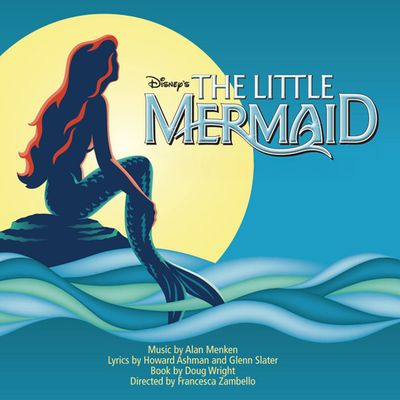
Dive into a magical behind-the-scenes journey with the cast and creative team of The Little Mermaid, now running at Paper Mill Playhouse through June 29th! This special bonus episode takes you inside the rehearsal room and onstage with the artists who are reimagining the classic Disney tale with heart, humor, and fresh perspective... Read More
From the show: The Theatre Podcast with Alan Seales
Guests
Featured Shows
About
Dive into a magical behind-the-scenes journey with the cast and creative team of The Little Mermaid, now running at Paper Mill Playhouse through June 29th! This special bonus episode takes you inside the rehearsal room and onstage with the artists who are reimagining the classic Disney tale with heart, humor, and fresh perspective. From the emotional depth of the parent-child relationship to the physical challenges of portraying life under the sea, this production brings new layers to a story we all thought we knew.
Hear from director/choreographer Joanne Hunter on how she approached the story from a modern lens, and enjoy candid conversations with the cast as they share what makes this version of The Little Mermaid so special. From bold audition choices to unexpected emotional moments, this episode is a celebration of theatrical creativity and connection.
Get your tickets now at https://papermill.org/.
Interviewees (in order of appearance):
- JoAnn M. Hunter – Director & Choreographer
- Aubrey Matalon – Flounder
- Hillary Fisher – Ariel
- Haven Burton – Ursula
- Jared Goldsmith – Scuttle
- Sean Patrick Doyle – Flotsam
- Nick Cortazzo – Jetsam
- Kyle Taylor Parker – Sebastian
- Graham Rowat – King Triton
- Mark Doyle – Prince Eric
- Christopher Gurr – Grimsby
Connect with The Theatre Podcast:
- Support the podcast on Patreon and watch video versions of the episodes: Patreon.com/TheTheatrePodcast
- Twitter & Instagram: @theatre_podcast
- Facebook.com/OfficialTheatrePodcast
- TheTheatrePodcast.com
- Alan's personal Instagram: @alanseales
- Email me at feedback@thetheatrepodcast.com. I want to know what you think.
Transcript
This transcript was automatically generated and might contain errors.
[0:00] Alan Seales: Hey everyone, welcome to another all-new episode of The Theatre Podcast with Alan Seales. That's me, I'm your host, Alan, and today we are diving deep under the sea for a behind-the-scenes look at The Little Mermaid, now running at Papermill Playhouse in New Jersey through June 29th. But this is not your average retelling of the animated classic. Director and choreographer Joanne Hunter has reimagined the show with emotional depth and stunning movement and kind of a fresh perspective on the beloved characters that we all probably grew up with, while staying true to the magic of the original, of course. So in this episode, at the press day that happened back in May, I chatted with members of the cast and creative team to talk about their bold audition choices, rethinking what it means to be a mermaid or a crab or an eel on stage, and why this production resonates on such a human level.
So we laugh, we have some insight, there's some heartfelt moments. So don't miss your chance to see this magical show before it closes. Get your tickets now at papermill.org. And as always, don't forget to follow me on social media and head to Patreon or Spotify to watch the full video versions of this episode. So now everyone, please enjoy this episode with the cast and creatives from Papermill Playhouse's The Little Mermaid.
[1:25] Joanne M. Hunter: I am Joanne M. Hunter.
[1:26] Alan Seales: And why are we whispering?
[1:27] Joanne M. Hunter: I don't, I don't know. I don't know.
[1:33] Joanne M. Hunter: My name is Joanne Hunter, and I am the director and choreographer of The Little Mermaid at Papermill Playhouse.
[1:38] Alan Seales: And how did you get connected to this? Because I heard you say in the performance we just saw that you didn't really know anything about the stage show before, other than the movie, right?
[1:50] Joanne M. Hunter: I did not. You know, of course, I know Little Mermaid because of the movie, right? It's like it's ingrained somewhere in the back of your head. So I knew, you know, songs, you know, the iconic songs and that, but I honestly did not know really the essence of the story. I kind of know the story just because everyone's heard of it. And so when Mark approached me, he said, would you be interested in directing, choreographing this? I was like, you know, and not that I wasn't interested, but I thought, I don't know this piece really. So I thought, let me read it because, because I just, I just like, is it, is it, you know, this is terrible to say, but is it just fluff? Not that, not that there's anything wrong with fluff because sometimes you want to have just have a good time, but it actually has so much more depth and digging into the script with these actors and figuring out, you know, you know, it's easy to get drawn into what the old school fairytale was and that, and you know, when it's written, it's a product of its times, which was beautiful, but how do we pay, pay absolute respect to the book, to the writing, but then how do we embody and embrace a, a more today's point of view with young people, you know, and I'm not saying we have to change any dialogue or anything, but it's, it's the way you delve into it and you, and you come to terms with each character.
So that was really interesting. And when we got to talking, we work on scenes with the actors talking about, okay, what, what is it that you want here? What is the most important thing? And it was so interesting that we actually found, or I found more depth than maybe is just on the surface, no pun intended.
[3:30] Alan Seales: That's really interesting because I was just thinking, as you were saying, describing this process that, that taking it from an animated medium to a human real life medium, I mean, when you're, when you're voicing an animated character, you're supposed to bring all this stuff to, to the character anyway, but bringing it into real life, you're, you're layering on top, like all the, the facial expressions, the micro expressions, the body language, that, that is very important to, to interpersonal communication. You were saying between like Chris Gurr and our, and our gentleman playing Prince Eric, like the two of, Mark, yeah, yeah, the two of them have this relationship that we didn't see, we haven't seen previously.
[4:06] Joanne M. Hunter: No, and I think, you know, it's, it's easy to go into those stereotypes as, for instance, with Christopher's role of Grimsby, right? You know, he's this like, you know, you think of him as like just, he comes from, he, he's in the world of royalty, right? He's there to take care of this prince. He, he worked under his father, who was a king. He's, this is what you're supposed to do, but human beings are much more rounded to that. Yes, that is his job, but he also sees the struggle that this young man has, and even though he wants him to take over and, and lead this world that he's in, he also understands that he has conflict, but he also sees in him that conflict is what's going to make him a great leader.
[5:01] Alan Seales: I love that. I'm, I'm applying the knowledge that I just uncovered in the last few weeks. I put together an episode all about, an episode all about Howard Ashman, because his birthday was just a few days ago. May 17th was his, would be his birthday, and Little Mermaid was the, was the, he and Alan Menken came in and, and turned Disney animation around. Completely. And, and it was the first time in decades that anybody had written songs that actually progressed the story and gave the characters depth.
[5:28] Joanne M. Hunter: Absolutely. And, and so now here in the, in the stage production, how much of what we hear, what we know, and what we expect from the animated classic are we going to see? And then like, how is that layered in with the new stuff that's also progressing? Or that, not new stuff, but the, the stage, the stage songs exclusive to the stage performance that are going to push the characters forward?
[5:47] Joanne M. Hunter: That's a great question. I think that, you know, when you're watching an animated piece and really well done animated pieces as Disney does, as Pixar does, you know, they, they humanize within the cartoon for a lack of, of, of the better way to say it, animation as well as the cartoon, but they, they are, what they do well is bring humanity and humanizing these cartoons, these animations. We then now have to almost reverse that because we have real people on stage and we are bringing what we have in our heads, especially an older generation who have seen that movie, right? We have to, we have live actors on stage and we have to use our imagination so much more, but with great actors, which I have, I'm so lucky that they are able to embody.
And how do we embody people who don't live on hard ground or not people, but, but, but beings that don't live on hard, that beings live in the water, that, how did you do that without it feeling campy? And actually I don't mind campy. I love campy, cheesy. How do you do that without making it feel and look cheesy? So it's, it's about finding actors who are so comfortable in their beings and their bodies and can figure out, you know, I would say to them, when you're in water, do you already, you always have a natural resistance because that's what water does. So how do you do that physically? Interesting. You know, how do you do that physically? But then also, so that's what we have to do. We have to find the other, we have to come in from the other way, but then because you have real actors, you already have the humanity. You already have that well-rounded being. Now, how do you make the audience go, okay, they're not really humans. They're actually other beings living in another place on this earth.
[7:37] Alan Seales: Do you have experience, you have experienced choreographing cats, right?
[7:41] Joanne M. Hunter: I know, but I did cats. I did cats. Yes. I was on the national tour. Yeah.
[7:45] Alan Seales: So when you, but so I'm equating this kind of like, I'm assuming, not assuming, I'm hoping that you came in and you're like, all right, we are all going to be fish for, for this rehearsal, because I, I've heard so many stories about when you come in and do cats, you have to like,
[7:57] Joanne M. Hunter: It was like two days of being cats. I did not do that. I will be honest. And it's, and here's the thing, I, you know, I could have been, but you know, the tricky thing is because cats live on the earth, on the ground, solid ground. We can't imitate fish because we're not in a bowl. We're not in water. That's the thing. We have to make the audience believe that our stage is a huge giant aquarium or an ocean. So it's a, it's slightly different, you know, and I, for me, it's just about in movement. And I, because when you hire really good people that can, you give them the note and then they can take it and then embody it even more and start to play with it. And that's, and that's what you have to do.
And then you just, you, you might, my job is to help edit and guide them once they find their way. It's just like, yes, yes. And finding your way, but it's, it is tricky because they don't live on solid ground. It's very different than being the imitating a cat because cat at least breathes the air we breathe where, where if you live, if you're in an aquarium, you don't breathe the way we breathe. You know, it's a whole different, your point of view is always up. If you, if like for Ariel, her point of view is always looking up and she barely sees enough sun. She gets that shimmer, but the lower she goes, the darker it gets. You know, when we're humans, it gets dark at night and then it gets light during the day. Where in the water, sometimes depending how deep you are, it's dark all the time.
[9:30] Alan Seales: Yeah. That's a very, very interesting comparison. And as a director and choreographer, when you're doing your blocking, when you're setting up the scenes, are you giving them work? Like thinking in your mind, like doing the choreography, like as they move around to that point?
[9:51] Joanne M. Hunter: I think about, you know, I think about, yeah, absolutely. And also even if we're not in water, just scenically, I think good transitions can make or bad transitions break a shell. So, you know, I'm not one that I don't, I don't, I'm not a blackout gal and not that sometimes they're appropriate, but, but this world, the worlds have to, they have to collide and that, or they have to, they have to intersect. And then one has to be more forward than the other. So absolutely. But even, even moving, even if they weren't in water, it's a constant world of movement. The only difference is it's not just moving bodies around what's moving bodies around that, that have to, they have to embody or imitate a being that, that, that is always has resistance to water. There's currents. Yes. Yes. Because as I walk by you, I'm going to leave a ripple when I swim by.
[10:42] Joanne M. Hunter: That's right. That's exactly right. I love it. I love that. Okay. So then final question is the fun one. We, we have, we're a little mermaid, little mermaid, beauty and the beast, Lion King, Aladdin, all these Disney classics have become amazing stage productions. What's a Disney classic or current any Disney or Pixar we'll go, we'll go full suite. Okay. Let's do, let's do all Disney properties, including star wars. If you want to go there, that you would like seeing make that you would like to see be made into a stage production.
[11:12] Joanne M. Hunter: Okay. Can I ask a question and you might have to edit this out is up a Pixar. Is that, this is the own Pixar? Yes. Excellent. That is one of my all time. And I love them all. I mean, I love beauty and the beast when it came out and the Lion King was remarkable, but there's something about up because here's the thing with, uh, with beauty and the beast there, you had inanimate objects and humans, right? With Lion King, you have animals, but up with humans, right? And that first seat first, like 10 minutes, I remember talking with my husband, we were both looking at each other going, okay, are we going to cry? Are we going to cry? What's going on? It was so magical. And it is good. That animation was so beautiful because the detail and the facial expressions look so real.
I, and that story is just make, I, that's about perseverance and in love and holding onto love and living, right? I mean, what in a world would we always know that life and death is part of living and law? I love that. I'm going with that. I'm going to amend my question to only say non current musical Pixar films. So you give me that. All right. Thank you. Well, congratulations. I cannot wait to see this. It'll be so good. Thank you.
[12:38] Aubrey Matalon: Hello. I am Aubrey Matalon and I am playing Flounder.
[12:43] Hillary Fisher: Yeah. I'm Hillary Fisher and I'm playing Ariel.
[12:50] Alan Seales: So what is your personal experience for both of you on growing up? Did you grow up with the animated film? I don't presume to have any age. I'm not going to age either of you. So you may be older than me, younger than me. I grew up, I went through, uh, I was a little one when this came out. Anyway, I've aged myself, but anyway, what was your first experience with the movie and like, how did you get connected with this?
[13:05] Aubrey Matalon: Yeah, I don't, I don't have a specific memory, but like I grew up watching the movie. It's, it's, it's one of the few movies I really remember watching. I'm not, I wasn't like the biggest Disney kid growing up, but like that little mermaid and snow white were like the two for me.
[13:20] Hillary Fisher: Snow white. Okay. I loved the little mermaid. I don't know how old I was when it came out, but I know I had little mermaid sheets and I was obsessed. And then I was obsessed again when they made a little mermaid that looks like me. So it felt like I was a kid again and I got to revisit that feeling.
[13:34] Alan Seales: So, well, then how does it feel for you to see someone who looks like you on a big screen and now you're, you're bringing this to the stage? How does this feel?
[13:39] Hillary Fisher: I could cry. It's really exciting. It feels super meaningful and I'm excited for people to see it and little girls to see a different version of a little mermaid again in theater live. Um, so yeah, I'm really grateful.
[13:53] Alan Seales: And then for you playing Flounder, traditionally played by a little boy and it is actually a fish. So when you get the call, the audition to be like, I'm going to be a Flounder. What are you thinking?
[14:06] Aubrey Matalon: Oh, I was like jumping at the opportunity to do this. I have like joked to friends. I was like, I want to play Flounder because she's in love is a very hard high song and it's a bop. And so I was like thrilled to be a part of it and actually like be like, wait, y'all want to actually take a chance on my like silly goofy idea that like Flounder is a girly.
[15:36] Alan Seales: If you could take any non currently a musical Pixar film and turn it into a Disney musical, which one would you choose?
[16:06] Alan Seales: If you could take any non currently a musical and turn it into a Disney musical, which one would you choose?
[16:26] Alan Seales: If you could take any non currently a musical and turn it into a Disney musical, which one would you choose?
[16:46] Alan Seales: If you could take any non currently a musical and turn it into a Disney musical, which one would you choose?
[17:06] Alan Seales: If you could take any non currently a musical and turn it into a Disney musical, which one would you choose?
[17:26] Alan Seales: If you could take any non currently a musical and turn it into a Disney musical, which one would you choose?
[17:46] Alan Seales: If you could take any non currently a musical and turn it into a Disney musical, which one would you choose?
[18:06] Alan Seales: If you could take any non currently a musical and turn it into a Disney musical, which one would you choose?
[18:26] Alan Seales: If you could take any non currently a musical and turn it into a Disney musical, which one would you choose?
[18:46] Alan Seales: If you could take any non currently a musical and turn it into a Disney musical, which one would you choose?
[19:06] Alan Seales: If you could take any non currently a musical and turn it into a Disney musical, which one would you choose?
[19:26] Alan Seales: If you could take any non currently a musical and turn it into a Disney musical, which one would you choose?
[19:46] Alan Seales: If you could take any non currently a musical and turn it into a Disney musical, which one would you choose?
[20:06] Alan Seales: If you could take any non currently a musical and turn it into a Disney musical, which one would you choose?
[20:26] Alan Seales: If you could take any non currently a musical and turn it into a Disney musical, which one would you choose?
[20:46] Alan Seales: If you could take any non currently a musical and turn it into a Disney musical, which one would you choose?
[21:16] Alan Seales: If you could take any non currently a musical and turn it into a Disney musical, which one would you choose?
[21:36] Alan Seales: If you could take any non currently a musical and turn it into a Disney musical, which one would you choose?
[21:56] Alan Seales: If you could take any non currently a musical and turn it into a Disney musical, which one would you choose?
[22:16] Alan Seales: If you could take any non currently a musical and turn it into a Disney musical, which one would you choose?
[22:46] Alan Seales: If you could take any non currently a musical and turn it into a Disney musical, which one would you choose?
[23:16] Alan Seales: If you could take any non currently a musical and turn it into a Disney musical, which one would you choose?
[23:36] Alan Seales: If you could take any non currently a musical and turn it into a Disney musical, which one would you choose?
[23:56] Alan Seales: If you could take any non currently a musical and turn it into a Disney musical, which one would you choose?
[24:16] Alan Seales: If you could take any non currently a musical and turn it into a Disney musical, which one would you choose?
[24:36] Alan Seales: If you could take any non currently a musical and turn it into a Disney musical, which one would you choose?
[25:06] Alan Seales: If you could take any non currently a musical and turn it into a Disney musical, which one would you choose?
[25:36] Alan Seales: If you could take any non currently a musical and turn it into a Disney musical, which one would you choose?
[25:56] Alan Seales: If you could take any non currently a musical and turn it into a Disney musical, which one would you choose?
[26:16] Alan Seales: If you could take any non currently a musical and turn it into a Disney musical, which one would you choose?
[26:36] Alan Seales: If you could take any non currently a musical and turn it into a Disney musical, which one would you choose?
[27:06] Alan Seales: If you could take any non currently a musical and turn it into a Disney musical, which one would you choose?
[27:26] Alan Seales: If you could take any non currently a musical and turn it into a Disney musical, which one would you choose?
[27:46] Alan Seales: If you could take any non currently a musical and turn it into a Disney musical, which one would you choose?
[28:06] Alan Seales: If you could take any non currently a musical and turn it into a Disney musical, which one would you choose?
[28:26] Alan Seales: If you could take any non currently a musical and turn it into a Disney musical, which one would you choose?
[28:46] Alan Seales: If you could take any non currently a musical and turn it into a Disney musical, which one would you choose?
[29:14] Aubrey Matalon: I grew up on, I haven't told Haven this either, so if she listens, she's about to find out, I grew up on her bootlegs of Legally Blonde and Shrek. Like I was a kid just like feverishly trying to find them. So now being on stage and playing with her in rehearsals and creating this bond has been super cool. And she is as lovely as you hope she is and makes the perfect like fun villain in the show. She's incredible. She finds a great balance of the fun but also the danger. Haven and I did Kinky Boots on Broadway together with Kyle Taylor Parker, with Chris Gurr, with Michael Milkennon who's in the ensemble. So it's just like in a way a kind of Kinky Boots reunion. Very, very different show. I mean, I've witnessed their brilliance and versatility and like comic chops, you know, already.
And this cast is spectacular, honestly. All right. So then between the Disney Pixar properties, what existing movie that is already not a musical would you like to see turned into a musical? I mean, I'm going to go with Moana. I know it's like kind of recent, but there's just something. It's already got music. Oh, no music. You're cheating. No music. Can't have music. No, like so. So no, no, no. Finding Nemo. I know like there's the stage version in Disney, but that is spectacular. And the fact that they didn't bring that to Broadway is crazy. Yeah. Nemo is a great choice. I mean, do we want to go full existential like WALL-E or... Haven said WALL-E. You know what I mean? But I'm a big fan of like the Laika Studios stuff, like Coraline and the Box Trolls.
Shameless plug. Yeah. I mean, let's turn them into a... You were in what? Yeah. The Box Trolls. What? What? Yes, I did the singing for Ben Kingsley in that, but I think it would... You heard it here first. Yeah. It would make a great musical. Yeah, I think so, too. Up, I think it's my choice. I'm shocked we don't have more Pixar Broadway musicals. They just don't, they don't do music. I don't think Pixar's... Have they ever done anything with music? I think it's always been Disney. Not really, but they can write it. I couldn't, but someone else could. SpongeBob could be a musical. Right. So can that. Or like, what's the Toy Story? Like everyone loves... There's 17 movies. So where's the musical?
Toy Story 18, like geriatric. It's at the retirement home. They're like, where's my money? I'd watch it. I would, too. All right. Thank you, guys. This has been great. I cannot wait to see the show on its feet. Thank you. Thank you. Thank you.
[31:47] Kyle Taylor Parker: Don't go anywhere. We'll be right back after this break. Welcome back to the episode. I'm Kyle Taylor Parker. Folks call me KTP, and I play Sebastian.
[31:56] Graham Rowat: KTP? KTP. I need to use it more, and I will. I'm Graham Rowat, and I'm going to look, even though it's audio, but I'm going to do a little bit of both. Graham Rowat, and I play King Triton. And King Triton... Well, you know Sebastian. I'm going to come back to Sebastian. King Triton, I believe, is one of the lesser appreciated characters in this, because as a now dad myself, I'm like, if my girl went off and was like going up to the other side, the surface, I would be hella pissed. You know what I mean? And then if her best friend was coming back... Anyway, so do you have kids? Are you relating as a dad to bring this all in? Because I'm talking to Joanne, and to take this from animated version into real life version, it's a bit of a switch.
[32:35] Kyle Taylor Parker: So I have a 14-year-old son, and so I relate in that respect. But a lot of people see the fantastical parts of this story, and I've said this to Kyle, so KTP, a couple times, because we've been... I hate it when it starts feeling like you can't answer, but the truth is, at the heart of the story, it's about parents and children, which is what you're saying. It resonates with us, and that's why people come out of the show, they will be coming out of the show feeling kind of emotional, because it's about children trying to find their independence, and parents struggling to guide them without restricting them, and also ultimately letting them go. And I still have five more years, maybe, with my son, and every time we sit down around the table and have a meal together, I have a little pang in my gut, thinking, how many more of these will there be? And then he grows fins and swims away.
[33:48] Graham Rowat: I know, I shouldn't ask you questions, but what are your children age?
[33:52] Kyle Taylor Parker: Two boys, ten and a half, and almost nine. They're 20 months apart, they're best frenemies, and yeah, my younger one, especially, is very cuddly, and so he'll be tired, I'll be laying down on the couch, and he'll come literally just throw himself on top of me, and he did this yesterday, and I just gave him a big hug, because I was like, I don't ever want this to end, or there will be a time when I do want it to end, because he's suffocating me, because he makes too much of a pattern.
[34:19] Graham Rowat: Yeah, well, there'll be a time when he won't be cuddly, he won't want to cuddle, he'll be like, I don't do that anymore, hopefully not, hopefully not.
[34:32] Kyle Taylor Parker: Hopefully it doesn't come, yeah, time is fast. Well, KTP, so, playing a crab.
[34:37] Graham Rowat: Yeah.
[34:37] Kyle Taylor Parker: You got the red going on, you got your rehearsal, your rehearsal claws, are you going to have, is that it, like, are they going to take that onto the stage, or are there rehearsal claws and production claws, do we, how many claws do we have? These are the hard-hitting questions.
[34:50] Graham Rowat: I think those are the claws. There will be tentacles in the back, and like, yeah, there's a whole situation, but.
[34:56] Kyle Taylor Parker: And so, when you're approaching being a crab, are you coming in, making, like, draw a dish, I'm asking everyone for, like, their bold choices they're making, like being a fish, being an Ursula, whatever, a squid, yeah, I guess Ursula is a squid.
[35:09] Graham Rowat: Yeah.
[35:09] Kyle Taylor Parker: Like being these incredibly not octopus, being these incredibly not human, or human-esque people, Triton's a little, a little bit more human, at least the other body.
[35:18] Graham Rowat: Man, man.
[35:19] Kyle Taylor Parker: Yeah, so, like, how are you approaching it, like, when you get the call, you're like, I'm going to go, I'm going to be a crab, how are you coming in, what choices are you making, what are you doing to stand out?
[35:30] Graham Rowat: Yeah, I feel like as an actor, I'm always inside out first, so at the audition, I was focusing on the spiritual side of being a crab, so to speak, and finding that, and I think I was, like, maybe gesticulating a bit, but more from the idea of, like, what I imagine my Caribbean step-uncle would do. And then once I got the job, I've just been playing so physically every day. When you have it, there's nothing to lose, then you can just play. I mean, I wish I had have been as brave in the audition, physically, but I got here.
[36:03] Kyle Taylor Parker: Well, what was that process like, though, because if you're coming in and they're like, all right, try it again, more claw, more claw, more scuttling, I mean, not, no pun intended, but, like, you know, crabs kind of scuttle around.
[36:12] Graham Rowat: Yeah, well, I think the redirection in the audition was, can you play with the frantic, physical nature of Sebastian? He's always really worried.
[36:21] Kyle Taylor Parker: Right.
[36:22] Graham Rowat: And then I just did.
[36:23] Kyle Taylor Parker: And you stopped taking your anxiety meds and came back in for the callback, and the rest is history, yeah. So what's the one thing about the characters that you guys are playing in the stage version, that you do in the stage version that's not in the musical, in the movie that we know? Because I love surprises, I love bringing them.
[36:39] Graham Rowat: Because Kyle and I have never seen the movie.
[36:43] Kyle Taylor Parker: What?
[36:43] Graham Rowat: Yeah.
[36:44] Kyle Taylor Parker: Yeah, true. I haven't.
[36:46] Graham Rowat: Are you from this planet?
[36:47] Kyle Taylor Parker: Yes. I just, for whatever reason, wasn't watching it, but.
[36:51] Graham Rowat: Yeah, so I think the movie came out when I was a dude, a single dude in his 20s, and I think that nothing about the movie at the time was like, I'm going to go to the movies to see that, because I was a single dude in his 20s, and it just didn't, it wasn't the time or place, and then I had a 14-year-old boy, and I'm like, why didn't I show him, or I have, he's 14 now, but why didn't I show him that when he was younger? And I think it's because, well, I show him the movies I know, and then I want to re-watch, because when you sit down with a kid, you're going to re-watch it, so I didn't know it, and I would rather queue up another wonderful Disney movie, and it just never, I never saw it. And then when you get cast, then you definitely don't see it, because you don't want to be influenced by the performance in the movie, or the animated, or the voice actor, and so, yeah, still haven't seen it.
[37:43] Graham Rowat: Yeah, you want to find it for yourself once you get it.
[37:45] Kyle Taylor Parker: Yeah, that's fascinating. So then, do you have any plans to watch it after the production's over?
[37:50] Graham Rowat: Maybe, maybe during, like once I'm up. I feel really confident in what I do now, so.
[37:55] Kyle Taylor Parker: Yeah, I don't know. Sometimes when I get to the end of the performance and the run, I'm like, I need a break from all that, but yeah, maybe I'll watch it. My wife will say, okay, you've got to watch this, because we would have a reference in our group of friends, where my wife, and they would all start going, ah, whenever they, I don't know, whenever they were jokingly talking about a fantastical dream, and I would start joining them in that, but I never really knew where they were pulling it from. That's how little I knew of The Mermaid.
[38:28] Graham Rowat: Wow, I knew that part.
[38:29] Kyle Taylor Parker: Yeah, but you know the songs.
[38:31] Graham Rowat: Yeah, yeah, yeah, I knew the songs. Like Under the Sea, Part of the World, and I mean, I knew it, part of it, because South Park made fun of, of one of the, the Bigger Longer Not Cut, like, because I think it's, is it Satan who wants to long to go above onto the.
[38:46] Kyle Taylor Parker: That's right, he did.
[38:51] Graham Rowat: That is amazing. Because I went through, I went through every single one of the songs from Bigger Longer Not Cut, and figure out which one that they parodied, because Matt Cilentri-Parker, Trey especially, loves musicals.
[39:01] Kyle Taylor Parker: Mm-hmm.
[39:02] Graham Rowat: So I grew up with him. I've seen that, but maybe I'll show that to my 14-year-old son. He would appreciate that. I don't know if it holds up anymore, but it's still good.
[39:10] Kyle Taylor Parker: Well, okay, last question, then. What Pixar or Disney movie that is currently not full of music would you like to see turned into a musical?
[39:20] Graham Rowat: Soul. I love Soul.
[39:22] Kyle Taylor Parker: Ooh, I love that.
[39:23] Graham Rowat: I want to be in Soul, if that's the thing that's going to be a thing.
[39:26] Kyle Taylor Parker: Yes.
[39:27] Graham Rowat: Yeah, that's a great pick.
[39:28] Kyle Taylor Parker: WALL-E.
[39:30] Graham Rowat: I think WALL-E is our frontrunner, but that's multiple votes for WALL-E. I mean, it's just a favorite. It's just a favorite. And also, why do I want to say The Invincibles, not The Invincibles, The Incredibles.
[39:43] Kyle Taylor Parker: But the musical score of Incredibles is so perfect, even though it's not to be sung.
[39:49] Graham Rowat: I didn't kind of want to mess with the magic of those horns that were so reminiscent of like action Bond.
[39:57] Kyle Taylor Parker: Thank you, Alan. Take care.
[40:00] Mark Doyle: I'm Marge Doyle, and I play Prince Eric.
[40:03] Christopher Gurr: And I'm Christopher Gurr, and I play Grimsby.
[40:05] Mark Doyle: So you two are the royals here.
[40:09] Christopher Gurr: I love what Joanne Hunter, the director-choreographer, was saying in our production. The demo we just saw was that Grimsby and the Prince, Eric, have such an emotional connection that we don't really get to explore in the animated movie.
[40:24] Mark Doyle: So what did the two of you do to really bring that to the stage and explore that?
[40:29] Christopher Gurr: Well, I'll be honest, we didn't talk about it on the sidelines.
[40:33] Mark Doyle: You're just that good.
[40:34] Christopher Gurr: Well, no, it's not. That is just like, well, we do have good instincts.
[40:38] Mark Doyle: Yes, and I think it's a good fit.
[40:40] Christopher Gurr: Yeah, it is a good fit. And the story does nothing but support that idea to me. I mean, we start with, we're on a ship when we start. He's having a fantastic time. I'm having a terrible time. Makes me ask the question, then why is Grimsby there? Did someone hold a gun to his head? No, he loves the boy. He wants to make sure he's okay. He wants to make sure he, you know.
[41:00] Mark Doyle: So, I mean, from the first scene, it seems to me the play is saying, these guys love each other, even though they're not kids. You know, they love each other.
[41:07] Christopher Gurr: And I mean, like, especially in royalty, I guess there's probably the help, the hired help that is actually raising these kids, right? Because the parents are off doing things that are, like, all over the place.
[41:20] Mark Doyle: Or are dead, because it's a fairy tale.
[41:22] Christopher Gurr: Right? It's a Disney movie.
[41:24] Mark Doyle: There's, yeah.
[41:25] Christopher Gurr: You can't have a parent.
[41:26] Mark Doyle: Exactly, yeah.
[41:27] Christopher Gurr: Well, what's something that you two get to do in the stage production that doesn't happen in the animated movie?
[41:32] Mark Doyle: Oh, that's a really good question.
[41:34] Christopher Gurr: And I should know that, because I just watched the animated movie two nights ago.
[41:39] Mark Doyle: I mean, have a full arc?
[41:41] Christopher Gurr: Yeah, well, be fully explored as human beings. You know, let's not diss the animated, because while I don't think the animated movie frames the same idea we were just talking about, about the actual emotional connection about it, those animators are good. And there are moments, I mean, this idea didn't come out of the ether. There are moments when that animated Grimsby is looking at him like, he's the hope of the kingdom, and I'm invested in that idea. As opposed to just being, you're a problem, I'm in charge of you. It doesn't feel like that, even in the animated movie.
[42:10] Mark Doyle: Right.
[42:11] Christopher Gurr: Yeah, I mean, I agree with that. It's very much a loving relationship.
[42:18] Mark Doyle: It's also interesting in terms of authority, because technically, you know, I'm the prince. I'm in charge, but Grimsby raised me.
[42:25] Christopher Gurr: And so it's like, who is?
[42:27] Mark Doyle: Plus, it's a tricky time, as any parent will recognize, because I'm like, well, my expectation is that he's going to be a grown man. So do I treat him like a grown man and let him have his own autonomy? It's a tricky time for any parent-child relationship.
[42:44] Christopher Gurr: The whole, I think, undercurrent of the whole movie and the story itself is that it's a parent-child relationship on every corner.
[42:51] Mark Doyle: Yeah, kind of mirrored relationships between me and you and Ariel and Triton.
[42:56] Christopher Gurr: And even Sebastian and Ariel, in terms of sort of like, well, you're not really my dad, but yeah, exactly.
[43:02] Mark Doyle: Okay, so then the last question, fun one, between the Disney and the Pixar properties, anything that doesn't currently have sung songs in it, what would you like to see be turned into a musical?
[43:07] Christopher Gurr: Turned into a musical?
[43:14] Mark Doyle: Oh, wow.
[43:15] Christopher Gurr: Toy Story.
[43:16] Mark Doyle: Does Toy Story have songs in it?
[43:17] Christopher Gurr: No, no, I mean, no, Randy Newman did the theme song for it, but it doesn't have songs in it.
[43:22] Mark Doyle: You got a friend like me.
[43:24] Christopher Gurr: I think, I think-
[43:24] Mark Doyle: Is that Pixar or is that DreamWorks?
[43:27] Christopher Gurr: Pixar.
[43:27] Mark Doyle: Pixar, yeah.
[43:27] Christopher Gurr: Okay, yeah, so we'll put them on the map.
[43:29] Mark Doyle: I'm going to say Inside Out.
[43:31] Christopher Gurr: That's two for Inside Out.
[43:32] Mark Doyle: I think Inside Out would make a really good musical.
[43:34] Christopher Gurr: Okay, sure.
[43:34] Mark Doyle: We've got Up, Inside Out.
[43:36] Christopher Gurr: Yeah, Haven.
[43:37] Mark Doyle: Just those first seven minutes.
[43:40] Christopher Gurr: You can make a score out of that.
[43:41] Mark Doyle: Yeah.
[43:42] Christopher Gurr: Absolutely.
[43:43] Mark Doyle: Well, thank you guys. This has been incredible.
[43:43] Christopher Gurr: Thank you, great.
[43:44] Mark Doyle: I can't wait to see the show.
[43:44] Christopher Gurr: Appreciate it.
[43:45] Mark Doyle: Take care.
© Broadway Podcast Network, All Rights Reserved