

Exclusive interviews from inside the 'The Outsiders' rehearsal room on a special, invite-only press junket... Read More
From the show: The Theatre Podcast with Alan Seales
Guests

Miniseries Inclusions
Featured Shows
About
Exclusive interviews from inside the 'The Outsiders' rehearsal room on a special, invite-only press junket. Watch the behind the scenes video here: https://www.instagram.com/theatre_podcast/reel/C4mRRe6uoYG/
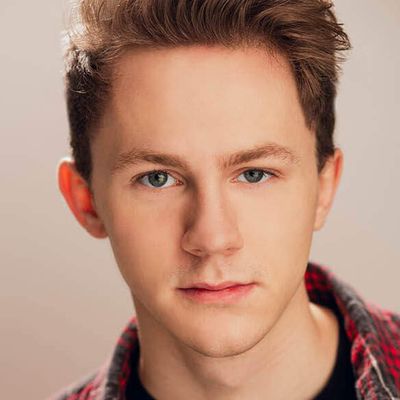
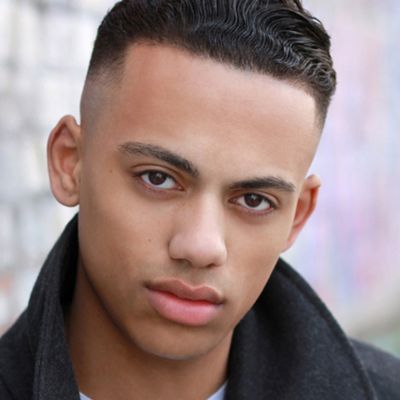
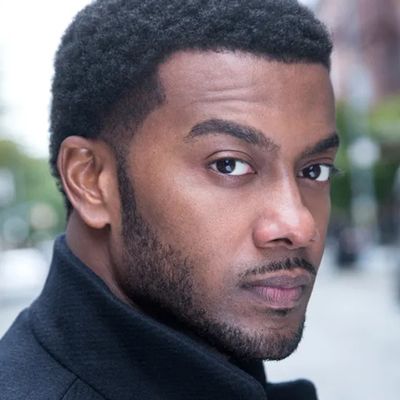
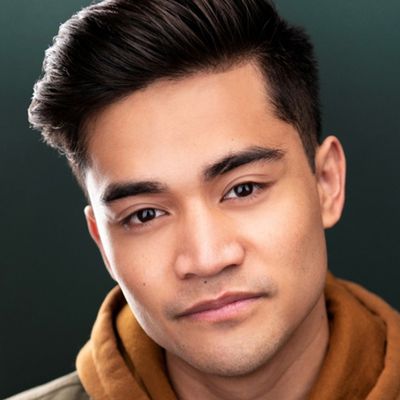
Hear from:
- Brody Grant (Ponyboy Curtis)
- Sky Lakota-Lynch (Johnny Cade)
- Joshua Boone (Dallas Winston)
- Brent Comer (Darrel Curtis)
- Jason Schmidt (Sodapop Curtis)
- Emma Pittman (Cherry Vallance)
- Daryl Tofa (Two-Bit Matthews)
- Kevin William Paul (Bob Sheldon)
- Dan Berry (Paul Holden)
- Tilly Evans-Krueger (Ace, Associate Choreographer)
- Danya Taymor (Director)
- Adam Rapp (Book)
- Justin Levine (Book, Score)
- Zach Chance (Score)
- Jonathan Clay (Score)
- Jeff & Rick Kuperman (Choreography)
Connect with The Theatre Podcast:
- Support the podcast on Patreon: Patreon.com/TheTheatrePodcast
- YouTube: YouTube.com/TheTheatrePodcast
- Threads, Twitter & Instagram: @theatre_podcast
- TikTok: @thetheatrepodcast
- Facebook.com/OfficialTheatrePodcast
- TheTheatrePodcast.com
- My personal Instagram: @alanseales
Transcript
This transcript was automatically generated and might contain errors.
[0:00] Alan Seales: Hey, everyone. Welcome to The Theatre Podcast with Alan Seales. That's me. I'm Alan, your host. If you're a long-time listener of this podcast, you'll know that the tagline is Intimate Personal Conversations with the Industry's Biggest Names. And this episode holds true to that, but these days, I'm fortunate enough to be able to get some exclusive behind-the-scenes access to an entire production, which is what this episode is all about. You're about to hear mini-interviews with the cast and crew of The Outsiders, a new musical from a recent press junket that they held in their rehearsal space. And I'll post the link to a little behind-the-scenes video I made while I was there in the room, and I'll drop that in the show notes, so make sure to check that. But first, in order to pay some bills, here's a quick commercial break.
[0:57] Alan Seales: In case you didn't know, The Outsiders musical is an adaptation of a book that was released originally in 1967 and is often required reading in high schools. The story takes place over two weeks following the life of a 14-year-old boy named Ponyboy Curtis and his struggles with right and wrong in a society in which he believes that he is an outsider. The story is still very much applicable today. You know, the need to belong to fit in, or being ostracized by others, having physical violence, being threatened, it's all still very much a part of the world now as much as it was back in 1967. But one of the great things about a show like this is that, especially for new Broadway performers and those making their debuts, which most of this cast are, is that it's a story that truly allows them to reflect more on their own personal lives, their experiences look inward and help them grow personally. And this is something that I tried to speak to the cast about. So, here's Joshua Boone kicking us off.
[1:55] Joshua Boone: I'm playing Dallas Winston. My connection was reading the book back in seventh grade. Like, it's the first novel I read, really, the first novel I read from beginning to end. And I was drawn to it because it's the first time I experienced in any medium that, you know, white people could treat other white people the way I felt white people treated black people. Like, the Greasers was synonymous with my people, and it just spoke to me. And I found out it was a musical through Brody Grant. Sidenote, Brody Grant plays Ponyboy Curtis. And we were doing a workshop of another show together, and I haven't done a musical in quite some time, and he just spoke my name to, you know, Danya and encouraged me to look into it, and just seeing information led me next to this guy next to you talking about it now. And we're about to head to Broadway with it, so.
[2:42] Alan Seales: So then, thinking back to when you first read it in seventh grade and middle school and all that to now, like, what has changed about your perspective to the message? Has anything changed? And, like, have you learned about yourself through the process of actually being the characters versus reading about the characters in the book?
[2:57] Joshua Boone: Yeah, I think the experience, unfortunately, is the same. My insight has strengthened. While it's unfortunate the experience is the same, I'm grateful to see how connected we are, and the book helped me with that. To see that while the world has, in some instances or degrees, gotten worse, my understanding of humanity and how we're all connected, regardless of our skin, you know, gender identity, our economic situation, like, we're way more alike than we'll ever differ, and nor did you ever choose anything that you identify as for the most part, you know? You didn't choose the skin you were born in, you just didn't, nor did I, and the book was an inlet to me understanding that, and I'm appreciative for that.
[3:45] Alan Seales: That is beautiful.
[3:46] Emma Pittman: Hi, my name is Emma Pittman, and I'm playing Cherry Valance.
[3:50] Tilly Evans-Krueger: Hi, I'm Tilly Evans-Krueger, and I am Ace and also one of the associate choreographers. Once I started this musical, I picked up the book immediately, and I've now read it several times, and it is just such a beautiful, heart-wrenching story that I can really relate to, and I wish that I had it when I was younger. I wish that I would have read it when I was younger, because I think it would have helped me through a lot of childhood.
[4:15] Emma Pittman: Yeah, I read the book, I think, somewhere in the ninth or the tenth grade, and then my school did a play adaptation of the book, so I felt like I've been connected to this story for a really long time, and trusting who you are and all the different versions of yourself is very valuable. When I was in the tenth grade, I wanted to be Cherry, in the play that we did. I ended up playing Marcia, her best friend, so I got to see and experience all that Cherry was, and I was like, I can't explain it, but I know that's who I am. That's how I feel right now in the tenth grade, and so that's not necessarily how I feel now in my adult body, in my adult life, but I can connect to that Emma in the tenth grade, and trust that she has the answers for me. I don't have to overthink it or get in my head, I can just breathe, look at the great writing that Adam Rapp has given us, and just trust that it's on the page.
[5:12] Tilly Evans-Krueger: So I'm Ace, and she is a new character that we've written for this iteration of The Outsiders, and doing this has really brought back a lot of memories from earlier on in my life, but I have learned that I am a wild woman, and so I think that Ace represents the woman that runs with wolves.
[5:39] Alan Seales: You personally are a wild woman, or Ace is a wild woman?
[5:42] Tilly Evans-Krueger: Both.
[5:43] Alan Seales: Oh, okay, okay.
[5:44] Tilly Evans-Krueger: Come on.
[5:45] Alan Seales: Well, yeah.
[5:46] Tilly Evans-Krueger: Come on, well, yeah. Yes, and. Yes, and, honey.
[5:49] Alan Seales: Yes, and.
[5:50] Tilly Evans-Krueger: I've just learned also through my lens as a black woman in this show to have compassion because I have so many layers myself, Ace has so many layers herself, that I now look at people and realize, wow, you must have so much multiplicity inside of yourself.
[6:11] Alan Seales: A cool little tangent that I got on with Brody Grant and Sky Lakota-Lynch about how and why they continue to persevere in this incredibly tough industry.
[6:19] Brody Grant: My name is Brody Grant, and I play Ponyboy Curtis in The Outsiders.
[6:22] Sky Lakota-Lynch: I'm Sky Lakota-Lynch, and I play Johnny Cade in The Outsiders.
[6:26] Alan Seales: And how long have the two of you been connected to the show?
[6:30] Brody Grant: I've been connected to the show for six years.
[6:32] Sky Lakota-Lynch: Six years?
[6:33] Brody Grant: Yeah, six years.
[6:34] Sky Lakota-Lynch: Wow.
[6:35] Brody Grant: Since its baby, since its infancy, since its reading.
[6:37] Alan Seales: Were you part of the original, yeah, the readings and the workshops and everything?
[6:39] Brody Grant: Yeah, I was a part of it since 2018, so it's been a journey to get here.
[6:44] Alan Seales: Wow. And Brody, when did you come on?
[6:46] Brody Grant: I first auditioned in 2019, but I joined the cast about two years ago. Originally as Soda Pop, actually.
[6:54] Sky Lakota-Lynch: Really?
[6:55] Brody Grant: Yes, yes. Which is a fun little—
[6:57] Sky Lakota-Lynch: Killer Soda Pop.
[6:58] Brody Grant: It was a good time. We got rowdy. We sang some songs. We got rowdy.
[7:03] Alan Seales: But no, and then I think a little bit after that is when I switched to Ponyboy. It was probably several months before we did the show in California.
[7:12] Alan Seales: So then, for you, you've been in this show, or been involved for six years. What's one of the biggest differences from six years ago to what's about to open on Broadway?
[7:21] Sky Lakota-Lynch: I think it's just the show is evolving. It's really hard to adapt anything, and especially a book written by a 14-year-old, so it's really hard to find what we can put on the stage and what we can't put on the stage. I think that we've mastered that now. I think the show has taken its time, which is the most important thing, I think, for putting up an adaptation, is to let it cook, you know what I'm saying?
[7:40] Alan Seales: Yeah.
[7:41] Sky Lakota-Lynch: I think that's the number one thing that's changed, is just what we can pull from the source material and what we have to leave alone.
[7:46] Alan Seales: That's interesting, though. And keeping on the six-year thing for a second, if I can ask, how old were you six years ago when you started?
[7:52] Brody Grant: I was 23.
[7:54] Alan Seales: 23?
[7:55] Brody Grant: Yeah.
[7:56] Alan Seales: All right. So you're 29 now.
[7:58] Brody Grant: Yeah.
[7:59] Alan Seales: And then, over time, did you think this was going to happen? How many projects have you been involved with throughout the time? Because I'm looking to get that advice for people who are like, should I do it? Should I stick it out?
[8:05] Sky Lakota-Lynch: Right.
[8:06] Brody Grant: This acting business is really hard.
[8:08] Sky Lakota-Lynch: Of course.
[8:09] Brody Grant: I mean, yeah, it was really wild. I was in Dear Evan Hansen when I was doing The Outsiders. I was doing Double Duty, and so it was really tiring, but at the same time, I just fell in love with the show, and it was the first book I ever read as a kid, and I just felt in my gut that I was Johnny, you know? And I just never wavered, and the pandemic happened, and there was a lot of things that were up in the air, but I just stayed true to myself, even in those moments where I just didn't even think the industry was going to come back. I was like, I know I'm going to do The Outsiders. I know it. I know it. And I had to re-audition after it all.
[8:39] Brody Grant: Yeah, I had to re-audition. It was wild. But I just stayed true.
[8:40] Sky Lakota-Lynch: Really?
[8:42] Alan Seales: Wow. And if you stick around the barbershop long enough, you're bound to get a haircut. That's what I always say.
[8:44] Sky Lakota-Lynch: I love that.
[8:46] Alan Seales: Oh, I need one now.
[8:47] Brody Grant: Yeah, Brody. So, you two, how long have you been trying to do this and make acting a thing? Have you always known you wanted to be a performer?
[8:49] Sky Lakota-Lynch: I wouldn't say there was any, like, golden dream. I just knew that, like, I wanted to act, and I wanted to make music, and I wanted to write music, and I wanted to sing music, and I wanted to have a career, and I wanted to be an actor, and I wanted to be an actor, and I wanted to be an actor, and I wanted to be an actor.
[8:57] Brody Grant: I wouldn't say there was any, like, golden dream. I just knew that, like, I wanted to act, and I wanted to make music, and I wanted to write music, and I wanted to sing music, and I wanted to act in any way I can, and, like, on screen, on a stage, whichever. You know, and growing up in a small town in Georgia, that's where I'm from, you know, I saw a lot of professional theaters in Atlanta, and I was, like, you know, like, I was, like, I grew up in Atlanta, and I was, like, that's the goal. You know what I mean? That's what I want, and so to get to be here in this community of Broadway proper is, like, it's a very beautiful thing, but I can say that, I mean, when I started performing, I think it was about, I think it was in middle school, yeah, sixth grade, when I started doing, like, the school play every year, and then I really, really dug into it my freshman year of high school, so I guess it's about, like, ten years, yeah, ten years running that I've just been, like, working towards this dream, and, like, yeah, whatever it would turn into, you know?
[10:05] Sky Lakota-Lynch: Well, you never know what it's going to be, and it's about embracing the challenges and embracing the opportunities as they come, like, doing Double Duty while in Evan Hansen and taking a chance on this other thing that you never know if it's going to make it to Broadway.
[10:17] Brody Grant: Exactly, yeah. All right, so we're just going to take a quick break.
[10:20] Alan Seales: All right, now we're back.
[10:23] Jason Schmidt: Hi, my name is Jason Schmidt, and I play Soda Pop Curtis. My dad read me The Outsiders when I was a really little kid. He read it to me and my three older sisters, and I remember it like this, really. I remember all the images it gave me. I remember how it made me feel, and it was one of my mom's favorite movies.
[10:40] Brent Comer: My name is Brent Comer, and I play Daryl Curtis. I saw the movie first. The book was secondary to me. I read it in seventh grade, but my first introduction was the movie, and I'm one of three brothers, so we did a lot of self-projection onto the Curtis brothers, as I'm sure a lot of young people sort of do.
[11:00] Alan Seales: Yeah. Well, that's interesting. So then bringing your, I guess, preconceived imagination of who the characters are and what they are into being able to actually put these characters on stage. Did you discover anything new about yourselves or about the characters in translating it from written form into musical singing, dancing form?
[11:20] Brent Comer: Yeah. I actually got a soda bottle on my arm tattooed after La Jolla when I didn't think I was going to be able to do the show because playing the role meant so much to me, and it taught me so much about myself. When I was playing the role, I felt so loose and open and free, and it bled over into my real life, and it was just an amazing experience. So soda has taught me so much. I think me as Brent and my character Daryl, we're two very different creatures. Daryl is very grounded, he's very still, and I am very much not that way. I'm very much a very flighty, I could say anxious person. So I think it's a really unique and special challenge as an actor to sort of find your strength in stillness and sort of find the perspective of stillness and how you see things through such a still and grounded point of view. It's been a really beautiful exercise for me. It's very much a you-are-enough kind of exercise.
[12:28] Dan Barry: My name is Dan Barry. I play Paul Holden. Well, when I first read it, I don't think I really understood how good the writing was. I was a kid. I loved the book. I read it really easily. But now I look back at it, and it's from Ponyboy's perspective, a 14-year-old kid, and it's so truthful. The writing is so truthful. He just talks and theorizes exactly like a kid would, and now that I'm older, I can really relate with that and see that and be like, wow, that's super incredible how S.E. Hinton captured that.
[13:00] Kevin William Paul: So I would say that, yeah. I'm Kevin William Paul. I play Bob, Robert Sheldon, with the roles, both in how we're telling it and in the book and talking with Hinton and everything. Within all the constraints and being a kid, you would think, how much do we really know at that age? But we know and feel so much, and we don't always have the tools to express that. And so I just find that it's really exciting with song to be able to express that with words and the dexterity of how we affect someone on the stage, and then what's so exciting is the audience is going to be there, and they're going to be part of that story with us, and that's what I'm really excited for.
[13:42] Kevin William Paul: What have you learned about yourself throughout this whole process, both as first-time Broadway debuters and also as character originators? I think I had an opinion about Broadway rooms before I was in them, and Donya runs such a beautiful, grounded, human rehearsal room. We all are just such great friends, and we use our relationships and who we are as people to then reflect against our characters. And in doing Paul, I've noticed that so much of myself has come out in portraying him. So I would say that Broadway is better than I ever imagined it could be, and I'm just so honored and blessed to be here. I've learned so much. So playing Bob, there's a lot of darkness in there. There's a lot of light.
There's gold in the story, right? But there's a lot of darkness, and we're going to go so high, and then we're going to go so low. And it's a challenge that I've loved embracing. I remember in my final callback, I was going in for a few different roles, and Donya looked at me in front of all of the rest of the creative team and said, are you really down to do this? Really down to go there, to carry this burden? What I'm asking of you is something that is very specific. And of course, in the moment, I said, are you kidding me? Are you kidding me? You know? I walked out with a little laugh and a smile, like skipping down the street like, am I ready? Are you ready? But the reality is, you know, we can't prepare for how a story or a role will affect us, especially when we live in it for a time.
And now that I've had time to marinate and sit with it from La Jolla to now, who I am has shifted. How I feel the role some days, it feels a little further away. Some days it feels real close. And all the different sides and approaches have taught me a lot about myself and about the fact that we can really embrace all of ourselves. And it's really just the choice of how do we choose to take action in a moment, rather than denying that we all have light and dark within all of us.
[16:41] Alan Seales: You've heard her name mentioned a few times so far by the cast. So now as we switch over to our interviews with the creatives, first up is director Donya Tamor. Also good news, I already have a confirmed recording with Donya for a solo episode coming up very soon. So stay tuned for that.
[16:56] Donya Tamor: My name is Donya Tamor and I'm the director of The Outsiders. It's a story about what it means to survive and to make it through when the unimaginable happens and then happens again and then happens again. I think that the resilience depicted in the story is amazing and inspiring. And then I think the authenticity of what it feels like and what it is to be a teenager really spoke to me.
[17:21] Alan Seales: Were you a teenager when you read the book?
[17:23] Donya Tamor: No.
[17:24] Alan Seales: Did you read it before?
[17:25] Donya Tamor: I didn't read it before. I obviously knew about it. I'd heard about it. I never got assigned it in my public school. So my first encounter of the story was through the musical. So I read and listened to it all the way through and then I read the book.
[17:38] Alan Seales: Interesting.
[17:39] Donya Tamor: Yeah. And I read the book in one sitting. I mean, I've read it a lot of times and I've also read all of her other books at this point. But that first read of the novel was, I can still remember it. The characters in Susie's book are definitely our North Star. So we're not making something that isn't of the book. But when Susie Hinton spoke to us at first rehearsal, she said to the actors, do your version. Don't try to be Matt Dillon. Don't try to be Ralph Macchio. Make this your own. And so, you know, the book is our touchstone and the characters in the book are. And then we adapt it from there and we bring what each actor has and their selves and their past and their experiences and their gifts. And we kind of fuse that with the character. And so I'm encouraging them to make it their own and to join with the character, but not to, you know, diverge from the soul of what S.E. Hinton wrote.
[18:27] Alan Seales: And so a lot of the subject matter, I mean, especially with going on in this 2024 as a recording, there's a very heated election about to come up. There's a lot of racial things, a lot of issues going on in society in general. When rehearsal started, how did you address as like a creative team with the cast and with each other? How did you sort of address this underlying, I mean, without keeping it an elephant in the room, how did you bring it to the forefront and say, like, we're going to talk about these issues?
[18:55] Donya Tamor: I think one of the most amazing things about her novel is that it resonates with people across gender, race, class, political ideology, across everything. You know, there's this amazing rapper named Killer Mike who loves The Outsiders and his youngest son is named Ponyboy. And I read this interview he did where he was like, I when I read it, I saw them as black. And I think that is an amazing thing about the book that one can project their own identity onto it. And so in our room and with this production, I hope that people can take it and cast it many different ways authentically. So this is not colorblind casting. This production is cast this way and we are really digging into the history of Tulsa, digging into the very American knot of class and race, which has been part of this country since its inception.
We're working with this amazing anthropologist named Dr. Michael Ralph. He is a professor at Howard and he's in our room helping us do research about Tulsa and research about this time in Tulsa. So these conversations, of course, come up. They're part of what we're trying to investigate and expose. And I think part of what Susie Hinton was interested in as well.
[20:02] Alan Seales: I was very impressed with how S.E. Hinton, the original author of The Outsiders book, was at rehearsals, at least in the beginning, working directly with Donya on the team.
[20:11] Donya Tamor: She's available to me. I can pick up the phone and call her or email her. We just went and saw her in Tulsa. She loves the cast. I think, you know, she loves artists, but there's no artist she loves more than actors. And so to be around them is amazing for her. But she also, when I met her in Tulsa the first time, said, have your vision, make, you know, have your vision and go for it. The story is there for you, so take that and hold on to it, but have a vision. So she, and she came and saw the show a few times in La Jolla. We just saw her. She'll come to New York. So it is incredible to be able to be in collaboration with the source.
[20:45] Jeff Kuperman: Hey, everybody. We're just going to take a quick break.
[20:50] Rick Kuperman: All right, now we're back.
[20:51] Jeff Kuperman: Hey, I'm Jeff Kuperman, and I'm one of the choreographers.
[20:54] Rick Kuperman: Hey, I'm Rick Kuperman, also choreographing.
[20:57] Jeff Kuperman: Wait, are you guys related?
[20:59] Rick Kuperman: No.
[21:00] Jeff Kuperman: We are.
[21:01] Rick Kuperman: We're brothers.
[21:02] Jeff Kuperman: I had read a lot of Adam Rapp's plays in college and studied his work pretty deeply. And so reading his script adaptation of this was incredible. So raw, visceral. I was like, this is going to be an incredible show.
[21:14] Alan Seales: Well, then how do you translate that into movement and into, yeah, dance interpretation? Because it seems so specific to take such a hard subject matter, something that is so serious and turn it into this big, I mean, for the lack of anything else, Broadway has to be big.
[21:31] Rick Kuperman: Totally. It has to sell.
[21:34] Jeff Kuperman: Totally. Because otherwise you're not going to last. So how do you take this little book I put in quotes and turn it into a big budget Broadway musical?
[21:41] Rick Kuperman: Right on. Well, we started with exploring how we were going to stage the rumble, because it's such an iconic piece from the book. And once we were able to crack open that vocabulary, it informed how the rest of the show was going to move and dance and interact with scenery, et cetera. So yeah, that was our starting point.
[22:03] Jeff Kuperman: What did you both learn about yourselves in this process?
[22:09] Rick Kuperman: I learned how gratifying it is when a creative team can truly meld and have an open conversation, dialogue and an open process about crafting a show from all different angles. It makes getting up in the morning and being in the room so much more exciting and makes you rearing to go.
[22:34] Jonathan Clay: I am Jonathan Clay, one of the composers on The Outsiders and one member of Jamestown Revival.
[22:39] Zach Chance: I'm Zach Chance. I'm also a composer in the other half of Jamestown Revival.
[22:44] Jonathan Clay: Composing for a story like The Outsiders comes with its fair share of pressure. It feels like a hundred pound weight on your shoulders. But I think, honestly, you can't think about it too much, because art needs to come from your heart and from your gut and from your soul. And I think if you add too much of your brain into that mixture, it'll mess up the equation. And so we honestly, we didn't think too hard about the pressure. We just tried to write songs from first person, from these characters, and get into their minds and give them a voice.
[23:16] Zach Chance: Yeah, I think if you dwell on that too much, it can be paralyzing. So we just, it's like one foot in front of the other. We need a song here, so let's write a song for this and then let's just keep going and we'll storyboard and figure it out. But if you telescope out too much, yeah, it's overwhelming.
[23:36] Justin Levine: My name is Justin Levine, and I am one of the composers and book writers of the show.
[23:41] Adam Rapp: And my name is Adam Rapp, and I am one of the book writers of The Outsiders.
[23:45] Alan Seales: When you're putting this all together, looking back at the process from when you first started to now, has it always been what I assumed to be this easy, working with your collaborators?
[23:55] Justin Levine: No, in the beginning we had a different director. I think bringing Donya on has allowed us all to feel, she's very welcoming to, you know, like multiplicitous collaborations. Like she knows, for instance, Justin has worn many hats, I've worn many hats. At one point, Donya and I were directing, each directing a play in the same space and sharing that space. So she knows me as a director, I know her as a director of straight plays. We know Justin as not only a songwriter, but as the greatest piano player in the world, who also can talk about the language, he can talk about the history of musical theater. Jamestown, even though they'd never really done theater before, can look at a scene now and say, I'm not sure I believe what he's saying there. There's something about all of us kind of being open to that expansion, which has made it a pleasurable experience.
[24:56] Alan Seales: And what was your first exposure with the actual, with the subject material? Did you read the books as children?
[25:02] Justin Levine: We both read them.
[25:03] Adam Rapp: Yeah?
[25:04] Justin Levine: Yeah.
[25:05] Adam Rapp: Adam read it in sophomore year. Do I have that right?
[25:08] Justin Levine: Yeah.
[25:09] Adam Rapp: We read through each other's.
[25:10] Justin Levine: All right. Justin, I think, read it in eighth grade at Miss Feminism.
[25:14] Adam Rapp: What was her name?
[25:15] Justin Levine: Lefemina.
[25:16] Adam Rapp: Miss Lefemina's.
[25:17] Justin Levine: Miss Lefeminism.
[25:18] Adam Rapp: Miss Lefemina's English class, and he had like an incredible first kind of reader experience with it. He's a kid from Long Island who hadn't been exposed to these kind of kids, and he just felt like totally captured by it.
[25:33] Justin Levine: Yeah.
[25:34] Adam Rapp: And Adam read it his sophomore year at St. John's Military Academy in Wisconsin, and it was part of a great books class, and it was the second book on the list. He was reading Catcher in the Rye, and his copy of Catcher in the Rye either was stolen or he lost it. I've heard two versions now today, and he's-
[25:55] Adam Rapp: I lost it in my bed.
[25:57] Justin Levine: Yeah.
[25:58] Adam Rapp: And then so he picked up The Outsiders, and the rest is history.
[26:02] Alan Seales: What is something, as two of the lead creatives on this project, what's something that you hope audiences will take away after they see this, whether they know the subject material or not? What's something that you know they're going to walk away with?
[26:11] Adam Rapp: The notion of grief and sadness and the life in the play, the death in the play, like the extremes of the drama, I think are going to really flatten people and also inspire people. I feel like one of the great messages at the end is like Ponyboy goes through some really tough stuff, and then he puts pen to paper, and he starts to process it, and that becomes his spiral notebook filled with words, which becomes essentially S.E. Hinton's novel called The Outsiders.
[26:45] Justin Levine: Yeah. And I think there's something about creation and moving through grief and sadness and finding your voice as an artist that is really, really inspiring. I hope people walk away with that.
[26:55] Adam Rapp: Same. I hope people see this show as an outlet, as a way to feel more seen and therefore less alone.
[27:05] Alan Seales: And that's it for the episode. As always, thank you so much for listening. This podcast would not exist without you. Make sure to follow me and the podcast on all the socials at theater underscore podcast. Thanks to Jukebox the Ghost for the podcast music.
© Broadway Podcast Network, All Rights Reserved