

Part 3 – The Drama Desk Awards: The Press Room: The 64th Drama Desk Awards took place on June 2nd 2019, at the Town Hall Theatre on 43rd Street. The press room, where the winners are escorted after accepting their awards and giving their acceptance speech, was a few doors down on 43rd St at a local restaurant... Read More
From the show: The Theatre Podcast with Alan Seales
Guests


Miniseries Inclusions

Featured Shows
About
Part 3 – The Drama Desk Awards: The Press Room: The 64th Drama Desk Awards took place on June 2nd 2019, at the Town Hall Theatre on 43rd Street. The press room, where the winners are escorted after accepting their awards and giving their acceptance speech, was a few doors down on 43rd St at a local restaurant. The Drama Desk Awards are special in that they nominate from shows across Broadway, off-Broadway, and off-off-Broadway all in the same categories. Please be sure to visit https://www.dramadeskawards.com/ for more info about these awards.
This 5-part mini series brings you exclusive, behind-the-scenes content from the 2019 awards season, ranging from the Tony Nominations themselves to red carpets to press rooms and conversations with this year’s biggest winners.
Interviews in this episode:
- Rachel Chavkin: Hadestown (Outstanding Director of a Musical)
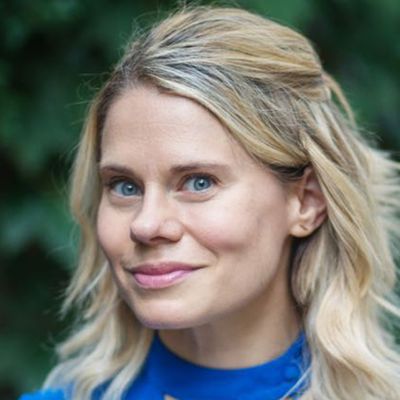
- Celia Keenan-Bolger: To Kill a Mockingbird (Outstanding Featured Actress in a Play)
- Nick Powell: The Ferryman (Outstanding Sound Design in a Play)
- Charles G. Lapointe: The Cher Show (Outstanding Wig and Hair Design)
- Bradley King: Hadestown (Outstanding Lighting Design for a Musical)
- David Korins: Beetlejuice (Outstanding Set Design for a Musical)
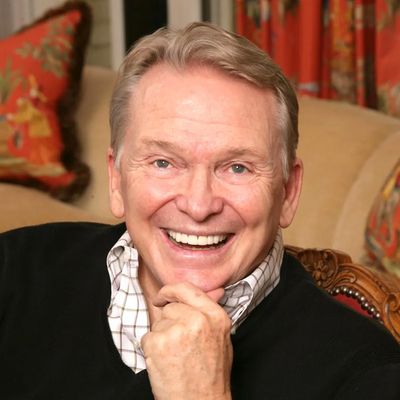
- Bob Mackie: The Cher Show (Outstanding Costume Design for a Musical)
- Dori Berinstein, Bill Damaschke, and Jack Lane: The Prom (Outstanding Musical)
- Extra closing standards
Connect with The Theatre Podcast:
- Support us on Patreon: Patreon.com/TheTheatrePodcast
- TikTok: @thetheatrepodcast
- Twitter & Instagram: @theatre_podcast
- Facebook.com/OfficialTheatrePodcast
- TheTheatrePodcast.com
- Alan's personal Instagram: @alanseales
- Jillian's personal Instagram: @jillianhochman
- Email me at feedback@thetheatrepodcast.com. I want to know what you think.
Thank you to our friends Jukebox The Ghost for our intro and outro music. You can find them on Instagram, Twitter, and Facebook @jukeboxtheghost or via the web via jukeboxtheghost.com.
A very special thanks to our patrons who help make this podcast possible!
If you would like to see your name in this show notes or get a shout out on the pod itself, visit ttp.fm/patreon to become a member and show your support!
Transcript
This transcript was automatically generated and might contain errors.
[0:01] Alan Seales: There's so much incredible work and the differentiation of the work is so amazing. So, it's been one of the more unusual seasons I can ever remember being, you know, being watching or being a part of.
[0:16] Alan Seales: This is a collect call from The Theatre Podcast. Bringing you exclusive behind-the-scenes access to The Theatre Awards Season 2019. This is Cereal. Part of a Broadway-Lover’s Complete Breakfast. In this special five-part mini-series, we bring you stories and interviews from some of the most hard-to-access places throughout the month of May, leading up to the red carpet and press room of the Tony Awards themselves, which took place on June 9, 2019.
[0:48] Alan Seales: For those who may not know, directly after the award winners stand on stage giving their acceptance speech, they're escorted into what's called the press room. This is typically a space in the same building as the awards ceremony or as close by as possible, where the winners get a chance to have their picture taken by media outlets and give audio or video interviews. You have to be invited into this exclusive room, and space is limited. So, Jillian and I are very grateful and happy that we're able to bring you these exclusive interviews.
[1:17] Alan Seales: Part 3 of Cereal takes us into the press room for the Drama Desk Awards and picks up pretty quickly after Part 2 concludes. Part of the fun is that the press interviews happen as the awards ceremony is actually still taking place. The press room was down the street from the Drama Desk Awards themselves. It was a dimly lit, intimate space with yet another step-and-repeat set up for the photojournalists. For those of us doing audio interviews, tables normally used for fine dining were repurposed as an assembly line of sorts, giving each of us an opportunity to interview winners for one-on-one interviews as time allowed.
[1:56] Alan Seales: We'll now present the interviews to you in the order in which we conducted them. We begin with Rachel Chavkin, who won Outstanding Director of a Musical for Hadestown, a category in which she also wins the Tony Award a week later. In the interview, I brought up the fact that Rachel is pregnant during this whole awards season, and she gives us more insight into who she really is as a person, exposing a side of herself that she may have previously never discussed with the media, before giving us a glimpse of her next projects.
[2:21] Rachel Chavkin: You're carrying another human being with you?
[2:23] Rachel Chavkin: I am carrying another human being, yeah, for my best friends, yeah, who are visual artists. I'm having this baby with slash for them.
[2:30] Alan Seales: Wow! Well, I had no idea you were doing circusy.
[2:33] Rachel Chavkin: Oh, yeah.
[2:34] Alan Seales: Can we talk about that for a second?
[2:35] Rachel Chavkin: Sure.
[2:36] Alan Seales: Or do you want to talk about the deal?
[2:37] Rachel Chavkin: I'm happy to talk about it. I will say, I think it's really important to model non-traditional families, and there are many models that have inspired me and my friends, and so, yeah, I'm very happy to discuss it.
[2:49] Alan Seales: So, you decided to do this as Hadestown, that is rising to all this critical acclaim, and you're doing these red carpets, and you're doing just show after show after award ceremony. Are you feeling okay?
[3:00] Rachel Chavkin: Well, I didn't make the decision in the height of the awards season, obviously. It just happened to line up with it. Yeah, I'm feeling fine. I mean, happily, I'm towards the end of my second trimester, so things aren't wildly uncomfortable yet, and my first trimester, I think I got off light for what I know so many of my friends and colleagues have been through.
[3:23] Alan Seales: That's wonderful. So, can you tell us, like, are you already thinking ahead to the next project? Are you working on something else now?
[3:29] Rachel Chavkin: Oh, yeah. I'm going to be developing a bunch of new things over the course of the summer. So, Lempicka, which I directed at Williamstown Theatre Festival last summer, is growing and changing and developing with Matt Gould and Carson Kreitzer. Heather Christian, the composer, and I are actually working on and co-authoring a piece that I'm also directing that's an adaptation of a Mack Wellman novel called Annie Salem. So, I'll be up at New York Stage and Film for that, and then my company, the team, is working on a new show that we're developing this summer. But no production until Moby Dick in the fall.
[4:03] Alan Seales: For those who haven't seen Hadestown, how can you describe the message that you want people to walk away with after they see the show?
[4:11] Rachel Chavkin: I think, I mean, Hadestown is about many things. But more than anything, it's about faith that your lover or your fellow human is going to walk alongside you in the darkness. And so it's about the fear of feeling alone and then the fellowship of standing together when you're asking a question and speaking truth to power.
[4:36] Alan Seales: Celia Keenan-Bolger, who won Outstanding Featured Actress in a Play, a category she also took home the Tony Award for a week later, was the next one to chat with us. Did you see this coming at all?
[4:45] Celia Keenan-Bolger: The show just kind of came out of nowhere and it's just been breaking record after record after record, and now here you are. You know, it's funny, I think now it's easy to feel like, well, of course, To Kill a Mockingbird is a huge hit on Broadway, but I actually think the process of making it, because it's a piece that is so beloved by so many people, that it wasn't a foregone conclusion that it was going to be this great piece of art. Because I think actually there are a number of ways we could have really screwed it up and didn't. And so in that way, I do feel like it is a sort of nice surprise that it has been not only well-received critically and by my friends, but that it's a piece that I think has enormous cultural relevance, which I feel on Broadway is actually not that easy to do. And so that part of it is also really very, very meaningful and very, very important.
[5:47] Celia Keenan-Bolger: So playing a literal child, like playing a role that normally would be played by a child, and that is, I think, as you said, an opportunity that could have made the show go very awry.
[6:00] Alan Seales: Correct. How did you personally, like when you found out they were casting adults for this role, these roles, how did you approach this?
[6:08] Celia Keenan-Bolger: I mean, the craziest thing is that when I got the call for this job, it came like this, it was basically like, look, they're doing the very first reading of this play because Aaron needs to work on the script, and obviously they will be casting kids in these parts, but they're worried that an eight-year-old or even a ten-year-old is going to have a hard time cold reading an Aaron Sorkin play for the afternoon, so would you mind just coming in for the day and reading the part? And I was like, yeah, I would be thrilled to come in with Aaron Sorkin and Scott Rudin and Bart Sher and like read Jean Louise Finch, like that sounds great. But in my head, I was like, this is a part, you know, and the truth is, like, I'm not sure I would have been like, yeah, you should cast adults, but I never thought it was a job I would have, so I don't know that I did anything to prepare for it except just try to show up and be present.
[7:01] Alan Seales: Nick Powell was nominated for two Drama Desk Awards, Outstanding Music in a Play for the Lehman Trilogy and Outstanding Sound Design in a Play for The Ferryman. He speaks with me now as he just won the award for his work in The Ferryman. Aside from some great conversation in general, I never expected the answer he gave me when I asked him what he was working on next.
[7:20] Nick Powell: First of all, I want you to tell me, if you're so kind, what sound design does for a play, because normally I think about sound design for a musical for obvious reasons. How do you approach this for a play?
[7:32] Nick Powell: Well, I could, it depends on the play, but this one in particular, we had some really different worlds to create within the same play, because it takes place in a kind of, in a real family environment, in a farmhouse in Ireland, so there's a sort of realistic world, which is to try and give the audience a sense of the exterior, the exterior beyond the walls of the set, but also the play exists in a kind of mythic space too, which is, there's a sort of supernatural element, which is evoking the past and the world of the Banshees and Irish mythology. So the sound design is there to really help bring both of those worlds to life.
[8:17] Alan Seales: And how does one get into sound design in the first place? Do you have background in, like, foley artistry, or how does that work?
[8:25] Nick Powell: I'm actually a composer, originally, so I wrote the music for The Ferryman as well. So I co-founded a theatre company when I was a teenager and at college, and basically I was writing the music for it, and the job sound designer didn't really exist in quite the same way at the time, so I was doing that stuff as well.
[8:47] Alan Seales: Well, that's incredible. Well, obviously you have done an amazing job, so congratulations, and what's next for you?
[8:53] Nick Powell: Well, I wrote the music for a show called The Lehman Trilogy, which has been on the Armoury here, but we've just opened it in the West End, and then I'm doing a big outdoor festival in Austria, where we take over a stretch of the Danube River and put on a crazy show for 100,000 people.
[9:13] Alan Seales: Is there sound design for the Danube River?
[9:17] Nick Powell: There is. Well, I've written music for it, and there's sound design, and yeah.
[9:22] Alan Seales: That's incredible. I absolutely love how theatre, and especially the Broadway community here in New York and the off-Broadway community, but theatre in general just can take over indoor space, outdoor space, and just transforms and transports people into a place that they wouldn't otherwise get to experience.
[9:40] Nick Powell: Yeah, definitely. I think it's interesting for people like me to move between different kinds of mediums, whether it's outdoor or indoor, whether it's a big show for 100,000 people, or if it's a small studio theatre show, all of those things are fascinating areas to work in.
[9:59] Alan Seales: Charles G. LaPointe, nominated against himself in the category of Outstanding Wig and Hair Design for both his work in Beetlejuice and The Cher Show, discusses yet another non-traditional career path that could allow someone to get involved in the Broadway community without being directly on stage.
[10:16] Charles G. LaPointe: What I find the best about the Drama Desk is that they nominate us, the wig designers, and I feel like we're overlooked by everybody else, and they've stepped up and said that, you know, you guys are worthy of at least recognition. You know, win or lose, it doesn't really matter. It's nice that someone says, you know, we appreciate what you do.
[10:36] Alan Seales: Where do you go for your wigspiration?
[10:38] Charles G. LaPointe: Oh, my gosh.
[10:39] Bob Mackie: I just looked at Bob Mackie. And done. Yeah, basically that's it.
[10:44] Alan Seales: Do you, when you're doing wigs, do you take it off of, do you get the costume design first and then add that, or is it vice versa?
[10:53] Bob Mackie: When I get the job, I meet with the designer and we talk about things, and they show me sketches and whatnot. And so I riff on the sketches and their ideas. They generally do kind of a loose idea of what they want, and they, you know, I've worked with many of them over the years, many times, so they just trust me to do what I do based on what they're getting as a general idea.
[11:12] Bradley King: Bradley King, who won for Outstanding Lighting Design for a Musical for his work in Hadestown, who also takes home the Tony Award in the same category, speaks to me about one of my favorite parts of the musical, the swinging lights during the performance of Wait for Me.
[11:27] Alan Seales: I'm sure you've been asked about this ad nauseum, but swinging lights.
[11:31] Bradley King: Ah, okay. So the swinging lights, I can't claim 100% credit for because they were the very first visual impulse that Rachel Chavkin, our genius director, ever had. And it comes from the idea of being on a highway late at night, driving home, trying to get back to your lover or your partner who you're missing really well, and seeing the flash of the headlights across the windshield late at night. And the idea for the swinging lamps was one of the first impulses she had for what the show was going to look like, and then we just refined it over and over and over again in all the various iterations.
[12:04] Alan Seales: Really? Like, it started with the lights and then kind of worked its way backwards?
[12:08] Bradley King: Yeah, exactly. It was an idea that she had. She told David Newman, our choreographer, it's like, I think it's going to look like this, and I think they're going to fly in, I think they're going to swing, and then we built around the idea. And that's one of the only times I've ever done something like that.
[12:20] Alan Seales: That's incredible.
[12:21] David Korins: David Korins, a name you may recognize as the set designer for Hamilton, Dear Evan Hansen, and several other of the largest productions of the last decade, speaks with me about his win this time for Outstanding Set Design for a Musical on his work in Beetlejuice, and how he took a single set and made it into four distinct houses, each with their own look, feel, and mood.
[12:42] David Korins: That set is the same set, but it represents basically four different houses, four different transformations of the same set. How did you start to imagine this process of, did you originally think of four different sets, or how did it come about?
[12:56] David Korins: So Alex Timbers, our director, in our very first meeting six and a half years ago, said to me, I think that the house should be another character in the show, and the Maitlands get trapped in the house, and it would be so amazing and delicious to watch this thing evolve over time. So we started the Maitlands, that house gets purchased by the Dietzes, it gets stripped of all of its fun Victorian charm, and then of course Beetlejuice comes in and he haunts the place, and it's just like one of those rare design challenges that is super integral to the show and the narrative, but also unbelievably fun and crazy.
[13:31] Alan Seales: So you've designed Hamilton, you've designed Dear Evan Hansen, you've designed Beetlejuice, you've designed some of the biggest, most iconic shows of the last several years, but they're all so dramatically different. The sets look nothing like each other. How do you approach your projects? How do you even get this concept in your head?
[13:48] David Korins: I mean, a lot of people ask me about the kind of varying aesthetics of the shows, and I say simply, Hamilton shouldn't look like Dear Evan Hansen, and Beetlejuice shouldn't look like Hamilton, and so for me, I just try and really spend time with the text, and I think to myself, what does the show want, scenically? I try to not go in there with a visual agenda, I try and literally make the thing that I think would be the best, most effective way to help tell the story, period.
[14:21] Alan Seales: The legendary Bob Mackie, who has designed the actual Cher's costumes for decades, speaks to me about his win in the category of Outstanding Costume Design for a Musical for The Cher Show, who is also another person who takes home the Tony Award in the same category a week later.
[14:36] Bob Mackie: At the age of 80, this is Bob's first Broadway-focused award. Being on Broadway is a dream of his that's been 70 years in the making, a dream he never gave up on.
[14:45] Alan Seales: You won the Drama Desk Award for...
[14:48] Bob Mackie: I know, and that always sounded so very cultural, the Drama Desk Award, and I never thought, it never even occurred to me that I could win that.
[14:58] Alan Seales: You're known primarily as a fashion designer.
[15:01] Bob Mackie: No, I'm not.
[15:02] Alan Seales: No?
[15:03] Bob Mackie: No, I started out as a costume designer, and I never stopped doing that, but when I was doing these things for Cher back in the old days, a lot of the fashion people were thinking, couldn't we have some of that? That's kind of how that happened.
[15:15] Alan Seales: Well then, maybe that answers my question. You've designed some of the most iconic outfits that Cher herself has worn, and then now bringing it into the Cher Show, they not only have to represent their original, I guess, prestige, but also be able to be put on and off quickly for all of these amazing quick changes.
[15:35] Bob Mackie: They are amazing. I mean, some of them are literally seconds, and Stephanie has the worst ones, and do the Academy Award ones, where she goes off, and they set a couple lines, and she walks back in, skin out, change, wig different, everything's different.
[15:50] Alan Seales: So did it present any sort of challenge for you to translate the original designs to Broadway?
[15:55] Bob Mackie: We did them exactly the same. We just made the closures easy to get into, and made them in that respect, but not simpler in embellishment or silhouette or anything.
[16:08] Alan Seales: So do you see yourself continuing down the Broadway path now?
[16:11] Bob Mackie: Listen, I would love to. I keep saying, oh, I want to do another one, but it doesn't mean anyone will hire me. They weren't even going to hire me for this one. I think some of the producers thought I was really dead.
[16:23] Alan Seales: Well, obviously, you are not here.
[16:26] Bob Mackie: I said, no, no, we're here, and it was Cher herself that said, no, he has to do it.
[16:31] Alan Seales: Well, I'm so glad she did. The costumes are beautiful. Everything you do is beautiful. Congratulations.
[16:35] Bob Mackie: I love that. Thank you.
[16:37] Alan Seales: If you could only see one show for the rest of your life, what would you see?
[16:42] Bob Mackie: One show playing right now?
[16:44] Alan Seales: Any show, any historical.
[16:46] Bob Mackie: Another show. Oh, I don't know. My family never went to the theater.
[16:52] Alan Seales: Theater? What's that?
[16:54] Bob Mackie: They went to the movies, maybe.
[16:56] Alan Seales: How did you get involved in theater, then?
[16:58] Bob Mackie: I was a weird child.
[17:02] Bob Mackie: I told this story on the stage, and you weren't in there. But I said, when I was 10 years old, my Uncle Harry asked me, what do you want to be when you grow up, Bobby? And I said, I want to be a costume designer on Broadway. And then I said, he just rolled his eyes and walked away. And I said, you know, 70 years later, here I am.
[17:25] Alan Seales: Fabulous. You've done an amazing job. Again, congratulations.
[17:29] Bob Mackie: Thank you.
[17:31] Alan Seales: Unfortunately, we weren't able to get interviews with a few winners for various reasons. Stephanie J. Block and Santino Fontana had time constraints on their schedules. Ali Stroker simply couldn't come down the stairs, which speaks to the overwhelming need for everyone to take accessibility into consideration when planning events such as these.
[17:48] Alan Seales: By the time we were finished with another interview, Ali had already gone back to watch the rest of the awards. We wrap up Part 3 of this miniseries speaking with The Prom, right after they won their Drama Desk Award for Best Musical. Accepting the award and speaking to me were producers Dori Berenstein, Bill Domaschke, and Jack Lane.
[18:06] Dori Berenstein: As mentioned in Part 2 of this miniseries, there were several shows that made it from Off-Off-Broadway or Off-Broadway to Broadway in the same season. The Prom, however, always had their sights set on Broadway from the very beginning.
[18:18] Bill Domaschke: When asked about this, here's what they had to say about the uncertainty of actually making it to the Great White Way.
[18:24] Jack Lane: I think when you're working with Casey Nicholaw, and Bob Martin, and Chad and Matt, and it was, we were hoping. You know, you never know. We always hope, but I think that was what we were aiming for.
[18:43] Dori Berenstein: But I think the most important thing is we wanted to get this show on its feet and get it to as many people because we believe so deeply in the message. And if Broadway was the way for us to do that, that was what we wanted.
[18:56] Bill Domaschke: And it's about Broadway.
[18:57] Jack Lane: It's about Broadway. It's a big Broadway musical that has a lot of heart and hope to it. But it's about Broadway stars. And it's about what happens in the world of theater. I just felt the Broadway stage was the right home for it. It needed the scope of the Broadway stage to tell its tale.
[19:17] Alan Seales: Well, the three of you, congratulations. I love the show. One of my absolute favorites. And it has so much heart and so much love. And it's literally, I keep hearing stories, literally changing people's lives. As you all know, the theater podcast was taken over by The Prom for all of May. So we had all the guests. And the feedback and the love and the requests for, like the love from all the way up to Caitlin down, I won't say down, like across the board to the ensemble. Everybody loves everyone in the show. And it means so much to so many people. So, you know, on behalf of everyone who's listened and everyone who's written in and everyone who's requested more episodes from The Prom, which we will plan on doing, thank the three of you for putting your heart and soul into this. It's meant a lot to a lot of people.
[20:06] Dori Berenstein: Don't stop talking about us.
[20:10] Alan Seales: Thank you so much.
[20:11] Dori Berenstein: Thank you.
[20:12] Alan Seales: Thanks for listening to Episode 3 of Cereal, part of The Broadway Lover's Complete Breakfast. Visit us online via theater underscore podcast on Instagram and Twitter, via thetheaterpodcast.com or send us an email via feedback at thetheaterpodcast.com and make sure to follow Parody Bill on Instagram for more amazing Playbill mashups.
[20:34] Alan Seales: If you could give your younger self some advice or younger people now who want to be lighting designers, what would you tell them?
[20:41] Bradley King: Make sure you stay passionate, slow down, take it in, no one's in a rush, you're going to get there eventually.
[20:49] Alan Seales: If you were to give advice to your younger self and younger people now starting out in a similar path of maybe costume design, what would you say?
[20:55] Bob Mackie: Try to work with somebody you admire and you like their work and watch them and watch them make mistakes because everybody makes mistakes and watch them have triumphs and have beautiful and you learn a lot and before you know it they're going to be giving you responsibilities and you can make your own mistakes.
© Broadway Podcast Network, All Rights Reserved