
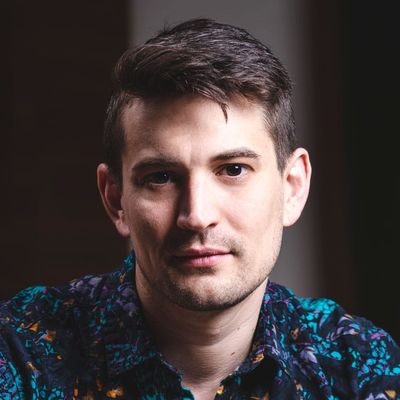
Mo Brady is a jack of all trades - a broadway actor turned social media specialist turned podcaster. After working for many years as a performer in Seattle, Washington, Mo made his Broadway debut in The Addams Family musical in 2010... Read More
From the show: The Theatre Podcast with Alan Seales
Guests
Featured Shows

About
Mo Brady is a jack of all trades - a broadway actor turned social media specialist turned podcaster. After working for many years as a performer in Seattle, Washington, Mo made his Broadway debut in The Addams Family musical in 2010. He later landed work as a recurring character on the second season of the NBC TV hit show Smash. These days, Mo works as the Communications Project Manager for Broadway Cares Equity Fights AIDS, and continues to host a wildly popular podcast, which he also co-created, called The Ensemblist. Amassing a following over the years, The Ensemblist has become an “online advocate for the talented artists working in theatre ensembles.” Now boasting not only a podcast, but a website and a social presence as well, they are “creating conversations about what it means to be a successful artist in the theatre.”
Mo spent a few years working as a full time performer in Seattle, including in shows at The 5th Ave Theatre. In 2010, he made the jump to New York City, and six weeks after his arrival, he had landed his first Broadway show - The Addams Family musical. After a year on Broadway, Mo shares how his offer to volunteer for Broadway Cares turned into a full time job, and how he at one time was balancing working this full time job with filming episodes of Smash in Long Island City at the same time. When Mo later realized he didn’t really love being an actor in NYC the way he had in Seattle, and that he wasn’t feeling as fulfilled, he decided to let his agents go and focus on his Broadway Cares job. In doing so, he was also able to revisit his initial idea for The Ensemblist, which had struck him while in The Addams Family. He loved the people he had performed with, and wanted to share their stories - the stories of the ensemble. These days you can catch Mo twice a week on The Ensemblist podcast, proudly championing Broadway’s underdogs, by visiting BPN.fm/theensemblist.
In this episode, we talk about:
- Finding community in the theater
- His hands on experience at Whitman College
- Working as a performer in the Seattle theater scene
- Being a part of The Addams Family musical
- Why and how he decided to let performing go (for now)
- The inspiration behind The Ensemblist, and how it has grown since the beginning
- Being a dad, and what the surrogacy process was like
Connect with Mo:
Connect with The Theatre Podcast:
- Support us on Patreon: Patreon.com/TheTheatrePodcast
- Twitter & Instagram: @theatre_podcast
- Facebook.com/OfficialTheatrePodcast
- TheTheatrePodcast.com
- Alan's personal Instagram: @alanseales
- Email me at feedback@thetheatrepodcast.com. I want to know what you think.
A very special thanks to our patrons who help make this podcast possible!
Cheryl Hodges-Selden, Paul Seales, David Seales
If you would like to see your name in this show notes or get a shout out on the pod itself, visit ttp.fm/patreon to become a member and show your support!
Transcript
This transcript was automatically generated and might contain errors.
[0:00] Alan Seales: Welcome to The Theatre Podcast. Intimate personal conversations with theatre's biggest names. This episode you're about to hear is with Mo Brady, who is a very well-rounded guy, a true multi-hyphenate, which is a term I keep running into across the space in the professional Broadway area. He has a podcast called The Ensemblist. He started that podcast while he was in the Broadway space as a professional actor. He's been on Broadway himself. What I really enjoy about his podcast is that he tells the story of the ensemble. He focuses very much on the ensemble, which I agree is the backbone of the Broadway industry, because without an ensemble, you don't have a lot in most cases. It's one of the oldest and most popular podcasts in the theatre space for a very good reason.
I encourage all of you to pause right here, subscribe to The Ensemblist with Mo Brady, and then come back and finish this episode. Before we get into this, as always, please visit me online at ttp.fm and show your support for the podcast at ttp.fm slash Patreon, P-A-T-R-E-O-N. I've been using the proceeds from Patreon to get the episodes transcribed. Thank you all very much for helping out with that. It's helping out with accessibility, which is very important to me. Everybody now please enjoy this episode with Mo Brady. Here you go. One, two, three.
[1:30] Alan Seales: My guest today is someone that I met in person only earlier this year, but now feel comfortable calling a friend. He's a Broadway actor turned social media expert who made his Broadway debut in The Addams Family, and now works as the communications project manager for Broadway Cares' Equity Fights AIDS. He's also been on TV in the second season of NBC's Smash, and is co-creator and current exclusive host of the extremely popular podcast, The Ensemblist, a theater-focused podcast dedicated to telling the stories of the amazing individuals from Broadway show ensembles. Mo Brady, welcome to the theater podcast.
[2:06] Mo Brady: Hi, we're here.
[2:07] Alan Seales: We're here. We're doing a crossover.
[2:08] Mo Brady: We're here. I'm queer. Get used to it.
[2:12] Alan Seales: I know you through the podcast world and Broadway Podcast Network and everything, but—
[2:18] Mo Brady: You're my boss.
[2:19] Alan Seales: Sort of. Yeah, I guess so. I don't know, but you're like, we're friends and—
[2:24] Mo Brady: Yeah.
[2:24] Alan Seales: We text late night and commiserate over dad life.
[2:28] Mo Brady: Dad life, yes. That is mostly the things we can't do that other people are doing because of dad life.
[2:35] Alan Seales: But we're up at like 11 o'clock like, why are we up? Why are our kids still up?
[2:39] Mo Brady: Yeah.
[2:39] Alan Seales: Anyway.
[2:40] Mo Brady: My son woke up at five o'clock this morning. He's usually asleep until seven, which is good—
[2:45] Mo Brady: Mine too.
[2:45] Alan Seales: For an almost four-year-old, but this morning it was five.
[2:48] Mo Brady: My younger one. Well, he woke up itchy. He's got some eczema that we had to put cream on. I'm like, daddy, I'm itchy. He calls everything a bug bite if it itches.
[2:57] Alan Seales: Yeah, sure, sure.
[2:58] Mo Brady: But that's not theater related.
[3:00] Alan Seales: No, but theater's about life and life is about bug bites. So there we go.
[3:05] Mo Brady: As long as it's, yeah, itchy bug bites. Okay. Tell me where you grew up.
[3:09] Mo Brady: I grew up outside of Seattle, Washington.
[3:11] Alan Seales: Really?
[3:11] Mo Brady: Yeah. Northwest.
[3:13] Alan Seales: Okay.
[3:14] Mo Brady: That's why I have this tattoo of a tree is because I'm trying too hard to show that I'm a Pacific Northwesterner. I'm pointing to my evergreen tree tattoo that is on my right lower arm.
[3:25] Alan Seales: Forearm.
[3:26] Mo Brady: Forearm. That's what it's called.
[3:28] Alan Seales: Okay. So Washington or outside of Washington, where did the love for theater then come from?
[3:34] Mo Brady: The love for theater. I think I've always been into community. My dad was a pastor growing up. And so the idea of people coming together and having a place to sort of belong, I think, was always kind of part of how I viewed the world. And I really found my version of that in theater. You know, you have you, you're all coming together, you're telling to get you're coming together because you have a common belief, right? And you feel like you are being vulnerable and you're being seen. Those two things sort of grew simultaneously for me.
[4:15] Alan Seales: Being a pastor's son, did that cause conflict at home?
[4:19] Mo Brady: No, no. You mean with me being gay?
[4:22] Alan Seales: Well, I was going to go there.
[4:24] Mo Brady: Spoiler alert, I'm gay.
[4:25] Alan Seales: I was going to go there, but I meant just originally of, I guess, sort of not, well, I don't know you as a religious person.
[4:33] Mo Brady: Oh, I wouldn't consider myself religious now.
[4:35] Alan Seales: Right. That's what I was getting at.
[4:36] Mo Brady: But and that is as much of a piece of contention as it is between a 38 year old adult and his parents who were pastors by trade. But one thing I got out of that spiritual upbringing was really how wonderful a community can be. And I think that that's something I really found in the theater. And so when I was a kid, I was just doing like every play I possibly could, was just in love with the experience of being in a cast. It really didn't matter to me if I was on stage, what part I was, if I was backstage, I was sort of doing kind of all over and all sorts of things in the theater because I just wanted to be a part of it.
[5:23] Alan Seales: Yeah, it brings a sense of community, like you were saying, in sort of the big shared experience. And some Broadway people I've talked to have even talked about when things don't go well, it's kind of the equivalent of going through trauma together.
[5:37] Mo Brady: And it brings you, yeah, you're right. It brings you together in a way that you don't get in what we'll call muggle life.
[5:44] Alan Seales: Sure. Or even in any other part of adult life. I think that one thing that I hear a lot is that it's hard for adults to make friends.
[5:54] Mo Brady: Absolutely.
[5:54] Alan Seales: Once you get out of school, it's hard to make friends. And so the fact that we have this community that is a little bit like school in both good ways and bad. There's a lot of gossip. And there's also a desire to help each other feel valued and seen and that their passionate creative pursuits are good things in the world and make the world better.
[6:23] Mo Brady: I love that. I love that.
[6:25] Alan Seales: So is that where you, well, I guess, let me back up still. I was going to say, is that where the podcast idea came from? But I'll get to the ensembles. But when, I guess, where did you go to school? Were you going to school for theater, too, in college?
[6:39] Mo Brady: I went to a liberal arts school in Washington State called Whitman College. It's a really small, when I went there, it was like 1,300 students total.
[6:48] Alan Seales: Tiny, yeah.
[6:48] Mo Brady: Yeah. In Walla Walla, Washington.
[6:50] Alan Seales: So we were out there among the wheat fields.
[6:52] Mo Brady: Wasn't there something from Nickelodeon? Why does Walla Walla, Washington sound familiar to me?
[6:57] Mo Brady: It was referred to in like a Bugs Bunny cartoon.
[7:02] Alan Seales: No, I went to Whitman, which was a liberal arts school. So it was a really kind of a jack-of-all-trades degree. My degree is in theater, but I wrote my thesis in guerrilla marketing tactics for the theater. I was just like kind of doing whatever I could there. Building sets, working on props, being on stage, making the programs.
[7:27] Mo Brady: Walla Walla is pretty far away from New York City. And so you really, it's not almost in any way a career-focused program. It's much more about the art form and about kind of learning your own craft, I would say, outside of how it would apply to professional settings.
[7:48] Alan Seales: But that's a liberal arts school in general, right? You're not going to liberal arts school for accounting. You're just going for ideas and thinking and communication.
[7:56] Mo Brady: I guess, yeah, and accounting.
[7:58] Alan Seales: They do need an accounting department in liberal arts school.
[8:01] Mo Brady: So you can like make general managers out of these people.
[8:05] Alan Seales: I think we need to take calculus, pre-calculus, all out of the school systems for high schoolers and replace them with doing your taxes.
[8:14] Mo Brady: No, very few 11th and 12th graders need to know how to do calculus.
[8:20] Alan Seales: But we all wish we knew how to do our taxes better.
[8:24] Mo Brady: I love that idea. I support that.
[8:26] Alan Seales: Hashtag bring back taxes.
[8:29] Mo Brady: Bring back taxes.
[8:31] Alan Seales: That's going to be a really popular one.
[8:34] Mo Brady: Hashtag taxes are for high school.
[8:38] Alan Seales: All right, so graduate Walla Walla.
[8:41] Mo Brady: Mm hmm.
[8:42] Alan Seales: And then what happened then?
[8:44] Mo Brady: What happened to get you to New York?
[8:47] Mo Brady: I graduated a semester early and I was like, I want to get out there in the real world. I was rushing towards adulthood, which now we know is stupid. But at the time, I was like, I don't want to spend any more money. I feel like I've gotten what I want out of this experience. And so my last semester, I was applying for marketing positions at nonprofit theaters all over the country. And I ended up getting a few offers at entry level. And I went to the theater in Orange County, California. It's called South Coast Repertory. It's a lurk theater down there. And I worked down there for about a year in the marketing department.
[9:23] Mo Brady: And I was like, I hate this.
[9:26] Alan Seales: What kind of marketing was it, though? Because social media wasn't a thing then.
[9:27] Mo Brady: No, no. It was sort of our young subscribers programs, writing press releases, working on budgets for our department, that kind of thing. But I really just didn't like the Southern California lifestyle. I didn't like being in my car all the time. And I think I was really missing a community. And so pretty quickly, I packed up and I moved back to Seattle, where I helped run the youth theater program that I had been in when I was a high schooler. And so I did that for about three years. You know, directing and choreographing and working with kids and teaching and kind of helping to inspire community in them. You know, a youth theater program. Those kids love each other. They're obsessed with each other.
And so to be able to foster that, I thought was like fantastic. And so I was doing that. And then the professional theater scene in Seattle is just a different beast than New York. It is non-profit theater mostly. So it's these small contracts. And sometimes you can get paid very well, but you're doing these little bits and pieces. And so once I was running the youth theater program, I also started just like auditioning for stuff. I was like, I don't know. These people I know from high school are auditioning for stuff. I could audition for stuff too. And slowly but surely over two years, I was getting like a full season of work as an actor. And so I was like, all right, I need to jump ship out of this youth theater business.
And I need to go see what this performing thing is because I don't think I like closed my heart on performing in college. And then I was a full-time performer in Seattle, which is such a great thing because there's so few of them. I mean, because the market just doesn't require a lot of performers and you don't get that many opportunities.
[11:29] Mo Brady: The Addams Family podcast host, The Addams Family podcast host, The Addams Family podcast host, The Addams Family podcast host, The Addams Family podcast host, The Addams Family podcast host, The Addams Family podcast host, Mo Brady.
[12:48] Alan Seales: So you said you moved to New York in 2010, and then Addams Family was also in 2010.
[13:22] Mo Brady: It opened in 2010. I booked it in 2010. I had been here for all of six and a half weeks before I booked my Broadway debut.
[13:50] Alan Seales: So you were like, I'm here and life is easy. I can get shows.
[13:54] Mo Brady: I walked in with a couple of great things in my pocket. One was those connections with people like Sergio Trujillo, who choreographed Addams Family. And part of it was I was just like in the zone. Like I walked in and was at the top of my game. I was really training very hard before I came. And when you're new, you're sort of fresh blood to casting. And so they're also like, okay, we've seen all these other people before. Who are you? And so I was getting a lot of appointments when I moved. And so things were really rolling at that time. And so yeah, it was basically just being, I mean, it's always being in the right place in the right time. But it was serendipitous. I mean, this is the end of 2010.
I was going in for the original company of Book of Mormon and Addams Family simultaneously. And I only got Addams Family because the guy who I replaced booked the original company of Book of Mormon. So it's all puzzle pieces. And there really was only one track in Addams Family for me, either the boyfriend or covering the boyfriend, which is what I did. But that wasn't a big ensemble. There were 10 of us on stage. And so basically, it just was like a waiting game. And I just lucked out and didn't have to wait very long. So that was 2010.
[15:34] Alan Seales: And how long were you in the show then?
[15:35] Mo Brady: All of 2011, New Year's Day to New Year's Eve. I had my first rehearsal at noon on New Year's Day, 2010. Let me tell you, there are no rehearsal studios open on New Year's Day. But it was me and two other actors who were going in at the same time. We were called at noon on New Year's Day. And then the show closed at a matinee on New Year's Eve.
[15:56] Alan Seales: Wow. And after that, I mean, were you in the show? You didn't need a survival job. But then what was after that?
[16:01] Mo Brady: I was going back to auditions. I had booked something. I did a regional production of Next to Normal that spring. But I had three months in the city between Addams Family and that, where I was going to auditions and taking classes. But I was like, I'm kind of bored. And I really don't want to memorize any more monologues. And so I had thought back to my Addams Family experience and remembered all the times I had volunteered for Broadway Cares. I worked at the table at Flea Market and performed at Broadway Bears and was collecting during the audience appeal seasons. And I was like, oh, I've got this marketing experience in my back pocket. I wonder if I could reach out to somebody in the marketing department and be like, hey, can I come volunteer?
So I sent a cold email to the man who is now my boss and has been my boss for eight years. And I was like, hey, can I come volunteer for you? And he was like, yeah, come right now. I was like, can I come volunteer for you later? And he's like, come now. Like an hour from now. Yeah. So I went the next day and I met him. And then I ended up being there. And I was writing press releases. And then one of the last things I did was work on video, worked on a Broadway Bears launch video. And then I went and I did Next to Normal. And while I was doing Next to Normal, they reached out and I said, we've got this job for a video editor. We'd love for you to apply. And I was like, I'm not doing that. I'm an actor.
Actors don't take desk jobs. But the more I thought about it, the more I was like, this is an opportunity and I can always leave if I don't like it. And so I applied and went through the process and ended up getting offered the position. And while the position has changed a lot in the almost eight years I've been there, I've been happy at Broadway Cares since 2012.
[17:48] Alan Seales: So did you stop performing or auditioning at that point?
[17:51] Mo Brady: I was auditioning simultaneously for about a year or two. And so I did the second season of Smash while working at Broadway Cares. I would go into the Broadway Cares office at 8 a.m. I'd be there until noon and then I would take the 7 to Long Island City, walk across the Pulaski Bridge, and I would be on set until midnight. And being on set is such a wild world when you're at the bottom of the call sheet. You are just there. There are so many people there doing so much more important work than you that you're really at the beck and call of what they need. And so you really got to go with the flow, and it was very hard to balance my full-time desk job where I had responsibilities and people looked to me for things.
And then going to this freeform job where I was at the bottom of the totem pole, they're like, we don't know if we need you for another take, but you want to be there for another take because you want to be in the shot. The whole thing is like to be in the TV show, and so you want to be available for it. So I did the second season of Smash while working at Broadway Cares. But the thing that I realized was I stopped training, and I wasn't doing my best work. Over the years, I went in for Book of Mormon, I think like seven times over three or four years. And at the end, I was like, I'm not doing this as well as I used to, and I don't need to waste their time. I don't want to waste my time. I'm like, if I ever want to come back to this, then I can get my chops back up. But because I wasn't training, I wasn't giving them my best self, and I was like, well, there's too many good people here.
[19:30] Alan Seales: So do you still consider yourself an actor?
[19:31] Mo Brady: No, no, I really don't.
[19:33] Alan Seales: Do you remember when you made that decision?
[19:36] Mo Brady: I remember when I let go of my agents, that felt like a decision. And I always felt like a person who did more than one thing. Even like I said, even in Seattle, we were directing and choreographing and teaching and all those things. And I really didn't love being an actor in New York. I loved being an actor in Seattle because it was so varied, and you got to do so many things. And I didn't really love being an actor in New York because it is, I mean, people talk about boxes and being put in boxes, but there's so many talented people here. And everyone does stuff really well. And so I wasn't getting the same opportunities to try different things as I was here. I wasn't getting the same opportunities to try things here like I was in Seattle.
And so I felt it wasn't as fulfilling, and I was like, well, I don't really like this. So it was easier to let go. And now, at the beginning of my Broadway Cares experience, I would stand in the back of the house before an audience appeal, and I would watch people who I'd performed with being on stage. And I'd go, ah, they're doing the thing. And I'm not doing the thing anymore. And that was hard at first. But now, millions of years later, I look back at those people who I performed with, and very few are still part of the theater community in the way that I get to be, both with my Ensemblist hat and my Broadway Cares hat. And so I really found a way to be part of this community that transcends contracts.
[21:14] Alan Seales: Yeah. It's a constant where you get to keep yourself involved and still elevate the voices of everyone else.
[21:24] Mo Brady: Yeah. It's a creative pursuit in the theater community that doesn't end when a producer announces closing.
[21:30] Alan Seales: Yes. Yeah. It actually gives you more to talk about when the closing happens.
[21:35] Mo Brady: Sure. Well, I can say, like, bummer, Beetlejuice. Like, man, that really blows. Sorry, go get another job. That's the business. And I still get to be here to talk about how great Jagged Little Pill was. Or in six months, I'll turn around, and I'll be able to talk about the great Musicman Ensemble. All of those people do deserve to be championed. And so to have this point of view and place where we can be doing it, I think, is really creatively fulfilling in a different way than performing, but not unlike it.
[22:09] Alan Seales: Okay. So you're fulfilled in Broadway Cares, like We Fight Saves, you're doing all that. But then where did The Ensemblist come from?
[22:17] Mo Brady: The Ensemblist actually came from when I was in Adam's family. I had been in the show for about six months, and I was kind of bored. You know, you can only go in for certain things when you're in a Broadway show. There's only, you know, you're not going in for regional gigs. You're just in your Broadway show when maybe you're going in for other Broadway shows or film TV. There's not a ton to do, and you've done your understudy rehearsals, you've gone on, and you're like, okay, well, I guess we're just chilling in this 25-hour work week. And so I was like, I got to do something else, spark myself in a different way. And I was a big NPR nerd when I was, you know, living in Seattle.
[22:58] Mo Brady: I got, you know, the crunchy granola tree tattoo. So I'm working that Pacific Northwest real hard. And I was like, I love these people that I'm performing with. And I think they're so interesting. This is before Instagram. This is really before people knew who Broadway ensemble members were. I was like, I want to share the stories of these really talented people that I'm working with. And I want to do it in a way that is creatively challenging and interesting to me. So based on that NPR nerddom, I was like, Oh, I'll just start a podcast. And that was really the idea for it. And like everybody's theatre podcast, it was terrible at the beginning. You know, everywhere. I think we all look back and we go, Hmm, the audio quality wasn't very good. But the thing is, with podcasts, probably most creative pursuits, you just have to do it and know that it's going to be better the further you go along.
[24:01] Mo Brady: So I was inspired during Adam's Family. I did a few pilot episodes. I didn't like them, and I put them on the shelf. And then when I was, had sort of gotten my sea legs at Broadway Cares, I was comfortable there. I was like, All right, I'm ready to try something. I'm ready to go back to that idea.
[24:30] Mad Fientist: That's impressive that you actually did some interviews that probably have never seen the light of day. So you shelved your first couple?
[24:38] Mo Brady: Yeah, I just thought they were boring.
[24:40] Mad Fientist: That's impressive. Because there's a lot of people who just want their ego fed and want to get it out there. So it's like you said, there's a lot of really bad audio quality at first. And the first couple episodes, even of mine at this podcast, my interview style got better. And the ability to carry on a conversation and shape it how I think is interesting, got better. But I still put out all my first stuff that, you know, you go back and listen, and not as good.
[25:06] Mo Brady: I wasn't as interested in analytics, or I was really much more about that. At the time, I really remember feeling like, who am I to tell these people's stories? You know, I'd had this experience in an ensemble, but only one, and I hadn't originated. And so there was a good amount of imposter syndrome of why am I the person to do this?
[25:30] Mad Fientist: Why ensemble though?
[25:32] Mo Brady: I've just always, it's the community idea. I have always been most hype about a group of people working together. I think it was the most fulfilling thing for me as a performer. I think it takes a really strong skill set. I think it's a story that isn't told as often. And so sitting in that ensemble, I was like, people know about Carolee Carmelo. Christa Rodriguez is great. I mean, they're both fantastic artists and humans. But I was in an ensemble with Samantha Sturm and Charlie Sutton, and these ensemble performers who have made a career out of not being in the spotlight and who are just as talented at doing different things. And that really felt to me like the story that wasn't being told.
[26:21] Mad Fientist: For me, swings and understudies are, I mean, in ensemble too, but the non-principal roles are some of the hardest jobs on the stage. Because when you, at a moment's notice, sometimes even mid-show, have to change tracks or go on when you weren't expecting it. And you have to know nine different tracks for the same show of where you stand and where you sing. And if the, God, like, I swung for Forever Plaid once.
[26:49] Mo Brady: And that must have been really hard vocally.
[26:51] Mad Fientist: Oh my God, it was one of the hardest things I ever did.
[26:53] Mo Brady: Yeah, sure.
[26:54] Mad Fientist: Because the harmonies are so close. And like, I messed up all the time.
[27:00] Mo Brady: Well, that's why you aren't doing it anymore.
[27:03] Mad Fientist: No, people talk about swing brain and certain people feel like they can really do that well. And so, I mean, like anything, like point or belting, it's just a technique.
[27:17] Mo Brady: Right. It's a way of training your brain.
[27:23] Mad Fientist: Exactly. Yeah. And what I love, part of what I really love about The Ensemblist, and you're going, you just hit 200 episodes pretty recently.
[27:28] Mo Brady: Yeah. In November.
[27:30] Mad Fientist: Yeah. Yeah. And so, well, I guess, first off, did you see yourself coming this far along and doing 200 episodes?
[27:38] Mo Brady: Yes and no. We would do an episode every two weeks when we started. And so to get to 200 would have been eight years at that rate. Now we're doing episodes twice a week. So four times as much content to create. But yes, because we really had a mission to help people's stories be told. I really remember people at the beginning saying, well, how long is this going to last? Because how many people can you interview? I was like, There's a lot.
[28:12] Mo Brady: I mean, just look at the number of theater podcasts we have under the BPN. I mean, what, 30 to 40?
[28:20] Mad Fientist: 40 now.
[28:20] Mo Brady: 40. There's lots of different stories in the theater. They're all different. To be shared. The way that I'm going to interview Cody Richard is different than the way that you're going to interview Cody Richard. So we all have different ways of inspiring conversation out of these people, and then those different podcast episodes will mean different things.
[28:41] Mad Fientist: Oh, I absolutely agree. It's not like you snag someone and it's like, well, I can't interview them because they've already been interviewed. I mean, your set of questions are going to be totally different.
[28:50] Mo Brady: Exactly. And that's what we're looking for. I mean, I really love, I keep going back to the ensemble aspect of your podcast, because really nobody else is focusing on that. And there is just as much struggle. There's just as much hardship that ensemble has, if not more so, because one could argue that they're working harder because their names are not as well known. It's easier to champion the underdogs. I mean, theater as itself is an underdog in a way, versus film, TV, the music industry. But people love when you champion an underdog. And so it gives a distinct point of view. And the ensemble also allows us to move beyond the podcast and speak about ensemble experiences in other ways.
[29:44] Mo Brady: You've got a blog and the website, and it's more than just audio. We produce original photography, a couple of photo shoots a month right now.
[29:52] Mad Fientist: Who's we?
[29:53] Mo Brady: Right now, it is me and Jackson Klein, who is our associate programs manager. I don't know, I give everyone very good titles because I'm like, sure, have a great title. So Jackson basically runs our social media, but he's also just my go-to person because he understands the ensemble's voice so well. He's been with us, what I say, like five, six years. And so, you know, I wrote something yesterday about Beetlejuice Closing, and I bounced it off of him because I knew that he would be able to reflect back to me and say, yeah, this is the kind of way that we would talk about Beetlejuice Closing, or this is a little too harsh, or you may be offending these other people. I mean, I always like offending people on the internet. I feel like I love getting people riled up.
[30:56] Mo Brady: But Jackson is like the mirror that I look to, and he's a big, big help. Love you, Jackson. And recently, I brought on two other people, Anna, who has been producing our photo shoots, and Angela, who is our website editor. And so that's been helping sort of stay in these three zones, the photography, the blog, and the podcast, but having them all be robust because nobody gets paid. It's all volunteer. You know, every photographer who takes pictures for us, everybody who writes something for us, everybody who comes down and sits in, you know, or edits any of those things is all doing it because they want to be part of sharing this story. And that is something I'm insanely grateful for.
[31:36] Mad Fientist: Well, you're an advocate personally as well. I mean, you're just getting into advocacy for so many things. And I mean, one of the recent miniseries that you've done, a side note for those listening, on The Ensemblist, you do series of interviews that are all creative miniseries. And there was a vocal health miniseries that you did recently that I just thought was such a brilliant idea. And it was a little bit out of norm. You started with Kasey Levy.
[32:02] Mo Brady: Right.
[32:03] Mad Fientist: I say it's out of the norm because she's not ensemble.
[32:05] Mo Brady: No.
[32:05] Mad Fientist: But I was like, she was in the ensemble of the Hairspray Tour in 2005. But mostly it was because I know Kasey because we're both parents in this community and have kids that are similar ages. And so when she was posting on Twitter about her vocal issues in the past, I was like, this is interesting. There's fire here. And so I was able to get her in really quickly. And so even though she wasn't in an ensemble, then the other three interviews that we did as part of that series were current Broadway ensemble actors. And so it all sort of speaks to each other. I think it's important when you ask people to come in to be able to speak for their experience and nobody else's. Because they're not in a teaching mode. You don't want somebody sitting across from you in an interview to feel like they have to teach.
[33:00] Mo Brady: Right. You want them to feel like they can share their honest experience.
[33:04] Mad Fientist: Let's have a real conversation.
[33:06] Mo Brady: Nah.
[33:09] Mad Fientist: And you did a recent Smash miniseries.
[33:11] Mo Brady: Oh, yeah. We're coming back to that, actually.
[33:13] Mad Fientist: Yeah.
[33:13] Mo Brady: So Aaron Albano, who is an actor and a friend of mine, we recapped the first five episodes of Smash so far, sort of from the ensemble perspective, talking about great ensemble performances. We do this thing called Albano Fact Check, where I take a plot point of the episode and I'm like, would this really happen? Or how would this be different in real life? And so next week, we're going to record more.
[33:38] Mad Fientist: Oh, awesome.
[33:38] Mo Brady: Yeah, we're coming back. So those will be back in our feed in January.
[33:42] Mad Fientist: Do you have a favorite episode out of your 200 plus now?
[33:45] Mo Brady: Oh, my gosh. No, I do not. I can't even remember all of them. You know what? I think there are a few people that really inspire me in this business. And I'm going to go back to Michael Burress and Susan Blackwell. I came into the theater business at just the right time to be hit over the head with title of show. And so I really think that they, I mean, that whole title of show team, Heidi, Blick and Staff, who I got to do Adam's Family with, Hunter Bell. I did a show on Disney Cruise Line. I originated a show that was written by Hunter Bell and Jeff Bowen. And so I spent a lot of time.
[34:57] Mo Brady: EP109 – The Addams Family Podcast host, The Addams Family Podcast Network.
[35:27] Mo Brady: EP109 – The Addams Family Podcast host, The Addams Family Podcast Network.
[35:57] Mo Brady: EP109 – The Addams Family Podcast host, The Addams Family Podcast Network.
[36:27] Mo Brady: EP109 – The Addams Family Podcast host, The Addams Family Podcast host, The Addams Family Podcast Network.
[36:57] Mo Brady: EP109 – The Addams Family Podcast host, The Addams Family Podcast host, The Addams Family Podcast Network.
[37:27] Mo Brady: EP109 – The Addams Family Podcast host, The Addams Family Podcast host, The Addams Family Podcast host, The Addams Family Podcast Network.
[37:57] This podcast can be heard at https://sites.google.com, The Addams Family Podcast, The Addams Family Podcast, The Addams Family Podcast, The Addams Family Podcast.
[38:27] The Addams Family Podcast, The Addams Family Podcast, The Addams Family Podcast, The Addams Family Podcast, The Addams Family Podcast.
[39:27] The Addams Family Podcast, The Addams Family Podcast, The Addams Family Podcast, The Addams Family Podcast, The Addams Family Podcast.
[39:57] The Addams Family Podcast, The Addams Family Podcast, The Addams Family Podcast, The Addams Family Podcast, The Addams Family Podcast.
[40:27] The Addams Family Podcast, The Addams Family Podcast, The Addams Family Podcast, The Addams Family Podcast, The Addams Family Podcast.
[40:57] Network, The Addams Family Podcast, The Addams Family Podcast, The Addams Family Podcast, The Addams Family Podcast.
[41:27] Network, The Addams Family Podcast, The Addams Family Podcast, The Addams Family Podcast, The Addams Family Podcast.
[41:57] The Addams Family Podcast, The Addams Family Podcast, The Addams Family Podcast, The Addams Family Podcast, The Addams Family Podcast.
[42:57] The Addams Family Podcast, The Addams Family Podcast, The Addams Family Podcast, The Addams Family Podcast, The Addams Family Podcast.
[43:27] The Addams Family Podcast, The Addams Family Podcast, The Addams Family Podcast, The Addams Family Podcast, The Addams Family Podcast.
[43:57] The Addams Family Podcast, The Addams Family Podcast, The Addams Family Podcast, The Addams Family Podcast, The Addams Family Podcast.
[44:27] The Addams Family Podcast, The Addams Family Podcast, The Addams Family Podcast, The Addams Family Podcast, The Addams Family Podcast.
[44:57] And we're on Instagram there. So that's me. That's cute. All right, you can get more of me at thetheaterpodcast.com.
[45:04] Support the podcast via thetheaterpodcast.com slash patreon. P-A-T-R-E-O-N.
[45:09] You can get me on Instagram and Twitter at theater underscore podcast. Please leave a rating, leave a review, share with a friend.
[45:17] Do it! Do those things. Turn to your friends. Do those things.
[45:20] Turn to the person next to you right now and be like, yo, I'm listening to this podcast. It's great. Here it is.
[45:24] No, don't don't even say that. Just go to the person next to you, take their phone and download the theater podcast.
[45:32] It's the only way to do it. When people are asked, when people actually ask me, hey, how do I find podcasts? I literally say, I say, give me your phone and I subscribe to them.
[45:38] Oh, yeah, exactly. That's exactly what I do, too.
[45:44] Thank you to Jukebox the Ghost for the intro and outro music and Mo Brady, of course. Big thanks to you for being here.
[45:50] This has been incredible. Thanks for asking me.
[45:52] Take a deep breath, make the world a little colorful.
© Broadway Podcast Network, All Rights Reserved