

Isabella Rossellini is an Italian-American actress, author, philanthropist, filmmaker and model. She is the daughter of Swedish actress Ingrid Bergman and Italian film director Roberto Rossellini... Read More
From the show: The Theatre Podcast with Alan Seales
Guests
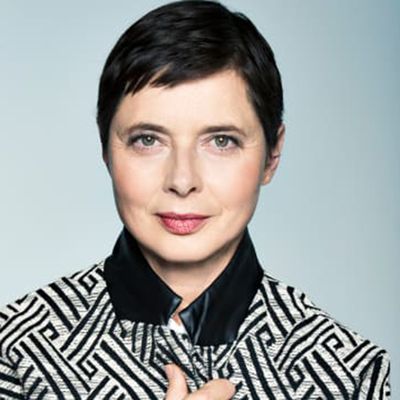
About
Isabella Rossellini is an Italian-American actress, author, philanthropist, filmmaker and model. She is the daughter of Swedish actress Ingrid Bergman and Italian film director Roberto Rossellini. A Golden Globe and Emmy award nominee, she started out her career as a successful model, appearing on the covers of numerous magazines such as Elle, Harper's Bazaar, Vogue, and Vanity Fair. She is also noted for her successful tenure as a Lancôme model and spokesperson. Isabella has worked as an actress in films directed by extraordinary talents such as Robert Zemeckis, David O’Russell, and David Lynch, to name a few. Some of her most notable American films include Blue Velvet, Wild at Heart, White Nights, Cousins, Death Becomes Her, Fearless, Big Night, Crime of the Century (for which she received a Golden Globe nomination), and most recently, Joy. She has also appeared Off Broadway in many performances. Isabella holds a masters degree in animal behavior and conservation, which has lent itself to her many award winning short films about animals and sex. Her latest project, Sex and Consequences, follows suit as a one-of-a-kind, 40-minute comedy about biodiversity and the multiple ways animals reproduce, which will be live-streamed from her farm 60 miles outside New York City beginning October 16th.
During our conversation, Isabella gives us an in depth look on how her hit series Green Porno came about. Robert Redford had been re-inspired by short films, and reached out to a series of people in his universe about creating films focused on the environment for the Sundance channel. She remembers having a light bulb moment - she could make a “very comical” film by transforming herself into different animals and showing how they mate. Thus, Green Porno, a series of short films on animal sexual behavior, was born. She credits her time studying costume design with giving her the ability to envision the costumes for each animal. And her newest show, Sex and Consequences, will explore similar ideas. With in person live performances limited due to COVID, Isabella is hoping to reconnect with audiences through her live-streamed Zoom performance, a method that many singers and musicians have found success with during this time. Although Isabella’s family is Hollywood royalty, to her her parents are still “Mama’ and “Father.” And towards the end of our conversation, Isabella reflects on the gift they gave to her and her siblings - “If our parents gave us a gift it was to always try to do what was interesting to us… It was always try to, follow your curiosity, follow your interest… They did and we’re doing it too.
In this episode, we talk about:
- How an interest in short films, and the advent of YouTube, provided an opening for Green Porno
- The reason she enjoys exploring sexuality in her work
- The makings of Sex and Consequences
- What appeals to her about storytelling
- How her parents, Ingrid Bergman and Roberto Rossellini, met and fell in love, and the way Hollywood reacted
- Celebrity in Europe versus America
- Her thoughts on working for, being let go by, and being re-hired by Lancôme
- How the ideas of self expression and beauty have changed over the years
Connect with Isabella:
Connect with The Theatre Podcast:
- Support us on Patreon: Patreon.com/TheTheatrePodcast
- Twitter & Instagram: @theatre_podcast
- Facebook.com/OfficialTheatrePodcast
- TheTheatrePodcast.com
- Alan's personal Instagram: @alanseales
- Email me at feedback@thetheatrepodcast.com. I want to know what you think.
A very special thanks to our patrons who help make this podcast possible!
Cheryl Hodges-Selden, Paul Seales, David Seales
If you would like to see your name in this show notes or get a shout out on the pod itself, visit ttp.fm/patreon to become a member and show your support!
Transcript
This transcript was automatically generated and might contain errors.
[0:00] Alan Seales: Welcome to The Theatre Podcast. Intimate, personal conversations with theatre's biggest names. I'm your host, Alan Seales, and today's guest. There's just no introduction that will do her justice. It's Isabella Rossellini, who you probably know just by name, but if you don't, she basically comes from Hollywood royalty, the daughter of Ingrid Bergman. She's probably most well-known for her role in David Lynch's film Blue Velvet, and in this episode, she shares a few secrets about their relationship. But one of the things I found most interesting about her is that she has a master's degree in animal behavior and conservation. And if you don't know, she's made many award-winning shorts about animals and sex.
We talked about her love of sex and reproduction, especially in animals, and her latest project, called Sex and Consequences, follows that same path. Check the show notes right now for links and more information about it, but it's coming up, live-streamed from her farm, and it looks to be really, really cool. I cannot wait for it. And make sure to check my Instagram account for some production photos, because they look pretty good. I'm just going to end the intro right here. Before we get going, please follow me online on Instagram and Twitter at Theatre Podcast, and show your support for the podcast. Help me keep going via ttp.fm slash Patreon, P-A-T-R-E-O-N. And now, everybody, please enjoy this episode with Isabella Rossellini. Here you go. One, two, three.
[1:40] Alan Seales: My guest today is a Golden Globe and Emmy Award nominee who started out her amazing career as a very successful model, appearing on numerous covers of magazines such as Vogue, Elle, Harper's Bazaar, and Vanity Fair. She also worked as an actress, appearing in numerous films directed by extraordinary talents such as Robert Zemeckis, David O. Russell, and David Lynch. Most notable of her American feature-length movies include Blue Velvet, of course, Wild at Heart, White Nights, Cousins, Death Becomes Her, Fearless, Big Night, and more recently, In Joy. Her interests embrace preservation of her family's extraordinary cinematic heritage, including the films directed by her father, Roberto Rossellini, and those featuring her mother, Ingrid Bergman.
She's appeared off-Broadway in several performances and coming up, starting on October 16, 2020, she's going to be performing four performances, live-streamed from her farm, a new theatrical show called Sex and Consequences, available to be viewed worldwide. Oh my gosh, Isabella Rossellini, welcome to The Theatre Podcast.
[2:45] Isabella Rossellini: Hi, hi, thank you for having me.
[2:48] Alan Seales: It is such an honor to talk to you. When I told a couple of people that we were going to have this interview, everyone was like, oh my gosh, it's like she's Hollywood royalty. And I'm going to ask you a question later about why you think, what your perception is about why you and your mother specifically, why the society has just been obsessed to the extent that we have been, but we'll get to that, all right? But I want to talk about Sex and Consequences at first. And you have a master's degree in animal behavior and conservation. You have a love for animals. And strangely, but maybe not strangely, and I want you to explain this, is you've got a lot of shorts that you've done that all sort of like have this throw towards erotica and towards sex and exploring sexuality, but it's all about animals.
[3:49] Isabella Rossellini: Yes.
[3:50] Alan Seales: So let's start with that.
[3:52] Isabella Rossellini: So a few years ago, so I worked most of my life as a model and also as an actress. And then when you age, there is less work. And my children also were older. And so I had a lot of time in my hands. So I went back to finish my master's degree on animal behavior and conservation. And at the same time, the Sundance television was intrigued with YouTube, which has just started. And they thought it would be a platform where we can repropose short films, because short films have disappeared. Now they're very popular. But 10 years ago, 12 years ago, a short film could only be distributed to television. And that was the half hour television on a normal cinema. It should be at least an hour and a half.
So Robert Redford got very inspired about short films and reached out to a series of a lot of people that, you know, were in his universe. And I worked a lot with David Lynch and Guy Maddin and Robert Wilson, a lot of the authors and maybe more experimental filmmaker. And so I was one of the person they contacted. And they also added, if there is about environment, we will be more inclined to finance these short films. And this is where I had an idea, like a little lamp bulb that went on my head. And because at first I could completely dismiss it, didn't even think I could be a director. And then I said, Oh, they can make very comical film, I can start if I were a fly, if I were a butterfly, if I were this bird, this type of mammal, this is how I made and I transformed myself with costume into the animal and show how they made.
So in a way it was combining all my talent. I studied at a school very similar to Parson in New York. I studied to be a costume designer, but then I never practiced it. But I could imagine costumes and, you know, how to disguise myself for a character or. And so I made this series and it became very popular. It was called Green Porno and it became quite popular. The reason why I explore sexuality is just because it is a subject that everybody's interested. It's easy to make jokes. I always say if I were going to do it about digestive system, it probably, which is as interesting, is probably not. You wouldn't find an audience as much as when you talk about sex. So is it is it more than that? I mean, I love, of course, that I love talking about sex.
And I think as a as an American, there's a taboo behind that. I've been taught that sexuality is bad, but like the nudist movement starts and started in Germany and France, all the studies of genetics and inheritance of genes and evolution are based on sex. I mean, you can call it genetics, inheritance, trait selection. You can give it a whole different name so you don't say the word sex. But in reality, it's sex. And if you talk about evolution and evolution and that's what it is about, if you have a trait, an element, something that gives you an advantage and you have babies and these babies or just offspring inherit that advantage and then they pass it on to others. And that's how the genes work.
And you can change and adapt an animal that can evolve. And we are still evolving, all of us. And evolution is based on sex. That's the mixing of the genes that allows us to adapt and change. So I just say, I just give it a name that all other scientists talk about, but they may not use the word sex. They might use reproduction, trait, selection of traits, genetics.
[7:46] Alan Seales: Right, right. You use a term that because you're not getting peer reviewed can easily get away. I mean, I mean, right, right, right. Yes. And also, I try to speak to a wide audience. So if I start talking like the scientist, I mean, there's one thing that science unfortunately has done, probably in the attempt to be very precise and an emotional and scientific is to create a lingo, a language that is impenetrable. They seem to me that everybody has done it, even lawyers. I mean, can you read this? Can you read a contract? I can't. I always have to ask my lawyer to put it in one page. It's simple words. So it seems to me that once you become specialized, whether it's law or medicine or biology, somehow there is a language that comes with it that prevents accessibility from to other from others to understand it.
[8:37] Isabella Rossellini: So Sex and Consequences is the upcoming show. It's 40 minute comical, absurd and scientifically accurate show on biodiversity and the multiple ways animals reproduce. I cannot I personally cannot wait to watch this. I think I think it's going to be very, very interesting. It's just when you put all that together in a sentence, I'm like, oh, that's different. I want to watch that. But so in this time of of quarantine, you know, where where did this come from? And were you planning on doing something performance wise anyway? And this was just the format that was actually was it is my agent at UTA. They thought about it because a lot of musicians, he represents a lot of musicians. And when covid-19 hit and we were all in isolation, a lot of concerts were cancelled.
But some musicians, you know, they have a room where they composed or they record. And so they wanted to stay in touch with their fan base. And they gave this short concert from their basement or their recording room in the house life. And they became quite successful. My agent told me and he thought that maybe the same can be done with monologues. As you know, all of us performers are grounded. I mean, none of us have worked. All the theatres are closed. All of us are wondering what will happen is this covid-19 seems to be staying for a long time. And so we are trying desperately to find other ways to reconnect to the audience. And this is what came to me. You know, so when when my Christian, my agent proposed it, I thought, yes, of course, let's try.
It's very experimental because we're doing it using Zoom. Of course, Zoom was conceived for business, but it has the advantage of can have a lot of people and is interactive, too, because the show is followed by a Q&A. The suggestion to make it 40 minutes long is because I think it's harder to be in front of a screen than being on a beautiful big theatre with chandeliers and decoration. So, you know, maybe it's all you know, it's we all have to find out. Everything is to be tried out. It seems to us that 40 minutes is the right format. It seems to us in the Q&A is appealing. And the desire that I have is to reconnect to my audience. And I've done several monologues in the theatre. So this is a reworking of the monologue they had done, collapsing them to 40 minutes and using I have a lot of material. And so it has been relatively simple to write it.
[11:19] Alan Seales: That gosh, that's so fascinating. And your love your love for entertaining. I was gonna say it obviously came from from your parents, from your lineage. But you initially as a child didn't ever think I was reading that you didn't think you were going to get into entertaining or did you always sort of in the back of your head know that you wanted to follow this in addition to other things because you do so much?
[11:40] Isabella Rossellini: Well, I think that I like narrative and I wasn't. And I that word didn't come up when I was a little child. I did like to tell story. And I told story when I was a little girl. But when I was a little girl, I was always asked, Do you want to be an actress like your mom, Ingrid Bergman? And if I'd said yes, then they would say, Aren't you afraid? And so there was something there.
[12:04] Isabella Rossellini: And I think that what they meant is that my mom was so superlative in her work that maybe I couldn't match her talent and I will always be looked at as the unfortunate child. You know, the unfortunate person who tried or maybe our society is a meritocracy. So the feeling of if I became an actress, maybe doors would open for me more easily than for others. I don't know. The thing made me feel uncomfortable. But if somebody would have asked me when I was a little girl, would you like to tell stories? I would have said yes, only that I didn't ask the right question. I think that I tell story and that is the impulse, whether I'm an actress in a film or whether I'm writing a story or whether I'm directing a story. I think the great appeal is narrative.
[12:54] Alan Seales: I really, really love that answer. Going through your life, your life story a little bit. I mean, on this podcast, my traditional place to start is like, all right, so tell me where you grew up and tell me about where you get into theater and all that. But there's so much there's so much already public about you that people can just go read and people that have. And I'm sure for most people listening right now, they have a preconceived notion of who you are and what your family is. Maybe not everybody. So I was I was born in Rome, Italy.
[13:26] Isabella Rossellini: Yeah, my father is Italian and my mother was Swedish. My mother was born in Sweden. And then when she was 22 years old, she became ready to 22. She was quite she had done already 11 films in Sweden. She was a promising young Swedish actress. And at the time, the great actress was Greta Garbo. And Greta Garbo had decided that she was going to retire earlier and she didn't want to continue her career. And the studios, the producers were desperately looking for the new Greta Garbo. And Greta Garbo was Swedish. So they came to Sweden to look to. And also Swedish women are beautiful by reputation, blonde, blue eyes, tall. And so my mother was offered to do a film in Hollywood. Actually, she made a film in Sweden called Intermezzo.
And Hollywood bought the film and remade the American version of the film and brought also the actress. So my mother did Intermezzo twice in Sweden and then here in America. And she quickly became very successful in America too. Also, it was the time there was the beginning of the war in Europe. And so coming to Hollywood, it was a time when a lot of people escaped Hollywood. As Billy Wilder said beautifully, he was a German Jew originally. He said the optimist remained and the pessimist left. So Mama was a pessimist. And given the opportunity to come to America, she came with a husband and a little daughter, Pia. And they had a beautiful 10-year career in Hollywood that launched her internationally and really created still the myth.
Or her reputation is still really based on those 10 years that she was in Hollywood making films like Casablanca, Notorious, Gaslight, winning two Oscars, three Oscars in her career. But in that period, she won two Oscars.
[15:27] Alan Seales: When you were born, I mean, at what point in your life as a young child did you realize, hey, my childhood isn't quite like other kids? I'm getting way more attention than I should.
[15:42] Isabella Rossellini: First, I first I tell you how my mom and dad met and then I tell you and then I answer your question. My mom was in Hollywood, but she was a European. And so films that my father did, my father did films that critics called neorealism. It was a new film style. It wasn't films that made to entertain or to make you dream off and leave off into fantasy. Actually, my father used film to make you face reality. And he felt the urge at the time of the war during the war in Italy to tell. And Italy was an ally of Hitler was fascist. We had a dictator called Mussolini. And the civilians suffered terribly. But when you talk about war or the film that were financed, they were often propaganda, whether it was Mussolini studios or Hollywood studios.
But they were all the kind of fantasy. And my father mixed documentary and feature, creating this new style of cinema called neorealism. They were very impactful right after the war and incredibly successful, especially in America, where you still have kind of disciples of Rossellini. I can mention Martin Scorsese, Coppola, you know, all working almost like an anthropologist. Right. So my mom saw this film and loved them and wrote my father saying, I want to make a film with you. So my father, you have to imagine that Italy was like today, Syria. It was a country completely ruined by war, bombed poor. And so my father couldn't believe his eyes when he said Ingrid Bergman, a superstar in Hollywood, wanted to make his film.
And he was trying to imagine how to integrate mother in his work because his work was in Italian reality in Italy. So finally, they found the first story to make together of a refugee in a refugee camp from probably northern Europe who wants to get out of the refugee camp and marries the first Italian just to come out of the refugee camp and finds herself in the island of Stromboli, which is a very island north of Sicily. Very, very primitive, very volcanic, very, very dark. And so so that they make the first film. But they also fall in love. They had three children, including me. I'm one of them. They eventually made five films together. But Mama became pregnant with my when she was still married to the first husband.
So this created an enormous scandal in America. And the Senate took a stand against my mother, against Hollywood, because at the time, the Senate was trying to moralize Hollywood. And they thought that to give an opportunity to a foreigner to become a star, you first have to do a kind of a moral check or I don't know that they should be because they thought actors could become role models. And so they have to be. You cannot risk it by having somebody like Ingrid Bergman that is loved by young people. And then she gives this bad example of becoming pregnant with another man where she's still married. My mama was not allowed to come back to America for 10 years and eventually she came back. But she never came back and lived here.
So I was born in Europe. And the reason why I have an accent, although my mama is a Hollywood star, is that the first time I came to America, first time I was in Hollywood, I was 25 years old and learned English in my 20s.
[19:13] Isabella Rossellini: Now, when did I discover that my parents were famous? It took very, very long, you know, because when you're little, you don't have a sense of society. So the more I had a sense of society, the more I realized that I didn't know parents of certain people that were introduced to me, but they all knew my parents. So I started to understand that my parents were different. But I have to say in Europe, the directors, actors, they don't enjoy the same kind of status as in America. In America, there is a kind of a frenzy about celebrity that there is a little less in Europe.
[19:50] Alan Seales: I totally get that. I totally get it. America like fantasizes over these people. We did have paparazzi and that was unpleasant, photographing us. But my parents never had bodyguards, never had an entourage, never had a private driver. None of that. So private plane, none of that. My mom took the bus. It was normal. Then people might talk to her and she would smile. And sometimes you say, you know, I don't want to talk. I'm sorry. I cannot talk to everybody. But it was relatively normal. But for the paparazzi, the paparazzi were annoying.
[20:31] Isabella Rossellini: Well, that I guess that takes me that takes me back to the question I teased at the very beginning, which was where do you think this obsession over beauty comes from? And then I want to, you know, and I want to lead that a little bit into. I mean, my mom, when she started to work, my mom was considered like a normal beauty. She was always I was when I read the old document of Mama, they would say the girl next door. So she wasn't, you know, Eddie Lamar was very beautiful. Mama was considered an unthreatening beauty like the girl next door. Then I think as you become famous and all that. But I think that a lot of Mama's reputation grows from her talent. You know, there are a lot of beautiful women. Not all of them have Ingrid Bergman's career.
[21:20] Alan Seales: Absolutely. Yeah. So I think it's a combination of things. And then you personally, too. You started modeling when you were 22, 24, right?
[21:30] Isabella Rossellini: A little bit later. I mean, I've been photographed here and there, but I started really to model, you know, every day and having an agent at 28, which is unusual. Generally, you start at 16, 15. But I looked young, very young. And I never I didn't know that they they didn't use 28 year old. So when they discovered my age, everybody was in shock. And then my career, because it was a very successful model, lasted also unusually very long. I stayed a model until, you know, until I was in my 40s, which is and I still today I'm still modeled some and still having the Lancome contract. But of course, that's not my principal activities.
[22:11] Alan Seales: So it was 1982 that you became the exclusive spokesmodel for Lancome and you were 30 at that point. And then you were let go at 42 and very publicly for being called too old. And then now at you're older now, but at 63, now you come back as a global brand ambassador for Lancome because we have a female CEO. And obviously, we've been through a bunch of societal changes since then. Were you I mean, were you angry at the time when at 42 and then like what's influenced the decision to come back now? And I mean, I guess it's an opportunity. It's a platform for good.
[22:51] Isabella Rossellini: Yeah, of course. Of course. You know, it was good news. You embrace it. Lancome wasn't the only one. Lancome got a lot of flack for letting me go. But there is no work. I mean, I haven't worked. The last film I've made was Joy, which was five or six years ago before Joy's. I hadn't worked in another many years. So it is there is in it's not Lancome in society. There is ageism. You know, a lot of models don't work. You know, you seldom see a gangly evangelist occasionally. And with great pleasure, we ceased in Naomi Campbell and Christy Turlington, but not as much. And a lot of the others disappeared. So this problem is not a Lancome problem is a problem that exists in our society. So Lancome, the way they rationalize it to me is that women dream to be young.
Therefore, an advertisement addresses to dream doesn't address the reality. So although the Lancome products are pricey and so generally the clientele may not be very, very young, there might be women that already started to have a career.
[24:07] Isabella Rossellini: I had the same age as these women. They felt that I couldn't represent them because they dreamt to be young. I think that having women executives brought in a new sensitivity. I think that when the men were executives, they understood the makeup, the pleasure that women have in self-decorating, clothing, makeup, as a tool of seduction. And it is a tool of seduction, but it is not only that. We also enjoy doing it the same way men enjoy repairing engines, I guess. So, when the female executives came, I think they brought in a new sensibility that wasn't there. And they called me. I was very surprised because it was 23 years later. And I just said, you know, if I come back, that old story would come back and the press were going to say, let her go.
And they were the mean. And, you know, these big companies are very careful with the press. And I said, why don't you hire Meryl Streep? Why don't you call Helen Mirren? You know, why do you want me? Call them. And then you have an older person and you don't have this history. They will be dug up again. And they said, no, I think the story is stronger if you come back because we want to. Explicitly said that society has changed. We have changed with society. And being inclusive is the goal now, not trying to look like a standard, but trying to give instruments for everybody for self-expression. And that seemed very touching. One of the most interesting things of working with Lancôme is that you have this pulse of the society, that you have the pulse of women's dreams and women's wishes. That is the most interesting aspect of advertisement.
[25:56] Alan Seales: A couple of things you said that really stuck in my brain is, you know, that women like to put on makeup. It makes them feel good. It's not just a tool for seduction. Men, you know, you're kind of naming stereotypes that men in the same way men like to repair engines or whatnot. But that, that again, is a societal predisposition, right?
[26:17] Isabella Rossellini: Because it is a societal predisposition. Lancôme is a service. So answers to the desire of society create the desire. So is that something, though, that you want that you're trying to influence and trying to change? Like, you know, is do you see a future where men and women put on makeup? And of course, there's the future now where men and women can repair car engines.
[26:42] Alan Seales: Of course.
[26:43] Isabella Rossellini: Yeah, of course. And I do have some friends that are using makeup and some men, you know, in certain countries, men use makeup, you know, in the Arab country, often they used to call, which is a darkening of the eye. Yes. You know, we don't do it in our society as frequently. But yeah, I would imagine it would open up. I think what is nowadays, you see, I'm not a sociologist and it's hard for me to talk as a sociologist. But you have the feeling that self-expression is what we like. And a few years ago, there was a standard of beauty. And you ask people to come up to that standard, to come as close as you can come to that idea. And now instead is much more relaxed and is a self-expression. What is your definition of style?
What is your definition of elegance? Do you do the makeup like this? Because, you know, makeup and clothing, you also communicate your personality. You communicate how you want to be perceived as a dialogue, isn't it? And so the way you dress reveals who you are a bit.
[27:48] Isabella Rossellini: Well, obviously, obviously, we are a product of our times. We have to be. That's just nature. What do you feel is indistinguishable or makes you indistinguishable from your family lineage, like from your mother?
[28:02] Isabella Rossellini: Well, every individual is different. So I, you know, I don't have to make myself different. I am different. We're all born differently. Going back to evolution, evolution needs these slight differences because I don't know if I were a rabbit and I would have a bigger fur than my brothers and sister and I would live in a very cold climate. I would probably have a longer life and therefore have more babies, more little rabbits and little by little generation after generation, you would see rabbits with longer coats like, you know, like me that I had the original longer coat. So individual differences are essential for evolution. And, you know, it's the ingredient evolution uses. So I don't have to work at any trying to be individual.
I am me, you know, so my mind that father's father and I have I have seven brothers and sister and they are all different. And I think if my parents gave us a gift, it was to always try to do what was interesting to us. They never said to you have to be a lawyer, you have to be a doctor. You know, it was always try go where follow your curiosity, follow your interest. Um, they did. And we are doing it too. And I have a, you know, we are, we're not seven anymore. Unfortunately, we're five. But we all have a big range. My sister, I have a twin sister is a scholar in medieval literature. I, I have a brother who is a painter, a sister is a journalist, a sister who converted to be Muslim, and she's a devoted housewife. And another brother was two brothers are filmmakers. And then me. So we all had different choices.
[29:54] Alan Seales: That's so fun. I love that. And I mean, if you just put your name into Google, I don't know if you've ever Googled yourself. But you know, the little info box on the side of Google that shows, you know, mother, father, siblings, Baba spouses and all that. I think it was funny because you're credited with two spouses and two partners. And, you know, so you're like, screw it. Now. I don't need to get married anymore.
[30:16] Isabella Rossellini: I have news for you. I was married twice, but I had more than two partners. They only mentioned the one that are famous, because, you know, it's part of this. It's a little bit less now. But there is a little bit of an obsession with who the lost, especially women, and especially women that are actors or models. There is a little bit of an obsession about from the press side and curiosity, maybe in the public, because at the end, the press also reacts to who you go to bed with, who's your lover, you know, the gossip, the gossip part. So yeah, that was one unpleasant part of being. No, it was for my mom. I certainly was for me.
[31:01] Alan Seales: Right, right. Well, my point of bringing that up is, is that I respect, I respect the amount of, like you said, just following your curiosity and doing what you feel is right in the moment, instead of what you think society tells you you're supposed to do. So like, I've got a partner. I don't need to get married right now. Totally fine. It's cool. Or, you know, whatever you want to call it. I feel like Google, Wikipedia, whatever it is, is trying to label your life. And you're like, no, I'm just living it.
[31:27] Isabella Rossellini: Yes, I don't know. I mean, it's true. I would have gladly married David Lynch, but he didn't want to get married. He had been already married three times. And so he wanted to take a break. And, you know, and you stay together and you, and you just see how, how you are together. You know, I had had my daughter and so we stayed together and it ended up we had a beautiful relationship that lasted for seven years, you know. But we never got married, but certainly is an important person in my life. I heard Esther Perel once say that, you know, people get married, the average person gets married two or three times in their life. And, but most people get remarried to the, to the same person. Right.
Because whereas we're changing, you're changing and you're evolving and I think there's so much extra pressure when you're in the spotlight like this, right. That, that, you know, people are watching, people want to know your dirty secrets. People want to, to, to amplify all of the problems. And I think, you know, in my opinion, I'm not a big celebrity. I'm not well known like that, that I think it makes it super hard to have a really solid relationship with somebody.
[32:36] Isabella Rossellini: I don't think I disagree with you.
[32:41] Alan Seales: Good, good. There is a lot, a lot of filmmakers with solid relationship. And unfortunately, divorce is prevalent in our society. It happens to lawyers, it happens to doctors, it's not true that it happens more frequently to entertainment people. I don't agree.
[33:00] Isabella Rossellini: Oh, I well, I'm glad you disagree. I think it's okay. Good, good, good. Yeah, I think maybe just people like to gossip, then they want to talk about the bad news over the good.
[33:07] Isabella Rossellini: People like to gossip because we are more. Yes, we are more in the, you know, in the, in the press and all this, but I don't think that people in, in, in theater or, or cinema, they have a different standard of morality than others. I don't think so.
[33:26] Alan Seales: Well, I, I am very, very glad to hear that. Okay. So I'll ask you my three standard closing questions that I ask everyone to close out the episodes. First one, very simply is what motivates you?
[33:37] Isabella Rossellini: Curiosity. That's my engine. I always follow my curiosity and it led me to wonderful adventures.
[33:41] Alan Seales: And then the next question is, what advice would you give to your younger self and younger people listening now starting out down a similar path?
[33:46] Isabella Rossellini: I think as a, as a young woman, and I think that's true, still true today as a young woman, you want to please and you want to be accepted. And I wish I had less of that and be more like I am the old me doing what is interesting to me instead of trying to please the other, please myself more.
[34:17] Alan Seales: Oh, I love that. Okay. So the last question, this is the hardest one. If you could only see one show for the rest of your life, but you can see it as many times as you want, what would you see?
[34:21] Isabella Rossellini: I know the answer. The Circus by Charlie Chaplin. Oh, maybe that's a film. The word circus is a circus. Should it be a show? Like a theater show? Hmm. Well, I do like, I do like circuses, acrobats, clowns. I think they are also part of my inspiration. And although I'm not a professional clown or, or a vaudevillian, a lot of it is in my work. So I think it would be something to do with circus. And the Circus by Charlie Chaplin. Look, I mean, it's a film, but it is about a circus. It's my favorite film of all time.
[35:05] Alan Seales: Wow. I feel like I could talk to you for another hour and a half. You are such an interesting individual to me. Thank you for taking the time.
[35:15] Isabella Rossellini: Thank you so much for having me. And everybody, please make sure to get your tickets to watch Sex and Consequences. I'm so excited to see it. There'll be a link to buy tickets in the show notes for this episode. So everybody, please make sure to get your tickets there. Follow Isabella on Instagram at Isabella Rossellini. And you can get more of me at thetheaterpodcast.com. Support the podcast at thetheaterpodcast.com slash Patreon. Got a lot of good rewards there. You can find me on Instagram and Twitter at theater underscore podcast. I'm going to be posting some, some images, some press images that I was sent for Isabella's show that I think is going to make you want to see it. It looks really, really fun. I'm on facebook.com slash official theater podcast. Please leave a rating and leave a review. Thank you to Jukebox the Ghost for the intro and outro music. And everybody, please do not forget to go vote.
© Broadway Podcast Network, All Rights Reserved