

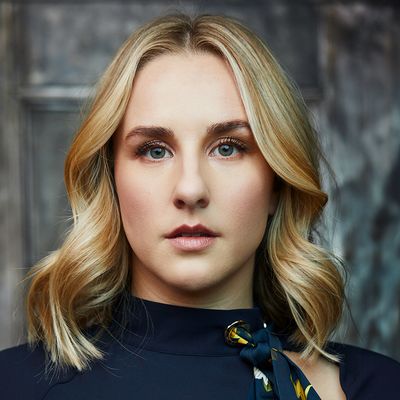
Jeanna de Waal originated the title role of Diana, Princess of Wales in Diana at La Jolla Playhouse and at the New York Stage and Film Powerhouse Theatre reading at Vassar College. Her previous Broadway credits include starring as Lauren in Kinky Boots and Heather in American Idiot... Read More
From the show: The Theatre Podcast with Alan Seales
Guests
Featured Shows

About
Jeanna de Waal originated the title role of Diana, Princess of Wales in Diana at La Jolla Playhouse and at the New York Stage and Film Powerhouse Theatre reading at Vassar College. Her previous Broadway credits include starring as Lauren in Kinky Boots and Heather in American Idiot. Jeanna originated the role of Dawn in the A.R.T. production of Waitress by Sara Bareilles, and the role of Mary Barrie in the A.R.T. production of Finding Neverland, both directed by Diane Paulus. She has previously appeared off-Broadway in Orwell in America at 59E59 Theatre, and played Chris Hargensen in MCC Theatre's reimagined production of Broadway's Carrie. Other notable credits include her West End debut in the Queen musical We Will Rock You, Glinda in the National Tour of Wicked and Janet in The Rocky Horror Show at The Old Globe. In addition to the stage, she can be seen in the recurring role of Sophia in the Netflix/Marvel series Iron Fist. Jeanna is also an amazing entrepreneur, and is the founder Broadway Weekends, the first theater camp for adults led by Broadway performers. Amid the COVID-19 shutdown, her company pivoted and became Broadway Weekends At Home. They continue to host theater classes virtually for people of all ages.
Nonetheless, performing was surely in the stars for Jeanna. Her first professional job out of school was the Queen musical We Will Rock You on the West End. During this production, Jeanna became friends with cast members of Broadway's Hair, in London at the time, and simultaneously she finally received her green card. Suddenly she knew it was time to go to New York. Jeanna shares with us the journey that took her from attending open calls in Times Square, landing her her Broadway debut role in American Idiot, to working consistently from the time she was 21 to 27 years old. Jeanna later opens up about leaving Kinky Boots behind, and her commitment to booking a show in which she could originate a lead role. It was during this period of down time, when she was without a schedule and a “purpose”, that she was inspired to found Broadway Weekends with her sister. These days, the classroom may be virtual (temporarily), but until Diana is able to open on Broadway next year, Jeanna is getting a kick out of bringing to others all the things she gained from her own education in theater - friendships, freedom to trust your body, self-confidence, camaraderie, and more.
In this episode, we talk about:
- The inspiration and motivation for founding Broadway Weekends
- Growing up in England and attending a performing arts boarding school
- What attracted her to theater in the first place
- Her journey from performing on the West End, to her Broadway debut
- Re-discovering her purpose and self worth after leaving Kinky Boots
- The spiritual nature of theater
- Her journey so far with Diana, the new musical
Connect with Jeanna:
- IG: @thebigdewaal
- Twitter: @thebigdewaal
- BroadwayWeekends
Connect with The Theatre Podcast:
- Support us on Patreon: Patreon.com/TheTheatrePodcast
- Twitter & Instagram: @theatre_podcast
- Facebook.com/OfficialTheatrePodcast
- TheTheatrePodcast.com
- Alan's personal Instagram: @alanseales
- Email me at feedback@thetheatrepodcast.com. I want to know what you think.
A very special thanks to our patrons who help make this podcast possible!
Cheryl Hodges-Selden, Paul Seales, David Seales
If you would like to see your name in this show notes or get a shout out on the pod itself, visit ttp.fm/patreon to become a member and show your support!
Transcript
This transcript was automatically generated and might contain errors.
[0:00] Alan Seales: Welcome to the Theatre Podcast. Intimate personal conversations with theatre's biggest names. I'm your host, Alan Seales, and this episode features Jeanna de Waal, who originated the title role of Diana in Diana the Musical on Broadway, yet it never opened because of quarantine, COVID, the whole lockdown. So as you probably know, this was recorded in front of an empty audience some time back for Netflix, and there's no premiere date yet at the time I'm recording this episode, so I can't say when it's going to show on Netflix, and even Jeanna didn't have a date to tell us yet, because I don't even think she knows. Either she doesn't know or she's not allowed to tell us. Who knows? But either way, I've got no good news there in that aspect.
But this was the first show ever Diana was to be recorded before it ever opened on Broadway for us to be able to see on camera. That's unprecedented. I hope that coming out of quarantine and coming out of COVID, that this might be a little bit of something that producers start to do to give access to people who may not be able to actually travel to New York or have the financial means or the time or whatnot to actually make it and see these shows in person. So hopefully there's some sort of healthy balance between keeping these exclusive to the stage and in person but being able to provide access to those people who may never get the chance to see it in person. But Jeanna herself, I was very impressed with how she keeps herself working, even when she's not working.
And before she got Diana, before that all happened, she started Broadway Weekends, which she billed originally at the time as Theater Camp for Adults. She and her sister started this. And now during COVID, they've overcome those startup challenges a year or two ago. But now during COVID, they've changed to being a theater camp for adults to now they call themselves a theater camp for everyone, especially now in quarantine, because everyone can take these classes online. They've got something coming up at the end of November to learn choreography and songs from the original production of The Prom, which is very cool, taught by the original cast of The Prom. So it's giving actors work who may be out of work.
It's giving patrons something to do and something to learn and connecting everybody again. So Jeanna, thank you for putting that together. It's such a brilliant idea. Everybody, please check out BroadwayWeekends.com. And find me online as always at Theater Underscore Podcast on Instagram and Twitter. Please leave a rating, leave a review. They always, always help. And now everybody, please enjoy this episode with Jeanna de Waal.
[2:33] Alan Seales: My guest today has been performing since she was 11 years old. Originally from England, she has starred in productions on the West End and made her Broadway debut in American Idiot. She was in the touring production of Wicked, then came back to Broadway in Kinky Boots before most recently originating the role of Diana in Diana the Musical. But in addition to being on stage, she can also be seen on Netflix in Iron Fist. But in addition to that is also an amazing entrepreneur having started what she calls a theater camp for adults with her sister, which is called Broadway Weekends. And now during COVID, they have pivoted during the Broadway shutdown and are doing Broadway Weekends at home in the midst of teaching all of these classes to people of all ages.
Right now what's going on is they've got classes led by the original cast members of The Prom. So that's super exciting as that is one of my most favorite shows. I can't wait to talk about all this. Jeanna de Waal, welcome to the Theatre Podcast.
[3:37] Jeanna de Waal: Hello. Thank you so much for having me.
[3:41] Alan Seales: Thank you very, very much for being here. And I want to start by something you were telling me a second ago before we started recording was that I originally quoted Broadway Weekends as like theater camp for adults, but you were telling me now that Broadway Weekends at home is more for everybody. So how has that changed in COVID? And what is Broadway Weekends in the first place?
[4:01] Jeanna de Waal: Well, Broadway Weekends started, the reason we started doing it just for adults was because it was a passion project that basically filled up my soul with love and joy. As you know, being a professional actor can be very grueling sometimes, and sometimes it feels a little bit like the world is beating you down when you're trying to pay your rent with your art. But hosting these camps, these theater camps where adults from all across Northern America would come, and even outside of America actually, we had people from all across the world come, it was just for adults who specifically did not want to pursue this professionally, and therefore just thought it was really fun to sing and dance and perform for our weekends, which ranged from like two to five days.
And that was like deeply fulfilling for me as an actor in a pretty tough time in my career, actually, to see what a privilege it is to sing and dance for a living. And I just love doing it. I love meeting these adults who thought that was a kick to do that, and I just got such joy out of it.
[5:06] Jeanna de Waal: So originally it was geared for adults who either, I was going to say like, tried to make it and didn't, but it seems like people, you know, there's always a choice. Not tried, make it, and did it. Like people who never planned to make it. We had like doctors, accountants, research scientists. I would love it if someone came and they were terrified to open their mouth, and by the end of the weekend they would sing a solo line. Like it was such a joy of mine to sort of get people to like break out of their shell, and yeah, no, the absolute goal was nothing but fun and celebration and joy. It was, there was no agents or auditions happening from it.
[5:48] Alan Seales: So you and your sister started this, which, this is, you know, on the Broadway Weekends website. She works for Google. She's an engineer, which is interesting, because she also has a Broadway credit. You, of course, have many Broadway credits, but she is case in point, I think, where, you know, living by example, she didn't want to do it. She did something else, but still enjoys the process, right? So did the two of you just kind of have this epiphany one night, and you're like, we got to do this?
[6:16] Jeanna de Waal: Well, I think we both grew up obsessed with the process. I don't think any of us, it's very British of us, and perhaps very female of us, but we never grew up sort of being like, we're going to be Broadway professionals. That wasn't even like a reality that was in our minds. I think we just love the theatre industry. We're obsessed with the theatre industry, and we're happy to do anything involved in the theatre industry. However, as adults, we sort of reflected on it, and we're like, so, we got so much out of that education. We got a friend group. We got confidence. We got, you know, there's, I mean, there's so many benefits to theatre education. So we sort of were reflecting on that, and sort of thought, I have a few good friends who are yoga teachers, and one specifically runs retreats all around the world.
And she was sort of explaining to me the outcomes of her yoga retreats, and I was like, well, that sounds very similar to what I used to get out of theatre classes. Let's sort of run this as a test to see if anyone is interested, and if they get the same sort of outcome. And they sure did, and we had adults returning like four years in a row to come for a five-day singing and dancing camp in New York. So we certainly figured out how to make theatre classes fun.
[7:27] Alan Seales: What is it that you think they get out of it? You talked about something tangible, or you alluded to something tangible, but what is that?
[7:34] Jeanna de Waal: Oh, I think there's so many tangible skills. I mean, first of all, let's just talk about the confidence to speak and hear your voice, and not mumble or stutter or freeze up when you have to be on the spot. Then there's the absolute surrender to the unknown. I mean, we all know when we're in improv or we're in a scene or any of those things, you're the best when you completely surrender and don't try and hold on to the moment and just respond and react. And that is so valuable in any business. If you're in a meeting, not to feel like you have to have every inch of your pitch planned or just the freedom to trust that words will come to your mind and you will make sense. And then just the freedom to trust your body and move in your body and respond to other people. And I think there's huge tangible skills to be found in theatre classes.
[8:27] Jeanna de Waal: I used to kind of poo-poo the idea of corporate training sessions that did improv or did public speaking, sort of things like that. And you're yet another person in a very short time that has brought up this exact sort of thing where it's like so much outside of the theatre space can be positively affected by theatre training and improv training. And you want to get into the science of it. The episode with Anthony Videnciale, I interviewed him. He's into the science. He gets into MRI machines when he's freestyling. And it's like the dural lateral prefrontal cortex. I think I have that right. This is activated. And I called it the devil on your shoulder that gets thrown away because the part of your brain that's like, I'm not good enough, or maybe I shouldn't try this, is deactivated. There's more. Yeah. And so like exactly what you're saying is being backed up by science that other people are researching right now. It's fascinating.
[9:30] Jeanna de Waal: That's incredible. I mean, you know, so we obviously know in this day and age, you're supposed to meditate, you're supposed to, you know, all these things, but these are things we're taught. These aren't things that we necessarily are born knowing. And there's so many theatre activities like that that require very similar skills. I mean, if you're going to learn to sing or anything like that, you have to have complete calm and focus to sort of do those intricate things. You can't be distracted or trying to muscle through and all those things. And I think there's so many tangible skills that relate to that. I enjoy, in addition to the science, like the personal sort of growth that comes from being on stage and just training your brain to learn lines or learn blocking or learn choreography, whatever it is.
There is a camaraderie that's formed by default when going through a rehearsal process and a performance process. And by having shared stress and shared experiences with these people that, especially as adults, is hard to get, in my opinion, because in school you're with these people. In, you know, elementary school, middle school, high school, then college. And then after college, you're basically like, that's your group of friends.
[10:34] Jeanna de Waal: And then, yeah, well, I think what does it, I think the reason that theatre classes does form a community in adults is because there is a level of exposure that you have to be willing to do when you sing in front of people or perform in front of people. And it's extremely scary. And even for professionals, it's extremely scary. And I think sort of witnessing someone else going through that and witnessing someone else sort of step up to the table makes you support them, especially when you've seen that process, whether they were quiet at the beginning of the workshop or whether they had their camera off in the first session. You know, seeing that progress of someone suddenly turn their camera on and then maybe after four weeks sign up to sing is clear to everyone else in the room, and it inspires humans to sort of lift up the other people.
[11:35] Jeanna de Waal: I mean, I think I cried nonstop for the first year, but then I got over being away from home and convinced my sister to come to boarding school. And then we literally would only do academics for three hours a day or something. And the rest, we were singing and dancing and acting. And amazing people have come from our school in the year above and the year below, and also people doing stuff outside of the arts. It was just a great environment that taught us work ethic, but also that you can support people beating you and still be friends and still be their cheerleader. It was just a wonderful way to learn that sort of how to be competitive without hoping other people fail.
[12:11] Jeanna de Waal: I mean, my parents say I did want to go. I don't really remember. I mean, I was such a baby. I don't really actually remember anything. I just sort of remember being there and suddenly being a bit panicked, like, why am I here? And sort of feeling lonely and stuff. But I think it was good for me because it's certainly tough on my skin. I mean, I think a lot of people find leaving home tough when they're 18 or when they're 21. I mean, I didn't even bat an eye when I went to college. And then moving to America by myself at 22, I hardly batted an eye. So it definitely made that learning curve happen very young, but I was grateful for it later on in life.
[12:47] Jeanna de Waal: Oh no, I loved performing. I mean, as I sort of mentioned earlier, I don't think I ever said I want to be an actress. Even when I was at drama school at 19, 20, we'd be at restaurants. My dad would say to the waiter, she's going to be an actress. And I'd be like, shh, shh, shh. Because more just because I didn't believe it. But I knew that I wanted to do something in theater. And having said that, I would have been happy doing anything in theater, from a company manager to a stage manager to a casting director to anything. I just knew that I loved this world.
[13:01] Jeanna de Waal: Well, I think, first of all, I used to listen to cast album recordings and imagine what the world looked like. And I think that was addictive to imagine it. Sometimes it actually let me down. I remember once we came to see Wicked, and I was so annoyed. It was not how I imagined it at all. And my friend who went with me agreed, and I think we wrote like a 20-page pitch deck and sent it to the Wicked company in New York for how they should have directed the show. And then they wrote back and said, there's the door.
[13:46] Jeanna de Waal: So I think it was like the imagination of what it all is. And then there is something that is so exclusive about theatre, because you have to attend, right? So when you see all like the national theatres marketing, and it looks so exciting, and it looks, there's this thing that you can't access it. It's so restricted. And you're like, gosh, I've got to know what's going on. I want to see it. I want to see it. And then also, it was the actual doing for me. The doing was more exciting in many ways than the watching. And that was the, you know, everything we've based our business off, which is, I just loved being in rehearsal.
[14:35] Jeanna de Waal: Yeah, the rehearsal part, for me, is always just so much fun, because you're getting to know these people, while getting to know yourself in a new character. And the whole process of just creating is intense. And I want to get to, I guess, we'll get to the Diana stuff soon, because that was, you know, a huge role to originate. But made your Broadway debut in American Idiot, which you were the first, you're one of the first replacements in the show there, right?
[14:59] Jeanna de Waal: Yeah, I was the first replacement, actually. Yeah, Mary Fairhuber I replaced. Oh, that's cool. Okay, so did the Broadway debut in American Idiot come before West End debut, or after?
[15:09] Jeanna de Waal: After. So it's quite a funny story, actually. So if you've got the time. I do. So I was in We Will Rock You in London, which was my first job out of school. And I was an understudy in that show, The Two Leads. And the Hair Broadway show was in London at the time. And I made friends with quite a few of those people. And my green card, which we'd applied for when we were like, 10 years before, came through during that contract. And a culmination of my green card coming through, and then also just meeting all these amazing Broadway performers, made me think, wow, I've just got to go. So the contract finished. In England, you have to do a year's contract. You can't, it's not like the four week thing in America.
So I finished my year, and then literally booked a flight and came. And I met Alicia Umfres, who was visiting one of the friends. And we were having to go to Amsterdam together. And I said, I'm moving to America. And we made a coffee date for like two months out or six weeks out or something. And so I arrived in America, and I start going to all the open calls in Times Square. And I happened to get American Idiot.
[16:11] Jeanna de Waal: So the next time I see her, because she'd been like, yeah, good luck, girl, move to America. You know, it's pretty hard kind of thing. The next time I see her, I'm like, hey, yeah, I'm coming into your show, actually. She was like, get out, get out. She was so annoyed.
[16:35] Jeanna de Waal: Oh, that's so funny. That's so funny. Yeah, I love Alicia. Okay, American Idiot. Then you were in Wicked Tour, Kinky Boots. And then, yeah, now Diana, of course. But between Kinky Boots and Diana, that was when Broadway Weekends got started, yeah?
[16:58] Jeanna de Waal: Oh, sort of. Yeah. In that Kinky Boots, I did The Out of Town of Waitress, and I did The Out of Town of Finding Neverland. Both have different stories that were complicated. And so those happened. And then I left Kinky Boots. I've been working pretty consistently from 21 to 27. And when I say consistently, I mean double duty most of the time. I was truly non-stop, and I would involve myself in everything. And then I left Kinky Boots, and it was, A, a decision to be like, I really want to originate a lead. I've tried now with Finding Neverland. I've tried now with Waitress. And they didn't happen. I want to originate. And sometimes you have to just unemploy yourself to get onto the next rung of the ladder as an actor, which is crazy, but it just is what it is.
It's scary, it is. But I sort of made that commitment. I told my agents, I just want to originate. And so then I was unemployed, and I found myself catering again. And without a schedule, and without a purpose, and maybe feeling like I didn't have any self-worth, and all those kind of horrors.
[23:09] Jeanna de Waal: I started creating projects that would give myself structure, and also that I felt passionate about. And one of them happened to be Broadway Weekends, and that's how we started developing it.
[23:28] Alan Seales: I think a lot of people in your position have and would go into sort of a spiral of self-doubt and a spiral of, you know, depression for a lack of, I guess, a different word. You know, going back to the mental health side of it all, how much of yourself did you at the time put into having a job? Were you like, I'm just not a real person unless I have a schedule and a job? Or, you know, where did this sort of like drive to create come from?
[23:57] Jeanna de Waal: Yeah, I definitely think a lot of my self-worth was based in my resume. I mean, both having things to do every day and also feeling good at what you do, and then also just having a wage. It's a really scary thing to be in New York and have no income coming in. And so it was just a hard thing to grapple with. And another thing as well, I actually started a new relationship at the time with someone who was really successful. And I found myself being introduced to all his friends and sort of seeing in their eyes like, oh, she's an actress. And people asking you questions like, what do you do all day? And those passive aggressive questions where you're like, that hurts. So, yeah, it was really, really important for me to set up some things that I thought A, one gave me structure, and B, made me feel passionate to get up and do things and feel inspired to work.
[25:02] Alan Seales: Well, so then, you know, going back to your Broadway Weekends and starting the company with your sister, right? So where did the idea sort of come from, though? Did you both? Yeah, go ahead.
[25:15] Jeanna de Waal: The idea came from I went on vacation with a friend who ran yoga retreats around the world. And I was sort of saying, oh, I feel like this. And she's saying, you should try yoga. I do all my friends, you know, sorry, all my clients. These are the benefits of yoga. And this is how we run a retreat. And these are the benefits of the retreat. And I came away being like, I don't like yoga. But all the things you're describing are outcomes that I would say I got from theater classes. So I wonder if I can create kind of a theater retreat, for lack of a better word.
[25:51] Alan Seales: And was it hard to get started, though? Because I mean, just taking people's money, if I didn't know anything, I mean, you're nodding for people listening now, you're just nodding profusely.
[26:00] Jeanna de Waal: Yeah, I would be reluctant as a first-time person taking a class from this first-time company to be like, here's my money, I'm going to travel to you as well and take this class that I'm not sure about and has no reputation. Yeah, it sure was. It sure was hard. And it lost money for a while, you know, like, it was an investment of time and money. But I believed in the higher philosophy that there are a lot of similar outcomes, similar to yoga or meditation that theater can provide. And I'm still sort of working to that higher level goal of and that belief.
[26:43] Alan Seales: Goal, okay. It's interesting how you phrase that higher level goal and that belief that that is like, those are phrases of more of a spiritual nature.
[26:56] Jeanna de Waal: Well, I think there is something spiritual about theater classes. I do. I think there's something spiritual about committing to your imagination. There's something spiritual about being so in tune with the inner workings of your body from, I mean, how much effort it takes to make your voice move in a certain way and focus on certain riffs and focus on certain notes. All that stuff is deep meditation. I mean, there's nowhere, it's practice, it's focus, it's calm. All these things that are required to develop these skill sets are absolutely spiritual in every sense of the word.
[27:30] Alan Seales: Did you find yourself, I guess, growing more as a teacher or when you were actually in classes and doing the rehearsal process and everything? Because I assume that you started out as one of your own teachers in the company, of course. So do you find yourself becoming a better person and a better performer now because of teaching or because of stage experience?
[27:55] Jeanna de Waal: Oh, so this is the thing. So sometimes when I'm, especially in the past when I've been acting, obviously you have all these tools and stuff that you've developed. But when you're actually in the room, you tend to let them go. At least I did for a long time. And I would just sort of do what came naturally or develop it in different ways. And then having taught all summer, when we went back to do the film for Netflix, I had seen firsthand how much people's performances change with some basic tools that I was teaching that I had maybe learned in drama school, tangible changes that were so clear. And so I literally broke my script down like a theater class with adjectives and which realm of myself, the person in the room, the higher power.
So the realm of consciousness, the active, the moment before. And I literally wrote it in like it was, I mean, well, who knows, maybe my performance will be terrible. But I purposely did the tricks I've been teaching just because I'd seen how much effect they had.
[29:08] Alan Seales: Well, then you still haven't actually answered the question.
[29:13] Jeanna de Waal: Oh, sorry. Do you think that, no, I mean, it's interesting to me because you're explaining this process. I'm trying to evaluate you, of course, as a person, while we're talking and asking all these things. So you keep flip-flopping back and forth in my mind between someone who's very logical and methodical versus someone who is spiritual, hip, more spiritual-based though. Because I mean, even in what you just said about how you broke down your script, you used the phrase higher power. So what is the higher power? I mean, you don't have to answer specifically, but like metaphorically, you're speaking to the audience, but to your character, what is the audience?
[29:53] Jeanna de Waal: Exactly, exactly. I mean, I think there is something that falls into both those lanes. Even as an artist, I think there's something that falls both into those lanes. I feel like when you first receive a script and you're trying to figure out like, how does my character get from A to B? What affects them? Okay. And then they go to C. And it is very planned out and structured. And you have these thoughts that are, okay, I read this article about her, so I know she was feeling this. So maybe that affected her. So it is very planned out. And then at some point, you have to step in and let go and commit to your imagination.
[30:43] Alan Seales: Well, that is a good way, I think, to transition to Diana specifically, because the show itself, I was not fortunate to see it in previews before COVID hit. But I've talked to a couple of friends who have, and so the show's phenomenal. And your performance is wonderful. And my question for you then is, of course, coming from the UK, you probably know more about the royal family than we do in America in general. But my impression, my personal impression of it is, I mean, really, it was a tragic lifestyle that she had. But the show itself is actually full of lots and lots of humor. So I guess, start with that. Were you surprised with the script, with how humorous it was? And then I want to get into actually how you started to research and prepare to be Diana. To originate something like this is huge. Huge.
[31:38] Jeanna de Waal: So I'm glad that people find it funny. She was in a very strange environment. She married into a strange environment. But we all know what a great sense of humor she had. I mean, that can be seen in interviews, that can be seen with her sons, that can be seen in reports. And her spirit was alive and funny. And so there was definitely a huge focus on making the show feel fresh and funny and alive and not all stoic and serious and tragic. So I'm glad that comes across.
[32:16] Alan Seales: Were you surprised? I guess, what did you expect to look into it when you first got the call from your agents? You're like, we've got this offer. We've got this role for you. Here are the sides. It's for a Diana musical.
[32:25] Jeanna de Waal: Yeah. Now, first, let me say that when I first auditioned for it, it was for a tiny reading, a four-day reading at Vassar. It definitely wasn't for Netflix, the first musical. So we've changed slightly what the goal was since I first auditioned. But when I first got the... I mean, with any musical, the scenes tend to get trimmed and so they make room for songs. But when I first got the script, I mean, it was a hefty script. Joe had gone in. And so it was less that I was aware of the tone and more I was aware of how fleshed out and detailed and well-written the scenes were. I mean, honestly, it could have been a TV script or a film script. There was nothing that was surface level or anything like that. I mean, we've definitely stripped it back to make room for songs as we've developed it over the years. But what started was a play. I mean, Joe wrote a play.
[33:30] Alan Seales: Wow. When did the development start? Because I know that you were doing it in La Jolla. So that was years ago. When did it start? When was the four-day reading?
[33:36] Jeanna de Waal: I think the four-day reading was in the summer of 2017. Wow. And then we did a workshop in 2019 and then... No, I'm getting my... 2018 and then La Jolla was 2019 and then Broadway was 2020. I think that's the timeline. I guess that's actually not so bad. It's pretty quick for a Broadway show, yeah.
[34:04] Alan Seales: Actually, yeah, it is. Assuming that that was one of the first workshops that they did, which I have no idea. But it's fascinating to me. Of course, you're stepping into these shoes. You've met your goal of originating a role and this is a hefty role to originate. And I don't suspect that you were able to get consultation from the royal family on this.
[34:28] Jeanna de Waal: No.
[34:33] Alan Seales: Do you know if they were planning on coming to see it? Have they ever endorsed it, actually?
[34:37] Jeanna de Waal: They have not. I mean, that would be amazing. But no word as of yet.
[34:43] Alan Seales: If they do, tell me. I need to know.
[34:44] Jeanna de Waal: You've mentioned Netflix many, many times. This is the first Broadway musical now to be filmed before the show ever opens on Broadway, or filmed and released before the show ever opens on Broadway.
[35:00] Alan Seales: Were you privy to any of that conversation or any of that decision-making process, or were you just got a call and you were like, we're going to go and film?
[35:07] Jeanna de Waal: I was actually a bit annoyed because I was like, wait, they gave us like five weeks notice. I'd been sat on the couch, drinking wine, eating chips, and I was like, you couldn't have even given us a hint. So no, they told us literally five weeks ago, and I think all our jaws dropped to the floor, but they were like, yeah, we've been working on this since March and it's coming through and we're going to film it. So we were blown away.
[35:30] Alan Seales: So was that since March? Yeah, I guess that's when COVID hit. So I guess the producing team probably pivoted real fast. I assume they must have been in conversation with Netflix anyway.
[35:40] Jeanna de Waal: No, I don't believe they were. I think one of our producers is Frank Marshall. I'm not sure if you know him, but he's a very connected man. So I guess it was an idea that came up in a production meeting and he made a call.
[35:59] Jeanna de Waal: And I hope Beth doesn't mind me saying this, but our lead producer was like, by the end of that call, he already had a call with Netflix set up for the next morning. That's how connected he is.
[36:08] Alan Seales: Wow. That's so cool.
[36:10] Jeanna de Waal: The people you know.
[36:12] Alan Seales: Well, it always is, yeah, in this business, of course. And so the process, you came back, of course, during COVID. I mean, I know that you're not supposed to or allowed to say a lot about this, but for what you can tell us, I mean, obviously you don't have an audience because it was filmed inside the theater, but it's different. Was anything changed, I guess, first off? Was it changed or the stage production is what we see is what we're going to get on stage too?
[36:43] Jeanna de Waal: There was one section of the show that they wanted to work on, and we did a Zoom workshop in June and worked on that. And they really made great change to that scene and song that they wanted to work on. And that was the only thing that was changed. The rest is the Broadway show.
[37:05] Alan Seales: So is that going to go back? The changes are going to go back to…
[37:08] Jeanna de Waal: No, no, no. These are set. I think they sort of… When we're in previews, there's always that one moment where you're like, oh, man, we wish we could work on this one section. But we had four days till opening or whatever, so it was sort of like, well, it's too late now. But it sort of gave us a new little section of time to work on that section, and it's fixed. It's great.
[37:31] Alan Seales: Oh, wonderful. So then, yeah, so the change will stick and when it goes back and opens on stage. That's awesome. That's so awesome. Well, I cannot wait for it to come out on Netflix. There's no word, no announcement yet on when that's going to be. I'm sure they're still working through all of that. But I'm super excited about that. But also speaking of things that are on Netflix, I'll tie this back to Broadway Weekends At Home now, The Prom, right?
[37:56] Jeanna de Waal: Oh, yeah.
[37:57] Alan Seales: Yeah, so The Prom coming out on Netflix in the fall, or in December. But the original Broadway production, you have teaching classes now.
[38:05] Jeanna de Waal: Right. So with Broadway Weekends At Home, we've obviously just been offering theatre classes covering the gamut of theatre subjects, but they haven't been on a theme or anything like that. They've just, the teachers, you know, one teacher's improv, one teacher's scene study, yada, yada. Whereas we really wanted to sort of explore, how do you experience a show if you're completely immersed in the material? So rather than sitting back and having this passive experience of, I see the show and I sit in an audience, if you are learning the material, hearing from the artists who made it, and sort of having this immersive experience. And we had started exploring that with in-person camps before social distancing, in pop-ups, by teaming up with actors in Broadway national tours.
[38:53] Jeanna de Waal: So we'd done this with Come From Away and The Band's Visit and Mean Girls and yada, yada on Saturdays and Sunday mornings in different cities where we were still adults then, but adults would come and they'd learn a section of the show and be taught by the cast members. So now this is our now online exploration. And the first show that we're doing with is The Prom, and we're aiming at high schoolers because of the subject. And, you know, because the high schoolers love theater and they've had so much canceled this year. So we really want to just sort of give them something. But yeah, this will be, it's a one weekend sort of standalone event taught by the original cast members. So Chris Seber and Beth Leavel and Josh Layman and Caitlin, all those people, and using material from the show.
And, you know, it's a bit of an experiment, but I sort of can't wait to interview the participants afterwards to be like, how did that feel? Like, how did it feel experiencing the show like this? And we're all sort of living in the unknown right now, but I am leaning towards follow this because I think there's something here of a different way of experiencing theater than just watching it.
[40:11] Alan Seales: Well, you're doing something that as far as I know, nobody else is doing. You know, being able to, especially right now during shutdown, provide some income to these actors who are sitting around doing nothing, which is super important. I take that back. They're not doing nothing. They're actually working their asses off trying to find other sources of income, such as this. But then for the people who desperately need the arts in their lives, the people who, like you have been alluding to this whole time, like, it was actually ironically Beth Leavel who first used this phrase with me, theater helped her find her tribe. And this is what the people who are taking these classes from the Beths and the Chris's and the Josh's and the Caitlin's, especially a show like The Prom and like Mean Girls, obviously the theme here is sort of like the high school angsty years of your life.
Well, not that life isn't angsty in general, but high school is particularly rough. And now like I'm of an age where I didn't have internet, I didn't have cell phones all the time and at all. I didn't have a cell phone until I was basically out of college. But now in middle school and high school, you've got the internet, you've got connectivity, you are nonstop. And you get exposed, kids get exposed to so much more than I ever did at that age. And I think it's so important to do what you are doing and bringing the opportunity for people to connect in a real and genuine and authentic way and identify with these people and these actors and these stories and these songs because music, the art, it heals, right?
Especially right now when we are as a nation hurting so much, as a country hurting so much and we can't get out and we can't connect and we can't touch and we can't hug and it's hard. So I really, really thank you for what you're doing because I think it's making a huge difference to a lot of people.
[42:09] Jeanna de Waal: Thank you. I hope so. I hope so.
[42:12] Alan Seales: And I think that is actually a wonderful place to transition into my three standard closing questions that I ask everybody to close out these episodes.
[42:20] Jeanna de Waal: All right.
[42:21] Alan Seales: The very first one, very simply, is what motivates you?
[42:26] Jeanna de Waal: Wide eyes. What motivates me? What motivates me is human interaction, I think. I mean, I wake up every day excited to go to work and it's mainly to talk to the people I work with, which happens to be all online, but I still communicate with them every day. And I love making something with other people. I am not someone who works in a vacuum at all. I love collaborating. I love working with other people. And honestly, I'd rather work than be on vacation. I just love working with people.
[43:06] Alan Seales: I love that you said that.
[43:08] Jeanna de Waal: When I go on vacation, I like to do the things, I like to work on the things that I want to work on, not the things I have to work on.
[43:14] Alan Seales: Well, that is the good, the very good thing about being an artist is, or not an artist, but an artist slash entrepreneur is you're only doing the things you want to do, which the negative is sometimes you have a source of income and you don't know where your life's going. But the positive is that you wake up every day and set your own schedule and it's only you really driving the ship. So I don't never have the Sunday scaries or anything like that. I really wake up kind of pumped every day.
[43:44] Jeanna de Waal: I love that.
[43:45] Alan Seales: Okay. Second question, then, is what advice would you give to your younger self and younger people listening now starting out down a similar path?
[43:51] Jeanna de Waal: I would say explore those skills that you feel are not for you. For example, mine would be writing. I wish I'd started writing music and scripts and practicing guitar at a young age and stuff. But to me, I just didn't because that just never felt like a possibility or a world for me. So to explore the skills that you think are beyond your means and ability levels, because everything is a skill that can be developed. And if you work on something for long enough, you'll be good at it.
[44:32] Alan Seales: I love that answer.
[44:33] Jeanna de Waal: So last question. This is the hardest one. If you could only see one show for the rest of your life, but you could see it as many times as you want, what would you see?
[44:42] Jeanna de Waal: Diane Paulus' Pippin.
[44:44] Alan Seales: So specific. Why that specific?
[44:48] Jeanna de Waal: I mean, so when I was a kid, I definitely used to get lost in the theater. You know, like I'd come out and I'd sort of be like, it was like I left the room and I just got lost in that world. But I got lost in that show as an adult. And it was during my unemployed time. And I think I bought house seats three times. That's how much I loved it. I was blown away.
[45:09] Alan Seales: Awesome.
[45:10] Jeanna de Waal: So please, everybody, visit broadwayweekends.com. There's an actual, there's a really great video that explains what Broadway Weekend is that I'm going to throw in the show notes for this episode. And then personally, where can we find you online?
[45:24] Jeanna de Waal: On the gram on the Big Duval.
[45:29] Alan Seales: The big, just D-E-W-A-A-L?
[45:32] Jeanna de Waal: Yes.
[45:33] Alan Seales: The Big Duval, yeah.
[45:34] Jeanna de Waal: Awesome.
[45:35] Alan Seales: Awesome. And you can get more of me at thetheaterpodcast.com. I'm on Instagram, the gram and the twits at theater underscore podcast. Facebook.com slash official theater podcast. Please leave a rating. Tell your friends. Share. Help Gina get the word out about Broadway Weekends and take these classes. The prom class, the next two coming up are November 21st and November 22nd. So sign up for those. Thank you for Jukebox the Ghost for the intro and outro music. This is edited by Matthew Hendershot. And Gina, thank you most of all. This has been such a wonderful chat.
[46:07] Jeanna de Waal: Thank you so much.
[46:08] Alan Seales: Thank you. Take a deep breath, make the world a little colorful.
© Broadway Podcast Network, All Rights Reserved