

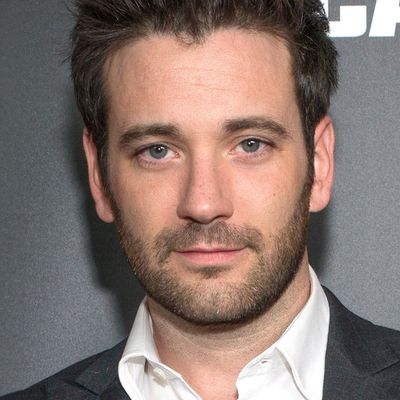
“It’s going to be bumpy, but it’s going to be worth it”. Colin Donnell is a singer, actor, and musician who has starred on both the stage and screen. His stage credits include the Broadway productions of Jersey Boys, Violet, and Anything Goes (for which he received a Drama Desk Award nomination), as well as many national tours including Mamma Mia!.. Read More
From the show: The Theatre Podcast with Alan Seales
Guests
Featured Shows
About
“It’s going to be bumpy, but it’s going to be worth it”. Colin Donnell is a singer, actor, and musician who has starred on both the stage and screen. His stage credits include the Broadway productions of Jersey Boys, Violet, and Anything Goes (for which he received a Drama Desk Award nomination), as well as many national tours including Mamma Mia! and Wicked. Colin made his TV debut in ABC’s Pan Am alongside names like Christina Ricci and Margot Robbie, and has since appeared on Person of Interest, The Affair, Chicago PD, and both Arrow and Chicago Med as a series regular. Off of the stage and screen, Colin is also an incredible musician. While in quarantine, he and bandmate Brian Usifer formed The Nineteen Twenty, and their debut album Chaos + Cocktails is now available on all music streaming platforms.
A native of St. Louis, Missouri, Colin shares he “basically lived the High School Musical in reality”. He was “a sports kid” for most of his life, until freshman year of high school when he broke his ankle playing football. On a whim, and because he could juggle, Colin auditioned for the school production of Barnum. The rest is history.
Speaking about his career, Colin opens up about what keeps it fun and interesting - continually striving to improve, grow, and tell the next story in a new and exciting way. He touches on the inevitable self doubt that creeps in when you share your work, but how freeing his newest project with The Nineteen Twenty has been, allowing him and Brian to focus on making the kind of music they want to make - something they could be proud of amid the shadow of a pandemic. Colin also talks about looking forward to the inevitable “explosion of creativity” in the years ahead, born out of the COVID-19 era - “what’s to come is going to be really special”.
In this episode, we talk about:
- The inspiration behind, and creation of his new band The Nineteen Twenty
- Giving himself permission to quit performing
- His experience doing his first straight play
- Something he admires about wife Patti Murin
- His love/hate relationship with social media
- Eleven O'Clock Number: The wine he and Patti collaborated on for Nocking Point Wines
Connect with Colin:
- IG: TheNineteenTwenty
- IG: @ColinDonnell
- Twitter: @ColinDonnell
- Listen to TheNineteenTwenty
- Drink his wine!
Connect with The Theatre Podcast:
- Support us on Patreon: Patreon.com/TheTheatrePodcast
- Twitter & Instagram: @theatre_podcast
- Facebook.com/OfficialTheatrePodcast
- TheTheatrePodcast.com
- Alan's personal Instagram: @alanseales
- Email me at feedback@thetheatrepodcast.com. I want to know what you think.
Thank you to our friends Jukebox The Ghost for our intro and outro music. You can find them on Instagram, Twitter, and Facebook @jukeboxtheghost or via the web via jukeboxtheghost.com.
A very special thanks to our patrons who help make this podcast possible!
Cheryl Hodges-Selden, Paul Seales, David Seales
If you would like to see your name in this show notes or get a shout out on the pod itself, visit ttp.fm/patreon to become a member and show your support!
Transcript
This transcript was automatically generated and might contain errors.
[0:00] Alan Seales: Welcome to The Theatre Podcast, intimate personal conversations with theatre's biggest names.
[0:11] Alan Seales: I'm your host, Alan Seales, and this episode is with Colin Donnell, who plays hunky TV doctor on Chicago Med and Chicago PD, and he's in Arrow, and he was the despicable Scotty Lockhart in The Affair, and this dude just has a TV resume out the wazoo, and he also has many Broadway credits as well. The guy can sing, now has a new band called The Nineteen Twenty, which is born out of, as he says, COVID necessity. He and a friend just have this need to create, to make music, to express themselves, and with Broadway shut down, with a lot of TV and film shut down, that this was just the time, and the music is so good, you guys. Just please, pause it right now, go over to Spotify or YouTube Music or Apple Music or whatever, wherever you listen to music, and pull up The Nineteen Twenty.
The new album is called Chaos and Cocktails, streaming on all platforms, just so good. Before we get into the episode, as always, find me online at theatre underscore podcast on Twitter and Instagram. Leave a rating, leave a review, wherever you are listening, it helps everything everywhere. Find me on Facebook at slash official theatre podcast, and find me online at the theatre podcast dot com. Now everybody, please enjoy this episode with Colin Donnell.
[1:35] Alan Seales: Today's guest is a star of stage and screen, with Broadway credits that include Jersey Boys, Violet, and Anything Goes, and TV credits that include Person of Interest, The Despicable Scotty Lockhart on The Affair, Chicago PD, Chicago Med, and now Arrow. In addition, this dude is also an incredible musician. He has a brand new band, born in quarantine, called The Nineteen Twenty. Their album Chaos and Cocktails is available on all music streaming platforms. Colin Donnell, welcome to The Theatre Podcast.
[2:14] Colin Donnell: Thanks for having me, man.
[2:17] Alan Seales: No problem. Is it called Chaos and Cocktails or Chaos Plus Cocktails?
[2:22] Colin Donnell: Chaos and Cocktails. We figured the plus kind of looked cooler on the graphics. We went for that. But yeah, the title of the album is Chaos and Cocktails.
[2:33] Alan Seales: So you are very well known from the TV world, from the Chicago PDs, the Chicago Meds, and whatnot. And I personally despised you on The Affair. So you did your job very, very well. But what people don't maybe don't know from that side of you is your Broadway life and your performing life, your singing life. And you met your wife, Patti Murin, of course, doing a show. But tell me about why The Nineteen Twenty and why now out of, you know, in quarantine.
[3:09] Colin Donnell: Yeah. So the whole thing was born out of a sort of conversation and passing that Brian Usifer, my bandmate, and I had backstage at Frozen. I was hanging out in Patti's dressing room. And for the probably half a person out there who doesn't know that Patti played Princess Anna in Frozen, I was hanging out in her dressing room. And Brian was the music director there. And he was taking notes on the show that night. And he just popped in and said, hey, we've been friends for years now. And somehow the conversation turned on to like, you know, writing music. And I had just gotten done doing Almost Famous out at the Old Globe. And I had told him that, you know, it really sort of reinvigorated my love for playing guitar and tooling around trying to write tunes.
And, you know, Brian has a massive background. That's what he originally moved to New York City to do, to be a producer and a pop songwriter. And we, you know, kind of planted seeds right there. It was he was like, maybe we should do this someday. And I was like, yeah, cool when we all get some time we're busy as all get out. And then pandemic. And somewhere along the line early on in all of us being in our homes, I posted an original tune online, which I had never done before, and was all scared and, you know, the requisite, you know, self-doubt and all that stuff. And Brian saw it and immediately said, hey, man, why don't we do this? Why don't we? Why don't we write some songs together? And really, that's how the entire thing came to be.
It was a random conversation leading to a random post on social media leading to a random text. And then we found ourselves really just loving it. We like we get on we, you know, I just said we've been friends for years. But there's this whole other dynamic of creative friendship and creative partnership that we really just, I think, we just didn't realize how much we needed it. And to be working on stuff that was our very own and not, you know, he and I are so used to doing other people's projects. And that's awesome. I mean, that's what I love to do, obviously. But, you know, to be doing something for ourselves with no expectations other than to do something that we were proud of, in the end, was very freeing. And really, not to blow it out of proportion, but it was just, it was exactly what we both needed, I think, at the time, and still is.
[6:01] Alan Seales: Well, it's interesting to me how you said at the beginning, you know, you posted something online with the requisite self-doubt that comes along with that. And then now you're posting something with The Nineteen Twenty that you want to do that just makes you make yourselves proud. Do you still have that same feeling of need for acceptance, need for like, of course, when you're posting, I guess it's different when you have something you're putting out with somebody because you can at least share the failure if that's what it becomes. The massive success.
[6:35] Colin Donnell: Yeah, you know, I look, I think there is always a bit of creeping self-doubt that comes with putting anything out there, period. And there is like, I'm a performer, I'm an actor. I want to be liked. I want people to like what I'm doing, of course. But there was, I think what's been special about this project with Brian is that we really were interested, we were just making music, the kind of music that we wanted to make. And whether or not, you know, I sure, I sure as fuck hope people like what we're doing. But in the end, it's, you know, we're very proud of what we did. And it was really, really awesome to put that out there. And just have it out there. I mean, that at the bare minimum, that was that we made something in all of this.
And we were able to create a seven song album that we really liked. And we hoped other people would too. There's something I'm looking forward to through all this pandemic bullshit and what was 2020 and is now still 2021 and whatnot. But after the, what was the pandemic of the late 19s, 19 teens, right, you had the roaring 20s. And so there's stuff like that after the plague, there was the Renaissance and whatnot. And you can look back through history. And now we're at a point where we've been sequestered and our livelihoods for the most part, artistically have been shut down and paused. And I think the writers, the creators, the makers and the shakers, right, have all pivoted because this is something that, you know, you're case in point here, there's something that you have to do to feel whole, to feel like a complete person.
You have to write and sing and express yourself in this way. And I think we are just now at the beginning of seeing some of this great, great stuff that people are now starting to put out in the world.
[9:39] Colin Donnell: Yeah, it's actually found themselves with. Yeah. And like, there's, there's this weird dichotomy, right, where you want to sort of forgive yourself for not being creative or not feeling like you need to be productive. And I look, there were many, many times throughout writing the album and after and before, during whatever that I would look at my guitar and disgust, or I would look at my journal of lyrics and be like, you are a fraud. That's a whole nother story. But, but it's like, you know, you, you want to and you feel compelled to, but you also have to forgive yourself at the same time when it's just not coming. You know, I've had this conversation a lot with people and I think you hit the nail on the head.
What is going to come out of this, whether it's next year, five years, 10 years down the line is going to be just an explosion of creativity. Because people have been, you know, consciously or unconsciously sort of filling up their cups with this pent up creativity. And I think, you know, there have been plenty of people who have been productive while it's going on and it's awesome for them. You know, I was for, for a little while, very productive. But, you know, what I, I just think you're right. Like what's to come is going to be really special and I'm really looking forward to it.
[10:31] Alan Seales: Well, now you specifically, I think it's actually really good timing because you've put out the seven song album. You're able to, to start to promote it and raise awareness for it without going anywhere, which is great for you. Also personally, because you've got a newborn, right? It came during quarantine so you can stay home with, with the baby.
[10:47] Colin Donnell: Yeah. Yeah. That was a, that was a big part of actually finishing the album. Brian was like, Brian, so Brian's got a kid of his own who's a little bit older and he was like, you know, our daughter was born on July 14th and he said, look, I think we should give ourselves a deadline to have all the writing done by July 1st because you're not going to have any brain space for anything else, but maybe to listen and give some notes on mixes, et cetera, et cetera. And I was like, yeah, no, I'll be fine. No, he was right. That is a good partner. That is advice. I love that.
[11:25] Alan Seales: Why I was saying that was that when restrictions lift and we're able to get in person again, you're already going to have a built-in following. So you'll be able to start performing without starting from scratch, essentially, because you can start from scratch without having to travel and play to half empty houses or whatnot, because there are no houses right now.
[11:46] Colin Donnell: Yeah. No, I think like one of the things that both Brian and I are looking forward to, and it's weird because it was only the two of us creating all this stuff, right? We essentially did all the instrumentation. We did all the music, just the two of us in this little tiny bubble. And what is really cool to think about is expanding that into a full band and going into a bar and playing some clubs and just getting in front of an audience and seeing people in a venue again, and experiencing live music all anew and all just joyously experiencing it together.
[12:33] Alan Seales: Oh, I agree. I mean, even Broadway specifically, I cannot wait for that first downbeat of that first show when it all comes back and just going on this journey with this room full of strangers again. There's something so cathartic about all of this. It's absolutely incredible. And I want to, I'm going to ask you about all the TV stuff, because I'm sure everybody wants to know about that. We'll get into that later. But I want to know from the beginning, you've got such an eclectic career now, but I want to know where it all started. So take me back, baby Colin, where did you grow up? What was your childhood like?
[13:16] Colin Donnell: Yeah, I grew up in St. Louis, Missouri. Super supportive family. I've got two older brothers who are creative in their own rights. One brother is a photographer. The other is in business. He calls himself the Black Sheep, but he's also in a creative business. So he owns his own company. And my parents were just super supportive. Long story short, and I'll keep it brief, because it's sort of boring, but I basically lived like the high school musical.
[13:48] Colin Donnell: I was a sports kid all my life. I broke my ankle playing football my freshman year of high school. And my high school was doing Barnum, the musical, and sort of on a whim, I auditioned for it because I could juggle. And then the music teacher, whose name was Karen Flasher, she was an amazing woman, who has unfortunately passed away since then. She literally said, can you sing? And I said, nope. And she said, all right, well, what about Happy Birthday? Why don't you sing Happy Birthday for me? So I sang Happy Birthday for her. And literally, the rest is history. I started singing in choir, and I loved it. And as things progressed, I just fell more and more. I got bit by the bug pretty hard, pretty quickly.
[14:44] Alan Seales: Well, what was it about the bug? And you hear people talk about this a lot. You're like, oh, I got in front of a stage, or got on stage, and I had the bug, or I felt the acting bug. But everybody's, I think, if you really think about it, your personal interpretation of what the bug is, is different, right? So for me, I need to be needed. So I like to stand on stage and know that I'm responsible for helping tell this story. And of course, the validation from the applause and whatnot, right? That's what the bug is for me. It's a nice way of saying I'm needy.
[15:24] Colin Donnell: Aren't we all?
[15:28] Alan Seales: Yeah, I think so.
[15:29] Colin Donnell: No, I think it's shifted for me over the years. There is something that inherently felt good about being good at something. And I think before I got on stage, I was just fine. I did fine in school. I was okay at sports. I wasn't great by any means. It's not like it was going to take me anywhere. But as soon as I got into rehearsals, and into whether it was choir or on stage for a show, there was something that it just felt like I was good at it. I could see myself continuing to do this because I had some sort of inherent ability to figure it out. And then it became like the puzzle to figure out, like, how do I get better at this? And how do I turn this into a career? And then as I got into college, it was continuing to grow that whatever that innate ability was, and work on it, and figure that out, figure out what the next step was.
And I'm always, I think that's been the fun. Looking back on my career, it's always been about how do I get better? How do I get that next thing? How do I tell the new story in an exciting way that's still going to excite an audience and make them forget that I ever did this stuff beforehand? And so that's what keeps it interesting and fun.
[17:09] Alan Seales: What age were you when you broke your, you said you broke your foot?
[17:13] Colin Donnell: Broke my ankle, yeah. I was, I guess I was, how old are you as a freshman? 14, 15, something like that?
[17:19] Alan Seales: Yeah, yeah, 14, 14-ish, I guess. So as a freshman then, I was wondering because if it was closer to junior, senior year, that's the point when you're already supposed to know what you're going to do for the rest of your life. Right?
[17:36] Colin Donnell: Right. I've heard that.
[17:40] Alan Seales: So I was wondering if you already had a plan that then breaking your foot and learning that you could sing, discovering that you could sing, what changed that? What path were you originally on? Do you remember?
[18:00] Colin Donnell: I don't know that I ever had a path. I do remember very specifically when I decided to go to college for theater, that I gave myself the permission to quit if I wanted to. Basically, and I've said this a lot throughout my career, as soon as I am not enjoying myself doing this anymore, I should probably get out. And there's something pretty freeing about that because it leaves me the opportunity to go in and just have a blast no matter what I'm doing. And it's not to say that everybody works hard at it and it's a job. It definitely is. But it's also really hard. So especially early on, I said, if this isn't bringing you joy, if this isn't fulfilling you in the way that it once was, you should probably do something else because it's not worth it to keep going down this path. And honestly, now I'm probably at the point where I thought, what the hell else would I do?
[19:06] Alan Seales: Well, so you started out, I guess there's a question then, did you start out pursuing straight theater, musical theater, or TV and film acting? Because that's somewhat different schooling. I mean, they're all related, but very different schooling trajectories.
[19:22] Colin Donnell: Yeah. So my background was all in musical theater at first. And that was all I was interested in or interested in doing. I did some straight plays in college. I think I've really only done one straight play as a professional actor. But it was just sort of a natural progression to start doing other things as it came along. I was always fascinated by TV and film and didn't know when the opportunity would come along. And when things started to come along, it was like, oh, yeah, that sounds great. I'll do it. It's basically saying yes when the opportunities present themselves. And I think it's half unconsciously sort of steering yourself towards the people and the opportunities. And this sounds hokey to say, but the energy of similar people to yourself, the people who want to either feel like there's a straight play type of people, and there's musical theater type of people, and there's somewhat TV film type of people.
And we're all related, and we're all needy. And of course, we all need that validation. But I think it is a different kind of persona. And I applaud you because so many people, so few people actually, I think are able to context switch between the three of them. And then maybe the straight play people, being able to sing is amazing. Being able to dance on top of that is even amazing-er. And so maybe that's like, I don't know, the straight play people, do they keep to themselves? Because I don't know. I don't know where I'm trying to go with this, but it's sort of like the Jets and the Sharks and then the third.
[21:19] Colin Donnell: You know, I think there's always been like a little bit of, there's a little bit of fascination in one world of the other, right? TV and film people look at musical theater people and they're like, how do you do that? But at baseline, we're all storytellers. We just have a different medium in which we do it. And I think there's what I love in this, in the last 15, 20 years or so is that you see so many people crossing over into different genres of theater and film and TV that nobody's just one thing anymore.
[22:01] Alan Seales: And it really is, you know, a quick story. I did my first and I think only professional straight play. It was an Edward Albee play. World premiere called Me, Myself and I down at the McCarter Theater in Princeton. And I was 26, 27 years old. And I was like, this is it. I'm going to be a straight play actor from now on. This is the thing that is making me a straight play actor. And then I did High School Musical at the Muny in St. Louis that summer.
[22:39] Colin Donnell: You're like, oh, I'm out.
[22:41] Alan Seales: It was, you know, and it was a huge, in all seriousness, it was a wonderful lesson in just the wildness and the craziness and sort of the humility of like, you know what? Yeah, I did that. And it was really cool and prestigious and wonderful. And I can do this other thing. And I like that just as much. I had just as much fun being in a room with all those fancy people down at the McCarter that I did in St. Louis at my hometown theater in front of 10,000 people. Like it's they're not really apples and oranges. They're just they're two different ways of telling the same story.
[23:28] Colin Donnell: Well, I think you said you kind of hit the nail on the head. I think you said it's the last 20 years that people started to cross over and that can be traced back to Rent, which Bernie Telsey cast. And when Telsey and Co. started spinning up in like 98, 99, Rent was his first gig. That changed not only the face of theater, but that also put New York on the map for TV and film because it was all LA at that point. Yeah. So then, you know, fast forward a couple of years and you've got now Bernie Telsey casting his favorite Broadway people in all of this stuff, which actually I would love to know how you got, how you found your foray into TV. Was it sort of similar trajectory or do you have different different casting agents, different agents at all?
[24:24] Colin Donnell: I mean, it's I've been really lucky to have been cast by a variety of different agents who, you know, casting agents who have just been remarkably supportive. But it's I think you're right. The fact that technology has allowed us actors in New York to be just as available for things that are shooting elsewhere around the country is spectacular. My first my first TV gig was in was shooting in New York. It was Pan Am on ABC with Christina Ricci and Margot Robbie. And that was my first experience on television ever. And I was doing Anything Goes at the time. And it was great. And I loved it. And I, you know, I went into a casting session in person because they were obviously shooting it in New York.
Then Arrow happened and I went on tape in New York City. And I never had to travel out to L.A. for a test. They cast it off the tape. It sounds like bragging, but it's not. They were looking for a while and it was like a whole thing. But it was like, you know, that's that's what that's what is the norm now. People are putting themselves on tape at home. I mean, you know, God willing, they are. And it's and and casting directors and directors and producers, they're they're doing it off of tape. And it's opened the door up to every coast in Chicago and everywhere in between because things are just they're digital. And especially right now with all the with all the, you know, things happening in the world, whatever they may be, you know, it's it's it's a blessing and a curse. I miss going into those casting offices.
[26:14] Alan Seales: But, you know, you alluded to the fact that I've got a kid now, it's a little easier for me to be at home and set up a tripod after she goes to sleep.
[26:22] Colin Donnell: Right, right. Yeah. I was telling somebody the other day that I actually miss the the smelly, crowded hustle of the subway right now. I mean, it's you know, grass is always greener. Right. But I just miss having somewhere to go. I feel bad. I miss like shaking someone's hand and giving a hug. Like, hey, it's good to see you. Good to see you. Because, hey, I'm not seeing anybody. But, you know, that's just like oxytocin release, whatever it is for for bonding, chemical hugging, physical touch. Yeah, there's a lot to miss right now.
[27:06] Alan Seales: We're going to take a short break. Stay tuned for more of the episode.
[27:36] Colin Donnell: Each other first, and you're still very, very private with your lives. And I was thinking about this the other day, because I was fortunate enough to do a brief interview with Matthew McConaughey. This is my turn to say it. It sounds like I'm bragging, but I'm not. And he started out the interview by saying, or by, you know, body language was sort of laid back and like, all right, this is another promotional thing. I'm just going to get through it. And then by the end of it, it was very much like, oh, it's over. We have to go. And I was talking to a friend about this, and it was very much, he was like, you know why Matthew was like this was because you didn't need anything from him. You weren't asking about gossip.
You weren't asking him to sign something. You were just having a straight conversation. And that's the blessing and the curse of, well, there's blessing and a curse of being, of rising up, because in your career, right, you want to achieve, you want to ascend. But the more you ascend, the more you have to pull back, which is this weird dichotomy, because you're doing it in the first place because you need to express, but you have to express less, the more famous you get.
[28:52] Colin Donnell: Yeah. I mean, somebody like that is on a whole other level than I honestly, maybe I ever hope to be. But it's, I think I'm inherently sort of a private person as it is, not that I mind, I love talking. I'll talk to a fucking brick wall, really. But one of the things about being with Patti is that she is very, she's just so open about who she is, what she goes through, whether it's happy times or struggling times. She's a pretty open book. And it's taught me to be a little bit more that way in my personal life. And we don't shy away from, we certainly don't shy away from expressing our feelings in the hopes that whatever audience we do have, that looks at our social media feeds or whatever, maybe find something a little bit relatable in it.
And especially Patti, and she is sort of the major leader on this front in our home. And it's something that's so admirable and something that I respect about her so much is that she connects to people on a whole other level because she shares some of the uglier parts of herself. And they're not, and obviously, I don't mean ugly in like, ugh kind of way, but she's been through some struggles. She struggles with things on a day-to-day basis that a lot of people also struggle with, but are maybe afraid to talk about it. And she realizes and recognized pretty early on that now, that gaining a platform meant that she could maybe have a positive impact in somebody's life. And she's used it so effectively and so well that it is, it's just, you know, it makes you look at her in a whole new light, you know, five years on in our relationship when all this stuff started to sort of, when she's really started to come into her own with all that stuff. And it was really neat to be a part of.
[31:18] Alan Seales: What about you though? I feel, forgive me for saying this, but I feel like that was sort of a deflection. You and your family, are they communicators like that? Are they, I mean, does it make you uncomfortable to talk about this?
[31:35] Colin Donnell: No, no, not at all. It's, you know, I think, it's funny because I think when Patty and I have an argument or something, I'm always the one who's like, we're going to talk about this until we figure it out. And then I'll be the first one to shut up in public. But it's, you know, I have, I've tried to be, I try to be open about, you know, whatever is going on in my life. I, you know, I have this sort of love hate relationship with social media, like I enjoy it in some regards, and I really don't enjoy it in others. But I really, I enjoy having a platform to talk with people. And it's not necessarily that I interact a whole lot, but I do, you know, it's like, I post something and we post it. So, for example, we posted about our daughter's surgery.
She, for those that are listening that aren't familiar with the story, our daughter was diagnosed with a hole in her heart before she was born, and she had to have surgery when she was 10 weeks old, open heart surgery on a 10 week old. That's pretty real. And it was scary. And it was all encompassing for a long time. And so when we decided that it was the right time to share it, Patty and I agreed upon that. And like, we decided, you know, when the time was right. And going through and reading all the comments on the Instagram post, and I read them all, it was amazing. It was heartening, especially in kind of dark times, to see people being so positive and so warm and so like, so giving of their energy, no matter what their own struggles are in their lives at that moment, they took the time to say something very nice or to, you know, be thinking about us and to put it down on their phones and shoot off a comment towards us.
And so even if I don't get back to all the people all the time, I read them. And that's like, you know, I guess that's my way. And, you know, the other way that I've sort of shared my own stuff is through our music. Like, I think, you know, going through all this and writing the album with Brian and because it was just a way to get things off my chest, that I was very grateful for the outlet to do it. And it was, you know, dealing with whether it was dealing with isolation or dealing with, you know, unhappy thoughts surrounding my own relationships with substances or whatever was going on. It was it was a way to just sort of recognize that that shit was going on in my head and to take it from there to there, that there being a pad and pencil and just get it out and share it with somebody in hopes that maybe they recognize something in it and, you know, can can relate to a little bit of the turmoil that's going on.
[35:16] Alan Seales: Yeah. Well, I think there's a lot there's a lot that people are afraid to say and afraid to talk about that happens very commonly in a lot of people's lives. Exactly what you're talking about. When we got pregnant, my wife and I, the first time and then all of a sudden, even though we fortunately consider myself extremely, extremely fortunate to have two easy pregnancies with two healthy boys, I didn't realize how lucky and how fortunate that was until after we got pregnant and that everyone who was afraid to talk about it publicly before was coming out saying, I can't get pregnant. I was having I had a miscarriage. I had two miscarriages. IVF isn't working. And there's there's all of this inherent shame that I don't quite understand.
[36:10] Colin Donnell: Shame about failing. Is that what it is? Is it shame? Like and then and then the coping side of it, too. You mentioned substances. I don't like people have all their different ways of coping with it. Some healthier than others. I just don't understand. I don't understand why as someone who has also been an open book, why people don't want to talk about this sort of thing.
[36:32] Colin Donnell: Yeah, it's you know, it's it's just I I don't have the answer, certainly. I mean, I just don't. But I do think that there's so many things that go on in your brain when you're going through situations like that. And, you know, Patty's also been open about this. We had we had a miscarriage before we had Cecily. Patty had a miscarriage before we had Cecily. And going through that. You're right. It's amazing how many people you start to realize have gone through the same experience that you are going through at that moment. And you wonder why it's the first time you're hearing about it. And I really think it comes down to a societal sort of block where we're afraid to talk about the ugly shit. And it's hard.
It's hard to talk about how, you know, devastating that was to the both of us. To me, I you know, Patty certainly had her own experience with it. And I had my own experience. There was there was a different sense of loss, but still a sense of loss that came along with that. And then, you know, going through the things that we went through with Cecily when she was born. It's, you know, again, we heard from all these people once we were out about it. And, you know, even before we were public about it, we had a lot of people that we were able to rely on who were amazing, you know, friends, family who had, you know, either gone through a similar experience themselves or had friends that were close to them that had gone through similar experiences.
But it's still fucking scary. And, you know, I think the both of us consider ourselves very, very lucky that we were able to have each other to talk to. And we both found people outside of ourselves that we could go and confide in. And, you know, there were a lot of times that I just wanted to fucking scream about it and or cry about it. And, you know, there was. I'm glad to be able to talk about those things now.
[39:03] Colin Donnell: And I think it's the most important thing is that there is somebody out there that you can talk to, you know, whether it is whether you're deciding to do it publicly and airing your, you know, not I don't say that in a bad way, whether you're deciding to be out in the world with it or whether you go talk to a therapist about it or whether you talk to a family member or a friend or a best friend or, you know, whomever, fuck it, a stranger, just talk to somebody about it. You know, these things are. They're just less common, less uncommon. That makes sense. They're more common. They're more common than than we hear about in the outside world. And so it's, you know, it all comes down to knowing that you're not alone. Period. End of story, I think.
[39:58] Alan Seales: I totally agree with all of that. And I wish that people would would, I guess, present more of their authentic self. But part of that, too, as as I sort of dig into this thought is that maybe they're not even aware of what their authentic self is. You've been fortunate enough to have a support base, your wife and your family and your friends who are open and able to talk about things and you express yourself through your music and through your art and acting in other ways. And that's that's catharsis. It's part of why people continue acting in this stupid, horrible business is it's a form of therapy in a form of catharsis. But then a lot of people want to get that maybe, oh, oh, I just had an epiphany.
What I was going to say was that I wish people on social media, which can be a tool for good and bad, would post more about their authentic selves. And then I was going to go down and saying people don't know what their authentic self is, et cetera, et cetera. But then going back to what we talked about at the beginning of what is the acting bug? What is what is the bug? Right. That need for validation or that need for self-discovery. Maybe now social media is giving people the bug in whatever chemical dependency, whatever chemical need that is. And they're getting that validation through likes. So that's what.
[41:23] Colin Donnell: I think I just said, I do have a love-hate relationship with it. I enjoy it on one hand. It is inherently a curated view of who you are, right? So, what we decide to post, and it's not like I'm guilty of it. Sometimes I don't want to post. I know what gets the likes. And sometimes I don't want to post it. I want to show you a picture of my dog because he looks really cute. Or like, hey, there's a deer in my... And I do this. It's not like I'm some hero going against the norm. It's just that I think that since social media is an inherently curated platform, people get to decide what side of them they show. And I think there are a lot of people out there who attempt to show their real selves, and I applaud them.
And then there are people out there who show an idealized version of themselves. And that's fine, as long as you are aware of that going into clicking, double tapping on somebody's picture or something like that. So it's... I think you and I are of a generation that grew... It came into being while we were adults. So we're figuring it out, and we maybe see it for what it is. There's a whole nother generation that grew up with it, and I don't know what their viewpoint, how they see... If they think that all of what they see is real. And then I just... I don't know, this is a rabbit hole.
[43:34] Alan Seales: Oh, keep going. I love this. I love it.
[43:36] Colin Donnell: It's just... On one hand, for all the good that it is, I just hope there's something that helps us figure out how to only use it for good. I mean, this is...
[43:56] Alan Seales: It's not going to happen, though.
[43:57] Colin Donnell: No, no, it's not. No, it won't. But I think if people seek out what is good about it, and follow... And if they see it for what it is, maybe that helps. I don't know.
[44:20] Alan Seales: Yeah, yeah. It's subjective, because what it is to us, you're right, as a generation that grew up with modems, is very different than what my kids and what your daughter is going to think about it, because...
[44:36] Colin Donnell: We're live chatting right now over the internet. That's fucking mind-blowing.
[44:40] Alan Seales: I know. I know. It's insane, the amount of technology that even you and I now, our generation takes for granted, when there are grandparents and people at home who are still programming VCRs. I have a whole case of DVDs next to me here that I don't know what to do with, because I can get all these things on demand now. I can't bring myself to get rid of them. What do I do with these DVDs?
[45:02] Colin Donnell: I mean, they'll come back in 20 years or so.
[45:04] Alan Seales: That'll be the hip thing. I guess vinyl's coming back, yeah.
[45:07] Colin Donnell: It'll be like Betamax.
[45:09] Alan Seales: Betamax never made a comeback.
[45:17] Colin Donnell: No, Betamax... I remember when HD first came out. Hi-def, as a format, there was the HD brand and Blu-ray.
[45:25] Alan Seales: That's right.
[45:26] Colin Donnell: And porn went with Blu-ray. That's what won. Porn went with VHS. That's why Betamax died out.
[45:34] Alan Seales: That's right.
[45:35] Colin Donnell: A little known fact there. Maybe it was a known fact. Who knows? But yeah, porn controls consumer media delivery?
[45:43] Alan Seales: Formats? Yeah, I guess.
[45:44] Colin Donnell: Anyway, we'll go. Now it's the internet. You don't need anything.
[45:49] Alan Seales: Oh, so earlier, you mentioned Arrow, the TV show. And isn't there some connection to wine that that show has brought you?
[45:58] Colin Donnell: Yeah. So Stephen Amell, who played Arrow on the show, also has a wine company called Knocking Point Wines. And they do these amazing collaborations with celebrities to usually benefit charities. They've done some stuff with The Real Housewives. They just recently did one with Ashton Kutcher and Mila Kunis. And so Stephen and his business partner, Drew Harding, contacted Patty and I before the holidays and said, hey, how would you like to do a wine with us? And we would love for it to benefit the theater community, to which, of course, we were totally down because we both love wine and we both love our community. So long story short, it's called the 11 o'clock number. It is the first time that Patty and I have both been above the title, which is... It's a red wine. It's a small thing. It's a small thing.
[47:06] Colin Donnell: I know. It's literally our names are tiny above the title, but it's awesome. And it's really cool to have your name on a wine bottle. I can understand why people do it. But it's going to... Proceeds from the sale are going to three charities, the Actors Fund, Black Theater United, and also in honor of Rebecca Luker, also benefiting Project ALS because she was just a devastating loss and a year of devastating losses. So we wanted to see if we could honor her in our own way.
[48:02] Alan Seales: Yeah. And you can go to knockingpointwines.com to check it out. It's available. We just did this really fun game drunken artist game night this past Sunday, where we actually raised all the proceeds from tickets for that event. Went to those three charities and we raised over $18,000.
[48:09] Colin Donnell: Wow.
[48:12] Alan Seales: Just people tuning in to watch a huge group of us get drunk and play Pictionary.
[48:20] Colin Donnell: So you're happy to raise a ton of money and it's just going to keep going up with every bottle that we sell. So everybody who's listening out there, please go out and buy it. It's delicious.
[48:33] Alan Seales: How does one make a wine? They came to you and they said, we have this idea. We want to put your name above the title. You're like, great. Personal validation. That's awesome. Now, what did you go through? You're like, I want something sweet or I want a red or I want a white or how do you make a wine?
[48:50] Colin Donnell: Well, we were on a pretty tight timeline. So basically we asked, what kind of grapes do you guys have available for us to make?
[48:58] Alan Seales: One plays a doctor on TV, the other's a princess.
[49:02] Colin Donnell: Exactly. I've been a big red wine fan for a long time. When I'm drinking wine, that's mostly what I'm drinking. They have a winemaker, of course, with the company. And he sent us three different blends. And we tasted them, twist our arm. It was terrible work, but somebody had to do it. So we tasted the wines. And they said, if you like one of them, great. If there's anything you want to change about it, just let us know and we can make some changes. Of those three, we found one that we really, really enjoyed and we thought was a little spicy. It was a little different, which we thought was a great representation of the theater community. Spicy and different. Yeah, it's 50% Cabernet, 50% Malbec. And yeah, it's delicious. So really, all the work except for the tasting was somebody else. But we came up with a name. We worked with one of the guys over there over at Knocking Point to design the label. And yeah, we ended up with our own wine.
[50:24] Alan Seales: That's very, very Moira Rose of you. I think that's very cool.
[50:28] Colin Donnell: Darling, we have a wine.
[50:35] Alan Seales: I would like to wrap this episode up here with the three standard closing questions that I ask everyone on these episodes. The first one, very simply, is what motivates you?
[50:48] Colin Donnell: It's not so simple anymore. Well, actually, it's more simple than it used to be. Now it's just family. And it's all about our daughter. And that encompasses a lot. But it makes me want to be a better person, a better husband, a better father, a better performer, a better actor, singer, whatever it is. But all roads lead back to making her life the best it can be.
[51:26] Alan Seales: What advice would you give your younger self and younger people listening now starting out down a similar path?
[51:36] Colin Donnell: It's going to be bumpy, but it's going to be worth it.
[51:40] Alan Seales: That's pretty true in almost all situations. Very good advice.
[51:46] Colin Donnell: Hardest question, last one. If you only see one show for the rest of your life, but you can see it as many times as you want, what show would you see?
[51:53] Colin Donnell: Oh, shit.
[52:03] Colin Donnell: Man, one show for the rest of my life. That really is a hard question.
[52:11] Alan Seales: Mm-hmm.
[52:17] Colin Donnell: I'm going to go with singing in the rain.
[52:27] Alan Seales: Oh, yes. One of my personal favorites.
[52:31] Colin Donnell: It's got a little bit of everything. But if I'm only going to be able to see one show for the rest of my life, I don't want a sob story. I want something to keep me entertained and laughing. It's got the love story, it's got the great dancing, super great tunes. Yeah, I'm going singing in the rain.
[52:53] Alan Seales: All right, we'll go with that. Where can we find you on social media?
[52:56] Colin Donnell: At Colin Donnell, or you can find my band at the1920. Those are both on Instagram. I am at Colin Donnell across all social media. The band is at the1920 on Instagram. We are also at the191920 on Twitter, because whenever. I don't really know what the rules were.
[53:21] Alan Seales: Character limits, probably.
[53:24] Colin Donnell: But yeah, find us there. We're very excited. We're working on new tunes all the time. We had the release, and then we had our Christmas release, and now we're just compiling stuff for whenever we get our stuff together to put out some new music. We're excited.
[53:41] Alan Seales: I love it. Yeah, so for those listening and not reading the show notes, the1920 is spelled out in all letters, except for the Twitter handle. I wanted to ask you a question real quick about It's Christmas Time Again, the single that you just released. The picture is a rhino from the Bronx Zoo that I see many times taking my kids to the Bronx Zoo. Did you have to get permission from them to use that image?
[54:06] Colin Donnell: I don't think so. Brian took his kid to the Bronx Zoo and took a picture of it, and I was like, that works. We're trying to figure out what to put on Spotify and everything to be the image for the single. And he was like, what about this as a joke? And I was like, that's pretty perfect. Just a rhino with a wreath around his neck.
[54:34] Alan Seales: A steel rhino with a wreath. Yep. Yep. I love it. All right. You can get more of me at thetheaterpodcast.com. Find me on social media, theater underscore podcast on Instagram and Twitter, on Facebook slash official theater podcast. Leave rating and a review. This has been edited by Matthew Hendershot. Thank you to Jukebox the Ghost for the intro and the outro music. And Colin, thank you most of all. I've enjoyed this conversation.
[54:59] Colin Donnell: Thanks for having me, man.
© Broadway Podcast Network, All Rights Reserved