

A Tony and Grammy nominated actor, this actor and new dad dishes on what it takes to keep himself going, and his latest sources of inspiration(s). Originally preformed live in the "before times" back in Feb 2020, Jeremy's cabaret show Carry On is being virtually reprised for 3 weeks only at 54/Below (tickets here)... Read More
From the show: The Theatre Podcast with Alan Seales
Guests

Featured Shows


About
A Tony and Grammy nominated actor, this actor and new dad dishes on what it takes to keep himself going, and his latest sources of inspiration(s). Originally preformed live in the "before times" back in Feb 2020, Jeremy's cabaret show Carry On is being virtually reprised for 3 weeks only at 54/Below (tickets here). Part comedy, part therapy session, Carry On dives into what makes Jeremy who he is today piling onto what he describes as his "rocky childhood," which opens up a side of himself that most audiences have never seen before.
As a child, Jeremy would almost only sing in the shower. After being encouraged by his mother to start singing in class (partially because he was "just ok" at sports), he was picked for the boys chorus. The rest, as they say, is history, building up his confidence enough to almost go to college for a vocal major. However, it was a local production of The Fantasticks where he was cast as The Mute where he felt he really learned how to act. Unable to sing, he was forced to listen, which only made him realize what he had been missing to help him round out his craft.
In this episode, we talk about:
- The type of love he's discovered as a father
- His grandma casting him in community theatre
- Our constant fear of... {insert your favorite item here}
- Being unable to show your unfiltered self unless you write your own material
- Getting in trouble with police in Times Square during Bonnie & Clyde
- How his career began to snowball while performing Bonnie & Clyde at night and rehearsing for Newsies during the day
Connect with Jeremy:
- Get Tickets to Carry On
- IG: @JeremyMJordan
- Twitter: @JeremyMJordan
Connect with The Theatre Podcast:
- Support us on Patreon: Patreon.com/TheTheatrePodcast
- Twitter & Instagram: @theatre_podcast
- Facebook.com/OfficialTheatrePodcast
- TheTheatrePodcast.com
- Alan's personal Instagram: @alanseales
- Email me at feedback@thetheatrepodcast.com. I want to know what you think.
Thank you to our friends Jukebox The Ghost for our intro and outro music. You can find them on Instagram, Twitter, and Facebook @jukeboxtheghost or via the web via jukeboxtheghost.com.
A very special thanks to our patrons who help make this podcast possible!
Cheryl Hodges-Selden, Paul Seales, David Seales
If you would like to see your name in this show notes or get a shout out on the pod itself, visit ttp.fm/patreon to become a member and show your support!
Transcript
This transcript was automatically generated and might contain errors.
[0:01] Alan Seales: Welcome back to The Theatre Podcast, intimate personal conversations with the industry's biggest names. I'm your host, Alan Seales, and this episode is with Jeremy Jordan, who has a virtual concert coming up at 54 Below beginning on May 6th, 2021. It's actually an encore performance, I would say, of his smash hit Carry On, which debuted back in February 2020. Believe it or not, he's actually an extremely shy guy. We got into how hard it was for him initially to start writing these cabaret shows because they're all about him. They're all about his past and his life. That's something that until pretty recently, he just didn't really allow many people into on that level. This one gets extremely personal.
His childhood, which as he says, was very rocky. So basically, Carry On, this performance now that you can get tickets for at 54below.com, is the story of growing up and how he became who he is, which if you ask my opinion, he did all right. He's a pretty great guy. So find me online on Instagram and Twitter, follow along, hit that subscribe button or that like button depending on how you are listening right now. And everybody, please enjoy this episode with Jeremy Jordan.
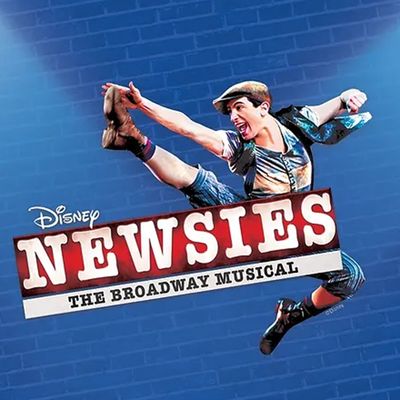
[1:26] Alan Seales: My guest today may be best known for his Tony and Grammy nominated portrayal of Jack Kelly in Newsies on Broadway, as well as his many roles on television, including series regulars on CW, Supergirl, NBC's Smash and Disney Channel's Tangled. Recently, he starred on Broadway opposite Kerry Washington in the provocative new play American Son and then reprised his role in the Netflix film adaptation. Other films include The Last Five Years opposite Anna Kendrick, Joyful Noise with Queen Latifah and Dolly Parton and Newsies, of course, on Disney+. Additional Broadway credits include starring as Clyde in Bonnie and Clyde, Tony in West Side Story and lead roles in Waitress and Rock of Ages. Jeremy Jordan. Now that I've read that bio, welcome to The Theatre Podcast.
[2:12] Jeremy Jordan: Thank you so much. It was just a rousing rendition of my bio.
[2:16] Alan Seales: Well, it was completely plagiarized from the 54 Below concert site.
[2:21] Jeremy Jordan: I figured as much. It sounded very familiar.
[2:24] Alan Seales: Yeah, I didn't know if you wrote it or not. But while I was researching, obviously, we're here to talk about your concert. And when I was reading up on this show, so you've got this concert coming up on May 6th and it's called Carry On at 54 Below. But normally on the podcast, I get into people's childhoods and how they got on into performing and whatnot. But your show seems to touch on that same subject. So I figure we can both, you know, let's start with the show. Tell us what the show is about. And then let's go back in time a little bit.
[2:50] Jeremy Jordan: Yeah, I'm glad I canceled my therapy session today because this seems to be going down that route.
[2:58] Alan Seales: That's why we're here.
[3:06] Jeremy Jordan: Yeah, so Carry On. Well, I'll go back. I mean, this is my third cabaret show at 54 Below. And I've done them all over the country and all over the world. And every time I do a show at 54 Below, I try to do something special, something different. And I've done like the shows of, you know, here's a story, here's a song, here's a story, here's a song like here's my here's the best of, you know, and the story behind the scenes of what really happened. You know, I've done all that stuff. And when I see like these intimate shows at, you know, these small clubs, the thing that I love the most is when people just dive in and get really real, you know, because it's fun to like have fun with the audience and, you know, joke and goof off with them, which I also do.
But it's a really cool opportunity to tell a really intimate and surprising story. So back when I did this in February of 2020, Pandemic Eve, as I like to call it, and that's I, you know, I didn't tell anybody what the show was about. And so they came just expecting me to, you know, sing songs and have a fun day. And not there is not fun to be had in it. But it's sort of the show is kind of plays out like a play with songs intertwined. And so the whole thing is scripted. It's basically a love letter to my new daughter. So I have a kid. She's two years old. Her name is Clara. And when I went to write the show, I was like, what do I have to talk about? How about this thing that has taken over my life for the past year or two?
And so it sort of became a musing over what it is going to be like, or what it could possibly be like to be a father, and how I could sort of try not to make the same mistakes that my parents made when I was being raised. And how I could help her avoid the pitfalls that I fell into when I was a kid growing up because I had a kind of rocky childhood. And so it sort of stemmed from that point. And so half the show is me kind of talking to her. And we created this sort of environment of this in-between space, where we're not sure where we are, but I'm sitting there conversing with my daughter and telling her some stories of my past and my childhood. And then the rest of the show takes place at the club at 54 Below, where I'm talking to the proverbial audience at home, kind of looking right into the camera and sharing that experience.
And so it kind of flips back and forth until it doesn't. It's a cool little experiment. It kind of feels like an experimental piece. Because it was experimental enough as it was with a live audience. But now that there is no audience, and you know, I'm still trying to tell jokes and still trying to emote and connect with people through a camera. It was a different kind of interesting journey.
[6:10] Alan Seales: Well, originally, so you said it was in February that you recorded originally, there was a live audience back then.
[6:18] Jeremy Jordan: I didn't record it in February, I did the live show in February. And I did a two week run, with no intention of recording it. It went really well. I mean, it sold out and then COVID hit. And now everybody's like, let's do virtual things. And so as part of this series, they asked me if I could record that same show. Now I had to update it because like, I didn't have an audience to laugh at all my jokes. And it was like over a year later, and my kid had grown up and since it was about her, like all the, you know, one year old jokes had to become about two year old jokes. So like, it was like a whole, I had to kind of rework the whole thing.
[7:00] Alan Seales: Like thinking back to when my first son was born, and I've got two boys that are about five and six and a half, almost seven ish now. And it's funny, because I remember when I was, when I was, I guess, in my late 20s, late to mid 20s. And I was thinking, you know, I got out of college and I was starting to, you know, I put in air quotes here, make it, you know, I was doing job things and trying to adult and not doing it very well. Looking back on it at the time, I thought I was amazing. And thinking back on my parents, at that time, I said, well, when I have kids, I'm going to not screw up. And I'm not going to make those same mistakes. And my parents were always doing this, and I'm not going to do that.
But then now as a dad of two that are slightly older than your daughter, it's taught so much, not only about me, and how I react to things, but then in general, why my parents reacted to me at that age as well. And it just frames things so much. And I don't want to go anywhere you're not comfortable with going. But you know, you said you had a rocky childhood.
[8:07] Jeremy Jordan: It goes pretty deep in the show.
[8:08] Alan Seales: Yeah. Yeah, well, I'm definitely, I'm really excited to see it. But like, what's one of the things that sort of has been surprising for you to learn about yourself now that you're a dad?
[8:22] Jeremy Jordan: Yeah, I mean, there's a lot. And it's continuing to grow and change. Almost it feels like every day. I mean, the whole idea of the show is that I, as soon as I became a dad, it felt like all this stuff that I've been holding on to from my childhood, you know, and at that point, I was not going to therapy. I am now. But like, all this stuff I've been holding on to, like, felt like it was taking up all of my heart space, you know. And so the idea was that I was going to excise this, these negative memories or these sort of things that I've been holding on to that. Because as an actor, as like an artist, you're like, oh, if I share things with people, it'll become less heavy, you know, it'll become less burdensome on myself.
And, you know, I'm always like, kind of, I keep things close to the chest, except for when I perform, that's like when I can do that. And so I told myself, like, I was going to just start sharing stories and sort of lift it off, lift that weight. And then I did. I mean, I did the show, like I said, back in February, and it was cathartic for like the first couple performances. And I did two weeks. And then after you do it a couple times, it's like, you know, you're like, I've done this. I like, I've had that catharsis moment. But then what it became was it became for the audience. Like, people would come to me after the show and be like, thank you so much for, you know, having that therapy session.
Like, it made me sort of really think about my own childhood and think about my parents. And like, it makes me want to call my mom and talk to her about things that I haven't talked to. So like, that was a really interesting thing that happened. And what it did for me was it was kind of a late effect of that. So after the show closed, and then COVID hit, all that stuff sort of hit me retroactively, which is why I started going to therapy. But it's like, I had let go of those things in a small way. But there's a difference of like, saying I'm letting go and then scripting it into a show and then like, really putting it out and drawing it out really neatly onto paper and saying the words in a really cool artistic way, and then actually dealing with it.
You know, I think it became a little bit like a coping mechanism for me, almost like it became a way for me to fake deal with that stuff on stage, so that I wouldn't have to really deal with it. And then, you know, as many people experienced during this past year, it boils up and you got to deal with it, you know. And so I think ultimately, it provided a door and sort of opened me up in that way so that I could continue to grow as a human being. And if I hadn't had Claire, my daughter, I don't know that I would have reached that point. You know, I tend to be the kind of person that pushes things down and sort of holds down tight to them. And if something is bothering me, if it's not like super surface level, I just kind of like, no, it's all good.
I'll just handle it. I don't want to make a fuss. I don't want to do something like that. I don't want to put myself in a precarious position. And I'm trying not to do that anymore. And I think a lot of it has to do with seeing this child that is completely open to the world around them. She's completely fearless. She's, you know, wears every ounce of her heart on her sleeve. And it's a good reminder to see that in someone, especially someone that you created, and to see yourself in that as well and be like, oh, that's possible, like to just be free in that way.
[12:12] Alan Seales: I agree with everything you said. It's very eye opening to see. Shame is taught. I think embarrassment to an extent is taught. And you're right, because like, I try to encourage the wonder and curiosity and the wide-eyed brightness of children with, you know, and encourage that as much as possible while still being like, you can't just jump off a cliff because you will hurt yourself. And you can't talk in the middle of everybody else because there's rules of conversation. But it's so much fun. And I applaud you. I applaud you for doing that, because it's not easy. And I was sort of the same way that I didn't start going to therapy until the last couple of years. And then it's like that door opened.
And I've said this a lot on this podcast, actually, that this is sort of a little bit of therapy for me. It's a bit of catharsis for me. And in that, I'm not a Broadway performer, I don't get the opportunity to do cabaret shows or like, I'll take it back to you for a little bit, I guess the performer in general, but like people get on stage because they need some sort of validation or they like the attention for one reason or another. Or if they're shy people, it's their chance to be noticed without either feeling guilty about it or without being afraid or feeling anxious about it. And that all comes from somewhere, right? And your childhood, your parents, there's a lot of therapy needs in the Broadway community, I must say.
[13:48] Jeremy Jordan: Yeah. Oh, my gosh. Yeah. Well, the other thing that I thought about is that, you know, to wrap up the having a kid thing is that I read this great book over COVID called The Untethered Soul, which is, you know,
[14:05] Jeremy Jordan: Self-help book. It's great. And there's this one thing that they talk about in it, like, for instance, when you're, like, really down or really depressed about something, like, say, like, your, you know, girlfriend left you and you don't eat, you don't sleep, you don't, nothing, nothing satisfies you, right? Nothing can satiate you. Like, it's just the world is like a blur. And then you, you get a call or a text from that person and say, I'm so sorry, I made this huge mistake. I want to get back together. And then suddenly you have a million pounds of energy, just like, I can run a marathon, I can clean my whole apartment, like, I can do this, this, this. And the whole point being, like, we have that within us.
Always, we just need the right trigger to unlock it. Right? And maybe that's not the best sort of example of a positive trigger. But having a kid is like having that trigger. Like, I could be having the worst day and then she, like, laughs at something ridiculous. And it's like, what are my issues? Like, that's just, it just, like, unlocks that joy, that happiness that's, like, always welling up and, like, waiting to be released that we push down ourselves, you know? And so, that's, it's a cool blessing in that way.
[15:26] Jeremy Jordan: Just something that I learned early on was that when you're pushing down the bad, you're suppressing emotion, period. So, when you're pushing down the bad, you're also limiting the good that you experience. And so, something that I recommend to anybody listening, speaking from experience, is that it's okay to feel down. It's okay to feel bad. And you acknowledge it and sit in it and see what it has to say. And then you move on. I feel like you can relate to this a little bit, that the more you push it away, actually, the more it grows. It doesn't go away at all.
[16:06] Alan Seales: Oh, God. Yeah. It festers, we'll say. Let's go back, though, and tell me about what got you into performing in the first place. When did you start? Was it acting, singing, dancing? Like, what all came first?
[16:19] Jeremy Jordan: I think I probably was a singer first. We're gonna just take dancing out of that equation until college, when I was forced to learn to fake that I could dance. But yeah, I was always a singer first, and I kind of used to sing in the shower. I was a really shy kid. Really, really, shy. And I used to sing in the shower, sing along to the radio. I was like a boy soprano. And my mom kept telling me, you know, I should audition for things, or I should go to the choir. And I was like, yeah, yeah, yeah. And, you know, I was okay at sports. Like, I was a medium-sized kid. So, like, I could do things normally, but, like, there wasn't, like, that thing. So, I remember when I was in—I did a couple of shows at the local theater, the community theater, when I was a kid, because my grandma used to direct kids' shows. And so, she would put me and my brother in them, sometimes against our will. We ultimately ended up having fun, but, like, it was just a silly thing that we did.
[17:27] Jeremy Jordan: And then I remember when I was in fourth grade or fifth grade, something like that, during music class, they couldn't get any boys to audition for the choir. And so, during music class, which was mandatory, they would make us all stand in a line and sing some song. And then the teacher would walk up to each of us and put her ear to our mouths and, like, go from one kid to the next and be like, listen to us singing. And then she would tap you on the shoulder, which would indicate that, like, you were good enough to come. You should come audition to sing for the choir, which is actually kind of messed up, if you think about it.
[18:04] Alan Seales: Oh, totally, totally.
[18:06] Jeremy Jordan: But it gave me the courage to come in, because, like, oh, maybe I could do this, you know? And so, from then on, I was a choir boy, and I was a choir kid all through middle school and high school. I almost went into college just for vocal, like, as a vocal major. I would do some plays sometimes in high school, just, like, ensemble parts, small parts. At one point, I auditioned for the musical The Fantasticks. And I auditioned for the boy, you know, like, there's like, the main guy. And I got pretty far. This is still at the community theater. And they decided to cast it all older. They cast adults. And I was like, oh, whatever. But the director liked me, so he wanted me to come in and play The Mute, which is a character who very clearly doesn't speak or say or sing anything.
And I was like, this is a musical, and I'm playing The Mute? Excuse me. But I didn't have anything else to do. So I did it. But what it did was that it made me realize that I was just kind of, like, up there on the stage, making faces and, like, you know, faking along to everything. And it taught me to listen for the first time, because I had no other choice but to listen.
[19:22] Jeremy Jordan: And as soon as I registered that, it unlocked this whole sort of world of potential within me that I didn't know was there or possible. You know, like, I couldn't get a role in Peter Pan as a lost boy when they cast, like, 20 kids, because I was a terrible actor as a child, apparently. And it's just because I didn't listen. And so I got, like, the whatever, the local community theater award for that show, and, like, all this other stuff. And so that kind of led me to believe that there could be a possibility for that going forward.
[20:01] Alan Seales: That's super fun. All it takes is, you know, the one experience to kind of flip the switch. But then you moved. So eventually, obviously, you made it to New York. And I was reading, I think, correct me if I'm wrong, you get your first Broadway gig from a complete open call, right?
[20:18] Jeremy Jordan: I did, yeah. I mean, I was lucky enough to have an agent when I got to the city after college. And we did, you know, the college showcase things. And I got an agent, but Rock of Ages was my first Broadway show, which I was absolutely not right for in any regard. But, you know, I was going to all the open calls. And it turned out that I was just wrong enough for all the parts that I could be a swing for all of them. That was just like, not quite rock and roll enough for the lead. Not quite, not quite, you know, silly enough for the little German character. Like, not quite sexy enough, but like, I was like, right in the middle. And I could sing all the parts.
[21:11] Alan Seales: Too normal? Too normal of a guy?
[21:13] Jeremy Jordan: I was too normal. I was a very normal person in that cast. And I don't know if you've ever met Konstantin Maroulis, but he's very much not normal. Love him, but not normal.
[21:22] Alan Seales: Not a normal guy. I will agree with you.
[21:25] Jeremy Jordan: And yeah, so I just went to an open call, and they called me back, and that was that. Then, I mean, I've got next that, you know, there's been a lot of cabaret shows that you've done. And I don't know if I'm finding more about cabaret shows from you, because the ones you write just happen to be so good, they win lots of awards, so people talk about them. Or if you just do an astronomically large amount in comparison to other people, but you do a lot.
[21:54] Jeremy Jordan: I don't know that I do an astronomical amount.
[21:57] Alan Seales: Well, you do do quite a bit.
[22:00] Jeremy Jordan: You said do-do.
[22:03] Alan Seales: When do you realize, I guess, that the cabaret scene is something that really interests you, too? Because it's a complete, well, I'm just going to say a completely different path from the Broadway stuff. But it is and it isn't. It's performing, it's getting yourself out there, et cetera, et cetera. But to write your own material, and then to make it personal, is a specific choice.
[22:28] Jeremy Jordan: Yeah, I was very much not into that, even a little bit. I mean, I would go see friends in cabaret shows, and I would see them do the up-close-and-personal stuff. I was like, nah, no, no, no. Nobody's going to know this person. I wanted to be mysterious. I was just going to be like, oh, that's that enigma. That's Jeremy. He's so broody. He's so mysterious, but what's his story? We'll never know.
[22:57] Jeremy Jordan: My first show was in 2014, and by that point, I'd already had my Newsies. I had been in Smash. I had had some notoriety, and people had come to me and asked if I was interested in doing these shows, and I was like, nah, peace. Then after I shot the last five years, I didn't have a job for over a year, and so I needed money. The cabaret scene is not the hugest, but I had enough of a following that I could make some money, so I did a tour of my first show, which was called Breaking Character. I went to San Francisco, Indianapolis, and then I went to 54 Below. I was forced into it a little bit, but I think secretly part of me inside was like, this is something that you should tackle. It's something that you need.
[23:50] Jeremy Jordan: What I hadn't realized is that I always wrote stuff. I always wrote music growing up, but I never played it or showed it to anybody ever. I used to write poetry and stuff. It was all for me, never for anybody else. It made me realize that I have this writer soul or whatever within me, and this was an opportunity for me to actually finally share it or to experiment with it. Breaking Character was the first show that I wrote, and it was disguised as a normal cabaret show. We're just going to tell stories, and then towards the end, the whole thing broke apart at the end of Pippin, where the curtain gets pulled up and all that sort of stuff and became this super intimate confessional moment. It was all by design, but it was thrilling for me to get to create that experience for an audience and to set them up for something and then throw them for a loop into something completely different. That's something that I try to do with all of my cabaret shows now. There's always a twist in every show that I write.
[25:10] Jeremy Jordan: The second show I did, which was called Jeremy's Terrible, was like a game show sort of a vibe. At the end, the whole thing sort of got flipped on its head and I quote-unquote broke down in front of everybody. It got to the point where audience members were like, are you okay? It's okay. We love you. It's okay. I was like, yes, I got you. That's called acting, people. Yes, bitch.
[25:43] Jeremy Jordan: Carry On follows that and takes it to another level. I wanted to do something completely scripted. We're going to take a short break. Stay tuned for more of the episode.
[26:00] Jeremy Jordan: Back to your point, it's like a chance for me to write my own show and to completely be in 100% control of it. As actors, I didn't really realize this until I was doing it. You are a vessel. You are the conduit to which other people express their art. Maybe you get to add a little bit of it in there. Not always. Try to get yourself into the cast of Wicked and see if they let you do your own thing. It's not going to happen. But it's like we have very little control over our art. All we're in control of is the final product that the audience sees on stage. That's the best part of being an actor on stage, is having that control. Then doing film television, you have even less control because you get to do it a couple times, a couple different takes.
Then somebody else goes and edits together. You see it six to 12 months later and hope that they made you look good. It's out of your hands. Having something that I could completely have control of and tell is empowering. I think having that empowerment allows you to be more invested in it. It allows you to be more creative. The audience grabs hold of that. The other great thing about cabaret, at least in my experience, is that I started doing it when I already had a level of notoriety. Everybody that came to see me was already a fan. There's nothing like getting to perform in front of a friendly audience. Everything is forgiven. Any little slip up, any little flat note, any weird hiccup, they don't care. They love you. It's almost an addictive environment. You have to be careful because it's still not real.
[28:08] Jeremy Jordan: I was actually going to ask about TV and film too, but then you brought it up, is TV and film, like you said, even that much worse, because you can't do it over and over again. You're not doing it for years, and you're at the control, the mercy of the editor and the director. Of course, the director is the moment, the editor is putting it all together, and you have no control over what the final product is, more or less. But in theater, and I'm just talking out loud here, but in theater, it's funny because we're looking, all the people, we're looking for the community, we're looking for tribe, and somehow there's comfort in being told who to be and what to say and who we are on stage. While at the same time, what you just said about needing to do your own thing so that you're not filtered and that you're not seen through any other way except exactly how you want to be seen, it's this competing dichotomy.
[30:11] Jeremy Jordan: Yeah, well, what's really interesting is that I think the reason I got into theater in the first place was to do the opposite of that, was to get away from myself, was to escape all of my issues and my things that I didn't want to deal with so I could escape into something else, something predetermined, something that's going to have whatever ending already plotted out for, and then you could let everything else fall away. It's a very romantic notion, but it only lasts for so long. As I got into my real adulthood, into my 30s, really, when I started doing these shows, it became like that's only going to carry you so far. Escaping and running away is only going to carry you so far because there's things in life every day that hit you that you have to learn how to deal with.
As I learned how to deal with stuff in life, I was like, oh, I should probably deal with stuff in the way that I can best communicate, which is through theater, through art, through song. If I can do that really well, imagine how much more exciting and how much more impactful what I can do would be if I filtered it through this medium.
[31:43] Jeremy Jordan: You're setting an example now for your daughter, setting an example that you didn't have. You'll be able to show her that it's okay to be expressive, that it's okay to have feelings, it's okay to be sad. It's okay just to experience the range of being a person. It's terrifying and it's scary. My last show I did was all about how afraid I am all the time of things. What are you afraid of?
[32:20] Jeremy Jordan: Well, you know, a lot of it is sharing and a lot of it is being vulnerable. I've always had trouble accessing some basic emotions because fear leads the way. It gets in the way. Before I can allow myself to access real happiness or real wonder or real pain, fear jumps the gun. There and blocks those sorts of things. You have to sort of take things at that. Fear becomes at the root of things. It's because of whatever things that happened to me in my childhood. There's lots of them, but for some reason, fear took root and then took precedent. The crazy thing is until I started doing these shows, I didn't really know that about myself. Like, I started being like, what am I going to talk about? What do I want to say?
What is going to be meaningful? What's going to really impact people? And as I started thinking about things, I would say like, no, I can't go there. No, I can't go there. No, I don't want to go there. And then I was like, and my music director, Ben Rahula, who's also brilliant and has sort of helped pull these things out of me, it's just like the fact that you're recognizing that is the indication that that's exactly what you should do. And a lot less things scare me now, I would say. I mean, there's still plenty, but just speaking them out loud and sharing them and sort of giving other people an insight into what's causing whatever ails you and distributing that, you know, away from yourself is very, very cool feeling.
And what I realized is that people openly accept that. And that's one of the reasons why people come to the theater. I mean, I come to the theater, I come to a movie, not realizing that like, I need the pain of that character, or like, I need the joy of that character, because it gives me insight into my own whatever, and then I can deal with it. Once I realized that I could be the one to do that for people, it was like, that's what I'm going to do.
[35:04] Jeremy Jordan: It's a very touching, it's a very real thing to be able to allow yourself to experience too, because it's a level of vulnerability that you have to peel this back. And the good thing about all of this is that it compounds with the people who are with you and the people that are watching, right? Because they come up afterwards and say, oh, well, I felt that too. Like you were saying, that it's encouraging, and it's very emotionally satisfying. I've got to imagine that you have all these people who came to see their version of you that they have in their head, because you're the goofy guy on TV.
[35:51] Jeremy Jordan: Yes.
[35:54] Jeremy Jordan: Lizzie, the producer, sorry. The producer, yes. So, they come to see this version of you that they have in their head, and I would love to take a guess here that they walk away loving you that much more because of the vulnerability and the whole person-ness, I will coin this phrase, the whole person-ness that you are providing for everyone to be able to see, right?
[36:20] Jeremy Jordan: To sort of piggyback off that, it becomes about them. And a lot of times we get into this business for us, like I got in it to escape for me, and it became, oh, I recognize what it's doing for other people, and that if I was them, what it could do for me in their position. And as soon as you start doing something for other people, it becomes, it sort of becomes a part of the universe in a way. It shatters whatever barrier that you've blocked it off, and there's this thing that I say in the show that when I first met my daughter, it's like I thought it was, I thought at first that she took a piece of me, like I felt less of myself, but what I realized is that it's not less, it's that it opened me up so that I could join the rest of the universe.
It's like my heart spills out of your chest. It's not contained anymore. It's suddenly like it takes up every ounce of space between you and those that you love. It's in every particle of air. And it's always been that way, you just didn't realize it until you feel that sort of love that I think can only really come from having a child. And I've loved before, and I've been in love with people, and in a way it's momentary. It's something that is still inside of us. We share it with one person maybe, but as soon as you have that life that you brought into the world, it's a whole other level. Unless not to crap on love, that's great, but it's something different. And I try to express that in the show the best way that I can, but yeah, it's a new kind of feeling and it's all about sharing.
It's about doing something for other people. And so whether it's for your daughter or when you're in my business, whether it's for anybody that's in the audience, it's for them knowing that they're a part of the universe that you're also part of. So it's like, it's all cyclical.
[38:58] Jeremy Jordan: Absolutely. I saw Dear Evan Hansen about three months after my first son was born. That was rough. That was so rough. That was the first time I had seen anything that was parent-kid related after I had my kid. And it ripped me to the core. It was one of those moments where I was like, yeah, yeah, this is a different kind of love. It's a different kind of feeling and infatuation. And it was beautiful. Anyway, back to your Broadway credits.
[39:37] Jeremy Jordan: It's funny because you had, let's see, Bonnie and Clyde ran for 30 days. Great music, don't know what happened to it. And all of a sudden, the show—
[39:48] Jeremy Jordan: Nobody saw it. That's what happened. Nobody bought tickets.
[39:53] Jeremy Jordan: Yeah, nobody went. That was what happened. And I mean, at that point, you're on Broadway, do you take it personally when something like that doesn't quite go as planned? Because I mean, you follow up with that and you've got Newsies, which then becomes your Tony nomination, your Grammy nomination. And obviously, two sides, back to back shows that are two sides of the same coin. And so, when you're in the middle of the Bonnie and Clyde decline, I mean, everyone knows, you can see the writing on the wall, the houses are empty, whatever the case is. Is that something that you feel responsible for? Because so many people that have been in a situation like that, that I've talked to, they've been like, that was it. I wanted to quit. I just wanted to walk away.
[40:38] Jeremy Jordan: No, actually, no, I didn't feel responsible in any way. I was trying to be made to feel responsible.
[40:49] Jeremy Jordan: Really?
[40:50] Jeremy Jordan: That's a whole other story. But what we ended up doing was it brought us all really closer together. We did this thing, this crazy thing where we made wanted posters, and we made like a thousand of them. And then we scattered them all over Times Square. And to try to drum up people, the actors, we did that on our own. We got in trouble with the police, but it's fine.
[41:15] Jeremy Jordan: Well, you are Bonnie and Clyde, right?
[41:17] Jeremy Jordan: It was very much on brand. And it just became something that we shared together. And we created it, and you never know. And that was really the only time that I'd been a part of a real flop. And we also were proud of it. And so as long as you can sort of take pride in the thing that you're doing, and whether or not it becomes something great or not, I mean, I might have a skewed vision of it because I knew pretty quickly that as soon as it was showing decline that I could probably jump into Newsies, which I wasn't going to be able to do, because it was coming in that same season with or without me. And so, you know, I kind of...
[42:12] Jeremy Jordan: And I've talked to my wife a lot, and other people about negative experiences that they've had in theater. And there's a lot of it. And I know a lot of it's kind of come up to light lately with all the Scott Rudin stuff. And all the stuff that is drumming up and people being like, well, it's not just that it's at every level, which it's true. And, you know, I've been uniquely blessed to not have to deal with it. Now, there's probably a certain amount of ignorance caught up in that as well. But, um, and sort of the fact that I am who I am, and probably didn't have to deal with it as much as people that were a little bit lower on the food chain. But in terms of where I was at that Bonnie and Clyde Newsies juncture, I mean, it was a magical time for me.
Like everything was rising. You know, I had just come off from Newsies at Paper Mill. And I was doing Bonnie and Clyde on Broadway at night, while I was rehearsing that during the day doing Newsies at Paper Mill at night, I should say. And I was just like, on top of the world. And I just knew that the next thing was going to fall into place. Like it was just that energy. And then right after Newsies, or during Newsies rather is when I got Smash. And it just like kept snowballing. And eventually the snowball crumbled. It always felt like I was in the right place during that.
[43:59] Alan Seales: When did all the workshops for Greatest Showman kick in? Was that in the same timeframe?
[44:04] Jeremy Jordan: No, no, that was a few years later. I was already doing Supergirl, which was the sort of thing that broke my drought of work. When I went to LA for pilot season, I was like, maybe I need to go somewhere else to get a job. And, and so during the first season of Supergirl, I, yeah, that's when I did the demos for The Greatest Showman while I was in LA. There’s a lot of 15. I've been, I went down a deep dive of Greatest Showman videos for a while. And I was, yeah, of course ran across the, I guess the now infamous video of, of one of the, I guess it was, what was it the meeting where you were all performing?
[44:49] Jeremy Jordan: It was the day after he had surgery on his nose to remove skin cancer.
[44:55] Alan Seales: Yeah, exactly. It was like, it was like the table read that greenlit the movie.
[45:00] Jeremy Jordan: Yeah, produced. Yeah. And, and then that led me into a clip from one of your cabaret shows that was called like, the time I saved Greatest Showman. I was a very ballsy title. But we wanted to get that clickbait, you know?
[45:23] Jeremy Jordan: Yep. Yep. And somewhat true. It's not, it's not not true. Right? I mean, somebody would have probably saved it. But that day, it happened to be me.
[45:29] Alan Seales: Yes. Yes. It's not saying like, without me it wouldn't have happened, like, most likely would have, but right. Well, for those who don't know, Hugh was not allowed to sing because this table read was the day after he had a surgery to remove something on his nose, skin cancer, I think. And then Jeremy was singing all of Hugh's parts sitting next to Hugh at the table read.
[45:49] Jeremy Jordan: And, and I was also playing the other lead male role at the same time. And I had also just less than a week before had bronchitis and had completely lost my voice. Yes. And by the time the reading came along, I was like, maybe, maybe 50 to 60% vocally there. And I was and I had showed up because I was excited about I had done all the demos for Hugh for all of his parts, because they wanted someone to sing it all like more rock and rolly style to like present to him like this is how we want it to be done or something like that. Because it's not like his normal vibe. And, and so I did that because I'm friends with Benj and Justin, Benj Pasek and Justin Paul. And I, and so when the reading came along, they're like, hey, you want to read this, you know, the secondary character, secondary lead?
I was like, yeah. So I flew myself up there and I was, I had just been really sick, but I only had like a couple of songs. And I was like, I can squeak through these. It'll be fine. And then I'm on the plane going there. And they're like, uh, we have an emergency. Hugh has to have surgery and he can't sing. And we have to do this thing. And everybody's already here in town. Like, what do we do? You're the only one that knows it. Cause you did all the demos. And then Justin, the composer is also a really good singer had also lost his voice and couldn't do it. And they were like, you're the only one that knows it. We don't, we are too afraid to try to teach somebody new in like 12 hours. And I was like, oh God, you gotta be kidding me.
And so, you know, like I buckled down and did it. This all used to be in my show and Carry On. And I, it's, it's actually not in this version because, um, we released it already long before we knew we were going to tape it. Plus I've told the story for the last couple of years, it was time to retire it. But, um, but yeah, it, um, so I was standing up there singing all of his parts and doing all of my parts and trying not to have my head explode all the while, like on the verge of completely losing my voice. And, uh, yeah, it was rough. It was rough. But, um, there was one point where that video is where that video was of at the end of the show where he decides to, you know, break the doctor's orders and break out, start singing, which was an incredible moment to watch.
Um, but for me, I had just done a song right before that where I had completely lost my voice in the middle of a song. And I felt, I was like devastated, embarrassed. And I still had to sing that next song, which was a little bit easier to sing. I was like, I'm this, I'm going to have redeemed myself here. And then he takes over. I was like, you bastard. But I mean, it was this magical moment. So, uh, that was like the whole time when I think that that was the first time Kiela got comfortable coming out from behind her music stand too, right? Like she was just shy about the whole thing. I mean, she, she, she got the part during that presentation. We were like, literally nobody else can do that. Phenomenal. Yeah. Yeah. She's, she's still one of my favorite people that have come out of that.
[49:17] Alan Seales: But did you, did you at any point think, or was there ever talk of being able to audition for, or get the Zac Efron role, that role you were reading for originally?
[49:26] Jeremy Jordan: No, no. I mean, early on after I was, when I was doing the demos and then my hope was that doing that table read would, you know, at least get me in the door. Right. Um, but I think by that point, it was already, he was already in talks or had already, maybe had even already agreed to do it. I wasn't aware of that, but you know, I allowed myself to hope for it, you know.
[49:50] Alan Seales: We're going to take a short break. Stay tuned for more of the episode.
[49:59] Jeremy Jordan: For these types of movies though, there's such a strong vocal ensemble though, that, I mean, I think to the most recent example that I can think of, of The Prom, right, the Prom Broadway cast, Vasti Monpoint was the only one who made it into the movie, even as, even as ensemble, even as chorus. And that doesn't, that doesn't make sense to me. I get, I get that Meryl Streep sells tickets. I get that Nicole Kidman and James Corden sell tickets, right? I get the name, but for the, for everybody else, and you already had a notoriety anyway, with everything that you were doing, like why? I don't know. Why? I don't know. You know, I think that, I think that people want to create their own version of something without, you know, whispers or like, oh, this is how we did it before they want to, you know, it's, whether it's director or producer or some of the actors being like, I don't want to be hampered by somebody else's experience of that, which I understand.
I mean, like when I did Bonnie and Clyde, I didn't, I had never seen the movie with Warren Beatty and Faye Dunaway. And I didn't watch it because I didn't want to be influenced by their, you know, interpretation of it. So, I mean, I get it in that way. I don't, I wish I could understand like all the other nuances that go into that sort of thing, but I don't, I don't have a producer brain. I don't know how they think, I don't know how they work. I mean, being exposed to a little bit of that, it's about raising the money and making money on once it's out. So, I mean, that's-
[51:37] Alan Seales: Yeah, I mean, they have whatever algorithms of like this person plus this person and this person, this, this person, this is going to, that'll tackle this market. This person will tackle this market. Oh, we need this little market to fill. Who can fill that void? We'll put that person in there, you know, I don't know, maybe.
[51:55] Jeremy Jordan: Well, in Greatest Showman 2, I will cast you as my lead.
[52:00] Alan Seales: Appreciate it.
[52:02] Jeremy Jordan: The show's not, the show must go on.
[52:05] Alan Seales: The Greatest Showman's demands go on. All right, so we'll wrap up here. May 6th is the premiere of your show on 54 Below, and May 6th only, right, is the live chat for fans to interact with each other before and during the show, right?
[52:19] Jeremy Jordan: Yeah, there's like a live chat. During the show, there's like, it's like a live broadcast, and then after the show, if you get a VIP ticket, we have like an hour-long show with me and my music director. We'll sing some bonus songs and answer some questions, and then it's on demand for like two or three weeks after that.
[52:37] Alan Seales: Three weeks, the website says, yes.
[52:39] Jeremy Jordan: Three weeks. Available to fans across the world and outer space.
[52:44] Alan Seales: Do they get Wi-Fi in outer space? Can they stream?
[52:48] Jeremy Jordan: Yeah, yeah, I mean, the satellite is, bloop, bloop, bloop, turn it around, and you can stream it anywhere you want. That's how, that's technology, it's easy.
[52:55] Alan Seales: Gotta get that sweet spot. Yeah, so we'll wrap up the episode with the three standard closing questions I ask everybody. The first one, very simply, is what motivates you?
[53:00] Jeremy Jordan: What motivates me? A lot of things, but I will say, I will say the opportunity for happiness in myself and to cause happiness in others.
[53:14] Alan Seales: All right, second question then. What advice would you give to your younger self and your people listening now starting out down a similar path?
[53:18] Jeremy Jordan: Knowing who you are, like as an individual, and what sets you apart from other people is going to be your greatest asset. I think often people say like, oh, especially in this business, they're like, oh, you know, we have to make you a blank slate. We have to like, you have to be, you know, malleable so you can become and do anything. But I think knowing what sets you apart and like what you're good at, and becoming the best part of that, or the best version of yourself is always the smartest and first thing that you should try to do.
[53:56] Alan Seales: Awesome. Okay, so the last question then. This is the hardest one. If you could only see one show for the rest of your life, but you could see it as many times as you want, what would you see?
[54:06] Jeremy Jordan: Oh, God. That's like a different question than what's your favorite show because like, do I want to see? No. Do I want to watch like West Side Story 100 times? No. I'm gonna just go with my gut on this one and say Rent. Because it was one of my first like loves. And it's the content while it can be dreary, like was before I was old enough to understand the dreariness fully provided me with like a lot of joy too. So I think I could probably get joy and emotion from it.
[54:49] Alan Seales: That's my answer to this question too. So hashtag Twinsies.
[54:56] Jeremy Jordan: Hashtag question three Twinsies. Hashtag Twinsies.
[55:02] Alan Seales: Alright, so everyone go to 54below.com. Of course, get your tickets for Carry On from Jeremy Jordan. And where else can we find you on social media?
[55:08] Jeremy Jordan: I'm on the Twitter and the Instagram at Jeremy M. Jordan. I'm thinking about getting a TikTok. I think hasn't happened yet.
[55:15] Alan Seales: I think you should.
[55:22] Jeremy Jordan: I don't know. I spend too much time on my phone anyways. I've got a TikTok account and I don't know what to do with it. Like I look at other TikTok people and I'm like, yeah, alright, they covered all the ideas. I don't have any more ideas. That's fine. They do their thing.
[55:38] Alan Seales: Alright, get more of me at thetheaterpodcast.com. Show your support at thetheaterpodcast.com. I had a little production help for this one from Elizabeth Wheelis. You can find me on Instagram and Twitter on theater underscore podcast. Leave a rating, leave a review. Thank you to Jukebox the Ghost for the intro and outro music. And Jeremy, thank you so much. I'm so looking forward to seeing your show. And this has been such a great conversation.
[56:00] Jeremy Jordan: Awesome. Great talking to you guys. Or to you and the other people that we're not seeing or hearing.
© Broadway Podcast Network, All Rights Reserved