

After realizing he “didn't just want to get up there and do a kick ball change, and sing a high C”, but also wanted his art to make change in the world, this Broadway veteran decided social justice would become a theme in his career... Read More
From the show: The Theatre Podcast with Alan Seales
Guests
Featured Shows
About
After realizing he “didn't just want to get up there and do a kick ball change, and sing a high C”, but also wanted his art to make change in the world, this Broadway veteran decided social justice would become a theme in his career.
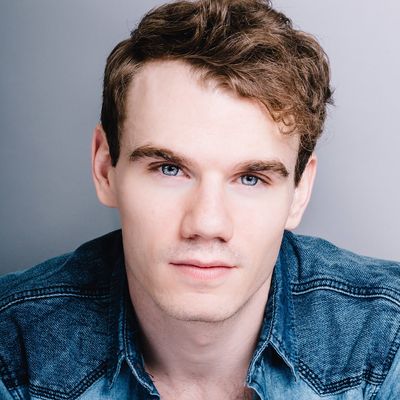
Jay Armstrong Johnson is no stranger to the stage, or screen for that matter, having six Broadway productions on his resume, as well as a recurring role on the ABC series Quantico. His Broadway credits include Phantom of the Opera (Raoul), On The Town, Hands on a Hardbody, Catch Me If You Can, and Hair (Broadway debut). Jay originated the role of Banko in Roundabout Theatre Company’s world premiere of Scotland, PA, for which he received a 2020 Outer Critics Circle Award Honor. He is the driving force, and a star of, the Hocus Pocus themed concert event “I Put A Spell On You”, which raised over a quarter of a million dollars for Broadway Cares/Equity Fights AIDS last year. Coming up next, Jay will be celebrating his birthday with all who tune in to his live streamed show from 54 Below on September 1st.
Jay grew up a “queer kid” in Texas, and when he joined a community theater group at 12 years old, he realized he had found his place and his people. Jay shares his deep love for the movie Hocus Pocus with us, and how it later inspired him to create the now yearly and widely successful “I Put A Spell On You” show/fundraiser. He opens up about how his Broadway debut in Hair was a “life changing experience”, one where they played the part of 60’s hippies on stage, and also walked the walk offstage going to rallies and marches for marriage equality as a cast. Jay also speaks candidly about the “reckoning” of the last year within the theater industry, and the need for representation both on and off stage.
In this episode, we talk about:
- Being bullied at school as a child
- Growing up as a “scholarship kid”
- How he almost ended up a swimmer
- How his parents divorce provided some “relief”
- Connecting with Bette Midler
Connect with Jay:
Connect with The Theatre Podcast:
- Support us on Patreon: Patreon.com/TheTheatrePodcast
- Twitter & Instagram: @theatre_podcast
- Facebook.com/OfficialTheatrePodcast
- TheTheatrePodcast.com
- Alan's personal Instagram: @alanseales
- Email me at feedback@thetheatrepodcast.com. I want to know what you think.
Thank you to our friends Jukebox The Ghost for our intro and outro music. You can find them on Instagram, Twitter, and Facebook @jukeboxtheghost or via the web via jukeboxtheghost.com.
Transcript
This transcript was automatically generated and might contain errors.
[0:00] Alan Seales: Welcome back to The Theatre Podcast, intimate, personal conversations with the industry's biggest names. This episode is with Jay Armstrong Johnson, who, as he puts it, is a queer kid from Texas. He found his tribe in musical theatre after being bullied and growing up in a place where he didn't quite feel like he fit in. His perspective on life is really cool because he supported himself at such an early age. He put himself completely through college, and now he wants to pay it forward and give back as much as possible so that others can possibly have the same opportunity to find the success that he's found. He's just really, really such a sweet guy, and we talk about this in the episode. He's just one of the nicest people I know and the most genuine people that I know.
Just a quick reminder to make sure you follow me on Instagram and Twitter at theatre underscore podcast on Facebook slash official theatre podcast. Please leave a rating or a review wherever you are listening. And now, everybody, please enjoy this episode with Jay Armstrong Johnson.
[1:18] Alan Seales: Today's guest has appeared on Broadway in Hair, Catch Me If You Can, On The Town, Hands On A Hard Body, and of course as Raoul in Phantom. He's known on the Magic TV Box as Will Olsen in ABC's series Quantico, and he might just be one of the nicest people I know, which we are going to get into shortly. He is the driving force behind the Hocus Pocus themed I Put A Spell On You, which raised over a quarter of a million dollars for Broadway Cares last year, and is now prepping to celebrate his birthday with you, and you, and you, and you, because it's going to be live streamed on September 1st from 54 Below. Jay Armstrong Johnson, welcome to the theatre podcast.
[2:00] Jay Armstrong Johnson: Oh, Alan, what a lovely introduction. You made me tear up a bit.
[2:04] Alan Seales: Really?
[2:05] Jay Armstrong Johnson: A little bit, yeah.
[2:07] Alan Seales: Well, you are super nice because I was just, you know, I Google people's names and I look up credits and things to prep for these interviews, and I put in Jay Armstrong Johnson, you know, spelled and spoken correctly into the Google machine, and one of the first videos that comes up is singing to healthcare workers. And I'm just like, you just go out and you're helping the homeless, and you're singing to healthcare workers, and I Put A Spell On You, you're going to do again this year, 2021, and I know that the details are still being worked out at the time we're recording this, so obviously to listeners, where's my link go to broadwaycares.org slash spell for the latest info, because it's going to be changing between now and when this episode drops. But like, why are you doing all of this? What is going on? And okay, for those who don't know, I Put A Spell On You, let's start there. What is that for people who don't know?
[3:10] Jay Armstrong Johnson: Well, you know, I'm a queer kid that was raised in the 90s, and Hocus Pocus is my favorite movie of all time. Judge me if you want. There is something about Bette Midler and Sarah Jessica Parker and Kathy Najimy's performances in that campy-ass movie that Disney produced back in 1993 that spoke to me on a deep, deep level. I loved Halloween as a kid. It was the thing I looked forward to most. And I always knew that I wanted to be the Sanderson sisters for Halloween, but I knew I didn't want to half-ass it. I knew that I needed money and designers to really pull off the look. So after being on Quantico for three seasons, I had some money in the bank, and I started producing my own concerts at 54 Below, and I have a live album because of it.
So when we dropped the live album, we decided to do our CD release party at 54 Below, and it happened to be in October. And so I had this wild idea to make it a Halloween CD release party. So I got my buddy David Withrow, DW, to do costumes, and I got my girl Katie Beatty to design wigs, and I brought on some friends to do our makeup. And so I just decided to put a Halloween show on in conjunction with this CD release. And then I realized that I spent all this money on costumes and hair. I was like, well, this thing should live on. We should turn this into a yearly event. And around that time, I started working with Broadway Cares a lot, doing Broadway Backwards and Broadway Bears, and really got super into the work that they do and the money that they raise.
And so I had this dream to one day partner with them. So it was very cool last year when they came on board to be our benefactor for I Put A Spell On You. And we had a meeting with them two Januaries ago, and that was before the pandemic actually kicked us in the tush. So they said that they'd be down to do it. And then the pandemic happened, and we pivoted and then put together a virtual event. You know, New York in the phase four of reopening during the pandemic was allowing for television and film production, because live theater was not back by then. And so we really decided to go all in, and we wanted to not just put on another Zoom concert from our homes. We really wanted to produce it well and give the people something that was different and exciting and fun and ridiculous.
And, you know, it was six or seven months into this crazy pandemic, and there were just a bunch of artists that were sitting at home doing nothing. And almost everyone that I asked to come on board, regardless of whether they were hair or makeup or wardrobe or music artists or editors or directors of photography or whomever it was, came on board and gave 110%. And then we ended up raising a quarter of a million dollars and produced something that everyone was really, really proud of.
[6:15] Jay Armstrong Johnson: I mean, it's an incredible production. It's like you're watching a full-on high-end, big-budget movie. And it sounds like you did it. I mean, to answer my own question here, I guess, it sounds like you did it just because you could and didn't know. I was gonna say didn't know how hard it was. A lot of people have gotten to where they are in life because they're like, well, I'm gonna do it. And if they had known in the beginning how hard it was to get to the end, they would have never started. Correct. And so now you're at a point where you've got a reputation and a crew and a, I guess, a procedure, right, to do this. And it sounds like it's gonna be something that lives forever. And I mean, the promos for it, the promo shots, the promo videos, everything I'm seeing is so, so high-end.
You see so much that happens around the city that looks like, oh, I could tell they did that themselves. But this stuff, like everything you touch just turns to like magic niceness professionalism. It's amazing.
[7:19] Jay Armstrong Johnson: Thanks, Alan. It was me and about 150 other people that helped pull this thing off. So I can't take all the credit.
[7:24] Alan Seales: And so now on September 1st is gonna be your 25th birthday again.
[7:34] Jay Armstrong Johnson: Yes.
[7:34] Alan Seales: And you have chosen to share your birthday with the internet, with special people at 54 Below Live, but also with the internet. So this show is all about country music inspiration, right? Because you come from Texas. So I'm gonna stop and let you do the rest of the talking here. Explain to us bumpkins what's going on.
[7:58] Jay Armstrong Johnson: Well, honey, here's what happened. On a balmy September evening in 19... I was raised in Texas. I grew up in households that were just only playing country music on the radio. I don't even think I knew what pop and R&B and rap was until I started getting babysat by my friend Lindsey. But country has always been in my bones, in my blood. My dad is a drummer, and he has been drumming in like country, western slash classic rock bands for as long as I can remember. You know, my last show at 54 Below was like kind of an amalgamation of who I am musically. And so it was very eclectic. And we had everything from pop to country to religious to musical theater to classical. And so I just want to hone in on what it was that kind of got me started in music in general. And that's country, honey. There is not a lot of crossover that I have found between musical theater and country.
[9:03] Alan Seales: So you are, aside from being a special snowflake, you're also a special snowflake in that regard. And I absolutely love it, because I think there's a lot of influence from, of course, all genres that make its way into musical theater. And I want to touch too on the cultural aspect of growing up as well, because, you know, like you said, you're a queer kid in Texas. I know a lot of people that have come out of Texas and don't ever want to go back because of one reason or another. But it sounds like, well, I guess, let me stop there and pause for a second. Did you have, did you have trouble or conflict or whatnot, like growing up as a young kid in Texas?
[9:46] Jay Armstrong Johnson: For sure. I mean, I think everyone else around me realized I was queer before I did. I mean, the kind of bullying started as early as like the third grade. I guess they could smell the homo on me. But I was a straight A student, and I went to church every Sunday. And I was, you know, an upstanding citizen to my head. And so the kind of messaging around homosexuality was that it was an abomination, and then it was bad. And then it, so I was just, I convinced myself that I couldn't be queer, even a little bit, because I was a good kid. And so, yeah, it really was kind of a torture. It was torture in my early years, starting as early as third grade. And it wasn't until I found theater, where like my life actually took off, where I found those humans, my tribe, you know, that were misfit toys like me.
So the second that I did find theaters, the second that I found like life and love and excitement. And even then, in the theater community, still being queer was not great. So it wasn't until I started doing professional theater, that I really started finding like queer role models and realizing, oh, these are humans, they are smart, and they're funny, and they're talented, and they're nice. It was difficult. And I definitely ran away from Texas as fast as I possibly could to try to get to New York. I've been away from home for 15 years now. And it's funny how it all continues to come back to me, especially in music. Even Christianity has been something that I've really had a hard time grappling with since I've left home.
And now I have a friend of mine who's the pastor at my church, and she is a single mother who adopted a refugee child, and she fights for LGBTQ rights and is vocal about it. And so she's kind of brought me back to like, what it really means to be a Christian and to accept everyone. And so I don't know, it's been a full circle experience when it comes to Texas, because there are those good people there. I mean, my county went blue for the first time in like 35 years, you know. So there's hope for Texas.
[12:06] Alan Seales: Yeah, I wanted to say too, that I'm not trying to stereotype. I'm talking about the general masses of data, and the state goes red. But there are, yeah, there are pockets of blue. And you hear about legislation, it's really like what makes the news, right? And when you're in the scene, and when you're in the network of being local in Texas, or being local to anywhere, of course, you're going to sort of gravitate towards like-minded people. And there's a bit of confirmation bias that happens too with the type of people you surround yourself with. But I totally understand that in North Carolina, I grew up in a red county. And in order to be accepted by the parents of the girls I wanted to date, I had to go to church with them.
And there was something even at a young age, there was something very hypocritical to me about that, because I was like, aren't these people supposed to be accepting? Aren't they supposed to be loving and be okay with everybody? But yet I'm being ostracized for not being one of them?
[13:05] Jay Armstrong Johnson: Now I have to change. It was this whole backwards thing. So, I feel like I can relate a little bit to some of the situation. I guess the underlying message is just be good people.
[13:21] Jay Armstrong Johnson: Which now, now that you've explained a little bit of that to me, that goes to the philanthropy, the healthcare workers, the homeless, the Broadway Cares outreach, and everything else that you've been doing, because you're getting back to really the roots of your spirituality, the roots of Christianity, the roots of just being a good person, full stop.
[13:43] Jay Armstrong Johnson: Well, and I grew up as a scholarship kid. My family didn't have a lot of money growing up. And so, when I started doing theatre, I never had to pay for any classes. My dance teacher scholarship me all the way through my training there. And that's kind of the community gave to me and helped and gave me a voice and told me that I had talent and also gave me the means to actually do the thing that I found that I loved. And so, I don't know, as someone that received that charity, I feel like it only makes sense to give it back.
[14:22] Jay Armstrong Johnson: It's perspective, right? And there are kids who are born into privilege, and they don't understand not just getting what they want, or they can just go to any school or whatever the case is, in terms of their path laid out for them, because it's literally fortunate. It's luck that they are created into a life that means they don't have to struggle as much as some others maybe have to.
[14:49] Jay Armstrong Johnson: And I totally see that. It's important to give the opportunities to those who may not have it, because if there aren't people like you, if there aren't efforts like this, then nothing ever changes.
[15:04] Jay Armstrong Johnson: And what's funny is that it's those people that were born into privilege that were the ones that were helping me get through it, right? So, it was all of the people that had the money that were donating to these organizations that were allowing me to be there on a scholarship. So, it takes a village, Alan.
[15:21] Jay Armstrong Johnson: A hundred and something people to put together a nice professional scholarship.
[15:26] Jay Armstrong Johnson: Yeah, no, it really, seriously, though, it does take a lot of people. And I appreciate the people who have enough that it's extra that they can give back to people who don't. And the efforts of Ham for Ham and other shows that are really trying to educate. And I think that's become such a big thing in the community now, like with the rise maybe with social media, I sort of tie it to that because there's so much visibility into not only the show, but the message behind it and what the performers are representing.
[16:03] Jay Armstrong Johnson: So, like Jagged Little Pill, for example, that show deals with transracial adoption, addiction, and sexual assault. And so, all of the characters, the real life people who are playing these characters are involved with now all of these outreach and education videos and things that are trying to help people find resources and help people become more educated and find help if they're considering suicide or if they've been raped or whatever the case is. And do you agree with this at all?
[16:30] Alan Seales: Absolutely.
[16:31] Alan Seales: There's an obligation a little bit now by the shows to educate?
[16:34] Jay Armstrong Johnson: Well, I feel like that's kind of how I jump started my career on Broadway with being in the cast of Hair. I mean, I talk about this often and how it was like such a life changing experience, not just because I was fulfilling my lifelong dream of being on Broadway, but it was around the same time that we were fighting for marriage equality.
[16:50] Jay Armstrong Johnson: And so, our cast, led by Gavin Creel, who started Broadway Impact, we were living the life of the 60s hippies on stage, but then off stage we were going to rallies in Times Square and our producers allowed us to march on Washington for marriage equality. And we sang at the Capitol in front of 30,000 people, let the sun shine in after Lady Gaga gave this crazy speech saying, do you hear us, Obama?
[17:19] Jay Armstrong Johnson: So, this idea of social justice became this theme that I needed my career to have. I didn't just want to get up there and do a kickball change and sing a high C. I wanted the art that I do to actually make change in the world and the way that it changed me as a young person and gave me purpose. So, yeah, I absolutely agree with that.
[17:39] Alan Seales: All right. I love this subject that we're diving into here. I'm trying to figure out what my question is, because as you're saying this, there are the good people. Of course, there are the good people everywhere and people trying to help, people trying to educate, people trying to inspire and literally just donate to create the financial backing to allow these programs to exist. So, thank you to all of you who you are.
[18:09] Alan Seales: But in the, well, I guess not a but, and in this industry, we've seen lots of not so good guys and not so good people, you know, the Scott Rudins of the world now that like your time is up and you can't be a jerk anymore. And so, there's lack of representation and lack of diversity in this industry that at the same time on the other side of the same coin is trying to usher in diversity and usher in change and usher in education.
[18:36] Alan Seales: From the inside, from where you are in your position, what you've seen in the shows that you've been in, especially something like Hair that stood for equality so much, is there this conflicting sort of dichotomy between the high-end production team and the cast or what the representation of the show needs to be?
[19:00] Jay Armstrong Johnson: Yeah, I think that that's kind of like the deepest issue amongst our community right now. And of my friends that are back in Broadway rehearsals right now, everyone is saying across the board how different the rehearsal rooms feel. And they're hiring in people that have a specific focus on social justice and on making sure that every company member feels heard and seen.
[19:26] Jay Armstrong Johnson: And I have friends that are starting coalitions where they're bringing in artists of color and underrepresented voices to be a part of the general management, stage management, producorial world because I think that's where we've kind of lacked as an industry is that there's usually been some representation on stage, and that's very performative.
[19:41] Jay Armstrong Johnson: All right, cast a person of color in this role to make it seem like we're lifting them up, but it's the people that are making the decisions. That's not been represented well through casting directors, through producers, through management. And so, I think that that's where the world is really starting to shift, and it needs to continue to shift in that way.
[20:00] Jay Armstrong Johnson: But I'm confident and I'm hopeful that this past year and a half of reckoning in our industry has really made us have to make that shift in a substantial way. And so, I'm excited about what these next few years are going to kind of look like in that regard.
[20:18] Alan Seales: Yeah, it's going to take a little bit of time. And I hope that people don't get impatient with the process too, because all these organizations first need to realize there's a problem, and then they acknowledge it, then they start going out trying to solve the problem.
[20:34] Alan Seales: And everyone's not going to get it right the first time, or maybe the second time, or maybe even the third time. But we have to continue to work together to find equality and to find equity, and make sure that everybody and everything is equally represented. Because at the end of the day, we just want to get on stage and sing our kickball change ass off, right?
[20:59] Jay Armstrong Johnson: Right. That's right. That's totally right. I miss it so much.
[21:05] Alan Seales: We're going to take a short break. Stay tuned for more of the episode.
[21:09] Alan Seales: We skipped over the part where you found theater and found your tribe. So, I want to get into that. How did you first decide that you were getting into theater, musical theater, specifically, maybe, and start looking for dance classes and scholarships?
[21:23] Jay Armstrong Johnson: What's wild is that it was actually through the friend of mine that's now the pastor at my church. Her name is Allison Lanza, and her brother David Lanza, were a part of this community theater group called Kitsukere. And so, I was starting to sing in the church choir as a boy soprano. And that family kind of saw that I loved to sing, and that I had some talent in that area. And so, they kind of brought me to Kitsukere.
[21:52] Jay Armstrong Johnson: And my very first audition was for A Midsummer Night's Dream, the rock musical. And I got cast in that musical. And so, that was the first time I stepped onto a stage that had a full set, and lights, and stage haze. And I remember that first day of tech being, like, maybe one of the more magical days of my life. And that's when that theater bug really bit me. And I said, this is what I'm going to do for the rest of my life.
[22:15] Jay Armstrong Johnson: It also happened that my parents were going through a divorce around that time. And so, it was a fantastic escape from that. And so, I was like, okay, and so, it was a fantastic escape from my tumultuous home life to then go and find this very fanciful, exciting new space where I was accepted, and elevated, and loved, and kind of groomed by a community of people when I hadn't felt that previously.
[22:46] Alan Seales: That sounds pucking amazing. So, I think. How old were you at this point?
[22:53] Jay Armstrong Johnson: I was 12.
[22:56] Alan Seales: 12. Oh, that is, that's, I think, one of the worst years.
[23:00] Jay Armstrong Johnson: I know, right?
[23:01] Alan Seales: Oh, my God. That's like, puberty's starting to hit, and you're like, I think I, what is this feeling that's happening to my body? Yeah, I remember being 12. It was horrible.
[23:12] Jay Armstrong Johnson: And finding, yeah, I think it was around that time, too, that, I mean, too, it was a time when I was like, I think I need something more. I don't like the jockey, sportsy, beer drinking kind of path. That's not my avenue. But what else is there in this tiny town filled with religious zealots? And it was, it turned into, for me, a lot of choir, and community theater, and just an open-mindedness, a group of people with open-mindedness that just didn't care what your background was. And it felt really, really, it felt really good. So, I'm totally with you.
[23:59] Alan Seales: All right. So, then dance classes, and singing, you're 12, going into community theater. And were you, was there ever a moment from that, or I guess, was there ever a process or a path that you thought you might go down that was different from musical theater? Or were you just like, this is it, this is all I really want to do now?
[24:19] Jay Armstrong Johnson: I mean, I kind of knew at an early age that I wanted to be an actor. I don't know why I thought that, but as early as the fifth grade, when Mr. Ingram's class was putting on the annual Romeo and Juliet play, the much abridged version, I knew, my sister played Juliet the year before me, and I wanted to play Romeo so badly, and I was one of the only maybe boys that wanted to wear white tights and recite Shakespeare in front of the entire school body.
[24:44] Jay Armstrong Johnson: So, there's always been something in me that wanted to do that. I wanted to be an actor. I even wrote Mr. Ingram a note saying, please consider me for the role of Romeo. And I think I was the only person that actually did that. But I guess if I had, I was a big swimmer up until that point. I was winning gold medals at the country club, because there was a while that my family was doing pretty well financially. And so, we were part of a country club, and I would swim every single day, and I was like a little fish.
[25:23] Jay Armstrong Johnson: And so, I thought swimming was going to be my path. It's kind of always been theater and acting.
[25:29] Alan Seales: No, it's interesting, because I guess you just find stuff that you're naturally good at, people just kind of gravitate towards it. But yeah, it's the tribe, it's the found family. And I wonder, too, you said that your parents were going through a divorce. Was it a time, too, where you were kind of just sort of looking for something stable? As a kid, right, you're seeking attention, and even adults, too. But that validation that maybe you weren't getting?
[25:56] Jay Armstrong Johnson: Yeah, I think that this whole, I think because school life was so terrible, and I didn't really have friends, and I spent my lunch periods in the library, I think that this idea of hypermasculinity that I was not…
[26:11] Jay Armstrong Johnson: And so she actually sang on the music that we created for our live show. So that was kind of cool.
[34:05] Alan Seales: Oh, you've got to get her to return the favor or something and like guest appear, do some guest appearance this year.
[34:11] Jay Armstrong Johnson: We're working on it, Alan.
[34:16] Alan Seales: Your mouth to God's ears. Make it happen, Jay. Make it happen.
[34:21] Alan Seales: Let's end here with the three standard closing questions that I ask everybody to wrap up the episodes. The first one just very simply is, what motivates you?
[34:27] Jay Armstrong Johnson: Fear of failure.
[34:33] Alan Seales: Fair. Very fair. I mean, that's kind of a negative way to look at it. But I often tell the kids that I teach or when I do talk back sessions with groups of aspiring young artists that I will never be satisfied. So regardless of where I get in my career, I always want to strive to learn more, to do more.
[34:49] Alan Seales: Okay. So then what advice would you give to your younger self and younger people listening now starting out down a similar path?
[35:03] Jay Armstrong Johnson: I'd probably have to say as hard as you're studying, you're acting and you're singing and you're dancing, study mindfulness. My friends, Mary Michael Patterson and Ahmad Simmons and I started this company during the pandemic called Bridge Arts Project. And it was a way for us to kind of reconnect, especially with our DFW arts world. And it's an education and mentorship program that actually goes into schools and different arts institutions to teach masterclasses and to start mentoring young aspiring artists. And that's a huge part of what we're doing because we feel like when we were taught the kind of old school way of learning how to be a theater artist was to go hard, to eat nails, to put the art above everything else.
And so as we found ourselves in the industry and doing eight shows a week on Broadway and the pressures of what it means to kind of deliver on that level, on like an Olympic type level, we started finding our mental health practice way later in life. And so I feel like if we can start instilling that idea of mindfulness around our practice of what it is that we do artistically, that I think that it'll set artists up for way more success in the future.
[36:39] Alan Seales: I love that. And I could not agree more. It's so important to maintain your mental health as much as your physical health. And I've said it a bajillion times on this podcast, Broadway performers are the Olympians of theater. I'm glad you said that too.
[36:49] Alan Seales: Okay, last question then. Hardest one. If you could only see one show for the rest of your life, but you can see it as many times as you want, what would you see?
[36:54] Jay Armstrong Johnson: Oh my God. That is a wildly hard question. Oh man. It would probably have to be Hair, if I'm being completely honest. As someone that was a swing in that show, I did watch it 17 million times because I was mostly off stage and I watched it with new eyes every time I watched it, specifically that 2009 revival. I mean, it was just really beautifully done by Miss Diane Paulus. And so yeah, it's Hair. It's always going to have that place in my heart. That cast is always going to have a place in my heart. We'd still have a text thread that's been going for 12 years, and we text each other almost every single day. So just anytime I hear a song, whether it was from the original recording or from our recording or some cover of it, it always gives me nostalgia and happiness and hope and all the good feels. So I guess it would have to be Hair.
[38:00] Alan Seales: All right. So everyone check the show notes for the ticketing and live streaming info for his birthday show on September 1st. Happy early birthday, Jay, by the way.
[38:09] Jay Armstrong Johnson: Thanks, Alan.
[38:10] Alan Seales: Get a look at Day Over 25. And if you're in town, go see it in person on 54 Below. Of course, check broadwaycares.org slash spell for the latest info on the Hocus Pocus themed I Put a Spell on You and just give back if you're able to. Where else can we find you online?
[38:29] Jay Armstrong Johnson: You can find me on social media at J underscore A underscore Johnson, because I wanted to make your life really difficult when you type that in.
[38:36] Jay Armstrong Johnson: Other than that, yeah, that's where you can find me or go to my website, J Armstrong Johnson dot org, which I probably should update soon because, well, it's been a while.
[38:46] Alan Seales: You can get more of me at the theater podcast dot com. I'm on Instagram and Twitter at theater underscore podcast because I also like making people's lives hard. I'm on Facebook slash official theater podcast. Please leave a rating and a review wherever you are listening. Tell your friends. Thank you to Jukebox the Ghost for the intro and outro music and Jay Armstrong Johnson. Thank you so much. This has been such a fun chat.
[39:09] Jay Armstrong Johnson: Thank you, Alan. This was a blast.
© Broadway Podcast Network, All Rights Reserved