

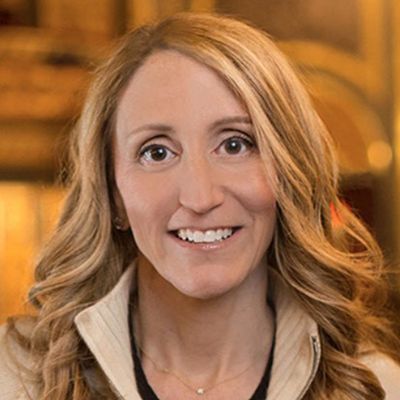
“If you can do something that makes you happy and that you really feel passionate about, it's not going to feel like work, it's going to feel joyous.” Two-time Tony Award winning theatrical producer Jill Furman is part of the driving force bringing Freestyle Love Supreme back to Broadway this month, after having originally brought it to Broadway in 2019... Read More
From the show: The Theatre Podcast with Alan Seales
Guests
Miniseries Inclusions
Featured Shows
About
“If you can do something that makes you happy and that you really feel passionate about, it's not going to feel like work, it's going to feel joyous.”
Two-time Tony Award winning theatrical producer Jill Furman is part of the driving force bringing Freestyle Love Supreme back to Broadway this month, after having originally brought it to Broadway in 2019. She is also currently producing six productions of Hamilton, including one on Broadway and one in London’s West End. Additional Broadway credits include In the Heights, the 2013 revival of Cinderella, The Heiress, Seminar, West Side Story, The Drowsy Chaperone, Sly Fox, and Fortune’s Fool.
Jill grew up in New York City going to the theatre with her parents, reading Variety magazine with her father, producer Roy Furman, and always knew she wanted to be in entertainment. She chronicles her journey from NYC, to LA, and back again, through college, grad school, and starting her own production company. Jill shares how she became involved with In the Heights very early on in 2003 after watching Lin Manuel perform in the basement of the drama bookshop; and how later the same year, she witnessed Freestyle Love Supreme for the first time. Jill also opens up about how she chooses projects to work on, highlighting the importance of her shows having a positive impact on an audience in some way.
In this episode, we talk about:
- The special Tony Award given to Freestyle Love Supreme
- Deciding when and how to bring shows back post-shutdown
- The thought process behind remounting FLS on Broadway
- Her preference for working in theatre v. film
- Two new projects she has in development
Connect with Jill:
- IG: @jillfurman
Connect with The Theatre Podcast:
- Support us on Patreon: Patreon.com/TheTheatrePodcast
- Twitter & Instagram: @theatre_podcast
- Facebook.com/OfficialTheatrePodcast
- TheTheatrePodcast.com
- Alan's personal Instagram: @alanseales
- Email me at feedback@thetheatrepodcast.com. I want to know what you think.
Thank you to our friends Jukebox The Ghost for our intro and outro music. You can find them on Instagram, Twitter, and Facebook @jukeboxtheghost or via the web via jukeboxtheghost.com.
Transcript
This transcript was automatically generated and might contain errors.
[0:00] Alan Seales: Welcome back to The Theatre Podcast. Intimate personal conversations with the industry's biggest names. I am your host, Alan Seales, and our guest for this episode is producer Jill Furman. She took a chance on a little show that kind of nobody wanted to take a chance on. It was sort of iffy. It was this show that was described to her at the time as Latino Rent, which turned out to be In The Heights. This show is her baby and one of the things she is most proud of in her career. Of course, working with Lynn, she's now one of the producers on Freestyle Love Supreme, which is why she is here, part of the Freestyle Love Supreme takeover that's happening right now on the podcast. Working with Lynn and Tommy Kail, of course, she's produced Hamilton and several other things with them and has many other Broadway credits that, of course, we're going to get into.
But she is just an amazing producer, an amazing person behind the scenes. Always knew she wanted to go into entertainment and the production side of things. So having that kind of forethought when she was younger has really helped her get where she wanted to be now. Before we get into the episode, follow me on Instagram and Twitter at Theatre Underscore Podcast. Leave a rating and a review wherever you are listening. And now, everybody, please enjoy this episode with Jill Furman.
[1:29] Alan Seales: Our guest today is another powerful producer on Broadway, now part of the driving force behind bringing Freestyle Love Supreme back to Broadway and originally to Broadway in the first place. Other producing credits include Hamilton, the 2013 revival of Cinderella, In The Heights, of which she was part of from the very, very beginning, and so many more. Jill Furman, welcome to The Theatre Podcast.
[1:49] Jill Furman: Thank you so much. I'm so happy to be here.
[1:54] Alan Seales: And thank you so much. You literally are coming straight off of the Tonys, which happened last night as we're recording this. And I mean, how are you feeling right now? Having theatre back, plus the Tonys were last night, plus FLS got the special 2020 Tony Award. Just what's going on right now in your head?
[2:13] Jill Furman: I am giddy. I am over the moon. I'm so proud of this group of amazing people with whom I've been working for 18 years. And, you know, getting the award was just the icing on the cake. It's not something we ever thought, never in a million years could we have imagined it happening. But, you know, they, or we, I suppose, prove that improv can work on Broadway. We were successful financially. We were successful critically. Audiences really liked us. We're coming back. And so that's really thrilling. And being at the Winter Garden last night was absolutely fantastic. I thought the shows, the two basically separate shows they did were wonderful. And it was just exciting to be back. I mean, this industry has been decimated and it's been so sad and so hard for all of us. So it really felt like a real return. And it was special to be there.
[3:24] Alan Seales: So I wish I could have been there in person. I was watching remotely, of course, and I was in the virtual press room and it was all just absolutely incredible. But I guess there is no but. It's just full stop. Yes. So I want to get into the logistics of producing, right? And we'll get into, warning, we're going to get into your childhood and what got you into producing in the first place. But I'm really interested now. You said something that was very interesting to me a second ago was that you're coming back and the industry was decimated. But as a producer, this is show business. This is not show fun. This is not show family. It's show business. So when you're deciding as a producer, as an entity, as a producing entity or as a company or even as a theater, I guess, how do you focus on what to bring back first?
Because there are some staples of the city of Broadway that, of course, Hamilton and Lion King and Aladdin. I feel like when Disney and Hamilton are back, then you can put in air quotes, Broadway's back. But there are, of course, lots of other theaters, lots of other productions. So you personally, how did you decide, you and your teammates, how did you decide where you're going to focus your energy to help start to unroll the red carpet, so to speak, and bring Broadway back?
[4:46] Jill Furman: Well, it's a decision, an individual or company decision for each show. And truth to tell, Lion King and Hamilton came back at the same time with Wicked, but Passover was actually the first show to open on Broadway. So every show makes the determination based on what makes the most sense for them, whether they have a show that's going on tour at the same time, just what makes the most sense. And it's hard to navigate because this is totally new for everyone. So we don't know. We have no, there are no guideposts. There's no anything that went before. So it's really just a, you know, you're making both a sort of a personal and a business decision. The opportunity to come back for Freestyle Love Supreme was presented to us a while ago, many months ago, actually.
And it's something that we have been chatting about and interested in, but nervous about the pandemic, then nervous about Delta. And it's just, but we ultimately decided this is a show that is approximately 80 to 100 minutes long. It is so full of joy. There's no intermission. It's really fun. It's topical, but in an entertaining way. And we just thought, what better show to bring back right now? I mean, it's the perfect antidote for our times. And so, you know, I hope we're able to bring joy to people. I hope also that last night's performance, you know, will set us up for success. Because a lot of people were probably introduced to the guys. Granted, they were doing something different on the Tony Awards, different from what they usually do.
But I thought they were, you know, I thought they knocked it out of the park. So, you know, so we'll see. It was really cool. I guess surprising to me too, that so many people, I guess as many people know about it as don't, which may or may not be surprising, but I figured with the success of Lin and Hamilton and Chris Jackson and James Monroe Iglehart and Utkarsh having his own movie career, like everybody involved is so successful in their own right. And yet they come back together to do this show. And as James was telling me on the last episode, was that they would still do it for Peanuts. They used to do it for Peanuts. They would still do it for Peanuts because they come back. This is family for them.
You know, he'll do a two show day at Hamilton and then come back and do the late show for Freestyle Love Supreme because he can't get enough. And he loves this chosen family of Freestyle Love Supreme on stage. But it's surprising to me how many people still don't quite understand what it is. They've heard about it, but they don't know what it is. And what was it? It was a couple of weeks ago at Playbill's Curtain Up in Times Square, the three-day festival that they had. And of course, with Broadway Podcast Network, we had some of the FLS crew there. And there were people, it was packed. There were people just standing room only, elbow to elbow in Times Square. But there were still some people who I talked to some lady after the fact. She was like, I didn't know who these people were, but I love them. I'm going to go. Look, I'm buying tickets right now. And she was on her phone buying tickets.
[8:12] Jill Furman: Yeah, we love her. And do you find that that's a common thing or there's the stigma of bad improv to get over? Because these guys are at a whole different, guys and girls are on such a whole different level.
[8:22] Jill Furman: Yeah. I've never thought about the stigma. I mean, certainly this is the first time that improv has really worked on Broadway. And it's delightful to see that it can. Obviously, they're so ridiculously talented that they make it look easy. And there are so many people in my life who actually still don't believe that they make it up on the spot. Yeah. And I have to say, they have the structure of the show is the same. They have games that they play. I guess we call them games. But everything is different. Everything is completely off the cuff. And the fact that their minds can work like that is just incredible to me. But I just think it's not a typical Broadway fare. And it's got a unique name. So even though Lynn does a lot of press for us, even though all these people have achieved fame, I think you have to keep working on building it out. And that's our challenge as producers. But we believe if we build it, they will come.
[9:41] Alan Seales: Well, they do. And you said you weren't sure. I guess the opportunity to come back was presented, but you weren't sure if you were going to do it. So the original run pre-pandemic had already finished. It wasn't cut short by the pandemic. So did you know at that point, all pandemics aside, were you already talking about coming back at that point, and that got pushed back? Or did the opportunity to come back only come up during the pandemic?
[10:08] Jill Furman: We thought that it was the kind of show that could be a perennial on Broadway, whether that would be every year or every couple of years. And obviously, it's cast availability contingent. And we have a huge, huge stable of amazing people. But they're also busy, as you rightly pointed out. So it was always something that we thought we could bring back. We hadn't talked about when we were going to. It's funny, it's almost like we never left, because we did end January of 19. And then we came back. So when we were doing the first iteration, we were thinking about the tour. And so we knew, and we had to keep pushing back the tour because of the pandemic. Then we thought, okay, we have this opportunity. The tour is starting in early 2022. This is a great way to jumpstart the tour. And so it's going out as a two-time Broadway running show. So it was always in the ether. When we were going to come back, we had no idea.
[11:33] Jill Furman: Can we get some legislation together or lobby for whatever type of Tony Award Anthony Veneziale needs to win? Is he a leading man? There's no MC award. But he manages the show. And there's been times when he's been out and others have been the MC. But Anthony, oh my god, there is a talent in him that I have never seen before. And the ability to, no matter what, make someone feel so empowered and so good about their story, no matter how positive or negative it seems to be coming out at the time. So he has this uncanny ability to just be this overwhelmingly positive person. And it comes across and makes the show so much of what it is.
[12:19] Jill Furman: Absolutely. He's a remarkable performer. He is so joyful, so much fun to watch, so talented, makes people feel comfortable. And it was his brainchild originally. And we really wanted him to be up there on stage accepting the award. So we made sure that that could happen. And we were thrilled. And I joke with him that when Seth Meyers moves on to something else or retires, he should take over.
[12:55] Alan Seales: Oh my gosh. He would be an amazing late-night host. And I really think he should do it because he's incredible. He makes people feel comfortable. He's warm and funny. And yeah, so I'm with you. And we all agree. And one of the greatest moments for me when we came to Broadway was being in his dressing room for the first time because I thought, finally, you have arrived. And it's a long time coming. And I cannot wait for people to experience your brilliance. It really is brilliance. It's the way a brain works that I understand at a very limited capacity. But when I talk with him about all the neuroscience research he was doing, I mean, I'm not going to get into that here because I had a whole episode with him a long time ago that was incredible during the first run. So Anthony, if you're listening, hi and congratulations.
[13:52] Jill Furman: Hi, we love you. We're going to take a short break. Stay tuned for more of the episode.
[14:10] Alan Seales: So you, I was looking on, I always look at IMDB and IBDB and I'll, you know, just scour the internet for some fun tidbits to talk about for these episodes. And I saw that your first IBDB.
[14:22] Jill Furman: EDB credit is as a photographer. What? You didn't know that? I don't know that because it is not true. Oh, really? Yes. I've never been a photographer. I'm an amateur photographer. I'm looking at you. Let's see. Yeah. Photographer for Cat and the Kings. I don't know who those people are. A Broadway production from '99 to 2000, apparently. Do I have a doppelganger who actually has my name? It must be. Fortune's Fool 2002. Is that you? Yes, that is me. But you know what's actually funny? There is a photographer named Jill Furmanovsky. I'm not making that up. And I wonder if Jill Furmanovsky actually ever took photographs on Broadway because if so, that's your girl. Because when I type in Jill Furman, it says, do you mean Jill Furman or Jill Furmanovsky?
And when I click on Jill Furmanovsky, no credits. So that credit probably will. Okay. Well, I was going to bring this up and you're like, so you started out as a photographer, huh? So let's talk about that. But obviously that's not happening. Okay. So tell me about little Jill and how did you get into theater? What made you want to start heading down this path? Little Jill was, little Jill is still little by the way. But I grew up in New York City and so I grew up going to the theater. My parents took me all the time. My first shows were A Chorus Line in Greece and I fell in love with it. My father is, well, he's now a theater producer also, but he is an entertainment investment banker and he started as an entertainment and media analyst.
Hold on, I'm dissecting. Entertainment investment bank. He focuses on media and entertainment companies. Okay. Okay. Gotcha. But so when I was growing up, it was something that we were very into. He would bring home Variety. I was reading Variety at a young age. We would guess the grosses of the movies. We still do that. We would guess the ratings of the TV shows when ratings really meant something. And there were three, you know, the big three networks. I'm dating myself here, but I guess I already dated myself with A Chorus Line in Greece. And so I was so fascinated by it. And he would go on trips to LA and bring us home, you know, sweatshirts and things from the studios and he'd bring us to screenings.
And we just thought it was really a cool industry. So I always knew I wanted to be in entertainment. I thought I wanted to be in film and I actually started in film. And I love the medium of film. I don't love the business of film. I love the medium. I've come to really love the business of theater, the whole, you know, roll up your sleeves and let's put on a show family aspect of it. And the fact that it's live and constantly changing. And the fact also that when you're a producer in theater, the buck stops with you. If you're a producer in film, it doesn't always, it's often the distributor who has the final say in things like marketing and advertising and stuff like that. But anyway, so I just at a young age, I really loved it.
And then I went and I got, I got an art history degree from Brown. So different kind of art, but I was analyzing art from a young age. And then I went out to, well, first I actually worked at ICM, the talent agency in New York. And then I went to LA for three and a half years, which I used to say was two and a half years too long. I love LA now. I went through the whole hazing process at the time. And I worked as a development executive. I worked on the set of a movie. I worked as an assistant. I was taking my boss's dog home from the office, you know, that kind of stuff. And then I came back, I got an MBA at Columbia because I wanted to start a production company. And I made a movie, which you did not see because no one saw it, but I made it. So I was proud of that.
[19:03] Alan Seales: Are you going to tell us the title or do we have to go search for it?
[19:06] Jill Furman: Well, it never got released.
[19:08] Alan Seales: Oh, that's why we never saw it.
[19:10] Jill Furman: I'm going to make you search for it. But the first search you did about me really, really worked very well. So good luck. We're going to be like, yeah, this is like Back to the Future, you know, something nobody ever saw. It was never released, but I learned a lot, you know, and I learned how to deal with investors and all that, which is something I also learned. At Brown, you can take whatever you want. You have to get a certain number of credits to get a concentration, so I didn't have to take math. So I was a little scared of math. And then I went to business school so that I could look at spreadsheets and I could walk the walk with investors and that kind of stuff. So that was the early part.
[19:41] Alan Seales: Well, I want to go back, actually, because you said you always knew you wanted to be in entertainment, but from the production side, did you ever want to be in front of the camera or on stage? Or were you always just sort of following the family business of being behind the scenes?
[19:56] Jill Furman: I always thought I wanted to be behind the scenes. You know, when I was in high school, I did some musicals in New York, and I was on acapella groups in high school and college. But that was just more of a fun thing for me. I never wanted to be a professional actor or director. I just thought I would like to help shepherd projects, help create and support behind the scenes.
[20:30] Alan Seales: Well, then how did you get connected to Lynn and the whole FLS crew? Because you said you've been with them for 18 years, right? So that was from the beginning.
[20:34] Jill Furman: Yes. So I started, my father started producing theater, and he formed a production company with a couple of other producers. And so I was lucky enough to get my start by associate producing some plays that they did, two on Broadway and one off Broadway, one of which was Fortune's Fool, one of which was the revival of Sly Fox with Richard Dreyfuss, and one of which was an Elaine May play at the Variety Arts Theater downtown. And so that was a way to dip my toe in the water and to learn. And I love working with my dad, and we still sometimes work together. And he's been a great mentor to me. And he's opened up a lot of doors as well. But when I was doing Sly Fox, it was the last of the three that I did with my dad.
An actor from the movie that I made that you did not see called and said, you need to go see this show that's being workshopped in the basement of the drama bookshop. And he said, it's a Latino rent. And I thought, oh, no. At the time, everything was a something rent. But I used to do it more, but I go to readings. And that's how I was looking for material or one of the ways. And I went to this tiny little theater, and it was February of 2003. And Lin-Manuel came out on stage and started rapping about his bodega and his neighborhood. And I was completely blown away by this guy. The show was very different then, a lot more basic. It was sort of a love triangle story. It was very different, but I just sat forward in my seat in a way that I don't do very often.
And I just thought, oh my God, I need to be in this guy's life. He is captivating and so talented, and I loved his method of storytelling. I hadn't heard rap on stage before. And also, it was accessible, but lyrical. And yeah, I was really blown away. So I got involved in In the Heights very, very early. And then in the very early stages of In the Heights, the first time I ever did freestyle was in August of 2003, the night after the big blackout on the East Coast or in New York. I can't even remember. And it was supposed to be in one place, but they didn't have power. So they had a whole bunch of people walking over to the drama bookshop. And that's where I first saw it. And I remember telling Tommy, I need to be a part of this.
More people need to see this. And that was also very different. But I just recognized that it was so, again, I keep coming back to the word joy. It was just joyous and fun. And I couldn't believe what they could do. It was astounding.
[24:00] Alan Seales: I want to add to that, too, because I'm piecing together the timeline in my mind. And so Tommy Kail is who you're referring to, director Tommy Kail. Tommy and Lynn knew each other from college. And then Lynn and Anthony were freestyling on their own in between rehearsals for In the Heights. And Tommy was like, there's something here. We need to start doing this. So they started doing it, workshopping it. And then they were doing these public performances. And then you came in. I love how it's just picking up these little thing here and a little person there and a little idea there. And all of a sudden now, I mean, not all of a sudden, it's 18 years later. Sometimes things take time, especially something like this. But now you're literally, as of not even 24 hours ago as we're recording this, winning a Tony Award for improv in the greatest city in the world. It's completely bananas.
[24:55] Jill Furman: It blows my mind just hearing you say it. I never, never, ever could we have thought. We always knew. And frankly, when we went to Sundance, we made the documentary, We Are Freestyle F Supreme, and we were lucky enough to get into Sundance. And we did a Q&A after and someone said, what did you imagine? And I said, well, certainly not this. So every step of the way, it's been heady and surprising. But Jenny and John and Tommy and I, we believed in them because we knew. We just knew how talented they were. They've shot a couple of different TV shows that didn't work for one reason or another. Improv doesn't work on TV. All these different things that we were told or that we learned. But we just stuck with it.
I'm so proud. Listen, I was lucky because I happened to be in the right place at the right time. But I always say luck is the residue of design. I had to make my luck. I had to take advantage of what was presented to me. And I did. And so the fact that I recognized Lin's talent so early is something that is probably the thing I'm most proud of in my career, frankly. Did I know that he had Hamilton in them? Of course not. I don't think anyone could have foreseen that, but I really believed in him. And I put my money where my mouth was at the time. And it's paid off very nicely. Also, these guys are the nicest group of people. Guys and girls.
[27:30] Alan Seales: I was literally about to say that. Every time I feel like FLS as an entity is this amoeba of a blob moving through time and space with shining rainbows coming out of it. And it's just like, oh, you're ultra nice. I suck you in. And here's Anissa Folds. And here's Jelly Donut. Everybody starts getting plucked in along the way. And they never get to leave because they are just in love with this family. They become part of the family.
[27:53] Jill Furman: Yes, it is a true family. All the clichés about theater creating these families for a group of like-minded individuals. In this case, it's really true. And they're kind. They're inclusive. This is all about promoting equity and diversity. And the whole notion of yes and. I think you talked to Jenny about that. And I'm sure you talked to Anthony about that. They have to embrace what's given to them. And they're just kind. The fact that Lin-Manuel can find time to still be a part of this and wants to be a part. Like what you said about James Monroe. He does Hamilton five times in a weekend or whatever and then runs to do a freestyle show. It's also fun. They're playing with their friends. And they like to bring joy to people. And they're good at it.
[28:44] Jill Furman: I'm into the science and the biology behind all this stuff, behind singing and performing and freestyling, too, especially. And I got into, again, the neuroscience of freestyling with Anthony and the fact that when you're freestyling... There's a reason that these improv games are corporate activities, because he helped to prove that you are changing your brain when you're freestyling to reduce inhibition. That center of your brain, the little devil on your shoulder that says, I'm not good enough, when you're improvising, you're helping make that go away. And so you're able to bond more with whoever you're with, you're able to express yourself better, you're able to feel more things and be more receptive.
It's more than just getting up on stage and being funny. That's a fortunate side effect. The slogan, not slogan, I guess, what is it? The mantra, right? Before they go on stage, every single time, I got your back, I got your back. They are saying that to each other every single time. And it still would seem from the outside like, Lin-Manuel doesn't mess up, and Anthony doesn't mess up, and James doesn't mess up. But I'm sure... Well, I guess in their world, there is no such thing as a mess up. Not at all.
[29:58] Alan Seales: To us normal people.
[29:59] Jill Furman: They embrace it. Yeah, they embrace it, they repeat it, and then they build on it. That's the yes angle. Sometimes those are the best, best moments in the show. It's... And they have... They're not the way a lot of us... I call that the notion of the shower cringe, where you say something the night before, and then you're in the shower, and you're walking away. They don't have time. They don't have time to do that. They're not dwelling on that. And they're really fostering a real human connection. Real emotions between people that got your back. We said that to each other right before they went on stage last night to Anthony and Jenny to accept the award. We said, we got you back. And it was just so sweet. It's just... Yeah, I just love them so much.
[30:53] Jill Furman: Yeah, they truly are having fun. And that's what James was saying too, that no matter how busy they are, they always want to come back and do it. It's not like... You're not calling up Lin, or Wayne Brady, or Utkarsh, or UTK. You're not calling them up and saying like, hey, you guys want to come over? They're like, oh, fine. But they're like, I want to do this. I want to do this. And there is, as far as I know, no limit. If everyone's available, everyone's going to show up. And that's going to be one of the best shows ever, because everyone's going to be there.
[31:26] Alan Seales: Then going back to you specifically, now that FLS is coming back, and Broadway seems to be more or less stable with a post-COVID routine, with no signs of slowing down, knock on wood. Are you setting your sights as a producing entity? Are you setting your sights back on smaller things around the city to be safe? Or are you looking more towards big musicals and more pro shots or movie adaptations? After FLS comes back, what else are you working on?
[32:01] Jill Furman: Um, well, you know, I don't do that much, because these projects take a really long time. And they're real labors of love. And I also have a young son. So I just have, I pick and choose pretty carefully. But I'm someone who I want, like you were saying early on that this is not show fun. It's called show business. So I am looking for projects that I believe have commercial potential, because I am a commercial producer. And I need to make my investors money. And I want to run for a really long time and help change lives on stage and off. And so, you know, I look for things, though, that surprise me, that are unique in some way, either a new sound, a new way of telling a story. Like on Cinderella, Douglas Carter Bean wrote a sort of an updated version of Cinderella, which gave her more agency.
And she wasn't just a damsel in distress. And, you know, so all my projects, I not only am I looking for something that feels special and different. But I'm also hoping that it can have some positive impact on an audience in some way, something that makes you think that makes you want to learn more about a subject that makes you look at things in a different way. And I'm not looking for things that hit you over the head in that way. I just, you know, if there's a subtle message that can be gleaned. So the two projects that I'm focused on right now, outside of Hamilton and Freestyle Love Supreme, one is called Suffs, which is a musical about the women who got the 19th amendment passed. And we're doing it at the Public Theater in March of 22.
And it was supposed to be up in September of 20, which was time to the centennial of the amendment passing in August of of 1920. And, and that's, that's written by Shayna Taub. And it's a largely female driven, creative team. And the cast, even the male characters are played by female, female identifying and gender non-binary actors. And it feels, it's very of the moment, but it's about history that we don't really know that much about. I went to an all girls school in New York and I didn't learn that much about these people. And that's crazy to me. I mean, obviously I know, I knew Susan B. Anthony. I learned about Susan B. Anthony and Elizabeth Cady Stanton, but that that's, that was the bulk of, of my, of my learning about, about the movement.
And so so anyway, I think this is another show that is important and timely, but is very entertaining and hopefully teaches people in a, in a way that doesn't feel pedantic. And so that's one thing. And then the other thing I'm working on is a musical adaptation of the young adult novel that was made into a movie called Wonder, which is about a boy with a craniofacial difference. And the book sold over 16 million copies worldwide. And the movie made over $300 million. It starred Julia Roberts and Owen Wilson as the parents and Jacob Tremblay as the son. And, and, and, you know, I'm not surprised, so I can see your face. I'm not surprised that you don't know it because it was a young adult novel, but you know, any, any, yeah, any, any of my friends who have kids who are anywhere between, you know, the ages of eight and 17, they, they all know this book and they all read this book and they loved it.
And it's, and it's about choosing kind and about changing the way we see and that we all feel like the other in some way, shape or form at some point in our lives. And that so we can, it's relatable. And I just thought when I read it, I thought it's, it's really saying so it's very moving and emotional. So those are the two projects that I've got going. Wonder is in a very early stage right now, but I, I envision them both being ultimately on Broadway. I, that, that's the Holy grail, obviously no one ever knows, but, but that's, that's the hope. That's the intention. And we'll see how it goes.
[37:02] Alan Seales: That's amazing. I, I, I help, I produce Laura Bell Bundy's podcast, Women of Tomorrow, which it's all about, you know, basically shining light on the history of these women who have done so many great things that nobody's heard about because it's not taught in the history books. And it's the same thing. I'm just to hear her and her co-host Shay Carter, her and Shay just go through this history that, I mean, even the two of them, they say until they started researching, researching it, they didn't, they didn't know most of this stuff. And I'm, so I'm really happy. I'm excited that something like the Suffs is coming.
[37:38] Jill Furman: Suffs, I assume is short for Suffragettes.
[37:45] Jill Furman: It's actually, it's actually short for Suffragists. It's, it's what the press called them and then they adopted it for themselves. So the Suffragists called themselves Suffs. Just FYI, and this is something you learn in the show. No one, most people don't know, but Suffragettes, that's what they were called in England. And then it's what, when, when people were demeaning towards the movement and towards the women in the States, they call them Suffragettes because it, you know, it was, it diminished them. Right. So, so, but yeah, it's, it's, it's short for Suffragists. And yeah, so I'm very excited. And I, I really believe that Shayna Taub is, is, is the real deal as a, as an artist. So, so the public theater off Broadway, March, 2022 for the Suffs. Yes. Yeah.
[38:36] Alan Seales: But just Suffs. For Suffs. Okay. Suffs. Yes. And of course, Freestyle Love Supreme coming back October 7th. So everyone can get tickets now. We'll wrap up here with the three standard closing questions that I ask everybody to end the episodes. The first one very easily is just what motivates you.
[39:01] Jill Furman: You know, just, that's such a good question. And just to being, being challenged and being happy and, and doing good. And certainly my son, my son, he's almost seven and, and he, he makes me want to be, you know, better and, and yeah. And I'm, I'm proud to be able to model a, a powerful, successful woman to him.
[39:31] Alan Seales: I love that. My, my older son is almost seven as well. And it's a fun age, right? They, they start to have like real personalities. They're like, oh, come on.
[39:40] Jill Furman: Yeah. Yeah. I can really talk to him. I can have conversations and flies beyond his ears. And it's pretty special. All right. So what advice would you give to your younger self and younger people listening now starting out down a similar path?
[39:50] Jill Furman: Well, I would definitely tell my younger self to have more confidence because I was pretty shy when I was young and I'm not sure of myself. And I think, you know, I, I, I ended up doing fine obviously, but, but I think, I think I could have sort of moved my career along a little, even a little faster. Not that I'm complaining about where I am, but had I been more confident and I always, I always tell people in the business just to, to, you learn more from your failures than you do from your successes. I learned a lot when I, when I made that movie and I, I lost all my investors money and it was very difficult for me, but I, but I learned a lot. And I also learned, you know, you, you sort of learn by doing always work with people who are smarter than you.
I'm very much a best idea in the room kind of person. So I, I have no problem giving credit where credit is due. I have no ego about stuff. So I always, I, you know, I, I, I try to suggest that to people who come talk to me who want advice and you know, just to go for it and do what you're passionate about because life, you get one life to live and it's not that long and life is hard. And if you can, if you can do something that makes you happy and that you really feel passionate about, it's not going to feel like work. It's going to feel joyous.
[41:18] Alan Seales: I love that. All right. So the last question then, now this is a doozy. If you can only see one show for the rest of your life, you can see it as many times as you want, what would you say?
[41:24] Jill Furman: What do you think I'm going to say? Hamilton, Natalie, because every time it doesn't matter how many times I've seen it, I've probably seen it, I don't know, 60 times, 70 times, you know, in so many different places and, and with different casts, but I always, always spot something different. I'm always moved by something new every single time. And, and, you know, I think it's a work of, of sheer genius. I really do. I would say that obviously, even if I had nothing to, and I don't, Lynn is the genius. I don't have much to do with, but even if I wasn't working on it, I, I would, I would say that. So without question.
[42:14] Alan Seales: Where can we find you on social media?
[42:14] Jill Furman: I'm on, I'm not that active. I'm on Instagram, Jill, at Jill Furman and Facebook. I don't tweet, but that's where you could find me and Jill Furman productions.com. If you want to find out more.
[42:30] Alan Seales: Amazing. All right. You can get more of me at the theater podcast.com. I am on Instagram and Twitter at theater underscore podcast on Facebook slash official theater podcast. Leave a rating and a review wherever you are listening. This has been edited by well-rounded hoodlum productions jukebox. The ghost provided the intro and outro music and Jill Furman provided the conversation. Thank you so much, Alan. This was a real pleasure.
[42:52] Jill Furman: Thank you so much.
© Broadway Podcast Network, All Rights Reserved