

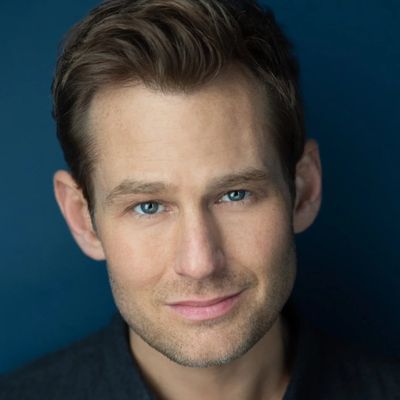
This episode features Tony nominee Chad Kimball, currently starring in the Broadway production of Come From Away. The episode discusses a wide range of topics from Chad’s early life in Seattle, to attending Boston Conservatory, joining Civil War on Broadway three weeks before closing, and even how he kicked his addiction to adderall after severely hurting himself during Memphis... Read More
From the show: The Theatre Podcast with Alan Seales
Guests
Featured Shows


About
This episode features Tony nominee Chad Kimball, currently starring in the Broadway production of Come From Away. The episode discusses a wide range of topics from Chad’s early life in Seattle, to attending Boston Conservatory, joining Civil War on Broadway three weeks before closing, and even how he kicked his addiction to adderall after severely hurting himself during Memphis. (watch the full, live performance of Memphis here)
Chad made his broadway debut in 1999 in the production of Civil War, followed by the off-Broadway revival of Godspell in 2000. He went on to play Milky White the cow in Into The Woods, which led to rave reviews. Chad has appeared in, Good Vibrations, Lennon, Memphis (Tony nom), and is currently starring in Come from Away.
Connect with Chad:
- IG: @chadkimball76
- Twitter: @chadkimball1Facebook.com/ChadKimballFanPage
Connect with The Theatre Podcast:
- Support us on Patreon: Patreon.com/TheTheatrePodcast
- TikTok: @thetheatrepodcast
- Twitter & Instagram: @theatre_podcast
- Facebook.com/OfficialTheatrePodcast
- TheTheatrePodcast.com
- Alan's personal Instagram: @alanseales
- Jillian's personal Instagram: @jillianhochman
- Email me at feedback@thetheatrepodcast.com. I want to know what you think.
Thank you to our friends Jukebox The Ghost for our intro and outro music. You can find them on Instagram, Twitter, and Facebook @jukeboxtheghost or via the web via jukeboxtheghost.com.
A very special thanks to our patrons who help make this podcast possible!
If you would like to see your name in this show notes or get a shout out on the pod itself, visit ttp.fm/patreon to become a member and show your support!
Transcript
This transcript was automatically generated and might contain errors.
[0:00] Alan Seales: Welcome to another episode of The Theatre Podcast. I'm Alan Seales, and this is a podcast with intimate, personal conversations with some of theatre's biggest names. This episode, in particular, is no different. We are talking today with Chad Kimball, who currently is starring as one of the many ensemble cast, the amazing cast from Come From Away, based on the true story of the people of Gander, Newfoundland, who took care of thousands of people that were grounded during 9-11. But before that, long before that, he got his start on Broadway in Civil War in 1999, Off-Broadway revival of Godspell in 2000. He was in Into the Woods, then Good Vibrations, Lennon, Memphis, for which he actually got a Tony nomination for that, for originating the lead role in Memphis, and then now, of course, Come From Away.
He's appeared in regional theatre all over the place, Paper Mill Playhouse. He's been in the Blank Theatre in Los Angeles. He's a native of Seattle, which is new for me to interview somebody from Seattle, but just an all-around great guy. Interestingly enough, we get into some of his past demons, including he actually injured himself during Memphis and got addicted to some bad things and turned to some other bad things to deal with it. So, we get into all of this during the episode, but it's incredible. He's a very nice guy. So, please enjoy this episode here with Chad Kimball.
[1:53] Alan Seales: He got his Broadway debut in Civil War in 1999, was in the Off-Broadway revival of Godspell in 2000. He was in Into the Woods in 2002, Good Vibrations in 2005, the Lennon musical also in 2005, Memphis, of which he got a Tony nomination for originating that lead role in 2009. Since August, correct, of 2016, you've now been in Come From Away. Do I have that right?
[2:18] Chad Kimball: Yeah. It was May of 2015. Actually, we started in La Jolla then.
[2:25] Alan Seales: Okay. Well, Chad Kimball, thank you for being here with me today.
[2:28] Chad Kimball: Thanks for having me.
[2:29] Alan Seales: No problem. You've done lots of regional theater at the Paper Mill Playhouse and Michael John LaChiusa's Little Fish at the Blank Theater in Los Angeles. But of course, as we always do, we'll get to that, but I want to back up to being a wee little Chad in Seattle.
[2:45] Chad Kimball: Oh my goodness.
[2:46] Alan Seales: Yeah. What was your childhood? How did you end up in Seattle?
[2:51] Chad Kimball: My great-grandfather, Lars Larsen, from, you guessed it, Norway, came from Norway. And apparently, this Puget Sound is reminiscent of the fjords in Norway. So a lot of Norwegian people went there. I don't think that that's the only—and I think there was great fishing. So I think that's how he kind of got there. And that's where I grew up. I was the kin of a fisherman who called his boat the Bull Moose.
[3:24] Alan Seales: Oh, so he actually moved there to fish.
[3:26] Chad Kimball: Yeah, he moved there to fish and to set up a homestead.
[3:30] Alan Seales: Your family's still there fishing?
[3:31] Chad Kimball: They are. Well, they're not fishing, but they are still there.
[3:34] Alan Seales: Yeah. And so what kind of childhood did you have? Was it filled with musical theater? How did you get from—I assumed you worked on the fishing boat as a little kid.
[3:42] Chad Kimball: No, there was no—I didn't even know him. I mean, I did learn fishing from my grandfather, but not in a grand capacity. I mean, we'd put hot dogs on a line and see what we got. It was mainly flounder and rockfish. But I learned music, actually, in church. I grew up going to a Christian church in Seattle, and my dad was the hymn leader. And so music was just kind of a part of our household. We had a piano, and my mom would play a little bit, and they'd rehearse for Sunday morning. So it was just kind of in our bones as kids. And from there, I actually didn't know that I could sing very well until I got to high school. And I went to a high school called Roosevelt High School, which is a nationally acclaimed high school for performing arts and drama.
And it was there that I kind of realized that I could sing. And so from there—and I also took vocal jazz, and actually that had a rather large influence on my vocal ability. We sang jazz almost every day in vocal jazz. And I remember every Wednesday, it was Improv Wednesday, so we'd get the tunes underneath us and we'd one by one just get up on the mic and improvise. You know, like, scat.
[5:16] Alan Seales: I was going to ask you if you could scat.
[5:18] Chad Kimball: Yeah, totally scat. And it was so much fun. And so that kind of was a real great foundation, especially for music like Memphis. And so from there, kind of just—the interesting is that nobody really stopped me. I don't remember everybody putting up a roadblock in front of me or saying, like, maybe you should do this, maybe you should do that. Everybody was just always very encouraging. And I listened back at some of the tapes—yes, I said tapes, cassette tapes of those times—and like, ooh, yeah, well, I was learning. But that was the kind of musical background of my childhood. And of course, from there, I applied to two colleges, and I ended up going to the Boston Conservatory, which people say is the Boston Conservatory of Music. It's actually the Boston Conservatory of Music, Dance, and Theater. So I was in the theater portion of that, but it all kind of bleeds together.
[6:18] Alan Seales: Where was the other school you applied to?
[6:19] Chad Kimball: NYU. I was waitlisted.
[6:21] Alan Seales: Oh!
[6:22] Chad Kimball: Yeah.
[6:22] Alan Seales: I bet they're sad now.
[6:23] Chad Kimball: That's fine. My wife went to grad school at NYU, so it makes up for it, right?
[6:28] Alan Seales: It evens out, yeah. Do you have any siblings, or is it just you?
[6:31] Chad Kimball: I do. I have an older brother, Todd, and a younger sister, Jill, both of whom are not in the acting business.
[6:40] Alan Seales: No? Not at all?
[6:42] Chad Kimball: No, no.
[6:43] Alan Seales: Were you the black sheep of the family then? Or you said you were supportive, so probably not black sheep.
[6:49] Chad Kimball: Actually, I was really incredibly shy until I was—well, I mean, I'm still a little shy. It's so weird. You hear actors say that they're shy, and you're like, okay, well, you get up and perform in front of thousands of people at night. But there is this aspect of, I think, being shy and theater actually being a great place for you to compartmentalize your shyness, because there's definite boundaries. You know where the audience is. You know what the scene is. So you can kind of interact in those social situations without having to be completely thrown to the wind. But I was really shy. And when I was—I think it was nine, my brother had been in theater. He did children's theater, summer stage at Children's Theater, Seattle Children's Theater. And they were doing this big TV pilot in Seattle called—what was it called? Oh, my goodness. Adventures on Sinclair Island. I don't even think you'd be able to find it on IMDb.
[8:55] Alan Seales: I've never heard of it.
[8:56] Chad Kimball: Well, nobody has heard of it. But I said to my brother, I said to my mom, I said, I want to go. I want to audition for that. And they all looked at me like I was crazy, and that I was going to fail miserably because I was so shy that I thought I was going to get up in front of everybody and just not do anything. But I ended up—my brother and I had to improvise a scene. I got the role, and he didn't. And then he quit acting.
[9:23] Chad Kimball: My shy kid brother beat me out for a role. So I'm done. I'm kidding, Todd. He's going to write it angrily. How dare you?
[9:32] Alan Seales: He's fine. He was really happy for me. And then so from there, I just kind of got the bug, the acting bug, and just knew that I wanted to do it.
[9:40] Alan Seales: It's funny you mention being shy. I've talked to a lot of people over my years in this business, and so many people are in the exact same boat. This is their way of expression, and this is their way of finding who they are and exploring their psyche. I think it—I mean, correct me if—or I guess agree with me if you do the same thing, but I find that a lot of people use their characters to explore parts of themselves that they may not be comfortable going to.
[10:10] Chad Kimball: Totally, totally. And I think as a kid, I didn't know any of that. I was just kind of doing that. But that is definitely some of the psychology of being an actor. And like I said, I mean, it's almost—being on stage is almost a safer space to explore social environments than just like a party, because you're kind of just—it's all random, and you don't know what's going to happen. But when you're on stage in a play, you kind of have these boundaries, and you know exactly what's going to happen, and you know how it's going to end. And so it feels a lot better. But yeah, I mean, I'm still, you know, a little shy, but I'm better.
[10:59] Alan Seales: Do you think it's helped you? Like, being on stage and being in front of thousands of people at night, has that helped you in the party situation?
[10:59] Alan Seales: Do you have a favorite character, a favorite role that you've gotten to dive into?
[11:04] Chad Kimball: I mean, I don't really partake much in the party scene anymore, but I think—well, I mean, I think alcohol always played a big role in helping. I mean, alcohol helps people, you know, kind of loosen their inhibitions. You know, I actually don't drink alcohol anymore, so I'm not too good in social situations. I kind of sit on a chair and talk to the people around me. But I do think that acting in theater definitely gives an actor the ability to explore those maybe hidden parts of themselves that they wouldn't really explore on the outside. There are more gregarious people who might be able to access those places a little easier. So, yeah.
[11:05] Chad Kimball: I think that Huey Calhoun in Memphis was probably my favorite creation as of yet. And I think the reason is, it's still somewhat a mystery to me how he came to be, because I did very little research on the actual guy. He was named Dewey Phillips, and he was on the radio in Memphis in the 50s. And, you know, the story follows him loosely, but I did very little research into his life. I listened to a couple of recordings of him, and I had a couple of defining characteristics that were imparted to me by the creators. And it just kind of fell out in rehearsal. I remember, we did the first production at North Shore Music Theater in 2003, and I remember saying to my mom the night before rehearsal started, I said, I have no idea, what I'm going to do.
I'm on every page. I don't even know who this guy is. And he just kind of just kind of fell out. And what fell out was this kind of really asymmetrical, lanky, but not kind of swaying physically, this character who explored weird modulations in his voice. And I know a lot of people, some people say, you hate him, but you love him at the same time. But man, he was, I would say that I played him as much as he played me. It was a really fun role to play, and the material obviously was a big part of that. But yeah, that's probably my favorite role.
[13:23] Alan Seales: That sounds, I guess, pretty accurate. I was thinking of the way you were describing, you know, your conversation with your mom. You're going into rehearsal, you're cast for this role, which I want to get back to the casting in a second, but you're cast for this role, you know, you're starting rehearsals. And you said a second ago that part of what's great about being on stage is that as a shy person, you've got the scene, you've got the lines, you know how beginning we get in the end. So when you're going into your first day of rehearsal, without knowing what your character is, right? Does that give you any sort of anxiety? Do you remember that moment of like showing up to the in front of the whole cast and saying like, Okay, well, I think in the audition process, I think that I did make a couple of choices that I hid behind, if that makes any sense.
The voice and the accent were something that I kind of immediately had. And those were easy. They just came to me. Obviously, they changed over time. But that's something that I think I hid behind early on. And also the writing allowed me to kind of just follow along a little bit. So I think that I was, I think that the bigger picture, the grander scheme of actually doing the show and, and figuring out how the parts fit together, I think that was more confusing for me.
[14:56] Chad Kimball: I don't think I was necessarily nervous about getting in front of the cast or the creatives. I was excited to just start working on it because I knew that people were kind of like, wait, what? You're using that voice? That's weird. So I remember kind of liking that kind of attention. So that was 2009. But yeah, so I guess we'll finish my earlier thought and go back to the audition process. So it was, you know, you had the Lennon Musical in 2005 and Memphis was 2009. How were you involved with workshops and readings and things leading up to the opening in 2009? Or was there, did you not work for those four years? Well, there was, we did the original production in 2003 at North Shore Music Theater.
And then, and then from there, it went to TheatreWorks in Palo Alto. And that's where Randy Adams, who is now one of our producers in Come From Away, he was also a producer on Memphis. He and Sue Frost and Kenny and Marlene Al-Hanif. He worked at TheatreWorks. And so he left TheatreWorks after Memphis because he knew this was something that he wanted to help shepherd to Broadway. After that production, there was about a three-year break. And I think that was in 2004 to 2007, that Memphis took a hiatus. And there were some rights issues involved. But so in that time, I did Good Vibrations and Lennon. And then I went out to LA and I did Little Fish out there among, you know, other assorted things.
And then, so there was no, there was one other workshop we did at New World Stages, actually, of Memphis. And I think in that one, I think in that, I want to say that in that version, like, Huey died, and we saw his ghost or something. It was very strange. It's a very difficult play to end because the actual ending of Dewey Phillips' life was not so nice. You know, he was heavy into drinking. And, you know, there were some, it was just not a fun or nice story. And not that you have to wrap up a musical in a nice and fun way. But they didn't want it to go quite that far in that way. So there was, anyway, we did have a workshop there. And then La Jolla Playhouse and Chris Ashley took over. And we had the pre-Broadway tryout, I think it was in, I think it was in 2007.
Yes. And then we went to Seattle, and then we came to Broadway in 2009. Wow. And in, you know, seven, I guess in Seattle, did you know it was coming to Broadway? I mean, in terms of how shows do their out of town tryouts, how many of them kind of just fall flat there? And how many continue on? Do you know? I don't. I mean, I will say that the cities have changed. It's kind of, you know, it used to be Boston, you know, Boston was a place where you take a show out of town. Now it's, there's this, a lot of shows come through Seattle, which is cool. I mean, I grew up there, but I'm like, hey, go Seattle. But the special part about Memphis is that they gave it, they gave it a lot of time to, to, you know, marinate.
And they gave it time to get it right. And just like Come From Away as well, they did several productions before Broadway. But yeah, I think that it's difficult. I mean, if you see the lineup of shows that want to come into Broadway right now, it's, it's a long list. Yeah. And there aren't that many theaters. But the fact that we got the Schubert theater, like the crown jewel of the Schubert organization. I remember when that, I think that that happened in, we found out in Seattle that we knew it was going to be a Schubert house, but we found out in Seattle that it was going to be the actual Schubert theater. And so I think we knew between La Jolla and Seattle that we were definitely going to Broadway.
We weren't necessarily, necessarily sure when, but then it became more clear as we, as we got into Seattle. That's fun. I, the whole journey, everybody's got a different story. The journey of getting like into the writing room and, or the writer's workshop and then getting, you know, like it, it amazes me how everybody's story is different, but it all culminates, of course, with this great, this great experience. Oh gosh. Yeah. And I mean, talking to producers and the creatives and stuff, there's just so much that goes on, on both sides, like in front of and behind the curtain. Right. So I'm curious about all that. Um, yeah, it's, it's, it's interesting to me. I I've, I like the producing side of it.
Uh, that I've always been one of those guys. It's like, uh, how I want to know behind the curtain, I want to lift up the hood and see how it all works. So, um, which is sort of the impetus for starting this podcast too. Right. So I want to know, I want to know everyone's story. I want to know everyone's, everyone's journey. And it's so disparate and different. It's so in this business, it's just, you know, there's so many little things that can go wrong and do go wrong and, you know, you know, kind of sidetrack, like, uh, steer a production off the path. Um, so yeah. Yeah. Well, anyway, enough about me, um, Into the Woods, you played Milky White, the cow. Yeah. Um, got really great reviews and Milky White was normally a statue, right?
Well, a cardboard, sorry, a wooden cutout in the original production. Um, and, uh, James Pine and, uh, Susan Hilferty, um, the costume designer, um, had this vision for, for Milky White to be a puppet. And, um, I was originally cast as, as, um, standby for Jack and Rapunzel's prince. So I wasn't on stage at all. Um, and, uh, Kate Reinders, um, uh, an accomplished Broadway veteran. Uh, she was in the show and she was cast as Milky White and her other duties were standing by for, uh, you know, Cinderella and, uh, some other, some other things, but she was cast as Milky White and, um, I remember the day she came up to me and said, can you, can you come and, um, you know, be my moral support going to talk to James Lapine about, and she had been talking to me for a while about how it was really hurting.
And she was having a really hard time doing it because it's on hand crutches. It's like kind of a, I'm not saying she couldn't do it, but she, she was having a hard time doing it. And, um, she just kind of wanted out. And so, um, we went to James Lapine and we were at the Amundsen theater in LA at the out of town tryout, uh, in the hallway. And, um, you know, she kind of broke down a little bit, said it couldn't do it. And he kind of just sat back and like shot his eyes at me and said, can you do it? Sure. And that was that. So, um, the costume was a little tight for me in, at the Amundsen, but, um, they made a whole new costume and I got these like cool bionic legs when we got to Broadway. I mean, on the road in LA, it was, you know, these hand crutches, very simple hand crutches.
And then on Broadway, they made these, um, I mean, you looked at it, I looked like a super hoofed, uh, you know, super man, super cow. It was, um, it was like hydraulic and it was, um, spring loaded. So, I mean, I could bound or I could run really fast stage. It was so much fun. Um, and Milky White's ears could, I could wiggle his ears and I could make him chew and I could blink his eyes, which is the best because the eyes were just the cutest things. So you blink the eyes and people would just, you know, Oh, you know, laugh immediately. So I was like, I have power. Um, no puppy dog control that well is connected to your face. No, it's actually, um, I had to take my hand out of the, out of the hoof and it took a lot of like kind of costume magic and choreography to do it because we had to put silk in there actually to, so that my, and I wore silk armbands so that when I did take my arm out, it would just slide past the fabric and wouldn't catch.
Otherwise you'd, you'd see it in the audience. So I, I, I, you know, kind of, you know, uh, slyly take my hand out of the crutch and we had to wait it so it would stand on its own. And then I would take my hand and put it into the mask and work the ears and the eyes and the, and the mouth. It was so much fun. And, um, I think my, my favorite part was, um, was, uh, uh, the part where he's, you know, saying goodbye, sold him. Jack has sold him and he's, I guess it's goodbye old pal. You've been a perfect friend. And I walk over and I put my hoof on his knee. I'll see you soon again. I hope that when I do, it won't be on a plate. And then I do a huge takeout to the audience with my eyes wide open and they just went crazy.
And then he runs off and then I run after him and then collapse downstage left and crawl, crawl, crawl and then collapse. And the audience just went crazy. It was so much fun. It was a lot of fun. And we had to be really careful, um, to not upstage everybody else. There was a moment, and I will be just completely honest about this in previews, Carrie O'Malley, um, uh, the baker, the baker's wife, Steven DeRosa, Carrie O'Malley were downstage saying, singing, it takes two. And I thought, I mean, I was like 25 at the time. Um, they're downstage singing. It takes two. It has nothing to do with the cow, but I saw an opportunity and I was like, I was sleeping upstate or standing upstage. And I was like, I have nothing to do here.
What am I doing? So during a few, I hope they don't, we've talked about it, but I hope they don't harbor any resentment. I walked down to them and during each verse, I would look up at her and then I would look up at him and then like shake my ears. And, um, I mean, understandably they were not too pleased with me. And I got a, I got a bit of a, a bit of a talking to, um, by James. He just, he said, don't do that. Don't do that. Well, I was just exploring that. So, um, so we had to be careful because the, the, the power of the cow, the pow cow was, was intense. People really liked it and it was really cute. So I know it it's weird. And it won, uh, it won the Tony for Best Revival that year. And that was your first time being around Tony Buzz.
What was that like? Uh, it was so, so much fun. I mean, I mean, we're, you know, on our, on our bus to, to Radio City Music Hall, the whole, the whole cast with, with Vanessa and, um, and, uh, you know, just, it was just, it was just so much fun. We, we had a really great time doing that, that show. And, um, not just because of, you know, obviously the camaraderie of the cast, but the magic of that story and, um, you know, Steven and, and James and, uh, uh, Gemignani being in all of, all the, the, the original creators involved, um, was just, um, thrilling.
[26:39] Chad Kimball: Yeah. So back up, I guess, to, yeah, 19, 1999 when you graduated from Boston Conservatory, um, and then you joined Civil War. That was your Broadway debut. The funny thing is it's not even in my playbill. It's not even in my, like, internet Broadway database. It doesn't list it there. I was there for three weeks. I got cast as a, um, I got cast as a, uh, an ensemble swing. And I, I mean, I loved the music. The music was great. It was, but it was seven days before I graduated, I got offered the Civil War. And it just doesn't happen. I mean, it, I mean, it happened to me, but, but it just, it really speaks to just being in the right place at the right time and being prepared. And I had the perfect song for the perfect, you know, role and, um, or roles and was young and ready to do it.
And, um, and so I got it and I remember just falling in love with that music. Um, and so I was there for, I think, I think it was like three weeks and the, uh, week, no, it must've been longer than that. Uh, maybe, maybe a month, maybe a month and a week, but I got three weeks in my notes. Is it three weeks? Okay. We'll say three weeks, but, um, I did start rehearsing. So that's good. Um, but then we, we did, we were nominated for the Tony against Fosse, I think it was that year and Fosse won and we lost. And then the next day, obviously Jerry Zaks came on stage and, and, um, lowered the boom. And I thought, I didn't know. I was so green. I was like, Oh, the director's here. And everybody's like, shut up.
Um, obviously it was, um, we're, we're closing. So, um, I was there for, for a little bit. It was a lot of fun. I met some people who are friends to this day and, um, uh, and it was, you know, I think in a lot of ways, getting the Broadway credit out of the way freed me up a little bit because I think a lot of people, and I do it in other ways with other, you know, kind of goals, but to have attained that one, you know, uh, the, the, the mythical Broadway, you know, credit, um, uh, kind of, I think, freed me up to just, uh, be a little more cavalier and, uh, choosy, I guess is a word I'd use. But, um, I think a lot of people just, you know, harbor that I gotta get on Broadway, gotta get on Broadway, gotta get on Broadway.
And it becomes a bit of an obsession. I mean, we all do it with other things, but, um, I'm grateful that I was able to just get that out of the way. Although I never went on stage. I never performed. I did. They let me sing in the pit, the last show. So I did perform technically on under Broadway.
[29:31] Alan Seales: Well, what do you, what, what do you look for when you're being choosy? What do you look for in a role? What, what really speaks to you? Well, part of it is that I, I say this as a kind of a joke, but it's kind of true. Um, I like to do new roles. Uh, and one of the, I think one of the reasons is I don't want to stay.
[30:22] Chad Kimball: I try and look for something that's redemptive, something that you find redeeming in that person or that character towards the end or in the story. I think that's kind of an important something I like to hold up as stories of redemption and stories of comebacks and that kind of thing. Yeah, I guess that's noble. I always wonder what really speaks to people, so it's interesting to hear everyone's different take on all of that. Speaking of originating roles, I want to go back to Huey in Memphis for a little bit. Definitely a big personality. Then you got the Tony nomination for this, so we'll get two questions. One, we'll talk about the Tonys after this. How much of what we see on stage, and it's actually available on YouTube now, the full production, right?
I think it's Amazon. It was on Netflix, now it's on Amazon. I think you can probably see it there on YouTube. I'm not sure, actually. I'll find it. I'll put it in the show notes. Yeah, I think it's Amazon because it shows up on my Amazon Prime. For this character, how much was written on the page was you, and how much spoke to you versus what you brought to the character? I think one of the cool parts about Huey, and I don't know how I can really take credit for it other than, like I said before, it kind of just spilled out of me. One of the cool things about him is that he was so much more than what was on the page, but exactly what was on the page. I don't really know how to articulate that other than I was able to fill in some of the gaps that were written to be filled in.
Does that make any sense? So it was all there. It just, I guess, needed a vessel for him to spill out, and that was me. But we did the great part about working with Joe DiPietro and David Bryan, who wrote it, and Chris Ashley, who directed, because he's very much involved in trying to shape the story in those early days, is that we all were able to talk about it, and I was able to say, well, I think that he probably would have said this, or it might be more interesting if we see him go this route, or if they have a back and forth here. So there was some of it that was in flux, but we were all able to collaborate really nicely, and if there was a word or a lilt to a line that didn't feel like Huey, Joe was very interested in collaborating and finding out a way to make it come off the page vocally in a more Huey-like way.
It was theater magic, really. It was just a collaborative dream, and to be able to give input and have that input heard, and then possibly see the fruit of the input. So you were definitely involved with shaping the character, I guess, in originating it. Yeah. And then for the Tony nomination, how did your career change after that? Oh, man. I mean, it's just a huge honor. It's a huge, huge honor to be honored by your peers in that way, and I don't really know how to speak to it. I mean, my career changed only in as much as it's like my laurels are more comfortable to sit on. That's it. I mean, I will say that it's just, like I said, it was an incredible honor. There were some humbling factors involved, which I really appreciate, because I hesitate to say that it's kind of been a touchstone for larger capacity for creation and all that stuff, creative energy in my life.
But there were some, because I really feel like humility and being humble is a better way to go. Actually, on the Tony broadcast, one of those humbling moments was when you're at an awards show and it's televised, they have, which I'm sure you know, they have seat fillers. And so they're all dressed to the nines. And so the cameras will, when they pan across and whoever has left the audience to go and perform or do whatever they do backstage, there's someone in their seat. And so I had just come back from, I think, either performing or I forget what, I was coming back to my seat and I was in the seat and one of the, you know, they've got these producers with clipboards and, you know, the little curly wire that goes in the air.
And she rushes over to me and she said, hey, so I need you to vacate at the next commercial break. And I said, okay, well, I don't know why am I, what do you, I already did the thing. She goes, what do you mean? I said, I already performed. And she's like, oh, so sorry. But you know, they're just like, okay. She thought you were the seat filler. Yeah. And that's great. That's great. I'm good with that. It's just a little way for me to remember where I'm from. Well, maybe producers don't know everybody. Yeah, that's right. Everybody is nominated. Exactly. Well, there is a sense of at that point, you're like, well, I, you know, you feel like maybe you are a nobody. And so to be kicked down a little bit, it's good.
It's healthy. It's healthy for everyone. Well, that speaks highly of you, I guess, to take that as a humbling moment instead of being like, I'll have your job. Okay. So then fast forwarding a little bit, July 2011, you said you'd be taking, you left Memphis for an indefinite leave of absence due to nerve damage, right? What's that story? Oh, man, that story still continues to this day. I had an injury, a pretty bad injury during the show. And I didn't. I was so wrapped up in that character and so needing to be him and felt responsible for him and somewhat for the show a little bit that I kind of tried to ignore the pain. And, you know, with physical pain comes emotional pain comes, you know, all of that stuff.
And it was it started to become a very dark time. And I got to the point where I just I was performing six shows a week, if that sometimes because I my whole right side was in the back was was pretty much atrophied and I couldn't breathe as well as I could. And because of that, I had a couple of panic attacks on stage, which are not fun, especially when you've got to do it like a two hour, two hour, two and a half hour show. So things just kept, you know, kind of piling on. And I tried to really smile through a lot of the pain. And, you know, I think also in those situations, you get misunderstood by people. And and it's an isolated you feel a bit isolated and that, you know, I was trying to go through.
I was trying to just muscle my way through without really reaching out for any help. And I around let's see around August. No, no. Sorry. Yeah. In July of 2011, you know, we just had a meeting and said, I just need to go and get better. And it was really hard. And, you know, I said I'd like to stay through the second year anniversary, which, you know, they were totally great with that. And and then I left. And so I kind of just like laid low and, you know, just marinated in a bit of post a mountaintop misery. Can you say that? Yeah, sure. And so it took me a few years to kind of get back on track. Really? Yeah. It was it was it was hard. Nobody nobody kind of prepares you for being in front of so many people and being so exposed and being kind of, you know, it's kind of a being as a shy person growing up and kind of a more of an introvert than an extrovert and a bit of a homebody being thrown into that that environment and not really thinking about the ramifications is is hard.
And then on top of that, being injured and then, you know, feeling emotional pain from from all that and anxiety, it was it was a recipe for disaster. So I did I hit a bit of a rock bottom and then I came I came back up and things have have have have been looking up recently. Are you prone to anxiety in general? No, I don't. I don't think so. I think that. No, I don't think so. I think that, you know, everybody's got their their everybody's got their, you know, their personal afflictions, really. And everybody goes through it in a different way. And mine ended up actually in an addiction. I was addicted to Adderall, which I was prescribed for attention deficit disorder. But when you're in a cycle of kind of anxiety and you're injured and the toleration for the medicine is is is rising, it was kind of a perfect storm.
And so I ended up, you know, kind of isolating myself quite a bit and being addicted to Adderall and finally reached out to my family, whom I was convinced would. I mean, they're the most loving people ever. But my mind was like, oh, you've disappointed them. And they were great. I said, we're going to help. We're going to bring you home. My sister said, I'm so excited. I said, what? Because I called home and I said, I've got a substance problem. And she said, well, we finally know what's wrong with you. And there was something that we just couldn't. You know, I did a really good job of hiding it. And something was they knew something. Yeah. And I'm, of course, across the country, you know, and they were like, what's wrong with him?
So so finally I got some help. And and I think the cool part about it is that there's as as an actor, I feel like my my motivation for acting has changed a little bit in that I I now understand some of the more psychological reasons why people get into acting. And and now I feel like I can focus more on the work, if that makes sense, because I've got kind of a larger foundation for who I am and what I've been through and what I can pick from here and there. Yeah, it's it's a it's a it was it was a hard time, but I'm so glad I went through it. Yeah. So did they did you go through like a rehab back in Seattle? Yeah. Yeah. In eastern Washington, 21 days and sundown and ranch. It was awesome. Yeah.
Well, yeah, because you're laid bare. And I mean, I when I got out of rehab, I I was so I'd isolated myself so much. And I had I had I want to say deceived my friends and family so much into thinking that I was OK, which obviously I wasn't that the truth and transparency and being able to lay everything on the table to to complete strangers, by the way, when you're in like group therapy was it was just the best feeling ever. And so so I I immediately posted on Facebook when I got out. I was like, this is what's happened. And this is, you know, this is what I'm going through. And I, you know, I just wanted to be open and transparent about it is probably one of the better things that I've ever done.
And not that, you know, I think that everybody's paying attention to me, but for people who were thinking that something was wrong or that it was, you know, kind of a, oh, OK, I understand now. And, you know, there were relationships that I that I had to repair and still have to.
[44:48] Chad Kimball: It's a production of the Center for Autism and Related Disorders.
[44:51] Chad Kimball: Settlement.
[44:52] Chad Kimball: It's a semi-final episode of the Broadway Podcast.
[44:54] Chad Kimball: Next week, the production is coming to a close in the next week.
[45:07] Chad Kimball: The Broadway Podcast next week.
[45:11] Chad Kimball: The production is coming to a close in the next week.
[45:21] Chad Kimball: The production is coming to a close in the next week.
[45:31] Chad Kimball: The production is coming to a close in the next week.
[45:41] Chad Kimball: The production is coming to a close in the next week.
[45:51] Chad Kimball: The production is coming to a close in the next week.
[46:01] Chad Kimball: The production is coming to a close in the next week.
[46:11] Chad Kimball: The production is coming to a close in the next week.
[46:21] Chad Kimball: The production is coming to a close in the next week.
[46:31] Chad Kimball: The production is coming to a close in the next week.
[46:41] Chad Kimball: The production is coming to a close in the next week.
[46:51] Chad Kimball: The production is coming to a close in the next week.
[46:59] Chad Kimball: The production is coming to a close in the next week.
[47:09] Chad Kimball: The production is coming to a close in the next week.
[48:44] Chad Kimball: It's the production is coming to a close in the next week.
[48:58] Chad Kimball: A close look at the next week.
[49:04] Chad Kimball: A close look at the next week.
[49:10] Chad Kimball: A close look at the next week.
[49:17] Chad Kimball: A close look at the next week.
[49:24] Chad Kimball: Be aware that he is here.
[50:12] Chad Kimball: Look at the next week.
[50:19] Chad Kimball: Be aware that he is here.
[50:24] Chad Kimball: Be aware that he is here.
[50:29] Chad Kimball: Look at the next week.
[50:34] Chad Kimball: Be aware that he is here.
[50:41] Chad Kimball: Look at the next week.
[50:46] Chad Kimball: Be aware that he is here.
[50:51] Chad Kimball: Look at the next week.
[50:56] Chad Kimball: Be aware that he is here.
[51:01] Chad Kimball: Be aware that he is here.
[51:07] Chad Kimball: Be aware that he is here.
[51:13] Chad Kimball: Be aware that he is here.
[51:19] Chad Kimball: Be aware that he is here.
[51:27] Chad Kimball: Be aware that he is here.
[51:34] Chad Kimball: Be aware that he is here.
[51:39] Chad Kimball: Be aware that you are here.
[51:42] Chad Kimball: Be aware that he is here.
[51:49] Chad Kimball: Be aware that he is here.
[51:57] Chad Kimball: Be aware that he is here.
[52:01] Chad Kimball: Be aware that he is here.
[52:04] Chad Kimball: Be aware that he is here.
[52:11] Chad Kimball: Be aware that he is here.
[52:17] Chad Kimball: Be aware that he is here.
[52:23] Chad Kimball: Be aware that he is here.
[52:28] Chad Kimball: Be aware that he is here.
[52:31] Chad Kimball: Be aware that he is here.
[52:37] Chad Kimball: Be aware that he is here.
[52:43] Chad Kimball: Be aware that he is here.
[52:49] Chad Kimball: But he is here.
[52:53] Chad Kimball: Be aware that he is here.
[52:59] Chad Kimball: He is here.
[53:02] Chad Kimball: Be aware that he is near.
[53:08] Chad Kimball: Be aware that he is spotlighted.
[53:14] Chad Kimball: Be aware that he is here.
[53:20] Chad Kimball: Be aware that he is here.
[53:26] Chad Kimball: Be aware that he is in trouble.
[54:04] Chad Kimball: Be aware that he is here.
[54:09] Chad Kimball: Be aware that he is in trouble.
[54:16] Chad Kimball: Be aware that he is spotlighted.
[54:22] Chad Kimball: Be aware that he is here.
[54:28] Chad Kimball: Be aware that he is in trouble.
[54:35] Chad Kimball: Be aware that he is spotlighted.
[54:41] Chad Kimball: Be aware that he is in trouble.
[54:48] Chad Kimball: Be aware that he is in trouble.
[54:55] Chad Kimball: Be aware that he is in trouble.
[55:02] Chad Kimball: He is in trouble.
[55:06] Chad Kimball: He is in trouble.
[55:10] Chad Kimball: He is in trouble.
[55:14] Chad Kimball: He is in trouble.
[55:18] Chad Kimball: He is in trouble.
[55:22] Chad Kimball: He is in trouble.
[55:26] Chad Kimball: He is in trouble.
[55:30] Chad Kimball: He is in trouble.
[55:36] Chad Kimball: He works with her lately.
[55:40] Chad Kimball: She's also, I've learned so much from her.
[55:46] Chad Kimball: As far as how to prepare.
[55:50] Chad Kimball: And she has learned a bit from me.
[55:55] Chad Kimball: I hope she has, maybe.
[55:59] Chad Kimball: We work really well together.
[56:03] Chad Kimball: I think it's a real blessing we found each other.
[56:08] Chad Kimball: She put together a couple's cabaret series.
[56:13] Chad Kimball: Reach out to Andy Carl and Orfeh.
[56:17] Chad Kimball: The four of you can go out and do couple's therapy.
[56:23] Chad Kimball: I'd watch that.
[56:26] Chad Kimball: I'd pay to see that.
[56:29] Chad Kimball: That's free for you.
[56:31] Chad Kimball: We'll wrap up here.
[56:34] Chad Kimball: We've been chatting for a good amount of time.
[56:39] Chad Kimball: We have three closing questions.
[56:43] Chad Kimball: The first one, what motivates you?
[56:46] Chad Kimball: Hope, I think.
[56:49] Chad Kimball: I've got hope that there are fun and exciting and fulfilling opportunities ahead.
[56:54] Chad Kimball: What advice would you give to your younger self and younger people listening now starting out down a similar path?
[57:01] Chad Kimball: Oh, man.
[57:02] Chad Kimball: I mean, I want to be able to live the same kind of life because I don't want to be rejected.
[57:08] Chad Kimball: That's a hard one.
[57:10] Chad Kimball: But I would say don't think that being rejected is because it's not a judgment on who you are or what your talent level is.
[57:17] Chad Kimball: It's just because you weren't exactly the right thing that they wanted.
[57:23] Chad Kimball: I think a lot of people, me myself, don't want to be rejected.
[57:29] Chad Kimball: It's so weird.
[57:30] Chad Kimball: They want you, but then they reject you.
[57:34] Chad Kimball: You are wanted when you come into that audition.
[57:39] Chad Kimball: They want you to be the perfect person.
[57:43] Chad Kimball: So I would say don't think of rejection in such harsh terms.
[57:48] Chad Kimball: Cool.
[57:50] Chad Kimball: Um, Sweeney Todd.
[57:52] Chad Kimball: All right.
[57:53] Chad Kimball: That is the second answer for, second person who said Sweeney Todd.
[57:56] Chad Kimball: Really?
[57:57] Chad Kimball: Yeah.
[57:58] Chad Kimball: Wow.
[57:59] Chad Kimball: It's just, it's stunning.
[58:01] Chad Kimball: And it's, yeah.
[58:02] Chad Kimball: I think maybe the hundredth time I'd start to find the major, major humor.
[58:06] Chad Kimball: All right.
[58:07] Chad Kimball: Well, people can connect with me on Twitter.
[58:09] Chad Kimball: I know you're the first person on Twitter.
[58:11] Chad Kimball: I'm number one.
[58:12] Chad Kimball: Yep.
[58:13] Chad Kimball: And then Facebook.com slash Chad Kimball fan page.
[58:16] Chad Kimball: Yes.
[58:17] Chad Kimball: And you can get more of me and the theater podcast at theater underscore podcast.
[58:21] Chad Kimball: That's web news.
[58:23] Chad Kimball: This is produced by Jillian Hochman and music you're hearing now, for the intro and outro by Jukebox The Ghost, our wonderful friends.
[58:31] Chad Kimball: Thank you again for this lovely conversation.
[58:34] Chad Kimball: Thanks.
[58:35] Chad Kimball: This was great.
© Broadway Podcast Network, All Rights Reserved