

Glynn Turman is an Emmy Award winning actor, writer, director and producer, who made his Broadway debut at 12 years old originating the role of Travis Younger in A Raisin In The Sun... Read More
From the show: The Theatre Podcast with Alan Seales
Guests
About
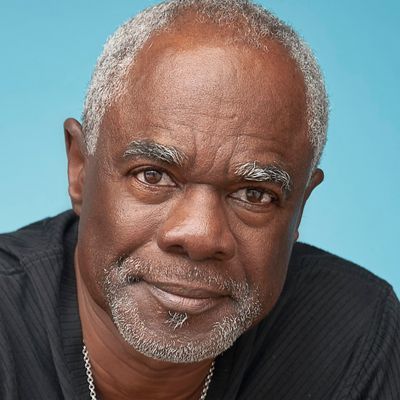
Glynn Turman is an Emmy Award winning actor, writer, director and producer, who made his Broadway debut at 12 years old originating the role of Travis Younger in A Raisin In The Sun. With a successful TV and film career spanning more than 50 years, Glynn has had notable roles in films including Cooley High, The River Niger, Gremlins, How Stella Got Her Groove Back, Men of Honor, Justine, The Way Back, and Ma Rainey’s Black Bottom. His TV credits include Peyton Place, Matlock, The Wire, In Treatment, House of Lies, How to Get Away with Murder, Mr. Mercedes, Fargo and many, many more. Glynn has also directed episodes of Hangin’ with Mr. Cooper, A Different World, and The Wayans Bros. He is now the newest face for Beyonce’s new Ivy Park denim line, and can also be seen starring opposite Tony award winner Adrienne Warren in ABC’s new limited series Women of the Movement.
Glynn credits his mother for getting him into theater and acting, and talks about what life was like growing up in NYC's Greenwich Village in the 50’s and early 60’s, immersed in a bohemian lifestyle. He chats about his love for all things horses and rodeo, and tells the story of a dinner with Beyonce that led to him becoming a spokesperson for her new Ivy Park line. Glynn also reflects on his career and the opportunities that have led to where he is now - “I’m glad that I’ve lived long enough to see that we as a black people have gotten the opportunity to tell some of our stories from our point of view”.
In this episode, we talk about:
- Auditioning for playwright Lorraine Hansberry, a friend of his mother’s and the creator of A Raisin in the Sun
- Skipping school to spend time with the horses in Central Park
- Getting into character as Mose Wright for Women of the Movement
- Auditioning to be the original Han Solo, and booking it
- Acting icons James Earl Jones, Cicely Tyson, Sidney Poitier, and Ruby Dee
Connect with Glynn:
Connect with The Theatre Podcast:
- Support us on Patreon: Patreon.com/TheTheatrePodcast
- Twitter & Instagram: @theatre_podcast
- Facebook.com/OfficialTheatrePodcast
- TheTheatrePodcast.com
- Alan's personal Instagram: @alanseales
- Email me at feedback@thetheatrepodcast.com. I want to know what you think.
Thank you to our friends Jukebox The Ghost for our intro and outro music. You can find them on Instagram, Twitter, and Facebook @jukeboxtheghost or via the web via jukeboxtheghost.com.
Transcript
This transcript was automatically generated and might contain errors.
[0:00] Alan Seales: Welcome to The Theatre Podcast. I'm your host, Alan Seales, and our guest for this episode is Glynn Turman. Just an amazing, amazing individual who has been in the business as a performer and actor for 50 plus years. Very timely. Between the time when we recorded and when this episode is released, Sidney Poitier died. He worked with Sidney in his Broadway debut at the age of 12. We get into that story just, oh my gosh, an amazing, amazing story. There's a couple times in the interview where he refers to my little one, my son, because what got edited out of this final interview they're listening to is one point when my little guy bursts into the recording studio here and asks me a question. So my son got to meet Glynn and Glynn got to meet my son.
So if you hear the little one, that's what he's referring to. Glynn is one of those people that simply by exploring the things that he personally wants to explore and supporting the things that he finds important, he's leaving this trail of influence of inspiration and education behind him for everybody he touches. It's incredible. And then in case you didn't know, he's one of the stars of the brand new ABC show, Women of the Movement, which just came out on January 6th. You have to watch this show. Of course, as you probably know, it stars Adrianne Warren and a whole slew of other Broadway names. I've rambled on long enough. I know you want to hear from Glynn, so let's just jump right into it. Everybody, please enjoy this episode with Glynn Turman. Here you go. One, two, three.
[1:47] Alan Seales: Today's guest is an Emmy Award winner who made his Broadway debut at the age of 12, originating the role of Travis Younger in the 1959 production of A Raisin in the Sun alongside Sidney Poitier and Ruby Dee before diving into an incredibly successful TV and film career spanning over 50 years. He has received critical acclaim for his roles in Ma Rainey's Black Bottom, How to Get Away with Murder, of course, both alongside Viola Davis, David E. Kelly and Jack Bender's series Mr. Mercedes, The Way Back, opposite Ben Affleck, Justine, produced by Ava DuVernay, a film in which he also executive produced. He's directed episodes of Hanging with Mr. Cooper, A Different World and The Wayans Brothers, and now is the newest face for Beyonce's Ivy Park denim line.
And of course, now is starring opposite Tony Award winner Adrian Warren in ABC's Jay-Z and Will Smith produced Women of the Movement as Mose Wright. Holy cow, Glynn Turman, welcome to The Theatre Podcast. How you doing, man?
[2:54] Glynn Turman: Oh, dude, I hope I didn't drop any names on your foot there. That was a lot of names.
[2:59] Alan Seales: My foot's hurting. You have done so much, so unbelievably much. And I mean, gosh, I don't even really know where to begin. Let's start with a fun one, though. How many people get to work with Beyonce? What was that like for you? How did that even come about? Like an actor for a denim line, right? Because like you got a little cowboy in you.
[3:17] Glynn Turman: I got a lot of cowboy in me. I got the buckles to prove it and the horse feed bill, too. And she knew that, Beyonce did. So at dinner, we were talking about that. And she was saying that she had just finished a rodeo collection. Her new collection was going to be called Rodeo. But that she was meeting a young lady who was beautiful and who could ride to model and finish out this particular segment of her. I said, my granddaughter used to be a model. She modeled when she was a youngster. But she's also my kid. So she grew up rodeoing. She barrel raced and rides very, very well as a cowgirl. And so I said, man, she's beautiful. So she said, what do you think she would want to do? I said, I'm pretty sure she would want to model some of Beyonce.
You're lying, B. I'm pretty sure. So then we had that going at my ranch. We've got a small ranch not too far out of the side of LA that we've had in the family for quite some time now. I don't know if you know Tina Lawson, which is Beyonce's mom. We were dear friends, my wife and her husband and all of us. She kind of said, oh, Glenn, look, I just happen to have a jumpsuit here. Let's see if that fits you. This is at the ranch. I thought I was just supposed to hold the horses and shovel horse poop on the set. But she kind of came up with this idea, sliding me into this jumpsuit, thinking that I might be able to model this. So the next thing I know, I'm the spokesperson for Beyonce's new line, the Ivy Park rodeo line. So there I am.
[5:09] Alan Seales: Crazy cool. And I love that you're just like, you're having dinner with Beyonce and you just happen to be Tina Lawson's bestie. So that's super cool. We'll skip all that. But that's very, very cool. But I want to dive into what made you originally, like at the age of 12, you're originating this role on Broadway in 1959. What got you into theater? Because you're in New York at this time, and then you move out to L.A. a little while later for TV and film. But what was the original impetus for getting into performing in the first place?
[5:44] Glynn Turman: My mother. My mother was a single parent. I grew up in an area called Greenwich Village in New York, in the West Village, back in the 50s and early 60s. And she moved there as a single parent from a place in Harlem where I was born. And I moved down there at about the age of eight. She was a part of what you would call probably a bohemian lifestyle of that time, which was really nothing other than people who were sort of intellectually gifted in their concerns about issues in the country, music and folk singing and poetry. And so her friends were James Baldwin and Lorraine Hansberry, who wrote A Raisin in the Sun. It was Lorraine Hansberry who suggested to my mother that I might be right for a role that she had written in this play called A Raisin in the Sun and would I try out for it?
And I had no inclinations of doing that. But mom presented this opportunity to me, and I said, eh. I said, I don't know, you know, okay, I'll give it a try. And I got the part. I got the part because I didn't know what an audition was. I didn't know I was competing. The part I thought was mine. I don't know what these other guys are doing here, but this is my part. There's only one part for a little boy.
[7:09] Alan Seales: Wow. So you just fell into this career without realizing what you were doing. That's insanely cool. Wow. Okay. Was it you? Is it your mom? Are the two of you talking? You're like, you really got some talent here. A teacher, a woodshop teacher in junior high school suggested that I try out for the Performing Arts High School, which is called LaGuardia now, back in those days. You remember the movie Fame? That was the year that that story was about my graduating class. Wow. Fame. And so I ended up at that school. I passed that test and got into that school. And I did well because I was a terrible student all through school, but I did well in that school at that time in that class acting. And I graduated top of the class.
And that's when I said, hey, mom, I guess I'll try this stuff, you know, for real. And of course, as soon as I made that declaration though, Alan, I never worked again. I didn't work again. I didn't work for years. As soon as I made that declaration, I didn't work. I couldn't get a job. I couldn't get arrested. I was put through the testifier. Oh, you want to do this, huh? Yeah. Okay. Here you go. You thought it was that easy? Well.
[8:22] Alan Seales: How long did you stay in New York before moving out west then?
[8:27] Glynn Turman: I graduated in 1965. And a high school teacher, a minor acting teacher, brought me to California in 1968 to do a stage play at a place called the Inner City Cultural Center here in Los Angeles. And I came out to do that. I was going to do that play for a few weeks. And then I was about to return. But when I got off the plane, man, it was 76 degrees here in New York. When I got on the plane five hours earlier that day, it was three degrees below zero. So when I got off that plane, I said, I got to figure out a way to stay here in California. I'm not going back to that cold. That's crazy. And here I am 50-something years later.
[9:10] Alan Seales: Wow. You mentioned you got a ranch outside of LA. You were born in Harlem, grew up in Greenwich Village, two places that don't really lend yourself to being in California. Talk to me about that, and then we'll get into the business stuff. I'm giving up key points because for you, I'm going to let you know I got a documentary coming out about my life that I just finished. So just finished it. And these stories will be in that documentary. But to answer your question, I just always loved horses, even in New York. I used to play hooky in school and go up to Central Park and shovel horse crap in the stables up there in Central Park if the man would let me ride a horse. I just always loved it.
[10:03] Alan Seales: That's great. I love that you've taken this love, this focus for animals, for horses, and just turned it into this whole lifestyle, which has then led you to being a model for denim jeans and get your granddaughter and all this stuff. I love how it's embracing chance. It's taking advantage of the opportunities right when they come to you and just running with it and seeing where it goes. And it sounds like you've done that your whole life. And you've got this incredibly successful career based on embracing chance, embracing opportunity. And as soon as things are presented to you, you just run with it and you let it go wherever things are going to go. I love that. I love people that do that because there's a fear that you have to overcome to be able to do that because it's all unknown, right? So when you look back at your career, you're an executive producer alongside Ava DuVernay, you're a successful actor with all these awards under your belt buckle.
[10:52] Alan Seales: And you've got starring roles alongside some of the biggest names ever, you know, and you're like besties with Viola Davis and all these people, like people now working alongside Adrienne Warren in this incredible show, Women of the Movement. And I'm just, I'm so impressed with how you have stayed so focused, but yet so diversified all at the same time. So how do you approach what you are working on? How do you decide? Because it seems like at this point, you can do anything you want. What are you looking for?
[11:27] Glynn Turman: Well, you know, I still got horses I gotta feed. So, one thing is a constant, you know, horses eat and they shit. You gotta feed them and you gotta clean up after them. So, I still got to do that. So, I'm still working. I still love working. And what has been wonderful is at this point in my career, some wonderful opportunities have come, you know, some great storytelling is happening at these days. And I'm glad that I've lived long enough to see that we've gotten as a people, as a Black people, the opportunity to tell some of our stories from our point of view. That's a little different from the times that I kind of started it. Although A Raisin in the Sun was about spearheading that opportunity. But in between, it's not been a crystal stair to make that happen. So, these young people, you guys, you know, this being your world for...
[12:29] Alan Seales: I'm 41. I'm not young people. But yeah, I hear you.
[12:32] Glynn Turman: Hell, man, these shoes I got on are 41 years old.
[12:36] Alan Seales: Fair point. Fair point.
[12:41] Glynn Turman: So, to see for you guys to be telling stories and doing things and making the change and include me in your storytelling, you know, I'm really very, very pleased and blessed to be in that position. At the same time, I just think that somebody has to have the truth, the experience, have lived the experience. And I guess it's my turn to be able to tell from that experience. You know, they're asking me about Women of the Movement. Do I remember that time period? And I do. And I guess there's not a whole lot of actors around that can say that, that are still doing it at a certain level. But yes, I was there in the 50s, in 1955. I was there when my mother panicked when I disappeared as a prank at eight years old, you know, just hiding from her, you know, and the whole family panicked, you know.
And why did they panic? Because on the newsstands, there were pictures of Emmett Till mutilated in an open casket that his mother insisted on so that the nation would wake up to the atrocity, you know. But what did that do for mothers of that time? You know, my mother was one of those mothers. She lit into me like, I don't know what, you know. I can recall that story. You know, I can recall that time.
[14:10] Alan Seales: Well, there's obviously so much about what's been happening in our culture in the last few years that indicates that we have come a long way, but we still have so far to go.
[14:22] Glynn Turman: Oh, yeah. The more things change, the more they stay the same. So, the other day, when I went to see Trouble in Mind with LaChanze on Broadway, that is Alice Childress's Broadway debut of a play that she wrote decades ago. And she's now passed away. And obviously, he's not gonna see this. But if the costumes and the set was not set in the time period in which it was written, then I would have not known that it was not supposed to be in that time period. Because unfortunately, the problems that we are seeing on stage that we are being presented with are still happening just as much now as they did back then, just in different ways.
[15:04] Alan Seales: You're absolutely right, Glynn. We're gonna take a short break. Stay tuned for more of the episode.
[15:14] Glynn Turman: Women of the Movement. Let's talk about that a little bit, because you play Mose Wright, who is a real-life civil rights movement leader and great uncle to Emmett Till. So, you were just saying that you remember these times firsthand. And you're starring opposite Adrienne Warren, who is young enough so that she did not remember these times firsthand. When putting together your character, when putting together the story and working with her and the other cast, were you able to... I guess, what sort of guidance? And I assume there's a bit of inherent leadership that comes out of you dealing with a cast of people who didn't experience this firsthand in real life.
[16:10] Glynn Turman: Well, to a certain degree, yeah. Because, you know, kind of grounded in the fact that I did come through that time period. There's a certain amount of grounding there. There's a certain amount of leadership, I guess you could call it, for lack of a better word, that comes with that. We had a very, very gifted cast and company. What I was not afraid to do was adopt the attitude of the time. There was an attitude that was expected of you of those times, being a Black man, a Black person. And what was most difficult for the youngsters that were with us was to adapt the attitudes of that time. Because the first thing you'd say, you know, is say, why do I have to get out of the way? I don't have to move for this white man.
But of the times, yeah, you did. You had to step back off the sidewalk. You see, you had to lower your eyes. You couldn't look somebody in the eye. You did have to lower your eyes. You did have to play small in those times. And so as actors, you're going to have to do that. I know it's hard, but think of how hard it was to live it. So today is January 6th as we're recording this. This is when Women of the Movement comes out, which is also the one-year anniversary of the civil rights uprising or the uprising on the Capitol. Sorry. There's a lot of emotion going on in the country right now, in the world right now, specifically today. And this show is incredible. It needs to make people think and it needs to make people realize.
And as you were telling the story a second ago about having to play small and having to move out of the way and not look people in the eye, I was starting to tear up because I feel, I don't know what to say right now, if I'm being completely honest. I don't know what to say as a white man right now. I don't know what to say to express how much I dislike the hate that people of color in this country have to experience. It makes me angry. It makes me mad all the time. And I don't know, as a teaching moment for me and for those listening right now, what should I say? What can I say? What can I do to help? What can I do to, yeah, I guess I'll stop right there. What can happen right now to have people learn from this?
[18:31] Glynn Turman: Well, you have a wonderful opportunity, a blessed opportunity, because it all starts with that little fellow who walked in the room. That's your responsibility. Your responsibility is to make sure that he does not adopt the attitudes that you are having such trouble with in terms of accepting. You cannot let him accept that hate. That's your job. That's what you can do.
[18:59] Alan Seales: Yeah.
[18:59] Glynn Turman: There are two of them, right? There's two of them now, right?
[19:01] Alan Seales: Two boys, two little boys, yep.
[19:03] Glynn Turman: They might go to school and somebody else is going to say to them, you know, oh, you know, January, you know, blah, blah, blah, blah, blah. Let's go, let's go storm the Bastille, you know, and you knowing better have got to instill in them the ability to say, no, fuck you.
[19:24] Alan Seales: In five and a half year old language, yes.
[19:28] Glynn Turman: Yeah, yeah. You know what I'm saying?
[19:30] Alan Seales: Yeah, yeah.
[19:30] Glynn Turman: But you get my point, right?
[19:32] Alan Seales: Yes, absolutely.
[19:33] Glynn Turman: That's what you, that's your job.
[19:35] Alan Seales: Yeah, that was something that I realized years ago was that racism is inherited.
[19:42] Glynn Turman: Absolutely.
[19:44] Alan Seales: And so anti-racism also is inherited.
[19:47] Glynn Turman: Absolutely, it's inherited. Yeah, that's what you do.
[19:50] Alan Seales: Yeah, so thank you. I mean, I will take this to heart. I mean, there's really no easy way to pivot out of this conversation, but I actually want to break up something that is semi, maybe semi related, was that I've read that you auditioned for Han Solo.
[20:09] Glynn Turman: Yeah, I got it.
[20:11] Alan Seales: The original, the original.
[20:13] Glynn Turman: Yeah.
[20:14] Alan Seales: You got it?
[20:15] Glynn Turman: Yeah, he was going to hire me.
[20:17] Alan Seales: Lucas was going to hire me, but because of the same subject that we're talking about right now, where he didn't want there to be a relationship, an international, interracial relationship with Princess Leia, is that her name?
[20:29] Alan Seales: Yeah.
[20:30] Glynn Turman: So I didn't get the job. Harrison Ford got the job.
[20:33] Alan Seales: So Harrison Ford owes me a hell of a lot of money.
[20:35] Glynn Turman: Yeah, he does.
[20:39] Alan Seales: Come on, Alan, let's go get my money.
[20:43] Glynn Turman: Let's go get my money, brother. Come on, man.
[20:47] Alan Seales: Have you ever talked to Harrison?
[20:48] Glynn Turman: Don't help me kick Harrison's butt. But yeah, that's the truth. I mean, it must have stung at the time. Like now, so many decades later, is it still something that you're like, man, that is, that is something. I mean, obviously, it was a life-changing experience. But looking back on it, what do you think about something like that, where if it had gone just a little bit in a different direction, who knows what life would have been?
[21:12] Glynn Turman: Well, you know, I've been blessed. I've got, my aunt had a saying, it used to go, what's for you is for you. I don't know how to spell that, but that's what she'd say. What's for you is for you. What's for you is for you. That's the good and the bad. And there's nothing anybody can do to take away and keep you from getting what's for you, you know? So I don't linger on what anybody else has. You know, I only accept what I've got and what was for me, and I do the best I can.
[23:14] Glynn Turman: For me, you know, coming up, starting with Mr. Poitier, you know, and going on with Lou Gossett and Ruby Dee and James Earl Jones, Cicely Tyson. So all of those people were formative for me, you know, who I looked up to. Anybody else I've worked with after that, I've just, maybe somewhere along the line, I stole something from somebody, a phrase or a twist or something, a turn. But my icons are who I just mentioned, you know. So one of my favorite actors, of course, was Anthony Quinn back in the day, but I never got a chance to work with Anthony Quinn, you know. So I come up from a whole different school and all my icons, not the icons that you would mention, but all of the great actors and actresses I'm working with now are fantastic, but they're two decades away from where I started. Sorry. You know, not that I can't learn from them, don't get me wrong. You know, not that I can't learn from them. Denzel is a great actor, you know, and I've learned from all over.
[24:31] Alan Seales: And you've worked twice with Viola Davis, right? Like twice in two completely different sort of things, right?
[24:37] Glynn Turman: Yeah, she's a powerhouse, you know. She's getting now with the, and I'm going to name some names you probably don't know, well, you'll know Ruby Dee. She's getting what Ruby Dee should have gotten in her day, you know, accolades or Frances Foster or Gloria Edwards. People I'm mentioning now, you won't know because they weren't afforded that accessibility that's been affordable for the people that you would know of Viola Davis or Audrey McDonnell or, you know, all of these powerful, powerful women of, you know, women of today. But it's a different time. You see what I'm saying? It's a different time because there were, these, all of us stand on these people's shoulders before. And I'm glad that I'm around to mention those other names that came before the ones that are popular now. You see what I'm saying? There are names that people don't even know they were there, but boy, were they something.
[25:42] Glynn Turman: There's been so much history that you've experienced firsthand in real life and so much history that you've helped make, especially in these storytelling worlds. And of course, working with Chadwick Boseman and Ma Rainey, some of the greatest people who have changed, like my son who just popped in, right? He's not going to know firsthand the experience that people of color of my generation went through. And I don't know firsthand the experience people of color of your generation that you personally have lived through. And I love that you have such this amazing perspective on, to be able to tell these stories. And I guess that probably answers the question that I'm about to ask, which is, why get into, why do directing and producing on top of the acting?
But I think if I can answer it a little bit, it's that there are still so many stories that need to be told. And so few people left to tell them exactly like you know how to tell them. So then, okay. So let's go with that then. So directing, executive producing, where are you focusing your attention, your energy when it comes to the creative, the writing, the directing, the producing?
[26:58] Glynn Turman: Yeah, more of that. I've got a project. I just finished my documentary, which is on my life as executive producer. I've got a couple of projects in development, as they say. Those projects are where I've had an incredible two years, three years running of some incredible momentum in my acting career, which has been amazing. And I managed to executive produce a couple of pieces. But I'm really going to take, seeing as I've got three or four things in the can right now that haven't even come out yet, starting with one today. Women of the Movement on ABC. And I'm going to let all of those kind of do what they do while I focus behind the camera and get some of these projects out that I'm looking to get out as the captain of the ship.
[27:59] Alan Seales: So you're also currently filming Rustin.
[28:04] Glynn Turman: Just wrapped.
[28:05] Alan Seales: Oh, you just wrapped that with Netflix?
[28:07] Glynn Turman: Just wrapped that with Netflix two weeks ago.
[28:10] Alan Seales: So that's a biopic on civil rights icon-
[28:13] Glynn Turman: Bayard Rustin.
[28:14] Alan Seales: Yeah, Rustin, which puts you back in front of the camera with Ma Rainey co-star Colman Domingo.
[28:21] Glynn Turman: And Michael Potts.
[28:22] Alan Seales: Oh, God, I love Michael Potts.
[28:23] Glynn Turman: And Michael the Greatest and George C. Wolfe.
[28:27] Alan Seales: George C. Wolfe, dude. Oh, God. The company you run with. Do you ever look at that? I'm going to take a step back here. Do you ever look at that and you're like, you know what, I'm just hanging out with Colman Domingo and Michael Potts and George C. Wolfe and I'm having lunch with Beyonce and no big deal. Do you look at this and you're like, what is my life?
[28:52] Glynn Turman: You know, I'm always flattered and so proud of these names that I'm in the company of the names that you just mentioned. And it is wonderful. I love the kick that my wife gets out of that. But my heroes are musicians, you know? Not football players, not actors. I've been in this world since I was a kid. I know Sammy Davis Jr. I started with Sammy Davis. I started with Sammy Davis. You know what I'm saying? I'm not diminishing anything. Don't get me wrong. But this life is the only life I've known. I know it's not out of my realm of expectation to be in the company of the company that I'm in. Because I've been in that company since I was like that. But man, I picked up the phone and talked to George Benson the other day.
Now that was cool. I'm talking with George Benson. Hey, George. Oh, hey, Glynn. Now, see, that works for me. You know, that blows my boat, you know? To be able to pick up the phone and call George Benson, you know? So it's all relative, you know what I'm saying? It's all relative.
[30:19] Alan Seales: Oh, God. Well, I am honored to be in your company today. And thank you for your time. I want to wrap with three questions I ask everybody to finish up my episodes. The first one, just really simply, is what motivates you?
[30:32] Glynn Turman: What motivates me to what?
[30:37] Alan Seales: To wake up in the morning, to create, to act, to do whatever, interpret it however you will.
[30:42] Glynn Turman: Oh, horses got to eat. Somebody got to feed them.
[30:48] Glynn Turman: Clean enough horse shit.
[30:50] Glynn Turman: Horse shit. No horse shit, and I'm good to go, baby.
[30:57] Alan Seales: So the next question then, what advice would you give to your younger self and younger people listening now starting out down a similar path?
[31:04] Glynn Turman: Oh, shoot. Trust yourself.
[31:08] Alan Seales: Fair enough. Make choices. All right. So this is the last question, hardest one. If you can only see one show for the rest of your life, you can see it as many times as you want, what would you see?
[31:19] Glynn Turman: A Broadway show?
[31:20] Alan Seales: Any show.
[31:22] Glynn Turman: Lion King.
[31:27] Alan Seales: Broadway or movie?
[31:29] Glynn Turman: Huh?
[31:30] Alan Seales: Broadway or movie?
[31:31] Glynn Turman: No, Broadway.
[31:33] Alan Seales: All right. Fair.
[31:34] Glynn Turman: Fair enough. I took all my kids to see, my kids and my grandkids to see Lion King on Broadway when it came here at the Foundation. And I finally realized, you know, you're taking them all to see it because you want to see it again.
[31:50] Glynn Turman: Everybody, please watch Women of the Movement on ABC. It's a phenomenal show. And of course, it's telling a story that we've got to know, we've got to hear, we've got to listen. And for parents out there, teach the good word to your kids, like teach the anti-racism, teach everything we need to be a better society, to be a better people. Follow along with the podcast on Instagram and Twitter at theater underscore podcast. Music by Jukebox the Ghost. Glynn, thank you so, so much. I really am. When I said it a second ago that I'm honored to spend time with you right now, I really am. I appreciate this interview. Thank you so much.
[32:27] Glynn Turman: Thank you, Alan. Take it easy, man. See you next time.
© Broadway Podcast Network, All Rights Reserved