

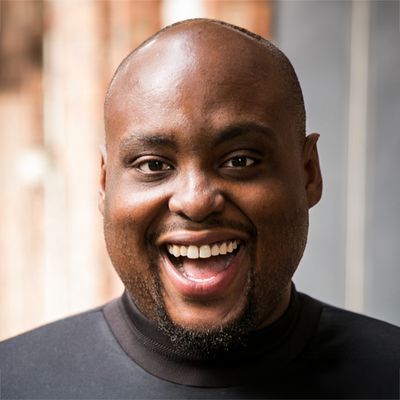
Major Attaway has over 20 years of experience as an entertainer, actor, singer, and voiceover artist, and may be best known for playing the Genie in Disney's Aladdin on Broadway for the longest amount of time (three years)... Read More
From the show: The Theatre Podcast with Alan Seales
Guests
Featured Shows

About
Major Attaway has over 20 years of experience as an entertainer, actor, singer, and voiceover artist, and may be best known for playing the Genie in Disney's Aladdin on Broadway for the longest amount of time (three years). He also debuted in Mack and Mabel as Fatty Arbuckle at NY City Center Encores in 2020, and his regional credits include Hot Mikado, Hands on a Hardbody, Little Shop of Horrors, and Ain’t Misbehavin. An accomplished Voice Actor and Twitch Streamer, Major has lent his voice to numerous projects including One Piece, Bread Barbershop, Fairy Tail, Battleborn, Borderlands 3, and more. He can be seen in an upcoming HBO series as well as in The Netflix original series Orange is the New Black, and is currently revamping his Disney based cabaret show, Genies Jukebox, for an upcoming 54 Below performance.
Major shares how singing led him to musical theatre, and the life lessons he learned as a child while performing at Casa Mañana Theatre in Ft. Worth, Texas. He chats about continuing his growth as an artist through voiceover work, and how he gets into character for those roles. Major also talks all things Genie on Broadway, as well as his cabaret, Genie’s Jukebox, where he delves into Genie's life before/after Aladdin by exploring questions like: What if the Genie had villain friends? - Maybe he used to be friends with Ursula. How does Genie spend his free time? - Maybe he takes magic courses. Major calls the show a combination of his dream of being a Disney villain, and a love letter to Disney.
In this episode, we talk about:
- Working on the Netflix Pokemon movie
- Finding peace in art
- Receiving his first standing ovation
- Standbys and swings as unsung heroes
- Being the voice of NuCalm
Connect with Major:
- IG: @majorattaway
- Twitter: @majorattaway
- Facebook: @BigTexGenie
Connect with The Theatre Podcast:
- Support us on Patreon: Patreon.com/TheTheatrePodcast
- Twitter & Instagram: @theatre_podcast
- Facebook.com/OfficialTheatrePodcast
- TheTheatrePodcast.com
- Alan's personal Instagram: @alanseales
- Email me at feedback@thetheatrepodcast.com. I want to know what you think.
Thank you to our friends Jukebox The Ghost for our intro and outro music. You can find them on Instagram, Twitter, and Facebook @jukeboxtheghost or via the web via jukeboxtheghost.com.
Transcript
This transcript was automatically generated and might contain errors.
[0:00] Alan Seales: Welcome to the Theatre Podcast. Intimate, personal conversations with the industry's biggest names. I'm your host, Alan Seales, and our guest for this episode is Major Attaway, who has the title of the longest genie in Aladdin history. Well, that sounds weird. He has the title of being the genie for the longest amount of time in Aladdin on Broadway's history. He started out as the genie's standby, which lends itself to a conversation that you may or may not have heard about that's been going on in theatre socials these days about the importance of swings, standbys, and understudies. Of course, we address that issue head on. And he's got this new show, coming to 54 Below on January 31st here in New York.
It's a take on, well, it's a new take on genie in his show. And kind of ask yourself, who would the genie's friends be if he had villains as friends? I'm not going to spoil anything else, because I'm just going to drop that for you right there to think about. Find me online on Instagram and Twitter. Show your support at thetheatrepodcast.com Patreon, P-A-T-R-E-O-N. And now, everybody, please enjoy this episode with Major Attaway.
[1:38] Alan Seales: Today's guest has over 20 years of experience as an entertainer and has the honor of being able to claim the title of being the person to play the genie in Disney's Aladdin on Broadway for the longest amount of time, three years, if you're wondering. He's an extremely successful voiceover actor and TV actor currently touring with his Disney-based cabaret show called The Genie's Jukebox, stopping here in New York City on January 31st at 54 Below. Major Attaway, welcome to the Theatre Podcast.
[2:05] Major Attaway: Thank you. Thank you for having me. How y'all doing? Hello, everybody.
[2:10] Alan Seales: Oh, hello, hello. And how are you, sir?
[2:16] Major Attaway: Oh, my goodness, I'm good. And one of the things, I just got to dive straight into this. There's always like one thing I'm pulling out of people's bios when I'm when I'm talking to people that I haven't met before. And my kids are so into Pokemon. And I know that's one of the voices you do.
[2:27] Major Attaway: Yes. Yes. I joined the ranks of the almighty Pokemon just this year, actually. I play three different characters in the newly released Pokemon movie that is on Netflix, which is Secrets of the Jungle. And I voice two different Pokemon and as well as a human who's on the bad, the losing side, if you will. But I voice Zarude, the one who is second in charge, the one of them who is second in charge, the sub alpha. And also, Buldor in that film, so a little rock crab Pokemon, so you've got a nice low voice.
[3:17] Alan Seales: Do you find that you're mostly cast as the bad guy? Why do we stereotype bad guys as having low voices?
[3:22] Major Attaway: Look, man, I'm not sure. Well, the truth is, I don't mind it, to be honest. Well, I see. Well, not only do I cast as the villain, but also like the opposite, really a lot of military authoritative type types. Yeah. But I don't mind the villain, the villain thing at all. And the reason is, I think there's a lot of value in playing a good villain, you know, without a good villain. Then what is Hercules going to do? Right.
[3:56] Alan Seales: So this then I mean, I think this is a great way just to jump right into the genie's jukebox because tell us, tell us about the genie's jukebox. This is like alternate reality sort of thing here.
[4:05] Major Attaway: Multiverse. Multiverse. Yes. Yes. Yes. It's the genie verse, if you will. So I, I want to be a Disney villain, you know, that that is separate from the fact that I got to play the genie in Aladdin on Broadway. And the fact that I got to do both got to do that means, you know, I have a, a venue to open that up. So essentially I was in Aladdin and I had two standbys. These were guys, these are guys who, you know, could both are just as capable as I am, but we can't do the show together on stage normally. Right. So I wanted a way to be able to celebrate the amount of work that we put into to get to play that role as well as a chance for us to sing together. So the first time I did the genie's jukebox, I was the three of us and we, we all sing together and we did, we made sure that there were no solos because this was about the camaraderie and the brotherhood that we had developed and created.
And this is the, the next generation of it, essentially. We're going everywhere to celebrate this energy. This is essentially, you know, one of the best, arguably the best role written for the big black man to date. I want to, to live in that energy and okay, I'm getting ahead of myself. So yes, you're right. It is a different version. This is a combination of my, my dream of wanting to be a Disney villain. And kind of my love letter to Disney in a way, you know, if you consider the jukebox, the planet, then every album in that jukebox is a unique genie's jukebox performance because each of them is catered to that event, that time of year, that person's happy place, all of those things. And so this first show that's happening at 54 Below is my bid to become a Disney villain and also a description, an example of what the genie's jukebox is meant to be because of what I would like the, I'm sorry.
[6:15] Alan Seales: I was going to ask, do you play the genie as a villain in this show?
[6:23] Major Attaway: That's a great question. No, not necessarily. You get my idea of it. So it's not, it's not, he is a villain. It is what if the genie had villain friends, you know, who would his friends be? What, in what ways are, is he connected to the other magical beings in the Disney universe? That type of thing.
[6:47] Alan Seales: Okay. So I give me, give me a little bit of like one of his friends that he's got, because I'm, you know, the genie is in our heads, in our minds because of Robin Williams and James and Roe Iglehart. When you're looking at the onstage and the movie, you've got a preconceived notion of this dude just wants to be good. And he like, doesn't want to be Jafar's genie. He wants to be Aladdin's genie because inherently he's a good dude, but like, he still has to do the wishes, even if they're bad wishes. So what if you get, I mean, are there bad genies that do good wishes and good genies that do bad wishes? And I mean, we're, we're getting in all sorts of metaphysical stuff here. I know, but I love it so much.
[7:28] Major Attaway: Oh, so what you've just done is add to the repertoire. You just added something else for me to think about. I love that. Oh my goodness. Uh, well, I mean, I guess, I guess I'd say where I started was which people would it make sense for him to simply be associated with, right? Because he can be anywhere and everywhere. What, how would this genie spend his time after he's free? You know, we don't get very much of that. So maybe he goes to hang out with Dr. Facilier, you know, maybe they taught each other a few tricks of the trade, right? Maybe, maybe he is friends with Ursula from another time. Like, I imagine that we could say on, on, on any given Saturday, you know, the genie may go say he had to brush up on his skills.
Like I used to be a massage therapist, right? And you have to re-up on your license. You have to go and take more classes. What if genie shows up to a magic course? Because after 10,000 years in the lab, you know, you might get a little rusty. So we may have, we may have them in a classroom setting where we talk about, well, who does he become friends with? But then what time period is it? Is he young genie? Is he old genie? Because even at 10,000, if he lives to be a million, you know, then that's a young genie still. And so we should have them in class together.
[9:00] Alan Seales: I was gonna, I was gonna make a joke earlier, but then you actually brought it in. I was like, Ursula and genie went to, went to genie college together. And so like, maybe, maybe they dated in, in college. And then all of a sudden they went down different paths. And you know, so now genie's like, oh man, Ursula, like I could tell Ursula was, was getting into some trouble. We, we didn't, we didn't work out, but she just started, she had this temper and couldn't deal with other people's voices. She had this queen complex. That's what she hated. She hated on me because the voice sounded like it did. Right.
[9:34] Major Attaway: And then we dated Elsa and you know.
[9:41] Alan Seales: Yeah, Ursula, Elsa, maybe get a little, a little Flynn writer in there. You know, it's, it's, it's a fluid man. It's fluid.
[9:45] Major Attaway: He is, he would be, that's true. That's right. We don't, we don't have any clue what genitalia the genie has or what his preference would be. He doesn't need that to grant your wishes.
[9:55] Alan Seales: Or maybe he does. He's got a different kind of podcast.
[10:03] Major Attaway: So you grow up in Dallas, Fort Worth, Texas. Dallas, Fort Worth, Texas area. And I, I know a lot of people actually that came out of Texas and ended up on Broadway. What is it about that area and you specifically, like what got you into, into jumping and dancing and singing and acting and everything?
[10:15] Major Attaway: Oh my goodness. Well, you know, the, the, the cliche is real. There must be, must be something in the water down there. You know, people from zip codes very close to mine are doing great things as well. I found peace in, in art early. When it, when it came to performing, I sang first, I would say I sang before, before anything else and had to find theater. Once singing wasn't enough because I started to sing in church and then moved on to the Texas Boys Choir. But I needed to do more. I couldn't stand and sing all day. I said, I need to move. I need to wiggle. So I ended up going to Casa Manana where we started doing theater there at a very, very young age. And I was a large kid. So the, the way my life worked, worked was I could spend all day at the theater because my middle school was also the adopted school of the local theater.
So I could spend my time there and wouldn't get counted absence from absent from school. So I would be spending the day with New York actors who had come down to do work. And I was always double cast as well because I was a large kid. So there was no other kid to fit my costume. So I got to spend a ton of time with, with these, with these working adults early on. And I mean, that's a lot of, of what helped it, you know, gets realize how to do the, the work itself, you know, past the passion. You know, I was, I was with people who were paying their bills with theater early on in life.
[11:56] Alan Seales: So I could see what it meant to them to, to make that job work and things like that. I guess I didn't quite answer your question today.
[12:02] Alan Seales: Well, you were around it. I mean, you sort of did because you were around it and, and that, that exposes people in a way that some people just don't get. Like I got into theater because my parents specifically didn't, my mom was a dance major and my dad sang a little bit, but when I was a little kid, I watched VHS tapes that they would watch at first. And then they became mine of music, man singing in the rain and West side story. So if I didn't know about that genre, I wouldn't have ever started to even explore that path. Right. And so like, if you're, if you're around someone who's a classical musician, then maybe you get into, into string instruments because that's what you see in front of you all the time.
Or, you know, like this, this goes into the larger conversation about representation, right? If you can see it, you can be it. And as a kid, what you see is what's put in front of you. So yes, you sort of answer, you answer, answer my question a little bit in terms of how it got to you, but I want to go, I want to go deeper because I love, I love the science. I love the science of the emotion behind it. Like I want to go deeper with you.
[13:13] Major Attaway: Yeah. Yeah. Let me start again then. Then well, to go back to the peace moment, cause that's, that was the initial, the beginning of it. Right. Expectations. Let's start with that. So before I would sing and after I would sing, I would have to listen to people's expectations, you know, uh, before you can sing it's, Oh, you can sing, you can't sing, or you can sing, sing for us. And then I sang in their quiet.
[13:44] Major Attaway: After I sing, it's, oh, wow, you can sing. You could be the next. Oh, man, you could sing. You know what you should do? Even though I'm not a singer, but here's what you should do with your career. And, you know, being eight years old, that was a little much. What I realized is that that level of peace, that serenity, it was more than just for me. Like, it's what I wanted the most, which is why I wanted to sing. Let me sing wherever, for whomever, it doesn't really matter. But at the same time, it was purposeful. I could tell that it did something, you know, that it touched people in ways that even if I couldn't understand it or even disagreed with, you know, like, well, it did that. So that was the beginning.
What that connects to is the first time I saw a Broadway show. I did a lot of theater, a lot of singing, a lot of music everywhere. But when I saw The Lion King for the first time, that's when it clicked. That's when I said, oh, this is what I'm supposed to be doing. Like, when people treat this passion I have like a hobby, that's not a problem because these people understand. These people wake up every day to do the same thing over and over again because they're supposed to be doing that. Great. I needed to see that. I really, I needed that confirmation. How old were you when you saw The Lion King? I want to say 10. Oh, so you were like young, young. Yeah. Yes. Yes. Yes. Yes. 10 or 11 or 12.
I need to do the math because I know the year I was born and I think it was around 2000, 2001 when we saw the Tony Awards as well. But Aladdin was the, excuse me, Lion King was the very first show I saw. Ninth row on the aisle. I can still point out the seat and it is the exact same place that I got to play the genie every day. Oh my goodness. So that was huge. I used to give a little love to that chair every single performance. Really? Oh, you got to. You got to. Just like when every kid is there? Right. And so usually it was somebody's grandma, but she still got the love. On the aisle seat, yeah. It's probably someone's grandma. She had to go to the bathroom quick. But yeah, that's what I would say.
[16:03] Alan Seales: That's so cool. I love these touchstone moments when you look back at your childhood of when somebody, they're looking for something. I feel like everyone in life, we're looking to belong. We're looking to, even as adults now, we need to embrace this inner child. And the inner child needs to be loved, needs to be accepted, needs to get affirmation. They need to feel good about themselves. But then there's the societal pressures of getting a job and being responsible. And if you're a parent and life is different for everybody, depending on what the color of your skin is, and you got to take all this stuff into account. While at the same time, everybody's the same on the inside. They just want to be loved. You know what I mean?
[16:59] Major Attaway: Right. Just want to spend most of the time looking for joy. And so Disney, this is where I'm going with this. Disney. Disney, this is why these mofos are so good in what they do, because regardless of who you are, what age, they allow you to experience things and be okay and be accepted to reliving magic. Right? Yes. And they're pushing forward science and tech to bring that magic back to kids again in more realistic ways. And I love the circular nature of all of this.
[17:32] Alan Seales: I do too. I do too. That joy, that nostalgia, I feel like it defines my Broadway career to date. It is a lot of the reason that I created the Genie's Jukebox. It's because there's nostalgia that I felt like celebrating that I don't hear anyone else celebrating. It's that simple. And so I was like, oh, if I want to do a cabaret show where I sing a song from The Rescuers, because it meant that much to me, I get to do that.
[18:13] Major Attaway: You know, so it goes west. Exactly.
[18:19] Alan Seales: The hits. So I totally agree with you. The value of it is so high, in my opinion. It's why I do this work that I do. That's what I want to chase all the time. And I'm totally fine with that. When you were doing Genie, and to do a role like that for three years, man, that is a marathon that, God, I mean, respect, mad respect for that, because that's a hard role to do. The feedback that you got from children versus adults, because again, this is going back to Disney. This is going back to something that everyone comes into this show. I can't imagine there would be anyone who comes to see the show who hasn't seen the movie first. And so they come in. You raised your eyebrows. It's a small number, but some.
Right. So the majority, the vast, vast majority comes in with some sort of preconceived notion. They want you to be something that means something special to them, right? As an adult, I guess. Maybe some of the kids haven't seen the movie, but I guess where my question in all of this is, thinking back to your time getting feedback at the stage door when there used to be stage doors, damn COVID, when there used to be stage door experiences, used to get this feedback in person, was it kind of universally the same when you would talk to people after the fact? Or was it kind of different depending on the age or culturally?
[20:04] Major Attaway: Wow. Yes and no. Okay. So with the kids, you get the honesty in that moment. If that magic was real to them, it's still real when you come outside, period. Right. When it comes to the adults, with the parents, it can vary a lot and it can get awkward, but not in a bad way because I remember the stage door energy. And I should have started by saying I love the stage door. I learned as many lessons there as I did on stage without coach or in any classroom ever to learn about theater. That energy there is so pure that I think there's just some wonderful, wonderful life lessons to take from it. So with the adults, you feel like you're kind of getting, like you can kind of see the child come through.
Right. Like whatever their response is, either I didn't... Some dads say, I didn't want to see this show, but you changed my mind. Or this is my first Broadway show ever. Or I remember one woman moved me. She said she hadn't been able to watch the movie since Robin Williams had passed away. Wow. And what I did for her was remind her of the value of that joy. She had been settled in that grief, but that was never the point of it. And so I got to open that door back up for her. So yeah, it varied from person to person, but it was always, I don't know, it was always welcome because the fact... The idea that you came around to that door to say anything to me is a win in my book. Because that means that that experience was as powerful for you as it was for me because I had to give it to you.
[22:02] Alan Seales: There's a couple of things that you said that I really love and appreciate and that sets you and your peers apart from others who may never get to experience a Broadway show or perform on a Broadway stage. And when you're doing something eight times a week, for one or two weeks anyway, it could get repetitive, but you're talking again, we're 150 something weeks, right? We're three years. So to come out every single time and make it fresh and unique every single show. And you said something earlier about that one seat, you remember the seat you were sitting in and you give that one seat love because you never know when it's someone's first time seeing that show. And when you've just created that magic moment for them, that they carry on and become the next you, become the next any other idol that they see. You have to serve the moment.
[23:02] Major Attaway: Yes. You have to serve the moment. I could be funny by myself at my house, right? Don't care if my cats laugh or not. I know it was a good thing. They always laugh. That's not what it's about. I had the honor to be people's first Broadway memory. Like what? The curtain opens and it's major. And that's full of so much because there were some days you could hear audible groans. I was a standby for my first year, right? So whenever I would go on for James, when people are there to see the Tony winner, the curtain opens and they go, oh, that's not him. Can you imagine? I'm there to do, like any actor who wants to be in a Broadway show, you should also take that into consideration. And that's going to lead us right where I know you want to go, which is the understudy talk.
But that's exactly it. I would be ready to fulfill my lifelong dream of doing this. And then I open that. I know when that curtain opens, I'm going to be burned into someone's memory as their entire representation of this thing called Broadway. That's so much bigger than me being tired today. I'm part of this legacy. Even the stage that I'm standing on, right? There was a time where I couldn't have come in the door that I get to come into. Give me my feelings. But I'm like, that's huge, man. Today we're recording Sidney Poitier. Thinking of people who are making history, right?
[24:49] Alan Seales: Oh, he's a king. Like the first king of cinema for me.
[24:55] Major Attaway: Yeah. I mean, I'm with you. I'm writing this with you. I'm actually, look at him. I got goosebumps hearing that story that you were just talking about, because you're creating this legacy. You're part of the history standing on that stage. And I remember the first time someone brought me onto a Broadway stage afterwards. It was a friend who was in a cast, right? And they brought me in, and they were like, you just stand here and wait for your friend to come out and whatever. And I took that moment right there. I was like, this is the first time I am ever going to stand on a Broadway stage for the first time. And I looked out at the house, and I had this one moment where I pretended. I was like, what does it have to be like to have a standing ovation that's coming at you? Because you created that moment. You created that energy that has made people laugh and cry and go on this journey with complete strangers.
[25:53] Alan Seales: I'll never forget the first one, man. I'll never forget it. It was so surreal. And it was more, it wasn't the end of the show. It was the end of Friend Like Me. It was the first time that I finished Friend Like Me on Broadway. That sound, that applause, it was like the most gentle rain you could imagine. It was like a culmination of a lifetime of energy. A lifetime of never seeing what Saturday looks like because I've been doing two show days since I was in middle school. Yeah, it was like, even if my journey is finished today, you did what you said you were going to do. Because I claimed it. I claimed my chance to be in this cast. And I'll never forget. I'll never forget that first process and all the anticipation and just being able to thank myself, really. You're always busy thanking everyone else who got me to where I am, which is necessary. But for those 30 seconds, it was like, oh yeah, you did it, son. Pat yourself on something because you did it.
[27:17] Alan Seales: We're going to take a short break. Stay tuned for more of the episode.
[27:27] Major Attaway: The attention that understudies and swings are getting right now on standbys are unsung heroes of the industry because I mean, I cannot stand and I've never understood the notion that an understudy or swing or a standby is not as good as the principal who's there doing it or an alternate, right? Correct. Because there's many different reasons why people get cast in different roles and whatnot and everyone's got a career path, everyone's got a trajectory, and you have some of the biggest, biggest, biggest names in the industry now who started out as swings, as standbys, as understudies.
[28:14] Alan Seales: Exactly, exactly.
[28:22] Major Attaway: I think the way we look at it is skewed, it's upside down, you know? Maybe the formula needs to change where the pride doesn't come in exhausting yourself from doing eight shows or something, you know? Maybe that's it so that we understand that the vehicle that is theatre for like, if you know all of the terms, you know, the show must go on like that. That shouldn't be at the expense of the value of the human who is making the show go on, you know?
[28:48] Alan Seales: Right.
[28:56] Major Attaway: And for me, I lived that life. I lived that life in a very strong way, you know? People bought a ticket to see a Tony winner and then it was Major's first Broadway show ever. But at the same time, it's like, guys, I spent 20 years doing the work. This spot, this area, while it is hallowed, yes, the work is still the same, you know? I've been working on this mind, this imagination so that I can do this job anywhere, at any time, at the drop of a hat. And so much so that they trust me to uphold the responsibility of this entire piece, you know? The stakes are so high. Like, there were times where, you know, you had to go on with 15 minutes notice.
[29:40] Alan Seales: Yeah.
[29:47] Major Attaway: Dipping my head in glitter and putting Swarovski crystals all over my body, and these people have the audacity to be disappointed. Like, I'm giving you everything I got out here. People have the audacity to be disappointed. Like, come on! And for me, it's such, really, the idea of that is beautiful. Like, the show is going to happen either way. Someone is ready at all times to make sure the story gets told. Like, we should be honoring that. And Swings, are you kidding me? Like, I was a standby. I covered three roles. My friends covered eight, nine, 13. It's like, let them do their job. And you, if you don't know exactly where to go in each of those different 13 tracks, you can literally get physically damaged by set pieces.
[30:35] Alan Seales: Yes.
[30:44] Major Attaway: Kicked in the head by a high kick. You know? Like, this is literal high stakes. Sometimes, I mean, when you've got trap doors, and you've got turntables, and you've got hydraulic set pieces coming in and out. That stuff is for no person. This is the professional theater circuit. Now, there are a lot of issues, right? But this is the top, and we have to deal with what we have here. But this is the top. It's like you buying a ticket to go see the NFL or the NBA or the NHL. Come on. We're at the top of our game, and we have to be. They have to be. So, yeah, I feel a way about that. I think anybody who has the chance to step into a theater space and work in one of those moments and uphold the show, y'all are right in my book.
I mean, I don't hear from anybody. I mean, you audition like everybody else. You get cast alongside everybody else. And I think it takes just as, I mean, it obviously takes just as much talent to do the role, but I think it takes more. It takes an extra amount. You got some extra knob that you got to turn up to be able to be okay and be functional, like you just said, going in with 15 minutes notice. Or I've heard stories of literally people going on at intermission. There was a story I heard of somebody in Come From Away the other day. Somebody wheeled, like they had food poisoning, so they wheeled themselves off, and then their standby got in a chair, because they were in a rolly chair, literally sat in the chair, rolled themselves back on.
[32:20] Alan Seales: Brilliant.
[32:20] Major Attaway: Most of the audience didn't even notice.
[32:22] Alan Seales: Brilliant, brilliant.
[32:23] Major Attaway: In the middle of the show. So this stuff happens all the time. And I actually really, really love seeing understudies, and I love seeing different combinations of casts, because, I mean, most of acting is listening. It's being a good listener. So when you're listening to the way somebody else who you're not normally used to receiving from, or not usually used to being on stage with, they're going to give you a different performance. They're going to cause you to have a different performance. And then somebody else who's watching it for the 10th time might say, oh man, Major was really, really on tonight. I wonder what that is. Oh, because it's Aladdin's understudy. That's what happened.
[33:08] Alan Seales: That's it. Tell the people. That's exactly true. You're getting to see lightning in the bottle when you see someone's understudy, someone's backup, because you could also be witnessing the birth of another star. It's happened before, then that understudy goes on and then that's their job.
[33:28] Major Attaway: Yeah. Oh gosh. I just love it so much. And also because for me growing up, that wasn't a thing. Like I said before, I didn't even get double cast as a kid. So the respect that I have for anybody who is supposed to sit back and learn what I do in case I need help, come on. Planned help? In the theaters that I, early on growing up doing theater, if you were sick, you were just sick. You ever had this thing, rent with a cold? Then you get everybody else sick. You get everybody else sick because you're like singing in their faces and touching their rent because we're sick.
[34:10] Alan Seales: One of the voiceover gigs you got, you're the voice of New Calm now. And part of the bio that I was reading was like, you're biohacking your way to owning every day with New Calm. And I guess the owning, right? Being present, being available. I'm giving New Calm a free plug here. But I guess where I'm going with this is, I love how your extracurricular work outside of the Broadway stage, right? Because you're a very successful voiceover artist in games like Borderland, and we're talking about Pokemon, and we haven't even gotten to your Twitch streaming yet where you're streaming in character.
[35:01] Major Attaway: Right there, you see it?
[35:02] Alan Seales: Yep, yep. I see it behind you. So all of this comes into, I guess, my question is, how are you maintaining your day to day? And now that you've gotten this one gig, you're the voice of New Calm now. So now that you've got this one gig, has that flipped the switch? Or is it more of a fader that's shifting over as you're more trying to be present every day, as you're, like you're saying, owning every day more and more? Do you notice a difference in who you are now versus who you were yesterday, last month, last year, previously?
[35:39] Major Attaway: I love it. I love it. I love it. Yes. Let's see. Where do I start that answer? I had a bit of an identity crisis, I guess. That's a strong way to say it. But after leaving Aladdin, I had to sit and think. And especially with 2020 shutting the world down, this forced me to think about this. Who am I outside of trying to be other people on a regular basis? And you spend 20 plus years auditioning and asking for permission to live in other people's lives for periods of time. So I had to sit and think, who is this guy who is major? And what are the things that he wants to accomplish based on the fact that you dreamt of doing this one particular thing, envisioned it, it happened, you achieved it. So now you have to sit with this power that you didn't realize you had.
When you set your mind to something and you see this thing happening, you are actually capable of attaining it. You can't deny yourself that because you did it, right? So I discovered New Calm while in Aladdin. I found a place called Recover, and I would go to this place to recover. And they had this scientific piece of work called New Calm that affects your brain chemistry. It takes you to the proper wavelength that you want to go to automatically. So alpha, theta for rest and recovery and things like that on a cellular level, right? Fell in love with it. And then 2020 happened and then Recover closed and I was offered a position with New Calm, a creative position. And it ended up me turning it into me being the voice of the company.
So on the app, when you download the app, I am the tutorial voice and I will be doing multiple things moving forward with them. But I'm also a super fan of the product. That's how it started because I had issues relaxing in between genie shows, the adrenaline pumping, you would stay up all day and then be hard to make it through to do a two show Sunday as well. So how that all connects is that I had to evaluate the energy I had spent doing eight shows a week. The way that the skills were refined and sharpened and now I wasn't doing that. So it was about leaning into my versatility. How do I continue my growth as an artist, but also acknowledge that I spent so much time doing the same thing and trying to get better and more efficient at that same thing.
It's like, okay, well, how many different things does that apply to? To the voiceover work, right? To the Twitch channel, which is connected to the voiceover work. The reason I started the Twitch channel is because I enjoy the video games, enjoy playing them as well as enjoy being in them. So why not put them together? And also I was a massage therapist before. What I used to do was take my massage chair and tables to the theater that I was doing a show at that evening and work on the people who came to the building and things like that, whatever I needed to do. So my mental well-being was still very important to me. And I was also told by a theater teacher that theater should be therapeutic, but theater should not be your therapy.
[39:30] Alan Seales: It's like, oh my goodness, has it been my therapy?
[39:30] Major Attaway: So all of that connected was, well, Major, how else would you fulfill this energy to grow, keep learning new things? So now learning to be my own engineer, learning to run all of the tech that comes with the Twitch channel, and also none of that has to do with the rest of this talent still slides into the TV and film world. I only had so much time to do those auditions and now I have a lot more. Now I can do all of these different things that are all the same energy as the theater that I've been doing for so long. And I just get to lean into it and enjoy life. And I get to do the exact opposite. If there was some monotony to doing the same character over and over again, now I have so many different things that are all coming from the same energy that it can help me stay present and grateful for the fact that I've gotten to where I have, and also grateful to be aware of the value of the growth and to not be afraid of that.
[40:48] Alan Seales: I'm letting that sink in for a second. It's similar to answers I've heard talking about how people have had to look inward and reflect during the pandemic, because again, your peers, you and your peers at the top of their game are just always, while you're doing your eight shows a week, you're looking for your next job because you never know when the job you have is going to go away.
[41:11] Major Attaway: And the emotional stress of that takes a toll, but then when you can't have it at all, like you said, who am I? What do I do without this? Without this struggle that I complain about all the time and I wish wasn't there, now that it's not here, what? What's going on? It allowed me, I love that, it allowed me to recognize how much control I have, or rather to go after what I do have control over. Auditioning was my favorite part of the job because I felt like I had the most control in that situation. I'm not there to ask for permission for a job, I'm there to negotiate whether or not my art fits with your art and we're going to do artsy things together.
[42:03] Alan Seales: Yeah, you made me think of that because that's what I tell the youths when they ask me about auditioning for Broadway and things like that, or auditioning in general.
[42:09] Major Attaway: Yeah, it was, Michael Urie told me once, he said, when he goes into the audition, you can't go in with the mindset of, I got to get this job and if you don't get it, you lost it. It was never yours. You got to go in and just have fun, make your choices and be you, bring your authentic self to that role, to that audition, to that space and that time. And then if you didn't get it, you didn't lose it because you never had it in the first place.
[42:41] Alan Seales: Exactly, exactly. Yeah, and I'm okay with the idea of that not being so straightforward. Like, no, you don't go in and win or lose a role. You go in and you affect the people in the room, that's it. Because I would much rather, rather than stress over that one particular moment, I would much rather walk into a room, audition and like, oh man, I didn't get that, leave, but then get offered something that they saw on you. They see you and they're like, oh, he'd be perfect for this and they just give you that. You ever think about it? I was like, that's what I prefer. So that's fine. That's a great way of doing it. It probably happens to a lot of people where you go in and you're like, well, we really liked them.
They came into audition for such and such, but we want them. They're not right for that role, but they're so good that we're going to give them something else. And I've heard similar stories like that, where people have actually had complete roles written for them because they came into audition for one part. It wasn't right for them, but the crew, the creative team loved them so much. They're like, we got to work with this person.
[43:51] Major Attaway: Yes, you went right where I was headed. That's exactly it. It ends up getting you your own original role in the show. I love that.
[43:57] Alan Seales: Mm hmm. And then other people then have to look up to you and they want to be like you. And then all you did was go in and be present in the moment. I loved it. Dude, that's great. That is so cool. That's so cool. Going to voiceovers real quick. I want to know. Well, I guess there's a voiceover part and then there's running your Twitch channel, which you do your live stream in character?
[44:16] Major Attaway: No, I play as the character.
[44:20] Alan Seales: Oh, I understand. You know what? I need to work on that wording because what I mean is I'll play the character on the game.
[44:27] Major Attaway: Do a stream in character. Now I will respond to people, you know, if they ask nicely and depending on the situation I'll do things in the character's voice, of course, but to just sit in character, I mean, that's as hours of that. That's what I was saying. I was like, dude, I mean, I was going to like, you know, give you mad properly. You just sit there and you're like, what's going on?
[44:56] Alan Seales: Yeah. I got a headshot headshot. Yeah. It's cool to have a character who is exactly that. But like, if I was in one game, I play a character named Discari, the demon Lord of locusts. That's almost when I changed my name to it's a game called Pathfinder, a wrath of righteous. And this man has bugs crawling out of his mouth as he speaks. So no, I couldn't, I couldn't do that. How did you audition for that? When you walk in talking about auditions, going back to that, how do you go in and audition for a guy who's got bugs crawling out of his mouth?
[45:39] Major Attaway: Do you know who's your favorite Ralph?
[45:45] Alan Seales: Sometime I do. I did. I did. Actually I did. Oh, let's see. Cause his voice is kind of like, he speaks slowly. You feel the peasant, that type of thing.
[46:01] Major Attaway: And so I was like, oh, if things are falling out of his mouth or he's, you know, he's towers over the character and things like that. So, yeah.
[46:09] Alan Seales: Do you, did you ever take any voiceover class formally, or is this something that you sort of fell into? Cause I just watching you do that right now, there was such a small, a subtle change. You're curled, you're curled your lip chin and that's all. And, but then that just changes the entire way that the words come out. And it makes me want to talk more slowly because I'm thinking about my lips moving. That's right. Do you fall into this naturally or where did that come from?
[46:40] Major Attaway: Well, I mean, it's a little bit of both. I mean, I'm always a student. I'll be a student forever. Right. I would say when it comes to voice acting, I try and get in the head of the character, which determines how his voice sounds. You know, I don't try to create a voice. I think, oh, I just am this thing. And then I start talking and I'll adjust to be able to maintain it. Or, you know, you adjust for the type of situation it is, whether, you know, whether you're a calm character or whether you're in a video game and you're a calm character, and then you could be calm and then you're still shooting people. But I would say the majority of it came from all the theater. You know, I did theater nonstop.
So it was that I felt like I was always in something. When I used to schedule this back in Fort Worth, I would write out a schedule and I would show it to my mom and be like, okay, here's what we got. I can do these six shows, right? There's a role for me in all six of these shows, but these two shows overlap the dates. So I can't do both of these, but this show is this far from the house. So I'll lose this much money if I go do this show. So I made sure that I never stopped. I just made that work. So that's where I would say most of it comes from. But I'm getting back into classes though. It's so much fun to be where I am now, right? To not have to prove that I can do the thing, but to just work on getting better at it.
Oh, it's just crazy exciting. I never thought when trying to get better the first time, you know, I never thought about this energy, about this moment to once you actually accomplish something that you wanted, you know, and then you get to get better and work harder. So yeah, the answer is I feel like theater taught me a whole lot. And for me, this is what I should. Well, yeah, for me, where I am doesn't matter. And whether or not someone is watching doesn't matter. So when I first got into voiceover work to naturally just make whatever face I needed to make, to make the sound happen, happened automatically. Because I had done that on stage too. So that's really, I was like, that's the answer. If I, you know, if I need to hunch over, if I need to take my shoes off, if I need to get on my knees to be this character, I do it. I do it.
[49:31] Alan Seales: I love that. I always love watching behind the scenes reels of the professional animation, professionally animated feature, like movies and cartoons and all of these things, because the actors get recorded, their faces get recorded because the animators use that to animate the face of the character. And there's so much you see of some little kind of like facial twitch or a tick or a way someone might curl the side of their mouth, like one side of their mouth when they're speaking or singing that then gets inherited into the way that the character is portrayed on stage. And I mean, it's this whole yin and yang sort of thing, right? Because you can't have one without the other.
[50:08] Major Attaway: I do that all the time. Like anywhere from what you said was like, fix your mouth a certain way or your body a certain way. So it reminds you how the sound comes out, how that person moves. Or I will give an imitation or a version of something that I know very well. That makes sense. Like, oh, my Pokemon character. I don't know if this is something I should be saying what I'm saying. But Pokemon character, the sub-officer Rude is my interpretation of Shredder from Ninja Turtles.
[50:40] Alan Seales: Oh, those insolent turtles.
[50:59] Major Attaway: Yeah, I used to love that growing up. And that was James Avery. Was that his name? Rest in peace. He was the father on Fresh Prince of Bel-Air. Yes, he played Shredder's voice.
[51:14] Alan Seales: So I remember that. Right. But that voice coming out of a Pokemon who can speak English, mind you, in that movie, those Pokemon speak English. Yeah, it gives it a different interpretation. So that's how different voices come out.
[51:31] Alan Seales: I've got three standard closing questions that I ask everyone to wrap up the episodes. The first one just simply is what motivates you?
[51:38] Major Attaway: Empathy.
[51:44] Alan Seales: Oh, I like that. All right. What advice would you give to your younger self and younger people listening now starting out down a similar path?
[51:50] Major Attaway: Wow. Everything feels so cliche. You already have everything you need. A well-rounded life makes for a well-rounded actor.
[52:01] Alan Seales: There you go. And drink lots of water. And use sunscreen. Good Lord. Hydrate, baby. Hydrate.
[52:07] Major Attaway: We don't like cliche things. Wear a sweater outside, says grandma. Drink lots of water, says mom. Wrap a tube sock around your neck if you get a fever.
[52:18] Alan Seales: All right. Last question. Hardest one. If you can only see one show for the rest of your life, but you can see it as many times as you want, what would you see?
[52:22] Major Attaway: What? Are we talking about a Broadway show?
[52:30] Alan Seales: Yeah, sure. Let's go with Broadway.
[52:37] Major Attaway: Oh, my goodness. Oh, my gosh. That's terrifying.
[52:47] Alan Seales: Only one. What has moved me like that?
[52:56] Major Attaway: You know what? Newsies.
[53:03] Alan Seales: Yeah. I mean, yeah. I don't need any death and destruction. I need to be a fine life out there. Tell Jeremy Jordan and Tommy Bracco.
[53:08] Major Attaway: Just recently became friends with Kara Lindsay and Dan DeLuca because we did Jolly Holiday together in Jersey. And I told them later, I said, you know, I did a really good job of not geeking out on the both of you. I love those folks.
[53:24] Alan Seales: I love that. All right. Where can we find you on Twitch, on social media? How can we connect with you online?
[53:28] Major Attaway: Yes, I am at Major Attaway everywhere except Twitch on Twitch. I am I played past tense major. I played major. So when I win, I can say major played me. And all of the information for the Twitch channel and for my upcoming shows in both 54 below, which is also going to be live stream. So there's a link for you to attend the live stream, as well as we're doing another Jeannie's jukebox in Fort Worth, Texas for Valentine's Day. It is Jeannie's jukebox Disney date night where we are celebrating love in all its many forms. All of that can be found at Major Attaway dot com. And then 54 below is 54 below dot com slash major to get tickets to that as well.
[54:01] Alan Seales: You can get more of me at the theater podcast dot com. I'm on Instagram and Twitter at theater underscore podcast Facebook slash official theater podcast. Please leave a rating and a review wherever you're listening now. This has been edited by well-rounded hoodlum productions. Thank you to jukebox the ghost for the intro and outro music. Major Attaway. Thank you so much for being here. My cheeks hurt from grinning this whole time. You are such a delight to talk to.
[54:40] Major Attaway: Thank you for having me. I'm so honored. Appreciate you. Take a deep breath, make the world a little colorful.
© Broadway Podcast Network, All Rights Reserved