

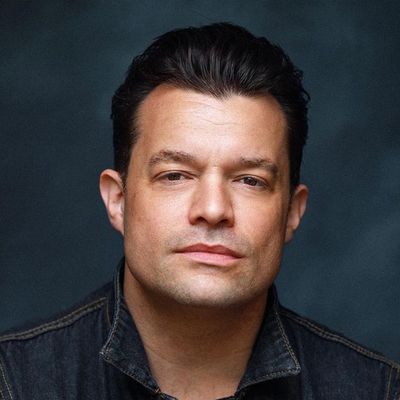
Actor Simon Bailey hails from London, where his career on the West End is booming. He trained at the National Youth Theatre of Great Britain, and his West End credits include Heathers: The Musical, Jersey Boys (Tommy DeVito), The Phantom of the Opera (Raoul), Enjolras in the 21st Anniversary cast of Les Miserables, I Can’t Sing!.. Read More
From the show: The Theatre Podcast with Alan Seales
Guests
Featured Shows
About
Actor Simon Bailey hails from London, where his career on the West End is booming. He trained at the National Youth Theatre of Great Britain, and his West End credits include Heathers: The Musical, Jersey Boys (Tommy DeVito), The Phantom of the Opera (Raoul), Enjolras in the 21st Anniversary cast of Les Miserables, I Can’t Sing! The X-Factor Musical, Romeo and Juliet -The Musical, Pharaoh in Joseph and the Amazing Technicolor Dreamcoat, We Will Rock You, and more. SImon can be seen now in the West End production of Moulin Rouge as The Duke at the Piccadilly Theatre.
Simon reminisces about his experience as part of the original workshop for Heathers: The Musical in London, and shares why it holds such a big place in his heart. He opens up about landing the role of The Duke, why he’s had so much fun building and developing a darker character, and also talks about why he particularly loves the first 10 minutes of the show when he’s able “to look out and see everybody… just completely entranced in this thing.” Simon also reflects on working as an understudy, and why he feels it’s such an important ground to start from and build on.
In this episode, we talk about:
- The community working on the West End
- Attending the National Youth Theatre, and bypassing drama school
- Why being an actor now is very different than it was pre-2020
- His experience as a swing in We Will Rock You
- Creative freedom from Alex Timbers
Connect with Simon:
- IG: @simonbailey1210
- Twitter: @SimonBailey1210
Connect with The Theatre Podcast:
- Support us on Patreon: Patreon.com/TheTheatrePodcast
- Twitter & Instagram: @theatre_podcast
- TikTok: @thetheatrepodcast
- Facebook.com/OfficialTheatrePodcast
- TheTheatrePodcast.com
- Alan's personal Instagram: @alanseales
- Email me at feedback@thetheatrepodcast.com. I want to know what you think.
Transcript
This transcript was automatically generated and might contain errors.
[0:00] Alan Seales: Welcome to The Theatre Podcast. Intimate personal conversations with the industry's biggest names, and the industry includes the West End. Our guest today is Simon Bailey, who comes to us from London. He is one badass looking dude, but don't judge a book by its cover. We actually get into this a little bit, because if you were to pass him on the street, I'd actually think it was like this cool biker kind of dude, but he's just like us. He's a theatre nerd, and he's not afraid to admit it, though. I actually really, really like it. So, super cool guy. Always loved to sing. He found his way into performing in a way that led him down a path that was very unusual, and of course, we get into that. But before we do, find me on Instagram and Twitter. Leave a rating and a review wherever you are listening. I love to read the ratings. They are wonderful. And now we're going to take a quick break, and then come back for this wonderful interview with Simon Bailey.
[1:10] Alan Seales: Today's guest is coming to us from London, where his career on the West End is booming. Recent West End credits include Heathers, which we're going to get into. I love it. Jersey Boys, the X Factor musical, Romeo and Juliet, the musical Joseph, We Will Rock You, Les Mis, Phantom, and about a half a page more. He can be seen now in the West End production of Moulin Rouge as the Sinister Duke at the Piccadilly Theatre. Simon Bailey, welcome to The Theatre Podcast.
[1:36] Simon Bailey: Well, that's quite the introduction. Thank you very much, but there's a lot to live up to here.
[1:41] Alan Seales: Well, I'm just reading what you've done. You've already lived it.
[1:45] Simon Bailey: I know. Do you know, I was thinking, this recent time that we've had, obviously, we've had time to reflect quite a lot, I think, on various things. You know, life has taken a bit of a strange twist for everybody. And I think, partly, one of the beautiful parts about the job that we do, acting, is you're always so focused on either what you're doing, or what you're trying to do, or what your, you know, what your dreams further down the line might be, that you often don't stop to think about what you've done. You know, you just kind of, it's just something that you shelve and you move on from. And, you know, I was, I had just a little moment to think about stuff. And it's been, you know, I've been very lucky.
And, you know, obviously, people work hard at things, but they're very lucky in the shows that I've done, because, you know, these are shows that growing up, you know, I listened to, I loved, I wanted to be in. I was just like, if I could just do one of those, that would just be kind of everything. So, you know, to have done a couple of them is amazing. So, it's nice to hear that list written at the red, red back. It's good.
[2:51] Alan Seales: Well, that was only part of it, too. I mean, the resume goes on. And it's interesting to me that, like, as an American, living in New York and being so immersed in the Broadway world, that I, this is complete naivete from my side of the pond here. And I think, oh, like, I know everybody in the business, or I've heard of them, or I've met them, or whatever the case is, because I live in New York. But there is a whole ecosystem. I mean, in every city, like big or small or whatever, there's this giant ecosystem of actors. And the West End is no exception. And I think Sydney is probably very similar, too. And then you've got Seoul, South Korea, that's, it's got a huge theater industry out there.
And of course, you know, when you get in languages, it's sort of segments. But I love, love, love interviews like this, where I get to meet somebody that I have never had the privilege of meeting before and talking to, who has, I mean, you're not just new on the scene. Like, we read the credits, and part of it, and you've been doing this stuff for decades, right? And we've had interactions with so many of my friends, like, I saw some posts with you and Ramin, and Ramin's a friend of mine, Ramin Karim.
[4:07] Simon Bailey: That's right. Yeah.
[4:08] Alan Seales: And I just, I love peeling back the world, especially here in the US, to expose what's going on in a good way in the West End and the culture out there, and the people and this new, this new, what am I looking for a band of people to follow, essentially?
[4:28] Simon Bailey: Yeah, of course. Because for me, I quite enjoy picking apart the differences in culture and how the UK approaches theater versus America. And correct me if I'm wrong, and I've been talking for a while, so I'm about to shut up, I promise. And that the theater actors in the US are kind of, in a negative way, they're sort of idolized as celebrities and put on pedestals, because I'm looking at, like, social media numbers, right? Just plain social media numbers of following people, and it's just, oh my god, a stage door. You've got Broadway actors that can't get a Starbucks. But I've heard people in the UK, my friends out in London are like, you know what? Like, this is just, this is part of our culture. This is our way of life. These are a job just like any other. So I mean, for the difference from you being in it, and being an experienced West End actor, and of course, interacting with Broadway, how was it from your perspective?
[5:44] Simon Bailey: You know, that's such a really good question. And I'm going to try and do my utmost to answer it. I think, as you'd mentioned, I mean, I started doing this 20 years ago, you know, odd enough, at the Piccadilly Theatre, where obviously social media wasn't even, it wasn't even a thing in any way, shape or form. And the basis of the West End, whatever that's supposed to mean, or does mean, or whatever, it was, you had a group of working actors who are all, you all knew who everybody was. And that's still very, very true now. It's a very small, I like that word you used, ecosystem. We have our own pool. And most people sort of tend to know each other. And that's the world that we know. With the introduction of social media, things obviously took, you kind of took this little fork in the road.
And I don't know the tricks and the skills of social media. I mean, as your listeners will not realise, we had an awful time trying to get on this call, because I'm terrible with technology. But there is, there's definitely a definite distinction now, like you say, between the numbers that kind of pop up and the ones who are kind of broken off and go on to have these huge numbers, and everyone knows who they are and things. But there's still this group who are still, you know, clocking away and doing their thing, and you wouldn't know them from the next man on the street. So I do think there's definitely a big change. Now, I haven't necessarily, well, I haven't done any theatrical work in the States.
So I couldn't really tell you, from my point of view, what those distinctions are from Broadway to the West End. But I obviously have lots of friends of mine who have worked in the States, you know, and you do see that there is that very different approach to two actors on both sides of the Atlantic there. So it's a strange one, really, I think.
[7:52] Alan Seales: Well, do the opportunities present themselves a lot? Because you're talking about the ecosystems. There's a lot of shows that originate on Broadway and then will open in the West End, Moulin Rouge, case in point. And then there's things that do out-of-towns, you call it an out-of-town, or they'll start in the West End and then they'll come to Broadway. And I haven't decided yet if I agree or disagree with this practice. But bringing, completely recasting a show when it's moving, I don't know if I agree or disagree with that, because then you're leaving behind the people who created it, who put their heart and soul into making it, to sell tickets with known names in your local region, which obviously you have to do. You have to be able to sell tickets to keep going. But where's that middle ground?
[9:02] Simon Bailey: Again, that's such a good point. I mean, because like you say, it's the heart and soul. You know, the genesis of a production is in that original cast. And I think you're right. Where do you find this distinction? How can you possibly quantify it? Because like you said before, I mean, so for example, I haven't necessarily been on your radar, for example, but I've been here doing my thing. So if I was to come over and do, let's just say, for example, this version of Moulin Rouge was the first, you know, we had come over and, you know, it's tricky for producers, I think, because you want to have, almost to make it feel like it's homegrown, whatever that means. So you want to have people from that region doing it as that, but also you want to keep the beating heart of what it is.
So I think it's, I think it's tricky because how do you take a full cast over, um, or I mean, in that, in that respect, how do you take it from Broadway to West End to Sydney, you know, how that in itself is quite difficult because you're talking like years, years of time to keep that one same cast. And I do understand what you're saying. And I'm not entirely sure what's right or wrong in that situation, because I haven't really thought about it like that. You know, you just think this great show is coming over. What can I, what can I plan?
[10:35] Alan Seales: Take Heathers, for example, right? Because that that's something that in the U.S., like people have been clamoring for a U.S. Broadway production of Heathers. So, so if that fell in your lap, right, because behind everything, though, there, there you are a person with a life in, in London, right? So you've got friends and family and whatever it is. So it's a personal choice to say, do I want to follow a show to the U.S., then to Sydney, then to tour, then, you know, whatever, like, that's something that, that takes a lot, a lot of, I guess, commitment that to uproot your life and to keep going that I think a lot of people would not have. So, so maybe that's the middle point. You offer it to everybody and then whoever refuses you, you fill it.
[11:19] Simon Bailey: Exactly. Yes. But that's a good point. I mean, of course, because, you know, you know, people with families that then it becomes, you either uproot everybody's life or just yours and then have a difficulty. And, you know, I think that's, that's a difficult middle ground. So I think maybe, yeah, just, just one at all, just, just take and drop. I think that's basically been, that's how it's kind of gone, I suppose. And I do understand it because, you know, how the situation with the families can be, it's always going to be very, very difficult and, and not for everybody. I mean, some people might like it, some might not. So you're right. It's just, I guess, offer it out and see, see what happens.
[12:04] Alan Seales: Well, if we offered you Heathers, would you come over to the States for that?
[12:09] Simon Bailey: Oh, without question. Heathers, I love you bringing Heathers up because this, I mean, Heathers really has a special place in my heart now because I was part of its original workshop in London, which we did for a couple of weeks. It was mind-blowingly crazy. I love the team more than life itself. You know, you have, you know, Andy Fitman is honestly one of the best people on this planet and makes me laugh. I don't remember anyone making me laugh quite on the regularity as Andy Fitman. Um, and of course, and all the team and Larry and Kevin as well, but we came over and this was very clearly their baby, you know, um, the love for that show that those that they all have is genuinely inspiring. So when we were, when we were originally cast in this original workshop, we knew we were part of something kind of special.
And it wasn't until I realized how special when we were gearing up, we were just supposed to do the one, the one performance, you know, just, uh, here's Heathers guys and it will come whenever it comes. But we went out just for, um, just for a little tea break just before we were going to be doing the show. We've been rehearsing and I was walking around, um, walking around to go and get some, some coffee from outside. There was a queue. I'm not even joking. I mean, going time and a half back around the theater. And bear in mind, this, this theater studio only holds about a hundred people or something. I'm just going, you guys need the Palladium for this. This is, this is quite something of people dressed as the characters.
There was so much cosplay there. I mean, and it wasn't, I knew the film. I wasn't, I wasn't that, um, that familiar with the musical. So I was like, how does everyone like know about this? And of course, when I realized I thought, obviously, cause it's, it's.
[14:02] Simon Bailey: Barking mad and beautiful. But there was such a desire for it. And that's why it holds a massive place because I was supposed to go and do the first production as well. But at that time, I'd just been offered Jersey Boys. So I went off to go and do, to play Tommy. And then this is where that love, in a roundabout way, it's all coming right nicely because the first production in London back after the pandemic, well, you know, as far as whatever after the pandemic means, but the first show back was Heathers at the Haymarket. And they very kindly asked if I wanted to resume my duty. And of course I did. And the love for that show is remarkable.
[14:51] Alan Seales: Yeah. Yeah. I love, I've never seen a production of it. I've only listened to the music over and over and over again because I want to start traveling now that the pandemic is at least a little bit manageable. Yeah. Definitely want to travel and get out to London to see it. But, and I do promise we're going to get into Moulin Rouge, but I want to go back to National Youth Theatre of Great Britain because that is, as an American, okay, I'm going to show my naivety again. What is the age group that goes into this? Is it a high school or a university, a college?
[15:24] Simon Bailey: If I remember correctly, I think the age groups, I think it's between 16 and 20. I think that's what it is. It basically, this all stemmed from, from school, school, school for me, not drama school. We, I took theatre studies as an A level and part of that was a practical exam. So you had to perform a monologue and you had to perform a duologue. My duologue was from A Streetcar Named Desire. The kind of very intense, very intense scene, which I'm not looking back. I'm not entirely sure how appropriate that was when I was 17 years old, but we'll gloss past that anyway. But I was doing that and I ended up getting the highest mark that the school's ever gotten in that field for that one performance.
And my teacher at the time, she was like, cause I was not planning on striving for a career in performance at that point. And she just said to me, she went, no, I really think you should, you should consider this because there's obviously something there, which needs to be kind of explored. Anyway, she gave me this form for National Youth Theatre. And basically the National Youth Theatre was just a three-week course in London with external directors coming in and out and a group of actors all basically just exploring. So we would, we would make scenarios out of everyday life, if that makes sense. It was really a basic training ground for training, if that makes sense. So we would work on experience.
[17:13] Alan Seales: Yeah.
[17:14] Simon Bailey: So unexperienced actors would work with professional directors and choreographers and so to speak, before you took that step into drama school. And I thoroughly enjoyed my time there. And it was very, it was very brief obviously. But it was, this is how strange life works because a buddy of mine that I met at the National Youth Theatre, we got on really, really well. He wanted to, he was from Liverpool. Well, he was from Liverpool. He wanted to move to London. He was like, look, let's halve the rent and move to London together. Cause I live just outside London. It sounds like a kind of a condensed story, but it isn't. It's literally how it played out. We moved into a flat in London. He had a friend come to stay with us for a couple of weeks.
This guy heard me singing in the shower. He was like, I think, I think you've got a really good, this is absolutely true. This is how strange my life has been. He said, I think you should speak to my old agent. So I spoke to him, he signed me. And then within a week, I had my first job. Whilst I was in that job, I was rehearsing. I was auditioning for Romeo and Juliet, the musical. And that's when I got, so I got my first West End job at 20, simply through a buddy listening to me singing in the shower. And that was it. I bypassed drama school and just did on-the-job learning.
[19:05] Alan Seales: Well, that explains the rumor I heard that every audition you give, you have to be standing in a shower behind a curtain with the water running.
[19:12] Simon Bailey: Yeah. I started, this is where I was the Genesis of that rumor. You see, I was the starting point. There's some grimy shower curtain, which has many stories to tell, you know, that's basically me.
[19:22] Alan Seales: Well, I just want to also drop like, this is no small feat because National Youth Theatre of Great Britain, a few names that they pumped out, of course, Simon Bailey, you, Helen Mirren, Daniel Craig, Orlando Bloom, Ben Kingsley, Matt Smith, one of my favorite doctors, by the way.
[19:41] Simon Bailey: Yeah, phenomenal.
[19:42] Alan Seales: God, Doctor Who. So listen, you are in good company, my friend. And the fact that, yeah, the fact that it pushed you into where you are now, that's phenomenal. I love, I've got another podcast called Was It Chance? It's with a co-host and we talk with people who basically embrace, just embrace chance and use that and manifest their own positive outcome, right? And so you're sitting here in the shower, like, first of all, okay, I'm going to back up a second because physically, if I were to meet you on the street, right, you've got like, you've got this buzz cut here, I'm going to describe you for the listeners. So you've got all black chains, big rings with like, kind of the skull and crossbones, with a bandana, skull around your wrist, like a giant silver skull around your wrist.
So yeah, I would say like, you're a badass kind of biker dude. That is my initial physical impression of you. Which of course, first impressions don't judge a book by its cover, but everybody does. So I'm not going to be like, holy shit, this guy's a West End actor. This guy is in touch with his feelings? Huh? Right? Say again? What?
[21:05] Simon Bailey: So where does this need, I guess when you were doing the monologue, which then got you noticed, which got you into the youth theater, which got you into the shower, which got you the agent, which got you the job. Where did all of this come from? Because you're, I mean, so Simon Pre-Theater, I guess, okay, I'll stop because I'm asking a lot of questions at one place, and it's early for me, so I'm not formulating these very well. But who are you on the outside versus who are you on the inside? And I guess, what made you want to embrace this chance of all of these opportunities just laying themselves out for you?
[21:32] Simon Bailey: Well, I grew up, my parents were big, they liked taking me to shows. So from a very early age, I was always really into musical theater. It was just something that was always playing in the house. And it was always something that, not always, but as a treat, my mom and dad would take myself and my sister to go and watch Western musicals. So it's always been, I suppose, and this was from early on. I mean, so I suppose it's always been kind of part of my DNA. It's not something that I kind of, when I got to 17 years old, I thought, oh, I should listen to Empty Chairs, Empty Tables on a whim. You know what I mean? It was something that...
[22:17] Alan Seales: Oddly specific.
[22:18] Simon Bailey: Yeah. I know, just to give some context. Yeah, that was it. But there's a reason, I suppose, why that song popped into my head. But it was always something that I was into. And as I discovered singing, I discovered singing at school because I was part of the school choirs and all that stuff. And then that took me into doing the musicals, the school musicals, because it was, I think my school was kind of, you had to be dragged kicking and screaming to do something in front of other people because it's, I mean, like it's a very British thing, isn't it? We don't sort of do that. We like to kind of hang back a little bit. So I think, you know, for kids to be in a musical in school is actually very, it's kind of daunting.
But I was sort of, wasn't given that much choice because I, when I was in the choir, they thought I could sing quite well. So they were just like, this is going to, you're going to be doing this, you know? So that was part of that, you know, to go from that into wanting to do it into, you know, I suppose, sort of the outlook, my own personal outlook is I'm basically like a frustrated rock star, you know, when I started to get, you know, and I'll say this till I'm blue in the face, you know, I think from like 13 or 14, I started to really discover rock music as well. So that was kind of, you know, and I've, you know, I wanted to sing like Freddie and I wanted to, you know, I wanted to be in Metallica and I wanted to, you know, play guitars like that and sing like that. And, you know, so I've just sort of decided to meld the two together and just dress like it, or, you know, like a frustrated rock star or failed pirate and just kind of try to battle everybody.
[24:06] Alan Seales: Fail as a pirate, like, I can't wear this eyepatch. I'm sorry. I give back my pirate credentials.
[24:11] Simon Bailey: Yeah. I either wear two eyepatches or nothing. That's basic. That was my thing, you know? So that was kind of it really. And I suppose, you know, the external kind of say, you know, you know, I suppose being, we were Rocky was fun to pretend to be a rock star and professionally. And it does help having Brian May sometimes playing the guitar. You're like, okay, this is kind of, this is a bit of a rock star dream fulfilled.
[24:39] Alan Seales: Well, when I think rock star, I definitely think Les Mis and Phantom.
[24:43] Simon Bailey: Yeah, that's right. Yeah. You know?
[24:45] Alan Seales: Yeah. It's the shredding of the guitars.
[24:47] Simon Bailey: And they love that. And I dream the dream.
[24:50] Alan Seales: Yeah, that's right.
[24:51] Simon Bailey: So actually Moulin Rouge, then is a good, is a, is I think, especially the Duke, I think is great to merge all this together because the Duke is the bad boy. The Duke is kind of like the bad-ass rock star of all of this.
[25:06] Alan Seales: Absolutely.
[25:07] Simon Bailey: And I think it's, it was funny because a very, a very good friend of mine, who I'm sure, you know, you're, you will know Ricky Rojas, somebody who's playing Santiago in the Broadway production. So when it was announced that it was coming over to London, Ricky literally sent me a text saying, dude, this part, it's got to be yours when it comes over. I was like, well, let's just, let's just wait and see. And then it turned out that it was it, that it all happened that way. And, you know, I love this. I love the character because, you know, the show itself is such an explosion of joy and a spectacle, a theatrical spectacle, but unlike anything I've ever seen before. And it just has all of these great qualities.
And I do like the fact that there is this one kind of fly in the ointment, you know, character, which is, which is the Duke. And, you know, he kind of goes on this bit of a strange journey because on the surface of it, you know, he's this cool guy. He turns up, you know, it's attention's all on his name. He's wealthy, but then he has this, this switch, this button switch. And he's like, Whoa, you're not right in the head. And I really like playing characters like that. I really like to find, I like darker characters, you know, I mean, playing, you know, other things as well as fun, but dark characters, you can really, that's where I think that there's so much fun for actors because literally nothing is off limits because you can, when you're building a character and you're developing that character, you can just go into this, these reams of, well, what's the worst that this guy could do, you know, and then you start to track back.
And I think that's quite a fun thing, fun thing to play with actually, because that's where you really start to, you know, you suspend disbelief and, and, you know, you kind of think, well, with all the things that are informed of what he's come from, which are all in the script, you think, well, well, what's the worst that he would do the worst that he would do. And that's kind of fun. That's where you have amazing people like Alex Timbers going, I'm not saying that's a bit too far and you need some help, you know, because someone just let Simon lay down for a minute because he's going to some very strange places, but, but I do think that's a fun part, you know, I think that's quite a fun thing to do is to kind of just see how far you can take something and then work backwards.
[27:55] Alan Seales: We're going to take a short break. Stay tuned for more of the episode.
[28:04] Simon Bailey: When a show like this is, it's so well-established, it's obviously not going anywhere in Broadway, and going back to our earlier conversation, the cast is still here. So, you know, you don't need to relocate the cast to London. But when Alex comes over, Alex Timbers, when he comes over, and you're in the rehearsal room for the first time, is he like, does he say, okay, this is all your character, do not try to recreate what is there? Or is there a certain amount of like, fitting a mold that you have to hit? Is there a balance between recreating what the public already knows versus creating, making your own character? Great question. Again, he, I love Alex, because Alex is like the actor's director, but he totally understands actors' processes.
And I think he realizes that everyone is going to have their point of creation. So in a roundabout way, answer your question, Alex was great in the respect that he was like, just put this on its feet. Like, I don't care about blocking for now. Let's just play with it, see what you guys come up with. And then we'll start to have a look. So he really wanted it to come from us, which was really exciting. Because Moulin Rouge was so new on Broadway, many of us hadn't seen it. The film we'd seen, so we kind of knew roughly what the style was going to be. We knew what the approach was going to be, that it was going to be this bright, fizzing production. But we hadn't seen the stage show. So, which always, I think really helps when you're kind of, when you, when you go in blind, there's nothing clouding your judgment on how a character should be played or shouldn't be played.
So, um, the majority of us just played and we just kind of kept drilling everything and working everything. And Alex was wonderful in just letting us do that. And then of course, once we were kind of establishing, we were kind of on the way to really establishing our characters. Then, you know, the, the, um, how do I say this? The finessing, of course, all came from, from Alex and the information that was, you know, this is great, but just remember this. And he was really great and letting us just, just go for it. And then, um, just finessing us as we were kind of getting into the latter stages, um, which made us feel like we were creating our own show, which was lovely because, you know, we're, we're obviously fully aware that there has, as we were talking about at the beginning, there is an original cast who put this together from page to stage, which of course we are very respectful of.
Um, at the same time, we feel that we were allowed, we were allowed to just kind of play with, um, play with some, not boundaries, but, you know, just play, play with that whole thing and see what we could come up with ourselves, which I'm sure is, is probably, you know, similar, but there's a nice bit of individual difference and therefore ensemble difference, I suppose.
[31:24] Alan Seales: What was the timing behind it? Because, uh, we're, we're recording now early 2022, um, Broadway shut down March 12th, 2020, reopened essentially in the fall of 2021. When were you, when did you find out about the, or I guess, when did you get the offer to start rehearsals and then open? Because I know West End opened before Broadway. So when did, when did I, yeah, talk me through the timeline then, because I was surprised when you said that, that it was so new and most people hadn't seen it yet. I thought that there was more time between Broadway opening and beginning of West End rehearsals.
[32:07] Simon Bailey: Well, the timeline for me, I think I came in relatively late in the process, um, of the casting process anyway. Um, but I, I certainly found out about it in June, June, um, 2021. In fact, in fact, I found out, it was bizarre. I found out the Friday, uh, I was due to start headless rehearsals on the Monday and I found out about Moulin Rouge on the Friday. So I was in this kind of giddy, I was like this, this giddy kid for the whole time. Obviously it was sworn to secrecy, but like, it was that kind of enigmatic smile on my face. I was at the Mona Lisa for about three months. Cause I was like, why'd you look so happy? I was like, I can't tell you, you know, all that kind of stuff. But the, um, but I, so I don't know when, when, when Moulin Rouge opened, when did Moulin Rouge open on, on Broadway?
[33:01] Alan Seales: Let's see, let me Google.
[33:02] Simon Bailey: Because I know they, cause they opened and closed because the pandemic, right. Quite quickly, I think, didn't they? It was, it was brutal. I remember the thing.
[33:12] Alan Seales: June 28th, 2019 was previews. Okay. So officially opening on July 25th, 2019.
[33:21] Simon Bailey: Yeah. Cause it hadn't been open that long before, you know, they hadn't sort of got into their, into their main stride, I suppose. Well, they were shut down for so long, which was just awful. I mean, the whole situation was just, you know, I remember just, just remember listening to these news reports saying this show has gone down. Now this show has gone down. You think, you know, cause of course we didn't know the enormity of the situation, um, you know, until probably, you know, a month into it when we were like, when it just looked like everything was just in real trouble. Um, you know, and just kind of watching helplessly as all of these, as, as an industry looks like it was being decimated before our very eyes, you know, which was essentially it was.
Yeah. I mean, and also again, like feeling completely powerless to do anything about it. Um, you know, still very much, very much now. I mean, we, we did a collection, um, at the Piccadilly theater recently for the theater trusts and theater charities, because whilst it's wonderful and I feel extremely grateful as does everybody that we're playing to full houses, but also very, very aware of the fact that theater is still very much on its knees. It's in a very precarious position right now. And the West End is one thing, but you're talking about regional theaters and theaters, which will never open their doors again now. Um, you know, which is heartbreaking, you know, because they, they've just been hit so hard by, you know, everything that's happened over the past couple of years.
So I think to be an actor now is very different than it was pre 2020. I really do think that I think everyone thinks about it in a very different way. I think the respect for other actors, I think is, is huge. Um, I think the respect for what you do is huge for the people who put it on and trust and producers put their money into it. It's huge. It's been a real, um, eye opener for so many reasons. Um, and of course we could, we could talk about the negativity, but I also think, you know, seeing the positives in this, as, as I kind of unfailingly like to do, you know, you do realize that there is this, this kind of hard, you know, uh, this hard way about creatives or people in the entertainment industry in this never give in atmosphere attitude.
And, um, and I love that, you know, and I think it seems even more so now that we've come out of something we are still rebuilding. Of course we are, but to cut to all intent to have come out of this and still fighting and still wanting to put on, in fact, not still wanting to put on the best shows you could possibly imagine. So the people who are paying their money for two and a half hours, they don't have to think about their own problems for a bit. And I really love that. You know, I remember, um, any, any situation, if people, if bad situations happen in the world, you know, situations that you didn't think would happen, do happen, you know, which we've faced a few of them over the past few years as well.
I've always been of that mind of, um, what we do is we're there to take your trouble away for the duration of our show. Um, and if that's a sad show, then cry, have that catharsis. If it's a, if it's an eye popping spectacular, come out and it's like to have the joy, you know, that's, that's the whole point of what we do. Um, and whilst it helps us in our catharsis, cause we get to travel and be other beings, which is what we like to do in this kind of oddly nomadic life. Essentially what we do is we take people out of themselves for a bit. Um, and I really like the fact that we can do that.
[37:21] Simon Bailey: It's practicing empathy because you can't, as, as a human being, you can't make your brain, uh, go through trauma without actually going through trauma or happiness, etc., etc. But watching us, hearing a story, watching a show, watching a movie that is, that is as close as you can get without actually doing it. And it practices, you get to practice feeling, you get to practice experiencing without actually going through it. And that's why as far back as time written history has been recording, there's people who are dancing with drums and telling stories and we are evolutionarily herd animals that are drawn to stories. We get chemical releases. I think it's, I forget what it is, it's either serotonin or oxytocin. I forget which of the two, but we get our brain is releasing chemicals when we're hearing stories because we have to remember and we, and we just love, we'd love to hear this stuff and love to watch it.
[38:23] Alan Seales: Absolutely.
[38:24] Simon Bailey: It's ingrained in, in being human. It's the very being of, like you say, I mean, this is, I mean, theater, just talking about theater solely has been running for, like you say, since the beginning of goodness knows when people want to be entertained and, and that's it. And, and it's, um, I have this wonderful, I mean, what I love, I love so many things about this show, but the first 10 minutes of my show is basically walking across the stage, um, delivering my first, but then sitting in a box. And I get to sit there for about 10 minutes while I watch an insane ensemble, uh, a company of people dancing like their lives depend on it. And I get to watch that and a, that's great. And they're all, I mean, just this company is incredible, but the best part for me is, cause I've seen those guys, you know, is I get to watch the audience.
Um, and I get to watch their reactions and it's, it's honestly one of, it's one of the best moments of best parts of my show because that opening 10, 12 minutes of Moulin Rouge is, I mean, if you haven't seen it, it's very difficult to describe it because it's just this beautiful assault of theatricality. I mean, it's, it's just something which I've never seen before. And you see people's jaws genuinely at the appropriate limit, you know, they can't, their jaws can't drop any further, you know, and you see like people touching the person next to them and looking across in this wide eyed disbelief, you know, and then you, you hear this tiny, while I always love when this happens in audiences, when you have this, um, this kind of moment of quietness before the roar of appreciation, because you feel it in that, did we, did I just see that?
Is that what that can't be? And then you have this bit of quiet and this eruption of noise. And that's really what we get from this show. And it's so great to be able to look out and see everybody and just completely entranced in this thing and reminding myself that not so long ago, we were all stuck at home and not able to do anything and not see each other or hug each other or certainly go and sit in a theater. You know, this was something that we thought, is this ever going to happen again? You know, as time wore on, like we were just saying, the, the, the, the industry was, was beaten to within an inch of his life. And there were honestly times, I think everybody must've thought, is that gone?
Is that, is that now going to be a memory? Because I don't really see that much way, you know, a great way back. But the fact that it did make it so it's way back and that we are in that place again, where we can do that to people, um, blows my mind. And it's, um, and being able to, to watch it play out every single night for me is, uh, it's every reward you could wish to have.
[41:37] Alan Seales: It's got to feel good from, from a personal standpoint to be able to see, literally see the joy and the love that you're creating in real time. And that's what makes it, that's gotta be what makes it different every night. You, you know, it's not the same show over and over again. Cause every show is different because of the audience is different every single night. And in that moment, you cannot recreate it the next night. It's always going to be a little bit different.
[42:01] Simon Bailey: Absolutely. Cause this is one of the questions most asked.
[42:37] Simon Bailey: I was going to come on to that a bit later on, but I'm glad you've mentioned swings and understudies. The work rate of the swings and understudies right now, you know, I started as an understudy myself, so I've had prior knowledge in knowing what it takes to have any one of any character just ready, bang, drop of a hat, someone's gone off at the interval, okay, I'll pick up or, you know, but this is taking it to a whole new level. Because of, you know, in an ounce of people who, you know, have got the virus, haven't got the virus, or, you know, this, that and the other is, it literally, yeah, it's, you're just picking out, you know, all of a sudden, it's trying, you have to go on or someone gets injured in a warm-up, bang, you don't have to go on, oh, but I'm going on for him, and then you go on.
It's, you know, to watch it play out is incredible. I mean, we had, you know, a situation over Christmas where we got hit by Corona, one hit, and we were down for 10 days, obviously, while everyone recovered, because there were too many of us that got it in one go to be able to carry on. And then we opened up and the whole cast was basically different. And then we got hit again. So half of the cast got it. And we had to shut down again. But in that time, our company manager very, very kindly, because I was one of the ones who caught it, so I was at home. And they sent us a live link of the show. So we could watch it and support from afar and cheer everyone on. And I swear, I mean, you would never know that these people had never done it before.
It was the first time, I think, well, because we were still in tech and in preview. So none of us know the actors had gone off, I'd gone off sick or caught it. So everybody was doing it for the first time. But the cast was 50% different. You know, the performance class was completely was 50% different. And you wouldn't ever, you would never have noticed, you know, hats off to everybody doing that right now, because it's a one of any number of people at any point that you have to just go, okay, you've got two minutes, get dressed, go.
[45:00] Alan Seales: Well, that's, it goes back to what you said a second ago, is that this, the industry is kind of beaten within an inch of its life and hanging on by a thread. And what's keeping that thread connected are the swings and the understudies.
[45:12] Simon Bailey: Absolutely. Because we, I mean, right now, look at what just happened a few days ago here on Broadway, where Patti LuPone is now out of company with COVID and Jen Samard for the first time is going in as Patti's understudy. And the internet is going insane. And so then, but that has a trickle effect because now someone's covering Jen's original role, and then someone has to cover that. And so it, all of these people, A, I mean, the benefits of this are incredible. You wouldn't be cast as a swing or an understudy if you were not just as good. That's the whole crux of the whole thing. People are like, oh, it's not, it's an understudy. Oh, they're not going to be good. No, that's not true. Everybody amazing, like yourself included, you just said, probably started as an understudy or a swing.
[46:00] Simon Bailey: Yeah. And it's way, I mean, I honestly think it was where I learned, I learned, I was about to say everything then, but that sounds ridiculous because you don't learn everything. But you know, I learned so much from the people that I understudied and really just watching these amazing people, you know, being in an ensemble every evening and watching, watching lead actors or having to cover what they do, or, you know, just the nature of what that brings is such an important ground. I think such an important ground for actors to go through because you realize what it is to really work and wait and take your opportunities and work really hard because you have to learn so many different characters.
And I remember there was one week on the most mind-blowing I've ever had. There was a week on We Will Rock You, where I think it was in where it must've been a Christmas schedule. And I think we had something like 10 shows in the week or it might even be more than that. I think it was, it was brutal, but I remember, I think it was something like I started the week on the Monday as my Gaga track, my ensemble track. And then it went something like Galileo, Galileo, Brittany, Brittany, Galileo, Brittany, Galileo, Brittany. And every single day I was saying one of, if not both those characters for those shows. And then I think I finished, they gave me an easy one. The last one I went back to, I was back in my original track.
But it was every single show was different. And then there was one, I was thrown on a half an interval. And then we had to switch. I think there was one day where I had to switch from being Brittany to Galileo or something like that in the interval, because that, it was just like, you know, it was one of those things you think if you wrote the book on that, there would be, it would be something that you would never believe, but you do, you just do it. And it's, that's just part of us. And I think it's a really great, it's such a good learning ground, you know, and I think everyone at some point should understudy your role because it teaches you different things.
[48:18] Alan Seales: Well, what, what, it just occurred to me, I've been doing over 200 something of these episodes now, and it just occurred to me why one of the big benefits, why there's a big benefit in being a swing and understudy, is every role you've, you've, you get, every cast you're with, teaches you more about yourself, teaches you more about the craft, makes you a better performer. And think about the fact that when you're a swing, you know, you're covering, talked to somebody in Hadestown the other day that covers eight tracks. So that's eight different chances for that person to improve and to learn and to work, have different interaction on stage with different actors. And every single time you're getting better that much faster, it's like an exponential growth versus just going into one role at a time in a show.
[49:04] Simon Bailey: Yeah, that's, that's a really interesting way of looking at it because I hadn't thought about that way either is, you know, it's like you say, it's interactivity, it's learning. You are learning on the job and you have to learn fast. And if you get to do that in, in eight different ways, you're learning eight times faster, I suppose. But that is the learning potential in, you know, in terms of future work is, is invaluable. I think, you know, when you get that, cause you have to learn things extremely quickly as well, and get proficient at them extremely quickly. And, um, that's really what that's a big learning part of the major learning thing for me is, you know, when I started to transition into playing, playing roles was to get everything up and running as quickly as you can so that the rehearsal process isn't about learning your lines.
The rehearsal process is about building your character and, and finding all the dimensions that you can find. It's not about, oh, I haven't learned act two, scene one yet. And that's okay. We won't learn that until the third week. It's about, we'll get that up, get that bit done, get the learning side done. So you then can just start to hone, hone that character and make it the best that it can be before you open the show yourself. So the speed of which you have to learn things definitely helps I think, in the long run.
[50:27] Alan Seales: Wow. Yeah. I hadn't thought about that either because academically you say you have to develop good study habits, right? You always say develop good study habits, learn how to study. And in theater, you're right. It's just what you said. You have to learn to learn. You have to learn how to learn quickly and you have to learn, especially as a dancer to like, all right, five, six, seven, eight, here's the combination. I'm not going to show you again, go out and do it. And that takes somebody who is trained to learn to be able to learn that.
[51:00] Simon Bailey: Absolutely. Well, you, you have to definitely train your brain to learn the fastest way it can possibly learn. And that is something that is, that takes a while to learn, but to learn that fast and to have the pace and also to work out what your, what your learning methods are. You know, some people like to shut, shut themselves away in a room for a week and say, don't disturb me. Some people would like to just whack it onto a tape and say, look, I'm going to give it an hour today and leave it to sink. And there is no right or wrong. It's just whatever works for you. And the more you have to do that, the more actually you kind of forcibly go, oh, okay, that's my way. That's what I'll do forever more.
And I think, you know, again, that's where, you know, learning by being an understudy really helps you because you get to, you get to kind of work out what that way is for you and learn that quickly, I suppose. So when you next come to, when you come to playing a role or your next understudy, you know exactly the points that you need to hit. And I know I need to go and sit here for two minutes. I'm fine. I need to go and sit there for two hours and just bang, bang, bang, read, read it four times. And then you'll be comfortable in your learning.
[52:15] Alan Seales: So you've been very gracious with your time. I want to wrap up here with three questions I ask everybody to end the episode. The first one just very simply is what motivates you.
[52:25] Simon Bailey: What motivates me? What motivates me, I suppose, is getting better. It's always, it's actually what we were just talking about is learning, you know, learning to approach things differently, learning to just get better at the craft and always kind of think ahead, I suppose, is just to do good work. And I'm motivated by other people doing the work that they do. You know, I think it'd be quite easy to let things, it's very easy to let things slide over a period of time, but actually having that kind of rallying charge within you to always wanting to be better makes you generate some other, some kind of form of energy towards the work.
[53:08] Alan Seales: I love it. All right. What advice would you give to your younger self and younger people listening now starting out down a similar path?
[53:12] Simon Bailey: Don't listen to other people. You know, I think, I think if you're, it's very easy to have outside influences, I think. And one thing as I've gotten older is always trust your gut. And if you want to do something, as long as you're not hurting other people, then just go and do it and find a way to get it done. You know, I think that's something that comes more so with age, but just not listen to outside influence and just trust yourself.
[53:49] Alan Seales: Oh, that's, I like that. If, as long as you're not hurting other people, find a way to get it done. I like that.
[53:54] Simon Bailey: Yeah.
[53:58] Alan Seales: All right. Last question. Super hard. If you could only see one show for the rest of your life, but you can see it as many times as you want, what would you see?
[54:02] Simon Bailey: God, man. This is very difficult. I, okay. Okay. Build time, build time, build time with noise. This is really hard because I have so, I have so many that mean a lot. I think for so many reasons, I think I would say, oh, this is such a hard question, Alan. Wow. This is, um, jumping to my head is Jersey Boys. And I don't really know why, but it's just, I think I had such a personal connection with that show. Um, but then again, I want to say Les Mis because Les Mis was kind of what really got, but like everybody really got me into, I'm going to say, I'm going to say Les Mis actually, I'm going to change my, I'm going to say Les Mis cause it was, it was formative for me. Um, and there was some, there's so many connections to it, old and new, um, but I think Les Mis is that timeless, it's timeless and it's eternal, isn't it?
And it brings back great childhood memories for me also brings back great professional memories for me. Um, and there's still some unfinished business in the show, which I would like to achieve in the future. So, um, let's go with that for those reasons.
[55:26] Alan Seales: Oh, I love that. All right. Where can we find you on social media?
[55:33] Simon Bailey: Uh, I am, I'm on Instagram and I'm on Twitter at Simon Bailey, one, two one zero.
[55:40] Alan Seales: All right. You can get more of me at thetheatrepodcast.com I'm on Instagram and Twitter at theatre underscore podcast, leave a rating and a review wherever you're listening. Now this has been edited by Well-Rounded Hoodlum Productions. Music is from Jukebox the Ghost and conversation is from Simon Bailey. Thank you, sir. This has been so much fun.
[55:55] Simon Bailey: This has been great. Thank you so much for having me on. I'd love to talk to you.
© Broadway Podcast Network, All Rights Reserved