

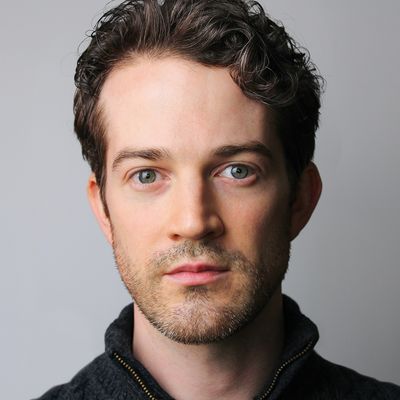
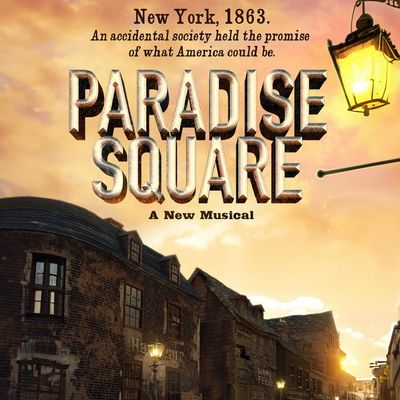
A.J. shares how he had to learn Irish step dance for the new Broadway musical, Paradise Square where plays the role of Owen Duignan... Read More
From the show: The Theatre Podcast with Alan Seales
Guests
Featured Shows
About
A.J. shares how he had to learn Irish step dance for the new Broadway musical, Paradise Square where plays the role of Owen Duignan. He also talks about his acting career which started at a young age, from landing his first professional job for the national tour of the Sound of Music and living in New York to pursue his dreams, to moving back to Ohio after the 9/11 attacks. He also shares a fun anecdote about his years in Professional Children's School, where a girl from his math class turned out to be Scarlett Johannson. A.J. opens up about how there’s still so much to learn about America’s history despite being a history nerd himself, why Broadway feels intimate to him, and why he thinks storytelling is important to help us remember and find empathy.
A.J. stars as Owen Duignan in the new musical Paradise Square which opened recently on Broadway at the Barrymore Theater. He has also been seen on Broadway in Bright Star; The Sound of Music; National Tour: Bright Star; La Cage aux Folles, and more. Some of his other Off-Broadway/stage credits include February House (The Public); Brigadoon (Irish Rep); The Suitcase Under the Bed (Mint); Unlock’d (Prospect); A Contemporary American’s Guide to a Successful Marriage (Cherry Lane); Things To Ruin (Second Stage). He was also recently seen in television shows, including CBS's “Bull” as Jerry McConnell and HBO Max's “Julia” as Chef André Soltner. A.J.’s Film and TV credits also include “Hunters”, “The Blacklist”, “Madam Secretary”, “Younger”, and “Homeland”.
In this episode, we talk about:
- Being on tour with The Sound of Music when he was 12 years old
- Attending the Professional Children’s School
- Living in New York when 9/11 happened
- Getting the role of Jean-Michel for La Cage aux Folles right after he graduated
- Watching Douglas Hodge's Tony-winning performance every night for a year
Connect with A.J.:
- Instagram: @aj_shively
- Web: ajshively.com
Connect with The Theatre Podcast:
- Support us on Patreon: Patreon.com/TheTheatrePodcast
- Twitter & Instagram: @theatre_podcast
- TikTok: @thetheatrepodcast
- Facebook.com/OfficialTheatrePodcast
- TheTheatrePodcast.com
- Alan's personal Instagram: @alanseales
- Email me at feedback@thetheatrepodcast.com. I want to know what you think.
Transcript
This transcript was automatically generated and might contain errors.
[0:00] Alan Seales: Hello, podcast listener! I'm Alan Seales and you're listening to The Theatre Podcast. Intimate personal conversations with the industry's biggest names. And this episode is no exception to that. A.J. Shively, our guest today, is now in Paradise Square, which just opened on Broadway. It shines a light on some history of New York City and some things that I didn't know about, and they're right in my backyard. I absolutely love this and love the subject matter. And then A.J. himself is actually such a history nerd. I love it. We dive deep into that. He actually learned to do Irish step dance for this show. I don't know if any of you listening have ever seen Irish step dance. I'm talking like Riverdance-style stuff.
Michael Flatley, Riverdance. That is some hard stuff to learn. He had to learn it for the show. And just a fun conversation. So, find me online on Instagram and Twitter, Theatre underscore podcast. Now on TikTok. What am I doing on TikTok? I'm on TikTok at The Theatre Podcast. Leave a rating and a review if you can wherever you are listening. Turn to that person next to you and say, hey, I'm listening to a podcast you should listen to. Spread the love. And now after this quick break, enjoy this episode with A.J. Shively. Today's guest is an Ohio native who picked up and moved with his family to New York City, got an agent, and began his acting career all at the age of 12. His first professional job was the National Tour of The Sound of Music, and Broadway credits include La Cage alongside Kelsey Grammer, Bright Star with Steve Martin, and then, and then, then, then, then.
I'm doing great. And can now be seen starring in Paradise Square with Joaquina Calicango and Chilina Kennedy. TV credits include Homeland, Madam Security, Madam Security. Jesus, I need more coffee. Madam Secretary, The Blacklist, and most recently, Bull, Madam Security. I'm still thinking about that. Oh, that's pretty good. That's pretty good. A.J. Shively, welcome to The Theatre Podcast.
[2:17] A.J. Shively: Thank you. Thanks for having me.
[2:19] Alan Seales: Madam Security.
[2:20] A.J. Shively: Madam Security.
[2:21] Alan Seales: That could be like the alternative to McAfee antivirus.
[2:24] A.J. Shively: Yeah, it's kind of more like a tough guy at a brothel or something.
[2:30] Alan Seales: Yo, you don't want to deal with those two guys. Tiny and Madam Security. Those are two guys you do not mess with. So tell me about actually moving from, I guess, Ohio, right? You started in Ohio, but obviously there's something that should have happened or must have happened before you were 12 that made you decide to move to New York. So how did you get into all that in the first place?
[2:45] A.J. Shively: Well, I was, you know, my family, no one else is in the arts in my family, but always were patrons of the arts. So I grew up seeing a lot of theater, all the national tours and everything. But when I was 10, there was a national tour that came through that had a bunch of 10-year-olds in it. And it had never occurred to me that I as a child could do that. And so right after that, I expressed interest. My mom signed me up for the Columbus Children's Theater. I auditioned and got into the show and kind of never stopped doing plays ever since then for the rest of my life. So that connection through the Columbus Children's Theater, they had a relationship with Nancy Carson, who was kind of the preeminent child agent in New York at the time.
My aunt and uncle live in New York. So we were coming to visit on spring break anyway, when I was 12. I met with Nancy in the meeting with Well, and she sent me on an audition just to see how I, you know, carried myself alone. And I ended up it was for the national tour of The Sound of Music and I ended up getting cast. So my parents had, it was kind of straight to the deep end. My parents had no idea that was going to happen. Yeah, and it was great. I have a younger brother and sister. So when I was on the road, it was kind of all hands on deck. My mom would come for a week and, you know, take me to the airport in Philadelphia. And we would fly to Denver and my aunt would meet us in Denver and she'd be my guardian for the week. And, you know, so I, my entire family kind of had a hand in, in helping me out for that tour. Yeah.
[4:37] Alan Seales: So then, okay, so you were 12, you came out, you came out to New York. Okay, hold on. So that, so did you get Sound of Music and go on tour after you moved to New York? Or would you get the tour and then you were like, okay, now it's time to move to New York?
[4:50] A.J. Shively: Yeah, I got the tour. And then I was in Final Callbacks for a couple of other shows. And, uh, you know, we made the decision to, to, to try it out for real. Um, and it was great. I, I was in New York for, uh, until 2002. I moved back home after the 2001, 2002 school year. So I finished out high school in Ohio. Um, and I went to college in the Midwest and then I came back to New York right after college.
[5:19] Alan Seales: Well, you went to college to be an architect, which we will get to.
[5:23] A.J. Shively: Well, no, no, it wasn't. I, I thought about studying architecture, but when I went to school, I went to school, I went to Michigan's musical theater program, but when I went back to high school, I was done with acting and I was like, okay, I did it. You know, that's pretty cool. Um, and I was really into architecture. Um, but when it came time to apply to schools, I applied to kind of an even number of programs. Um, and I just loved the Michigan program so much and kind of the acting bug had still bit, it had still bitten. So I went for it back in, in the information I was reading about your prep for this, did nine 11 have something to do with moving back to Ohio? Cause it was that timeframe.
[6:03] A.J. Shively: It was that timeframe. Yeah. So nine 11 happened while, um, the way, the way guardianship works for me is because my family stayed in Ohio. Um, we would share a lease on an apartment with other families who are from out of New York, um, and kind of switch every two weeks guardianship. So my mom would come for two weeks and then my roommate's dad would come for two weeks and then my dad would come for two weeks and my roommate's grandma would come for two weeks kind of thing. Um, and when nine 11 happened, um, it was my roommate's, uh, parents were guardians for that week. Um, and that was pretty, it was pretty hard on my, uh, my family being in Ohio and all the cell towers came down so we couldn't get in touch with each other for a few days. And, you know, everybody was fine, thankfully. Um, but, uh, yeah, I think that was, that was definitely an inciting incident and that's to, to, to reconstruct the family unit back home in Ohio.
[7:03] Alan Seales: Wow. Well, so I, I, I guess at that young of an age though, so you're out here, you're by yourself as a teenager, right? Like these are some of your most, in general, hardest impressionable years if you were just not moving around and, you know, had your standard childhood in Ohio. So now that you're in New York and nine 11 happens and auditioning, auditioning, final callbacks, you're getting so close again. So I think, did you sort of have, did you struggle with, uh, with all of this during that time? I guess, especially being that age too, but so you moved to New York because you found immediate success, right? You got cast in the national tour and you're like, oh, okay, cool. I don't have anything to compare it to. I'm going to be this overnight star. And then you get to New York and New York rears its ugly head.
[7:55] A.J. Shively: Yeah. Well, and you know, I was lucky cause I kept, I kept working. I didn't do any big major Broadway stuff, but I did a lot of, um, off Broadway stuff. I did plays with ensemble studio theater and Manhattan theater club. And, um, and I was, I went to the professional children's school for those years. So I was surrounded by some of the most talented, smartest, like just coolest kids in, in the world really. Um, it was, it was a great time. Um, and, uh, you know, I always tell the story that the, uh, so the way the math education worked from Ohio to New York was, I ended up being like ahead of grade, um, just because of when they taught algebra versus geometry and all that kind of stuff. Right.
Um, and there was, uh, an upperclassmen girl in my math class who I just crushed on so hard. And there was one day we were in the commons and she called me over. She said, Hey AJ, to go over some of the homework. And I was just like, she knows my name. She knows me. And that girl was and grew up to be Scarlett Johansson.
[9:04] A.J. Shively: Yeah. Yeah. Professional children's school was a crazy place. It was just, you know, it was an incredible, incredible group of people to grow up with. And, um, yeah. And, and, uh, it was, it was hard to move back to Ohio. It was kind of why I, I was kind of wanted to make the switch away from the arts because I felt like I had experienced that. And, you know, I wanted to be normal in Ohio for a minute.
[9:32] Alan Seales: I keep going back to it. You just said she grew up to be Scarlett Johansson. Like originally when you met her, she was Gertrude Pewterschmidt.
[9:41] A.J. Shively: She wasn't a movie star yet though. She did ghost world, like right after she graduated. So.
[9:49] Alan Seales: Okay. So, so then you've, you've, you've got a history, I guess, of, of quote of, you know, going back and forth between Ohio and New York, and then you're back to Ohio and then, uh, I guess, so then where did the opportunity come back? You said the acting bug was done. You were, you were ready to like, you're thinking you were going to do architecture. So then like Broadway debut did all the same as Broadway debut falls in your lap again, or did, did you?
[10:08] A.J. Shively: So I pursued it again. So luckily, you know, I was visiting New York cause my aunt and uncle live here. Um, when I was a senior in high school, you know, applying to colleges and I went in to visit Nancy Carson to say hello. Um, and, um, one of Nancy's clients was, uh, one of her clients at the time was in the office and we were talking about applying to colleges. And, uh, she said, you know, you should really give university of Michigan a look. It's where I went to school and I loved it there. And that person, uh, grew up to be, and was at the time Celia Keenan Bulger. And I was like, Oh, okay. And I looked into the program, the school was, had the, you know, academics that I was interested in.
It was, it's a big, big university. And, and I've always been, uh, the super nerd and just wanted to learn, you know, kind of a jack of all trades, right. I wanted to take as many different kinds of classes as I could and still have that conservatory style training. So I applied, I got into the school, I auditioned and got into the program. And, um, you know, it, the training was great. Um, we showcased in New York after, uh, graduation and I was lucky enough to get, um, representation and a little job out of the showcase, which was great. So I kind of hit the ground running out of school and I was in the college. I was casting the college about a year later. So my intention had always been to go to grad school, to go to like, you know, in my mind, cause I went to musical theater undergrad, big undergrads to go to like real acting school for grad school. But, um, I did, I did Broadway instead watching, watching Douglas Hodge and his Tony winning performance every night for, for a year was my grad school equivalent, I guess.
[12:04] Alan Seales: Oh, that's, that's so cool. So then you go to, you go to UM and there's so many people that go to UM too. And I'm sure you've got plenty of other stories of like, Oh, sitting next to me was Matthew McConaughey who grew up to be Ryan Reynolds, who was related to, uh, you know, Chris Pine. Um, yeah. But I, I think coming out of UM, going into La Cage with Kelsey Grammer and, and I guess when, when you get thrown into this stuff, I mean, even going back again as a teenager 12 years old, uh, 12 years older than going to teenager, New York, et cetera, et cetera. Are, are, are you, have you been able to adjust your, your expectations of how easy or hard the business is by this point? Cause you go to UM, hard to get into UM and then you get a show a year, you know, you said a year out of college and you're doing this stuff. So like, are you again, sort of in this place where you're like, I got this? Or are you like, well, never, never, never, never.
[13:05] A.J. Shively: Well, as a child actor, you know, like I, when I, I left the sound of music tour at, I think I had turned 13 by then. Um, I was in final callbacks for a couple of Broadway shows. I didn't get any of them, you know? Um, so I learned at a young age, I think the adage is, if you, if you're cast one out of every 100 auditions, you're doing really well. Um, so, you know, you kind of just got to let it roll off your back. Um, and I was so lucky that when, when I got the offer for the college, I thought I took me, I couldn't understand that it wasn't for the understudy for Jean-Michel that it was for the role Jean-Michel. Um, cause I had just graduated. It was hard for me to wrap my mind around it.
And then for your first show to be, you know, we won the Tony for best revival. We were like the hit of our season. Um, you know, some of the vets in the cast were like, it's not like this. Don't do this. This is like the best case scenario. Um, and it, but it, you know, it's, everything's an incredible learning experience, I think. Um, and I'm very grateful for having that experience early on just cause it makes the transition into the Broadway community that much easier when you don't have to worry about, um, really anything when you're like just, you know, the hit it's really fun. It's a really, really fun experience. And I'm glad I had that when I was younger.
[14:28] A.J. Shively: But yes, never any expectations, ever. My biggest takeaway from that was after the first week of rehearsal, I remember thinking, oh, it's just, we're just doing a play. It's just like every other play. We're just doing a play. You know, I was like, oh, it's Broadway. It's going to be different. And it's not. You just, you show up, you rehearse, you find the moments, you get notes, and then you do it in front of people. Just a lot. A lot of people who pay. A lot more people. Yeah. Yeah. But even like some of these touring houses are like thousands and thousands of seats. So like the Broadway theatres feel so much more intimate. And like, that's one of the best parts about doing a Broadway show is that the audience is like more available.
You can feel their energy in a different way. That's a really good way of looking at it. And I never, I never thought about it. And I've done, I've done regional theater barely a day. And you're right. It's these houses can be, you know, several thousand seats. And there's just not the real estate in New York to have that. So I don't know what the biggest Broadway house is, but it's probably the Marquis, right? Something like that. New Amsterdam. Maybe New Amsterdam. Yeah. I don't know. Maybe the Lyric. One of those, one of those new ones, newer ones. But regardless, you know, you still have, like, it's hard to sell out one of those theatres. Because there's so much rent here. But I guess my point being is that it's, it's interesting to me that you said that Broadway to you feels intimate. It can, it can.
[15:56] A.J. Shively: Yeah. Yeah. Because you still have Broadway to be called a Broadway house. You just need, was it 500 or 501? It's 500. I think 499 is off Broadway and 500 is Broadway. Right. So you have 500 seats. And I guess, yeah, when you're playing, yeah, if you're playing 2000 people regionally and then you come to a 500 seat house, you're like, oh, yeah, I can, I can smell them all now. Like, oh, I'm accidentally spitting on them with my annunciation. But even with Paradise Square, for example, we were at the Nederlander Theatre in Chicago and we're at the Barrymore Theatre now. And I think the front row of the Nederlander Theatre is like our fifth or sixth row here. It's just so much more intimate. The back wall of the Barrymore, the back wall of the Barrymore Theatre.
So like the last row of seats is probably just like the 10th or 11th row at the Nederlander. It's a completely different experience being able to hear the people lean forward even. You can like hear, it's just all the laughs. We couldn't hear laughs in the Nederlander. We had to kind of just trust that things were landing. It's such an incredible experience and just that community, that feeling of togetherness.
[17:16] A.J. Shively: So then, okay, with COVID, we're all coming out of COVID in an industrial, I'm saying from a business perspective, I guess, in Broadway. Like there's, I forget, 16 openings, I think, in April here? Yeah, isn't that wild? I think it's the most ever in a single month. Right. It's openings and reopenings. Yeah. Yeah, it's kind of ridiculous. So was Paradise, I don't know the details on this, was Paradise Square supposed to come to Broadway before the pandemic? Or how was the timing behind all that?
[17:45] A.J. Shively: So we had tried out in Berkeley, at Berkeley Rep in 2019. And I don't think there was a theatre lined up, but the plan was to come in late 2020, like fall of 2020. Yes. So obviously that didn't happen. And we were all very surprised and grateful in 2021 to hear that we were going to be going to Chicago in late 2021, with the hope that a theatre would open up and be available. I think, you know, the waiting list for Broadway theatres is always long, but this season it's even crazier than usual. So many, so many shows, you know, two years worth of shows wanting to come in. And it's still hard for me to wrap my brain around the fact that we got a theatre, that we're here, that, you know, the year and a half off in between where I had just let it go.
I was like, okay, well, that one won't happen. Hopefully something else will happen. Which is hard because I've been working on the show since 2018. I did a workshop in 2018. It's been a lot of time and sweat equity put into this one. You know, I learned how to Irish Step Dance. I was going to talk about that. That's my next thing. Irish Step Dance, I'm glad I'm doing it. That's no easy thing to do. It's really not. Man, I know all art is supposed to look easy, but like Irish Dance takes so much effort to like, look like you're not doing anything. And just the amount of tension you have to hold in certain parts of your body while you have to be completely loose and relaxed in other parts of your body. It's so hard. Did you teach yourself or did you take form?
[19:29] A.J. Shively: No. Oh God, no, no. I'm very lucky in that our Irish choreographers, Garrett Coleman and Jason Ramis are both world champion Irish dancers who have, you know, toured the world for many, many years with Riverdance and Lord of the Dance and all that stuff. And their immense patience and ability getting me in shape and, you know, our whole choreography team, you know, Bill T. Jones, his whole ethos is artists do their best work when they've been pushed past what they think they're capable of, which is certainly that I have been pushed past what I think, what I thought I was capable of in this project. Chloe Davis, our associate choreographer and dance captain, just, you know, they all come in with exactly the right note.
You know, I didn't grow up dancing. I obviously, I went to musical theater school, so I had dance class there, but I've never been a dancer dancer in my career before. And I've had such, such incredible support, mostly for the mental aspect for them to be like, just let it go. Let it be fun. You know, the way you feel about singing, let it be that way about dancing. I feel like the beginning of Irish Step Dancing is like, here's your straight jacket. You can't move your arms.
[21:00] A.J. Shively: Yes, yes. Well, that and like, so the two big things, hold a pencil between your shoulder blades and hold the piece of paper between, between your thighs. That's it. That's, that's the posture. Wait, how are you supposed to move your legs when you have a piece of paper, holding a piece of paper between your thighs? Exactly. They got to move fast. Oh my goodness. All right. Well, I, I did, um, uh, at Busch Gardens Williamsburg, I was in a one-man show there, right in a theater right across from, um, the in-residency, uh, Irish Step Show. So we would go over there on our breaks and watch the, the Irish Step Troupe just go off and do their thing. And God, they would, they would just at night, uh, their calves would, would twitch and convulse and it was insane.
It was absolutely insane how their legs were just destroyed. Yes. An unseen side effect of, of preparing for this, this, um, role is I am now very knowledgeable about the intricate musculature in the legs. I know all the different muscles. I'm like, Oh, that's the posterior tibialis. It's in control of pointing just your big toe. That's all it does. But when you're jumping on your toes all day, the posterior tibialis has to grow. And, uh, I tell you what, it was really painful when it was growing, but now it's strong enough. Now it can, it can hold me up. Um, yeah, when I heard that the show was coming back, I hadn't danced in over a year. Um, you know, during the pandemic, I, I was in a show right when we closed the weekend of March 15th, right.
When, when all Broadway shut down. So, but I, I, you know, two, two plays that I had been supposed to do that year were canceled. Um, so I, I, you know, our industry was shut down and I took an office job. So I was, I just, you know, sitting at a desk, not dancing at all. And when I heard this was coming back, I was like, Oh boy. So I, I got, I got right on the jump rope. I was just jump roping off all day, trying to get my calves back.
[23:06] A.J. Shively: Paradise Square. Give us the synopsis though, because I, it's such an interesting story. Yes. Yes. And I can't believe I never knew this about American history. I never knew this. Um, so the events of the play take place in civil war era, New York in the five points. So if you've ever seen gangs in New York, that's kind of where, but, um, our show is about more of the, uh, American melting pot kind of, this was the birthplace of American culture, right? That's where it's where immigrants and, uh, born free black Americans and self liberated black Americans. And we're all kind of mixing in America. And it's where some of the first American pop music was created, um, written by a man named Stephen Foster.
Um, and, uh, the events of the play, you, the play opens and you meet, uh, a community of people who are living openly interracially married. Um, there are civil war in the civil war, 1860s, New York, um, 1863 to be precise. So you meet this, you meet this integrated community. And, um, the events of the play are around, um, the draft Abraham Lincoln instituted a draft because the civil war had been going on for so long. Um, and you could buy your way out of the draft. If you had $300, which was a year's salary, um, more than a year's salary for some of these people. Um, so when the names were called, it was the hottest day in New York and you know, in New York in the summer is like, uh, and people were angry and people have been drinking.
And when the name started to be called for this draft, which was basically a death sentence, you'd be sent to the front line and be used as cannon fodder. Basically. Um, we all know how bloody the civil war was. Um, and as the names were called, people got angrier and angrier and they had been protesting and this protest turned into a riot and, uh, the riot turned into a three day civil insurrection in New York city. This is all true. Yes. It's called the draft riots of 1863. Read about it. Please read about it because I had never learned this and it's a huge oversight in my education. Um, and as are most things, but the crazy, the, the, the really awful thing that happened, um, is these, these riots started uptown.
It was the poor people, kind of the proletariat rising and looting mansions and they burned down the official buildings where the names were being called. And, um, over the course of three days, the newspapermen and the politicians, Tammany hall politicians were able to turn that immigrant Irish anger and point it toward, uh, the black Americans living in Manhattan and it became a race riot. Um, and it's, it kind of destroyed this, this, I was going to say idyllic community. It wasn't idyllic. Everyone was dirt poor. It was a slum, but, um, it broke up this community of amalgamation is, and the black people of Manhattan were scattered out to Brooklyn were scattered up, up to North Manhattan, which wasn't part of New York city yet.
Um, they were all run out of the city. Um, there were somewhere around a dozen lynchings that happened in Manhattan. Um, it's, it's an unbelievable, it's, it's an unbelievable moment in American history. Um, and one of my favorite stories from the history is in the five points, there was a pharmacist, a black man, um, who was loved and respected by his community. And when the writers came down to the five points to that specific neighborhood, then they came for that pharmacy, the whole neighborhood student fund. And they said, no, no, you leave here. You've passed this. You leave us alone. And so this community was able to, they were able to protect themselves and the worst of the destruction, um, missed, missed the five points, but it still, the society was broken.
The, the, the cultural repercussions are still, still happening. Um, yeah, it's, it's crazy. It's crazy. And if you go back and read some of these pamphlets that were being sent out during these days, um, our, our dramaturge, uh, called it the night that the Irish became white. Um, cause up until this point, the Irish had been looked at as, um, just dirty immigrants, you know? Um, and, uh, some of the language in these pamphlets that turned, turned that anger and made it racial is verbatim to some of the stuff you see today.
[28:56] A.J. Shively: If you think about the Irish immigrants coming to America, it's still happening today with other groups. So for example, in Ohio, in my part of Ohio, there are a lot of Somalian immigrants that are coming who have a different religion than a lot of the people around, who are fleeing from famine, fleeing from genocide, who have different cultural traditions than everyone else. It's exactly the same as when the Irish came in the 1800s. And it's hard for us to remember that because the Irish have been so... The Supreme Court is mostly Catholic right now. That's insane to think about when you look at this period in American history. Because being Catholic was looked at the same way that being Muslim is looked at now in a lot of America.
[29:47] A.J. Shively: Wow. Yeah. The wheel of time keeps spinning. How much... Yeah, I guess they're parallel to what's happening literally right now. What happened metaphorically yesterday with Afghanistan, we had this influx of Afghani refugees that landed all over the world in various pockets. And then now today, literally as recording, the Ukraine and Russian war is happening. So Ukrainians are fleeing, some Russians are fleeing because they don't agree with it. It's insane. It keeps repeating itself. But my question then, or what I was about to ask was, you know so much about the history of it now, but did you... Was this part of the process of naturally with the whole cast and the director, the creative team started to educate everybody on what was happening? How did you all learn so much about what had happened?
[30:34] A.J. Shively: Yes. Well, we had a great, great dramaturgy team. And I think I know so much also because I've been involved. We were workshopping the play and I've been involved for a long time. So the more time you spend with something, the more you learn. And the goal is to honor... We always talk about our ancestors. This is how and when part of my family came to America as an Irish immigrant fleeing the Great Hunger. And my people wound up in Indiana rather than in New York, but this could have been me. Owen Dignan, the role I play could have been me. It's my family. And we want to honor that. We want to do it right. And we want to make sure the story that we tell is inclusive of all viewpoints that haven't necessarily always been included in the telling of these kinds of stories.
The focus of our show, the central character of our show is a born free black American woman who is the owner of a business. And that existed in the Five Points in New York in the 1860s. I think it's really important to get it right. And so we've all done the work and we all talk about it constantly and we all share. The way Moises works, Moises Kaufman, our director, with his company Tectonic, it's called devising. And there's an intellectual approach where it's you take a big topic like this and break it down into little pieces and everyone in the company brings their research project, really, and everyone educates. And then you just see where the story comes from that. And that kind of work definitely happened in the workshop process of this musical.
[32:26] A.J. Shively: That's so cool. I always wonder how much, for the stuff that's not glitzy, glamour-y, showboat-y song and dance, nothing against any of that, right? Yeah. And honestly, the show sounds so dark, but it's a lot of fun. It's a huge dance show. And most of the show is about celebration of this culture, the amalgamation of these cultures coming together. So I want to make sure it doesn't sound like a really dark night at the theater.
[33:00] A.J. Shively: Well, that's what I think is one of the best types of stories, right? When you're learning and you get really, really educated without knowing you're being taught in education. So you're there to see a dance show. You're there to see some amazing performance and some amazing singing. And all at the same time, you're learning about true history. I mean, it's sort of the same thing. Let's equate it to Hamilton, right? Hamilton's fun to watch. Everything is true. And it's all true. It's all real. Yeah. Which is great. It's great. I love that. I've been saying I'm really pleased with the past few seasons, how many shows are just not based on anything. Hamilton's an adaptation of a biography book.
And just true events. And shows like Dear Evan Hansen or A Girl from the North Country, these original stories, I'm very pleased that this trend is continuing in the American musical theater. And I hope it keeps going. There is a lot of, now that you said that, even Strange Loop, right? Like all these original pieces, it's really great. There's a lot of history being taught now. I wonder playwrights, I'm trying to just go down a really quick thought path here. And then I'm not articulating well at all. But Hamilton's been out for a while. Now we're seeing a bunch of things that are still historically, I guess they're more history-based without hitting you over the head with being about history, right?
And I wonder how much of that influence, how long it takes for that sort of stuff to influence or if they've already been in the works, right? So if I see Hamilton now, I'm going to start unconsciously writing something of the same vein, right?
[34:41] A.J. Shively: Yeah. Well, I know this. So the play that Paradise Square is based on was called Hard Times and it premiered in New York 10 years ago or so. So definitely, I think that these ideas have been percolating and maybe the success of Hamilton has allowed the investor class to lift these kinds of stories maybe. Because I don't think creatively it's anything new. I think there are so many stories out there waiting to be told and there's just not enough space to tell them all. So that's the commercial aspect of commercial theater, I guess, is who gets to use the space.
[35:20] A.J. Shively: Did you ever watch Battlestar Galactica?
[35:27] Alan Seales: Yes. Yes. You have hit the bullseye of my taste.
[35:33] A.J. Shively: Oh, my God. I love that show. And so I'm not going to spoil it for those who haven't seen it, but going back to history repeating itself and society and culture, like literally, you said the stuff that is happening in 1863 in Paradise Square, literally, almost verbatim, is being used as propaganda now in today's society because we still can't get past ourselves metaphysically or existentially, I don't know, whatever this word is. Why do you think we freaking keep doing this? You've researched this now for the role, but why do we keep repeating this? Why can't we learn?
[36:15] A.J. Shively: Yeah. Well, I think it's got to be a generational thing, right? Our grandparents remember, but we forget or we don't have the context from the things our grandparents remember when they were children. So, I don't know. You see it now with the last of the Holocaust survivors are very old. And how many people now are saying that that never happened? It's about honoring history. That's a huge Irish thing. One of the best things you could be, one of the highest social statuses you could be was, well, they called them poets. It took 12 years of study to become a poet. So, the Irish, pre-colonial Ireland, the native Irish had no written language. It was all oral tradition. So, to become a poet, yes, you had to know the verse, you had to be able to speak off the cuff in verse, right?
But you had to memorize verbatim all the legends, all of the stories, and that was the history. So, the poets were used as historians, educators, as lawyers, because they could remember through their poems, through their epic long poems, the previous decisions, right? They were the judges. They could remember the court history. That history, I think that's it. You can't keep going down a road without remembering where you've come from. Otherwise, you have to keep reinventing the wheel.
[37:54] A.J. Shively: I think you hit the nail on the head by saying context. We know what has happened because we know what we've been told, but we don't know why, because we've lost the context by not living it.
[38:06] Alan Seales: Right, right. I think it's really important. I had a seventh grade social studies teacher presented, and he's in North Carolina, mind you. North Carolina, seventh grade social studies teacher presented the, I put in air quotes, facts of the Holocaust, and then said, you decide if it was real. And I went home to my Jewish mother and said, this is what I learned about today, mom, what do you think? And she flipped her shit.
[38:30] A.J. Shively: You decide if it's real?
[38:32] Alan Seales: Yeah, you decide if it happened.
[38:34] A.J. Shively: Now, my seventh grade social studies history teacher was phenomenal, phenomenal, phenomenal. And had us, he would teach us about a subject and would have us write scenes or plays just to get us into a different part of our brain so we could internalize this history.
[38:53] A.J. Shively: It's wow. Man, I can't believe that happened. That's crazy.
[38:57] Alan Seales: Yeah, yeah. And that stuff happens. I mean, so if I didn't, right, so that moment in my life-
[39:03] A.J. Shively: Without your personal connection, what then happens to that 12th grade brain?
[39:06] Alan Seales: Exactly my point. If I had not gone home to my mother, who obviously we have family history of living through this, then, oh my gosh, yeah, I could have, that would have planted the seed as a seventh grade kid and been like, you know what? I don't really know anybody who lived through it. Maybe, maybe it didn't. And then I mentioned my thought to somebody else who combines it with their thought and that forms their X thought and my Y thought come together and we make a-
[39:34] A.J. Shively: They congeal into something unbreakable.
[39:36] Alan Seales: Congeal into something else. It's like, you know what? I'm going to teach my kids that this didn't happen because I don't have-
[39:40] A.J. Shively: Or just not mention it. And if it does come up, be like, oh, never, don't think about that.
[39:46] Alan Seales: Yeah. That's not-
[39:46] A.J. Shively: Yeah.
[39:46] Alan Seales: Yeah. Wow. Okay. Well, on that happy note, let's wrap up-
[39:50] A.J. Shively: Yeah, geez, this has been so dark. I apologize.
[39:54] Alan Seales: Let's wrap up with three questions I ask everybody to wrap up my episodes. Just the first one very simply is what motivates you?
[40:02] A.J. Shively: Oh, man. What motivates me like as an actor or like a human?
[40:06] Alan Seales: As a human.
[40:07] A.J. Shively: I guess it's kind of the same. Like what we've been talking about, I think story, storytelling is so important as humans because it helps us find empathy. It helps us remember. But part of that remember, it's like we were just talking about the context of history is empathy. And I think that's what drives me as a human. I strive to find empathy and I hope to inspire empathy in others.
[40:33] Alan Seales: That's beautiful. Okay. What advice would you give to your younger self and younger people listening now starting up on a similar path?
[40:39] A.J. Shively: So just try and drop as much of the anxiety as possible. There is no perfect, there is no correct way to do anything. Don't work hard because it feels like you're working right. Like if it comes easy to you, let it come easy to you. Don't make a problem if there's not one. I've wasted a lot of time dealing with like stage fright. And it's taken me decades to try to like let go of that anxiety. It's just not worth it.
[41:09] Alan Seales: I love it when Broadway actors still say they get stage fright.
[41:12] A.J. Shively: Oh yeah.
[41:13] Alan Seales: Oh, it's incredible.
[41:14] A.J. Shively: I'm like, what, really? Like even Kristen Chenoweth gets nervous before she goes on at Carnegie Hall. Hell yeah. The feeling of walking on stage ready to go. And as soon as you cross that threshold, you're in the lights and your mouth goes dry and you're like, I have to sing right now. There's a ton of weeds back there.
[41:31] Alan Seales: All right. So the final question is the hardest one here. If you could only see one show for the rest of your life, but you can see it as many times as you want, what would you see?
[41:39] A.J. Shively: Oh God, that's impossible. Oh man. That's really hard for me too, because I'm definitely of the mindset like see every show once. Oh man. So God, this is really, really hard. My first Broadway show I ever saw was Ragtime.
[41:58] Alan Seales: Nice.
[41:59] A.J. Shively: And I think I got to say Ragtime. It's just, it's like perfect.
[42:06] Alan Seales: I love that show.
[42:10] A.J. Shively: All right. Where can we find you on social media?
[42:12] A.J. Shively: I'm on Instagram at AJ-Shively. And I'm on Facebook as AJ Shively.
[42:22] Alan Seales: Oh, I introduced you as Shively. I said your last name.
[42:25] A.J. Shively: Oh yeah, that's okay. Everyone does that.
[42:29] Alan Seales: So I issue this correction. Here we go. I retract my original bio and say, AJ Shively, welcome to the theater podcast.
[42:36] A.J. Shively: Like a historical record show.
[42:40] Alan Seales: I corrected myself. You can get more of me and this podcast at the theaterpodcast.com. I'm on Instagram and Twitter at theater underscore podcast. I'm now TikToking, I don't know why, at the theater podcast. I've got a couple videos up. So I got, you know, a few followers. It's pretty cool. Leave a rating and a review. This has been edited by Well Rounded Hoodlum Productions. Jukebox the Ghost gave us our intro and outro music and AJ Shively gave us our wonderful history lesson and our wonderful conversation. Thanks, dude. This has been so enlightening.
[43:12] A.J. Shively: Yeah, yeah. It's great. It's great.
© Broadway Podcast Network, All Rights Reserved