

With years of training with the best teachers, including Grammy award winner Ustad Zakir Hussain, it’s no surprise that Salar Nader is considered percussionist royalty... Read More
From the show: The Theatre Podcast with Alan Seales
Guests
Miniseries Inclusions
Featured Shows
About
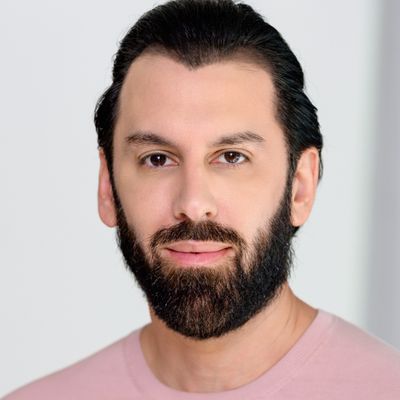
With years of training with the best teachers, including Grammy award winner Ustad Zakir Hussain, it’s no surprise that Salar Nader is considered percussionist royalty. Apart from being the tabla artist and creating additional arrangements for The Kite Runner, Salar has also performed for the hit show and is playing the tabla for its current Broadway run. Salar passionately shares the history of tabla and the tradition that comes with it, treating instruments as a living entities and why it's important for him to connect with an instrument before playing it. No matter how long he's been playing and making music, Salar still considers himself a student who has more to learn--whether it's from performing or from the cast. He shares a story of buying three sets of tablas in 2020 to use for Stanley Clarke's concert, not knowing that the world is going to shut down two weeks later. He talks about the longevity of tablas, and why he would usually have a secret backup off stage in case they break on the spot. Salar recalls how he met Khaled Hosseini in the late 90s and how he eventually ended up making music for the Kite Runner's stage adaptation. For Salar, music has no boundary and is the most peaceful way of connection. He shares the emotional aspect of playing music for Kite Runner, and why it gets heavy at times.
Salar Nader is a percussionist, composer, producer, beat maker, and one of the most sought-after Tabla virtuosos of his generation. He started his music career at an early age, doing classical training with Tabla bols as his main concentration. He also began studying with the Grammy award-winning Tabla virtuoso, Ustad Zakir Hussain, at the age of seven. With years of training and experience, he has become the leading pioneer in combining the art of Tabla with the musical sounds and rhythms from Afghanistan being the primary component. He is constantly expanding his musical language by weaving Tabla into contemporary music. In 2019, Saler launched the Salar System Collective which offers scholarships, as well as The Salar System album. He originally played the tabla and composed additional arrangements for the hit Broadway show, Kite Runner, which has been nominated for several awards. He has now played the tabla in seven “Kite Runner” productions, including its current Broadway run. He’s also currently touring with legendary bassist, Stanley Clarke.
Connect with Salar:
- Twitter: @salarnader
- Instagram: @salar_system
- Website: www.salarnader.com
- Facebook: salartabla
Connect with The Theatre Podcast:
- Support us on Patreon: Patreon.com/TheTheatrePodcast
- Twitter & Instagram: @theatre_podcast
- TikTok: @thetheatrepodcast
- Facebook.com/OfficialTheatrePodcast
- TheTheatrePodcast.com
- Alan's personal Instagram: @alanseales
- Email me at feedback@thetheatrepodcast.com. I want to know what you think.
Transcript
This transcript was automatically generated and might contain errors.
[0:01] Alan Seales: Welcome to The Theatre Podcast. Intimate, personal conversations with the industry's biggest names. This is actually the first episode of a Kite Runner takeover. The Kite Runner on Broadway. The cast and creatives are taking over the podcast. So this is the first of a series of several episodes that are going to be all focused on The Kite Runner and the people involved with it. Just an amazing, amazing show if you haven't seen it yet. So the guest for this episode is Salar Nader. He's a super talented guy. Super nice. He's bringing awareness of the tabla to the world. And those are hand drums. He's going to get into exactly what all this is. And I'm sure you've heard it. He's mixing R&B and hip hop into this traditional Afghan instrument.
It's just this super, super cool idea. And he actually helped compose and create the original stage adaptation of The Kite Runner many years ago. Of course, he tells that story. So find me online, Instagram and Twitter at Theatre Underscore Podcast. On TikTok at The Theatre Podcast. Find me on the web. Leave a rating. Leave a review. You know the drill. Everything that we always say. So now, everybody, please enjoy this episode with Salar Nader. Here you go. One, two, three.
[1:25] Alan Seales: I am so truly excited to introduce today's guest, which I think I can easily classify as percussionist royalty. Hailed as Afghanistan's tabla virtuoso, he is a percussionist, composer, educator, and producer. Mentored by Grammy Award winner Zakir Hussain, he currently tours with legendary bassist Stanley Clarke. Having a family history incredibly similar to the backstory of the hit Broadway play, The Kite Runner, he originally composed the music and has now played tabla in a total of seven Kite Runner productions, including this Broadway run throughout the U.S. and Canada. Salar Nader, welcome to The Theatre Podcast.
[2:03] Salar Nader: Pleasure to be here. Thank you so much for having me. Man, that was pretty amazing. What was that? 300 words and under a minute. Do you remember the Micro Machine Man? I mean, I'm aging myself right now, but that was the age. That guy was the best. I could do that if I had a script that I was reading and that I can't because that dude, he had Guinness Book World Records for like the fastest talking person.
[2:28] Alan Seales: Did he?
[2:29] Salar Nader: Yeah. Wow. Yeah. I mean, that was up there.
[2:34] Alan Seales: Yeah. I think you and I catch up. Yeah. You and I are like, I think, pretty much the same age. I remember all of that and, you know, coming home from school and watching Smurfs and Gummy Bears and Tailspin and Ducktales and all of that.
[2:42] Salar Nader: There you go. There you go. He-Man and Thundercats. Heck yeah.
[2:48] Alan Seales: Yeah. Ultron. Yeah. Okay. Let's just not talk about anything except 80s cartoons right now. I want to real quick just get a semantic thing. So tabla, is it, so the pronunciation, I want to make sure I'm saying everything right. So tabla, is it tabla or tabla?
[3:05] Salar Nader: It's the tabla.
[3:06] Alan Seales: Tabla.
[3:12] Salar Nader: So tabla is how we would say it. So maybe almost like how you would say the. So tabla.
[3:23] Alan Seales: So they're hand drums. And is the plural also tabla or tablas?
[3:28] Salar Nader: Tablas. Now here's the thing. It's the tabla is about a 400 to 500 year old instrument. Yeah. And it refers to the smaller drum, which is the higher pitched instrument. And so that's a tabla. Now the bayan or the bass drum, I play tabla southpaw. So I'm a lefty when I play tabla. But when I play baseball, I throw with my right hand and I swing right handed. So I'm a switch hitter when it comes to tabla. And so tablas would be referring to many of the smaller drums and then daga or bayan, which means your left hand in Hindi or in Farsi, you would say bam, B-A-M, like bam, bam from the Flintstones. More 80s cartoons. I'm going to go there. It's all good. So the bam is the bass where you get all those dipping tones and you know, the sounds I demonstrate on stage with you a couple weeks ago.
[4:30] Alan Seales: Yeah.
[4:31] Salar Nader: Oh, yeah. I'm glad you mentioned that. So I don't know. We haven't gotten the footage back from BroadwayCon yet. We're still waiting. That's why I haven't released it. But along with this Kite Runner takeover that's happening now, which includes Silar and others from the show, I'll release the live panel. We had a live panel with him and many other people.
[4:47] Alan Seales: So, yeah, like that was an incredible, incredible panel. And one of my most favorite moments was when you were doing the tabla demonstration. And, you know, it's like not often do you get to sit on stage, not as a Broadway person, with Broadway performers and witness this talent within like three to four feet of their greatness. And just to be there. Did you see the video? I took a video from the reverse. It's one of my favorite selfie videos that I reposted a bunch of times on different platforms.
[5:09] Salar Nader: Oh, thank you.
[5:10] Alan Seales: And I love it. It's so good. And one of the greatest things I think about that moment, though, and something I had never thought about until that moment was when you got ready to perform, you took your shoes off.
[5:15] Salar Nader: And yeah, and then and then I stunk up the room. Tough actin' tinactin. Another 80s reference. What's that smell?
[5:23] Alan Seales: There you go. Tough actin' tinactin. John Madden.
[5:28] Salar Nader: Oh, yeah. Well, yeah, the shoes must come off.
[5:30] Alan Seales: The shoes must go. And, you know, I didn't mean to cut you off there. But part of the tradition is that it's a spiritual tradition. And any time I'm allowed to connect with the instrument or the drum or a sitarist or sarod player or robot player, we have our, you know, our routine. And part of that is you always wash your hands. You make kind of an internal prayer before you connect with the instrument, because it's the instrument that's helped you get to the stage. At the end of the day, that's what we believe. So it's a, you know, give and take and an exchange. And there's a belief that, you know, when and if the instrument accepts you, that's when, you know, doors will open. So, you know, the least I can do is take off my old shoes when I approach the instrument. And especially when I've been walking 30 blocks, 40 blocks in Manhattan.
[6:14] Alan Seales: Yeah. One subway and it's worse than every other public restroom in every other city.
[6:18] Salar Nader: And the reason I bring that, I brought that up was, was that it's almost personifying the instruments and treating them like a living entity. And I wanted to get into, like, your philosophical sort of belief behind the interconnectivity of all of us, of you and me, of the world, of when you're creating these vibrations. The whole world operates in vibrations and it's the ebb and flow of the tide. And literal music is vibrating of strings or shaking of whatever materials on top of drums, whatever the case is. And so every heartbeats, everything is is a rhythm and a vibration. And so when you're approaching the instrument as a master, as a guru, like it's it seems like it's more than just picking up and playing. It's plugging in and connecting. Does that make sense?
[8:11] Salar Nader: Mm hmm. Mm hmm. You know, there's there's a couple of things that you just reminded me of in the movie Avatar. If you remember when the I forget which character it was, but when they connect with those like dragon flying horses initially, they they plug in and make the bond, Jake, make the bond, make the bond that well, that's that's what it is with our instrument. And to quote my guru, Maya Stodd, because I still no matter how long I've been doing this, I am still a student and I'm still learning every time I set foot on the stage and learning from everybody else in the cast with the way they move. You know, they inspire what I play each night. And so Zakir Hussain is who I've studied with all my life and continue to study with.
And he believes and says that the instrument has a spirit itself and and that we honor that and we pay homage to that spirit anytime we connect with it. And and also even the instrument maker. Sometimes you'll have the opportunity. It's not like, you know, when you want to go to Guitar Center and you want to buy a new guitar, you just go out and you pick it up and it's you want this one, man, you want the Fender, you want the Rhodes or whatever, you know, whatever it is. But if you're in Afghanistan or India or Pakistan, you'll go actually sit with the maker. You'll have tea. You'll break bread. You'll really connect with them. He'll pass you the instrument. You'll play the instrument, get it to your liking.
And there's a connection there also. So from the root source, you know, whatever animal it was and then and the vibrations that are created once that skin is stretched by the maker, then lands in my lap. And hopefully it speaks to, you know, thousands of people who are coming in and out of the hell and haze each night.
[10:17] Alan Seales: That's really interesting. Something you said, it's skin. You're stretching skin across this wooden shell, right? And so it's the wood was alive. The skin of the animal was alive, which is nothing against guitar players. Guitar, some of that is wood, but a lot of it is mechanical. It's electronic. It doesn't, I guess, it wasn't truly alive at any point in the same way that the tabla, I got to get this right, was alive. And I didn't know the process of like sitting, breaking bread and becoming basically a friend of whoever is giving you this gift to allow you to then create this music, to give gift to others. It seems very circular, very spiritual.
[11:08] Salar Nader: Absolutely. In 2004, I went to India for my first trip and it was just Guru Purnima, which is the day you celebrate your teacher a week ago. So it was celebrated globally where you honor your teacher. And so I landed in July of 04 and upon checking in to the hotel, I got in to check in. I said, you need to call this tabla maker and let him know that, you know, Salar is here and I'm a student of Ustad Zakir Hussain and I need to have my tabla ready for the Guru Purnima festival. And, you know, I didn't even get a call back. I got back up to my room. I called my teacher, Zakirji, and he said, oh, there's, you know, word on the street is that this guy from California has landed in Mumbai and he's just calling the shots like he needs his drum to be sent to his hotel.
And, and, you know, I kind of, I felt a little embarrassed there because I noticed that, wait a minute, this isn't about like the drum costs $999 or $1,000 and here's the money. So now you give me a perfect drum. These aren't machine manufactured. They're made with literally blood, sweat and tears. And so I realized that the instrument quality is also, there's a destiny and a connection and kismat with when you will arrive at a point where the instrument that is given to you, even though you've purchased it for the same price as another person, might sound better. It might sound, have a different way of speaking and.
[13:49] Salar Nader: And I've been playing on those instruments, so they've lasted me three years, touchwood, and they sound amazing. I'm so surprised the way they're singing in this hall. So there's another plug as to why people need to show up.
[14:08] Alan Seales: So they wear out and then you just get new ones? Can you replace the skin or is it just done?
[14:15] Salar Nader: Sometimes if the skins want to go, they just go. There's a little rip that'll start and then if you don't see it coming, it'll sound like a piece of paper is being torn in half. And then you'll look down and you're like, whoa, the drum's smiling at you. It's amazing because when I tour with different rock drummers or jazz drummers, they'll have the company come out and they'll bring three or four drum heads in case our drummer goes through his kick drum or they'll replace it during the concert. But for us, playing this 500-year-old traditional instrument, there's no mechanism yet to where we could change it on the spot. So I usually have to have a secret backup offstage or I'll call up a few other players in the vicinity and be like, hey, you know, be on call if you can help me out, help a brother out if we run into that situation. So, so far, so good. We got a great insurance policy here.
[15:20] Alan Seales: We're going to take a short break. Stay tuned for more of the episode.
[15:24] Alan Seales: So The Kite Runner, it opened recently on Broadway, did so well in the UK, came over here. It's phenomenal over here. And I want you to talk to the origin story of creating a visual production out of this, because it's obviously a well-known book. It's won so many awards and it's incredible in the message it brings and the awareness it brings. But you were one of, you were part of the driving force that actually brought this into fruition.
[16:01] Salar Nader: Yeah. So, so basically in, let's go back to 1994. So 1994, right? There we go. Wayne's World. I walk into this party and I'm like, oh, there's a set of tabla. And there's this tabla master from Kabul visiting during that time. His name is Asif Can. And he was playing, accompanying a very famous female vocalist. And what I didn't know was it was the night of Khaled Hosseini, the author of The Kite Runner. Oops, dropped that name. Let me pick that up real quick. So he was getting engaged. It was his engagement party. So what would happen with me back then is I would walk in, I was a young little whippersnapper, itching to play the drums, inching towards the drum set. So finally, I got my chance.
I played two or three songs. Fast forward to 2004, I attend a Khaled Hosseini Kite Runner book signing, NY Times bestseller. When I approached Khaled, he's like, Salar. I'm like, wait, what? He's like, man, what are you doing here? I was like, I want to get my book signed. He's like, man, get over here. He's like, we're family. He's like, did you forget? Do you not forget? I have a VHS tape of you performing at the engagement party. And I was like, get out. That was your engagement party. And I had a, I have a blown up picture of it in my studio. And he said, hey, look, man, do you want to get involved with any music, anything you'd like to contribute? And I was like, absolutely. That's why I'm here.
I came out to say, if this is going to turn into a, you know, stage adaptation, I'd love to be involved. So fast forward another year, I get a call from Matthew Spangler from SJSU. He says, hey, I'm adapting this into a play. Let's get together. Khaled recommended you. So we sat together in his living room page by page and talked about different sections and cue points where we could hear different tabla music at the time within the SJSU workshop. So the workshop was happening at San Jose State University. So we workshopped it there. A couple of years later, San Jose Repertory Theater, David Ira Goldstein made the world premiere and they had me come along as composer. So that's where I featured different elements of Afghan music, instrumentation like the Rabab, Dilraba, Afghan Zir Ba Ghali.
And so now for this production, though, there's been so many different elements, like the Atan scene, the dance scene, the circular dance scene. I mean, that's something that goes back, I would say, at least 1,500 years in Afghan warrior tradition. It's a mountain dance. It's a dance that the different warriors would do to prepare for battle, believe it or not. So the drummer would, you know, kind of like when you see a modern-day film about the Civil War, there's someone on the snare and they're marching through, same concept. And so it eventually became a celebratory piece of music for weddings. So March of this year, Jonathan and Giles Croft, Jonathan Gerling and Giles Croft came over to Los Angeles, and I was showcasing a two-night festival of traditional Afghan music.
And they came out and saw a full 20-minute Atan. Usually, some Atan dances can be 40 minutes. It's like, starts really slow, and it's like, dance till you drop, is what I call it. Last man standing. So usually, I'll stand in the middle, and I'm the poor guy that has to keep on going. But here, we do it for about, I don't know, 35 seconds, maybe 45 seconds every night, and the audience loves it. I don't want to ruin it for the audience, but you got to come out and hear this Atan dance. For me personally, for the Atan to be on Broadway, I would have never imagined in a million years for that to happen. So I'm so grateful and happy that everybody was so open to this idea and this concept, and for it happening, because that's something that really showcases the authentic culture of Afghanistan, because a lot of people don't know that Afghanistan has its own dance traditions, its own poetry, poetic traditions, song, so many different genres of music when you traverse the different regions. But anyways, I can go on and on. I know we only have so much time here.
[21:01] Alan Seales: That's fascinating. It's absolutely fascinating to me how you're underscoring the entire production, and it's not a musical. It's a play. So there's no songs. There's nobody singing, but there is music the entire time, and it's coming from you, and it's coming from others in the cast who are using hand instruments as well at various points to accentuate the action, and it's just so brilliantly done. It feels like I am watching a movie live, and for you sitting at the foot of the stage at any particular time, has it become harder for you? I remember you saying in the live event previously that there were some times when you have to disconnect because the emotion is so hard. Now that you've opened, things have been going on for a while. This is the seventh production, but gosh, is it still emotionally as deep for you as it was at the very beginning?
[22:00] Salar Nader: Absolutely. So there's a line saying that there's been 20 years of war because it's 2001, but now we're in 2022, and it's still a mess there, a massive mess, and 95% of the Afghan population is facing famine and starvation because they're not allowing assistance in and food in to the country. So we're finding ourselves at a very dangerous crossroad with the innocent people of Afghanistan, the kids, and so this hits home every day. I basically have almost 110 first cousins that are still there. I have a very close family that's trying to work on reopening schools, helping women enter different positions within the society, within the workplace, and so I deal with this every day. Every morning, I get an update.
Every evening, I get at least one message from an aspiring tabla player who's like, please help me, and I should mention that in 2020, I launched SNTF, the Solarinator Tabla Foundation, and that's a foundation where we give out scholarships, music scholarships, to students from all walks of life all over the world, and that's one way I've tried to help some of these kids who are still dreaming. They want to become something, and it can be tabla, it can be flute, it can be piano, something creative, and so me being here right now is trying to open that door up so hopefully their dreams stay alive, and so yeah, I'm literally bawling some nights on stage, and I'm like, okay, please don't turn my lights on because how can I not?
There's so many parallels with my life. My mom attended our opening last week, and it was her first time in New York in 35 years. Our first stop from as Afghan refugees was Queens, New York, so we lived here from 1982 through 85, and then I started kindergarten in San Francisco, and so I remember pizza by the slice, playing in the playground, and the other night we passed by Casino Boulevard, and then my mom was like, well, we used to live off of that street in Queens, and she asked me, do you want to go? And I said, I don't know if I'm ready for that yet. I don't know if I'm ready to go stand in front of the buildings and just feel that yet, maybe before the run's over, but yeah, it hits home. It hits hard because we live it. We're living it, and we're still living what's happening within the country and the refugees that we connect with on a daily basis.
[25:02] Alan Seales: Well, right, so you mentioned it, and I wanted to just expand on that for people listening now, that your family, you were born in '81 in Germany to Afghan parents, but your parents were also they were forced to flee in the actual Russian-Afghan war that is being dramatized in The Kite Runner, so you literally lived through the experience that we're watching unfold in such a horrifically dramatic way on stage, and so yeah, it makes total sense that you're just not ready yet. That's hard. Every time we get into
[25:38] Salar Nader: You know, the tabla is such a unique instrument, and it's been around for centuries. It's not just about playing the notes; it's about the connection you have with the instrument. When I sit down to play, I treat the tabla as a living entity. Each drum has its own personality, and I feel it's essential to connect with it before I even start playing.
[26:08] Salar Nader: I remember when I first started learning, my teacher would always emphasize the importance of understanding the history and tradition behind the tabla. It's not just about technique; it's about the stories that each beat tells.
[26:28] Salar Nader: Even after all these years, I still consider myself a student. There's always something new to learn, whether it's from performing or interacting with the cast. Each performance brings its own challenges and opportunities for growth.
[26:48] Salar Nader: In 2020, I bought three sets of tablas for a concert with Stanley Clarke, not knowing that the world was about to shut down just two weeks later. It was a surreal experience, and it made me realize how unpredictable life can be.
[27:08] Salar Nader: The longevity of the tabla is fascinating. I usually keep a secret backup offstage, just in case something goes wrong during a performance. You never know when a drum might break, and it's crucial to be prepared.
[27:28] Salar Nader: I met Khaled Hosseini in the late '90s, and that encounter changed my life. His storytelling and the emotional depth of his work inspired me to create music for the stage adaptation of "The Kite Runner."
[27:48] Salar Nader: For me, music transcends boundaries. It's the most peaceful way to connect with others. When I play for "The Kite Runner," the emotional weight of the story often hits me hard.
[28:08] Salar Nader: There are moments during the performance when I feel overwhelmed by the emotions that the story evokes. It's a beautiful yet heavy experience, and I think that's what makes it so powerful.
[28:28] Salar Nader: The tabla allows me to express those emotions in a way that words sometimes can't. Each stroke on the drum carries a piece of my heart, and I hope that resonates with the audience.
[28:48] Salar Nader: I've played the tabla in seven productions of "The Kite Runner," including the current Broadway run. Each time, I find new layers to explore within the music.
[29:08] Salar Nader: It's incredible to see how the audience connects with the story and the music. I believe that every performance is a unique experience, both for the performers and the audience.
[29:28] Salar Nader: The journey of creating music for "The Kite Runner" has been one of the most fulfilling experiences of my career. It's a blend of my cultural heritage and the universal themes of love and loss.
[29:56] Salar Nader: I often think about how music can bridge gaps between different cultures. The tabla has a rich history, and I strive to honor that while also pushing the boundaries of its sound.
[30:16] Salar Nader: Collaborating with artists from various backgrounds has enriched my understanding of music. Each collaboration teaches me something new and helps me grow as a musician.
[30:36] Salar Nader: The Salar System Collective, which I launched in 2019, aims to provide scholarships and support for aspiring musicians. It's important to give back to the community and help nurture the next generation of artists.
[30:56] Salar Nader: I believe that music is a language that everyone can understand. It has the power to heal and bring people together, regardless of their background.
[31:16] Salar Nader: As I continue to evolve as an artist, I remain committed to exploring new sounds and styles. The tabla is my foundation, but I love experimenting with different genres and incorporating them into my work.
[31:36] Salar Nader: The process of creating music is deeply personal for me. It's a reflection of my experiences, emotions, and the world around me. I hope that listeners can feel that connection when they hear my music.
[31:56] Salar Nader: Ultimately, my goal is to inspire others through my art. Whether it's through a performance or a collaboration, I want to share the beauty of music with as many people as possible.
[32:16] Salar Nader: Each performance is an opportunity to connect with the audience on a deeper level. I cherish those moments when I can see the impact of the music on their faces.
[32:36] Salar Nader: The journey of a musician is never-ending. There's always more to learn, more to explore, and more to share. I look forward to what the future holds for me and my music.
[32:56] Salar Nader: Thank you for allowing me to share my story and my passion for the tabla. It's been a pleasure to discuss the art of music with you.
[33:16] Salar Nader: I hope that through my work, I can inspire others to find their own voice and express themselves through music. It's a powerful tool for connection and understanding.
[33:36] Salar Nader: As I continue to perform and create, I remain grateful for the opportunities I've had and the people I've met along the way. Each experience shapes who I am as an artist.
[33:56] Salar Nader: Music is a journey, and I'm excited to see where it takes me next. Thank you for being a part of it.
[34:16] Salar Nader: I encourage everyone to explore their own musical journey. Whether you're a musician or simply a lover of music, there's so much to discover and appreciate.
[34:36] Salar Nader: The beauty of music lies in its ability to evoke emotions and create memories. I hope to continue creating moments that resonate with people for years to come.
[34:56] Salar Nader: Thank you for having me on the podcast. It's been a joy to share my experiences and insights with you.
[35:16] Salar Nader: I look forward to connecting with listeners and fellow musicians in the future. Let's keep the conversation going about the power of music.
[35:26] Salar Nader: Remember, music has no boundaries. It's a universal language that can unite us all.
[35:36] Salar Nader: Let's continue to celebrate the art of music and the connections it fosters. Thank you once again for this opportunity.
[35:56] Salar Nader: I hope to inspire others to embrace their creativity and share their unique voices with the world.
[36:16] Salar Nader: Music is a gift, and I feel fortunate to be able to share it with others.
[36:36] Salar Nader: Let's keep exploring the beauty of sound and the stories it tells.
[36:56] Salar Nader: Thank you for listening, and I hope to see you at a performance soon.
[37:16] Salar Nader: Until then, keep the music alive in your hearts.
[37:36] Salar Nader: It's been a pleasure sharing my journey with you.
[38:04] Salar Nader: Thank you!
© Broadway Podcast Network, All Rights Reserved