

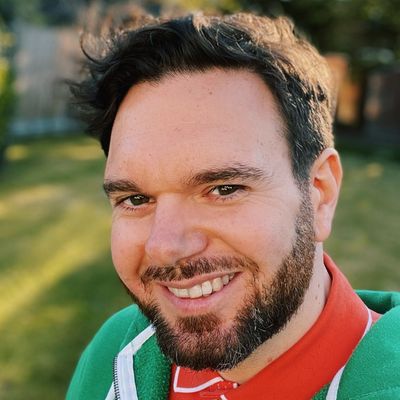
Damian Sandys is currently bringing his talent to the Broadway stage as The Kite Runner's associate director. The theatre director talks about the difference between the UK production and Broadway production of “The Kite Runner”, the importance of humor in the show, and how its US audiences are more vocal... Read More
From the show: The Theatre Podcast with Alan Seales
Guests
Miniseries Inclusions
Featured Shows
About
Damian Sandys is currently bringing his talent to the Broadway stage as The Kite Runner's associate director. The theatre director talks about the difference between the UK production and Broadway production of “The Kite Runner”, the importance of humor in the show, and how its US audiences are more vocal. He shares how he started getting into theatre directing, from watching and learning from his dad to meeting Cameron Mackintosh which opened up opportunities for him. Damian recalls how after graduating, he ended up taking a teaching job at a boy's boarding school where he taught English and Drama, and after putting on shows at the Edinburgh Festival, a producer who watched one of his shows offered him a directing job. He talks about working for the show, “NewsRevue” which was influential in his career. Damian also shares how he got connected with "The Kite Runner" production, why he decided to stay with the show for this long, and why he thinks a line from the show, "there's a way to be good again" is the key to life.
Damian Sandys is a theatre director with productions across the UK, Edinburgh Fringe, the West End and internationally. He graduated from Oxford University and has directed over 50 productions at the Edinburg festival, including “Shakespeare For Breakfast: 25th Anniversary”. He has been the resident/associate director for several West End and international tours of “Priscilla Queen of the Desert”, “The Kite Runner”, and more. His other directing credits include “Aladdin”, “The Taming of the Shrew”, “Beauty and the Beast”, and “Sleeping Beauty” among others. He's also been a part of the teams responsible for the London revival of “Tick, Tick... Boom!”, “When Midnight Strikes”, and “West Side Story”. Currently, he's the associate director for Broadway's "The Kite Runner”.
Connect with Damian:
- Twitter: @munchkindamo
- Instagram: @munchkindamo
Connect with The Theatre Podcast:
- Support us on Patreon: Patreon.com/TheTheatrePodcast
- Twitter & Instagram: @theatre_podcast
- TikTok: @thetheatrepodcast
- Facebook.com/OfficialTheatrePodcast
- TheTheatrePodcast.com
- Alan's personal Instagram: @alanseales
- Email me at feedback@thetheatrepodcast.com. I want to know what you think.
Transcript
This transcript was automatically generated and might contain errors.
[0:00] Alan Seales: Welcome back to the next episode in the Kite Runner Takeover here on The Theatre Podcast.
[0:12] Alan Seales: I'm Alan Seales and our guest today is the Associate Director of The Kite Runner, Damian Sandys. This guy has been with the production in London and before that and now has helped make it what it is there and now here on Broadway. Just gosh, if you haven't seen this, again, you gotta see it. It's a story everybody needs to hear. It's got so much heart and it's a story of love and forgiveness and family and it's just what we need right now. So, connect with me online. Let me know you're listening on Instagram or Twitter or TikTok or Facebook. Is Facebook, sorry, Metabook? I don't know what they're calling it anymore. It's Meta Metaface. There we go. Find me on Metaface. Leave a rating and a review and everybody please enjoy this episode now with Damian Sandys.
[0:59] Alan Seales: Today's guest, a graduate of Oxford University and Arts Educational, is a director who's been part of the teams responsible for the London revival of Tick, Tick... Boom!, When Midnight Strikes and West Side Story, and he's directed over 50 productions at the Edinburgh Festival including the sellout Shakespeare for Breakfast and even the UK and international tour of Priscilla Queen of the Desert. He's now bringing his talents to the Broadway stage reviving his role as associate director for The Kite Runner following an incredibly successful run on the West End. Damian Sandys, welcome to The Theatre Podcast.
[1:37] Damian Sandys: Hello, thank you for having me.
[1:40] Alan Seales: So actually, as we're recording this, you just like days ago landed back in London. So you've been, you just left New York after The Kite Runner has opened and now I feel like as a director, right, if you can speak to this, it's like you find your kids finally made it to college and left the house or they've moved out. You don't have to worry about them anymore?
[2:09] Damian Sandys: Absolutely. Well, it's very much that kind of feeling after being in New York for two and also sort of months before prep and everything. It was very, very odd to have left it behind a little bit now. I am just two or three days back in the UK and it felt really, really odd. It is that sense of your baby has grown up in front of your eyes and now you have to set it free as such and let them walk and breathe on their own. But yes, it does feel very strange at not being with them every day and seeing the show unfold even more because it's still at a relatively early stage of performances. And one of my favorite things as a director is seeing how the show grows within certain parameters and reacts and changes with the audience in front of it. So I have found myself still living slightly on New York time and I'm very conscious whenever it gets to a performance time. It's slowly easing back into UK time now.
[3:14] Alan Seales: Well, I was going to ask this later, but I think something you just said about the show's growing and changing based on audiences and whatnot. I was going to ask, what if anything changed between the UK production and the Broadway production now? But was there anything script-wise or staging-wise or anything that actually had to change in that respect? Or is it all just like a different dynamic? Because of course, it's a whole new cast, but the audiences culturally are different.
[3:44] Damian Sandys: It's a bit of everything, actually. We've always tried to keep the show really fresh. And I think this is my sixth cast that I've worked with over six years. And every time we do a cast change, even if it's just a couple of people, we always like to look at the material, look at the staging, just to check it's really serving the cast that we have at that time. And so having been a few years since we did the last production, I think, first of all, the fact that the world has changed in the last few years made it really important to go through the script and make sure it was really, really tight for 2022 and serving that initial story well. But then also, for the first time, we had a completely brand new cast.
And that was kind of, in one sense, quite liberating, just having a complete blank slate to work with. And it allowed us to freshen up a few bits that we quite wanted to do and just tweak the staging every now and then, and also find out what the impulses of our new actors were as well. And then add into that the fact that culturally, we are putting it in front of a very different audience. And I wouldn't say that we have changed anything specifically for an American audience. But what we have done is just be really attentive to the new lens that we're looking at the show through. And I always find previews fascinating because it is. And when you get to that stage, you're adding in the final cast member, which is the audience as a whole.
And there are very subtle differences between a UK audience and a US audience watching it. I've been asked this question a lot by my friends who've seen the show and how I found that different. And I would say, as a very sweeping generalization, the US audiences have tended to be more vocal during the show. And yeah, they really kind of throw themselves into getting immersed in the story. And if they feel surprised, if they feel shocked, if they find something funny, we know about it. And I love that. It's been really interesting to see those responses. And most of all, it shows how engaged they are in the show all the way through. And we do get that with a UK audience, but a UK audience tends to be more really listening and saving their noise for key moments.
And so you kind of get ripples of it through the show. Whereas I feel there's more a constant soundscape here. But the nice thing is that I've seen the show five, 600 times around the country, around the UK, in Dubai, in the US, and the very end of the show always gets the exact same response. I don't want to talk too much about it for spoilers, but the last 30 seconds of the show always react in the same way. And it's amazing to see the audiences across the world universally react in such a special way.
[7:20] Alan Seales: Well, I think for the most part, if you're going to a show like this in the first place, we'll exclude all of the friends and partners who were dragged there for whatever reason. But if you're going there, because you want to be there, you're open minded and emotionally available to a certain extent. And this is a show that touches everything a little bit. I mean, it's funny, but it's serious. And it deals with a lot of very intense subject matter and opens a lens onto a part of the world that especially in America, we are so far detached from. It's interesting to me because when I travel internationally, I hear the world news. And when I look at the news in America, all I get is the latest school shooting, which is really messed up.
And there's so many things that I think, as a culture, we could improve upon, especially in this country. But it's funny to me. Why do you think that the UK audiences are more reserved? Do you see that? Is it just with The Kite Runner? Or is it kind of with all your productions? As a culture, they just are quieter?
[8:30] Damian Sandys: Yes, it is a bit of a British thing, I think. I think there's a sense of keeping your cards close to your chest, and you'll reveal them when you feel the time is right, and so on. And it's not to say that the UK audiences have always been really quiet with this show. I think for a tale that is very serious, that has its dark moments, I think the humour in this show is so important. And all of those lighter moments are really, really necessary for, in order to tell the story properly, and for an audience to take it in. And I think an audience latches on to those points, always, because it is a relief in the harrowing nature sometimes of the story. And I guess, I think that is something that we've become more conscious of, as the more productions we do.
And I do think that we went into this particular production looking to not expand the lighter moments, but really treasure them and appreciate them. And our cast were very open to that. And that's probably part of the reason why the audiences are more vocal as well, in the fact that we have sought to bring a little more equilibrium there this time around.
[10:02] Alan Seales: I like that a lot. And we're gonna come back to this, because I have a lot more to talk about, because The Kite Runner is just incredible. But I want to back up a second to you as a small lad, wondering what you're gonna do with your life. And so tell me about when you started getting into performing, theatre, directing. And it's interesting. I always love hearing directors' stories or creative stories, because everyone wants to be the actor. But then some people, you have a very select few, like yourself, that are so cool. They're like, you know what, I need to create this on this side. Anyway, I'll let you tell your story.
[10:43] Damian Sandys: Well, so I did want to be an actor initially, I thought. I did a lot of youth theatre, particularly from the age of about 12, growing up. And I really, really loved it. As a child, I'd always been taken to the theatre a lot. And my dad used to do amateur shows. And I used to sit and learn his lines with him, and then sit on the front row, mouthing along with them. I don't have a particular recollection of this, but I was once telling the story of how I got into directing. And my brother pointed out that aged four, on a holiday, I had rounded up all the children on the holiday camp and put on a play, and directed them at that point. So clearly, it was in me from an early age, but I didn't capitalise on it for a while.
So I did loads of youth theatre. And I did think that I would like to become an actor, but I knew I wanted to do an English degree. I've always loved reading. And I had in mind that I wanted to do that first. And it was whilst I was at university. I, from the first day that I'd been talking to someone, and we were talking about how Guys and Dolls is the most perfect musical in the world. And for the next six months, randomly, this topic would keep coming up. And we would talk about how we would do our production of it. And there was one particular night that we literally talked through the entire show, scene by scene. And I went, why are we not putting this on? We should just do this show. And the next morning, it still felt like a good idea.
So we found ourselves literally putting that show on. And the moment I started directing it, I instantly went, oh, this feels really good. It feels a lot more me. I quite like this. And just at that time, Cameron Mackintosh came to university to give a talk on producing. And this is one of those moments that you look back on now and go, how on earth did I think this was a good idea to do? But I just waited till he was standing by himself. And I went over to talk to him. And we talked for about 20 minutes about the different shows he put on. And at the end of it, I just said, do you...
[13:42] Damian Sandys: Wow. I, I know. And I was basically brought in across the three months of rehearsal at all the key points of the rehearsal schedule to watch this brand new musical become a show. It was the most incredible experience. I'd never really contemplated how a new piece of writing became a finished product. And watching the amount of material go in, get revised, get moved out of the show was really fascinating. And it was a really big landmark for me. And I gained so many wonderful friends from that production that I'm still very close to now. So I'm still at university. I did another show, which was Honk by George Stiles and Anthony Drew, which was the very first time an amateur company were doing it.
And they turned up to see it randomly. And then the National Theatre was just about to do that show on tour. And they put me onto it, shadowing the director as well. So I had these two mammoth jobs having an amazing time. And I thought, this is amazing. I would love to work in theatre, but there's a slight fly in the ointment is I'm approaching my final exams. I need to do a lot of work to make up for all the work I've missed whilst doing shows. I've got to put my head down, do some work. I'll take a year out when I finished university and do anything. And in that time, I'll work out what I'm going to do with the rest of my life. And so I ended up taking a teaching job at a boys boarding school in Edinburgh, teaching English and drama.
And I only intended on being there for one year. And at the end of that first year, they made me head of drama. So I stayed for four years in the end. And it was a really sports orientated school. They had a theatre, but it was very rarely used for drama. They did like one production every two years. And by the time I left, there was a production every term. And funnily enough, my last show there was Guys and Dolls again, where I had full circle exactly. And I had 50 of the lead rugby team, all doing ballet in that show. Drama became the most popular extracurricular activity that was not sports there, which was lovely to see. And alongside this, every the upside was I got long holidays, and I filled every single one of them putting on a show in a theatre somewhere, and including the Edinburgh Festival.
And a producer watched one of my shows and offered me a directing job. And so I literally handed in my notice for a seven-week comedy show back in London. And again, the moment I started that job, I went, No, this is absolutely what I need to be doing with my life. And that was back in 2005. So I managed to keep hold of it ever since.
[17:11] Alan Seales: Wow, wow, that's incredible. So it's just being so sure of yourself that you know your path and you follow it. That takes a lot of guts, I guess, to like handing your notice for a full-time salaried regular job to go out for a seven-week comedy show and hope that that's going to be your career. That's incredible. And again, it's one of those moments like, looking back on it as a how on earth did I do that? But I remember it being such a quick and easy decision and just going, I've got to do this because I'll never get this opportunity again. And I just know that I'll regret it if I don't. Fortunately, that seven-week comedy show did become a job for a year and a half. It did give me a lot of time.
And actually, it was a really influential job in my career as a whole. What I learned from that job was amazing. It was a show called News Review, which is the longest running live comedy show in the world. It's still going now. And it basically, it's an hour-long sketch show where every week you update it based on the latest news. But obviously, if you have some massive world event, or a key figure in one of your sketches suddenly passes away or something, you've got to react to that that night. And so it was so fast-paced. So like, particularly anytime you go to a general election or something like that, and you're going, okay, we've got all this material in about this politician or this person in charge, what happens if it changes? And so always, you're close to the wire, making up things so close to the show being on, and just having to react to everything, which was such a great skill to learn. But yeah, very, very fun.
[19:11] Damian Sandys: Were you part of the writing team that was updating this? And how much of it was improv? Did you did was did the cast improv any of it in real time? Or was it like, Oh, someone just died? And we got to figure this out. It was a bit of a mixture of all there was a massive writing team. And they would send lots of stuff in daily. But then we were on the ground running and sometimes you didn't, you didn't have time to wait for something to come in, or you just had a great idea for something. So you'll start devising it together, committing it down to paper. And yes, sometimes it was, we know we've got this rough idea for what is going to happen. Let's just improvise this right now on stage. Thursday evening was always the day that the show changed. So you would re-tech and dress it that afternoon. And so Thursday evenings were always known as a terrifying day. Because we just don't know what's going to come out of their mouth tonight.
[20:16] Alan Seales: I think it seems like a combination of Saturday Night Live and Freestyle Love Supreme in a way, right? So it's, it's the best of both worlds of like, you know, you're going to have an outline of where the story needs to go. But how exactly you're going to get there is anyone's guess.
[20:32] Damian Sandys: I actually work really well under those kind of things. Because I'm like, if I'm worrying about word for word punctuation, and like, I get stressed out, but give me a direction and I'm fine. I know, it's massively affected my life in that way. A couple of months ago, I had to give a best man speech at a wedding. And it was actually freaking me out before of the thought of committing a speech down to paper. And in the end, I kind of went for a hybrid in between of going, I know what I'm saying here, I've got my subheadings, and I'm just going to rip off those, because I feel so much more comfortable doing that. And I, and I feel I will do a better job by doing it that way. Luckily, it did pay off.
[21:15] Alan Seales: When you're giving your best man speech, you're like, all right, I need backlight over here. And then this set piece over here. And here's how it's going to look for the photos. This is how it's going to be. All right. Trust me. Trust me.
[21:31] Damian Sandys: There's small elements of that. I try not to take over too much.
[21:39] Alan Seales: You will honestly be framed better if you stand there.
[21:44] Damian Sandys: Yeah, it's hard. It's hard not to. It's actually hard now. And I'm sure when you've been involved with like some TV and film things as well. But now watching theater, like it's hard to watch TV or even theater and not wonder how things are done or like appreciate the way lighting is used or camera angles are used or, you know, we're watching things and I'm like, drone shot, crane shot, steadicam. Like, I'm trying to figure out everything that's going on. And I'm like, and I can't watch anything with cars and not look for the reflections of boom mics in the windows now. It's just something I can't get it out of my head. Are you able to relax in that kind of way or is it still always with you?
[22:27] Damian Sandys: I genuinely am. So weirdly, I am able to relax in theater more than watching TV. In theater, I still love watching things. And I still love experiencing it. And I really try to become an audience member in those times. Like when I was in New York, I think I saw 17 shows across my time there. And each one, I was just going to be an audience member. And then afterwards, I do like to think about sort of like, oh, I really love that moment that they did stage wise, but watching the show, I just try to appreciate it. In TV, weirdly, I am more fascinated by the technical aspects. Like during the pandemic, I was so fascinated by all the filming techniques they were doing to make it look normal. By all of filming people separately and splicing them together, all of those techniques, I would stare at the screen and go, right, I reckon you've done this to make that work, and so on. It did destroy me a little bit in that time.
[23:38] Alan Seales: That's fascinating. I didn't even think about the COVID side of things. Because yeah, you can do so much with literally the same shot, and have two people on different sides of the room in the same shot, and they could have filmed it in totally different times. Yeah, that's fascinating. Now I have to go back and like watch things that are, you know, what, late 2020, early 2021, and see what I can see. So coming then back to the Kite Runner, at what point in that amazing story you were telling earlier, did you get connected with the Kite Runner production? Because it's been around for years in various incarnations.
[24:15] Damian Sandys: It has. So this production itself started around 2012. I came on board in 2017, which was just at the beginning of its second West End run. It'd been in the West End just before Christmas 2016 and 17, and had done phenomenally well sales-wise. But it had to move out of the theatre because they had another show booked in. So it very quickly sorted a transfer to a different theatre that opened five months later. And there was quite a substantial cast change at that point, half the cast change. And so it was a really lovely time to come into the show, because it had quite a bit of reinvention at that point, just because there was so much new input. And that's the thing, even with this, with our new production now, this show has always built on its history.
And so much as we have this wonderful new cast with all great new impulses and finding new things in the story, the production as a whole is so indebted to all the actors that have played a part in the Kite's journey before, because every single person has left a mark on the production somewhere through one of their impulses. And we do so much consultation on the script with Matthew, the adapter as well, that there are traces of all these people within the script as well, which is really lovely.
[26:11] Damian Sandys: So I came in in 2017 to do that second West End run, and I came in as resident director with that. So I stayed with the production all the way through its opening, worked with all the covers at that point, and then we took the show immediately out on a UK tour for another year. So I did 15 months on it in that stretch, and then I jumped over to another show when that came to an end. I did Calendar Girls, the musical on tour, then Priscilla. And whilst I was doing Priscilla, we brought The Kite Runner back to do a UK tour and go to Dubai as well. And it was really lovely to revisit it again and find some new things in the story, tell it with a different cast again. And also it's the most wonderful antidote to working on Priscilla at the same time, because I don't think you can get two shows that are more different from each other.
And so I would immerse myself in The Kite Runner by day, and then jump over and be at Priscilla by night, which was a lovely way of doing it. Kind of some nice light relief after the show. And that production did a few shows in the UK, went over to Dubai, where it won an award for best international production. And then it came back, and it was just starting a UK tour when the pandemic hit, which curtailed that tour very prematurely, alas. And so, again, it's so nice to have the show back with us again now, a few years on.
[27:53] Alan Seales: Why have you decided to stay with the show for this long? I mean, because I'm sure there's other opportunities that have come and gone. And I think it would be a conscious choice to repeatedly help the show come back in its different incarnations.
[28:09] Damian Sandys: Yeah. I love this show. I think I've always loved the book. And I read it right at the beginning when it came out. And there's something about this story, which I think is really beautiful. And whilst it's got a very specific backdrop to the story, at the heart of it are really, really relatable human emotions of friendship, betrayal, love, forgiveness. And that's why I think the story is held in such affection by so many people, because no matter who you are, I think there are aspects you can relate to it. So that's a massive draw. On top of that, the fact that every time we do it, we find something fresh in it. So it's never the same as just repeating a show. There's always something more to discover, more to explore in it.
And that's really exciting. The fact that you know a show inside out. I almost take myself by surprise sometimes of the amount of detail that carries in the back of my head, even after three years away from it. And I can know the specific word something happens on or something without looking at anything. But to have that and still be finding new things in it is amazing. And then it's also down to the fabulous team we have. I love working with Giles Croft, our director. He's always been a very generous, very supportive man to me. And right from the beginning has allowed me to have a lot of creative input into the show. And so I think that is a very large part of why I stay with the show. Because I think it probably would be different if it was just every time coming back to it, helping to deliver someone else's work.
And whilst that is part of what I do, there's still so much freedom within it to discover new things. And Giles has always been really supportive of that. And so I think all of those reasons together just give me an overwhelming sense of belonging with the show and also no desire to leave.
[30:35] Alan Seales: Well, there's a line in the show that says, "there's a way to be good again." So do you take that with you? That's one of my favorite lines. And so I want to know what it means to you. And do you assimilate that into your personal life?
[30:52] Damian Sandys: There's so many ways you can interpret and apply that line, a way to be good again. I think there is something about that, that the message of it always striving to be the best version of yourself is really good, both professionally and personally. Like professionally, directing is such a strange business in one sense. And it's very unlike other jobs. And how do you know if you're good? How do you get better at it? And so on. So something that I started many years ago, and I still hold true now is on the last night of a production, I always watch it and go, if I was starting this again tomorrow, what would I do differently and why? And that might be about a specific moment of storytelling. It might be just about something that has evolved over time or something that I'm not happy with.
Or just go now that we're X months on, I've got a completely different view of a moment, I think. But what that does is it always allows me to learn something and take it into the next job. Or if I revisit a show, it's kind of there already. And then personally, as well, I think a way to be good again is the key to life really about, again, being the best version of you as a human and the way that you treat other people. And so there's another wonderful saying from Maya Angelou about, I'm going to paraphrase now, I'll probably get it terribly wrong. But something about people will forget what you say, what you do, but they will never forget how you make them feel. And I think that's really important, as well. And so that would be my take out of that line.
[32:46] Alan Seales: I love that. Okay, so let's then shift into the three standard closing questions that I ask everybody to wrap up the episodes. The first one just simply is what motivates you?
[32:59] Damian Sandys: What motivates me? Good stories. Good stories really motivate me. I think I love working across all genres of theatre. I do musicals, plays, pantomimes, comedies, tragedies, anything. And the thing that always drives me and gets me excited is a good story. Good story with good characters that you care about. That's the heart of everything to me. And connected to that work. I am not exactly a workaholic, but the best thing about this job is I get to do something that I love. And I just want to do it all the time. And so I do quite often bounce from production to production, which I'm very lucky to be able to do so. And I always feel better when I'm working and doing that. And friendships also motivate me. Finding good friendships, keeping them close, and meeting new people as you go through life, I think.
[34:10] Alan Seales: Next question then, what advice would you give to your younger self and younger people listening now starting out down a similar path?
[34:15] Damian Sandys: The piece of advice that I was given and I followed, and I really think it's true, is if you can imagine yourself doing something else, you have to do the something else first. Which is why I taught first. And I am really, really sure looking back on it, that this is why when I did make the jump to directing, I knew that was it for life. And in those early years, there were some tricky times. And sometimes you finish a job without knowing where the next job was coming from, or I had a long stage of getting to the final two for jobs and not getting it because I didn't have the experience and so on. But the thing that kept me going all the way through was, I know this is the job I'm supposed to be doing. So I think one, taking time to get there is good. The fact that it is a marathon, not a sprint is all about the long term, not the short term. And it doesn't matter how quickly you get there. And to always trust your instincts.
[35:23] Alan Seales: I like that. All right. So the last question, if you can only see one show for the rest of your life, you can see it as many times as you want, what would you see?
[35:27] Damian Sandys: Oh, my goodness. Oh, my goodness. Oh, my goodness. So many, so many. I'm going to immediately discount any of my own productions just to go to like, let's see someone else's. And I'm going to be greedy. I'm going to pick a musical and a play. Okay. So musical wise, I don't know if this musical is very well known over in America, it has had a production. But the musical, which I adore, I discovered it at 16 when it came out. And it's the first musical that I ever went. I am making the conscious decision of I've heard this show. I love it. I want to go and see it. And I really adore it. It's Martin Guerre, which is the third show by Boublil and Schönberg after Les Mis and Miss Saigon. There is something, there's something so beautiful about the writing.
It had two productions over here. It opened, it closed briefly, they did some reworking of it. And it was a really big, very dance heavy production. And then they closed it, and they completely reconceived it, reorchestrated it, moved things around, changed the plot slightly, and took it on tour. And I love both versions equally. It had one very small production over here since it is a show that I would kill to do. And I just adore every ounce of music in that show. So I think that will be my musical choice. Play wise, I was going to say one and then three other plays popped into my head. And I was like, Oh, which one should I go for? Which one should I go for? I am going to go for The Inheritance, which I believe you had on Broadway just before the pandemic.
It started out this year. It was a show that I did not know much about when I went to see it. And I just thought it was the most beautiful piece of theatre. And it encapsulates so many different emotions. And that's why I think I could sit through it for the rest of my life, because it really is every facet there. It's a beautiful story, beautiful characters, again, and told in such a beautiful way as well.
[38:10] Alan Seales: I agree. I agree. So where can we find you on social media?
[38:10] Damian Sandys: I am at munchkindamo on both Twitter and Instagram, which in no way reveals anything about my height. Just your love for Wizard of Oz?
[38:24] Damian Sandys: I think it's more my height. I am slightly known for being this and my nieces and nephews are all giants compared to me. And they are now 16 and above and have got used to just kind of calling me munchkin around the place.
[38:39] Alan Seales: Oh, well, that's cute. You can get more of me at thetheatrepodcast.com. I'm on Instagram and Twitter and TikTok. Find me at theatre_podcast and leave a rating, review, spread the word, tell your friends. This is edited by Well-Rounded Hoodlum Productions, music by Jukebox the Ghost. And Damian, thank you so much. I had so much fun talking with you.
[39:04] Damian Sandys: Thank you. So nice to talk to you.
© Broadway Podcast Network, All Rights Reserved