

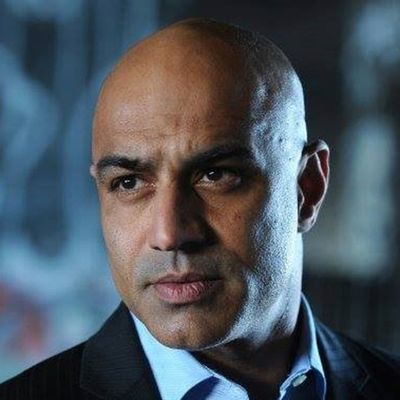
Actor, writer, director and producer Faran Tahir may be best known for his roles in “Iron Man” (he tried to kill Tony Stark!) and “Star Trek” (he was killed by Nero!) but is now currently making his Broadway debut as Baba in “The Kite Runner”... Read More
From the show: The Theatre Podcast with Alan Seales
Guests
Miniseries Inclusions

Featured Shows
About
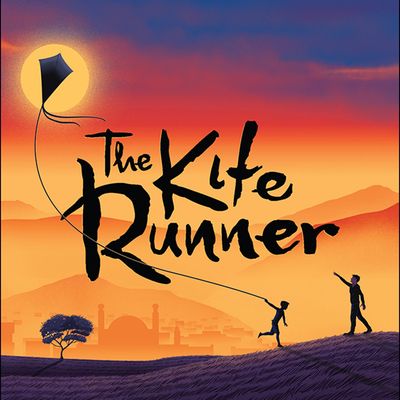
Actor, writer, director and producer Faran Tahir may be best known for his roles in “Iron Man” (he tried to kill Tony Stark!) and “Star Trek” (he was killed by Nero!) but is now currently making his Broadway debut as Baba in “The Kite Runner”. Faran talks about playing villain roles, the challenge that comes with it, and how he brings a level of humanity to his roles. He talks about his childhood and growing up in a family who has been in the arts, and why he wasn't initially supported in his goal of becoming an actor. Aside from playing a bad guy, Tahir also shares the challenge of playing a good guy and of finding flaws, why he thinks art is "about putting up mirrors so that we can look at and examine ourselves". He shares what he would tell his students when he used to teach acting, which was you can never say you've mastered something. He also reflects on his role as Baba in "The Kite Runner", finding your spiritual community, and how as humans there is always room for redemption.
Faran Tahir is an actor, writer, director, and producer who came from a theatre family. He has appeared in over 50 stage productions across the US and the world. He received his Bachelor's degree from the University of California, Berkeley and his graduate degree from the Institute for Advanced Theatre Training at Harvard University. His film credits include "Iron Man", "Star Trek", "Escape Plan", and Elysium. He has also appeared in numerous TV shows, including "The West Wing", “12 Monkeys”, "Shameless", "Supernatural", "24", "Lost", "Prison Break", "Chuck", "Criminal Minds", and "How to Get Away with Murder". He's recently played the title role of Othello at Shakespeare Theatre Company and Richard III at Commonwealth Shakespeare Company. His other theatre credits include "Macbeth" at American Repertory Theatre, "Beast and Moon" and “A Perfect Ganesh” at Actor’s Theatre of Louisville, and "A Midsummer Night’s Dream" at the Commonwealth Shakespeare Company. Tahir is currently making his Broadway debut as Baba in "The Kite Runner".
Connect with Faran:
- Twitter: @farantahir_
- Instagram: @faran.tahir
- Facebook: @OfficialFaranTahir
Connect with The Theatre Podcast:
- Support us on Patreon: Patreon.com/TheTheatrePodcast
- Twitter & Instagram: @theatre_podcast
- TikTok: @thetheatrepodcast
- Facebook.com/OfficialTheatrePodcast
- TheTheatrePodcast.com
- Alan's personal Instagram: @alanseales
- Email me at feedback@thetheatrepodcast.com. I want to know what you think.
Transcript
This transcript was automatically generated and might contain errors.
[0:00] Alan Seales: Hey, everybody. Welcome back to The Theatre Podcast. I'm Alan Seales, and our guest today is Faran Tahir, who continues our Kite Runner takeover. This is a guy who's done so much work to himself, both physically and emotionally, work on himself. He knows who he is. He knows what he wants, and by doing good, he's making it happen. He is always trying to learn and improve himself. I respect that so much and obviously feel a bond with him over that, since if you've listened to this podcast for any length of time, you've probably heard me mention that one of my biggest fears is growing older and being unable to learn new things, to always improve. He and I share that. Just an awesome, an awesome guy.
Find me online on Instagram, Twitter, Facebook, TikTok. Connect with me. Let me know you're listening. If you want to help with my TikTok, I need somebody to run that thing. I don't do it very well. So, if you want to help out, let me know. And everybody, please enjoy this episode with Faran Tahir.
[1:17] Alan Seales: Our guest today is an actor, writer, director, and producer. He's appeared in over 50 stage productions across the U.S. and the world, and recently he played the title roles of Othello at Shakespeare Theatre Company and Richard III at Commonwealth Shakespeare Company. His film credits include over 30 films, including Iron Man, Star Trek, Elysium, and Escape Plan. His hundreds of television credits include recurring roles on shows like Scandal, 12 Monkeys, Warehouse 13, Once Upon a Time, American Crime, Dallas, among many others. And now making his Broadway debut as Baba in The Kite Runner, Faran Tahir, welcome to The Theatre Podcast.
[2:00] Faran Tahir: Thank you for having me. It took us a while to get here, but here we are now.
[2:06] Alan Seales: I know, the Internet, the challenges of the Internet make life complicated and simple all at the same time. But I just have to break the ice here and just get it out of the way. The elephant in the room is you tried to kill Tony Stark.
[2:15] Faran Tahir: I did.
[2:23] Alan Seales: And I think you need to apologize for this, because there's a lot of people who like Tony Stark.
[2:28] Faran Tahir: I know, I try every day, and people are still not forgiving me for that. But you know what, you can't blame a man for trying to kill him and also to apologize at the same time.
[2:34] Alan Seales: Well, you've got this massive film career. And of course, like the recent J.J. Abrams, not so recent anymore, but like on Star Trek, you bring a level of humanity to these roles. And even when you're trying to kill Tony Stark, it's real. It's not like, oh, I'm a bad guy, I'm coming in and I'm artificial. There's a depth to everything I see you in.
[3:05] Faran Tahir: Well, thank you. I appreciate you saying that, because something that I always say and think about is that, especially when you're playing bad guys, there's no one in this world who gets up in the morning and goes, "Aha, I'm going to be the worst man in the world today." You know what I mean? I think the more chilling thing is the justifications that a person, a character gives to his actions, and those can be chilling. And I think the challenge is that if you're playing a bad guy, especially, it's easy to play the badness first. But we also need to find the opposite of it every now and then, so that we ground the character and anchor him a little bit. I think people can, well, if not identify, they can at least make it seem a little bit more real, rather than just a bad guy.
[4:03] Alan Seales: Yeah.
[4:04] Faran Tahir: So thank you for saying that.
[4:05] Alan Seales: Well, it's noticeable and obviously speaks to the fact that you just continue to work over and over again. You've got a massive resume, and with some major, major motion pictures and TV shows. And you're obviously somebody that can deliver, but seem like, personally...
[4:26] Faran Tahir: Look, I know in this field, and you know it too, this well can dry up any day. So I thank the heavens, God, nature, whatever, every day that, you know what, I'm still breathing and I'm still working. So let this train just keep on going on a steady pace. We don't need to go fast, we're going to go slow. Just on a steady pace is good for me.
[4:51] Alan Seales: Well, with Avatar 2 coming out this December, now I'm back to praising Ewa.
[4:58] Faran Tahir: Ah, okay, let's let this play Ewa.
[5:00] Alan Seales: Ewa, I love the interconnectivity of all of this. And I feel like... I've been talking about this a lot, actually, and to take it to The Kite Runner, one of the episodes that I just recorded recently was with Salar Nader, who's the tabla player in the show. And we got into such a deep conversation about the interconnectivity of people, but also to animals and to instruments, because when he's playing the tabla, it's skin stretched across wood. So it was a living being that you are now using to create more sounds that are affecting more living beings.
[5:39] Faran Tahir: And the wood was a living being also. It is all connected. And I think it is that kind of that energy that flows through everything. And we need to just take a pause and celebrate that every now and then, if we can.
[5:57] Alan Seales: Well, so when did you start performing? Because you're a Pakistani-American actor, right? So what was your childhood like getting into this industry, especially when I suspect that we can touch on this, when there was very little representation? There was hardly probably anybody who looked like you who wasn't playing a stereotype.
[6:11] Faran Tahir: Well, I mean, so I'm kind of blessed, in a way, because my family has been in the arts for the last 100 years. My grandparents were playwrights, actors, writers. So are my parents. So I kind of grew up backstage. And so it was kind of part of my reality. Although when I started, much to my chagrin, I thought that when I would announce this to my parents that I wanted to do this, they would be like, "Yes, boy, go, go do your thing." And their question for years was, "Why? You see us struggling. Why do you want to do it?"
[7:11] Faran Tahir: Why do you want to do this? Why do you want to do this? Exactly. And that was their point, that they really wanted me to kind of do some soul-switching on this and come up with some answers. And what one realizes is that those answers evolve over time. And that's a good thing. And something my father said to me, which was wonderful, I finally, in those days, there were no emails or anything. So you have to write letters. And I wrote many of them. And finally, my father said, "I don't know if you have talent or not, but I think you'll be okay. But remember this, that in this business, success and failure both can ruin you if you're not anchored." And I thought that was a wonderful piece of advice.
So having said that, I had the bug. I couldn't get rid of it. I tried to do other things. I went to Berkeley and my initial major was business and economics. But I was like a fish out of water, right? I mean, I couldn't really hack it. But I had to do this. I mean, I had no other choice. Really, I had no other choice. There was a struggle between my heart and my mind, the mind saying, "Do something sensible," heart saying, "Follow what you really believe in." And I wanted to do this. And when I started here, you're right. I mean, there weren't too many people, especially who looked like me, who came from my background. So my whole idea was, okay, given the fact that I am going to do this, what do I do now?
And what I came up with was that, okay, there will be a lot of no's coming my way for one reason or another. And how can I change as many of those no's into yeses as I possibly can? There's certain things that I can't change, which is the color of my skin, or I don't want to change it or who I am or where I come from and all that. I celebrate that. To me, it's very important. It's my uniqueness, and I want to keep it. So I tried to get as much, the best training that I could. I went to a theater school, got my MFA, did all of that. And then I also realized that at that time, especially when I started, there weren't any great roles or any interesting roles, especially in film and television. So my plan was that if I could do verse, if I could handle verse, if I could do Shakespeare, or if I could do the classics, if I could do Chekhov, if I could do that kind of theater, theater can be more accepting in a way, because the conceit is different.
You turn on the light in that room and it's day, and you dim the lights and it's night, and the audience will go there, if you're doing an honest job. So my plan was that, okay, let's get trained and learn how to handle Shakespeare, learn how to handle the classics. And that actually worked really well for me, because in the beginning, I did a lot of theater. I was part of Repertory Theater, and great theater all for many, many years. So it paid my bills, and it gave me the opportunity to challenge myself as much as I possibly could. And then slowly things started to open up. I didn't want to play just the stereotype characters. Theater helps a lot, especially when you talk about Iron Man, you talk about Star Trek and all that, and you'll see that a lot of actors who come from theater do find a home in science fiction and all of those, because it has a similar kind of stakes.
Like if you're doing Shakespeare, it's about kingdoms being ruined, right? And then when you're doing science fiction, it has a similar thing, you know, planets or universes being ruined or being challenged or whatever. And also, what it also does is that when you're doing science fiction, a lot of the times you're working with the green screen. There's a black balloon coming towards you, and you're thinking, "Oh my God, it's a monster that's about to hit you," which is very theater, you know? I mean, in theater, you create the picture for the audience by taking their imagination. So there is harmony. As you said earlier, the skin and the wood and all that, there is something that flows, that energy flows through even in art in many ways, if that makes sense. I don't know.
[12:10] Alan Seales: Oh, it makes total sense. It makes total sense. And I never made that connection until now that I obviously love theater, and I love musical theater, and I love sci-fi. I love time travel, aliens, alternate multiverses. I'm like, I can't get enough of it.
[12:30] Faran Tahir: Exactly.
[12:31] Alan Seales: And I think you just hit the nail on the head. That's phenomenal. That's phenomenal. I'm never going to look at sci-fi the same way. I'm like, this is just really good theater. That's all this is.
[12:39] Faran Tahir: It is really good. It is really good.
[12:41] Alan Seales: So for you, then, you've played a lot of bad guys. You've played a lot of good guys. Do you have a preference or do you approach them differently? Because I feel like what you just said about being the bad guy and showing that they have depth and humanity, they don't wake up...
[12:48] Faran Tahir: You actually were twirling your mustache when you said that, which was very funny.
[12:56] Alan Seales: Yeah, yeah, yeah. I'm going to be the worst bad guy I can today.
[13:00] Faran Tahir: Actual bad guys still think they're doing the right thing.
[13:04] Faran Tahir: Exactly. And that's the chilling part, right? I mean, to them, every action is justified, you know, however maniacal it might be. But to them, it is what needs to be done. Right? So when you're playing a bad guy, the challenge again is to find those cracks and how to make a bad guy human. And by the same token, when you're playing a good guy, you also need to find the flaws in playing a good person, because it's important for us to, there is no one who's a complete saint, right? And none of us is a complete criminal either. So when you play a good guy, at least I try to find the flaws in the person because they have...
[13:52] Faran Tahir: I have some. I know you don't, but I have some.
[13:55] Alan Seales: Just like one, one or two.
[13:58] Faran Tahir: Yeah, well, yeah, minor ones.
[14:00] Alan Seales: Yeah.
[14:01] Faran Tahir: But yeah, but I think that's the balance that we need to keep when we're trying to play a character, because I don't, you know, every I kind of I kind of hate the word people see a character actor. Well, every character is a character. You know, so you're playing the lead or you're not playing the lead, you're still playing a character. And the character has to be has to be what either people should be able to identify with or people should be able to recognize.
[14:30] Alan Seales: We're going to take a short break. Stay tuned for more of the episode.
[14:42] Faran Tahir: Well, good, good performance, good theater makes you think makes you go internal. And you're right. Like, if you could walk away from a performance and you're like, whoa, whoa, whoa, I totally relate to the bad guy. I need to talk about this or, you know, like, that's that's something that really can make you think.
[15:06] Faran Tahir: Well, exactly. Look, I mean, I think art is all about putting up mirrors so that we can look at ourselves and examine us. Right. And sometimes we like what we see and sometimes we need to challenge what we see. But that is that is what art does. That is what the theater does or actually the film or whatever. You know, it should do that. It shouldn't be. That you go go to an evening of theater and, you know, there's a nice little bowl put on it. And you you by the time you get to dinner, you forget what you what you saw or film. Right.
[15:39] Alan Seales: Right.
[15:39] Faran Tahir: Right. So there is something beautiful about that, that people are connecting on a very raw level to what they're experiencing in that two hours plus show. And because, again, it's about flawed people, you know, especially the character of Amir, my son, and the character that I play, Baba, both of them are extremely flawed people who are trying, who literally try for the entire life to right their wrongs.
[18:08] Faran Tahir: You know, that's what I was going to break up with, was that Baba, especially, you're talking about find the flaws in your heroes. That's literally, like, Baba, you look up to this man. He's the great father figure. And then, like, I'm not going to give away spoilers, but so many people have read the book. But in the end, right, you find out about his past and he's been trying to do good the entire time. And by coming out of something bad, like he could be seen as a bad guy or a good guy, depending on sort of, you know, what side of this problem you're coming from. And it's played, it's played brilliantly in there as an actor with the depth and the humanity that you have. Like, were you excited to sink your teeth into Baba?
[19:15] Faran Tahir: Oh, good God, yes, man. I was like, bring it on. Bring it on now. Yeah, yeah. I was very, I mean, I read the book a long time ago and the book really moved me. Because I think, again, it's, yes, I mean, yeah, I mean, you see a war-torn country. You see all of that, you know, because it's especially the first half is set in Afghanistan and all of that. So that is the backdrop of the story. But it's a very human story. And I've been saying this over and over and over again, that it doesn't, it doesn't aggrandize and it doesn't demonize. But it humanizes. And that, to me, is the most beautiful thing about the story. And we need to be bringing stories like, stories that aggrandize us, war-torn country, whatever it is.
Because I think that's something that's, we have gotten into a place in our lives where, now I'm going to steal this term from theater, that we have started monologuing and we don't dialogue anymore. You know, if you are opposite sides of an argument, you say my piece and then pat myself on the shoulder and go, aha, I said my piece. And you're doing the same thing, but we're not dialoguing, we're not having a conversation. Things, we have come to a point where people don't want to listen to each other, you know? And stories like this, again, it shows us that there is room for someone with great flaws to rise above. Or for someone, you know what I mean? I think that's the beauty of stories like this.
[21:00] Faran Tahir: Well, there's a lot of redemption and forgiveness. And, I mean, just look at some of the greatest people that exist in real life, right? There are times when they've had to make mistakes. You can't be who you are without learning, without making mistakes. And the hope is that you're going through life not hurting people. And the mistakes you make are not catastrophic to a point where, you know, now with the internet, everything's permanent. I mean, so this stuff, like, again, depending on what side of the conversation you come from, you can say like, oh, 15 years ago, I made this tweet and I did this bad thing. Or that could have hurt people, but now I've learned from it, I'm not that same person anymore. Like, we fall into multiple chapters of our lives all the time, whether it's on a macro or micro scale. It's, you know, day to day or week to week or even year to year or decade to decade.
[23:30] Alan Seales: I want to erupt out of my chair and applaud right now. Many, many, many snaps, snaps, snaps, snaps, snaps. But yeah, I 1000% agree with all of that, and it's about learning. And I said this so many times on this podcast, is that one of my biggest fears is the literal calcification of my brain and the inability to learn new things. Because at my ripe young age of almost 42 here, I am very much into, like, what's next? What can I learn next? What's going on? Who can I talk to next? What can I learn? Like, every one of these conversations that we are having right now like this, I come out a slightly better person. Because I want to pull out and share with everyone listening the best parts of all of you and the guests. And what makes you successful and able to maintain this success? Because it's got to be stressful, right, to maintain this job.
[23:54] Faran Tahir: Exactly. And we should. We should. Because, look, I mean, we are growing every moment, right? I mean, the minute the growth stops, you're dead. You're actually dead. Yes. You know, I've lived many lives and I've been many people and I wear many hats. You know, I mean, what I am with my friends, I'm not the same person with people who are not my friends. And I sometimes simultaneously wear many hats.
[24:25] Alan Seales: Yeah.
[24:25] Faran Tahir: You know, I'm a father. So I put on that hat and that's not a fake hat. That's a true part of my personality. You know, at the same time, I go to the grocery store and I'm a different guy. Right? That's one side of it. The other side of it is, yes, we do need to grow. We all have skills, you know, and you're right. If we don't have those, how do you grow? Because life is not linear. We want life to be linear. We want to say that, you know what, if I love hard enough, I'll always have love in my life. If I work hard enough, I'll always be successful. If I work out hard enough, I'll never get cancer. But that's not what it is. Right? We grow in the, not in the linearity of life, but in the incongruities of life. You know, I mean, we are flawed people. We are humans. There is room for redemption. There should be hope always, unless you're screwed in the head. You should always be hoping to rise above your own flaws or do better than what you did yesterday.
[24:25] Faran Tahir: It is stressful, but I think, I mean, I used to teach acting for a bit. And I used to tell this to my students always, that, look, you can never say that you've mastered something. And don't think that. Because the day you say that you've mastered something, there's nowhere to go, right? So you always have to stay a student. You know, never the master, but always a student. Learn and keep learning. That's what we need. That's what we do. And I mean, that's what you're saying, right? I mean, that every day you try to learn and hopefully I try to learn, you know, in different ways. That feeds different parts of personality. And that is the joy of it. Otherwise, what are we doing here?
[25:13] Alan Seales: I know. I feel the same way. I'm like, there's the grand scheme of the universe, right? Like, that's all metaphysical. But yeah, I mean, you know, we're here for a limited time. We might as well make the best of it and go see some good storytelling. Go see some good theater.
[25:28] Faran Tahir: Exactly. Look, man. I mean, even if there are other lives, I don't know what my past life was. So I only have this one that I know. So I should try to do the best that I can in this one. So yeah, go see some good theater, please.
[25:44] Alan Seales: Speaking of which, the Kite Runner, right?
[25:46] Faran Tahir: Yes.
[25:47] Alan Seales: So Baba, we talked about Baba a little bit. But the way that Baba is, he's there. He's like this rock that Amir keeps trying to bounce off of and get approval from and whatnot. I guess taking from your own life as a father, you mentioned you're a father now. And looking back on things that have happened to you in your life, right? Did all of this come together to create Baba? Were you pulling from the original book, from when you read it the first time?
[26:17] Faran Tahir: Both. I think, of course, you have to stay true to the story that's been given. But you try to create a bridge between the character that's being offered to you and the person that you are. And in that, you also start to then, again, you also start to see your own flaws. Especially as a dad, you see a lot of your own flaws.
[26:47] Alan Seales: Exactly.
[26:48] Faran Tahir: Because, you know, man, there's no textbook. It's literally you do something and you go, I don't know how much therapy they might need for this one. It worked with the older one. Why didn't it work for the younger one?
[27:01] Alan Seales: Exactly.
[27:02] Faran Tahir: So yeah. So you pull from both. And then you also realize the level of deep connection as a parent that you have. Or you should have with your kids. I'm not saying that every parent does. But, you know, I mean, hopefully you do. So yeah, I mean, I personally, I pull from both of those things. I have to stay true to the character that I'm playing. But I also, the images, the things, the little things that you think of, like, oh my God, yeah, I did do that, didn't I? And now I'm doing it. Now I'm playing that character. Yeah, I see that.
[27:56] Faran Tahir: Well, the humanity of the show is so resonant. The whole show, I think the message of the show, in my opinion, is about forgiveness. It's forgiving family, forgiving yourself, forgiving others around you for whatever may or may not have happened to them that has directly affected you. And there's so much that I can understand why people want to come back and why people want to erupt and give their applause, because it's probably cathartic in a way. So, for you as the actor doing this story eight times a week, it's not an easy story to do. Are you bringing any of the lessons from the show home with you? Has it changed you as an individual? Look, I think every character that you do should make you grow and transform and look at yourself and see parts of yourself and see how can I improve that.
It doesn't mean that you will, but you should at least ask that question. And the show does. One of the things that I've been thinking a lot about in the show is that it also makes you think about that. Well, it's almost a cliché, but that one should love people for who they are, not who we want them to be. You know, and that's a problem or that's an issue that we face all the time now.
[29:31] Alan Seales: Absolutely.
[29:32] Faran Tahir: You know, we expect things. We don't embrace the person for who they are, but we want to embrace, we want to hug them for who we want them to be. And I think that's a running theme, even in this play, especially the characters, the back and forth between the father and the son has a lot.
[30:02] Alan Seales: Yeah, well, it's still, I mean, you look at Amir, too, the character of Amir that wants his father to love him, wants to accept him. And still, it's, gosh, it hits on so many things that we, as regular people in regular lives, are dealing with all the time of the missing love of a father or just internal conflict. But there's so much culturally, too, that this brings to light, especially with what's happening now with Afghanistan directly, but also the Russia-Ukraine war and all this just classist bullshit.
[30:43] Faran Tahir: Yeah, exactly. And I mean, you know, the thing, I mean, if you look at Afghanistan right now, the rise of the Taliban is again, they're on the rise, right? I mean, there was a massacre actually just a few days ago of, you know, like 70 people. Well, an issue that we bring up in this play is the tension between the Pashtuns and the Hazaras and all that. And I think I just read someplace that there were 70 Hazaras killed just the other day, you know? And that's a tragedy. And unlike Ukraine and the Russian issue right now, which is very prominent in our minds because it's news, sadly, Afghanistan is becoming news of the past, you know? But the tragedies and the injustices don't stop. Just because the news has moved on doesn't mean that people's lives have changed for the better.
They're still facing off. So I think in a way, the play is very timely. Very. You know, it also shows the humanity of the Afghan people. You know, we always think of people who live somewhere over there as we only know them from what we know of, right? We don't. And you realize that, you know, in the worst of situations, people still try to find normalcy. They still try to find laughter. Otherwise, people would go crazy. You know, you will always, it's human nature to keep on trying to find the light in the darkest moments. That's why sometimes you revert to a sense of humor as dark as it might be, you know? Because if you don't have that laughter, you know, to kind of take some of that pain away, it's just darkness.
It's a coping mechanism. And we've evolved intellectually to have these defense mechanisms to be able to exist and to carry on. And, you know, at the basic level, we're continuing to allow ourselves to procreate as a species through humor, because we have to get past these horrible situations. And yeah, I get that. It's amazing. I keep thinking back to the line in the show, there's a way to be good again. And that means so much to me, again, going back to the forgiveness of yourself and of others and of constantly trying to make good. But I'm curious as to what, personally, if that has come out into your personal life, what does that line mean to you? There's a way to be good again.
[33:42] Faran Tahir: It's almost like a mantra to me, because there is a way to be good again. And we need to be trying every day, you know, to be good again. Better than yesterday, better than the last moment that we just breathed, you know, because that is the struggle. That's a human struggle. And whatever it is, I mean, we all have regrets in our past. But how do you redeem yourself? And can you redeem yourself? If you give up, then all is lost, right? I mean, that's what, basically, I would argue, that's why religions came about, to give you hope, right? That's the basic reason of it, whether they're true or not, or whether it happened or didn't, or if there's a God or not. But it's all about hope. It's all about it.
And it should be. So I think it should be a mantra that there is a way to be good again. It's hope in community. Yeah. And because we are, again, herd animals. Evolution says safety in numbers. You have hope if you're with friends, if you're with your community. And this is actually kind of a tangent, but it's applicable. I was talking with somebody the other day who has a podcast called Latter-day Lesbians. And one of the two of them used to be hardcore Mormon and came out as a lesbian, left Mormonism. And they now have this support group that they've created for other people who have left these intense religions. Because the hardest thing to walk away from is not the religion itself, but the family, the chosen family that you thought you had, or that you actually did have, right?
So you're walking away from your community. And then you need to find your support and your love in another group of people who don't necessarily do nefarious things. I'm not going to go into religion, but I think one of the things that, again, you find your community by creating a certain kind of spiritualism. You know what I mean? And a lot of what religions are doing now is that they want you to focus on the ritual, but not on the spiritual. That if you pray this way, then you're closer to God or whatever. Because then it brings in control. But rituals were created so that you could actually open the door to the spiritual, right? And so what you find in your spiritual community, whatever that is, whether it's geographical, or whether it's based on who you are, or whether it's gender, whatever it might be. But once you find that spiritual connection with people, that becomes your community.
[36:50] Alan Seales: Yeah. Is theater a form of spirituality for you, like that chosen community, those casts?
[36:56] Faran Tahir: Absolutely. Absolutely. Absolutely. Because theater community is historic. It's where misfits always came together. It's always been accepting of the misfits. That's who we are, basically, in one way or the other. Or that's what the rest of the world might think of. We are people who assume characters. That's our therapy. We walk in other people's shoes. That's how I get my empathy with people. Because I literally walk in their shoes at times. So it is my spiritual shrine, which is theater. I love it. I love it to death.
[37:41] Alan Seales: That's brilliant. And I agree with that, too. The misfits portion of it, as well, is very resonant. Because there's so many people that they don't feel like they belong until they find other people who don't belong. And therefore, they belong with each other.
[37:49] Faran Tahir: Exactly. And theater has always been accepting. I mean, when the rest of the world was not accepting of people, whether it's race or whatever it might be, you know?
[38:03] Alan Seales: Yeah. Well, let's wrap up with three questions I ask everyone to end the episodes. The first one, just very simply, is what motivates you?
[38:08] Faran Tahir: What motivates me is there's a way to be good.
[38:19] Alan Seales: Good answer. All right. What advice would you give to your younger self and younger people listening now, starting out down a similar path?
[38:24] Faran Tahir: My advice to them would be that always dream big. But don't shy away from the work and the effort that goes into it. Take your successes with grace and humility, and take your failures with bravery and humility and grace.
[38:45] Alan Seales: All right. Now, last question. Hardest one. If you can only see one show for the rest of your life, but you can see it as many times as you want, what would you see?
[38:50] Faran Tahir: Oh, good God. Okay. What would that be? Look, I mean, I'm going to be shamelessly plugging Kite Runner right now. So I'll say Kite Runner for the time being. Is there a Shakespeare play that you would like to see repeatedly?
[39:14] Faran Tahir: Well, so I, as you mentioned earlier in my intro, like I did Othello and Richard III, what I would want to see and what I would want to do right now is a Scottish play. So right now, I want to see that a lot because it's something that's been like, that's just been like, kind of in my head right now. So, so yeah. I mean, with Shakespeare, I think, well, I would, I would see Shakespeare all the time because it's, again, it's about flawed people. And somebody said this very, uh, love, love this thing that the director once said, that Shakespeare's characters, their imaginations are too big and that's what they fall a prey to.
[40:04] Alan Seales: Huh. That also puts things, puts Shakespeare into perspective.
[40:09] Faran Tahir: Yeah. I mean, you can take Othello again. You take Richard III again. The imagination is too, like, I mean, whichever one you take.
[40:14] Alan Seales: Yeah. Yeah. You're right. You're right. Everything's going on. That's brilliant. All right. So can we connect with you online and social media? Where can we find you?
[40:21] Faran Tahir: You can find me on Instagram, which is Farhan.Tahir. You can find me there. You can find me, there's a Farhan Tahir page on Facebook, and then there's a Farhan.Tahir on Twitter, but I'm not on Twitter too much because I don't know what to say all the time, man. But yeah, so there you have it.
[40:43] Alan Seales: He's wake up every morning and like, good morning. I don't know what to say today.
[40:46] Faran Tahir: I know. And who's interested in what breakfast I have? It's really not interesting.
[40:56] Alan Seales: Well, you can get more of me in these episodes at the theater podcast.com. I'm on Instagram and Twitter at theater underscore podcast on TikTok at the theater podcast. Don't know what I'm doing there, but whatever. I'm there. Leave a rating and a review wherever you're listening. This has been edited by Well-Rounded Hoodlum Productions, and the music came from Jukebox, The Ghost, and Farhan, thank you so much. This has been such a fun conversation. It really has been. It's going to put a smile on me for the rest of my day.
© Broadway Podcast Network, All Rights Reserved