

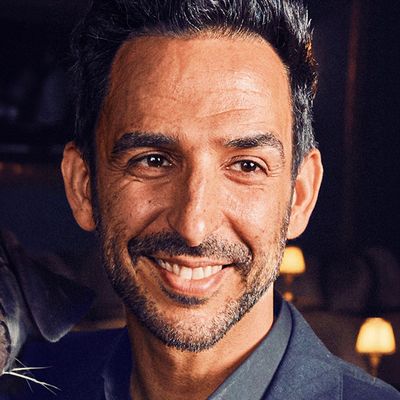
Best known for his recurring role as FBI Special Agent Aram Mojtabai on the NBC hit TV show, "The Blacklist” is stage and TV actor Amir Arison who's also currently making his Broadway debut as Amir in "The Kite Runner"... Read More
From the show: The Theatre Podcast with Alan Seales
Guests
Miniseries Inclusions

Featured Shows
About
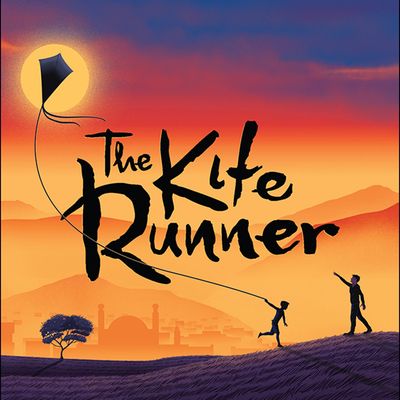
Best known for his recurring role as FBI Special Agent Aram Mojtabai on the NBC hit TV show, "The Blacklist” is stage and TV actor Amir Arison who's also currently making his Broadway debut as Amir in "The Kite Runner". He shares one of the hardest scenes in the show for him, and that while playing his role can get tiring at times, he finds it "bizarrely energizing" and cathartic. Amir recalls the preparation he did for his role where he spent months not doing anything, practicing his lines and how his dog barking at him while doing so is a good thing. Amir shares an incident of a service dog barking in one of their shows and how he uses incidents like that as an opportunity to have a direct relationship with the audience. He shares the two moments that made him want to pursue acting, the support he's gotten from his parents who are both in the medical field, and why he thinks medicine is an art. Advocating for mental health, animal rescue and arts education, Amir makes sure to do good and that while he's alive, and why he believes that the one thing that transcends time and space is love.
Amir Arison is a stage and screen actor best known for his role as FBI Special Agent Aram Mojtabai in NBC's "The Blacklist". His TV and film credits include "Billions", "Fringe", "Homeland", "The Mentalist", "American Horror", "NCIS", "Girls", "The Visitor", and "Jane Wants a Boyfriend". His stage credits include "Hamlet", and Off-Broadway productions like "The Way of the World", and "Aftermath". In 2018, he received the Mendez Award from the Maryland International Film Festival-Hagerstown, an award given to those who use their platform to give back to the community. Aside from acting, Amir advocates several causes , including mental health, arts education, and animal rescue. He recently made his Broadway debut as part of the ensemble cast of the Kite Runner, playing the role of Amir.
Connect with Amir:
- Twitter: @AmirArison
- Instagram: @amirarison
- Facebook: @amirarison
Connect with The Theatre Podcast:
- Support us on Patreon: Patreon.com/TheTheatrePodcast
- Twitter & Instagram: @theatre_podcast
- TikTok: @thetheatrepodcast
- Facebook.com/OfficialTheatrePodcast
- TheTheatrePodcast.com
- Alan's personal Instagram: @alanseales
- Email me at feedback@thetheatrepodcast.com. I want to know what you think.
Transcript
This transcript was automatically generated and might contain errors.
[0:00] Alan Seales: Welcome back to The Theatre Podcast. This is another episode of The Kite Runner Takeover. If you haven't listened to the previous episode, scroll back through the feed for like four, five, maybe six episodes by this point. I don't actually know. There's a lot of episodes that are all cast creatives from The Kite Runner. Just incredible people. And this one is no different. This episode is with Amir Arison, who you probably know from his hit role on The Blacklist. And he's been performing TV and film for a long time. And this is his Broadway debut. And it was actually really fascinating to me how he said that once he knew he was getting the role, he started working on the character long before ever hitting the rehearsal room.
Because, I mean, he's basically not basically literally on stage the entire time once the show starts, more or less. And he just needed to build up his emotional stamina. You hear about physical stamina and even maintaining your mental health in one way or another, whatever that means to you. But the emotional stamina of having to go through this intense story eight times a week, he wasn't prepared for. And I love how he worked on that. Incredible. So connect with me online, Instagram, Twitter, Facebook, TikTok. If you want to help with my TikTok, I need somebody to help me with that. I don't know what I'm doing. And I would love for somebody to kind of run with that a little bit. So let me know.
And now, everybody, please enjoy this episode with Amir Arison. Today's guest is best known for his nine seasons on the hit TV show The Blacklist. Additional fun TV credits include Law & Order SVU, American Horror Story, Billions, Bull, Homeland, and Girls. He's appeared in almost a dozen off-Broadway productions and is a Mendez Award recipient, which is an award given to those who use their platform to give back to the community. Outside his film career, he is an advocate for mental health, animal rescue, and arts education. Making his Broadway debut as the narrator Amir in The Kite Runner, Amir Arison, welcome to The Theatre Podcast.
[2:16] Amir Arison: Hello, hello. It's good to be here.
[2:20] Alan Seales: Thank you for coming on what's leading into your, we're recording on a Friday afternoon, leading into your five show weekend. Four show weekend? Wait, Friday, two Saturdays.
[2:31] Amir Arison: Yeah, four show. Right.
[2:33] Alan Seales: Well, actually, we do shows Monday. So you could say five show.
[2:37] Amir Arison: Okay, five show weekend. And we were just discussing right before we started recording that you don't get an alternate. And I want to say, first off, like you're on stage the entire show. And it is a long show.
[2:51] Amir Arison: Yeah.
[2:52] Alan Seales: You're like, oh, yeah, screw you, man. I know that.
[2:56] Amir Arison: Yeah.
[2:57] Alan Seales: It's a long show. And you don't have an alternate. Of course, everybody's got understudies. But like you were saying, you just you do it, you go for it and you want to do every show. Right?
[3:10] Amir Arison: I mean, they didn't even suggest an alternate. I would have pondered that, you know, after two show days, I do I do sort of hobble home, just the whole body, every part of the voice, body, shoulders, neck, back, ankles are just kind of like you get home. But if you get your sleep, sleep is very restorative. You get up and you go again. The surprising thing is I thought it would really sort of drain me sort of soulfully, spiritually, mentally. And it has it. It takes a toll on my body and stuff. But I find it bizarrely energizing. I mean, there's a catharsis and there's no time to really think or overthink, you know, by just being on stage. You just you have to just go. It's you and the audience to stay present and go with the audience.
If something goes strange, you just go right to the next one. There's no time to worry or plan or dodge and leave. You just tell this. And then whenever you feel if you're feeling a little strange or off, just tell the story. And I'm half the time I'm in the scenes and half the time I'm monologuing. So you just get right back and you grab the reins and you tell the story. And weirdly, it's energizing and grounding in many ways.
[4:30] Alan Seales: Well, that's what I was going to get into, because the narrator, I mean, without giving away too many spoilers, if any, right, like the context, the subject matter, it seems like this story of love and friendship and respect. And then it just goes so much deeper than that into this level of intimacy. And I guess it's still love and family, but it's like it hurts. It hurts to watch. And I can imagine as the narrator, when you're reliving this night after night, that it hurts to talk about. It hurts like inside your soul. But then at the same time, you just said it's it's regenerative. It's restorative. Well, one of the reasons I think it's regenerative is because there is that redemption at the end and it takes a long time to get there.
It's like the last two minutes of the play. With that, after sitting there for two and a half hours, I think that's part of it. But you can also feel that I can feel the audience with us. I mean, there's there's there's beats and there's pauses and there's slow moments, monologues in the audience, not shift that you hear them with you, that you can hear a pin drop. You can hear the sniffling. Obviously, you hear laughs. But when there's no laughs or sniffling or that you can hear them listening and that is that's regenerative, regenerative.
[5:50] Amir Arison: You said something about it sort of being the monologues of as it'd be hard to say because he said it's the monologues are interesting because they don't follow traditional acting rules. It's like, who's my scene partner? Well, my scene partner is the audience. And you know, when you read the book, you know, there's not an audience. There's it's a one person individual imaginative experience. They're telling you a story. Collette is telling you a story and you have your mind visualizing it. Here, the visualization is all taken care of and we're and it's a collective conversation, if you will. So one of the things that's different is it sort of sort of functions as a memory play, as you were saying.
But two thirds of the play, the memory court becomes the present because he talks the beginning. I became in the winter of 1975 and I got this phone call and then I went for this walk. And so that's how the play starts. And then we get to that phone call. It's almost like the character of Amir is to set everything up that every key moment of my life that you need to know so that I need to confess it so you can help me get through this moment where no one else in my life knows the truth, if that makes sense. It's like you guys are privy to something. And when I enter the memories, which are cowardice or wicked or shameful or joyous, and then I step out of them, the bravery comes in talking to the audience, weirdly talking to the audience is cathartic.
As painful as a scene is, I step out and I can ground myself and admit the truth. And as uncomfortable and as as terrible it is, you're telling the truth. And that's the thing he needs to realize at the end of the play when he talks to the general. He just says, that's what you tell him. You tell them the truth. And it's almost like he's telling the truth to this, the secret truth to the audience until he as a person can tell the truth in his life.
[7:40] Amir Arison: There's a catharsis to telling the truth. And people walk around, sometimes their whole lives with these huge lies or this huge trauma that's happened to them, or these moments that they're afraid they'll be judged for when they finally do talk about them. And then once they say them, everyone's like, oh, yeah, that's happened to me too. And so everyone can start talking about it. I'm not saying that that's in this case, but there are so many things and, you know, like even coming out stories or whatever the case is of people just finally being able to be comfortable in their own skin and talk about what's happened to them. And then they find that community, they find that camaraderie and a brotherhood or a sistership in their storytelling.
[8:23] Amir Arison: Absolutely. There is a particular scene that was one of the hardest scenes for me to get behind. I see how important and theatrically relevant it is, but it's the scene when it's after the main event of Act One, which, you know, we'll call it the violation where Hassan is completely and utterly violated by the character of Asa, the bullies. And many people know this and Amir, he sees it, but he doesn't step up and protect it. And that's the thing that haunts him for the rest of his life. And he can't talk about it. He's sitting on this. If he talks about it, he'll feel like he'll be in trouble. It's so shameful. He doesn't want to get him. There's so many aspects of that. And then Hassan just wants to play with him.
He doesn't know what's wrong. And Amir can't look at him because he's so crippled with guilt. It's a line of play. And then Hassan sort of confronts him. Do you want to go for a walk? It's nice outside. We can go to the bakers together. And he's like, no, no. And he's avoiding it until Hassan's like, what did I do? Yeah, he thinks it's personal. You haven't done anything. Just go. And then he still comes at him and he goes, what? Why don't we play anymore? And Amir has to say, you want to play? Okay, let's play. What would you do if I hit you? What? And then in that scene, he proceeds to try to get, I mean, the character of Amir wants to be beat up. He like, he needs to be beat up. He needs to be punished.
So what do people do when they hate themselves? They project, they project that hate onto someone else. And it's like the sage to say, so he ends up hitting Hassan, multiply calling Hassan a coward for not hitting him back. That was the hardest scene to get behind. And it's different in the book and the book, he throws pomegranates at him. So it's less violence. It's, it's, it's, it's, it's aggressive, but not violent. So it was very, very hard to kind of figure out a way into that. And then, yeah, and then there's monologues that come out of it. And that's when just everything unravels for him at the end of that one. That to me was the hardest scene to do. It was so anthema to me, just, it's just so it's, but it's, it's important.
[10:42] Alan Seales: Did I read or hear correctly that originally when you were offered the role and didn't want it?
[10:47] Amir Arison: No, I, when I got it, I knew I was going to take it. I knew that, but I wasn't sure I wanted to audition for it.
[10:53] Alan Seales: Oh, that's what it was. Yeah. You weren't sure if you wanted to do it.
[10:56] Amir Arison: Yeah. If I even wanted to go for it because, um, at first I just, I didn't like the character. That's not a reason not to do it. Um, you know, you don't have to like a character. Our job is to sort of humanize them, find the empathy. I had a, uh, an acting teacher once in college, rest in peace. Steve Friedman, um, said you play every hero, like a villain and every villain, like a hero, but so in some ways he's a villain. He's a villainous, he's an anti-hero. He's a, he's a coward. It's almost worse. So one of the reasons I was concerned is I think one of the hardest parts in Shakespeare is Brutus because he's full of indecision. How do you make indecision active on stage? You know, I had that one scene where that indecision, where he projects his cowardice and he beats on somebody, but most of the scenes are not like that.
That's a sort of an operatic moment. How do you project indecision, shame, guilt, um, confusion? Those are inherently inactive. And as an actor, you want to make active choices on the stage. So I was like, hey, how do I do that? B it's so hard to stomach for so long, all the way through act two, he doesn't stand up for his wife. He doesn't want to go to Kabul and save the kid until he sort of has to. It's just like coward decision.
[12:53] Amir Arison: Utterly changed my life and literally stopped everything. Not even during the show, but I had to go away for a month just to prepare. So, I've dedicated, you know, between rehearsal, the run, and preparation, you know, five to six months of my life where I'm really not doing anything except the show, walking my dog, eating, sleeping, and your podcast.
[13:15] Alan Seales: Well, we hear the dog with the squeaky toy in the background.
[13:18] Amir Arison: Oh, sorry about that. Sorry.
[13:19] Alan Seales: No, I just, I want to acknowledge that I'm like, it's not, if you're listening in your car right now, your wheels, your tires are all fine. It's a dog playing with a squeaky toy. It's totally cool.
[13:28] Amir Arison: It's so funny. My dog, she, real quick, she, when I practice my lines, when I was like in rehearsal, practice my lines, she'd be like in the other room. She'll come barking at me as if something's wrong. And then if I'm like, you know, in a very sad moment, she'll come up and look at me. Are you okay? And lick me. So, I was like, oh, no, that's good. That's good. That means I'm telling the truth. She believes me.
[13:46] Alan Seales: I was going to say, I think like dogs, you know, they can sense when people are going to have seizures and they can understand all these things. They can smell on a level that we as conscious homo sapiens cannot understand. Right. So, I totally was going to go there because it was funny because Carrie Butler, when I interviewed her for Beetlejuice years ago, she was saying that when it first opened, she was saying that like her psoas, she hurt her psoas, which is like this weird muscle or something on the inside of her back. I forget where it is. But it's because when you're in fear, for whatever reason, that muscle starts or whatever it is, like ends up doing weird things. And because she has to be scared in the show over and over again, like her actual fear response in her body started to react.
So, I think, to your point, I think it goes to, you know, acting is being. It's not, you know, you are being that indecisive, cowardice character, that sad character. You're not acting like it, you're being it. And then Good For You speaks to the talent that your dog, who unconsciously pulls up, smells pheromones and can sense things that we as humans can't, is like, wait, daddy, daddy, daddy's really sad right now. I gotta, I gotta go get some love. That's really cool.
[15:05] Amir Arison: It's incredible. Or like, we'll bark to like, wait, like, what's going on? Talk to me. Hello, are you okay? But I have to say, this actually reminds me, we had a dog bark in the theater the other day.
[15:15] Alan Seales: What?
[15:16] Amir Arison: I think it was a service dog. Okay. Service dogs are trained to be, you know, wonderful, quiet. And it was, you've seen the show? Yeah. So it was actually at a very major moment. It was right when I'm about to pray. And, and my character's quite vulnerable. Maybe I'll take this as a compliment from that dog. We heard a little tiny, and it was like, what was that? And then, uh, as I get down on my knees, I'm about to do the big prayer. I hear a bigger wolf and I just look out and go, it's okay, doggy. The audience, the audience lost it. They laughed and then they gave a big cheer, like a big applaud and cheer. But the reason I, two things, the reason I, I, I, I've been, I've done that a few times whenever, like a cell phone, because you can feel the people get angry or shift or nervous.
And I don't want to, I want to keep the story present. So I want to not fight the audience or have the audience fight that person who made sound and just kind of keep us, we're all together. There's another time a Siri went off, cell phones went off. And I, in the, if it's in the right moment, I will address it when I'm in narration and then just bring us all back to the story saying it's okay. We're all, we all heard it. We're all good. So I said, it's okay, doggy. And they all kind of, now they're like laughing, but it's a very serious moment. And then I put my hands up and I looked at everyone and said, but now I'm going to pray now. Okay. I'm going to pray. And I went back down and went right back into the scene and they were quiet and stayed with me.
[17:10] Alan Seales: We're going to take a short break. Stay tuned for more of the episode.
[17:15] Amir Arison: So it's, um, this very unique thing in this play where to have a direct relationship with the audience that you can one time, you know, a cell phone went off and everyone's shifting. And I just said, it's okay. We're all, we're all in this together. And everybody kind of stops. They clap and they laugh. And then I, at one time said, we all get calls, you know, whatever, like, it's okay. Not too much. I'm not leaving the story. I'm not like, oh, this is a comedy show. This is like, just, just a little bit to say everyone we're okay.
[17:43] Alan Seales: That's cool that you do that. Because as an audience member, I mean, I know that you hear it. I know that the cast hears it. And I know that the cast is like, not again. And it makes me as an audience member, I'm comfortable for the cast. So I think if I saw that happening, like, like, man, kudos to you for doing that, because it's challenging in scenes when you're in a scene and it's a back and forth and a phone goes off that that's, but what I usually do when that happens is I take a breath and just take a breath and pause and stay in character or, you know, but the other thing I realized I do too, is if someone coughs or phone rings or sneezes on an important line, unconsciously, I repeat the line because I know they need to hear it for the story.
[18:24] Amir Arison: Wow. So it's like whatever it is my job as this as well, our jobs as actors, but my job, in addition to as the narrator, is to make sure we tell the story. And so that is unconsciously in me. And, and that's, in some ways, it makes it it's not fun when phones go off all the time, or there's a bunch of late seating and doors opening when you're telling a monologue and crying to the audience. But that's not fun. But, but, but in some ways, it is fun, because it keeps it very live and present. And it changes the energy every night. You seem like you're on a whole different level of intensity than in a good way, right? You're, I guess, like when you go in for something, you just, you're going 100%.
Like Amir Arison is 100% just not here anymore. I am the character. I am the character that I'm here to, to portray. And I think maybe, well, I was going to ask how much of the intensity is carried into your personal life too, because taking it back to the the Mendez Award, right? Again, an award given to those who use their platform to give back to the community. So you're, you're, you're an advocate for mental health, and animal rescue, and arts education, and you're trying to just do good in general. And you've been recognized for it. And is this who you are all the time? Like when you're on, you're on, and then you just sleep? Like switch off, switch off, and then now you recoup?
[20:00] Amir Arison: You said so many nice things right now. So very flattering, and thank you. I don't know. I don't think that's for me to answer who I, I know as I get older, I think it's something that was in me when I was younger, but you know, we're, we're, we're, technically we're here for a short time. Very. We don't know when our life, our corporal life on this earth will end. But we do know it's not forever, and it's not very long, in the big scheme of things. And it's going to get esoteric, but I sort of figured out that the one thing that transcends time and space is love. That's why you don't stop loving those that have passed that you know. You don't stop loving even your ancestors. You can be away from a loved one and not have a phone.
You know, my family's in another state. I love them right now, unconditionally. So I, I try to lead with love. And it starts with a man in the mirror. You got to be kind to yourself. And that's something that this play has extraordinarily reminded me of, especially as a character who hates himself for so much of the play. It wasn't until actually in the callbacks where I had found the love inside of him. It's just misplaced love, misdirected love. He has guilt because guilt and remorse and grieving to me is a direct, it's the other side of the point of how much love you have. If you're grieving and you can't stop grieving, that's how much you love someone. Or if your shame is, is, is how much you hate yourself, which is the opposite side of love. I'm getting a little out there right now.
[21:38] Alan Seales: So incredible. Please keep going.
[21:41] Amir Arison: But back to what you were saying in terms of, you know, some of the nonprofits and stuff, and then some of the causes I have is, um, when I started on the blacklist, uh, that was sort of the advent of social media kind of taking off and so forth. I started getting asked, would you promote my cause? Or would you, would you like, would you speak at this women's homeless shelter? And I did. And I was like, I don't, it was really hard to write that speech because I've never been a woman and I've never been homeless. Um, I don't feel that I'm the person who should be speaking on this. I did speak on the values of home and where I come from and helping, but, uh, it occurred to me, someone was like, I kept getting asked, would you promote this cause?
And I realized, Oh, someone's like, pick the ones that matter to you that changed your life. And mental health awareness for various reasons, animal rescue Raina and, um, arts access and education. And I wouldn't become an actor if I didn't have the access, not everybody has access and education. And then doing this way, um, this is not, not planned, but, uh, you know, that book is being banned from a lot of schools, very important, uh, book and people are afraid of it or afraid to teach it. And that book, besides being an extraordinary exploration of character has the full history of full history of Afghanistan and America in the backdrop, a history that most people don't know. This book translated to so many countries.
So the books takes place for the story takes place from 1975 to 2001, it's 26 years. And if my second, last monologue of the plays in 2001, uh, we arrived home in a warm day in August 2001. And while Sarab was silent, the world changed one Tuesday morning, the twin towers fell, America bombed Afghanistan and the Taliban scurried away like rats. I'd go into Starbucks and people would be talking about Mazar-e-Sharif, Kabul and all the cities of my childhood. And during all this, Sarab didn't say work. So it's still about Sarab and the story at that moment, but I can feel the audience kind of, I feel a little ship. It's like, yes, now you're in this story. That's when most Americans woke up to where, what, who is in Afghanistan.
What is going on in Afghanistan? So we all know about nine 11, and then we all woke up to all the listening to the news. What are the politics? What is the history? And here we get the 26 years before that, that not many people know about. And some of it is there's, we celebrate the beauty, the culture, the family, the love, the irony, the funny, and also the tragedy. And unfortunately, history is, there's a lot of history that's repeating itself right now, both in Afghanistan. And so I feel sort of, it's like a higher duty. It's like, it's not even about, I mean, it's awesome. The acting and getting us a part like this and on Broadway, it's absolutely awesome, but it's like not even about that.
And that makes it, keeps it light for me because it's, it's heavier and bigger for something more important. So it's here, I'm doing arts access and education, but we're also doing like sort of a razor, like what is theater supposed to do? Ultimately you hope, you know what I mean? You want to be.
[25:17] Amir Arison: To bring it full circle, what made you want to get into acting in the first place when you were a kid? Do you remember a moment where you were like, this is what I want to do? This is my career? I'll give you two moments. I did my first play in the second grade. I had two lines, and they came naturally. I just kind of said them; I wasn't afraid. I don't know what it was. I don't remember them as much as this line I had in the sixth grade. After I did those two lines, my mom came up to me and just said, "You have talent." So, I joined the drama club. I wasn't great at sports, so I joined the drama club and stuck with it. I started getting awards; I got a drama award in the sixth grade and another one when I was a senior in high school.
Ironically, that drama award in high school had previous winners from my high school, like Kelsey Grammer and Jane Atkinson, among others. I can't tell you how important that was because seeing my name with them on this high school thing, like they were many years before me, was like, "Oh my God, maybe it's possible." They're professional actors; maybe I can really do this too. But you asked specifically what I knew was in the sixth grade. I did a play called "My Robot Buddy," and I remember the line. A kid asked me a question, and I thought, "If I go up with my inflection here, I think I'm going to get a laugh." And I did. You get that laugh, and it was like a drug. It became sort of instinctual, and I was like, "Oh, this is what I do."
So, I became an actor because I felt like that was something I could be good at, and it was a thrill and attention. You make a room laugh, and that's how I started. It was personal, and now it's like, you want to be part of good stories.
[27:11] Alan Seales: Your parents, at the time, maybe still are, were practicing doctors. So, having the, I put in air quotes, "real job" of two physicians in the family, and then your mom comes to you and says, "You have talent." Was there ever anything where they were like, "Maybe you should get a fallback, just try this acting for a little bit and then go into doctoring, lawyering, something else?"
[27:38] Amir Arison: Yes, my dad was always like that. My mom was like, "Are you going to be an actor?" I'd be a kid, and people would ask, "Are you going to be an actor or a doctor like your parents?" She would jump in and say, "No, he's going to be an actor because that is his passion." But my dad was always like, "Amir, your mother's a hippie. You're a smart kid; you could do so many things. It's a difficult profession." But I need to say this very clearly: my dad is an incredible support. Both my parents came to the opening. It was a seminal moment in my life to have my dad come to the opening of "The Kite Runner" on Broadway and see me up there. I remember all that. I never wanted to move. I still want my dad to approve and be proud of me, and he very much is.
We're very connected. When I decided to be an actor, he said, "Okay, it's a tough profession. You have to work hard, you have to show up on time, and you have to keep going." He's an example of hard work; that guy still works seven days a week. He doesn't stop. I got the discipline and reality from my dad, and from my mom, I got the unwavering blind belief, if you will. That combo, I'm very grateful for.
[29:00] Alan Seales: I want to almost call that faith, right? It's her faith in passion, and coming from two doctors who are science-based, to put effort and stock into faith. I think that was probably really tough for her. Maybe it wasn't really tough; I don't know. Maybe she's like, "My boy, he's the best. No matter what he wants to do, he's going to be the best." But that still says a lot about who she is. My mom always says people in school, when they get a bad grade, feel like they have to fix that. Like, "Why did you get a C in that?" My mom is like, "I don't know why teachers and students, schools do that so much. We should lean into the things that they're good at."
[29:44] Amir Arison: Yeah, not fix what maybe they're not excelling in, but lean into the things they're excelling in. It creates confidence and creates other things that you grow from there. She always saw an aptitude for acting and encouraged me to keep going, encouraged me to do whatever I want. You said something I just want to quickly jump in on. You said science-based. I also always learned that people don't think of this. People think medicine is science-based; medicine is actually an art.
[30:05] Alan Seales: Go on.
[30:07] Amir Arison: It requires, like, just like acting is a craft, it's an art, but it's a craft. You need to learn the craft of it. You need to learn every detail of the body, the history, the tools, the nuances of medication, all that stuff. You need to know all that. Of course, I need to know stagecraft; I need to do voice technique; I need to know character intention. I need to know all that, but then your doctor is a collection of instincts and wisdom and experience mixed with bedside manner. There is so much that involves besides just the learning part. You can have the most educated doctor in the world not feel like a good doctor, or maybe they don't care, or they're so routine, or you can have a doctor from the university of nowhere who is the Pulitzer Prize-winning conscious-raising awareness.
I'm on a little bit of a tangent, but it's not just in a laboratory. It is connections with humans, and it's trial and error in many cases. We're going to try this; we're going to try radiation; we're going to try chemo; we're going to alter your medication. You're not responding to that. I see you have a genetic history of that. It's an art form of an artist when they're painting. They're trying to say something, and they're using Picasso in their past, and they're using sculpture, and they're using "The Kite Runner." It is a collection of things that formulate into what you do.
[31:41] Alan Seales: I have never looked at the medical profession like that before, and now I'm never going to be able to unsee that or unhear that because my brother and his wife are both physicians. My dad is now a retired neurologist; he was a physician. I always just thought, you're right, just memorize a couple of books and input and output, there you go.
[32:01] Amir Arison: What about a plastic surgeon who's literally an artist?
[32:05] Alan Seales: There you go.
[32:05] Amir Arison: A plastic surgeon, it's instincts; it's experience; it's style; it's taste. It's what they like, but they have to know every single thing about medicine before they can become a plastic surgeon. I really think oncologists are artists too because we don't have a cure for cancer. It's all about all the new studies, experience, the training, instincts. Wow, I could talk about this forever.
[32:29] Alan Seales: Bringing it back to "The Kite Runner," the actual author, Khaled Hosseini, came to the show the other night.
[32:34] Amir Arison: Yeah, he surprised us the other night.
[32:37] Alan Seales: Right? So, is that the first time you had met him, or was he part of your onboarding process when you were getting into the role?
[32:42] Amir Arison: I understood he knew about the casting; he had heard about me, and the writer, adapter of the play is close to him, and Myra Gilsai, our culture consultant, is quite connected to him. They've been involved since they first adapted the play. But no, that was the first time I met him.
[33:02] Alan Seales: Wow.
[33:02] Amir Arison: It was the first time I had spoken to him, and it was very special.
[33:10] Amir Arison: It's weird because I've been carrying this story and this role in my consciousness for the last five months, six months, I guess, since I got cast. And then all of a sudden, there he is.
[33:35] Alan Seales: Do you feel like the character of Amir, when you're portraying this, do you feel like it is Khaled's voice, or is it a made-up fictional voice that Khaled put into the universe? Because there's a subtle difference.
[33:51] Amir Arison: Yes. You would have to ask him that, clearly. But for me, I can only imagine there's aspects because it's such detailed thought. I do feel like it's a created character, but that character is a vessel for a lot of his thoughts, both in the macro and in the micro, both internally, but really in the macro, what's going on in Afghanistan—good, bad, the beautiful, the ugly, the challenging, maybe those that aren't aware of. I sort of feel like, I talked to him a little about this; I do not know how someone can even write something like that. It feels like the grand design, like when people talk about Earth, the human body, there is a poetic grand design to that piece. I don't know how you go back and keep, every night in the play, I keep hearing some other sort of couplet, or some other flip side of a coin, or some magical parallel.
I keep, I was like, I am literally walking through poetry that fulfills it as story, it fulfills it as character, but it also fulfills it as context, as empathy, but it also fulfills it as some ethereal thing. The character shuffles around as if he's walking around in a dream, and it's his story, but the story's happening to him. I do feel like I'm shuffling around in a dream up there, a magical dream.
[35:35] Alan Seales: I have to go back and see the show again; I will, and with everything that you just said, and that the other cast members have already talked to, there's just so much depth, and so much love, and redemption, and as you were saying, interconnectivity, that I didn't notice the first time I was there.
[35:51] Amir Arison: Oh, there's so many parallels. And I can imagine, just real quick, talk about the first time you were probably in tech; you were there with the lights, cellars on the tabla, and you've got the—I forget what the wind instruments are called—the atmosphere is there, the underscoring is there. You said you're like living poetry, but I was saying you're like watching a movie unfold in real time with actual underscoring. It's just this beautiful thing coming together all at once. Did you have a moment at any of this time during tech, or during rehearsals, or previews, when you were like, "Holy shit, what is this that we created? This is beauty, absolute beauty."
[36:31] Amir Arison: No. I mean, the book, the story is absolute beauty. I had so much work to do and so limited time that I just was trying to continue to work out every moment, every tech, everything, so that I can serve this up. It wasn't really until opening night that I was like, "Okay, we just opened a Broadway show. It looks like it works. It looks like I haven't messed this all up." That is when I was like, "Wow." I mean, we're in rehearsal, and they're showing the Schreiber book, and I'm like...
[37:11] Amir Arison: Oh wow, I actually haven't even seen what the projection, I've never seen what the projection looks like. Only when I see B-Roll, I was like, that's what that looks like. Because I'm facing out the whole time, because the projections are when I'm narrating or I'm in a scene and I'm facing forward or facing a character. I don't look upstage. Well, I look upstage a couple times when Sarab is sitting up there and that's usually just there's overhead lighting there. I don't know what the show looks like.
[37:38] Alan Seales: Would you ever take a day off and watch it? Like watch your understudy and watch the full picture or is that just too weird?
[37:44] Amir Arison: I don't know, I probably mean, I don't know, that might be strange. I mean, yes. There were a couple times when I was like talking to the director and we're just kind of teching a moment. And so, you know, one of the covers went on and stood in for me. It was like, not really, they weren't really working out acting or blocking or working out some tech stuff. So I was like talking to the director, I was like, oh, is that what that looks like? I kind of like stopped talking, I was just like, oh, wow. So I would be curious, but I, you know, I want to, I don't, I don't, I don't plan to miss any shows, but, you know, you never know. And if I'm missing a show, I'm not watching it. I'm at home, whatever, resolving whatever it is I have to be resolving.
[38:23] Alan Seales: True.
[38:24] Amir Arison: I don't know. I don't, um, I guess the answer is yes, I'm curious, but not more, I'm not more, I'm more interested in doing the show than seeing the show, but I would love to see the show if I could. It is an intense show and, and the amount of work that goes into it, I mean, how much rehearsal did you have with, with Giles, the director outside of the rest of the cast? Because I don't know what the breakdown is of like how much you say versus what all the other characters say, but it's probably like you say 50% of the lines, if not more, and then divided between the rest of the cast is the remaining 50%, if that.
[39:01] Amir Arison: I actually think it's a little bit more because the monologues, if you consider the monologues half the play, what would you consider the monologues versus the play? Well, everything, all spoken word. So there's something like 40 monologues and then I'm in every scene, so I'm talking in every scene, so there was no break from talking. The rehearsal was, look, they've done versions of this production in the West End and on tour, but a different cast, but you know, the designs, it wasn't being workshopped. They know what worked, the designs, the scoring. There was obviously changes, Salar came in, they have different actors, American, there's some tweaks in the rewrites, so it wasn't like 100%, but there was a structure. So they knew, in some ways it was comforting because I was like, they know this works. It's not like we're, you know, stepping into some, you know, strange, you know, so, but as a result, the rehearsal was short.
[40:07] Alan Seales: It was three weeks and then we had tech.
[40:10] Amir Arison: That is nothing for the year, your amount of lines.
[40:13] Alan Seales: Correct.
[40:14] Amir Arison: When I saw that, I was like, I need to go away for a month and study before we start rehearsals. So I went away and studied to learn. I promised myself I wouldn't enter rehearsal without knowing every monologue, knowing my accent as best I can, knowing the Dari, which is the language we speak, the Afghan dialect of Farsi, and as much of the scenes so that I can, you know, and stretch and get my mind and body right and got a vocal coach so I can get as much variables answered before we go in and meeting all the actors and direction and staging and all. And I don't get it. It's not like I can go sit down and watch and write down notes. I didn't even get a chance to take notes in rehearsal. You know, when you have your script and you write down your blocking, I didn't even do that.
I had no time. You know, when there's a break and then you're talking to someone, they're like, we're back from break. I was like, I gotta pee. You know, you run out, you're like grabbing some water, throwing some chips in your mouth. So it was all like learn in body on the go all the time. When I was away studying, I did zoom with the director a couple of times, the writer, my accent person, Humira, the cultural consultant. So I could, you know, sometimes on the right, I'm like, why is he saying this? Or what does this mean? Or what is the relationship with the audience? So I just got as much as I could so that when we're in rehearsal, I'm not actually asking a bunch of questions. I'm just learning, learning, learning, learning, learning and trying to sleep so I can keep learning. That's what Patti LuPone actually told me is that she wants to be off book the first day of rehearsal because rehearsal is the time to play, not the time to learn.
[41:47] Alan Seales: Correct.
[41:48] Amir Arison: So you play, you play with the actors, you discover your minds. The only thing I tell young actors when I teach is the only thing in your control is how much you prepare.
[41:55] Alan Seales: I love that.
[41:57] Amir Arison: The only thing in your control for auditions, too. And then if you know you've prepared as much as you could and you've done your best, there's nothing more you can ask of yourself. No matter what, if you don't get the job, the show closes early, people don't like it, you can't control that. But you know, if you can sleep at night, if you know you've prepared and you've done your best. The line in the show, there's a way to be good again. How does that resonate with you?
[42:21] Amir Arison: That's a very important line. Well, the line takes on a whole new meaning when he starts, when he, when it gets revealed the secrets of the plot. I mean, no spoilers. I mean, I guess if you're listening to this, you might know the story. Multiple layers of things that get revealed. Yeah. But when he finds out the sort of the big secret that his father had been keeping after his father's death, that Hassan is not just his best friend, but also his, his brother. Sorry, spoilers that we find that out halfway through the second act. And he had been punishing himself all that time for in many ways, abandoning Hassan and getting Hassan kicked out. But that almost all of that could have been avoided had he known he was his brother.
So he's been living with this thing and all this time his father took to the grave, but that was his brother. So suddenly he had a replay of his whole life and he saw it completely differently. All the interactions and what his, his world, like his dad never knew what I did and I never knew what my dad did and it all comes pouring out. So a way to be good again, he always thought it was about him. How to, how to fix my giant mistakes that I've made in cowardice. How do I find a way to be good again? Because again, there's love inside of him. So he, he, he wants to be good. He just doesn't know how now. And as the lie gets longer and longer, it becomes harder and harder and you get buried in it deeper and deeper and deeper.
And then you get that call and then the bet, the past comes, but when he finds out a way to be good again, it's not just about him, but it's about his father. It's actually about legacy. It's about bloodline. It's about history. It's about Afghanistan. Again, like I was saying earlier, it's, it's bigger than him. He was about, he was turning down the offer to go be good again when it came to himself. And when he found out that it's his dad and it's family, and he has a chance to save someone that he, that he, that he lost, save someone that he had, he had essentially lost in some ways. People could argue it. He was murdered because of this. I'm getting a little weird now with the plot, but he has a chance to do something and he doesn't convince him when it's just for himself.
It convinces them when it's for his history, his family, his dad, his family. Family, history, and by extension, no one's going to know about that dad or anything. No one's, no one's going to know that this kid was, is my brother. Even when I find that out, I decided to go to Kabul before I even have called my wife and told her, I tell her after the fact, after I went and got beaten up and tell her, and then I confess everything because I didn't know what to do. Now I'm like, I don't know what to do. I have this kid, I don't know how to get him home and what, what the next move is. And I don't know what to do. So I call her and then it's after I stood up or anything that the truth starts pouring out of me and the truth continues to pour out of me and faith and hope and truth. And it's like, once I faced that, all this stuff that was bottled up inside of him that he didn't even understand came pouring out.
[45:29] Alan Seales: Well, everybody has to go down to see this show. It is so brilliantly, brilliantly staged, brilliantly acted. You and the rest of the cast are phenomenal.
[45:41] Amir Arison: Such a good company. We all love each other. We all, we all prop each other up. It's such a special company. It's the most fun I've ever had doing a play. As hard as it is, it's the most special.
[45:50] Alan Seales: Oh yeah. So I, I, I firmly believe that like the more traumatic you're going through eight times a week, more traumatic situations, like the closer you're going to get because you have to trust each other. You have to be, you have to know it's the safe space. All of you are coming together to create this safety net and the audience too, to what you were saying earlier, the audience is a character in the show too. You're talking with it. And so the audience walks out feeling exactly that. So I think it's just, it's so brilliantly done. But there's three questions I ask everybody to wrap up the episodes. The first one just very simply is what motivates you?
[46:19] Amir Arison: We have one life. What are you going to do with it? What are you going to do with it? Go for your dreams. Be kind. Help others. You know, spread the love. Lead with love. But all that is connected to, we have one life, what are you going to do with it? No matter what I'm going through, I, no matter what I'm going through, I wake up and I always try to, I've gotten into this practice to do sort of a little meditation prayer on, no matter what, what, what is ailing me or troubling me, I always just think about the gratitude of all the, all the, all the beauty that I've been given.
[47:01] Alan Seales: What advice would you give to your younger self and younger people listening now starting out down a similar path?
[47:04] Amir Arison: Don't stress so much. Day by day. Enjoy the journey. It's not about, I got to get there. I got to get on TV or I got to get on Broadway and enjoy acting. Enjoy looking for work. And try not to beat yourself up so much. One foot in front of the other.
[47:30] Alan Seales: There you go. All right. Last question. Hardest one. If you could only see one show for the rest of your life, but you can see it as many times as you want, what would you see?
[47:35] Amir Arison: Are you talking about a play, a Broadway show, a theater show, or a movie or a TV? What are you saying?
[47:42] Alan Seales: Well, first thing that comes to mind for theater, Broadway, play, whatever. But if you want, if you have a movie too, you can throw that out.
[47:49] Amir Arison: If I could see one, one story for the rest of my life? Yeah. I don't know why cabaret keeps coming to mind. Do you have a movie you would want to watch over and over again?
[48:01] Amir Arison: I don't know. Maybe Breaking Bad as a series, because every aspect of that, sort of like every, every edit, every sound cue, every acting choice, every word is perfect. It's a perfectly designed, executed piece of television. I could watch that over and over again, I guess, but just as a craft of it all, of all aspects of the television. Plus, like the acting in that, again, just everything about that.
[48:33] Alan Seales: I agree with you. I agree with you. That is one of the best, the best series ever. So where can we find you on social media?
[48:39] Amir Arison: It's my name, Amir Arison, A-M-I-R-A-R-I-S-O-N. I'm on Instagram, I'm on Facebook, I'm on TikTok, which is sort of silly, but it's what the kids are doing these days. Twitter, all of it's Amir Arison. I have a YouTube channel that I've been active on now because I've been busy. All of it's Amir Arison, A-M-I-R-A-R-I-S-O-N.
[49:04] Alan Seales: Well, you can get more of me at thetheaterpodcast.com. I'm on Twitter, Facebook, and TikTok and Instagram. Find me, leave ratings, reviews, edited by Will Run at Hoodland Productions, music by Jukebox the Ghost, and Amir, thank you so much. This has been a really, really cool conversation. I appreciate the time.
[49:23] Amir Arison: Thank you so much. Come again.
© Broadway Podcast Network, All Rights Reserved