

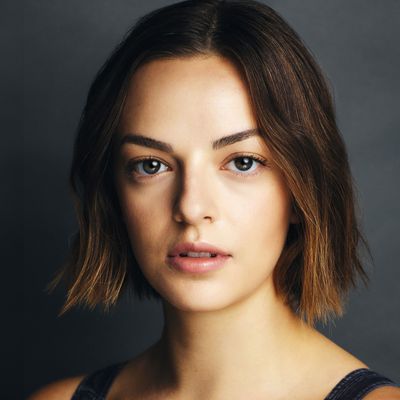
Talia Suskauer is currently playing Elphaba in "Wicked" on Broadway, following the success of the Munchkinland National Tour of the same show where she played the same role... Read More
From the show: The Theatre Podcast with Alan Seales
Guests
Miniseries Inclusions
Featured Shows

About
Talia Suskauer is currently playing Elphaba in "Wicked" on Broadway, following the success of the Munchkinland National Tour of the same show where she played the same role. From being a pasta lover to being a dog lover, Talia gets super personal as she shares how she got into theatre, which includes singing recordings in the car with her mom and sister. Talia looks back on the things that inspired her to pursue acting, the lessons she took throughout her childhood and teenage years, and how the support she got from her parents and mentors has molded her and helped her find her identity as an artist and performer. She recalls her first audition for "Be More Chill" just a week before graduating and her Broadway debut which she considers as unexpected and wild. During their closing week, Talia auditioned for "Wicked" as an Elphaba replacement and eventually got the role. And with live theatre shutting down for almost two years due to the pandemic, Talia opens up about how it affected her mental health, not being able to turn to theatre as a means of escape, and what helped her get out of her rut, including exercising. She was a part of the reopening cast for "Wicked" which was the first Broadway-caliber show to reopen in the country. She talks about being on tour and being on Broadway, why she loved touring, her passion for her job, and why you shouldn’t let anyone try to put you in a box because your uniqueness is what makes you special.
Talia Suskauer is a New York-based actor and singer who made her Broadway debut in "Be More Chill" and recently finished a long run in the Munchkinland National Tour of Wicked as Elphaba. She attended Penn State, where she received her BFA in Musical Theater. Her other stage credits include "Shrek", "Little Women", and "The Secret Garden". Talia is currently playing Elphaba in "Wicked" on Broadway. She's also appeared in a few TV shows such as "The Kelly Clarkson Show" and "The Broadway Show with Tamsen Fadal".
Connect with Talia:
- Twitter: @taliarach
- Instagram: @taliasuskauer
- Facebook: @taliasuskauernyc
- Website: taliasuskauer.com
Connect with The Theatre Podcast:
- Support us on Patreon: Patreon.com/TheTheatrePodcast
- Twitter & Instagram: @theatre_podcast
- TikTok: @thetheatrepodcast
- Facebook.com/OfficialTheatrePodcast
- TheTheatrePodcast.com
- Alan's personal Instagram: @alanseales
- Email me at feedback@thetheatrepodcast.com. I want to know what you think.
Transcript
This transcript was automatically generated and might contain errors.
[0:00] Alan Seales: Hey, everyone. Welcome back to The Theatre Podcast. I'm your host, Alan Seales, and this episode is with Elphaba herself, Talia Suskauer. She seems like a very old soul in a good way. She just has her junk together, you know what I mean? She knew what she wanted, and she just went out and got it. It's kind of incredible that she went from being a kid to saying, I'm going to go to college and do this, and I'm going to be this type of performer, and then bam, she's just been doing it. And this role as Elphaba is going to open up so many doors for her. And this is pretty much the very beginning of her career. I cannot wait to continue to watch her and see her grow in this space. So, everybody, make sure you follow her and watch her blossom and grow.
It's going to be incredible. Find me online on Instagram and Twitter and TikTok. Before you get going or while you're listening, leave a five-star review because, you know, why not? Be generous. And now, everybody, please enjoy this episode with Talia Suskauer.
[1:12] Alan Seales: Today's guest is a Florida native who made her Broadway debut in Be More Chill and recently finished a long run in the Munchkinland National Tour of Wicked. As Elphaba, she's an avid pasta eater, a dog lover, is taller than you think she is, and is now defying gravity eight times a week as Elphaba in Wicked on Broadway. Talia Suskauer, welcome to The Theatre Podcast.
[1:31] Talia Suskauer: Hello. Thank you for having me.
[1:34] Alan Seales: What kind of name is Suskauer? That is such a unique name.
[1:38] Talia Suskauer: Yeah, so it's German, but my family itself is not. We're not German. We are very much Jewish. But it means sweet tooth. Someone married into our family, and it means sweet tooth, which is actually really cool.
[1:51] Alan Seales: Which is ironic and connects you even more to the Be More Chill family with Jason Sweet Tooth Williams.
[1:56] Talia Suskauer: Absolutely. We definitely connected on that, for sure.
[1:59] Alan Seales: Did you really?
[2:00] Talia Suskauer: Yeah, of course.
[2:01] Alan Seales: Well, speaking of Joe Iconis, I sent him a message and I was like, I'm interviewing Talia. What's something fun you can tell me to talk about? And he said, I met her at Penn State. She played Miss Asp in the Penn State production of Love and Hate Nation. And that's why he called you in to audition for Be More Chill at the Signature. And then in that production, your character had a whole song about cockroaches that got cut right before the first preview. And what he was saying about it was, you were totally cool with it, as opposed to being wrecked that your big song was being cut and what any other student and most adults would still do. And he said that, oh man, this kid is the real deal.
[2:46] Talia Suskauer: Oh, well, that's very nice. I remember that conversation well. Him and our director called me and they were very serious. And they were like, we have something to tell you. And I was nervous because I was like, am I bad? Like, am I getting fired? You know what I mean? Like, fired from a school production. And they just told me the song was cut. And I was like, oh, okay. Whatever. I mean, that's what happens when you're working on new musicals, right? And things get cut all the time and added and cut in service of the show. And so, I mean, I fully expected things like that to happen. And you just can never take anything like that personally. In fact, I think it meant that, okay, we were getting enough of the character and the scene work so that we didn't even need the song, which I think is great. So yeah, I was not pissed at all. I was actually really relieved they weren't going to tell me I was doing a horrible job. So, yeah.
[3:36] Alan Seales: That's a really interesting way of looking at a situation like that. Like, I am so good at not this song that you just don't even need the song.
[3:44] Talia Suskauer: Yeah. I mean, the song was kind of, you know, we say a lot in theater, like a hat on a hat. And so, we didn't need it because you were getting what the character is giving you from that song already in the scene. So, it was just kind of too much. So, yeah.
[4:01] Alan Seales: Huh. I'm going to remember this and apply it to Elphaba later on. But I want to pause for a second.
[4:08] Talia Suskauer: Okay, good.
[4:11] Alan Seales: And go back to Little Talia in Palm Beach Gardens, Florida.
[4:17] Talia Suskauer: Yeah, that's it.
[4:18] Alan Seales: That's where you grew up?
[4:19] Talia Suskauer: That's the town.
[4:20] Alan Seales: So, when did you get into theater? When was, I guess, what was your childhood like in terms of acting, performing, dancing, singing, all that jazz?
[4:29] Talia Suskauer: Yeah. So, my mom used to play a lot of cast recordings in the car for my sister and I, which was really, really great. And she used to play a lot of Joseph, and Phantom, and Les Mis, and Chess. And we would just belt them over and over and over again. And that, I think my way into theater was really through the music. I just loved singing that stuff in the car. And my mom took my sister and I once a year, starting when we were pretty young. I think I was like, seven. My sister was five, to New York. And we'd see a Broadway show. And we do all kinds of fun New York things. And that was our little kind of window into Broadway from a very young age. So, I was really, really lucky. And I was a very dramatic kid.
I was kind of all over the place. And so, immediately, my parents were like, get her into drama classes and after school programs for theater. And I was really happy that they kind of saw that energy as an opportunity and threw me in that way. And it was my escape. I loved it so much. So, I guess from the very beginning, it was... I don't think when you're five, you're like, this will be my career. But I think it was just my passion. And the thing that I love to do that growing up, I was validated by my parents and my teachers that you're actually good at this thing that you love, and you should pursue it for money.
[6:04] Talia Suskauer: For money. Or happiness, because one of the two probably isn't. They usually aren't at the same time.
[6:11] Alan Seales: Correct. I guess then, I think about my kids, almost six and seven and a half. The two albums that they like to listen to are the sixth original cast album from London and The Greatest Showman soundtrack.
[6:30] Talia Suskauer: Okay. I love that.
[6:33] Alan Seales: So, The Greatest Showman, side note, is the only human movie, as they call it, not an animated movie, that they can watch beginning to end.
[6:43] Talia Suskauer: I love that. A human movie. I'm going to start calling it a human movie.
[6:47] Alan Seales: So, you got animated movies and human movies. Right. But yeah, so now, I think, especially my younger one, I think he kind of bounces off the walls. So, I want to put him in like, but my older one likes singing more. So, I'm sort of torn as to like, maybe opera is for the older one and musical theater is for the younger one.
[7:07] Talia Suskauer: Yeah, I think like, I mean, I just did like a little after school, you know, playtime musical theater-y, theater games type class. And it was just a total blast. It was just so fun.
[7:19] Alan Seales: Well, so you were five then, when you started singing and performing and doing all this, I guess, in the car. But then, what age did you start any sort of formal training or deciding that school was for you or even like you started in community theater?
[7:36] Talia Suskauer: Yeah, I think, I mean, when I was in middle school, I started voice lessons before, like when I was in elementary school. But when I was in middle school, yeah, yeah. When I was in middle school, we, I went to a magnet school. So, it was an audition. You had to audition to get in. It was a public school, but you just had to audition. And so, I got in for theater and started doing plays in school. And in eighth grade, we did a very weird production of Big River for some reason. Like, why was that the show that we chose for eighth graders? But whatever, it was fun.
[8:05] Alan Seales: That's odd.
[8:06] Talia Suskauer: Very, very, like a very weird choice, but went with it. And I absolutely loved it. And then from there, the natural progression, if you wanted to continue, there was a magnet arts high school in South Florida that I went to called Dreyfus. And I auditioned to get in and got on the waiting list, did not get in initially for theater, but got on the waiting list and eventually got in and was there for my freshman and senior year. And it was that, that point where I was like, Oh, I'm taking this seriously. And even perhaps more seriously than my classmates, which let me know, my professors know like, okay, she's, this is what she wants. Like, it would frustrate me when other people that like chose theater because they thought it would be easy maybe, but it's not easy.
And I was just very, very passionate about every aspect of it. And I think I started to get more serious about my training sophomore and junior year of high school and then pursued outside theater activities and community theater and other children's theater. And I just, I could not get enough of it. So if I wasn't rehearsing for the school play, I was rehearsing for shows outside and I didn't do any professional theater until I got into college and my summers I spent at Summer Stock. But I mean, it was really the only option for me was, was a career in this path.
[9:35] Alan Seales: I love when people say summer stock. I did summer stock and you know, everyone's got their fun non-union summer stocks, summer stock stories, but it's like paying your dues and it like when you're performing one show at night and rehearsing for the next one. And don't forget working in the costume shop is your tech duties and then rehearsing and then performing and then waking up and doing it all again and having the most, I mean it's it is paying your dues, but it's also like the, it's like theater summer camp where you make $70 a week. Like it's the most incredible thing.
[10:15] Talia Suskauer: I did it. I did it in Coldwater, Michigan, Tibbetts Dinner Theater, which I don't think exists anymore. Maybe it, maybe it does. I'm not sure, but they don't have cast housing. So they would get people in the local community to, to offer up extra bedrooms. And, and my, I stayed with this wonderful family that I barely saw because of the schedule. Right. And like they had two entrances on their house. It was like this giant U shaped house. So they didn't went in one side and I had the other entrance to the spare bedroom, but they have these cats that would just poop in the hallway all the time.
[10:50] Alan Seales: No.
[10:52] Talia Suskauer: It became so, so affectionate to, to me to like come home and smell the cat poop. So yay. Summer stock. Yay. Summer stock. For sure. It was a great experience. Everyone needs to do it.
[11:05] Alan Seales: Yeah, for sure. So then summer stock and eventually make it to Penn State. So at some point you are saying, this is what I want to do with my life. And I think I'm good enough to do it. And so a lot of people, I guess you were saying that you were taking it more seriously than possibly some of your peers. And I just wondered like what, what the community was like where you were at that point, because where I was in and where a lot of people were in community theater, they're like, everybody's at sort of like a different echelon. And then there's somebody that's just like, I gotta go, I gotta move to New York. I gotta do this. This is, this is my calling. I think, um, when I was in high school, uh, it was me and probably four other people in our, in our theater program that were like, in our musical theater program that were like, we are taking this extraordinarily seriously and we, this is what we want to do. So I think I knew like midway through high school.
[12:11] Talia Suskauer: For me, felt like the right move, because it was, it's a really big school. And so, I wasn't just going to be in this little theatre cave. I was going to be doing other things and being in the middle of rural Pennsylvania and having an amazing college experience, which I did, but also got this kind of conservatory style, really intense training that I loved. It also, Penn State's not like a cutthroat, kill your peers program. Like, that's just not what it is. No one's really in competition with each other at all. It's very much like, let's help each other out because this stuff is hard. And so, I think I was really validated before I made the decision to go to college for it. I have an amazing mentor, Jennifer Yormack, whose theatre I performed at.
It was a children's theatre. It still exists to this day. And her and my parents, who I trust implicitly, and a few other people really were like, you can do this. A hundred percent, you're going to do this and you're going to be good at it and you're going to succeed. And I was like, great. That is literally all I need to make this decision. And so, off I went to college and it was hard. I didn't really know what to do with me at first because I'm just kind of this, I was this tall, big ball of energy and they didn't change me. They just took me and grounded me and molded me and let me experiment with my identity as a performer and an artist. And I had the best time. And I think I really came out of school knowing who I was and who I wanted to be in this industry, which is great.
[14:04] Alan Seales: Well, who do you want to be? And I know that sounds like a hokey question, but you said it. I guess, does it mean more about type of character or type of show? Or I guess explain that a little bit more because I'm always curious what that means for people.
[14:21] Talia Suskauer: Yeah. I think that you can put a lot of people in a box in terms of type, which I hate. And I think I want to be someone who transcends type and just gravitates towards projects and, oh, her spirit would be really good in this. So I think she would bring a lot to this because of her unique skill set. And so I think I want to do a lot of new works. That's why I loved working with Joe Iconis because he just is always brimming with new ideas and new things. And so working with him and getting my start in new works with him that way really inspired me. So I want to do a lot of new works. I also want to do just a lot of really inspiring things that people need to hear right now. Like Wicked is amazing because I feel like it's a story that is timeless and people can come back to it when they need it in different parts of their life. So I think it's just an important story and I'm happy to be telling it. So I really want to be telling a lot of really important, vital stories throughout my career.
[15:36] Alan Seales: We're going to take a short break. Stay tuned for more of the episode.
[15:51] Alan Seales: When did you first see Wicked? How old were you? Because it's coming up on 20 years.
[15:56] Talia Suskauer: I was nine.
[15:59] Alan Seales: And so that nine-year-old girl, did you think, I'm going to be that?
[16:06] Talia Suskauer: I don't think in the moment. I wish I could say that. I don't think that I did. I think I saw the show and was absolutely blown away by what I witnessed, especially seeing like two women leading it. And it's an incredible spectacle and it holds up, which is wild. So I don't think I was like, I'm going to be her one day. I think I looked up and I craved the feeling of what I felt when I was watching it. And I think I've been just trying to chase that forever.
[16:42] Alan Seales: So is Wicked then one of those touchstones, those turning points when it sticks out in your mind of like, this was the show, this is one of the shows that made me pursue this, that solidified what you wanted to be?
[16:55] Talia Suskauer: Certainly. Especially because before I saw it, I was in this after-school musical theater class in someone's basement. And a girl walked in with the vocal selections of Wicked. I had this new musical. The song's from this new musical called Wicked. And she sang Popular that day in class. And I was like, what is this? This is cool. This is great. What's going on here? And I remember, I think I asked my mom for that same vocal selections book and then the cast album. And we started listening to it. And so I think, I mean, from that moment on, I was like, this is really cool. It's so crazy because I still remember that. I remember that exact day. I remember who it was. I remember the feeling of it being new. And now it's not new anymore. It's one of the oldest shows we have on Broadway. So that's absolutely wild to me.
[17:59] Alan Seales: Fifth longest running show on Broadway, I believe.
[18:02] Talia Suskauer: So I believe you graduated 2018, right? So graduated Penn State 2018. Then went on tour in 2019. So you just got thrust into this right out of the gate. And I mean, of course you were doing, there's Be More Chill in there at some point. I actually don't know the timeline around that.
[18:28] Talia Suskauer: I can tell you if you want.
[18:30] Alan Seales: Yeah, please.
[18:31] Talia Suskauer: The timeline is, I graduated college in May of 2018. And in the last week before I graduated, I got an email or I went in for an appointment the week before that into the city, did the Be More Chill, all the material for them, left, didn't think anything of it. This was to be the offstage swing, female swing for the off-Broadway production. And the week before I graduated, we were in the city post our showcase. And I got an email because I didn't have an agent yet. That was just telling me that I booked it, an email. And I was like, that's great. That's awesome. All right, here we go. And so at that point, I didn't know when I was going to move to the city, but that solidified me moving to the city that summer pretty immediately.
So I moved. I was so grateful to have a reason to move and a job that started pretty immediately. And so from July to September, I was in Be More Chill. And in, I think, late August or early September, they told us that we'd be moving to Broadway, which is crazy. I will never forget it. It was just unexpected and wild. So I had from September to January off, which was cool. I can just chill knowing I had a big Broadway job coming up and I had a great time. And then we started rehearsals for Broadway in January, which was really difficult and fun and a huge challenge for me because the show changed a lot. So as a swing, I had to kind of take what I know and remember it, but also forget it. It was wild.
And then we opened on Broadway in March, and we ran a nice little six-month run, I believe, until August. And we closed, I think, August. Oh, man, I forget the day. Six? Eight? I forget. And that week, I went in. Our closing week, I went in for an audition for Wicked, my very first one, to be the replacement for Elphaba on tour. And it being a quick turnaround, like two weeks, and I'd have to leave. And I auditioned, didn't hear anything. Like a week later, I heard that I was going in for a final callback, did that. And then a couple days later, they told me I was going out on tour. I'd have to have to leave and get on out there to California, where we started. I opened in Wicked September of 2019.
[20:54] Alan Seales: Wow. That is so lucky and so fortunate.
[20:58] Talia Suskauer: Yes. It's, yeah.
[21:00] Alan Seales: And so the first audition, when you go in initially, do you sing from Wicked or you sing your own stuff and then final callback is like, can you defy gravity?
[21:09] Talia Suskauer: Yeah. So how it works with audition appointments, for most things, especially for Wicked, is that you don't ever go in for an open call for Elphaba and sing whatever you want. It's always a smaller pool of people that I get called in. And we call it the callback material or the packet, the Elphaba packet. And so in it, there's defying gravity, the end of defying gravity, the end of the wizard and I. And I'm not that girl in a few scenes. And that's it. And that's it, I say. It's only the hardest parts of the show. It's all right.
[21:50] Talia Suskauer: Yes, literally. And so I went in there and did two songs from the packet and I think one or two scenes. And the first time and the second time I went in, I did each of the songs like three times. And I think that was probably for stamina to see if I could do it. And then I did the scenes a few times as well. And that one, that audition lasted a lot longer. But yeah.
[22:17] Alan Seales: Well, it's an iconic role that is history making for most people. I mean, pretty much everybody who has been in Elphaba, it opens so many doors. And because it's such a difficult role to do eight times a week.
[22:34] Talia Suskauer: It is.
[22:36] Alan Seales: So do you find that, I guess it's like any muscle that you keep flexing, you get used to it, right? But when you first started going out, were you like, this is so much harder than I had anticipated? Or were you like, do you do physical training to get ready for this kind of thing?
[22:55] Talia Suskauer: Yeah, I think my journey with it and preparing for the role has changed a lot because I've done it for a long, a longish time now. So I didn't have time to prepare for it when I first started. I literally just, they told me I got it. And the next week I was on a plane like that was that quick. And so I was freaking out because I know that I know how hard this part is. I'm not an idiot. Like I've seen what it has done to certain women. And I just, I didn't want this to be like the beginning and end of my career. So I was really nervous, like vocally and physically, will I be able to do this? And I got out there and I said to my music director in our first rehearsal, I said, I think they've made a mistake.
And he goes, Wicked doesn't make any mistakes. You're going to be fine. You're here for a reason. You're going to do well. And so I think as I started to do the show, you kind of learn what works for you and what doesn't work for you. It was trial and error. I mean, it's a given that you have to take care of yourself and kind of, if you have, I never had a party lifestyle anyway, but like you just maybe instead of going out to eat on your nights off, just stay in or, you know, just have one last drink or hydrate constantly, constantly have a drink in your hand. I think what I found that I needed was, um,
[24:54] Talia Suskauer: After a few months of depression, I got off my butt and got into the gym. And I was like, if we're going back and doing this again, I need to really be in amazing shape. And so I started working with a trainer and three times a week, just started strength training. And the difference that it made when I came back to work in terms of my mobility and things that I was able to accomplish and feel like I wasn't hurting constantly, I mean, it was drastic. And so now, the hard part about that on tour is that you can't really work with someone in every different city, right? You kind of just have to do it yourself. But now that I'm doing this on Broadway, and in New York, I'm working with the same person twice a week. And, you know, living in my own home, and I'm feeling like I'm really strong in my body in the show, and it's making a huge difference.
[25:47] Alan Seales: Well, the stage on Broadway is raked, right?
[25:51] Talia Suskauer: Yes, it is.
[25:51] Alan Seales: Which means it's angled facing the audience. And then on tour, do they install a raked stage too? Or is it flat?
[25:57] Talia Suskauer: No, it's completely flat.
[25:58] Alan Seales: And you were having hip issues even on a flat stage?
[26:01] Talia Suskauer: Mm hmm. Yeah. There's a lot of... I wear knee pads the entire show. So, you know, I was going down to my knees and up and constantly and the running was crazy. And honestly, I think I'd have a lot of problems right now on this raked stage had I not started strength training. I know I would have because I was still petrified coming here. Because you have to change like, when your body is standing on a hill constantly, and you're standing sideways and diagonally, your hips are at all different angles and levels. And you're not, our bodies aren't supposed to work like this.
[26:40] Alan Seales: Your back's out of alignment.
[26:41] Talia Suskauer: Yeah, your back's out of alignment, your center is off, and you have to completely adjust. And so I felt really happy starting the show and feeling like, really good doing it. Because I do have such a strong core now and such a strong center, that wherever I am, I know I have myself, because I built it up.
[27:03] Alan Seales: I want to go back to something you sort of glossed over. It's okay to dive into this a little bit. You mentioned depression when the pandemic hit. And I don't know if you were just using hyperbole because the whole industry just frickin shut down and we didn't know what we were doing. I ask people sometimes, like, what is it about theater, musical theater, chosen family, finding your tribe, etc., etc., that really draws people to it? And a lot of it is that when you do suffer from depression, or you do suffer from even social anxiety to an extent, that there is comfort and there's a lot of solace and catharsis in being told what to say, where to walk, what to do, and having this family that accepts you no matter what.
[27:51] Talia Suskauer: It was not hyperbole. I was definitely very, very depressed during the pandemic. I felt like this purpose that I had for my entire life, as we talked about from the beginning, was stripped away from me. And I didn't know who I was without performing and being able to perform for people and perform with this family, with my family, you know. And so I literally would wake up, sit on the couch, watch TV, eat, and then be there until the evening and then go to sleep. And like, it got to the point where my boyfriend at the time and my mom like sat me down and they were like, we don't recognize you right now. We don't know who you are. Like, you need to find some happiness and purpose in other things.
Because at that point, it was like the summer of 2020. And there was no end in sight. And so we had to, I had to find a way to get out of what I was going through, because you can't live like that forever. And if we aren't coming back to the stage for a long time, or maybe ever, which was a thought in my brain, then you know, you have to find another purpose. And so, you know, I started caring about myself again, and putting in work and doing other things that brought me joy, trying to and getting out and seeing nature and seeing the world, the world of Florida, where I was living with my family, so we couldn't really go anywhere.
[29:19] Alan Seales: Oh, you went back to Florida?
[29:21] Talia Suskauer: Oh, yeah, I got rid of my apartment here and just went home because I couldn't afford it, you know. So I was lucky to go back home. But I think the thing that was the most heartbreaking about all of it is that, you know, in times of all these trials and tribulations, and when things have gone terribly wrong in our world, we've always been able to turn to theater and go to the theater and escape. And it was an escape for the artists and for the audience. And this was like the first time pretty much ever, that we weren't able to do that. And that was heartbreaking to not be able to provide that for people, but also not to experience that catharsis for myself. And so, um, yeah, I mean, it was rough for a while, but I was able to be a part of the reopening cast for they brought us all back for the tour.
And we were the first tour, or Broadway caliber show to reopen in the entire country, which was huge and historical. And I will literally never forget the feeling of being back and, and like opening the door to the theater in Dallas for the first time, we're coming up on a year, but a year of reopening, which is really cool. But oh, I think a year next week, we will have reopened, which is wild. But Wow, I will never forget walking into the theater for the first time and seeing, seeing it and just being like, Oh, my God, we have not been in a theater for a year and a half. This is amazing. And we all walked in in our masks, and the crew was in the lobby of the theater, and everyone just started clapping and cheering with each other. And it literally brings me to tears every time I think about it, because it was so special.
[31:12] Alan Seales: Oh, yeah. When did you find out that you were going to go back? And was there like a re-rehearsal process? Or did you show up and like just do the tech and in Dallas?
[31:25] Talia Suskauer: Yeah. So when the pandemic started, we kept, you know, hearing from our producers and everyone, they were like, Okay, it'll be a month, it'll be two months. Okay, we're thinking three months. And then eventually, we stopped hearing. And we kind of went about our lives. And then finally, finally, when the vaccine started being rolled out, in January or February, we heard whispers of June or July. And that was the first time where I was like, I think this is gonna happen. I really resisted like, letting myself believe that because I had for so many months initially that it broke my heart. Like, I would sit in the car and sing the songs to myself to keep myself in shape when we first went when we first broke for the pandemic.
And eventually, I stopped singing altogether. And so in January and February, I was like, I'm going to start singing again. And so I started doing voice lessons with my voice teacher, and I started getting on the treadmill and running and singing. And then we got official word, I think in like, March or April. And then flights were booked. And I was like, no takes backs. We're doing it.
[32:42] Alan Seales: We're gonna take a short break. Stay tuned for more of the episode.
[32:48] Talia Suskauer: And we got there. I still I couldn't I wouldn't believe it till I got there. And we got there in June or July, I forget. And we had July, we had like a three or four week rehearsal process with the original creative team. They all came back. And we put up Wicked like it was the first time. And it was so cool lighting designers that like everyone came back, everyone who could have came back to the show and put it up because those people haven't been working either. And you know, we had to re-rehearse because it was a year and a half. So things were changed a little bit things were up. It was just it was it was an unforgettable experience.
[33:43] Alan Seales: I was gonna ask about what had changed because I when I saw it, I saw the show about two months ago, month and a half ago, I think. And I've seen it a couple times. I think the first time was almost 15 years ago or something. And I remember in the back of my mind somewhere that it used to open with the feet and the striped socks, right? The witch's feet coming or am I totally making this up dreaming this?
[34:08] Talia Suskauer: I think so. Unless you saw like, unless you saw like one of the initial previews of the show. I don't think I don't. Yeah, because who I was who I went to see it with said the same thing and that's what made me think, oh, I wasn't dreaming this because I thought it used to maybe I'm just interpolating my memories from the actual movie from The Wizard of Oz. But anyway, so what what got updated? Are you allowed to say what changed?
[34:35] Talia Suskauer: Yeah, I mean, it won't really make sense to like the average, this tiny, tiny little things like spatially some lighting stuff, like, no nothing plot story set, like, nothing serious, no script changes, nothing like that, just like tiny, tiny, tiny little things here and there, to just freshen it up. And you know, original director came back and was like, Why did I do that here? Let's change it up. Like, let's, you know, which I think is really cool to be able to come back to something you had 20 years ago and be like, I'd like to see this a different way, potentially.
[35:52] Alan Seales: So yeah, that's interesting because it the story itself is timeless and I feel like technology in the theater has changed so much right in the last 20 years because I don't even think projections used to be a thing when the show opens.
[36:01] Talia Suskauer: So they were but they were they what's cool about Wicked is that they have completely like every few years, I believe they come back and they redo the projections because the technology keeps getting better.
[36:08] Alan Seales: Yeah, yeah, that's amazing and I love that they're accentuating the core story, right? So the story is there. The story is timeless. The story is what draws people back but then they're keeping it up to date with technology so that I guess it's on par with everything else that's brand new that's opening because there is always somebody there's always probably the majority of the crowd that's seeing it for the first time every single show, which is amazing and it's also amazing that we're sold out almost every night to like 20 years later and what was cool on tour as well as that this right that ring true, especially on tour because we're bringing these to sometimes new markets that have we Wicked has never been to before. That's rare for Wicked but like I got to play two new markets with the show that the show has never been to the excitement to have this show in town like in these small towns across America.
[36:35] Talia Suskauer: It's like a celebrity is rolling into town. These people had been waiting for this. And some of these folks cannot get to New York. It's so expensive. They can't afford a Broadway price ticket. And so being able to bring Broadway, especially Wicked, to people on tour was an immense honor because most of them were seeing it for the first time. And this is after years of hearing these songs. And so the gratitude from the audience, it was amazing. And then the first show in a city that we'd never been to before was always different than the last show. Because by the time the last show rolled around a few weeks later, we had repeat people. These are people that came on the first night and said, I have to see this five more times while it's here.
And so the last show in every city was always raucous because people were just so happy to be seeing it again and again and again and didn't want us to leave. But yeah, here it's a good mix of tourists and people that have seen it before and also people that are bringing their kids for the first time on New York trips like my mom. So it's very, very cool. That's really cool. I love that. You mentioned that people have been listening to the cast album for years and then you show up to a show as someone who's never actually seen it before. And you've got Kristin Chenoweth and Idina in your head. Did you talk to other Elphabas about stepping into the role of Elphaba? And you're like, listen, how do I live up to this?
There's expectations. What do I do? Help me, help me. Because what was that all like? I guess first going into the tour, but then was it easier or harder or no different to actually make the transition to Broadway?
[38:24] Talia Suskauer: The thing I say about this is that, yes, there's a Green Girl Sisterhood. I know a bunch of the other Elphabas. They're all gems. They've all been through it like I have. No pun intended. Gems. Yes, yes. And it's really cool to have them as people to trust and go to and commiserate with and confide in. And it was a fear at first. It's like, will I not be able to live up to what people are hearing on the soundtrack? And I think that what's so cool and my favorite thing about playing Elphaba is that so many women have played this part at this point across the world. So every one of them is unique and different. None of us can be Idina Menzel. None of us want to be Idina Menzel. There's already Idina Menzel.
So it's like, I can only bring my uniqueness, my personal uniqueness to the show. And that has to be enough. And so I think people have different tastes with anything. I'm not going to be everyone's cup of tea. And I'm so okay with that. But the fact that I'm able to kind of step into the strength of every woman that has played this part before me, it's an immense honor. So I love it. Also, another cool fact about Wicked is that when you first go into the show, it takes them a while to build these costumes. So you're not going to have your own costumes right away. So you get to wear another Elphaba's costumes, which is really cool because it's like, great. I know that the person that has worn these before me has done this.
They've gotten through it. I'm going to get through it. And sometimes, the three hours ahead of you feel daunting, and they feel like an insurmountable climb. But the person that has worn this before me has done it. And so I'm going to be able to do it.
[40:18] Alan Seales: How long does it take to get the makeup on? The green paint?
[40:22] Talia Suskauer: So the makeup artists can get me ready. You can get an Elphaba ready, I should say, in like seven minutes if they have to do a witch switch in the middle of the show. They can do it that fast if there's a mid-show call out or something like that. So we work with some really talented people. But normally, it's like 15 minutes to 20 minutes. It's very quick.
[40:46] Alan Seales: Oh, I don't know. I guess you see all the behind the scenes of these big Marvel movies where they're like, I sat in the makeup chair for eight hours every day, and we got on set for 24 hours every day. Well, the difference between that and this is that no one is zooming up on my face like they are on a film set. And so I will say, though, if you did zoom in on my face, the makeup is so precise and beautiful. It looks like my skin. It really does. But yeah, I mean, theater makeup is something special because it can happen like that. It really can. And so it's my favorite part of the day because normally, you have to put yourself in makeup and that's a whole other part of your process. But I get to literally be transformed into my character and watch it happen and just sit there, which is cool.
[41:36] Talia Suskauer: That sounds like a lot of fun. I've never been able to do the whole prosthesis thing. It's always been like a bucket list thing of mine to have like a monster head made or something or just something very, very cool like that. But no, you didn't answer the second part of my previous question, and I have a habit of asking multi-part questions. It's my fault. But the transition from tour to Broadway, was that any different? Was it expected? I guess like the stage was raked. So that's something that you had to get used to. But in terms of the size of the house or whatnot.
[42:08] Talia Suskauer: Yeah. So I mean, thank goodness. I say this to myself every day that I did the tour because there is no better boot camp for doing the tour or for doing Broadway than doing the tour. I already knew what a beast this role was and the show was. So I take everything else out of it. I know how to get through the show and I know how to pace myself and I know how to do it healthfully. Great. So the differences between Broadway and tour, we're playing houses that are as big as 4,500 seats on tour. That's pretty huge. The Gershwin is the largest theater on Broadway, but it's only like, what, 1,500? I should know this, but it's really, it's not big. So this is actually the smallest house that I've ever played Wicked in, which is very cool.
So there's that. There's a level of consistency on Broadway that you don't get on tour. I get a different dresser in every city on tour and different backstage in every city, different dressing room in every city. The climate is different in every theater. If it's moldy or if it's new, you're having to deal with all of these elements. I go to one place every day now. So that's good. On tour, we don't have a trap door like we do on Broadway. There's a lot of entrances from different trap doors on Broadway that we do on tour. And then we don't have that on tour. So there's a lot of extra running downstairs that I have to do on Broadway and up. On stage right, we have an onstage staircase. So I have to run up it offstage and come down onstage.
And so we don't have that on tour. It's just an on and off stage, very quick. So a ton of extra running. So the cardio that I'm doing is absolutely insane on Broadway. And yeah, I mean, and then the rake, of course, those are the biggest differences. But I felt so well prepared coming here, having put in pretty much a year altogether on tour, playing the role.
[44:24] Alan Seales: Would you think you would go out on tour again? I know tour life is so hard. You hear it all the time. Once you have a consistent Broadway gig, so many people are like, I don't want to go on tour again.
[44:32] Talia Suskauer: I loved touring. I loved it so much. It would have to be a very specific tour, touring experience. I couldn't do one-nighters. I'm too spoiled from the Wicked tour. It was too good. The shortest we were in a place was two weeks. So that's the size of a nice, long vacation somewhere. So sometimes the nice, long vacation was in Columbia, South Carolina. But still, it was two weeks in a place. You're not doing bus and truck. You're not doing one-nighters. And so I think it would have to be a very specific scenario. But I loved touring. I loved it so much. I loved the change in scenery every once in a while. And I loved exploring these places that I might not ever go to again or have experienced otherwise. When will I go to Little Rock, Arkansas again? I'm not sure. Glad I had three weeks there to experience it. So yes, the answer is yes. I loved it. I'd do it again.
[45:38] Alan Seales: Awesome. Awesome. And you have to bring your dog with you this time, though.
[45:42] Talia Suskauer: Oh, my God. I don't think my parents would let me. I wish.
[45:45] Alan Seales: Oh, really?
[45:46] Talia Suskauer: No. It's like our family dog. But I mean, he also just is such a little homebody. He just would hate to travel like that.
[45:59] Alan Seales: All right. So let's wrap up here with three questions that I ask everyone to end the episodes. The first one, just simply, is what motivates you?
[46:08] Talia Suskauer: Um, I think wanting to make myself and my family proud, mostly my family. They've sacrificed everything for me. And I just want to show them that it was all worth it.
[46:23] Alan Seales: I think they know now.
[46:25] Talia Suskauer: I hope. I hope so. I will never stop trying to impress them.
[46:28] Alan Seales: You've done pretty good. You've done pretty good down there. All right. So what advice would you give to your younger self and younger people listening now starting out down a similar path?
[46:36] Talia Suskauer: Don't let anyone try to put you in a box or tell you who you are. Your uniqueness is what makes you you. And everything that makes you different makes you really special. And that's it. Most important thing.
[46:53] Alan Seales: Yeah. So you're 5'9". That probably makes it hard to be cast against other shorter people in...
[47:01] Talia Suskauer: Yeah. It's either you want me or you don't. You know what I mean?
[47:04] Alan Seales: Yeah.
[47:06] Talia Suskauer: I'm not going to fall in the middle. And I used to, I had a teacher that I wore flats in college for an audition, flat shoes. And she goes, why are you wearing flats? And I said, because I don't want to seem like as tall, you know, I just want to make myself seem kind of more average. She goes, don't you ever do that again. And that was the last time I tried to shrink myself down in an audition.
[47:30] Alan Seales: Oh, that's a good teacher. Don't you ever do that again.
[47:33] Talia Suskauer: Don't you ever.
[47:34] Alan Seales: All right. Last question. Hardest one. If you can only see one show for the rest of your life, but you can see it as many times as you want, what would you see?
[47:41] Talia Suskauer: Oh, my God. Why are you doing this to me? Ragtime.
[47:46] Alan Seales: Oh, okay.
[47:48] Talia Suskauer: My favorite high school.
[47:49] Alan Seales: All right. Where can we find you online?
[47:51] Talia Suskauer: You can find me at @TaliaSuskauer on Instagram and @TaliaRACH, which is short for Rachel. It's my middle name, on Twitter.
[48:00] Alan Seales: Rachel is such a not, I was going to say not exotic name. I mean, maybe it is in some culture, but Talia is exotic. Suskauer is exotic. And Rachel is just, I guess you got to balance it out. I love it.
[48:13] Talia Suskauer: Yeah, absolutely.
[48:14] Alan Seales: It's a nice sandwich. It's a friend's name sandwich. Sure. Okay. You can get more of me at thetheaterpodcast.com. I'm on Instagram and Twitter, theater underscore podcast. Leave a rating and a review wherever you're listening. Tell everyone how much you love Talia. This has been edited by Well-Rounded Hoodlum Productions. Music by Jukebox the Ghost. Talia, thank you so much. I had so much fun.
[48:34] Talia Suskauer: Thank you. Thanks, Alan.
© Broadway Podcast Network, All Rights Reserved