

Eddie Izzard is a Tony Award nominated, Emmy Award winning actress who quickly rose to fame in the 90s as a phenomenal standup comedian - producing two of my all time favorite specials Glorious and Dress to Kill... Read More
From the show: The Theatre Podcast with Alan Seales
Guests
About
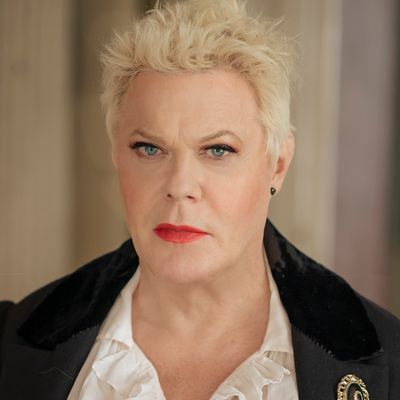
Eddie Izzard is a Tony Award nominated, Emmy Award winning actress who quickly rose to fame in the 90s as a phenomenal standup comedian - producing two of my all time favorite specials Glorious and Dress to Kill. Among her 41 film credits include The Avengers, Ocean’s Twelve, Ocean's Thirteen, and Rock Dog. She has around 40 TV credits, is a politician, activist, philanthropist, historian, linguist, has lent her voices to video games and now along with her brother Mark have adapted Great Expectations, the Charles Dickens classic, into a 2 act play now showing at the Greenwich House Theater in NYC where she plays 19 different characters.
This episode covers why Eddie ran for Parliament (yes, THE Parliament), how she finds her comedic seams that glue her standup together, why running marathons became a hobby, and what it means that she is exactly 150 years younger than Charles Dickens (spoiler, it doesn't mean much!). After losing her mom at a very young age, Eddie turned to the theatre in what she believes is the need to feel the love from the audience - a substitution for the missing affection from her mother.
Connect with Eddie:
- Get tickets to Great Expectations
- Twitter: @eddieizzard
- IG: @eddieizzard
- FB: /eddieizzard
Connect with The Theatre Podcast:
- Support us on Patreon: Patreon.com/TheTheatrePodcast
- Twitter & Instagram: @theatre_podcast
- TikTok: @thetheatrepodcast
- Facebook.com/OfficialTheatrePodcast
- TheTheatrePodcast.com
- Alan's personal Instagram: @alanseales
- Email me at feedback@thetheatrepodcast.com. I want to know what you think.
Transcript
This transcript was automatically generated and might contain errors.
[0:01] Alan Seales: Welcome to The Theatre Podcast, intimate personal conversations with the industry's biggest names.
[0:10] Alan Seales: I'm your host, Alan Seales, and this is the first episode of 2023. And what better way to kick it off than with an incredible guest, none other than actor and comedian Eddie Izzard. I was really impressed to hear some of her personal philosophies around just continuing to want to learn and better herself. And these are philosophies that I try to impose on myself personally of just never stopping trying to learn and improve. And she just ran for Parliament, said she still wants to go into politics. But all these little known facts that I didn't realize that she was totally into outside of just what we may know her for of comedy and acting. So I can't wait to share this conversation with you. Find me online, of course, Instagram, Twitter, TikTok. Leave a rating, leave a review. And everybody, Happy New Year. Enjoy this episode with Eddie Izzard.
[1:13] Alan Seales: Today's guest needs no introduction, although I'm going to give her one anyway. She is a Tony Award nominated Emmy Award winning actress who quickly rose to fame in the 90s as a phenomenal stand-up comedian, producing two of my all-time favorite specials, Glorious and Dressed to Kill. Among her 41 film credits include The Avengers, Ocean's Twelve, Ocean's Thirteen, and Rock Dog, which my kids still love to watch. By the way, she has around 40 TV credits, is a politician, an activist, a philanthropist, historian, linguist, and has also lent her voices to video games. And now, along with her brother, Mark, have adapted Great Expectations, the Charles Dickens classic into a two-act monologue that was just extended through February 11th at the Greenwich House Theater in New York City. She is the reason that throughout college at every birthday party, I would just ask people if they wanted cake or death. Eddie Izzard, welcome to The Theatre Podcast.
[2:10] Eddie Izzard: Thank you very much. You mentioned video games. I didn't know I was on a video game.
[2:15] Eddie Izzard: According to Wikipedia, you've got two V.O. credits.
[2:21] Eddie Izzard: All right. Well, yeah, we're probably a voiceover from some other thing that's been spirited. I used to be addicted to them, you see. I used to play Asteroids back in the early days of video games, but most people weren't born. Most people in the whole world. History started in 1979 or so. I think that's what it is, right?
[2:37] Eddie Izzard: Yeah. No, I'm just, I just assume I'm slightly older than certain people. But it's actually the young and the young at heart. It's an interesting thing. The young and the young at heart that change the world for the better. It's the old and the old at heart that change it for the worse. That's what I feel. This is my political thought for the day.
[2:54] Alan Seales: Well, speaking of politics, I just want to touch on this real quick that you just recently ran for Parliament, which I think is just phenomenal. With everything that you've done and can do and want to do, you're just like, I'm just going to add politics to my resume.
[3:02] Eddie Izzard: It might look that I'm adding things, but there's only about three things that I wanted to do in life. Politics was one I considered, but I thought, no, I need to do my creativity. Drama was my first love and comedy was something I liked, but I didn't know you could specialize it. So there's only those three things. The running 130 plus marathons. That's a thing. That's a thing in itself, but that's for charity. And that's a sort of positive thing. It's health for myself. It's hopefully inspires other people to get up and keep their bodies going. But there's only really those three things, politics, drama, and comedy that I've done. So I like to boil it, distill it down to that. And that doesn't, that's not, you know, when you were a teenager, you might've gone, oh, an astronaut, I'll be this or I'll be that. And I've just, there's three of them.
[3:51] Eddie Izzard: And I was doing one. It took me so long to get, well, I wanted to be an actor that didn't happen, but it wasn't happening at school. I was, if you were a smaller kid at school, I think kids all around the world, especially if you're growing up a boy, taller boys, you said, right, you're the king, smaller boy, right? You're the slave. And the slave, very few great slave parts, the Spartacus and that's it. And there's very few school productions of Spartacus due to the fact that the large battle scenes were very tricky to do with kids. How do we get all the Romans coming in and getting enveloped on doing Hannibal? I know that's different battle than Spartacus.
[4:26] Eddie Izzard: Anyway, yes. So, it just took me a long time to get the comedy going. And then the comedy got going and I thought it was taking so long to get this going that I'm going to add drama to it as well. So, I have a separate dramatic agent and a separate comedic agent. That's an interesting thing, which most people don't do. But then politics was something I've said for 10 years, or 12 years now that I'm going into politics. And Glenda Jackson did it, of course, Oscar Jackson. It's a thing. I just thought, am I going to go through this entire life and not do this? Because politics, there's some wonderful people really pushing away hard and telling the truth in it. And then there are these lying people, these lying, Tweedle-Dum and Tweedle-Dee, Donald Trump and Boris Johnson, who just thought, I know if I just lie my way through politics, surely that's going to be easier.
And it is so much easier. You don't have to check anything. Just lie, lie, lie. Piles of lies. And if you're fast enough at your lying, as we have noticed, by the time anyone says, this lies, oh, you're on to another one. But hang on, what about this? Oh, let's deal with this next. Oh, we're dealing with a third. And Trump's lying more than Hitler. And I think Boris Johnson's catching up on that.
[5:44] Eddie Izzard: Anyway, so I thought, if you're moderate, I'm a radical and a moderate. Radical things with a moderate message. So, I thought, well, let's commit to going into politics. And then I'm going to come out of politics later on, down the road, and I'm going to make a lot of films after that. So, I've worked out the next 50 years. In my head, it won't be precisely like this, but plan ahead on what I want to do. But yeah, I will be going into politics. So, I didn't make it on this seat, but I'll keep going because I am a relentless bastard.
[6:16] Alan Seales: Well, you sound like you've always got a North Star, right? Like, you're pursuing this truth or pursuing your truth, whatever the case is. And so, like, what you were saying about politics, it sort of relates to what I wanted to touch on with the acting and the drama and the stand-up and everything, because it seems like when you go on stage, you're just stream of consciousness. And I don't know if that's planned or if that is, like, how much of that is rehearsed. But like, obviously, I would assume you have talking points and outlines of what you want things to do. But how much of what you're doing on stage is a complete stream of consciousness?
[6:50] Eddie Izzard: You're talking comedy here, as opposed to the Dickens show that I'm doing in New York.
[6:53] Alan Seales: Yes. Yes. Comedy in general.
[6:53] Eddie Izzard: Yeah. Yes. Yes. Comedy. No, it's not. It starts as a stream of consciousness, but not like, hey, what's cheese? Cheese comes from cows. If cows eat cheese, well, are they cannibals? Is that a little bit? No, because you can't. It's just their milk and whatever. I'm not doing that. I'm just running through ideas and endlessly going on a kind of a druggy trip. It's more like I find a scene of things. Like, I found this scene that I thought was worth exploring, and that was human sacrifice. Now, we know it happened. We know that the Aztecs did it. So, you've got a lot of tribes, probably tribes, well, there must be tribes. Yeah, tribes in North America, South America, Africa, all around the world.
We know the Vikings were doing it. So, Vikings and the Aztecs did it at the same time. And were they phoning each other and saying, how are you getting on with the human sacrifice? Is it really helping? On a long string with a tin can, you know, because obviously mobile phones were less good back in those days. But we know they were doing it.
[8:04] Eddie Izzard: So, they weren't conferring. And we know that, you know, the idea, if you think about the sales technique of, we're going to stir the crops up. This is part of my stand-up. The weather is bad. The crops have failed. The gods obviously hate us. So, we're going to kill Steve. And Steve's always going to run. And you go, whoa, whoa, whoa, whoa. Someone must have gone, whoa, hang on. And you kill Steve and it gets better. Why? Because that's what the gods say. And who are the gods? They're talking in my ear right now. I put this bone through my nose for a specific reason, Jack. And that bone through my nose means I am the witch doctor. And therefore, I'm talking to the blokes upstairs. And they're telling me, Steve, we're going to rip out his innards while he's still alive.
And then the crops are going to really pick up in the next quarter, in the next fiscal year. You know, it was obviously bullshit from way back when. It was political control. And if Jack got up and said, hey, Steve, you shouldn't go, they'd say, Jack, you're next in line. You realize that. Oh, okay. Good luck, Steve. I'll just go do the washing up.
[9:00] Eddie Izzard: And so, where am I going with this? So, that's a seam. So, I would mine that seam and look for people saying stupid things, people trying to push back on that. And rather than it be just a stream of consciousness, it's a directed stream upon a seam, like a seam of gold in the rocks. I find the edge of it, and I just mine that seam and stay on it. Some people, Stephen Wright, amazing American stand-up, he would take individual jokes. He crafts a beautiful pearl, and then he does another pearl, and then another pearl. I can't do it that way. I can't do that, Stephen. I have to do it where I take them away. I think it's a lazier approach. You just find a seam, then you mine that seam for a long time, and then you've got to do another seam. And therefore, each seam is about 10 minutes long. And you save having to come up with a million, billion ideas and just come up with about 20 per show or something.
[9:46] Eddie Izzard: So, that's the stand-up. But the Dickens I'm doing at the moment is a learned thing. I was going to adapt it with my brother, who's a writer, and my older brother, Mark. And it's 20 hours a book. So, we're going to cut it down to half two hours. And he just went ahead and did it while I was touring in America. And so, I said, oh, you've done Act One. Do you want to do Act Two? He said, yeah, I'll do Act Two. And suddenly, he was off and running. And so, I said, well, okay, you do it yourself. And then he'd done Act Two, and then Act Three was much trickier to put together. So, Act One and Act Two is the first half, and Act Three is the second half. And yeah, it's working. People are liking it. We're getting these great reviews. We've extended before we've even opened, which is very, it's apparently rare. We've gone on to 11th of February now at the Greenwich House Theatre, which is fantastic.
[10:45] Alan Seales: I saw it last week. And it just blew me away. It absolutely did. Because it's the first time I've seen you... Actually, no, that's not true. I saw you when you were touring about five or six years ago up on the Upper West Side somewhere. So, I saw you do stand-up. And then to watch you again, tell the story, it seemed like if I didn't know it was the story of Great Expectations, I would have thought it was just a wonderful Eddie Izzard, not a comedic bit, but a through line of something that just fits who you are and fits your personality.
[11:21] Alan Seales: And I wondered, was that a conscious choice to put some of the humorous bits in there and the recurring gap...
[11:30] Eddie Izzard: Like, taking the letter from downstage left, right? Like, you always have a little bit of you in there, but it is the classic story. And I wonder, like, where that merging comes from? I mean, as you'll know, anyone who loves Dickens, Dickens is actually exactly 150 years older than me, by the way. His birthday is 7th February 1812, and I'm 7th February 1962. So I have this 150-year-to-the-day link, which doesn't mean anything, but I decided to run with it. And his descriptions were humorous. Some of his characters were humorous. Some of his characters are very dark. Some of his women were underwritten. Some of them were much better written. A lot of his male characters are quite distinctive and memorable.
But he did like the humorous descriptions and humorous setups in scenes, getting into scenes where comedic things would happen. I come from a comedy background, have done a lot of drama, and it kind of sits well with me that any humor that he has put into a scene, I have pulled it out. When I receive letters, or when Pip, the hero of our story, receives letters, I get them through his front door. And I just keep saying thank you to a person who is delivering it who's not there. And it just becomes this, it became this running thing. They only started about a week ago, actually. But it seems quite fun to just have people keep going, except for the one, the last one, actually, which I stopped, because I didn't want to, because it's when I go down to Miss Havisham's for the final time, and she's going to see me on a matter of business, and she's, her character has come upon a realization of what she's been doing all her life, how terrible she has been.
And I have, I do not receive that from the person at the door, so there is no laugh there. There was before, I just thought this doesn't sit right. But a laugh can relieve endless tension that is going on. But it's the drama, it's the arc of Pip, who basically writes the richest story. It's a kind of American dream story. And if you think about what the American dream is, if you distill it, it's the human dream. It's, you know, it was actually an immigrant dream, I think, if you have the essence of America, people coming and say, I'll do it. I'll try. I'll push. I'll build something new. And that thing, that's why I say, I think like an American on my Twitter feed, because I think like that.
Let's go do it. Let's go build it. I mean, a trans woman playing 19 characters on stage launching Dickens' show in New York. That's pretty cool. I think that's great. Dickens played here 155 years ago. He was in New York, performing extracts of his own material in the Steinway Hall, which was a hall that Steinway Piano Company had built on the 14th and 14th, so people could do concerts with their pianos and that kind of stuff. They've moved now to Steinway, and Steinway Hall is where they have their pianos, but there isn't a hall there anymore. But he was playing here. He was performing his own material. And I'm sort of mirroring him. But I do add certain little, I call them Easter eggs of comedy, which are not his, which are mine, but are written in his style.
There's one that Uncle Palmachuk description was a large, hard breathing man, face like a fish, dull staring eyes, and hair that stood up on his head. That was his, that's Dickens' description. And mine is Uncle Palmachuk, a large, hard breathing man, face like a fish, dull staring eyes, and hair that had obviously been arranged by a dying relative, which just came to me, and I just thought that's very, that's fun. And I think Dickens might have liked it. It's not his line, but obviously been arranged by a dying relative or just someone dying of consumption on a bed saying, Uncle Palmachuk, that's good, that's pretty good, that's pretty good Uncle Palmachuk, off you go. And it looked the same as sticking up on top of his head.
So those, there's little, there's little Easter eggs in there, but essentially, it's very true to Dickens. It is adapted by my brother. There's some lines we have augmented, enhanced certain scenes just so that people can clearly work out what's going on, because he wrote monthly and sometimes he was trying to give out little clues, but obscurely. And at certain points you go, well, who is Estella's mother? And so you can work out who's Estella's mother is from our story. I mean, it's 20 hours of book cut down to two hours of film, which is like the David Lean classic benchmark film, which 1948 film, black and white film, Off Great Expectations. And we're at the same length, two hours, and people seem to get it. And kids from, you know, eight or 10 are getting it, as well as people from eight to 80, I think it's, or even eight to 90.
[16:21] Alan Seales: Yeah, there was a kid in front of me in the audience too, like a young kid. And it occurred to me like, yeah, it totally makes sense because you, you start to learn these classics at a young age. We're going to take a short break. Stay tuned for more of the episode.
[16:39] Alan Seales: Where did your love for Dickens and Great Expectations come from? Because you were saying, I read somewhere that like, you're dyslexic. So reading these heavy books has been really tough.
[16:51] Eddie Izzard: Well, this was the thing. I reached a certain age. And I thought I've never read a great work of literature. I'm also severely, atypically dyslexic. So that's kind of the reason I'm very slow reader. I'm still sub vocalized in my head. So when you start off in a kid, you actually read it out and go, the cat sat on the, and you just say it out loud. And I'm, um, some, I think some people are like, well, I'm doing it in my head. I read out the words in my head as I go along. And so it just takes me a lot, much longer than your average reader. So I suddenly thought, I've had this little fact that audio books were on the rise, as you may know, as people, as the podcast, audio books, your podcast, it's on the rise.
It wasn't there before. And now it is. You've been here in the car, you can get up in the morning, put your microphone on, do whatever you need to do to get up in the morning. And, and you can listen to things. You can have an, um, an air pod in and plug us in and you can just listen during the day, drive, whatever it is. And so more of these are around. And I thought maybe a company wouldn't pay me to read a work of Dickens. I chose Dickens because my 150 year link and this company, uh, Wildfire, they came up and they've got Alex Clark said, okay, great expectations. We want you to do because that's on the syllabus for a lot of kids, particularly in the UK and sometimes in America as well, in English speaking countries.
Dickens, it's, it's quite, it's one of those more mature books towards the end of his life. Some of the earlier books, a little bit, um, crazy romps. And this one's more about life and emotion and redemption. And, um, a lot of characters being very twisted to each other and catching themselves on by the end that this is not a good way to live a life. Um, so they chose that. I did it 20 hours of book took me three weeks in a studio. I had to read the, the, the stuff I was going to record in the morning. And then I'd go in and record it in the afternoon. Quite a tricky thing to pull out of me, but it's out there. The audio book is there in all its majesty to be downloaded at your leisure around the world.
Um, and I thought, why don't I do a live show to back it up? Because I realized I could do a live show because my standup was very influenced by Richard Pryor's, uh, technique of having two characters saying, Hey, what are you doing? Well, get it. Have you got the gun? I haven't got the gun. We're going hunting. What the hell man? Just give me the gun. This thing of two guys going hunting. And I remember, um, Richard Pryor watching that, I think it's on Richard Pryor live. Um, and he would have characters talking to each other. And so I thought, well, I'll do that. I think a lot of, I thought a lot of standards must do that. When I started standups, I came from sketch comedy before I did standup.
And I found that with examination, not a huge amount of standups do characters talking to each other. And I do this sort of quarter turn that I got from Richard. And I realized I have done it all through my standup career since 1988. I'm very, um, experienced at doing that technique. So why don't I just use it on drama? So that's what I've done. I've taken Richard Pryor's technique and applied it to Dickens, which is again, kind of beautiful. I love these, these collisions of stuff, which, you know, Richard Pryor, I think he'd love to know that that was happening. Dickens would like to say, well, who is this gentleman? His name is Richard Pryor. He's a brilliant standup. He's an African-American guy.
Uh, it was a lot of people. Okay. Okay. Richard's going, okay, what Dickens, Dickens, that's no, okay, crazy. Let's do it. Well, let's watch it or let it happen. You know, so that's what I did. And I'm a trans woman. So there was one review that said that I'm embodying the male characters and the female characters with, I'm paraphrasing here, but with equal, I'm not, I'm not twisting the sexuality. I'm not, I'm not, obviously I grew up as a boy, so I can playing the male characters is somewhat easier to me, but to play Estella and Miss Havisham being their feminine selves, being the ice queen that Estella is, this beauty that she has. And, um, she knows the power it has over people and the fact it's destroying Pip.
She doesn't really care about this. She just feels she's had a life without love and Havisham wants revenge, revenge, revenge, but I'm playing the women inside me or the, cause I feel I'm gender fluid and I feel I have boy genetics and girl genetics. So I'm just, it's a perfect thing to express that. May 21st century again, New York's just a great place to launch it. And we previewed it around, um, since the start of it before COVID. And now it's been launched and, um, the reviews that are coming out are coming, saying really wonderful things. So I'm very happy.
[21:31] Alan Seales: Well, they're well-deserved, it's well-deserved accolades. I mean, like I said, I saw the show and, and again, just blew me away. And the, and that's really true. The way that you do present both genders, uh, of characters, it's just, it's you present them as they are without embellishing any stereotypes, which I think is, is a dangerous trope to do. And it's very common to fall back to, uh, with these days too. But I mean, you, you've brought up being trans a couple of times, like you came out as trans 37 years ago, right? In 85. So as you said, like as a kid, you're running, jumping, climbing trees, putting on makeup, right? So that's, that's what you as in a nutshell, but you were at boarding school and you had, you were with your brother and you lost your mom at a young age too.
So there's like all this rolled into like little Eddie that, that, you know, in the next five minutes, hopefully we can unpack. But, um, like what got you into the need for, for, for performing for standup?
[22:23] Eddie Izzard: I think it's mom. Mom loved amateur dramatics and, and singing. I still haven't used the voice. I think there is a latent voice in me, which at my ripe old age of 60 going on 30. Um, I think I still need to put it out. I started taking, uh, uh, music lessons. I've only had two, but, uh, this, this, uh, teacher, this, uh, singing teacher joy. And I really want to do more with her, but I've been running around doing other things, but anyway, mom had this thing. Mom died 1968. Uh, and if you know, 68 was also Martin Luther King and was.
[23:31] Eddie Izzard: And about two years after she died, I saw a play and I saw someone on stage doing great work, great stuff. And people were giving this kid lots of applause. And I thought, I want to do that, that I want to do. And it never moved from that point. And I think it's a swap for mum's affection. I just wanted to be on stage and playing these other people. Maybe that was an escape from the hell of mum going away forever and ever and ever. Because I do like that. If you sit inside another character, that is an intriguing place to be. But also the performance. And if you do it right, the audience gives you applause. Therefore, that's affection. And that's a swap. So I think that's where it came from.
And for the age of seven, January 1970, I saw a play, A Boy with a Cart, a boy with his cart, a Christopher Fry play. And yeah, I thought, that's what I wanted to do. I've now performed in that very room again, which is no longer a, it was a gymnasium, and then it would become into that performance space. But now it's a dance room. But then I went back to that school. I said, can I perform in this room? Because it started here. Yeah, so it's come from that. And it's quite a good swap as well. Because if you, a mother might give unconditional love, even if the kid's going off the rails. Mother might still be there and loving the kid, even if bad things happen. But this is the thing is, you have to do good work on stage, and then the audience will give you affection or some applause or whatever it is. But if you do bad work, hopefully they'll go, well, that's applause for you. Or no applause. Or I'm going to walk out of it. So I really strive to do good work.
[25:08] Alan Seales: How do you workshop new material? Because I know a lot of comedians will just go and with their notes in their hand to these tiny little clubs and try to figure out, obviously, what works and what doesn't. And are you workshopping in that same sort of way? Or when you're looking at new things, how do you figure out what you want to talk about? How do you find the seams?
[25:27] Eddie Izzard: Yeah, in comedy, yes, that's it. I have little ideas that I go in, but I don't do... I noticed that in America, there was a whole history, a culture of, let's go to a small club and we'll just come on maybe at the end of the thing. Hey, it's that person. We know that person. Yeah, I'm going to do some new stuff. I've got stuff in my hand. I have everything that is, but I do it in small theatres instead. And I would encourage any American to stand up to this as well. I need to stand up in the world because if you've got a certain profile, if you reduce your ticket price down to what we do, 10 buck tickets. So I do two shows a night, two hour shows. And for, say, a period of months, I would go in and just do, I don't know, 7 to 8 and then 8:30 to 9:30 with a little break in between.
A different audience would come in and you just say, yeah, okay, let's talk about cheese. Let's talk about haircuts. Let's talk about this and go into it and go, okay, that's not working. And I'd usually leave a little bit of my own material that I've done before at the end to give them a nice feel that something hit at the end, that they had a bit of editorial in case, you know, 45 minutes is kind of dull. But that's what I do. And I've done that in French as well and in German. That's the interesting thing. Because we had Brexit, which I didn't agree with. The idea of separating out in the 21st century is not going to end up with us in a good place. I think that's what Vladimir Putin wants us all to do is separate out and start hating each other.
So Brexit is part of his plan, I think. So I feel we should be making connections rather than breaking connections. So I started developing my last show, Wunderbar, in Paris. And I just went on stage again doing the two shows. But for one hour and then another hour, I would just go, hey, qu'est-ce qui se passe? Maintenant, je suis ici. Pour faire improvisation. Oui, c'est très cool. Oui, j'y suis contre, Brexit, je suis positif. Les liens entre les deux. So I just talk and just, you know, my vocabulary wasn't that great. It was pretty good, not that great. If I didn't get a no word, I'd say, comment est-ce qu'on dit, how do you say, you know, helicopter? Oh, helicopter, c'est le même mot. Okay, and I just carry on.
Or if another word, squirrel, what is squirrel? Écureuil. Écureuil, really? Écureuil? Wow, that's crazy. How do you spell that? Most of the vowels shoved in there. There's some words which, you know, in any other language, it's going to be just tricky. If you, écureuil is one. Requin is a shark. Pâte feuilletée, pâte feuilletée is a lovely sort of boulangerie pastry thing, which I love saying because I find it so difficult to say. Oeuf, papillon, papillote, the scrambled eggs is a tricky word as well. So, I just like getting all the trickiest words that I can and shoving them together and reading them out one after the other. But yeah, mucking around in French, and then in German, alles abdeutsch.
Oh, that's this mesh, that's really tricky. But I think the German kids dig it, and the French kids dig it, and the Spanish kids as well. I'm starting doing Spanish now. I just want to keep doing that, keep on the edge. Even though I'm going to politics, I'm going to keep these languages ticking over. And yeah, I just want to keep pushing the edge, pushing the fear back. Because if you could do gigs in French and German, but if you're improvising in French and German, then improvising in English is going to be like, well, what's the problem there? That's my technique. You're making it so scary. You're going to such scary arenas that once you push the fear back in that arena, and going back to the English one, it's like, wow, this is walking in a park.
We're just talking about stuff. Because the idea of improvising around for an hour is essentially scary. But it's like driving. Before you could drive, the idea if you're driving for two hours, that would be a scary thing. Oh, God, what was that? Did I just miss something? But when you get to experience driving, you just go, yeah, yeah, and you're chatting away with your friend, and you can't even remember exactly how you did it. Because a lot of it's built in autopilot. And most of driving is actually, if you study it, it's just looking out for idiots. That's all you're doing. It's you look, you come up to a junction, you go, is there an idiot here? Isn't that, what's that car doing? It's okay.
You've gone past them. You go past the danger point, because even if they set off, they're going to go behind you. But we're always just driving. Anyway, we get very experienced with things. And I'm experienced at stand-up now in four languages I've got going. So that's crazy.
[29:53] Alan Seales: Yeah. Are you Arabic, German, Russian, and Spanish?
[29:57] Eddie Izzard: No. It's Arabic and Russian are to come, and German, Spanish, and French are up and running.
[30:04] Alan Seales: Oh, God. That's ridiculous. Okay. Well, you have a brain that is phenomenal. But, gosh, we're out of time here. I want to end with three questions that I always ask everyone to wrap up the episodes. Just the first one, very simply, is what motivates you?
[30:18] Eddie Izzard: I think, above all, it's trying to get affection back, the affection that my mother gave me. I think that's sitting on top of it. But underneath it is trying to get respect of the people that I respect. So if the Monty Python guy said that they like my stuff, that's great. If great actors say that they like my acting, that's great. That's the respect of your peer group or of your elders, the people, the stuff you really love. That's what really motivates me.
[30:48] Alan Seales: What advice would you give to your younger self and younger people listening now starting out down a similar path?
[30:51] Eddie Izzard: Younger self, I'm not sure. Younger people, I just say determination is more important than raw talent. There's some people, anyone who's got anywhere. I know some people who were talented when they were starting off, but they sort of dropped away. And it's the determination thing. You've got to keep going because there will be roadblocks all along the route of life. This is life. This is business, politics, whatever. But if you have a positive heart, if you have a negative heart, then please just stop, sit down and try and analyze why you're so negative. But if you have a positive heart, because there's a number of us who like to get somewhere, but we like other people to get somewhere. It doesn't have to be a zero-sum game. Come on, you go for it. Yeah, try that. Have a go at that. Do a one-person show. Try it. See what happens. That's it. So yeah, determination is a very important thing.
[31:42] Alan Seales: All right. So the last question then, if you can only see one show for the rest of your life, but you can see it as many times as you want, what would you see?
[31:45] Eddie Izzard: The Outlaw Jersey Wales. Did that throw you?
[31:55] Alan Seales: I've never heard of that.
[31:59] Eddie Izzard: The Outlaw Jersey Wales, a Clint Eastwood film. From his earlier time, he said in, if you watch the making of the documentary, it's very, very good. I mean, it's from a Southern perspective, but it doesn't actually seem to be from a Southern perspective. It's at the end of the American Civil War. I know a lot about your American Civil War, but this is really not about that. It's more about learning to live with people. Jersey Wales, he becomes the outlaw because he refuses to give in at the end of the war, which could be taken as a political thing. But if you separate that out, it's really about just one person wanting to do his own thing. And his family was being killed by renegades at the beginning of the war.
And that's really got nothing to do with the North-South battles, just renegades going in and fighting whoever they thought was against them. But he ends up with such a ragtag group of people that he's kind of protecting. It really is about life, about different people struggling together just to exist. And it's a kind of beautiful film. And it would have got Oscar nominated, or Ram and Mizzou, if it had come later. He said that because he eventually got to the point where they're saying, hey, Clint Eastwood, let's consider this for Oscar nominations. But at that time, they didn't do that. But Outlaw Jersey Wales is quite epic. I mean, there are others. There's probably about 10 films, I could say.
But that is one that is just wonderful to watch. Anyone who hasn't watched it, get it out and have a look because it's a very good film. And it's emotional. And it ends in a bittersweet place. But it's kind of like life.
[33:41] Alan Seales: Well said. And I think it's a great place to end. So everybody, please visit EddieIzzardGreatExpectations.com and get tickets for the now extended Great Expectations one-woman show at the Greenwich House Theatre. Eddie, thank you so much. I feel like I could talk to you for hours. I have so many questions. But obviously, you have a very busy schedule. Make sure to visit me online at TheTheatrePodcast.com. Find me on Instagram, Twitter, TikTok at Theatre underscore podcast or The Theatre Podcast. Please leave a rating, leave a review wherever you're listening now. Thank you to Jukebox the Ghost for the intro and outro music. And Eddie, thank you so much for this incredible conversation.
[34:22] Eddie Izzard: Thank you very much. Very good to talk to you, Alan.
[34:24] Alan Seales: You too.
© Broadway Podcast Network, All Rights Reserved