

Robert Horn's life story is an incredible testament that you can use humor as a way of survival—well, that and a little bit of luck... Read More
From the show: The Theatre Podcast with Alan Seales
Guests
Featured Shows
About
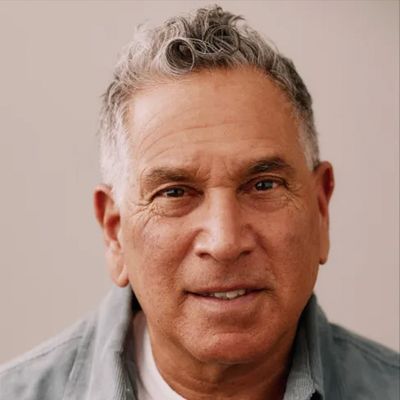
Robert Horn's life story is an incredible testament that you can use humor as a way of survival—well, that and a little bit of luck. From getting separated from his twin and sneaking out of an orphanage when he was a little over 13 to renting an apartment in New York that was possibly run by the mob and eventually moving to LA to pursue a career in writing, his life is anything but boring. Robert talks about how he got his first gig and how it was kismet, what a showrunner really does and why it's great training for theatre, and his myopic approach when it comes to writing jokes. He looks back on his life in New York City during the 70’s, which included working all sorts of jobs, including writing monologues for actors and working as a phone sex operator.
Robert has two productions currently on stage - the first is Disney’s “Hercules”, currently open at the Papermill Playhouse, the other is “Shucked”, which begins previews on March 8th. With his long list of works and achievements, Robert reminds us that we should never stop learning how to laugh at ourselves and follow our instincts.
Robert Horn is a Tony, Drama Desk, Outer Critics Circle, and New York Drama Critics' Circle award-winning book writer. His career started in film and television where he worked as a writer on the CBS series "Designing Women" and as a writer and producer on the Fox series "Living Single". Following that, he created and Executive Produced the CBS series "High Society". He was also signed to an overall production deal with Warner Brothers Studios, where he developed, wrote, and executive-produced numerous network pilots and series. He also signed a script deal at Sony Studios and an overall pilot deal at ABC studios. Together with Bob Boyett, he created and wrote the FX series “Partners”. Robert's Broadway credits include "Dame Edna", "13 The Musical", "Back With A Vengeance", and "Tootsie" among others.
Connect with Robert:
- Instagram: @rhorn1
Connect with The Theatre Podcast:
- Support us on Patreon: Patreon.com/TheTheatrePodcast
- Twitter & Instagram: @theatre_podcast
- TikTok: @thetheatrepodcast
- Facebook.com/OfficialTheatrePodcast
- TheTheatrePodcast.com
- Alan's personal Instagram: @alanseales
- Email me at feedback@thetheatrepodcast.com. I want to know what you think.
Transcript
This transcript was automatically generated and might contain errors.
[0:01] Alan Seales: Welcome back to The Theatre Podcast. Intimate, personal conversations with the industry's biggest names. I'm your host, Alan Seales, and our guest today is Tony Award-winning book writer. He most recently won a Tony for Tootsie, the musical, and given his success, the story that he's telling here in the episode is actually incredible, and I don't want to give too much away, but his dad left, wouldn't support his mom, mom went down some hard mental health issues, went down a hard road, and he was taken away from his twin sister, overcame so much, ended up in an apartment that he suspects, sorry, snuck out of the orphanage, and ended up in a, in an apartment that he thinks was run by the mob. Just a really cool story that you got to hear for yourself.
And among all of this, among all of his weird survival jobs, one of which is incredibly fun, he'll tell you about, he kept a great attitude and used this as a lot of comedians do, like a lot of pain and a lot of hardships and turn it into comedy, because once you discover you can make people laugh, that's kind of a drug you get addicted to emotionally, I think. So anyway, find me online as you normally do, Instagram, TikTok, Twitter, and leave a rating and review wherever you're listening now. And everybody, please enjoy this episode with Robert Horn.
[1:34] Alan Seales: Today's guest is a Tony, Drama Desk, Outer Critics Circle, and New York Drama Critics Circle award-winning book writer whose career began in film and television as a writer-producer on the iconic television series Designing Women, followed by the groundbreaking Fox series Living Single, and the irreverent hit CBS comedy High Society, before being signed to an overall production deal with Warner Brothers Studios, where he developed, wrote, and executive produced dozens of network pilots and series. Past Broadway credits include Dame Edna, Back With a Vengeance, 13 The Musical, and of course, Tootsie, and now he has two new productions in the works, Disney's Hercules, which is now open at the Paper Mill Playhouse, and Shucked, which is just about to begin previews on March 8th, here in New York City at the Nederlander Theater. Robert Horn, holy crap, welcome to the theater podcast.
[2:31] Robert Horn: Well, my goodness, I fell asleep during all that.
[2:36] Alan Seales: Sorry, was it that?
[2:37] Robert Horn: It's great to be here. No, I'm like, did I really do all that?
[2:41] Alan Seales: Dude.
[2:42] Robert Horn: At only 23? That's amazing.
[2:47] Alan Seales: Your history is incredible, and I love the progression of your career that you've made, because I don't know very many other people who have started out in TV and film and been as successful as you have been in that world, and then just been like, I'm just going to go over here and do this other theater thing now, and win Tonys, and Drama Desk, and all these other awards, right? You're just like, whatever I'm going to do, I'm going to do it. So let's start back in, I guess, moving to LA, right? And we'll get into the childhood stuff a little bit later, because I know it's a little bit more serious subject, but I want to start with some light stuff. And when you moved to LA, how did you just fall into the writing for TV and film? Because I feel like everybody moves to LA to write or act, and so how did you get over that hump?
[3:44] Robert Horn: Well, I started off actually, I'm from New York, so I grew up in New York and wanted to be a playwright. And sadly, I was the only one that wanted that. Nobody else seemed interested. And I ended up going to LA, and it was a really rough time in New York, and I just had to get out of there for a while. So I went to LA just to see what would happen. And honestly, it was just, I kept, I pounded the pavement, and I had no idea how to get started, what to do. And interestingly enough, it all happened. I had a friend, whose partner at the time was in Le Cajun Faux on tour in LA, and I ended up moving with him. And he came, my friend from New York came out and went to the beach and was hanging out with a bunch of people.
And they were looking for a joint. And they said, I know who will have a joint, Robert Horn. And they came to my house. And one of the friends that they were with wanted to be a writer and was working at a network. He was working at, his name is Daniel Margosis, a wonderful writer. And he was working at CBS. And we said, Hey, let's write something together. And we wrote a pilot. And at that time, because he worked at CBS, they had what's called writer first refusal, which is anything that you write, they have to see first. And we showed it to somebody up there. And somebody read it and said, Hey, do you guys have an agent? We said no. And they hooked us up with our first agent at ICM. And literally, six months later, we had our first job and just started working.
So it just was this kismet. It was this right person, right place, right time. And, and we started it. I mean, it was real. And there was a very interesting thing because we started up, we wrote a bunch of one offs, you know, we would get hired to do an episode of this, an episode of that. And then we got the opportunity to be on Designing Women, and eventually showrun Designing Women. And it was crazy. Yeah.
[5:48] Alan Seales: So what is a showrunner? Because I still, I know what it is, and I still don't know what it is.
[5:52] Robert Horn: Well, the showrunner, usually the showrunner is the person that created the show. We did not. That was Linda Bloodworth-Thomason and Harry Thomason. But it's the person who basically runs the show. So it's, you know, you're running the writer's room, you're casting, you're editing, you're, you have the weekly task of getting that show going, getting next week's going and fixing last week's.
[6:16] Alan Seales: That's interesting, because I thought, I thought the showrunner was the person who was just ultimately responsible for the writers keeping a through line throughout a series.
[6:26] Robert Horn: That's part of the job. You know, when you start a season, you arc out that season, and you decide where you want to go over the course of the season. And then you decide what stories you want to tell to get you from A to Z. And then you put a staff together that, if you're smart, is much better at the things that you're not good at than you are. And you start, then you just divide it up what writers are going to write what episodes and, and then you ultimately will have the final say on those episodes. But they, you know, then you send people off to outline and script and then you come together as a room and everybody gets a stab at it. And it's, it's a crazy job. And you do it. In those days, it was multicam.
So there's not a lot of multicam left anymore. But you do it, you put it on a plate every week, every week, you're doing a new episode, and you sometimes have four days or five days to do the whole thing. It's insanity, but it's just glorious. It is a giant sandbox with which to play in. And you it's, and it's really great training for theater, ironically.
[7:29] Alan Seales: Oh yeah, that's, that's what somebody I had a manager once back in the day. And they were like, Oh yeah, with your theater training, I'm going to put you up for all these sitcoms. And I said, Oh, okay, cool. So I totally get that parallel. Because yeah, you're you're doing two, maybe three or four takes in front of a live audience. And that's it. That's all you've got after a couple days of rehearsal, and then dress rehearsals. So yeah, that makes total sense.
[7:52] Robert Horn: What's really funny too, is in working in theater, people, I'm a big rewriter, and people are constantly amazed. I'll come in, as the actors will tell you, from the shows I do, I'll come in with the 20 and 30 new pages every day, or like 12 joke options for something. And people are amazed because that sort of isn't a lot of playwrights take a lot more time to be able to do that. But being weaned, weaned on television, you get you fix it right then and there. And that you hone that skill rather quickly. Or you're, you're kind of sunk.
[8:17] Alan Seales: Oh, that's interesting. Yeah, because there have been, there've been other writers that I've talked to that have been like, oh, yeah, we'll go back and we'll have a couple weeks or we'll have a day or we'll come back the next morning. But no, you're, you're coming in already with options. Are you, are you then like, they hate you? Are you upset when you come in with 10 jokes and nine of them don't land? Or do you, I mean, you're like, oh, these were all so good. Are you like this one crap? You know, well, that's a good question. But what I try to do is be a little more myopic than that. In other words, if I come in with 12 jokes, it's usually not just freestanding jokes. It's what's the character, what's the situation.
So more often than not, they will, half of them will work because they're right for the moment. Often when they don't work is when it's just like, hey, this is funny, but it really has nothing to do with what's going on. And then it won't work. But you're trying to really focus on what, what the, what the piece is asking or the character is asking of you at that moment.
[9:35] Robert Horn: I guess, well, yeah, that makes sense, as any good writer should do is. And also, and also, often if the actor doesn't like the joke, they'll tank it. So, so it won't go forward. I'll be like, okay, got it.
[9:41] Alan Seales: Well, so then we kind of tease this a little bit in the beginning, but your journey out to LA coming from New York was a little bit of a tumultuous one. Do you want to, I mean, because you were saying that like your family, family home life I was reading was not so good. And then you came back to New York. I don't ever need to like what the most influential part of your past was. And I'll let you tell these stories, but like you came out as a teenager in the seventies in New York after Stonewall. And there was all these things that made you who you are now. So where do you want to begin and tell this story?
[10:05] Robert Horn: Well, I don't know. I mean, it's this, you know, I, I, so as a kid, I grew up in New York. As you talked about, my mom was a theater person. She grew up, as you said, she was an Ed Sullivan's at that time, they called them secretaries. Now they're her assistant, but her, his secretary. And she was a theater girl. She grew up in Bensonhurst, Brooklyn, and she loved theater. And she worked with Ed Sullivan and his wife actually. And she did a lot of work working with the Broadway talent that would come on the show. So she would always go to theater. So at a very young age, she took me to theater. I think the first show I ever saw was a show called 70 Girl 70. It was a Kendra and Ed show that didn't really have a long life.
And then after that, the original Fiddler on the Roof when I was maybe what five, six years old. And so she introduced me to theater at a young age, and I loved it. And, you know, it was a things, you know, my father left, I have a twin sister, twin sister and an older brother. And my father left and we were born and my mom, sure he left, he wouldn't pay any alimony, he just disappeared. And it was really a challenge for my mom, who at the time in her life suffered from depression, which in those days, it really didn't. No, they just medic, they just knocked you out. They didn't understand it the way they do and it was very taboo to talk about. And so my mom struggled really hard to raise us and she tried to work and we were really we were on welfare, we were really struggled.
And ultimately, we were taken away from her and sent to live through an organization called the JCCA, which is the Jewish Childcare Association, was sent, my sister and I were separated and I was sent to live in basically what you would call an orphanage or a facility upstate New York called Pleasantville Cottage School, ironically. And I and when I was about nine, I went there and I and I lived there and, and it was tough. But you know, I used humor as a way to survive. And I think that set the tone for realizing what I wanted to do with my life because humor was a survival mechanism. It was a way to emotionally deal with as a nine year old kid being separated from your family and from the closest person in the world to me was my twin sister. And also in order to protect yourself, because it was a kind of a rough place. And if you were funny, you didn't get the crap beat out of you. And so I sort of honed my comedic skills.
[12:36] Robert Horn: Through those survival techniques. And also, my grandfather was in Vaudeville, and he, as a very young kid, would introduce me to, we watched great TV shows together, and he introduced me to all that. And so, like, I remember every year, you could get a holiday gift, and I would always ask for, like, I want a book of Neil Simon's work, or I want, I would always, it was something that had to do with comedy. And then, when I was about 13 or so, a little over 13, I just ran away. I didn't want to be there anymore. I came, and I kind of, I ran to New York. I ran away, yes. But it was, it was the 70s in New York. It was a very, very different time. I lived for about four or five months in what's sort of like a halfway house, a group residence.
And then, I got an apartment. I was maybe just shy of 15, 14. I got an apartment. I don't know if I'm allowed to say this. It was sort of, so I was walking around. I needed a place to live, and I was walking around the village, and there were these various sort of Italian men sitting outside playing chess. They used to set up chess boards on the streets, and they would play chess on the street. And I asked one of these guys, do you know of any apartments that are available? And this guy said, come with me. It was all mob. It was all mob. And he showed me this apartment on Thompson Street, and he said to me, can you pay the rent? And I said, yes. It was like $95 a month. He gave me this. He said, nobody, there's no lease.
Nobody knows you're here. You be quiet, and you pay me the money every month on time, and the apartment is yours. And literally, I got an apartment. Wow. And I lived for years on Thompson between Bleeker and Houston, and was in New York in the 70s, and it was just such a glorious time. I didn't have that sort of burden of expectation from parents or family or what that was, but I will say this, and I do tell this story, and it's a true story. When I was about six or seven years old, my mom sort of, she knew that I was going to be gay, and she knew that I had an appreciation for the art, and she knew who I was. And she pulled me, she said to me, I remember, I literally remember this, which I don't remember a lot from my childhood, but I remember her saying to me, you're going to be different, and don't let anybody tell you it's not fantastic.
Wow. And so, she set me up to have confidence at a very young age and sort of have survival skills. And I'll tell you, it was the most glorious time to be in New York in the 70s, wanting to be in theater. It was a renaissance of theater. It was the Michael Bennett years, and it was, you know, it was incredible. I didn't answer to anybody. It was post-Stonewall, so sort of, you know, that the outing of gay liberation was happening, and it was a steamy, crazy, wild, incredible time to cut your teeth and figure out who you are. So, that's sort of how I started. And then, the 80s hit, and the AIDS crisis hit, and everybody was starting to, you started to lose everybody. And the city went into a depression at that time, if you remember, financially. And then, I was like, I got to get out of here. I was having no success, no luck, wanting to be a writer. And I moved to LA, and then that other story happened. So, that started the journey.
[16:00] Alan Seales: That's an incredible journey. And there's so much I want to go back to. But even at that young age, as a teenager, you knew you wanted to be a writer. You were trying to be a writer by yourself, in a mobster's apartment in the village.
[16:12] Robert Horn: In a mob-owned, I assume it was, you sort of got that indication. And, you know, I actually, I had like hundreds of jobs, some of which were not necessarily on the up and up. But one of the things that I did for a living was there was, this was obviously before internet, there was a magazine, I think it was called Backstage Magazine. And that's where, if you were an actor, you found out where auditions were. And I put an ad in that magazine, and I wrote monologues for actors, for auditions and acting classes. And I charged 20 bucks for a monologue, an original monologue for somebody. And that's how I started writing, by writing monologues for actors through Backstage.
[16:54] Alan Seales: Wow, you can do five of those in a day, and you've made your rent for the month.
[16:58] Robert Horn: I'm telling you. Well, not that many people called, but yeah, I did that. And I did other things, like, I don't know, what can I say or not say? Is this family friendly? Or can I?
[17:09] Alan Seales: We'll mark it explicit, say whatever you'd like.
[17:12] Robert Horn: Well, like I had a job. So back then, there were these, they were called, they were 876 sex phone lines. And you would call up, and you would talk to somebody on the line.
[17:33] Alan Seales: And I was one of the—
[17:36] Robert Horn: A phone sex operator.
[17:37] Alan Seales: A phone sex operator from my apartment on Thompson Street. Yes.
[17:42] Robert Horn: Did you—
[17:43] Alan Seales: I worked at Serendipity's for years, with Yellow Fingers. I was an elf at Santa Land, at Macy's for many years. I was a roller skating waiter that didn't know how to roll. It was literally on Funny Girl. I got a job, it was a restaurant across from Lincoln Center. I forgot the name of it. It's now something else. I got a job as a roller skating waiter, could not roll, lied that I could roller skate, got fired the day that I got hired.
[18:09] Robert Horn: Oh, wow.
[18:11] Alan Seales: You know, I had lots of crazy jobs.
[18:14] Robert Horn: The phone sex operator, did you do that as a male or a female character?
[18:19] Alan Seales: As a male character, but as a gay male. Yes.
[18:23] Robert Horn: You should talk to Josh Layman about his story about being a phone sex operator.
[18:26] Alan Seales: I guess you are.
[18:27] Robert Horn: He used to, yeah, before he made it in New York, he used to do it as a female. He would call up, and men would talk to him, and he would be Fiona. He would pitch his voice up and become Fiona and have phone sex as a woman with other men.
[18:45] Alan Seales: I'm going to talk to him about that. The fantasy was that I was a student in the UCLA dorm. That was what I was supposed to be. Here I am, this little Jewish kid. I was supposed to be a student in the UCLA dorm. I can't believe I'm telling this story, but also, you made more money if you were requested. The longer you would keep people going, the more money you'd make. There was a whole formula to it.
[19:18] Robert Horn: Yeah.
[19:19] Alan Seales: Yeah, it was easy.
[19:19] Robert Horn: Finest hour, but I was pretty good. I remember when I was... I'm 42, so I remember in the 80s, even in the early 90s, I think I've seen late, late night commercials about some of that stuff. Yeah, so I remember it was like $2.99 per minute. Yeah, I remember all that. Yeah, the longer you stay on, the more money you make. I get it.
[19:39] Alan Seales: Sadly, you might have talked to me. Well, you might not have, but—
[19:41] Robert Horn: No, I never called one.
[19:43] Alan Seales: Might have talked to me, but yes.
[19:45] Robert Horn: That's funny. Okay.
[19:46] Alan Seales: Well, then obviously, this all leads to Disney? No, it does not. Hercules and Shucked, that is the worst segue I probably have ever done on this podcast. Yeah, so now you've got two productions in the works. I know it always takes years and years for this stuff to actually materialize. I remember seeing Hercules at Shakespeare in the Park, I think it was summer 2019, right? It was the summer before the pandemic, I believe.
[20:17] Robert Horn: Correct. Yeah.
[20:19] Alan Seales: Were you involved with it back then? How does this continue?
[20:22] Robert Horn: I was involved in it back then. I won't go into a lot of detail about that for many reasons, but yes, I was involved in that production.
[20:35] Alan Seales: As it then moves forward from there, I continue to be involved in it, and yes.
[20:42] Robert Horn: So the evolution of this kind of stuff, and I know that even Shucked, too, has sort of been around for a while.
[20:49] Alan Seales: I've been working on that show for 12 years.
[20:51] Robert Horn: No kidding.
[20:53] Alan Seales: 12 years. It started off, there was a whole other incarnation of it, of which there is nothing left, which was another show, but it's where the seed of the show was born, in terms of it brought together the incredible composers that are like family to me. They've been on it for 10 years. I got a phone call from my agent asking me if I ever heard of the TV show Hee Haw. I was like, well, yeah, I did, because again, my grandfather loved vaudeville, and he used to watch that, and I would watch it with him. And Grand Ole Opry owned the rights at the time and said, we want to do a stage version of a Broadway musical, and I said, I met on it, and what I said is, what I don't want to do is an Opryland show, or a sit-down show, like a variety show.
I want to do a book musical. And they let me do it, and we did it, and I met Shane McAnally and Brandy Clark, the incredible composers who are very successful in Nashville, and we did a version of the show that didn't really come together. I think in trying to honor the source material, of which there really wasn't any, because Hee Haw was just a skit show of like 10-second skits and characters. It never really gelled, and so we did a version of it at Dallas Theater Center, and it was a wonderful team, and everybody was wonderful, and it didn't work. And so we let it go, and then like three years later, we all got on the phone, and the world really started to change. And there was just this little seed of an idea that we had talked about during that show, and I said, let's not give up, let's start over.
And as the world started to become more divided, and I really watched the vitriol that was going on, we knew that through comedy and their music, we could tell a story about division. Because really what Chucked is about is, I don't know, people are like, what is this show? What it really is, it's a show about this small fictional town in the heartland of America that grows corn, and on every property line there is corn, and these huge corn walls have closed them off from the rest of the world. And they're terrified of anybody that's different than them that might come in and change their way of life. And what happens is the corn starts to die, and if the corn starts to die, it exposes them to everything they were afraid of.
And so truly, it's about unless you learn to open your heart to people who are different than you, you cannot grow. So corn is a euphemism for the growth of life and what that means. So it sounds very serious, and it is because it's really about a divided nation and what it means to open yourself up to people who do not think the way you do, and have preconceived ideas of what and who you are. And we couch all that with incredible comedy and some of the most glorious music I've ever heard on the stage, and so there's my pitch. But that truly is what it is. And we've been having the best time, and then along comes Jack O'Brien, who is the Yoda of theater, and all these other misanthropes and misfits that we've gathered along the way. And it's this really quirky little original musical.
[24:05] Alan Seales: That's cool.
[24:06] Robert Horn: And it's unusual in this—unfortunately, I think, I will say, unusual in this time to have an original musical, because so much is based on other material and even existing stories.
[24:17] Alan Seales: So I—
[24:18] Robert Horn: I understand that, too, because I think theater is very expensive and very hard, and I think producers often think that if there is source material, there's sort of a guarantee of ticket sales, or at least an understanding. Like, a lot of people are like, I don't know what Chuck is, which was always the case back in the heyday of musicals in the 30s and 40s.
[24:40] Alan Seales: Heyday.
[24:40] Robert Horn: I see what you did there.
[24:41] Alan Seales: Yeah.
[24:42] Robert Horn: So I think—I think, yeah, it's really hard to do original musicals. You're betting on yourself. You're just betting on an idea. But I will also love it because you're not—like, I loved Tootsie, and I had the time of my life, and, you know, we had the best time. But you, to some degree, you are locked—you are—you must honor the source material. And so sometimes the tail can wag the dog when that's the case. When you do an original musical, it's whatever—
[25:11] Robert Horn: You know, I think there are people out there that are activists and they're born with a prism for which to look at the world through its disparity and its unfairness, and I think everybody looks at the world differently. I just, I'm also, this is, I don't want to, I do not navigate in tropes, but I'm a Jew, and Jews, just comedy is sort of who we are. I mean, if you look at the history of comedy, there are a lot of very famous, you know, Jewish comedians, really. And I, and again, I was introduced to vaudeville, to a borscht belt humor, which I love, and then how I turned the rhythms of those into contemporary comedy. I sometimes like to think I carry the torch of two different generations. But I don't know, I got, you know, how I did it, luck.
There but for the grace of God, I was able to just, a lot of the kids that I grew up with never survived. They did not, they were not able to survive that. I just was able to, I find the humor in it, and I don't know how, and I don't know, maybe I don't want to even know, but I think that's how you do it. And the task that was on the table was at one point I said, I can make a living doing this. I bet I could get paid for this because I'm making people laugh. And I don't know, it just sort of happened.
[31:25] Robert Horn: Have you ever thought about writing your story as a show, as a musical? Literally everybody asks me that. Yeah, I have. I don't know how. I think sometimes I think so. I'm able to sit here and talk about it because I can be a little detached from it, but if I actually sit and write it, I'm gonna have to deal with all those things I've never dealt with, and then maybe what happens with the comedy? Then the comedy goes away because I'm not bitter anymore.
[31:49] Alan Seales: Yeah, the comedy, your comedy works because you're bitter about it, I guess.
[31:55] Robert Horn: Yeah, yeah. So Hercules now at Paper Mill, it's another production, and there's always like, when's this coming to Broadway? When's this coming to Broadway? Right? So I know, like given the powerhouse of Disney behind all of this and the creative team involved, is there, is that still on that path? And what's different about this Paper Mill production versus what I saw at Shakespeare in the Park versus any previous readings?
[32:23] Robert Horn: Well, this is the Zeus honest truth, as we say in Hercules. They don't tell us what the next version of it is. I don't know if it's going to Broadway. I don't know. We do not know. We get through this and then they decide, so they don't tell us, and they tell us, and we sort of don't, we're told not to ask. I think, you know, Tom Schumacher, who's the president of the theatrical, is really a genius at knowing when to bring things in, where to send things, how to do it, and so we sort of leave it to him. So I don't know what the next version of it is. What's different about it? You know, Hercules in the Park, the idea for all of this came from our incredible director, Lear de Bessonnet, who, as you know, just had a real great success with Into the Woods on Broadway last season.
And with this season, it was this. And she was working with the Public Works at the Public Theater, which is every year they do a production at the Delacorte in Central Park that includes people from all walks of life to come up and be on stage and be part of the production. So nurses and sanitation workers and teachers, and it was a glorious thing. And it was a pageant. It was outdoors. It was during the summer. It was Central Park. It was all those things. And I think wisely what Lear realizes, you can't replicate that. You can't replicate 200 civilians on stage. This was now going to be a legitimate musical in a very different way. And so making the transition from that to this is what I think is different.
It's still the message. She has a very clear message of what she wanted in this show and what Hercules meant to her about community and about how we're stronger together than as an individual, about what heroism is. And so I think that's sort of where the difference is. And things play very differently in the theater inside and with professional actors, and so that's sort of the difference. But the Park Center Gret started was a great template with where to begin.
[34:27] Alan Seales: We're going to take a short break. Stay tuned for more of the episode.
[34:38] Robert Horn: I love the production because it gets so many people involved and being outside. Yeah, you're right, it does have like a different, a literal and metaphorical atmosphere.
[34:50] Alan Seales: Yeah, yeah, yeah. So let's wrap up here because I know you are joining us on your lunch break from some unknown rehearsal, and so we're going to get you out. But I want to wrap up with three closing questions I ask everybody on the episode. The first one, just very simply, is what motivates you?
[35:07] Robert Horn: Fear. That's an honest answer. I'm always, honestly, you know, I'm always afraid. Oh my God, they're gonna fire me. Yeah. And laughter, truly, I would say both those things. I love laughter. I love being able to make people laugh. I think, I mean, I hear, you know, there are singers out there that I wish to God I could sing like that and actors that I could never do what they do. But I, for some reason, was given the gift of making people laugh, and that motivates me.
[35:45] Alan Seales: Okay, what advice would you give to your younger self and younger people listening now starting out down a similar path?
[35:51] Robert Horn: Go vegan earlier to my younger self. This is the advice I always give to people. You ever follow your instincts? A lot of people are going to try to tell you a lot of things. Listen wisely, know the source of who they are, why they're saying it, and follow your instincts because that's all you have is your instinct.
[36:18] Alan Seales: All right, if you could only see one show for the rest of your life, but you can see it as many times as you want, what would you see?
[36:28] Robert Horn: Oh my God, I can't answer that. I mean, for the rest of my life, well, I don't know. It would be a comedy. Shucked. Good answer. Only because hopefully, because then I'd be making money off it if it's playing out and be making people laugh, and you wouldn't have fear of losing, of being fired. So it hits everything.
[36:47] Alan Seales: There you go. Cool. So where can we find you online? Do you do social media? Are you on the Instagram?
[36:54] Robert Horn: I am, yeah. I'm on Instagram. I don't do the TikToks. I watch them, but I don't do it. I don't love being in front of the camera. I'm on Instagram. Our Horn One is my thing, our Horn One, the number one. And I'm on Facebook, but I never go there. I'm not a big social media person, but I do do Instagram. That's my jam.
[37:19] Alan Seales: Love it, love it. You can get more of me at thetheaterpodcast.com. I'm on Instagram, theater, Instagram, Twitter, Facebook, TikTok. I don't know what I'm doing on any of that. You know, whatever, it's there. Leave a rating review wherever you are listening now. Thank you to Jukebox the Ghost for intro and outro music. And Robert Horn, thank you. This has been such a fun episode. I love it. You will enjoy it. Take a deep breath, make the world a little colorful.
© Broadway Podcast Network, All Rights Reserved