

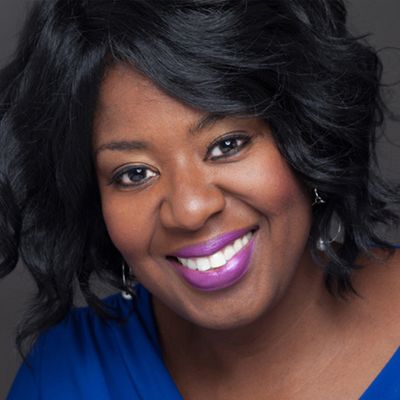
Natasha Yvette Williams is currently originating the role of Sweet Sue in the brand new production of “Some Like It Hot” on Broadway... Read More
From the show: The Theatre Podcast with Alan Seales
Guests
Featured Shows

About
Natasha Yvette Williams is currently originating the role of Sweet Sue in the brand new production of “Some Like It Hot” on Broadway. She gets real as she opens up about why she doesn’t consider herself a singer, admitting that she’s still a little insecure about her singing, but despite dealing with imposter syndrome, Natasha remains positive by constantly reminding herself that everything is a challenge, a lesson, and a blessing. She also shares where she used to get validation and why all the validation she needs now comes from her. Being a part of “Some Like It Hot”, she continues her goal to develop a great relationship with each and every other cast member and see how it unfolds on stage. Natasha recalls watching Lily Tomlin in “The Search for Signs of Intelligent Life in the Universe,” which sparked something in her to join the musical theatre, and why she wants to have the same impact on other people whenever she performs.
Natasha Yvette Williams is an actress who has starred in Broadway shows, including “The Color Purple”, “A Night with Janice Joplin”, “Waitress”, “Chicago”, “Chicken and Biscuits”, and “Porgy and Bess”. Her national credits include “Waitress”, “Xanadu”, “The Drowsy Chaperone”, and “All Shook Up”. Natasha has also starred in several tv shows and movies such as “Harlem”, “I Take Thee Zoe”, and “Better Late Than Never” among others. You can also catch her in “Alice”, the Disney Plus’ “Better Late Than Never”, and the Netflix series “Partner Track”. She’s currently on stage originating the role of Sweet Sue in the latest production of “Some Like It Hot”.
Connect with Natasha:
- Instagram: @natashayvettewilliams
Connect with The Theatre Podcast:
- Support us on Patreon: Patreon.com/TheTheatrePodcast
- Twitter & Instagram: @theatre_podcast
- TikTok: @thetheatrepodcast
- Facebook.com/OfficialTheatrePodcast
- TheTheatrePodcast.com
- Alan's personal Instagram: @alanseales
- Email me at feedback@thetheatrepodcast.com. I want to know what you think.
Transcript
This transcript was automatically generated and might contain errors.
[0:00] Alan Seales: Welcome to an all-new theatre podcast. Intimate personal conversations with the industry's biggest names. I'm your host, Alan Seales, and our guest today is NaTasha Yvette Williams from Some Like It Hot!. I love this show. It's so energetic, so fun, and her role in this just amplifies all of this. We get into this really cool conversation. Of course, I ask everybody why they were performing and why they love doing what they do, and she just goes into this explanation of having to chase the high of performing and using the energy she gets when she's on stage to turn any bad day into a good one. She can always just use this onstage experience to make herself feel better. And you know what? Fun fact, she mentions this.
She does not consider herself a singer, which, oh my gosh, when you hear her in Some Like It Hot!, you would never believe that she was not a singer. Just amazing, amazing, and super talented, and so I think it's untrue. I just choose to not believe her. So with all of that, find me online, Instagram, Twitter, TikTok, Facebook. Leave a rating. Leave a review wherever you're listening. Make sure you go see Some Like It Hot! because, you know, that show brings it. Please enjoy this episode with NaTasha Yvette Williams. Today's guest has starred on Broadway in past shows, including the Tina Turner musical, Chicken and Biscuits, Waitress, Chicago, A Night with Janis Joplin, Porgy and Bess, and The Color Purple.
National credits include Waitress, Xanadu, The Drowsy Chaperone, and All Shook Up, which, by the way, is still one of my personal favorite shows. Love it. You can catch her in the historic thriller Alice, the Disney Plus movie Better Nate Than Never, and on Netflix in Partner Track, and she is currently on stage originating the role of Sweet Sue in the current production of Some Like It Hot! NaTasha Yvette Williams, welcome to the theater podcast.
[2:08] NaTasha Yvette Williams: Thank you for having me. Good to be here.
[2:13] Alan Seales: Oh my goodness, I love Some Like It Hot! It is one of my favorite shows right now, and God, I want to go, I mean, I'm going from zero to a hundred real fast. I want to, I cannot stop thinking about the final, or not one of the final, not the final, but one of the near the end of the show, the big chase scene with all the doors, and it's got the whole cast. It's reminiscent of one of these old timey, like, I think almost vaudevillian sort of things, though. Is that- Noises off, or I think it was noises off. They had the big famous door scene or whatever, but we just take it up a step, take it up a notch, I think. The whole show takes it up a notch, including Sweet Sue, right? And so you've been in so many amazing productions, so when you're given a script and you're like, all right, I want you to put your Natasha touch on this brand new role, where do you start with that, right?
[3:16] NaTasha Yvette Williams: I obviously start with the words in the space and the character that the creators have designed, and then I try to align it to something that's personal to me, like a relative or a character that I'm very interested in, and I can align some of the feelings and the actions with. And then I try to fuse myself into the characters. Sweet Sue was kind of, I don't want to say easy, but certainly natural to me. She's a nurturer and she's in charge. She reminded me a lot of my Aunt Christine, who I lost a couple years ago, but even her clothes and everything that she wears, I just sort of feel embody her spirit in the role of Sweet Sue. And so it makes it just fun to visit her every day and to bring her to life for the audience, because I'm literally just moving through a space in a natural way. The role is great. I love it. I absolutely love it.
[4:18] Alan Seales: So what you're saying is that you and your family are running from the mobs still, so you're in witness protection.
[4:22] NaTasha Yvette Williams: Not that way, but my uncle was a little bit of a rebel. My aunt was a little bit, she was a very, very church oriented. So they had that sort of yin and yang in their relationship that I got to watch throughout the years.
[4:40] Alan Seales: Opposites attract.
[4:41] NaTasha Yvette Williams: We weren't running from the mob per se, but it was fun. It was fun. And they were a fun couple to watch. So I sort of infused a lot of Sweet Sue into that. I infused them into Sweet Sue.
[4:56] Alan Seales: What style do you prefer? I mean, I was going to say, what style do you prefer sort of singing in? Because you got like, I mentioned All Shook Up in the intro. I paused on that, because that's like your big, that's Elvis. And then you've got some classic, and then you've got, throughout everything you've done, there's been so much that's been sort of ranging across the gamut of styles, right? Does this fall into your sweet spot? You said Sweet Sue itself is...
[5:23] NaTasha Yvette Williams: Yeah, I love jazz a whole lot. Gospel would probably be my favorite. What I sing when I'm alone in my room would be gospel. I admire jazz singers a lot. I don't think I'm a singer though. I feel like I'm an actress, and I sort of just sort of fall into, not mimicking people, but I haven't really, I don't consider myself a singer, if that sounds crazy. But I, even though I make my living as a singer, but you know what I mean? I just, I'm not like, okay, like some of the new kids that are singing now, who am I thinking about? Amber and Michael Kilgore, and all of the runs and stuff they do with their voice, I can't do stuff like that. I can bend a little bit, but I don't really do stuff like that. Even in my show, Jay Harrison Gee is ridiculous.
[6:10] Alan Seales: Oh my gosh.
[6:11] NaTasha Yvette Williams: I just don't, I don't, I'm not confident in that area, I think, as well as I am in terms of just telling stories. I am a storyteller, and you give me a script, I'll tell you that story. I'll tell a story, even if it's not the story, maybe that the creator has designed, but I can come up with a story for it and tell the story. But singing, I'm a little insecure about my singing.
[6:32] Alan Seales: Really?
[6:33] NaTasha Yvette Williams: Yeah, I'd love to get better, but I'm not real confident in that. You know what I just realized? I not just realized, but I read somewhere, you're from North Carolina.
[6:42] Alan Seales: Yeah, yeah, yeah.
[6:43] NaTasha Yvette Williams: I am too.
[6:45] Alan Seales: Which part?
[6:45] NaTasha Yvette Williams: I'm from Fayetteville.
[6:47] Alan Seales: Oh man, yeah. I grew up in North Wilkesboro, but if people don't know where that is, which is the creation of NASCAR. Remember the Wilkesboro Speedway is still there. The invention of NASCAR happened there. Junior Johnson still lives in Wilkes County somewhere. I say Raleigh-Durham because I lived there for eight years.
[7:06] NaTasha Yvette Williams: Okay, cool, cool, cool.
[7:08] Alan Seales: Yeah, yeah.
[7:09] NaTasha Yvette Williams: All right.
[7:09] Alan Seales: So Fayetteville, that's actually a cool segue. Fayetteville, where did little Natasha, how did you start singing? Where'd you start performing?
[7:18] NaTasha Yvette Williams: Oh, I started singing in church. I started singing in church. We had a tiny top choir in my church and I used to watch television with my mom and love the reaction of people when I opened my mouth. And even though probably it didn't sound good, but it was cute because I was little or whatever. I just wanted to entertain people and wanted to make people feel things. From a very young age, but that started in church. Out in the country, I used to sing for the chickens and the pigs. Because I went to Cape Fear High School out in the country, the countryside, the east side of Fayetteville. While Fayetteville's a city, I've stayed in the woods.
[7:57] Alan Seales: Were you really, were you literally singing to the chickens and the animals and everything?
[8:01] NaTasha Yvette Williams: That's what they tell me. I don't remember that aspect, but we had a chicken coop and I had a captive audience.
[8:10] Alan Seales: What's the song? I should know this, but pigs and chickens and something go to wiggle. What's the song?
[8:14] NaTasha Yvette Williams: I don't know that song. I don't know that song. I was singing church songs to the chickens. I was singing Jesus loves me, you know, or something.
[8:21] Alan Seales: Oh my goodness. Yeah. I used to, I loved it. I was in like choir and magical singers and everything. And, and so, yeah, I had the mix of secular and sacred and we would do all this stuff growing up, of course, in North Carolina. It was, it was in my high school. So we had to skirt the line very carefully between church and state, literally.
[8:42] NaTasha Yvette Williams: Yes. Yes, we did.
[8:43] Alan Seales: Yeah. Yeah.
[8:43] NaTasha Yvette Williams: Aretha Franklin, because my parents wouldn't buy me records. So I had to listen to all their records before they started going to church. So it was like Aretha Franklin and Diana Ross and Nina Simone and Al Green. So that's, those are the songs that I grew up on. And everybody, all of my friends were like, why are you listening to all this old music? But you know, that's all I had. So.
[9:00] Alan Seales: Did you listen to Tina Turner?
[9:02] NaTasha Yvette Williams: I didn't listen to a lot of Tina Turner. They didn't, they didn't have a Tina Turner thing.
[9:07] Alan Seales: That's what I'm asking, like going, going into the Tina Turner musical. I was wondering if that like came full circle, you know?
[9:13] NaTasha Yvette Williams: No, she loved Tina Turner though. Whenever Tina would come on television, it was a great, it was like, everybody come sit down and watch this woman's legs. You know what I mean? It was literally, but they didn't have, she didn't own an album for Tina Turner, or at least if she had, it didn't make it to, by the time I was alive, they must have broke it or something. I have no idea, but there wasn't a Tina Turner album in it, but we loved Tina Turner.
[9:36] Alan Seales: So you've got, let's see, Tina Turner and Chicken and Biscuits, which also, I just love Chicken and Biscuits. Michael Urie's just, again, I got a special place in my heart for Michael Urie.
[9:52] NaTasha Yvette Williams: Yeah, me too.
[9:54] Alan Seales: But you got plays, you got musicals, and I cannot believe you just said that you're insecure about your singing, because it is beautiful and it's amazing, and you wouldn't continue to get cast doing this stuff if you weren't good at it.
[10:08] NaTasha Yvette Williams: I'm always amazed at how, the perception of people and how you can be successful. I'm successful. Hey, yay, very grateful, but still there's this inner kind of, not doubt, but questioning sometimes about a lot of things I do, and my singing is at the top of that, at the top of that. So it's not like I'm, I don't know, it's crazy, but I have that.
[10:34] Alan Seales: It's not unusual for you theater Olympians, because Broadway is the Olympics of theater, for you theater Olympians to have some imposter syndrome. I've heard that many times.
[10:46] NaTasha Yvette Williams: Yeah, yeah.
[10:48] Alan Seales: How do you, not cope, cope is not the right word, but process it, right? Because I've been in past situations where if there's a particularly high note, or if I'm feeling under the weather, or whatever the case is, right? I'm anticipating ahead of time and getting, I'm my own worst enemy, so I start to tense up, but I start to create that reality that I am afraid is going to happen. So how do you avoid that?
[11:17] NaTasha Yvette Williams: Well, it's a constant conversation with yourself as you do it. I'm going to share this. I recently, as in last week, for the first time, hit one of the notes that I was supposed to hit since we opened.
[11:31] Alan Seales: Really?
[11:31] NaTasha Yvette Williams: We learned a song in the title song, Something Like It Hot, we learned it a certain way. The night before we opened, before we froze it, yeah, the night before we opened, Mark Shaman wanted me to sing a different line. And he just said, okay, here it is, blah, blah, blah. I think they played it, or they hummed it, or something, and said, put it in the show. And I couldn't do it. I was like, every time we got to that place in the music, my ear, my body would not let me hit this note. I tried it maybe twice live, and it went awry. And I was like, something in the music is not letting my body do it. I can't do it. I need rehearsal. But we didn't have time for rehearsal. So for two months, almost, I never got the line.
And then we recorded the album, and he wanted those notes on the album. So I did them in the room. And I could do it alone, but I couldn't do it with the band on stage. There was something blocking me on stage that I couldn't get it. But then we had a rehearsal for the album, for the CD, and that's what I needed. And then he was like, oh, well, try Do Re Mi right before you sing it. And it clicked, and now I'm doing it. But two months of every day doing this show, or eight times a week, and I couldn't get this note. So that's what I mean. It's just like, you talk yourself out of it. So how do I cope with it? I say that everything is a lesson, a challenge, and a blessing. I am working every day on the process of being the best Natasha I can be.
And that means that whatever job I'm given, right now it's currently Sweet Sue, that I have to be the best Sweet Sue that every audience member walks in and sees. So some days Sue's right on top of everything, and some days she's not. So I have to give myself permission to not be perfect, to not get everything right, to not beat myself up when those human aspects come into the portrayal of this role, and to the process of me building myself, Natasha up, because I'm learning every day how to produce the best product, which I'm the product. I'm the product, and what I offer is the product. So I have to forgive us a lot of forgiveness, a lot of conversations with yourself, and a lot of understanding that the process is what the goal is, not the finished product.
The process of learning how I put together my notes, learning how I put together my lines, those kinds of things. As long as I get that process down pat and understand what it is for me, then whatever I'm given, I can achieve it. It might take two months, but I can get there. So that's it. That's what I do. I forgive myself a lot. I laugh at myself a lot, and I keep trying. We're going to take a quick commercial break. Hang on a second.
[14:58] NaTasha Yvette Williams: It used to be my mother. My sister is very close to it, but she's very hard to please. So I don't find that validation in her that much. So I really don't, I really don't give it to anybody else now. I used to, it used to be, oh my God, if I, this, just this, this person or that person, or, but I think I've kind of learned that it's more important for me to be happy with whatever I'm doing to do my best. And then it takes the pressure off, you know? So, cause, cause there was a moment where I was like, oh my God, I can't get this note, I can't get this note. But I was like, you know what? I'm still working at it. I work at it every day and I can get it off stage. I don't know why I can't do it.
Something in the music is wrong, you know? I don't know why I can't do it, you know, when it's on stage. But now the validation really comes from me. I have to just sort of, cause I'm, I'm hard on myself. I don't think I find it in anybody else, but before it was my mother, but my mother passed in 2017. And it didn't even matter what I did. Everything was going to be good enough for her. But even if I felt bad about it, she would make me feel like it was enough.
[15:57] Alan Seales: There's something important that you said, and you said it real quick, and I want to call it out for everybody listening now, is that you, now you don't give it. You don't give that validation to others. And I love that you said the word give, because it's a choice to rely on others to feel good about yourself.
[16:15] NaTasha Yvette Williams: Yeah, yeah, yeah, yeah. I've learned that. I wasn't doing that in the beginning. You know, constantly chasing that, that either that job or that yes, or that, that, that validation. And, and it's exhausting. And it doesn't serve me, it didn't serve me very well, to constantly be measuring up, putting myself up against other people. So now I sort of just try to compete with myself and make myself a little better.
[16:45] Alan Seales: That's hard. That can be equally as hard, though, as someone who is equally as critical of oneself as I am. I get it. I'm like, is this episode as good as the last one? Am I getting better? Are we getting, like, this work? Oh, man, it is tough.
[17:01] NaTasha Yvette Williams: I know, it's hard.
[17:02] Alan Seales: So, um, what I was saying, though, originally was, was between the musicals and the plays, we brought up Chicken and Biscuits and whatnot. Because of, of the lack of singing in a play, do you prefer plays, TV, movie, aside from musicals? Because like, again, there's something about musicals that is just, cannot be beat. But in terms of stress, vocal fatigue, uh, energy required, right? Like musicals are the hardest. They're, again, the Olympics.
[17:29] NaTasha Yvette Williams: Definitely the hardest. I definitely love, um, doing plays and TV as well. There's there, but there is something about that downbeat, you know, dropping on in a musical that is, is just a rush, especially this particular production of Some Like It Hot. I can't remember having as much fun as I have every night, um, in Some Like It Hot. Not just because it's a comedy, but it, it just is so well crafted that it makes me, uh, appreciate or and understand why I got into, um, musical theater at all, you know, because it is such a, it's a traditional, um, story and the structure is so traditional and classic, but the message and the presentation of it is so current and so validating and so needed right now that I think it's just one of the best, um, productions I've ever been in.
And it's definitely, um, one of my better roles. And I'm just having, I'm just having the best time in a musical. Now, certainly if it was a play and just funny, I would be, oh, I'll be fabulous. Then I wouldn't be doubting myself every night. Am I going to be able to hit this note? And could I do it if I wasn't feeling well? Um, I think play sometimes I can, I can do that. I can muster up whatever I'm supposed to have if I'm not feeling well. Whereas, you know, a musical, I've gotta have at least most of the notes, you know, I can talk through some, but I gotta, gotta be at my best tip top shape to run around and all the things you have to do in a musical.
[19:07] Alan Seales: It is running. It is literal running throughout that show.
[19:13] NaTasha Yvette Williams: Yes. Yes. That's, that's the comedy, the vaudevillian aspect of what's in there and, and keeping up the energy level. I feel like it's one of those, one of the casts where you're always trying to like, kind of one up each other on energy in a good way, in a good way, not one up each other. Maybe it's the wrong way, but, uh, you're encouraging each other. You're building each other up, right? Like just the way Christian and Jay and Adriana and everybody just, it's fun nominal the way that all of you gel together.
[19:42] NaTasha Yvette Williams: It's crazy. And you never know what's going to come out of Christian's mouth and face and hand and body. Um, so you have to always be prepared for him to, oh my God, he's, he started using this voice on Sunday in one of the scenes and he was like having a cold. He said he had a cold. So he was pretending like, you know, he's talking out of his nose or something crazy. And I was like, I'm not going to laugh. I wanted to like, sort of mimic him. Cause I was like mad at him as Sweet Sue. It was, it was the funniest thing. And I thought, how genius of you to say, you know, I have this bronchitis and then do a bronchial voice. You know what I mean? It was just, but he hasn't had never done it before, but we were, it's just all about, everybody just seems to be very concerned and skilled at growing and not changing the show so much, but growing in the roles and allowing the people, the characters to breathe.
And, um, that's, what's really exciting about working with Jay and Adriana and especially that crazy Christian, because he is constantly growing and we're constantly evolving and learning things about the characters. And it's like, oh, maybe that's what that means, or that could mean that. So there's several ways to explore the words. And, um, we do that weekly in this show. It's so great. I love it.
[21:04] Alan Seales: And especially with the message of what it is and, and the movie, this is an adaptation of the movie.
[21:10] NaTasha Yvette Williams: Yes.
[21:10] Alan Seales: Some Like It Hot that was released in 1959.
[21:14] NaTasha Yvette Williams: Yes. We say some things that the movie probably couldn't say at that time, you know? So, yeah.
[21:20] Alan Seales: But, but given the circumstance of, of men who are dressing as women and, uh, and just the way that it's presented, it came across, um, in 1959, it had so much success. And of course, that's why I suspect that the production team was like, oh, let's adapt it. It'd be a great musical. Let's put it on stage. And, but God, like this role was like, like Jay was born to play this role.
[21:47] NaTasha Yvette Williams: I agree. Yep.
[21:48] Alan Seales: And watching, watching them, uh, actually I interviewed Jay long before Some Like It Hot opened and it was on this podcast, actually, that they came out as, as non-binary and, and then knowing, cause Some Like It Hot, I don't even think it'd been announced yet or it had just been announced. I didn't know much about it, but like watching Jay's transformation eight times a week, like, do you feel like Sweet Sue is sort of the mother, I feel like the mother of the, of the show, right? That motherly role. Do you feel like the sense of pride of accomplishment, like watching this and what you were just saying, speaking to what you were saying about everybody kind of finding these little nuances night after night that maybe weren't there before, like, how has that changed across for, for you watching everybody else? Because you're on scene, you're on stage so much with everybody else exploring these deep emotional, uh, corners of their minds. Right.
[22:40] NaTasha Yvette Williams: I, I, watching Jay, uh, transform every night is, has been, um, I don't know, this, this show has given me so much, but with every person on stage, I try to find a moment where Sweet Sue has with them, where she's either chastising them or whatever she's feeling about whoever it is, to have a really personal moment. Jay and I relationship develops because she starts as, you know, as Daphne comes into the group and I don't know them that well. And then he, he sort of stands up for me at a certain point and she, she stands up for me at a certain point and she, um, speaks out against, uh, Josephine who is, uh, got a different kind of energy. So I'm developed, our, our relationship is growing. And by the end of it, I, I do feel like she's my daughter, you know, um, and I, I hate what is happening and the trans, I don't want to, I don't know if she'll be talking about what happens in the story, but, um, I worry about her and I get a little bit more connected to her than I do Josephine.
And so it is a very nurturing relationship and I love the way that it unfolds, that it grows and that I, it takes me by surprise by the time we get to the end. And, um, so yeah, I'm having, ah, it's wonderful. It's just wonderful. It literally is a gift to me, um, being in the show and figuring out, oh my gosh, how many times do I look at Abby? How many times do I see Devin? You know, the, the, the ladies in the ensemble and what can I do to establish that I actually talk to them and that I know them and that we can have a relationship on stage. So I try to do that with everybody at some point and every, I haven't gotten around to everybody in the show, but that's what my goal is, that there's something displayed on stage that tells that I have a relationship with this person. And it's different than this relationship with the other person.
[24:36] Alan Seales: That's what I'm doing every day. Well, so you had said, you said earlier that when you approach new material, you make it personal and you'll start with the lines and all that. And then, um, I know, I mean, obviously it's an obvious answer. I was like, oh, and then it's a different when you start rehearsing. Of course it's different. But, um, when, when you're going through that rehearsal process, it's interesting to me that you've mentioned that now that like, even still being open for a couple months, that you're still finding those moments with all of the individual cast, uh, the individual characters. Um, so is it, are you looking for that sort of thing, the connection, the relationship from the beginning, like when you literally are just given the script and start, you know, mechanically memorizing the lines or does it have to be on its feet first?
[25:23] NaTasha Yvette Williams: I, I, for me, I think it has to be in its feet. I mean, I'm so not panicked, but so focused on making sure I know the words, you know, in the beginning, making sure I know where I'm supposed to be, the blocking and all of the outside things. And then the internal things happen. Um, I learned the words and I learned where I'm supposed to be when I say the particular words, but then the life around that particular moment hits me. So then I react and respond to that. So that's part of why it takes a minute to develop. You know, I think that's part of the reason why you have previews and you have all these things before you open so that you can sort of flesh out stuff that happens. But even beyond opening, you know, you're still going into to who the people are and you're like, ah, now I can, because then you're so, oh, can I do it?
Can I do it? Are we going to do it? And how is it going to be received? It's all those nerves and stuff in the beginning are, are there and they're right on the surface. Whereas now you just sort of relax into who it is and less like, and things make more sense sometimes. So that's where I am now in terms of finding those relationships every day with people on stage.
[26:23] Alan Seales: That's pretty cool. You said that because I was kind of putting into perspective of the timeline, right? So you're rehearsing and then you go, you start doing Invited Dress and like what makes the crew laugh seeing it over and over and over again, it's completely different than what makes the audience laugh first time seeing it, right? So the audience becomes a character. So you have to like hold for laughter, see what works, see what beats don't, you know, and that's a process. And that changes every single night because the audiences are different every night. And I guess this speaks to sort of, I mean, sort of Meisner technique, if I want to get technical about it, because you can, once the show is locked, right?
You have, like you said, you've got the stress of saying the same thing or during previews, the show's not locked. You're changing things, sometimes adding and cutting completely different songs and scenes and lines and all that. But then once the show is locked, you're saying the same thing over again, which again, go to the Meisner thing, it's like, you could say the phrase, I see you, but then you say it again, I see you, or then I see you. Like everyone, every way to say, all those three sentences are completely different meanings. And that's what we're doing every day. Not necessarily changing the meanings, but certainly if things are different, like if somebody's coming, okay, this is an example.
And that's not a great example, because I didn't do it as well as I should have. But one day we came to, it was before opening, it was right before we opened. So this is a preview, we're still changing stuff. And we got to work and they announced that one of the cast members had COVID and would not be in the show and would not do the opening and blah, blah, blah. And we were like, I was devastated. I was devastated for them and for us. And so I went out and did the opening number. That is this big, come to, come on, let's have a great time, inviting the audience into the space. And I was just regular. It was nothing, because I was bummed. I was like, oh, and I performed that way. And after the show, or I think it was after the show, Casey, our director came to me, he said, Natasha, that opening number, I don't know exactly what he said, I'm paraphrasing, that opening number sets the energy for the rest of the show. And I know, you know, some stuff is happening. We got a little bit of a kick in our gut, but we got to set the energy for the rest of the show.
[28:57] NaTasha Yvette Williams: No matter what is going on, because if we don't, then we lose it. If that moment is not quite right, then the audience doesn't know if they're going to be able, if they're free to clap or laugh or, you know, during this dance, you know, they don't know if that opening number isn't right. And that to me was like, hey, set it, do it every time. And regardless of what is happening to you and around you, that moment has got to be on. I don't know why we started this conversation. I don't know what question I'm asking. But it made sense to me in the moment. But I don't know what we're talking about. But I'm saying that all that to say that I allowed my environment to sort of cover how I performed.
And in that opening number, I try very desperately not to do that ever again, because I recognize how the trajectory of the show and the energy went because of how I felt about our missing cast member. We were talking about how saying the exact same line in a different way has a completely different meaning. Yeah. I said those things, the same words, but they totally were covered with, oh, poor me, you know what I mean? As opposed to, come on and celebrate with us and we're going to have a good time tonight. So I did not say those words properly that night.
[30:23] Alan Seales: That's really good kind of paraphrasing of years of acting training. It's not what you say, it's how you say it.
[30:28] NaTasha Yvette Williams: Right, right, right, right. Which is also great in interpersonal relationships in real life, too.
[30:34] Alan Seales: Definitely. Right?
[30:35] NaTasha Yvette Williams: I have to talk to me all the time about my tone and how I sometimes don't say things. I mean, I'm meaning them a certain way, but it sounds like I'm talking about something else. So I have to work on my tone, my delivery.
[30:45] Alan Seales: Yeah, yeah, me too. Sometimes I'm like, look, I really, I'm really trying to be helpful and I don't know how to say it any other way besides like, okay, say the same words, just say them a little bit differently. Okay. I got it. I got it. All right. All right.
[31:03] NaTasha Yvette Williams: We're going to take a quick commercial break. Hang on a second.
[31:05] Alan Seales: All right, back to the episode. I guess being the puppet master, you are setting the tone, you're controlling the tone of the entire show, this behemoth of a machine. Casey Nicholaw, phenomenal director, choreographer. When he says this to you, are you like, okay, cool? Or are you like, oh, okay, cool?
[31:27] NaTasha Yvette Williams: No, it was a second one. It was like, oh. Because at that moment, not only did I understand the weight of what he was saying, I also understood how I didn't do it and how I didn't ever want to present that way again. And I know that the guy that was not with us wouldn't want that either. You know what I mean? It did a disservice to the show and to everything for me to feel bad about something that I had no control over. So I had to just, and I do have control over my performance. So I have to do that. I have to rise up, if you will.
[32:01] Alan Seales: Yeah. And it sets, and we're going back again to if the cast is always trying to make, build each other up and help each other be on the same level. If you set the bar high, you can only go higher and that's going to elevate everything.
[32:17] NaTasha Yvette Williams: Yeah. That's a really good metaphor. We sort of skipped over one of the basic questions I asked people at the very beginning, what I want to circle back to, which was like, when did you decide that musical theater was for you, that performing was for you? Because you could be a singer, you could go in, if you're heavy into church, there's a number of different paths you can go down that route as well. But why theater? Why musical theater? What happened there?
[32:41] NaTasha Yvette Williams: I think I knew once I figured out, I came to New York as a high school student and went to, my school chose what show we were going to see. And we went to see Lily Tomlin in Intelligent Signs, Life, the Universe. It was a long title. Across the street was Sweet Charity and it had Debbie Allen's name on the marquee. And I was crying because I wanted to go over there. And I didn't know Lily Tomlin at that time. And I did know Debbie Allen. I was like, no, why did we pick this show? I want to go to this show. Anyway, so obviously we didn't. We went to Lily Tomlin and I was mesmerized by this captivating, this one woman show and her doing these characters and captivating this audience by herself on stage.
And I thought, this is something people do. You get paid for this? There's nobody. Okay. So it's not that I decided at that point that that's what I wanted to do, but it did spark something in me like, this is moving people. She's moving me. This is a visceral experience. And I was absolutely taken with it. Fast forward years later, I came back to New York and I came to New York to be on the Apollo and sing. Then I stayed after college. I studied acting and that's what I wanted to do. And I stayed here and musical theater chose me because I thought I was going to be doing plays. I really thought I was going to be acting and just, but obviously there's generally, not this year, there's generally more musicals than there are plays, or there's more opportunity for more people to get involved in a musical than there are in plays.
So musical theater chose me. I just kept auditioning for things and I was like, oh, well, they don't dislike how I sing and I have to fall in love more with how I sing so that I can present in the best way and be confident when I go into the room. But I also saw Ragtime. It was the first show that I, I moved in 97 or 98, I can't remember, but that was the first Broadway show I saw after moving to New York. And I remember at intermission going downstairs into the basement and getting on the pay phone because they had pay phones then and I didn't have one and calling my mother and saying, this is why I want to do this. What I'm seeing here is why I want to perform and have people feel like I was feeling in that audience. I wanted to share that and create that memory for people.
[35:26] Alan Seales: Wow. Okay, I need some tissue.
[35:34] NaTasha Yvette Williams: You want to take a moment? That is what's so interesting to me that, and I guess it's why I was, I took my kids to see Hercules the other day at Paper Mill.
[35:50] Alan Seales: Paper Mill, yeah.
[35:50] NaTasha Yvette Williams: And I'm constantly trying to give them that feeling, you know, that first, that first show that you go to and, and you're moved in such a way that you find something to cling on to, to hold on to that may be a part of your future, your happiness, your joy. And so we still, I'm still trying to take them to find that show. But that is always the goal for me to be somebody's experience because it changed me and gave me a hope that still is with me. And I think we'll never leave that so many people don't have. And then if they just got to the right production or the right piece of art or the right music or the right song, or they just heard those things that will help change them inside. That's what I'm living for, to give people that experience, that first experience that stays with you.
[36:54] Alan Seales: I'm speechless. I feel the same. I feel, I understand completely what you're saying because I remember that touchstone for me. I remember, I mean, there's so many people, so many stories that I'm sure you've got these stories yourself too of like back when stage dooring was the common thing, right? You get somebody who's seen not only your show for the first time, but they've seen that's their first Broadway show. And that's their first time experiencing going on an emotional journey with a room full of strangers. I say this all the time in this podcast. That's what I missed about the pandemic was what, I mean, live theater brings people together because we're all, all of a sudden, I mean, in theory, nobody's on their phone and we're all facing the same direction, metaphorically or physically, however, whatever you believe in, we're all vibrating on the same level for that little bit of time and going on a journey in a way that you cannot get in any other medium. That's why storytelling is one of the oldest mediums, right? Storytelling and dance and song is, there's a reason that every single culture has it.
[38:00] NaTasha Yvette Williams: Yeah. Yeah. Ah, life changing. Life changing. Absolutely. So I actually think this is a wonderful place there. I want to wrap up with three closing questions. I ask everybody to end the episode. First one, very simply is just what motivates you?
[38:20] NaTasha Yvette Williams: I absolutely have joy every time I go on stage. I am motivated and chasing that high of performing really because it is an offering to me, makes me so very happy. It's not work to me. It makes me so happy. And regardless of whatever's happening outside in my life, or I can get to the stage and I can not release it all, but certainly transcend it, whatever it is. And if it's great, I'm going higher. If it's bad, I'm going higher. And I get to do that on stage. That motivates me. And also the idea of knowing that for someone it is their first time, and maybe they're going through something that this show can help them with, this story can help them with. And so that's very encouraging to me. And I love the possibility.
I might not ever know that I changed somebody's trajectory by them watching me perform, but I imagine that that happens every night. And so I live for that. I work toward that. Changing people trajectories. You can literally change their whole life in two and a half hours of a job for you. You're changing someone's entire life.
[39:43] Alan Seales: Yeah. Yeah. That's brilliant. All right. Next question is, what advice would you give to your younger self and younger people listening now starting out down a similar path?
[39:49] NaTasha Yvette Williams: Okay. Definitely, I would try to tell myself to not be a procrastinator and to be as prepared as you can be when you go in the room, so that that confidence is what is leading you, as opposed to doubting anything that you have to offer. I would tell myself that you are a singer. You are enough. You are fabulous. And if they don't use you, it's because that job wasn't for you. I would tell myself, oh, so much, that every no gets me closer to my yes. I would tell myself that whatever is for me is for me, and no one can take it. Even if it's delayed, no one can take what belongs to me. That's what I tell myself. Let that sit in. That is beautiful.
[40:48] Alan Seales: All right. Last question, then. If you can only see one show for the rest of your life, but you can see it as many times as you want, what would you see?
[40:53] NaTasha Yvette Williams: I think I'd see Some Like It Hot. Wait, existentially. Were you in it, or when are you going to take a vacation day and get to see it?
[41:02] NaTasha Yvette Williams: I'd love to see it with me in it, but I think the show is so good. I really do. And I think it makes people, again, feel and ask themselves questions. Am I a part of the group of people embracing and making things better, or am I a part of the group that is shutting people out and isolating groups of people? I would love to see this show because I think I would end up on the right side of that, if there's a right side. I'd end up on the side of embracing and encouraging and accepting people. I think our show is full of access to groups that might not have ever been to a show. I think our show is full of access windows that you can get in and receive something. And so that's the kind of show I would love to see every day or over and over again.
[42:08] Alan Seales: I call them access doorways. They're bigger than windows.
[42:11] NaTasha Yvette Williams: Yes, they are. Doorways, doorways. Open the door, walk on through. I love that.
[42:16] Alan Seales: I agree. Where can we find you online, on social media, on the web?
[42:21] NaTasha Yvette Williams: I am on Instagram, NatashaEvetteWilliams.com, whatever it is. NatashaEvetteWilliams is my whole name and at, right? Yeah, on Instagram, yeah.
[42:33] NaTasha Yvette Williams: I'm going to do better. I'm going to do better in terms of getting on. I'm not on Twitter. I am, but I'm not on it. I mean, I got a thing, but I'm not on that. And I'm on Facebook. I'm mature, but I'm starting to get more into the social stuff.
[42:47] Alan Seales: You can get more of me at thetheaterpodcast.com. I'm on Instagram and Twitter and Facebook and TikTok. Find me, leave a rating, leave a review wherever you're listening. And thank you to JukeboxTheGhost for the intro and outro music. And Natasha, I cannot thank you enough for this conversation. I think you are phenomenal at everything you do, especially singing.
[43:10] NaTasha Yvette Williams: Thank you. Thank you.
[43:11] NaTasha Yvette Williams: I love having this conversation. You are so beautiful inside and out. I love it.
[43:15] NaTasha Yvette Williams: Thank you so much. Thanks for having me. I've enjoyed it.
© Broadway Podcast Network, All Rights Reserved