

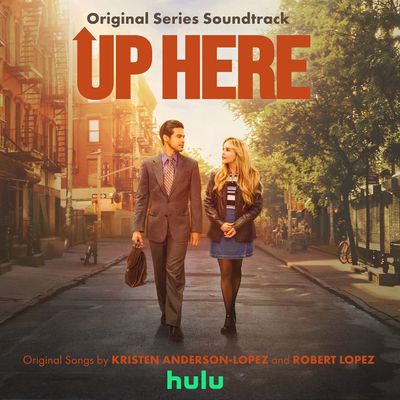
This is the first episode of a special 4-part takeover with cast & creatives from Hulu's new musical series UP HERE. Make sure to stream the entire 21 song UP HERE soundtrack everywhere you find your music. Kristen Anderson-Lopez and Bobby Lopez are living proof that two is better than one... Read More
From the show: The Theatre Podcast with Alan Seales
Guests
Miniseries Inclusions
Featured Shows
About
This is the first episode of a special 4-part takeover with cast & creatives from Hulu's new musical series UP HERE. Make sure to stream the entire 21 song UP HERE soundtrack everywhere you find your music.
Kristen Anderson-Lopez and Bobby Lopez are living proof that two is better than one. They have now co-created a romantic musical comedy called “UP HERE”, streaming exclusively on Hulu. The talented and award-winning duo talk about their humble beginnings and how they crossed paths, all thanks to the BMI workshop. They share the underlying themes of “Up Here”, which includes reestablishing relationships as we go through changes in life that they deeply relate with as a couple. Having the luxury of working together, they look back on their previous projects such as “Coco” “Finding Nemo” and “Frozen”, and how sometimes their work is a reflection of their experiences and what they’re feeling and going through at the moment. Having never worked in television before, the two talk about what the process is like and why it’s been an eye-opening experience for them. Kirsten and Bobby also recall their time working together for WandaVision and why it’s the most fun they’ve ever had working on anything. Ultimately, the power duo’s success can be attributed to two things: the desire to keep getting better and to connect with people.
Kristen Anderson-Lopez and Bobby Lopez are two talented individuals who have collaborated and co-created music and lyrics for movies and television shows, including “Frozen 1” and “Frozen 2”, “Coco”, “Finding Nemo the Musical”, “Wonder Pets”, “Winnie the Pooh”, and “WandaVision”. Kristen is an Oscar, Emmy, and Grammy award-winning songwriter who helped create Broadway's first a capella musical, “In Transit” while Bobby is the world’s only official double EGOT winner who helped create “Avenue Q”, “Book of Mormon” for Broadway and has written for shows like “Phineas and Ferb”, “Scrubs”, and “The Simpsons”. For their latest project, Kristen and Bobby are co-creating a romantic musical comedy called “UP HEREUp Here”, now streaming on Hulu.
Songs used in this episode:
- Can I Ever Know You
- Tiger Shark
- Can I Ever Know You (Finale)
Connect with Kristen and Bobby:
- Twitter: @Lyrikris10
- Instagram: @kristenampersandlopez
- TikTok: @k10lopez
Connect with The Theatre Podcast:
- Support us on Patreon: Patreon.com/TheTheatrePodcast
- Twitter & Instagram: @theatre_podcast
- TikTok: @thetheatrepodcast
- Facebook.com/OfficialTheatrePodcast
- TheTheatrePodcast.com
- Alan's personal Instagram: @alanseales
- Email me at feedback@thetheatrepodcast.com. I want to know what you think.
Transcript
This transcript was automatically generated and might contain errors.
[0:00] ♪ Musical number: "Can I Ever Know You" — performed by Kristen Anderson-Lopez & Bobby Lopez ♪
[0:29] Alan Seales: Welcome to The Theatre Podcast, intimate personal conversations with the industry's biggest names. I'm your host as always, Alan Seales, and that little ditty you just heard to open the episode is called Can I Ever Know You, which is from Hulu's new original music series called Up Here. Why, may you ask? Did I include that song?
[0:47] Alan Seales: Well, Up Here just took over the podcast for the next four episodes. This first episode is with Kristen Anderson-Lopez and Bobby Lopez, the songwriters from The Book of Mormon and WandaVision and Frozen and Coco and, like, pretty much everything else that you love, who also wrote 21 original new songs for Up Here.
[1:06] Alan Seales: So, in addition to me discovering that I'm actually neighbors with these two amazing individuals here in Brooklyn, I also discovered their love for each other, which includes a fun story of how they met, what they love about songwriting in general, and how important it is for them to create new work simply for the love of creating art. They're just kind of full of love. They're really nice people.
[1:26] Alan Seales: Once you're done listening to this episode, make sure you listen to the entire Up Here soundtrack. It's just, it's incredible. It's the Lopez's. It's awesome, which is out now everywhere you stream your music. So, now, instead of my normal transition music, here's a cut from another new song from Up Here called Tiger Shark.
[1:44] ♪ Musical number: "Tiger Shark" — performed by Kristen Anderson-Lopez & Bobby Lopez ♪
[2:14] Alan Seales: Our two guests today, Kristen Anderson Lopez and Bobby Lopez, are two people I have admired for an extremely long time, each incredibly talented individually. Together, they have joined forces for good and co-created the music and lyrics for movies and shows such as Frozen 1 and 2, Coco, Finding Nemo, The Musical, Wonder Pets, Winnie the Pooh, and WandaVision.
[2:32] Alan Seales: Kristen is an Oscar and Grammy Award winning songwriter who helped create In Transit, Broadway's first ever a cappella musical, and Bobby is the world's only official double EGOT winner who helped create Avenue Q, Book of Mormon for Broadway and has written for Phineas and Ferb, Scrubs, The Simpsons, and their latest project together has them back again co-creating a romantic musical comedy called Up Here, which is now streaming on Hulu.
[2:58] Alan Seales: Kristen and Bobby, not only do I welcome you, I bow to you. Welcome to The Theatre Podcast.
[3:05] Kristen Anderson-Lopez: Thank you so much.
[3:06] Bobby Lopez: Thank you.
[3:07] Kristen Anderson-Lopez: And that was very impressive. And that was in record time, too. That was incredible. But I just wanted to add that Kristen now has an Emmy after WandaVision, too.
[3:14] Bobby Lopez: Oh, yes!
[3:16] Kristen Anderson-Lopez: Two, I found out. So actually, right now I have a double EGOT.
[3:20] Bobby Lopez: We randomly, we did this song with the Obamas for a Netflix show about civil liberties. And like, what, it was like a month ago, I got a text saying, you just won an Emmy. It's coming your way. And I was like, what is this, Bobby?
[3:42] Kristen Anderson-Lopez: What?
[3:43] Bobby Lopez: What happened? It turns out that we were included in the Emmy that that show won. It was like a television Emmy.
[3:53] Kristen Anderson-Lopez: But you don't get an advance notice of like, you're even nominated or you're in the running. You're just like, oh, by the way, here's an Emmy for you.
[4:00] Bobby Lopez: I think it was given to so many people that they couldn't even, I mean, it might have gone into our spam folder. It was so many people.
[4:07] Kristen Anderson-Lopez: You get so many Emmys that this one just went to your spam folder.
[4:12] Bobby Lopez: And I was very excited about it because then it, I mean, if we're playing the game of fill in the blanks of an EGOT, I now just need two Ts, which I could hold forth for hours on why the Ts are so elusive for someone with two X chromosomes.
[4:37] Kristen Anderson-Lopez: Someone with two Ts of their own.
[4:39] Bobby Lopez: Yes.
[4:42] Alan Seales: I loved In Transit. I loved In Transit.
[4:47] Kristen Anderson-Lopez: Oh, my God.
[4:48] Alan Seales: And I'm an acapella nerd. So when I saw this, I coached and I coached, I led my own acapella group in college.
[4:58] Kristen Anderson-Lopez: Which one? Which one?
[5:00] Alan Seales: NC State Acapology 101. So for a few years, I was.
[5:04] Kristen Anderson-Lopez: NC State?
[5:05] Alan Seales: Yeah, yeah, yeah. North Carolina.
[5:06] Kristen Anderson-Lopez: I'm from North Carolina, too.
[5:08] Alan Seales: Yeah, yeah.
[5:09] Kristen Anderson-Lopez: We're going to touch on that. You're from the Charlotte area.
[5:11] Bobby Lopez: Yes.
[5:12] Alan Seales: Yes.
[5:13] Kristen Anderson-Lopez: So you can't tell him anything about yourself that he doesn't know.
[5:18] Bobby Lopez: I have to pretend I don't know a lot of things we can.
[5:21] Alan Seales: No, I was really excited to meet you, too, because there's multiple opportunities that I mean, you touch. Both of you have touched everything and you're responsible for so much of the soundtrack of my car rides with my children.
[5:36] Alan Seales: And because they're six and a half and eight.
[5:39] Alan Seales: Yeah, almost seven and eight and a half. Actually, they've aged now.
[5:42] Alan Seales: Funny how that happens.
[5:44] Kristen Anderson-Lopez: But yeah.
[5:45] Alan Seales: What a great age, though.
[5:46] Kristen Anderson-Lopez: They're obsessed.
[5:47] Alan Seales: That age is so fun.
[5:48] Kristen Anderson-Lopez: They're obsessed now with Coco. Like they saw it when it came out, forgot about it for a while.
[5:53] Kristen Anderson-Lopez: And now every car ride is just Remember Me is all they, that's all I'm hearing over and over again.
[6:00] Alan Seales: But and I want to get into, like, the love for children's music and for and for writing for that age. Obviously, you both have a passion for it and a huge talent for it.
[6:11] Alan Seales: But I guess, Kristen, great place to start. You mentioned growing up in Charlotte. What was your childhood like and how did you get into music and then be specifically was musical theater part of that or did it just fall in later?
[6:25] Kristen Anderson-Lopez: Oh, gosh. There's I'm going to try and do the quick answers because, again, I could I could hold forth on just those questions for half an hour. I actually grew up in Westchester. I was born in Yonkers and I grew up in Westchester.
[6:40] Kristen Anderson-Lopez: And my family, like so many families, we didn't have a ton of money then. But what we all had was like we were adjacent to many, many houses, all with other kids who didn't have a ton of money either.
[6:56] Kristen Anderson-Lopez: So I had this backyard repertory company with long stretches of days with kids looking for something to do. So I used to do all these plays and musicals with them starring me, written by me, directed by me, costumed by me.
[7:17] Kristen Anderson-Lopez: And I just loved I had already fallen in love with musical theater from like age two. And I was that kid who for every birthday from then on asked for a cast album or asked to take the train into the city to see musicals every birthday, every Christmas.
[7:34] Kristen Anderson-Lopez: Then my family moved to North Carolina. I did a lot of theater like children's theater then. Croton Children's Theater was a big part of my summers. I did a lot of children's theater in the community.
[7:46] Kristen Anderson-Lopez: And then when I moved to Charlotte, I did a lot of Charlotte Children's Theater as a teen. It was sort of my mental health saving grace, actually. And I did a lot of theater at Charlotte Country Day.
[7:59] Kristen Anderson-Lopez: I can tell you that because I was female, I sort of thought, oh, I love theater. It must mean I'm an actress. I didn't see a lot of examples of female writers or female directors. You know, the Tonys were sort of my only access to that.
[8:15] Kristen Anderson-Lopez: And the cast albums always had like men around a piano smoking cigars, looking really worried. And so it took me a long time to realize and a lot of struggle. And, you know, 20s, a lot of terrible auditions in my 20s and playing nuns in New Hampshire to realize I wanted to do something else with this passion and this love.
[8:39] Kristen Anderson-Lopez: And I found the BMI workshop within three weeks. I had not only found my passion and my place in this career, but I also had met my life partner, like my soulmate there.
[8:50] Kristen Anderson-Lopez: So it was one stop shopping, a really magical, heady time. We can't promise that that will happen to you, but it happened to both of us.
[9:00] Bobby Lopez: If you join the BMI workshop, it's definitely in the ring.
[9:05] Bobby Lopez: Not only does it help blossom careers, it also acts as a dating service.
[9:10] Kristen Anderson-Lopez: Yes.
[9:11] Alan Seales: I just want to rewind for a second because I don't think any discussion of Kristen's musical childhood is complete without touching on a little subject called Eliza Udingling.
[9:23] Alan Seales: Kristen's adaptation of My Fair Lady that she did in fourth grade. Can you talk about that, honey?
[9:27] Kristen Anderson-Lopez: Oh, thank you, honey. And then we should focus on you.
[9:35] Kristen Anderson-Lopez: But when I was in fourth grade, my mom took me to a community theater production of My Fair Lady. And it must have been a Friday night. And I came home over the weekend and from memory wrote my own version of My Fair Lady and brought in the script to my fourth grade teacher.
[9:57] Kristen Anderson-Lopez: She was an amazing Mrs. Leibowitz. She was in the open classroom. It was a very progressive wing of our school. And I was like, can we put this on? And she was the first producer that said, yes, yes, we can.
[10:10] Kristen Anderson-Lopez: And she helped me get the two fourth and fifth grade classes. I cast the whole thing. We costumed the whole thing. We directed it. And yes, it has a pre-scene, a prelude that is Eliza as a child in a classroom where I was clearly channeling my own experiences.
[10:36] Kristen Anderson-Lopez: And I changed the ending where Eliza leaves Higgins and then goes and teaches all the Cockneys how to speak proper English. But there was a lot of Eliza, you dingaling throughout the whole thing.
[10:53] Bobby Lopez: Kristen, at some point you started writing and playing piano and all of the other things, right? So what's your story?
[11:02] Bobby Lopez: My story is my parents were, I think they were both sort of frustrated artists themselves and they had this idea in their mind. They were both from poor backgrounds and kind of the first to go to college in both of their families.
[11:19] Bobby Lopez: And they just had a sense that being an artist is the best possible outcome of your life, but they weren't able to do it. And so they had it in mind, especially my mom, that anything that I was excited about, that I showed interest in growing up, they were going to encourage me to make that my life and just really do it.
[11:38] Bobby Lopez: So I think I got this unusual dose of drive from my mom just saying, like, you like the piano? There was sort of a false start when I was four or five. I said, I think I want a guitar. And they were like, he likes the guitar. He wants to play the guitar. We're going to get you a good guitar. We're going to buy one at the music store. We're going to get you lessons.
[12:06] Bobby Lopez: No, I want the one with Mickey Mouse from the drugstore. I just want a toy guitar. I just want a plastic guitar. I loved music. I loved Disney records. I had The Jungle Book on record. I had Cinderella. I had Mary Poppins. And I guess we moved to Worcester, Massachusetts randomly. My dad got a job there. And when we moved back less than a year later, it did not work out well in Worcester. We moved into this little sublet that was one bedroom, and we were really kind of crammed in there, and things were not going great. But there was a piano in this apartment, and I was about six. And they said, now is probably the time. We should get him. We have this opportunity. There's a Steinway Upright in this apartment.
Let's get him piano lessons. So I started taking lessons at the Greenwich House Music School, which is in Greenwich Village. I grew up in New York City. And this piano teacher said he started to teach me little lessons, little pieces. And then only a month or two in, he started making me write my own songs, my own music, which is not the normal curriculum for a young piano student.
[13:21] Kristen Anderson-Lopez: Not at all.
[13:22] Bobby Lopez: Yeah. And so he had me. I remember thinking, but music comes from grown-ups. Music is the thing that I'm trying to... I don't even know how to read it. How can I write it? And I'm only six. But he gave me not only the confidence, but the sort of like, you have to do it. And I don't want to interrupt, but I would love if you were able to play it. Can you turn... Will the mic pick up?
[13:50] Kristen Anderson-Lopez: Oh, maybe. Can you play... This is his first song ever, age six.
[13:55] Bobby Lopez: I'm just going to take off all of a sudden.
[13:57] Kristen Anderson-Lopez: Oh, it's not hard to memorize. You know what? I'll just sing it without the piano, because you don't really need the piano part. It went, oy vey, what a day. The crops have not been fed. Oy vey, what a day. It's already time for bed. And that was the song.
[14:23] Bobby Lopez: Because he knew a lot about Jewish farming.
[14:26] Kristen Anderson-Lopez: Yeah, Jewish farmers. I think it's a kibbutz.
[14:29] Bobby Lopez: Yeah, it sounds very New York-y.
[14:33] Kristen Anderson-Lopez: Yeah, for a little Filipino kid. Rather Hebraic.
[14:41] Bobby Lopez: You mentioned that your parents had said that being an artist is the greatest thing you could ever become in life, which is such an unusual thing for parents to say who want their children to have a monetarily successful chance in life, right?
[14:57] Kristen Anderson-Lopez: They wanted that, too. And that's what messed me up so much, because I was like, okay, I have to be a musical theater composer, and I have to make money, make a living doing it. How is this ever possibly going to work out? I think it's like a suicide mission.
[15:13] Bobby Lopez: Well, so then you got together at the BMI workshop. And I mean, Kristen, the way you kind of paraphrased it, or maybe this is literally what happened. You're like, three weeks later, I met my soulmate, and then the rest is history. But when you met each other, was that a chance? Or was it a West Side Story moment where your eyes locked across the room, and the world stood still, and all the dancing slowed down? Or were you given an assignment? You're like, whoa, this other person, I can work with them. This is really awesome.
[15:42] Kristen Anderson-Lopez: Gosh, and this is a good segue to talk about Up Here, too. Because I think it happened in the fall of 1999. And if you remember correctly, we were all really worried about Y2K. Everything was going to end. And even though intellectually, we were like, yeah, yeah, yeah. There was this thought of like, oh, things could go crazy. Who knew it was going to happen instead, like 20 years later. But they were painting the picture that the world was going to end. So I think something in me also, that story drove me to really take a long look at my life and change it. I had been in a relationship that was really not going anywhere. And I had gotten out of that the summer before I met Bobby. I'd had some time to see what it was like to be single in New York.
Not very much, but long enough to know like, oh, this is hard. And in walked this really cute, really talented guy. He was performing the first song from Avenue Q that had ever been performed publicly with his partner Jeff Marks. But Jeff was at the piano and Bobby was playing Cape Monster with a red orange wig, because Bobby had just been bitten by a dog.
[17:08] Bobby Lopez: Yes. And it had gotten infected, so I couldn't play the piano.
[17:15] Kristen Anderson-Lopez: Oh, okay.
[17:17] Bobby Lopez: Yeah. So because Bobby usually is at the piano. But afterwards, I mean, I really did sort of have this electric charge of thinking, like, is that who I'm going to marry? I had been told by a palm reader in New Orleans like two years before that she was like, you're a writer, and you're going to meet someone of undisclosed ethnicity. And I can't tell if it's a club or a class, but you're going to meet him. At the time, I was not a writer. I didn't even know I was a writer. At the time, I was like a failed actress working with schizophrenic patients at the Bronx and with a boyfriend who I thought I was going to marry. But two years later, here was this thing coming true. So either palm readers know the future or Kristen just does whatever they say. There's no way to know.
[18:13] Bobby Lopez: I'm reading your palm right now, and I see two Ts in your future.
[18:17] Kristen Anderson-Lopez: Again, that we should all wish to have two Ts. So yeah, I met Bobby in 1999. I can't say that we had an easy first two years of it either. We have relationship 1.0, relationship 2.0, and relationship 3.0. I would say even in our marriage, while technically we call it, it's still in relationship 3.0, but wouldn't you say we're at 50.7 at this point?
[18:56] Bobby Lopez: But I think that, and moving to the theme of Up Here really, I think you're always reestablishing your relationship. You're always creating a new connection because as you go through life, you go through changes. If you're communicating well, you're constantly meeting this next person that's being born, that's being created. You can never really know what someone else is thinking, and that's kind of what Up Here is about. It's what we were thinking about at the time. It's hard to know. If you could see into someone's head, then maybe you'd really be able to know them, but since you can't, how can you possibly ever communicate? Well, if you have the kind of relationship that Kristen and I have, you get to spend every day kind of trying again. Working on a musical. Working on a musical about it because I think something that we've learned, we're about to celebrate our 20th anniversary.
[19:57] Kristen Anderson-Lopez: Congratulations.
[20:01] Bobby Lopez: Wedding anniversary, but something I've learned is that every time I learn something new about Bobby, every time we peel back one more layer, it's kind of a new relationship. It's a deeper relationship, and sometimes that layer wasn't there if we hadn't made each other grow, too. That's the other thing. Being in relation so much, we actually create new versions of each other. I think it was Esther Perel, famous relationship psychologist, who said that most people in life get married multiple times. You're just lucky if you could do it to the same person.
[20:45] Kristen Anderson-Lopez: Yes. 100%.
[20:48] Bobby Lopez: Every time you change, you need to make the effort to come back together. I was going to say that you know, I've done literally 250, gosh, probably 280 episodes now on this podcast or so, including the bonuses and everything. What I've been learning is that going through the creation of a show, whether the creatives have more of a trauma than the actors do sometimes, and it is a bit of a trauma because it's so much stress often, right?
[21:12] Kristen Anderson-Lopez: Oh, my God.
[21:13] Bobby Lopez: Yeah. For you to have the stress of a relationship, your standard relationship living in New York City, which isn't easy in and of itself, and you've got two children, because being a parent is not easy by any stretch of the imagination, and you now have the pressure. You always got this pressure, right? I assume to outdo what you did the last time and just be that much better and that much better. Then when we're talking, I mean, the level at which we are talking now seems...
[21:42] Kristen Anderson-Lopez: It's unfathomable to me. And for you to be able to, I guess, go through project after project and still come out stronger, I feel like... Is every project kind of like therapy for the two of you, like couples therapy, so that you're talking about what's important to you? And I imagine, I go back to Coco again, you're talking about the meaning of death and the afterlife, and then Frozen is love for a sibling, and you've got... I mean, I'll stop rambling, because I could go on forever, but I mean, you see what I'm saying? I feel like you've chosen everything complicated to do together and are still weathering it perfectly.
[22:25] Kristen Anderson-Lopez: I wouldn't say perfectly.
[22:27] Bobby Lopez: No, no, no. We're not putting ourselves out as any kind of an example of how to do it, but we've been muddling through, and we've had highs, we've had lows, we've worked well together, we've driven each other crazy. We've done all of that, and we've gotten to have some real highs. We were watching the Oscars just last night, and we looked over each other at one point, and we were like, we did that. We won an Oscar together. We did it twice. Isn't that weird?
[22:58] Kristen Anderson-Lopez: Isn't that crazy?
[22:59] Bobby Lopez: It was weird, and I was so grateful that we weren't there last night, because at the same time, our bank failed last night. So, we were literally dealing with whether we were paupers and had lost our entire life savings last night.
[23:21] Kristen Anderson-Lopez: And I started singing the Apple Solar song from Annie.
[23:26] Bobby Lopez: No, today we're living in the shanty. Today we're scrounging for a meal. I was totally like, that's the song I always skip on the album of Annie. But that's the context I have for what we are currently dealing with while watching the cocaine bear and Elizabeth Banks.
[23:47] Kristen Anderson-Lopez: It was quite a moment last night, and I guess that's the part of the amazing plot of the musical of our lives, is that we never know what's coming. We never know.
[24:03] Bobby Lopez: Is Steven Levinson writing this?
[25:12] Bobby Lopez: A similar point of view on life, on the part of life that we're going through at the time, like Finding Nemo the Musical for Walt Disney's Animal Kingdom might be like just any job for someone else, but for us, we were really writing about becoming parents. We had just gotten married, Kristen was pregnant, and we wanted to put everything we felt about, you know, all the fear and all the love and all the wonder that we felt about bringing a new life into the world. And it's a privilege to be able to do that pretty much on any project that we do. You know, Coco, like you said, is about your family and the death being like a family reunion in a weird way, the idea of Dia de los Muertos being a family reunion, and what a comforting thought as your grandmother is passing away.
Yeah. At the same time, you know, the Remember Me was also fully us channeling what it was like to be bi-coastal parents a little bit. In order to do what we were doing at the time, we had to leave our children behind. So we actually would create these original lullabies that we sang to them every night, and we would create songs that when we were on the West Coast, my two sisters who were 14 years younger than me, and still are, they would babysit, and we would leave them with these songs so that there was a piece of mom and dad at bedtime, even though we couldn't be there. And we had rules about never going away more than two nights and three days at a time, because it just never worked well after if we left for too long.
And we lived in that space of like the traveling musician for a lot of years too. And you know, Frozen, a lot of Frozen was also about female power and finding your power and learning how to, you know, as we were writing Frozen, Bobby had sort of been the one whose career had really taken off more than mine for many reasons that we could talk about regarding unconscious bias, and also Bobby starting when he was 11, and me figuring out I was a writer when I was 27. But-
[27:40] Kristen Anderson-Lopez: Smash the patriarchy.
[27:42] Bobby Lopez: Yes. But Frozen was about Jen, Jennifer Lee, who we were also lucky enough to work with. We were finally given a seat at the table, but what does it feel like to start to own it? What does it feel like? Like, it's kind of lonely too. And it's more powerful if people around you accept you and don't make you feel quite so isolated. And so, there was a lot we were putting, we put a lot of ourselves in it. At the same time, Up Here especially is not us. People might think it is, but it's definitely not. They're definitely characters written by a whole amazing writing room. And yes, we put a lot of our emotions and our experiences in it, but it's not us.
[28:30] Bobby Lopez: So, Up Here, it's interesting because it's set in '99, which I think adds a level of fun and unknown to the dating scene as we kind of touched on the beginning, because '99 was kind of like those final years before everyone had a computer stuck in their pocket and could communicate 24/7. So, like the scene in one of the early episodes where they're just like calling each other on the phone. I remember in high school, I was just, I would talk hours and hours and hours on the phone and my parents would pick up and be like, get off the phone, I need to use the phone. Like, that's part of, gosh, I mean, the age we are, we grew up analog and became digital, and it's such a unique experience that no one else is going to have. And I think it's been...
[29:16] Kristen Anderson-Lopez: Isn't it so much more human than texting? Like to be able to...
[29:20] Bobby Lopez: Yeah.
[29:22] Kristen Anderson-Lopez: To linger on the phone and then to have your dad jump on and totally embarrass you. Like, there's something so sweet about that. Actually, there is a population that exists without the technology, and I think it's people in prison. I think we might look to them. And it's really interesting. And this is nothing against probably everyone who won an Oscar last night, is that people who are our parents' age or a little older than us, who were already popular when digital became a thing, had an assistant to do everything for them, and they don't know how to turn on computers. I've also helped run podcast sessions with Major League Baseball players, talking about Broadway. And they're like, what is this USB thing that I'm holding? Like 40-something-year-old retired MLB player doesn't know how to plug in a USB camera. So everybody's got different ranges. Yeah, it's different.
[30:26] Bobby Lopez: Up Here, it started as an original musical, like a stage play that you wrote that I think it was in 2015, it debuted, right? And Alex Timbers was the original director.
[30:40] Kristen Anderson-Lopez: Yes, the amazing Alex Timbers.
[30:42] Bobby Lopez: Phenomenal.
[30:43] Kristen Anderson-Lopez: We, he's a phenomenal human being and director, and we were so lucky to have him as we were developing this concept. We pushed it out into the world to see what it was going to be. And looking back, I wish we'd had a smaller workshop and hadn't just gone like, let's go big or go home at that moment. At the same time, no regrets.
[31:13] Bobby Lopez: Yeah, I mean, I think that that moment, we had been working on it for many, many years at that point. And a lot of those years, we couldn't get the project done because it was ambitious. It was big. It was a large cast. It was a large orchestra. And we had only ever done kind of relatively small shows. Even Book of Mormon is not as big as the show we were envisioning. And we were still up and comers. No one was going to just sink tons and tons and tons of money into this kind of crazy show. And it was crazy. It was very different than the TV show that we've arrived at, which in the end, I think, we think is much better.
[32:02] Kristen Anderson-Lopez: We had thought of all these crazy—we were almost thinking of it as like a world building, a universe inside someone's mind. And all the feelings were kind of imagined as fantastical characters, some of whom were puppets and effects and echo voices and all this crazy, almost like a British mega musical kind of style. We had a character called The Fog. It was just fog.
[32:31] Bobby Lopez: It was like depression, kind of despair.
[32:33] Kristen Anderson-Lopez: Depression. But you know what? It's hard to clear fog out. You can't move fleetly when you have a character. You can write it. But what we learned when we actually put it on its feet is that theater is very hard to move quickly. And that's why TV ended up being the right place for Up Here, because thoughts come in quickly. They don't have to do costume changes, and you don't have to push a big set piece on stage. You can, in a minute, have a thunderstorm in your head. And then in a second later, something can happen and the thunderstorm is gone. And you can do that with TV.
[33:19] Bobby Lopez: Also, because it was always a romantic comedy. The story is now very different, but it's still a romantic comedy. And what we found after we put the first version up on its feet was, gee, the audience wants to go into her mind as well, but we only go into his mind. And five years later, when we kind of started to take a look at it again with Tommy Kail and Stephen Levinson, we all agreed this is the perfect way to be able to go into both characters' minds.
[34:01] Kristen Anderson-Lopez: Yeah, I was-
[34:02] Bobby Lopez: Turns out, people want to hear what women are thinking too.
[34:06] Kristen Anderson-Lopez: Strange how that happens. It's amazing. Yeah. No, I was going to bring it up. Yeah, the original production I thought was only going in, like the male protagonist, anti-protagonist, yeah, the male lead was the only one that it really focused on. And I love now in the current version, the Hulu series, that we see both of them. And I think it, A, humanizes, like you said, people want to hear from the female lead, but then the male lead has emotions too to acknowledge that everybody is flawed and everybody has these issues and you should need to talk to both sides. I think it's just so brilliantly done. So, you both are executive producers on this as well, right? Is this the first time you've EP'd anything?
[34:40] Bobby Lopez: Yeah, we've worked in television before, but we've never really seen how the sausage gets made. And I think you have to be an EP if you want to create a TV show. You can't just be the songwriter, because the songwriter doesn't participate in the writer's room and doesn't participate in the post-production side of things and doesn't necessarily even show up on the set. So, with this show, we were in all of those places, and it was eye-opening how hard it was to assemble. It's a completely different process to put them together, a live action TV musical, as opposed to an animated film musical or a Broadway show. Those two things are more like each other than television. Really?
[35:30] Kristen Anderson-Lopez: We were so lucky to have Tommy Kail, the world's, I mean, Hamilton, brilliant Tommy Kail with his incredible taste and his incredible executive functioning, and Steven Levinson, and they had worked together on Fosse Verdon, which is our favorite TV show. If there's a president and vice president of the Fosse Verdon fan club, it's the two of us. So, getting to work with them on this live television thing we were making was a dream come true. At the same time, we didn't realize that it was going to be a 16-hour-a-day dream every day. Like, no days off for months between producing 18, 21 songs, like, completely.
[37:18] Kristen Anderson-Lopez: Man, it was scary to record those songs before we even started shooting.
[37:23] Bobby Lopez: Well, that's what I was about to ask. How do you know a song is done? Because if you're going over and over and over again, when you're like, that's it, all right, send it to the print, send it to the newspaper to be printed. Well, one of my favorite parts of the television process is that we were very, very active in the writer's room, which was all on Zoom because we were still very deep in the pandemic. But we were tapping in and hanging out with these people all day and sharing stories and helping to break the story. And so one of the first steps was getting to a point where an episode was starting to congeal. And sometimes the song would come before the scenes around it. Sometimes the scenes would come before the song.
But we were very chicken and egg there. And so a song felt done in step one when Danielle and Stephen and Tommy and the writers all said like, oh, yeah, that's right. That's good. Then in step two, it was done when the actors really found their groove and their performances. And we comped each one of their takes and tuned it. That was step two where it felt done. Step three is when you film all those pieces. And you start to feel like, okay, did we cover everything? Did we get everything? But it's still not really done then. Then in post, and this is the other thing that I found as an artist I love about television. That's when it's done. That's when you take all of these pieces together. And yes, sometimes you cut a verse.
Sometimes you take huge dance breaks that you thought were so great on the day, and everyone was so excited, and they just don't work. And you have to cut out a two-minute dance break and figure out how to glue them together in a way that no one knows that's missing. Sometimes you're adding more vamps so that you can add a line in ADR. And ADR is when you record after it's all been filmed. So it's really fun to see the magic of post and the magic editors can do, which you cannot do in a stage musical.
[39:47] Kristen Anderson-Lopez: Is that easier or harder than doing something with an animated movie? Because animation, you have to plan everything out exactly. And then once it's storyboard locked, then you go and animate it? Is that?
[39:55] Bobby Lopez: Yeah. I mean, you get to work with these artists in animation, where I guess you have, depending on how far along the movie is, sometimes you're just kind of blue-skying a song that then you see everything you came up with in the lyrics finds its way into these beautiful sketches that they start out on. And if that works, if that works when they put it into the context of the larger thing, and sometimes all you're watching is just pencil, sketch, storyboard, art, and temp dialogue, temp synthesizer orchestrations, or piano demo with our voices. If that works, then that scene might get locked and put into production and you watch all the different stages of animation. And it's just a joy to, once you know the thing works in the rough form, you're kind of pretty sure it's going to work even better when they put color and beautiful animation and all this acting that gets added once the animators get their hands on it.
I was just going to add that animation is super iterative, similar to theater, where you do a workshop, you sense what the audience is feeling, you get notes, you go away for a couple months, you rewrite, you do another workshop. You do that with animation, you get six different screenings where you're totally rewriting the whole thing as you go. With a show, it can take seven years. With TV, you get it all up first, and then you piece it together in post.
[41:48] Kristen Anderson-Lopez: And the relationship with the actors is different, because in a TV show, these are the only people that are ever going to be playing these characters. And they're not like in animation, where they're coming in on the day and doing some recording, and then they go home. These are people who are there every day, just like you, every day of filming, and they are your collaborators, essentially. We were really lucky, because we got Mae Whitman, who Tommy was brilliant to bring in to work on this. She's just so good, and no one knows how good she is as a singer yet. I'm just excited for people to see that. And then we were lucky to cast Carlos Valdez, and he's an undiscovered musical theater... Triple threat.
[42:35] Bobby Lopez: Triple threat, amazing, amazing actor, and a star, honestly. I think he's a star. And the two of them together had all this chemistry that we couldn't even have planned for. So it was just exciting to get to see this magic happen with actors and be able to... Honestly, they influenced it as much as any of us EPs did. It was a wonderful, wonderful thing. And they are leaders as well, which Mae just is such a force of positivity, and really believed in this project. And another strange thing about TV, other than musical theater or versus musical theater in the room, is that your actors are your first audience, really. Other than the writers room, the writers room is your first audience, I guess.
Then your actors are your next audience, and they help shape, like, I really believe in this line, help me understand this line. And then the people on set, who basically you're filming, your crew is your next audience. And you have these small audiences that are also making it with you. And by the way, gotta say, Tommy Kail puts together a great crew. Tommy just brought in the best people. It was so much fun to just go to work. We never get to go to work with other people. We just kind of sit here in our office together. I guess we are technically other people, but...
[44:09] Kristen Anderson-Lopez: We are, I guess. Right now, we're doing this podcast, we have offices across from each other. There's like a three-foot hallway between us. And that was a huge moment in our marriage and our collaboration when we each got our own room. Because we were working all the time in the same room in the basement of our house for a couple of years. And that was bad. That was really bad. Windows, even, just to feel like you're not prisoners with each other.
[44:44] Bobby Lopez: Well, there were windows, but they looked out into a basement pit with a shaft of light.
[44:51] Kristen Anderson-Lopez: Fair. Very fair. The cast, actually, you touched on that. It was great. I mean, Carlos and Mae, as the leads, are incredible. And then there's some known Broadway people in there, like Katie Finneran, Andrea Burns, of course, Brian Stokes Mitchell, who plays this outrageous character. I love Stokes in this. I love everybody. But you've got this wonderful mix of people who are known and not known for their singing ability. And how much, I guess, input did the two of you get into the final casting decisions as EPs? Because, Kristin, you also mentioned Danielle a second ago. It was Danielle Sanchez-Witzel, which is another EP, and then Steven Levinson. So, the four of you were the EPs, right? So, is there like a head boss EP, or were you all equal? How much input did you have in the various aspects of the production?
[45:34] Bobby Lopez: Steven is the showrunner, which is so weird. It's like, you never will see that credit in the credits on screen, but it's a position that's in every TV show. And it's just sort of agreed that this person is the showrunner. So, Steven was our fearless leader, and when the buck had to stop somewhere, it stopped with Steven. And thank God, because he has done a lot of great work in television and kind of knew what was coming in a way that Kristin and I certainly didn't. And the guy has so much intuition when it comes to music and musical storytelling. He just knows when to bring in a song, how to set it up. And very often, we were like, what do you think it should be called, Steven? How should it go?
[46:31] Kristen Anderson-Lopez: Well, yeah. Steven is also, yeah, thinks like a songwriter, writes like a Pulitzer Prize winning playwright. And Tommy, obviously, is kind of masterful at casting. But yeah, we would all sit in the room. We all did the bulk of the casting very democratically, where we would all put forward our favorite people and see where those overlapped. And then I think Bobby and I knew often to defer to Steven and Tommy on decisions that were like a tie, let's call it for a tie, as long as the singing was strong. And I think Steven and Tommy knew to defer to us when things were going to be big musical decisions. So there was a lot of respect for the areas of expertise we each have. And Danielle Sanchez-Witzel was the only one who came in with a 30-minute sitcom experience. So we also knew when we needed to turn and go like, Danielle, how does this work? What do we have to do here?
[47:51] Bobby Lopez: Yeah, the other four of us were like, well, we've watched a lot of sitcoms. We kind of know what we're doing right. And she'd be like, no. Because yeah, it's so weird when you think you know what something is, but all you've ever done is been a consumer of it. There's this ocean of stuff you need to learn. And it's smart to include someone that knows it. I know we are coming up on time. And real quick, I just want to touch on WandaVision, because what you just said reminded me of a question I had about that.
[48:24] Alan Seales: Are most things that you've written appear included? The songs progress the story. It's a through line, right? The songs are there for a purpose to push the story forward, which is kind of contrary to WandaVision, which you get to take the same song and write it however many different ways for each of the different decades that the episode started, because that was the sitcom-y aspect, right, of all of this. So, did you enjoy that in a different way, more or less, than writing a whole big picture, or was it just something different? You're like, all right, I did that. That's cool.
[48:58] Robert Lopez: I mean, we always say that it was sort of the most fun we've ever had working on anything, because WandaVision really didn't require us to sit in the writer's room, sit with our collaborators for years and years, hashing out the story. They had done that apart from us, and they had this genius idea of how to use music, and they kind of planned out most of what they needed, and they were able to just tell us what they needed. We got to sort of listen to their pitch, riveted, and then Kristen and I are both, especially Kristen, just brought up on TV from the 70s. The 70s television included all of 60s and 50s TV, and then in the 80s, we watched it all after school, and then in the 90s, we kind of didn't watch TV, honestly.
[49:55] Robert Lopez: Right, and the 90s song was the hardest one for us to crack, but I grew up, and these songs live in my body, because if you were sick, you started the day, like your mom would put you in front of the TV, and you'd start the day with I Love Lucy and My Three Sons, and then by three o'clock, you were watching Brady Bunch, by four o'clock, you were starting to watch Three's Company, and then in the evening, you were watching Family Ties and Growing Pains, so this just lived in me, and honestly, we would wake up every day. We wrote all of those songs in two weeks, because I would wake up every single day going like, I know what, I'd go in the shower, and I'd be like, I have our 60s song, or I have our 70s song, and it was so much fun to do the demos. We'd write it in the morning, send the demo by 2 p.m., and get it approved by 5 p.m., and then start on the next decade. It was a fun puzzle, and we would have done it for free as a party game.
[51:02] Robert Lopez: Also, for the social capital we got from it with our kids, who love Marvel, and they were like, wow, you guys are doing that? Awesome. But then it's funny, the song that was the most breakout-y of all of the songs was the one that was most musical theater-ish, honestly. I think it was Katherine Hahn singing Agatha all along, at a moment where you were learning, oh, she's the villain. Actually, that song did bring the story forward and gave us a new villain song in a cool way. I don't think we were even aware that we were creating a villain song when we wrote it. We thought, oh, we were trying to do a theme song, but it functioned as a villain reveal, and I think that's why that song was popular.
I love that. As long as we're talking about Katherine Hahn, we should also add that one of the great gifts, if we're looking at our whole career, is the many brilliant performers who have taken things that we write in that room where Bobby is right now and record, and then they make it their own. There's no Let It Go without Idina Menzel. There's no First Time in Forever without Kristen Bell, or In Summer without Josh Gad, and Katherine Hahn is a huge part of that alchemy of what made Agatha all along go viral. I truly believe that Mae and Carlos are a vital, vital piece. If people respond up here, it's because they bring so much humanity and so much of themselves to these words and notes that we write.
[52:49] Kristen Anderson-Lopez: I agree. It's the full package that has to make it to the screen or to the stage or whatever it is, and putting so much truth into the words and the songs is where it has to start, and you guys are just brilliant. You're both brilliant with that. We didn't even get a chance to talk on the love for children's music or that age, and gosh, hopefully there will be a part two for your next project. We can continue this conversation, but I want to wrap up here with the three standard closing questions I ask everybody, and I'll ask you both. Kristen, let's start with you. What motivates you?
[53:24] Kristen Anderson-Lopez: What motivates me? I think what motivates me the most is when I'm going through something, I really want to share it and connect with people, and so I have found this career that allows me to take things that I care about really deeply, and they're so big that I need to sing them. I need to write them so other people can sing them, so I think it is this giant well of human need for connection that motivates me.
[53:59] Bobby Lopez: I would say lots of things do, but I think in the end, I'm just trying to get better, and I have this deep need to get better, and every project I'm just... When we rewrite songs, I have this rule, no rewrites that don't make the song better, which is a weird rule, and then I feel the same way about myself. I just have to keep getting better. I want to get good.
[54:27] Alan Seales: I think you're pretty much there. Okay, so what advice would you give to your younger self, Bobby, and younger people listening now starting out down a similar path?
[54:35] Bobby Lopez: All right, so what I usually say and have to keep repeating to myself and sometimes to others is that people like me who are sort of high achievers or overachievers that do well in school, I always thought I had to do it alone. If I got help from anyone else, that would be cheating, but the lesson that I keep learning and the main lesson of my life is that nothing gets made by one person, and it's all in some sense a group effort, and the key to it is listening and allowing other people's voices to join with yours and knowing also when to let your voice shine. So that's, I say, learn how to collaborate, learn how to work with people.
[55:29] Kristen Anderson-Lopez: I would say that mine is that every single person has a voice and something to say because nobody else on this planet or who has ever existed has your experiences, your memories, your entire dictionary of the language that you use, the way that you see the color blue. Everything is uniquely yours, and so you don't have to try and be somebody else to have something fresh to say. You just kind of need to go to the piano or the page or the canvas and just pour a little bit of your own truth onto it. You don't need to work so hard, and you don't have to wait until you feel like you are Sondheim or Gandhi. You just have to be you and own your truth and find a way to get it out of you.
[56:34] Alan Seales: Well, Gandhi was an incredible songwriter, so I can see that. Okay. So then, Bobby, I'll go back to you. If you could only see one show for the rest of your life, but you can see it as many times as you want, what would you see?
[56:47] Bobby Lopez: You mean a Broadway musical?
[56:49] Alan Seales: Interpret it as you will.
[56:52] Bobby Lopez: Because I think I would watch the first four seasons of The Office.
[56:58] Alan Seales: American or British?
[57:00] Bobby Lopez: American.
[57:00] Alan Seales: Yes. Kristen?
[57:03] Kristen Anderson-Lopez: Oh, you know what? This is a lazy answer because I just spent the last weekend watching my daughter in 25th Annual Putnam County Spelling Bee. She did it four times, and we watched it four days in a row. I could have watched that show for another 25 years. I loved it so much because there's always something new. They're always pulling up new people from the audience. They're riffing at the table, so there's always something new to come, but those songs are so quirky and truthful and weird and lovely, and there's so much heart there.
[57:44] Alan Seales: I love that. All right. So, everyone, check the show notes. I'll drop in the link for where to grab up here. Watch it on Hulu. And then, both of you, where can we find you online on social media? Kristen?
[57:55] Kristen Anderson-Lopez: You can find me at Lyra Kristen, spelled like Lyra-sis, but with K-R-I-S and 10. That's hard. You'll find me. Hook me up. And I've just started a TikTok because I'm on TikTok, but only to stalk my own children to make sure that what they're posting is appropriate. But now, I'm going to start sharing some content from up here. And you can also find me on Instagram at Kristen Ampersand Lopez. Yeah, that's where you can find me. And Facebook.
[58:35] Bobby Lopez: I'm mostly off social media altogether, but I reactivated my Facebook account to use these fancy sunglasses Kristen got me that take video, and you need to have a Facebook account to use them. So, it worked on me, I guess.
[58:54] Alan Seales: All right. You can get more of me at thetheaterpodcast.com. I'm on Instagram, Twitter, Facebook, TikTok. I don't know what I'm doing on any of them. Leave a rating and review wherever you're listening. And Bobby and Kristen, thank you both so much. This has been such an honor meeting you. I'm really happy that you joined us today.
[59:09] Kristen Anderson-Lopez: Thank you.
[59:10] Robert Lopez: Thanks for the wonderful conversation.
[59:12] Alan Seales: Amazing questions. You're really great.
[59:14] Kristen Anderson-Lopez: Thank you.
[59:15] Alan Seales: And to take us out, here is the end of Can I Ever Know You? Of course, available now. I've said it at the beginning. I'll say it here at the end. Go stream this soundtrack. It's incredible. Here you go.
[1:00:14] ♪ Musical number: "Can I Ever Know You" — performed by Kristen Anderson-Lopez & Robert Lopez ♪
© Broadway Podcast Network, All Rights Reserved