

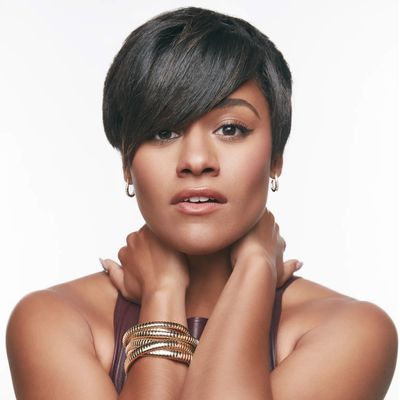
Originally released as episode 2 on Oct 26th, 2018, I'm bringing you one of my oldest episodes with Oscar winner Ariana DeBose! Make sure to listen to her in the BPN original "As the Curtain Rises": bpn.fm/atcr... Read More
From the show: The Theatre Podcast with Alan Seales
Guests
About
Originally released as episode 2 on Oct 26th, 2018, I'm bringing you one of my oldest episodes with Oscar winner Ariana DeBose! Make sure to listen to her in the BPN original "As the Curtain Rises": bpn.fm/atcr
Original description as follows:
This week we speak with 2018 Tony nominee Ariana DeDose. She discusses how her early childhood as a competitive dancer led her to So You Think You Can Dance. She eventually moved to New York to land her first job on her first day in the city. Ariana tells us about the importance of legacy, what it was like to be part of the Hamilton theatrical revolution, how she feels staring in Summer: The Donna Summer Musical, her thoughts on pride and sexuality, and the need to keep moving forward without getting too comfortable.
UPDATE Jan 14, 2019: Ariana will also star as Anita in the upcoming remake of “West Side Story,” being recreated by Steven Spielberg.
UPDATE Jan 14, 2021: Holy crap, her career has exploded! Congrats, Ari!
Connect with Ariana on social:
- Twitter: @ArianaDeBose
- Instagram: @arianadebose
- Facebook.com/ArianaNDeBose
Connect with The Theatre Podcast:
- Support us on Patreon: Patreon.com/TheTheatrePodcast
- TikTok: @thetheatrepodcast
- Twitter & Instagram: @theatre_podcast
- Facebook.com/OfficialTheatrePodcast
- TheTheatrePodcast.com
- Alan's personal Instagram: @alanseales
- Jillian's personal Instagram: @jillianhochman
- Email me at feedback@thetheatrepodcast.com. I want to know what you think.
Thank you to our friends Jukebox The Ghost for our intro and outro music. You can find them on Instagram, Twitter, and Facebook @jukeboxtheghost or via the web via jukeboxtheghost.com.
A very special thanks to our patrons who help make this podcast possible!
If you would like to see your name in this show notes or get a shout out on the pod itself, visit ttp.fm/patreon to become a member and show your support!
Transcript
This transcript was automatically generated and might contain errors.
[0:00] Alan Seales: Hey everyone, welcome to The Theatre Podcast. I'm your host Alan Seales, and you're listening now to Episode 273. But since it took almost five years to reach this point, I thought it may be nice to throw back to some great episodes from the past every now and then. So this episode that you are now playing is the very first episode I ever released with a guest. This is Episode 2 Remixed and Remastered, now as Episode 273, Episode 1 being my solo introduction to the podcast. So this is with Ariana DeBose, and this episode, originally recorded October 25th, 2018, was recorded in Ari's dressing room while she was still in the Donna Summer musical, and this was before West Side Story and her resulting Academy Award win, before The Prom, before Schmigadoon, before hosting the Tony Awards twice.
I was so happy to know her before this, to see her and even interview her during Donna Summer and then to see her career explode. She's still so friendly and down to earth every time I have the pleasure of seeing her. So I hope you will enjoy this one. I also wanted to give a quick shout out to one of my longest and most passionate listeners, Cheryl Hodges Selden, who after years still continues to write and brighten my day with lovely, lovely feedback. Thank you, Cheryl. So now, slightly remixed and remastered, because I've learned a thing or two about editing in the last five years, please enjoy this episode with Ariana DeBose. Here you go, one, two, three.
[1:44] Alan Seales: Welcome to The Theatre Podcast, intimate personal conversations with theatre's biggest talents. I am your host, Alan Seales, and that is New York background noise. I'm currently sitting in the dressing room with the smart, funny, amazing triple threat who got her start on So You Think You Can Dance season six. You may know her from Broadway shows such as Bring It On, Hamilton, A Bronx Tale, currently starring as Disco Donna in the Donna Summer musical, Ariana DeBose.
[2:17] Ariana DeBose: That's my name.
[2:18] Alan Seales: How are you doing?
[2:19] Ariana DeBose: I'm good.
[2:20] Alan Seales: We're sitting here. This is like a living room inside your dressing room.
[2:23] Ariana DeBose: It is. I call it my sitting room. And it's where I receive my guests after the show.
[2:31] Alan Seales: It's nice. I always wanted one of these. You know what I mean? When you first get your Broadway show and whoever's starring in said show, you go into that dressing room. It's very chic. And you realize, oh, wow, when you're a star, you have a place to sit down.
[2:48] Ariana DeBose: Like a couch with nice things around it. So this is very fun.
[2:53] Alan Seales: This is beautiful. Did you decorate it?
[2:55] Ariana DeBose: I did not.
[2:55] Alan Seales: Does it come decorated like this?
[2:56] Ariana DeBose: No. Good Sir Mike Harrison, the interior designer, designed this for me. He has, if you check him out on his Instagram, he basically does this as a fashion project.
[3:07] Alan Seales: You're serious?
[3:13] Ariana DeBose: Yeah, I'm serious. There's somebody who does this.
[3:15] Alan Seales: Broadway star dressing rooms.
[3:16] Ariana DeBose: He'll also design your home as well. But pretty much any star on Broadway in the last three years or so, he's done their dressing room. It's pretty great. He's got a good thing going.
[3:30] Alan Seales: I had no idea. That's incredible. This orchid needs some attention over here, though.
[3:34] Ariana DeBose: Oh, it's dead. That's fine.
[3:35] Alan Seales: So let's get into the reason people are listening. Of course, from North Carolina, I want to get into your childhood, who you are, where did you come from? What kind of kid were you? What part of Raleigh? Not Raleigh. Are you from Raleigh?
[3:50] Ariana DeBose: Well, I was born in Wilmington, North Carolina. And I lived with my grandmother and my mom at the time. My mom was in college or finishing up her degree when I came along. So my grandmother was very involved in raising me in my formative years. And then my mom graduated and got her first job teaching. She's a public school teacher in New Bern, North Carolina.
[4:11] Alan Seales: New Bern.
[4:12] Ariana DeBose: Yeah. They need some love right about now. A lot of hurricane devastation going on down there. But I went to elementary school in New Bern, and then my mom then got a better job in Raleigh, and that's when I moved to Raleigh.
[4:27] Alan Seales: Right. And then what kind of child were you? How did you get into performing?
[4:34] Ariana DeBose: I mean, I was very outgoing. Apparently, I came out the womb kicking and moving and wiggling. So they're like, she's either a soccer player or a dancer. And I think it was my grandmother's idea to put me in dance. So I started with ballet, tap, jazz. I was very curious and clearly very competitive kind of from the jump. I liked being good at things. I do remember that very strategically. But I loved being social. I liked spending time with people I didn't know. I loved going to playgrounds. I was that kid. And like playing with sticks or, you know, swinging on the jungle gym or whatnot. I was very athletic, along with being outgoing and very cute. I was the ivory baby, actually. Like ivory soap.
[5:23] Ariana DeBose: They used to have the actual ivory baby. If I'm correct, I think it was the last ivory baby that they ever crowned, quote, unquote. Which was kind of cool. That was back in what? Ninety-three and...
[5:36] Alan Seales: Ninety-two or ninety-three.
[5:39] Ariana DeBose: And I was a biracial baby that was the poster child for this soap company. And that was before Brown was in, you know what I'm saying? So that was kind of cool. But I was an outgoing, sunny disposition type of child.
[5:54] Alan Seales: And then I noticed at one point you said you're an award-winning competitive dancer by 13.
[6:00] Ariana DeBose: Yeah, I was. I trained at a competitive dance studio, CCN Comedy Dance Complex. And I was really lucky and fortunate that they brought in guest choreographers each season to work with us. It wasn't just like a summer intensive. We had the benefit of working with them all year round whenever they were available. So a lot of those names that you see on So You Think You Can Dance or within the first seven seasons or so, those names I had already worked with because they were in my hometown.
[6:29] Alan Seales: No kidding.
[6:29] Ariana DeBose: Yeah, it was awesome. It was awesome training. And I took ballet three times a week from age 11 until I graduated high school. So I had very sound technique, but I was trained to be versatile in a lot of different genres. I could do hip hop. I could do lyrical hip hop. I could just give you straight jazz. I could turn around and give you contemporary or distinguish between contemporary and lyrical. Like, what is the difference? Does anyone know? You know, or theater, theater dance. So that was how that went. You know, I ran the circuit, Stockwest International Dance Competition, Star Power, West Coast Dance Explosion, New York City Dance Alliance. I ran the gamut in that way.
[7:19] Alan Seales: Then where did the singing come in?
[7:22] Ariana DeBose: That's funny. I participated in high school theater. That's when I discovered I couldn't hold a tune. They cast me in Fame.
[7:33] Alan Seales: No kidding.
[7:34] Ariana DeBose: Yeah, that was my first musical. I was Carmen and I was flat as a pancake for most of it. But I really liked it because it was hard. It didn't come easy to me. I like, as I said, I'm competitive, but I like a challenge. I don't like it to be too easy. So I stuck with it. And then the next thing I did was that summer I was cast as Aida in Aida. And it was like an all-county production of the show. So I wasn't just working with kids from my school. I was working with kids from all over my county, which was awesome. Because we also, we had several different public schools, but we had an arts magnet school. So we were all thrown in together. And there was no distinguishment of like, well, you're better because you go to the arts school.
And I'm less because I'm just in regular school. So that was awesome to play a lead role. And I was going into my sophomore year at the time. And I didn't know what I was doing. So it was me, Heather Headley. And what's his name? Oh, no, this is bad.
[8:32] Alan Seales: Uh-oh, uh-oh.
[8:33] Ariana DeBose: Who played Radames originally? Oh, come on. See, you're bad theater people, too. You don't know either. Anyways, but really, it was me, Heather Headley, and the cast recording. And I was trying to learn how to sing. Great. Someone Google it.
[8:47] Alan Seales: Someone Google it.
[8:48] Ariana DeBose: Get back to me. We'll have to do like a fact check at the end of this. Please do a fact check. Make sure my facts about myself are right. Good luck with that.
[8:59] Alan Seales: And then, so after high school, what was that?
[9:03] Ariana DeBose: I had, well, I auditioned for So You Think You Can Dance while I was still in high school. I was getting ready to take my finals of senior year. And I asked my mom if me and my friend could go down to Georgia so I could audition. And she was like, that's a terrible idea. You have finals next week. What happens when you get the show? I was like, well, I don't know. We don't know if I'm going to get it. I just want to try. So I went, and I ended up making it to the Vegas Week Round. And by that fall, I had accepted a spot at Western Carolina University in their BFA musical theater program. And I chose to take a semester off and compete in the show. So I did that and went back to school in the spring semester, which was very short-lived.
Because at that point, I was like, well, that was a basically professional experience. In my mind, it was. I ended up getting paid by the end of it to do it. So I was like, well, I can work. See, Fox told me I could work. I could work. So I stayed in school for three months. And I wasn't happy. I'd gone through a bit of depression. I was terribly skinny. God. And I was like, you know what? This is for the birds. I'm not doing well. I know I can dance. I believe in myself. Go try. And the day I got here, I booked a job.
[10:30] Alan Seales: Which one?
[10:31] Ariana DeBose: I was going, I got a job dancing on One Life to Live in their Star-Crossed Lovers series. Glee was at its height. And everybody wanted a Glee version of something, something. So I was a dancing high schooler. It was great.
[10:45] Alan Seales: But did you take your high school finals?
[10:47] Ariana DeBose: I did. And I passed them. I had like a 4.2 GPA. I was smart. I'm still smart.
[10:52] Alan Seales: It's like, was?
[10:55] Ariana DeBose: Yeah, you're still smart, Cookie. It's funny. I think there's a big, just quickly, I think there's a stigma on folks who don't go to college for what it is that they do. And I totally don't agree with that, because I don't think college is for everybody. Granted, I do think that college and higher education is very important. And a lot of people need that, especially if you're coming into the arts. Like, don't come here if you don't have a very strong sense of self and a buttload of cash. Because it's hard. And the rejection on top of...
[11:27] Ariana DeBose: Feeling like you're struggling or whatnot, it will only get harder after that. What is it? If you work to live, you're not going to work to work?
[11:36] Alan Seales: Yeah.
[11:36] Ariana DeBose: Or whatever, yeah, whatever that's saying.
[11:39] Alan Seales: Yeah, it's something like that. And then bring it on, Broadway debut in 2012.
[11:42] Ariana DeBose: Yeah, that was quick.
[11:45] Alan Seales: Yeah, that was very quick. We're going to take a short break. Stay tuned for more of the episode.
[11:50] Alan Seales: I guess you were still young at this point. Did you understand, did you realize the gravitas of what you had just stepped into?
[12:04] Ariana DeBose: I think I knew the show was going to be special. I had booked, I had three job offers on the table at one time that included Bring It On. And I chose to do that show because it meant I was creating something, something new that had never been done with someone I deeply respected, Angie Blankenbuehler, and, you know, and Lin-Manuel and Tom Kitt. And I knew this team and I knew that they were the upcoming stars and like leaders of the industry I wanted to work in. So when we were doing the developmental workshop, did I understand the gravitas? No. But when I got here, and to be honest, Judith Light showed up to a preview of our show, and then tweeted about Lin and mentioned me as like, you know, a great talent in this show.
I was like, wait a second. Oh, anybody can come see you at any time. You know, like you're, you're standing on a Broadway stage at the St. James Theatre, like the history of the St. James Theatre. Like, you're a part of that legacy now. It was the first time I'd really had the opportunity to understand and believe that I was a part of a legacy. And it was the first time you begin to understand what that word means. It's a very special moment.
[13:21] Alan Seales: And then next year is Motown.
[13:24] Ariana DeBose: Yeah.
[13:25] Alan Seales: Wonderful show.
[13:26] Ariana DeBose: Yeah, it's a good one. And was that, I mean, the music and playing Diana Ross, you actually got to go in as Diana Ross. Was that, was that role something that meant something special to you compared to the other ones?
[13:43] Ariana DeBose: You know, at the time, to be perfectly honest, I, when I booked that show, I knew we had an end date for Bring It On, and I wanted to keep working. You know, I was definitely in that age-old space, headspace as an actor of like, I'm never gonna work again. And then I was lucky enough to find another team that very quickly said, no, we would like you to come work with us. And I started that show five days after Bring It On closed. And to be perfectly honest, I grew up on their music. My grandmother and I would drive down, you know, 421. And I live off 421. Used to. So, you know, it's a long stretch of road.
[14:26] Alan Seales: That's right.
[14:28] Ariana DeBose: So we'd drive down a highway listening to the Shirelles and the Supremes and the music of the 60s and the Beatles. And so I knew the music and part of me wanted to do it for her, because it gave me a little bit of home. And then I, all of the other experiences and the knowledge that I gained from doing the show and really getting into the psyche of what it, what it felt like for these women to be ahead of their time and to make a space for people where there hadn't been a space before. That was really valuable to me. Not just specifically playing Diana Ross. I mean, those are very large robes to wear and heavy and pretty, but heavy. And I was 21. I was still 21 when I started that job. I was the youngest member of the company at the time, save the little boys.
[15:19] Alan Seales: Right.
[15:19] Ariana DeBose: But of the adult company. So I did feel some pressure. And I will say I was not always taken seriously in that building by my castmates.
[15:27] Alan Seales: Really?
[15:27] Ariana DeBose: Yes, I was. I was beautifully underestimated, but I will. I think that that's the best place to be. I'd rather you underestimate me because I will always prove you wrong.
[15:36] Alan Seales: Outshine.
[15:36] Ariana DeBose: Yeah. Outshine the expectations. Because they're, they're false, you know, and most people underestimating you is really about them. But if you remember, it was like, I'm not, I'm not there for you. I'm here for the job. I'm here for the work. I'm here for this story. I'm here to do my job and to grow. So I think that's where I really learned that that's what I was made of. That I did have the ability to go, wow, I can work with these people, many of whom I love and adore and respect immensely. And we're not always going to see eye to eye. And they are not always going to like me because my job is to keep that curtain up. And the show must go on. And I'm sorry if you don't happen to like it, that I'm the person who has to do it. But it is my job. And it's why I make my paycheck. So it's, it's fascinating. But, you know, be young, scrappy and hungry. Namaste.
[16:32] Alan Seales: Speaking of young, scrappy and hungry. Of course, Pippin, 2014. I'm skipping over so many notes here because there's so much to talk about. This little thing called Hamilton.
[16:44] Ariana DeBose: A couple people have heard of it.
[16:47] Alan Seales: And, and you were the bullet.
[16:49] Ariana DeBose: Yeah.
[16:50] Alan Seales: Which was amazing. And for, for, I was going to say for some reason, but I don't, I guess it was such a unique role. You got so much attention just for being a bullet.
[17:01] Ariana DeBose: It was cool. It's cool. I mean, I think it, the idea that an inanimate object can be personified by a woman, by a woman of color. I think that was just another, another element of what made Hamilton great. You know, the storytelling was outside of the box, the way, the way they used the text and the lyric and, you know, you know, bringing rap to Broadway and making that genre even more relevant than it already was. I think the idea of the bullet was kind of that little extra cherry on top. You know, you got women's empowerment with the Schuyler sisters in it. That was just another like, yeah. And that girl too. Wait a second.
[17:51] Alan Seales: You know, and I, I, I totally give credit to Andy for that idea and, you know, for giving me the opportunity to do that. But a little, little known fact.
[18:02] Ariana DeBose: I actually came up with that hashtag.
[18:04] Alan Seales: Really?
[18:04] Ariana DeBose: That was me. Yeah.
[18:07] Alan Seales: Things you learn.
[18:08] Ariana DeBose: The things, the things you learn. And it was fun because it, it just helped. I, I like connecting with the fans and it was one way that I could connect with them as, as an individual within, within the group. And we had so many amazing, wonderful, crazy, talented people in that group.
[18:27] Alan Seales: That was amazing. I mean, the cast now, I saw what the original cast and of course, went in with no expectations, blew me away.
[18:35] Ariana DeBose: Of course, yeah, I saw you twice years and years and years ago.
[18:38] Alan Seales: Well, not years and years. It's only been a few, but I mean, what was it like being part of that, that, that changed theater in a way that will, that I guess we'll never recover from in a good way?
[18:50] Ariana DeBose: In a good way. Yes. In a good way. Being on the inside of it was fascinating. And, you know, I recently ran into Leslie and Renee, we were on a meeting. And, you know, people ask that question all the time, no matter where we are. And it's, it's hard to find an answer because when you're in it and it's happening to you, you're just doing your best to take it all in and, and value it for what it's worth. It was a whirlwind. It was a tornado. It was a hurricane. There was an eye, there were gusts of wind. There was like, you know, no, a house didn't fall on anybody's head by any stretch of the mind. But, you know, it was a lot. And it's something that I don't think we'll find any other words besides extraordinary for until like a decade down the line.
[19:39] Alan Seales: Yeah.
[19:40] Ariana DeBose: I think the show opened doors for each and every single one of us that might not have been opened. Had we not done the show, I certainly believe that it has provided me with a great opportunity to continue to grow, you know, and it's certainly a very good talking point. I've got so many more.
[20:06] Alan Seales: Wonderful.
[20:07] Ariana DeBose: Then Bronx Tale. So Hamilton was 2015. Bronx Tale, 2016 with my buddy Michael Bera.
[20:15] Alan Seales: Yeah.
[20:16] Ariana DeBose: I love that guy. He's a special one. Cannolis. And now, of course, Summer. One of the Donna Summers and Tony nomination for this role. Congratulations. And how has your life changed since that point?
[20:36] Ariana DeBose: That's been recent. Yeah, I think I'm just now coming down off of the cloud and trying to, you know, adult and normalize again, you know, find your routine and just get back to the bones of being an actor. You know, that's all I really ever wanted. It's like, yes, I came into the industry as a dancer, but I just really wanted to be an actor and I wanted to be taken seriously as an actor. So that nomination was important to me because I was nominated as Best Featured Actress, not Best Featured Dancer in a musical. The word actor was really important to me. You know, I think there's a whole different set of challenges and blessings when you continue to move up in your industry. I love my show.
I love this job. I do. Oh, man, I don't know if I'll ever really get another one that is tailored like this. I certainly hope to. I hope to continue to create and originate work. But this one really was tailored around me. And that's not, you know, that's not too far away for me in my brain. But I also know that once you enter this echelon, you know, you have to face the realities like when you're doing principal work, you might not work as often, especially when you're a woman of color. You know, I think there are a lot of shows that are being produced now that that provide bigger roles and featured like wonderfully arched featured parts and leading roles for women of color in particular. There's still few and far between, however, and everybody wants a job.
So I'm lucky to be to have my name included in what is what I consider to be a short list, because I wish there were more names on the list, to be perfectly honest, even though it means a little more competitive. Like, I'd love to see more names on that list. But I'm certainly glad to be there. And it just makes it makes me have to up my game. It's like this is actually not the time to coast. I don't get to just sit down and be like, I did it. Yeah, that was about a month ago. The yay part.
[22:56] Ariana DeBose: Now I'm back into, okay, you got to keep training. Not only do you have to be excellent at the job that you currently have, and that you the role that you were nominated for, but you have to go out there and continue to build new skills. We're going to take a short break. Stay tuned for more of the episode. What do you do to train? Oh, well, I take acting classes. I do. I typically like a roll through monthly. You know what I mean? If I can't try to go twice a week, or twice, twice a month, at least, just to, you know, stay on your feet. I like classes that they're like, hey, here's your side for the day. You have a four hour session. And at some point during the day, after you've watched and taken, you know, little things from everybody, you go, you perform your, your ditty, la la la.
Or perhaps I just go and I observe said class and I'm like, oh, I see what that person did. Maybe I'll try that. Maybe there's a space for it in my show. You just never know. And I'll take dance class from time to time. But most importantly, it's important that I continue to train my voice. I take voice lessons once a week.
[24:08] Alan Seales: That's great. Yeah. I really like the kind of the theme of the stories that you've, that you've been coming back with here, especially starting with Diana Ross is being part of something that's kind of ahead of its time. And you're leaving legacy behind and changing, changing as you go, I guess. So like, yeah, being Diana Ross, you're playing this person who embodied that and then part of Hamilton, which is that like, in every aspect of what the show is. And now, you know, of course, with Donna Summer, this is a cast, almost entirely of women.
[24:43] Ariana DeBose: Yeah, it's huge. It's important. It's like your dance partners are women. My dance. And they are fantastic partners. In fact, I think Jenny LaRoche might be the best dance partner I've ever had there. I said, yeah, she twirls me around that stage like nobody else. It's awesome because it's, you know, gender today. It's fluid. It doesn't matter. But I think this show and the statement it makes by, you know, the display you see on stage with so many women who are embodying feminine and masculine energy, but still very much being women, that's important, because those are the women of today. Those are the women you see walking down the street, those are the women who are buying tickets, those are the women running companies, you know, or babysitting your children.
Like those, those are the women of today. And, you know, while there are moments where I become a little disappointed that that's not what I think is the largest selling point of our show, it's an important point of our show. And if you don't walk in expecting to see that, it is what you leave talking about. And that is important, especially 2019. Woo! Yes, which we are coming up on very soon. At the time of recording. The magic of podcast time travel. Right.
[26:05] Alan Seales: Um, and speaking of like all the stuff that you do, I guess to further your craft and to stay involved, you you constantly are doing cabarets or benefit concerts, you know.
[26:15] Ariana DeBose: I am, I'm about to do one, a cabaret of my own, which I haven't really done. And I think the last one I did of my own was typed out. And I was I just left Motown. Think that's the last time I had done it. Maybe I was in Pitman. I can't remember. Time flies when you're having fun. But I only do my own cabarets when I feel like I have something to say. But I do a lot of benefit concerts. And I participate in a lot of, I guess you could call it group cabaret. Because it's, it's fun. I enjoy it, the different level of intimacy with an audience in a cabaret venue. And I'm, I'm, yes, I'm playing a character, I'm playing a version of myself. And it's probably my cabaret work, probably the closest I let an audience get to the real human that I am, you know what I mean? I use my humanity in my work. But you do have to find a safe space between Ariana DeBose, the actor and who Ariana DeBose, the human is right.
[27:30] Alan Seales: So going actually, it's a great segue going to the human part of yourself. I'm gonna talk about pride for a second. I want to quote you here I read you said pride by definition is the feeling of deep pleasure and satisfaction derived from one's own accomplishments. It's also one of the seven deadly sins. The duality of the word is ironic. It's ongoing, yet fleeting, overwhelming and wonderful or a means of defeat. Pride is tricky.
[27:59] Ariana DeBose: It is. How do you navigate your own sexuality and your own pride in today's world? You know, it's day to day. Pride is fluid. I think the importance of understanding myself, my understanding of my behavior, my tendencies, you know, why things come up, what my reactions are, why they exist, where did they come from, all of that good stuff that has to do with understanding pride, because you have to be proud of your flaws and, and the humanity and in and the beauty of, of, of all that that encompasses. Hmm. My understanding of my sexuality is that I genuinely like humans. Genuinely. It's like, it's an energy thing for me. I walked down the street, and I'm that sensitive to energy, where if there's someone with rank energy, within 20 feet of me, I will cross the street.
I, I'm sensitive to it. But I'm also sensitive to feelings of Wow, I've never met anybody like that. Wait a second. I, I'm gonna ask you another question. I want to keep talking to you. Can we have a drink? Wait, I'm not done. Oh, well, can I can I can I have your number? Do you do like email? You know, I, I, sexuality to me is more about, or at least where I currently am in this moment, is about how familiar I feel like your soul is to mine. And what that conversation is, that's where my sexuality then comes in. Because there's, there's charm, there's lust, there's, there's intimacy, and how you cultivate that. That's what it has the makings of a relationship and la la la la la. I think that I think that that's the most important part of pride is that you can be proud in how you relate to another person.
Not proud that that person is a man or that person is a woman, or a trans woman, or a non-binary identifying man, blah, blah, blah, blah, nothing, nothing. Maybe they just want to be them. You don't have to be proud of those labels. You can just be proud of being human. You know, claim what you want.
[30:27] Alan Seales: It's absolutely you're right. I claim humanity. I love that. So we're running short on time because your show you have to go get ready for your show soon. So we're going yes, we've got a few we got three three questions should be quick answers for you. Okay, standard closing. I'll try. I am like, long winded. Very simply what motivates you?
[30:54] Ariana DeBose: Is it bad that my first reaction was proving people wrong? There is no wrong answer. Um, that's part of it. And then part of it is, I just want to be of service. I really just want to try to help people. And this is the only way I know how. I'm not a rich person. But I I give through my art, I give you compassion and empathy, sympathy, I give you everything I possibly can humor through my heart.
[31:26] Alan Seales: What advice would you give to your younger self and younger people now starting out down a similar path?
[31:30] Ariana DeBose: You know, go big or go home. You know, be ambitious, but be kind about it. You know, your goals are your own. They have nothing to do with anybody else. So try and remember that and have compassion for those who don't quite understand it.
[31:46] Alan Seales: If you could only see one show for the rest of your life, you can see it as many times as you want. What show would you see?
[31:49] Ariana DeBose: Oh, wow. That's really hard. There were two that came to my mind. They are sort of like person specific. Great comment. I would see that show over and over and over in any time. It's a bummer it closed, which was not my fault, by the way. We will not talk about this on that podcast. But for the record, I had nothing to do with that. And Chicago, because it's timeless. That musical is timeless. And I also just want to be Roxy Hart.
[32:28] Alan Seales: Yeah. With anybody in it, particularly?
[32:31] Ariana DeBose: Opposite me or me in it.
[32:33] Alan Seales: Oh, no, you're going to see it. So you're watching.
[32:35] Ariana DeBose: Although I can't be in it. You know, I wish I'd been around when Annie Reiking was playing Roxy. There's something special about first cast. You know, there's, there's an energy, you see it with Hamilton, and you see it with, you know, the Dear Evan Hansen company. It's like, their first companies in general. There's just some magic that is really hard to duplicate. But you know, Charlotte Dunblas will always be my favorite Roxy.
[33:08] Alan Seales: Wonderful.
[33:09] Ariana DeBose: Yeah.
[33:09] Alan Seales: Well, thank you so much for doing this.
[33:12] Ariana DeBose: My pleasure.
[33:13] Alan Seales: People can connect with you on Instagram and Twitter at Arianna DeBose.
[33:17] Ariana DeBose: Yeah, so basic.
[33:18] Alan Seales: YouTube, Facebook.
[33:20] Ariana DeBose: I do have a Facebook page. I feel like it's facebook.com backslash Arianna N. DeBose. And N is Nancy.
[33:27] Alan Seales: Is that your real name?
[33:30] Ariana DeBose: Well, no, not Nancy. Certainly not. Could you imagine Arianna, Arianna Nancy, get back here. Um, that's gross. And I know I don't have a YouTube channel. I do not. I do not. I like the YouTubes, but I don't really like being on it.
[33:50] Alan Seales: Well, I appreciate it. You can get more of me and get more of the theater podcast at theater underscore podcast on Instagram and Twitter, also on Facebook at slash official theater podcast. And then the music you're hearing right now playing underneath you is jukebox the ghost. Big thanks to those guys for lending their support to the podcast here. Again, Arianna. Thank you. This has been wonderful.
[34:13] Ariana DeBose: Thank you, Alan. Thank you for having me.
© Broadway Podcast Network, All Rights Reserved